



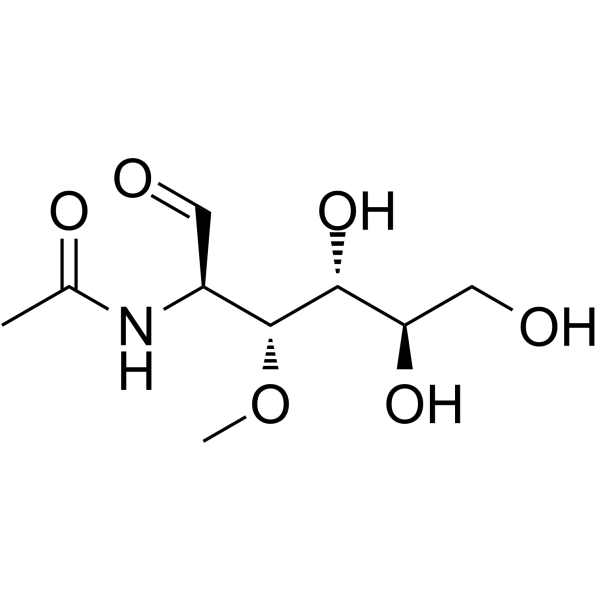
3-O-Methyl-N-acetyl-D-glucosamine

Based on 1 Customer Validation
3-O-Methyl-N-acetyl-D-glucosamine is a potent inhibitor of N-acetylglucosamine kinase. 3-O-Methyl-N-acetyl-D-glucosamine potently inhibits glucose phosphorylation by N-acetylglucosamine kinase whereas glucokinase is not at all affected by this hexosamine.
For research use only. We do not sell to patients.
- Purity : 95.0%
- CAS No.: 94825-74-8
- Formula: C9H17NO6
- Molecular Weight:235.23
-
Storage:Powder -20°C, 3 years ; In solvent -80°C, 6 months , -20°C, 1 month

To place orders, for customer services and technical support, please contact: MedChemExpress USA
Tel: 609-228-6898 E-mail: [email protected] [email protected]


-
 Biological Activity
-
Chemical Information
-
Solvent & Solubility
- Protocols
- Purity & Documentation
- References
-
 Help & FAQs


-
HY-126854
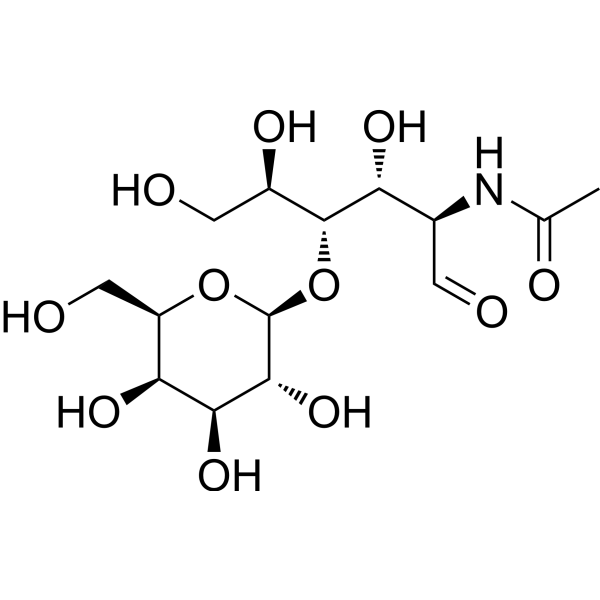
N-AcetyllactosamineNitrogen Disaccharide -
HY-N6833
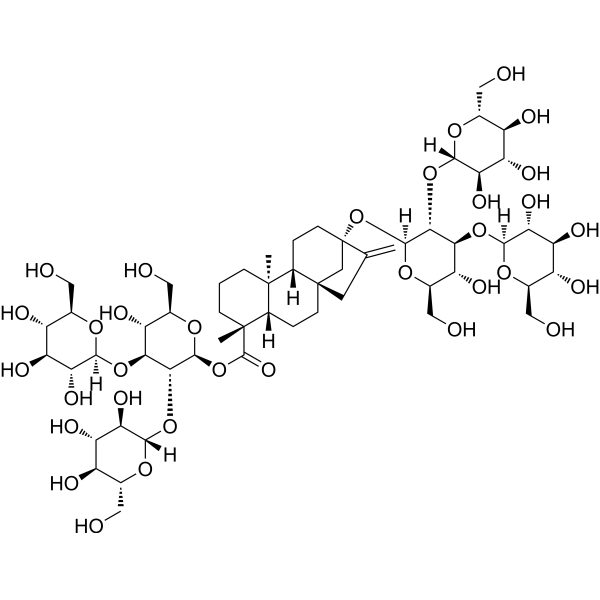
Rebaudioside MSweetener -
HY-N5102
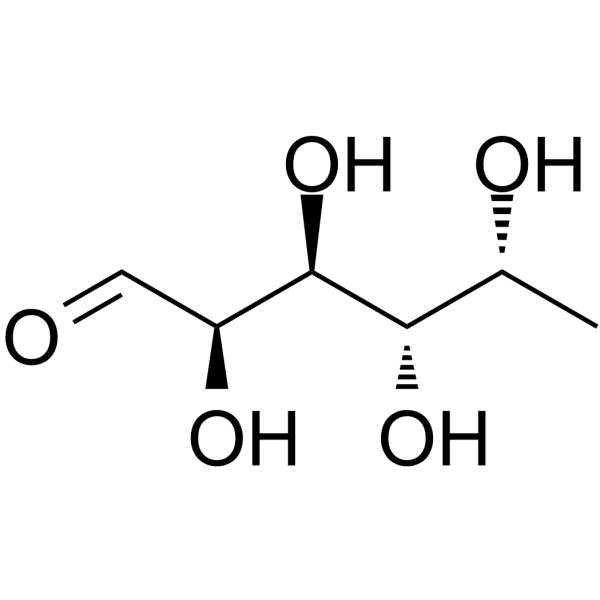
D-(+)-FucoseL-arabinose Analogue -

HY-N6833R
Rebaudioside M (Standard)Sweetener -

HY-N8326
MaltononaoseLinear Oligosaccharides -

HY-121305
D-Ribulose (1 M in water)Pentose Sugar -
HY-D0195S
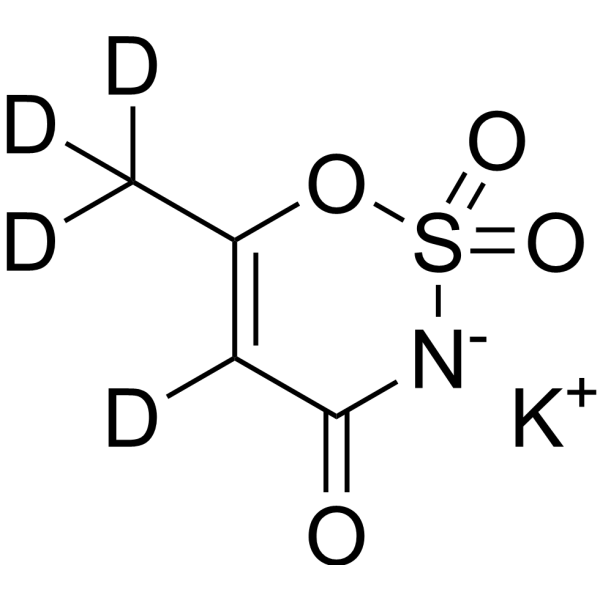
Acesulfame-d4 potassiumStable Isotope -

HY-126854R
N-Acetyllactosamine (Standard)Nitrogen Disaccharide -

HY-N5102R
D-(+)-Fucose (Standard)L-arabinose Analogue -

HY-128103
Glucagon receptor antagonist-7GCGR Antagonist -

HY-118914
Glucagon receptor antagonist inactive controlGlucagon receptor antagonist inactive control -

HY-109092A
rel-LicogliflozinSGLT Inhibitor


Biological Activity
Description
IC50 & Target
N-acetylglucosamine kinase[1]


Chemical Information
-
CAS No. 94825-74-8
-
Appearance Solid
-
Molecular Weight 235.23
-
Formula C9H17NO6
-
Color White to off-white
-
SMILES
O=C[C@H](NC(C)=O)[C@H]([C@@H]([C@@H](CO)O)O)OC
-
Synonyms
3-O-Methyl-GlcNAc
-
Shipping
Room temperature in continental US; may vary elsewhere.
-
Storage
Powder -20°C 3 years In solvent -80°C 6 months -20°C 1 month


Solvent & Solubility
In Vitro:
DMSO : 30 mg/mL (127.53 mM; Need ultrasonic and warming; Hygroscopic DMSO has a significant impact on the solubility of product, please use newly opened DMSO)
Please refer to the solubility information to select the appropriate solvent. Once prepared, please aliquot and store the solution to prevent product inactivation from repeated freeze-thaw cycles.
Storage method and period of stock solution: -80°C, 6 months; -20°C, 1 month. When stored at -80°C, please use it within 6 months. When stored at -20°C, please use it within 1 month.
Please refer to the solubility information to select the appropriate solvent. Once prepared, please aliquot and store the solution to prevent product inactivation from repeated freeze-thaw cycles.
Storage method and period of stock solution: -80°C, 6 months; -20°C, 1 month. When stored at -80°C, please use it within 6 months. When stored at -20°C, please use it within 1 month.
Concentration (start) × Volume (start) = Concentration (final) × Volume (final)

Protocols
-
Kinase activity and phosphorylation assays
Kinase activity assays measure the ability of kinases to transfer phosphate groups from ATP to specific substrates, while phosphorylation assays detect the presence and levels of phosphorylated proteins. Common methods include radiolabeled ATP incorporation (e. g. ,), ADP release detection via bioluminescence (e. g. ,[3]), enzyme-linked immunosorbent assays (ELISA) for phospho-specific epitopes (e. g. ,[6]), and microtiter-based formats for high-throughput screening (e. g. ,[8]). The ADP-Glo assay quantifies kinase activity by measuring ADP produced during phosphorylation using a luciferase-based system. Radiometric assays involve autoradiography or scintillation counting after incorporation of 32P-labeled ATP into substrate proteins. ELISA-based approaches rely on phospho-specific antibodies to detect activated kinases in cell lysates or purified samples.
-
Western Blot
Western blotting (WB) is a commonly used experimental method in molecular biology, biochemistry, and immunogenetics for identifying and quantifying target proteins. It combines gel electrophoresis with immunoassay, enabling researchers to analyze protein expression, post-translational modifications, and molecular weight.
-
Protocol for Kinase activity and phosphorylation assays
Kinase activity assays measure transfer of phosphate from ATP to a protein or peptide substrate, generating phosphorylated substrate, ADP, or incorporated radiolabeled phosphate as the readout; phosphorylation assays measure site-specific phosphorylation in cells or tissues as a proxy for kinase-pathway activation, inhibition, or substrate regulation. Phosphorylation can be detected by phospho-specific Western blot, immunoprecipitation kinase assay, phospho-immunofluorescence, phospho-flow cytometry, luminescent ADP detection, radiolabeled ATP incorporation, or reporter-based pathway assays, and these readouts can be applied to cancer cells, primary neurons, mouse tumors, organoids, inflammatory macrophages, ferroptosis studies, and mitophagy studies when the kinase target is biologically relevant.


Purity & Documentation
-
Data Sheet (271 KB)
-
SDS (394 KB)
- English - EN (394 KB)
- Français - FR (394 KB)
- Deutsch - DE (394 KB)
- Norwegian - NO (394 KB)
- Español - ES (394 KB)
- Swedish - SV (394 KB)
- Italian - IT (394 KB)
- Korean - KR (394 KB)
- Portuguese - PT (394 KB)
-
Handling Instructions (2659 KB)
References


Complete Stock Solution Preparation Table
Please refer to the solubility information to select the appropriate solvent. Once prepared, please aliquot and store the solution to prevent product inactivation from repeated freeze-thaw cycles.
Storage method and period of stock solution: -80°C, 6 months; -20°C, 1 month. When stored at -80°C, please use it within 6 months. When stored at -20°C, please use it within 1 month.
| Optional Solvent | Concentration Solvent Mass | 1 mg | 5 mg | 10 mg | 25 mg |
|---|---|---|---|---|---|
| DMSO | 1 mM | 4.2512 mL | 21.2558 mL | 42.5116 mL | 106.2790 mL |
| 5 mM | 0.8502 mL | 4.2512 mL | 8.5023 mL | 21.2558 mL | |
| 10 mM | 0.4251 mL | 2.1256 mL | 4.2512 mL | 10.6279 mL | |
| 15 mM | 0.2834 mL | 1.4171 mL | 2.8341 mL | 7.0853 mL | |
| 20 mM | 0.2126 mL | 1.0628 mL | 2.1256 mL | 5.3139 mL | |
| 25 mM | 0.1700 mL | 0.8502 mL | 1.7005 mL | 4.2512 mL | |
| 30 mM | 0.1417 mL | 0.7085 mL | 1.4171 mL | 3.5426 mL | |
| 40 mM | 0.1063 mL | 0.5314 mL | 1.0628 mL | 2.6570 mL | |
| 50 mM | 0.0850 mL | 0.4251 mL | 0.8502 mL | 2.1256 mL | |
| 60 mM | 0.0709 mL | 0.3543 mL | 0.7085 mL | 1.7713 mL | |
| 80 mM | 0.0531 mL | 0.2657 mL | 0.5314 mL | 1.3285 mL | |
| 100 mM | 0.0425 mL | 0.2126 mL | 0.4251 mL | 1.0628 mL |


3-O-Methyl-N-acetyl-D-glucosamine Related Classifications
HY-131940 Related Classifications
 Powered by Bioz