



8-pCPT-cGMP-AM
8-pCPT-cGMP-AM (8-(4-Chlorophenylthio)-cGMP-AM) is a highly membrane permeable prodrug of the PKG agonist 8-pCPT-cGMP, which increases the membrane permeability of cGMP and is converted to its active form by esterase hydrolysis within the cell, thereby activating PKG. 8-pCPT-cGMP-AM can be used to explore the role of cGMP signaling in neural plasticity and memory formation.
For research use only. We do not sell to patients.
- CAS No.: 272445-72-4
- Formula: C19H19ClN5O9PS
- Molecular Weight:559.87
-
Storage:Powder -20°C, 3 years , 4°C, 2 years ; In solvent -80°C, 6 months , -20°C, 1 month


To place orders, for customer services and technical support, please contact: MedChemExpress USA
Tel: 609-228-6898 E-mail: [email protected] [email protected]


-
 Biological Activity
-
Chemical Information
- Protocols
- Purity & Documentation
- References
-
 Help & FAQs


-
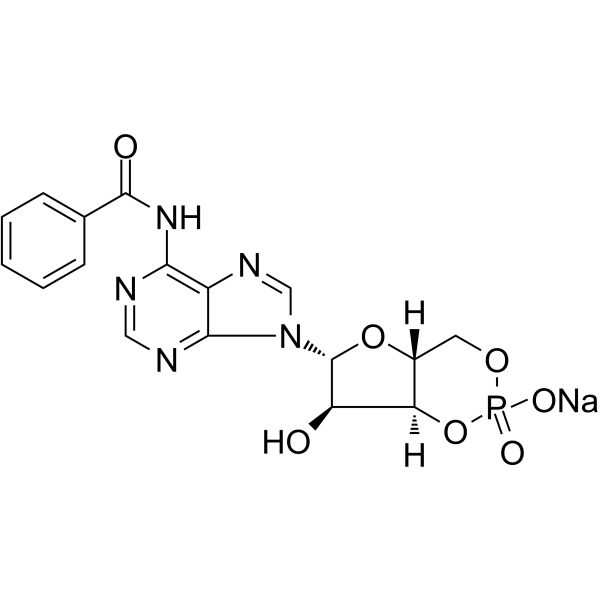
HY-103322
6-Bnz-cAMP sodium saltPKA Activator -
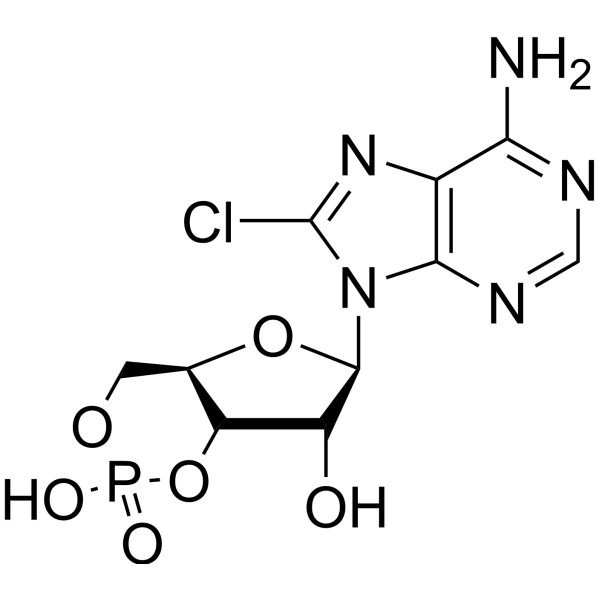
HY-123396
8-Chloro-cAMPcAMP Analogue -
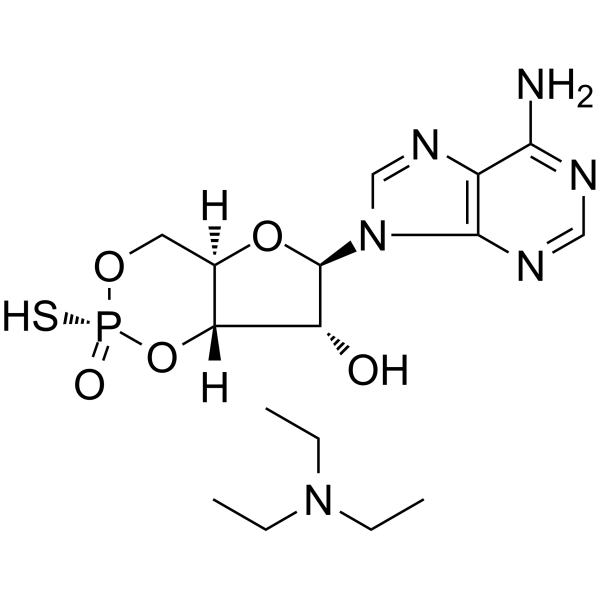
HY-100530
Rp-cAMPS triethylammonium saltPKA I/II Antagonist -
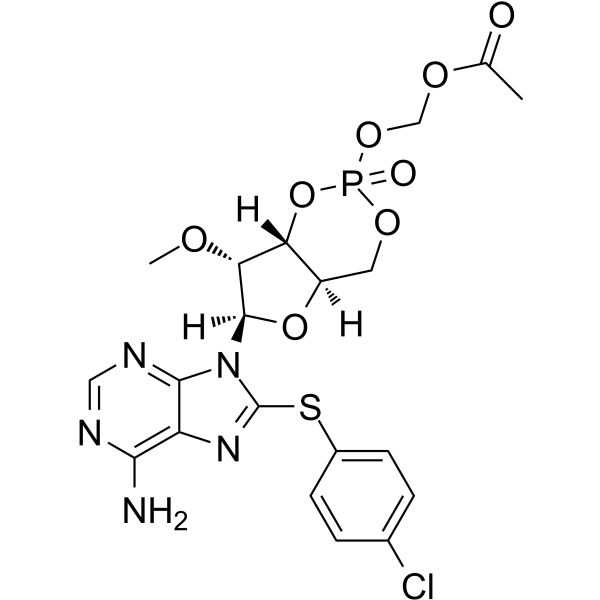
HY-107544
8-pCPT-2'-O-Me-cAMP-AMAMP Analogue -
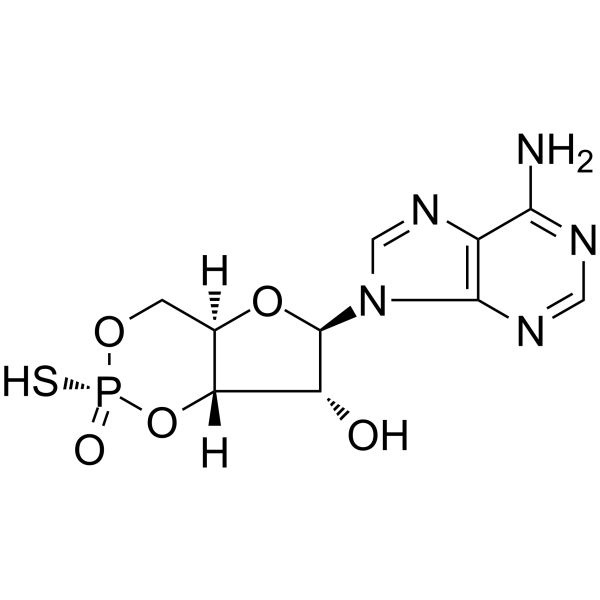
HY-100530A
Rp-cAMPSPKA I/II Antagonist -

HY-137633
Sp-8-Br-PET-cGMPSPKG Agonist -
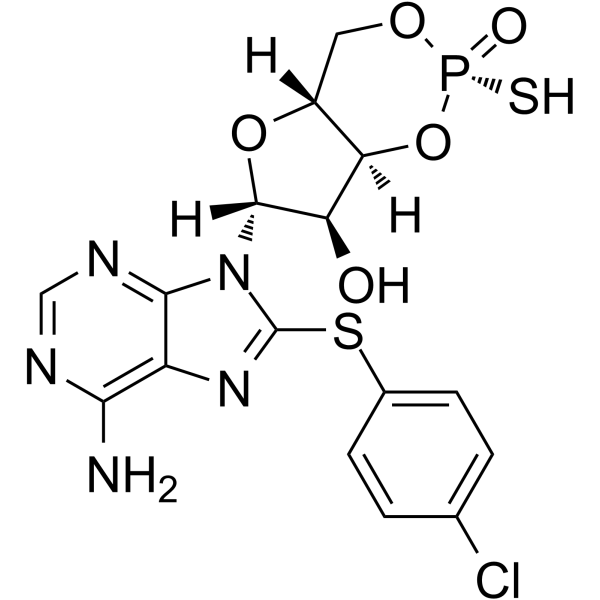
HY-120994B
Sp-8-CPT-cAMPSPKA Activator -
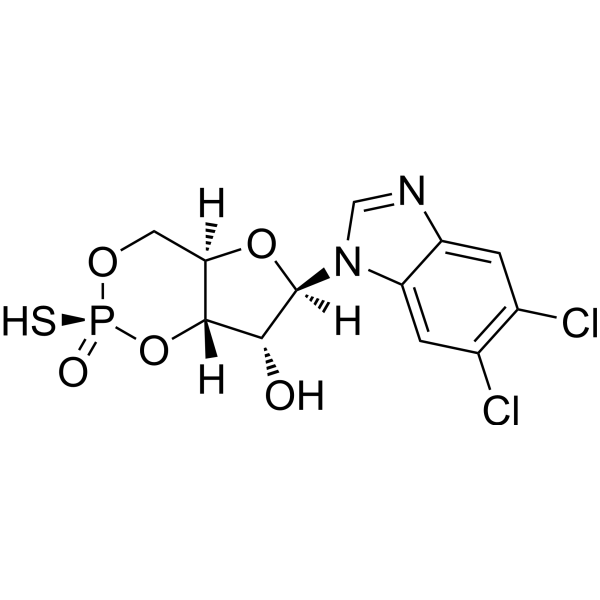
HY-137638
Sp-5,6-DCl-cBIMPScAMP-PK Activator -

HY-137640
Sp-8-Br-cAMPSPKA Agonist -

HY-137640B
Rp-8-Br-cAMPSPKA Inhibitor -

HY-131421
8-PIP-cAMPProtein Kinase Activator -
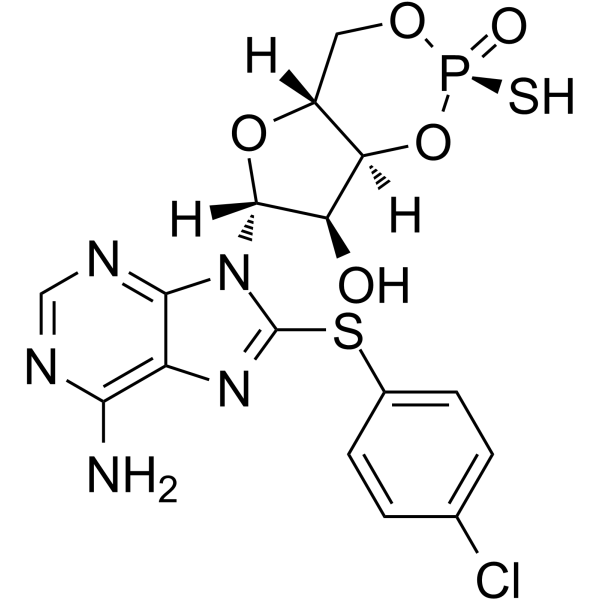
HY-120994A
Rp-8-CPT-cAMPSPKA Antagonist


Biological Activity
Description


Chemical Information
-
CAS No. 272445-72-4
-
Appearance Solid
-
Molecular Weight 559.87
-
Formula C19H19ClN5O9PS
-
SMILES
O[C@@H]1[C@H](OP2(OCOC(C)=O)=O)[C@@H](CO2)O[C@H]1N3C(SC4=CC=C(Cl)C=C4)=NC5=C3N=C(N)NC5=O
-
Synonyms
8-(4-Chlorophenylthio)-cGMP-AM
-
Shipping
Room temperature in continental US; may vary elsewhere.
-
Storage
Powder -20°C 3 years 4°C 2 years In solvent -80°C 6 months -20°C 1 month

Protocols
-
Transepithelial/transendothelial electrical resistance assay
TEER measures electrical resistance across epithelial or endothelial monolayers cultured on permeable supports, and the readout reflects ionic conductance through the cell barrier, especially the paracellular pathway regulated by junctional integrity. TEER can be measured without destroying the monolayer and is commonly used before or during transport, permeability, barrier-disruption, and barrier-maturation experiments. TEER values are influenced by biological maturation and technical conditions; reported factors include temperature, medium formulation, passage number, electrode geometry, membrane properties, and junctional length during early monolayer maturation. Therefore, TEER should be interpreted with blank-insert subtraction, area normalization, repeated readings, and, when possible, orthogonal barrier readouts such as FITC-dextran flux or tight-junction staining.


Purity & Documentation
References

Calculators
Concentration (start) × Volume (start) = Concentration (final) × Volume (final)


8-pCPT-cGMP-AM Related Classifications
HY-134345 Related Classifications
 Powered by Bioz