



β-Amyloid (10-20)
β-Amyloid (10-20) is a fragment of Amyloid-β peptide and maybe used in the research of neurological disease.
For research use only. We do not sell to patients.
- CAS No.: 152286-31-2
- Formula: C71H99N17O16
- Molecular Weight:1446.65
-
Storage:
Please store the product under the recommended conditions in the Certificate of Analysis.


To place orders, for customer services and technical support, please contact: MedChemExpress USA
Tel: 609-228-6898 E-mail: [email protected] [email protected]


-
 Biological Activity
-
Chemical Information
- Protocols
- Purity & Documentation
- References
-
 Help & FAQs


-
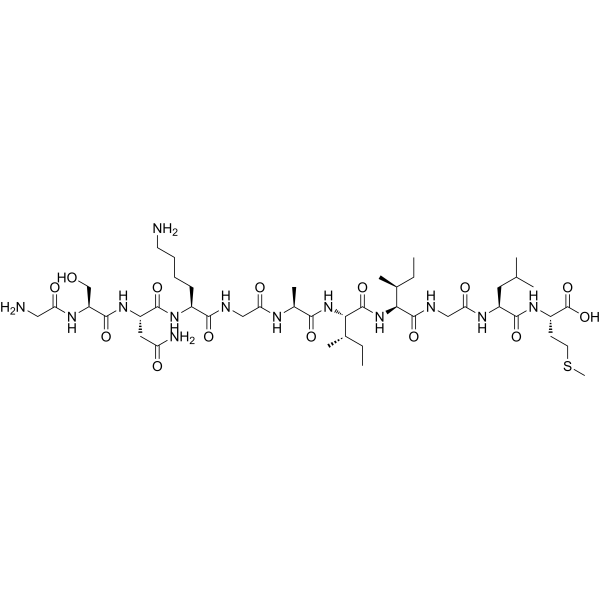
HY-P0128
β-Amyloid (25-35)Amyloid β Peptide -

HY-P0128A
β-Amyloid (25-35), HFIP-treatedAmyloid β Peptide -

HY-P1363A
β-Amyloid (1-42), humanAmyloid β Peptide -

HY-P1363B
β-Amyloid (1-42), human, HFIP-treatedβ-Amyloid (1-42) Peptide -
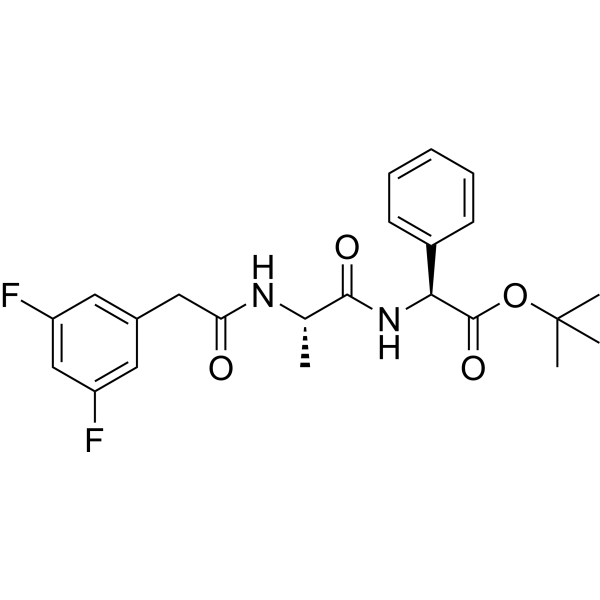
HY-13027
DAPTγ-secretase Inhibitor -

HY-P1061
ColivelinNeuroprotectant/STAT3 Activator -
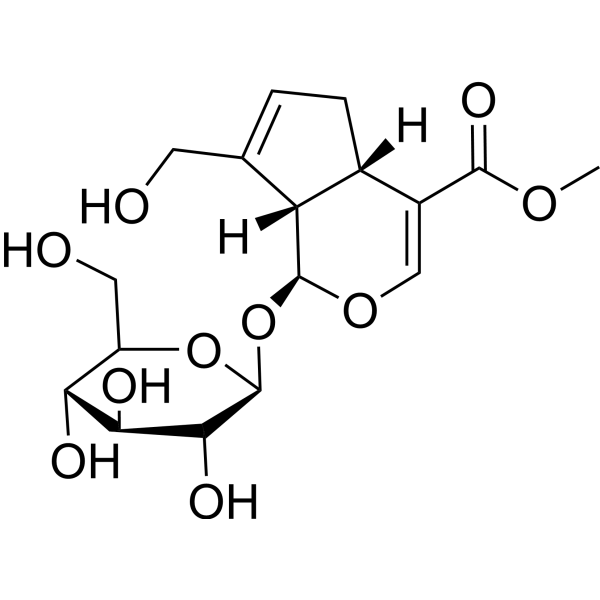
HY-N0009
GeniposideInfluenza Virus Inhibitor -
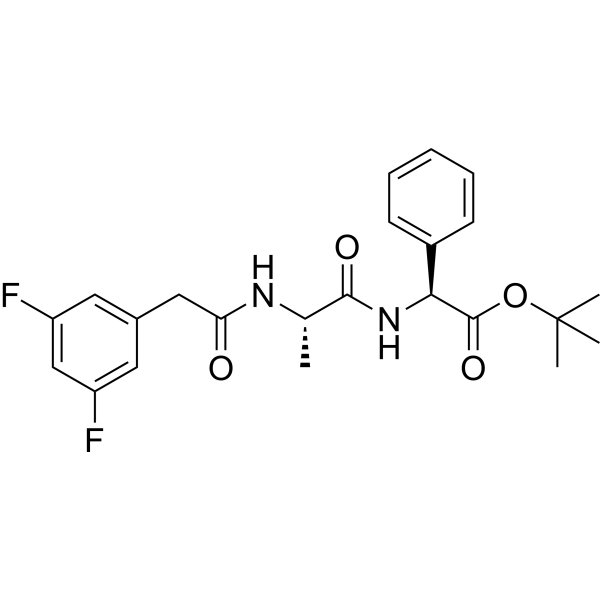
HY-13027G
DAPT (GMP)γ-Secretase Inhibitor -
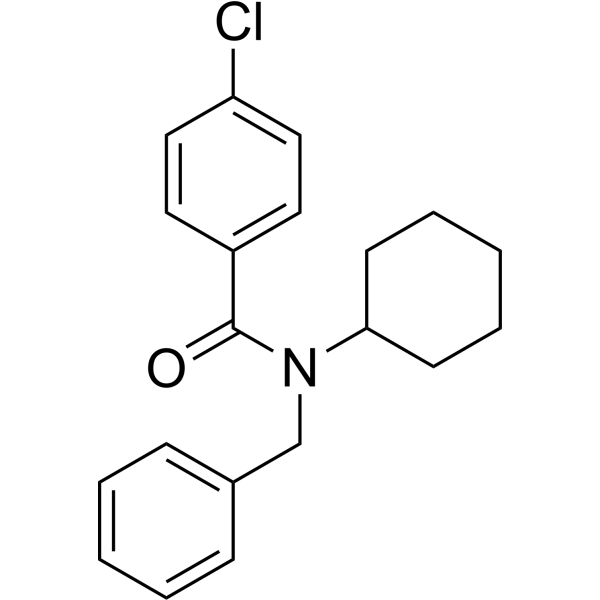
HY-19370
FPS-ZM1Amyloid-β Inhibitor -
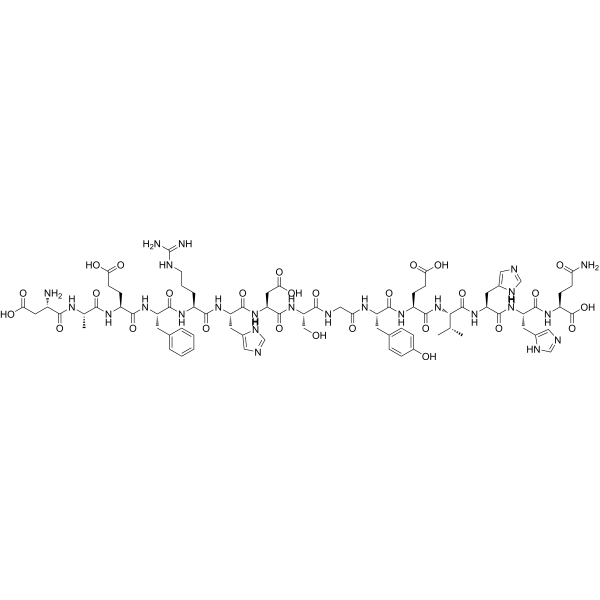
HY-P1046
β-Amyloid (1-15)Peptide Fragment -
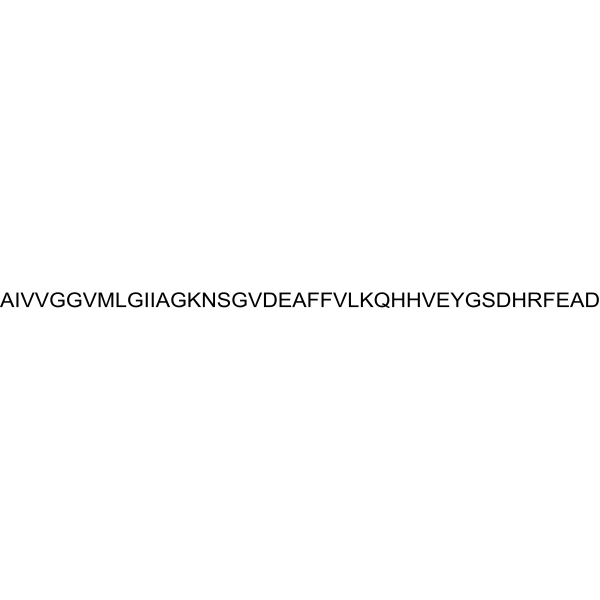
HY-P1362
β-Amyloid (42-1), humanInactive Form of Aβ(1-42) -

HY-N0009R
Geniposide (Standard)Influenza Virus Inhibitor


Biological Activity
Description
IC50 & Target
Amyloid-β[1]
In Vitro


Chemical Information
-
CAS No. 152286-31-2
-
Molecular Weight 1446.65
-
Formula C71H99N17O16
-
Sequence
Tyr-Glu-Val-His-His-Gln-Lys-Leu-Val-Phe-Phe
-
Sequence Shortening
YEVHHQKLVFF
-
Shipping
Room temperature in continental US; may vary elsewhere.
-
Storage
Please store the product under the recommended conditions in the Certificate of Analysis.

Protocols
-
Research Protocol for Neurological Diseases
PINK1/Parkin-mediated mitophagy pathway is a mitochondrial quality-control signaling axis in which mitochondrial depolarization stabilizes PINK1 on damaged mitochondria, activates Parkin recruitment and E3 ubiquitin ligase activity, promotes ubiquitination of outer mitochondrial membrane proteins, recruits selective autophagy adaptors, and drives lysosomal degradation of damaged mitochondria. In neurological disease research, this pathway is experimentally important because neurons, especially dopaminergic neurons, are highly dependent on mitochondrial integrity, and defective mitochondrial turnover can lead to mitochondrial dysfunction, oxidative stress, impaired neuronal survival, α-synuclein accumulation, and neuroinflammatory damage-associated signals. The genetic disease link is strongest in Parkinson’s disease because mutations in PRKN/parkin cause autosomal recessive juvenile parkinsonism, mutations in PINK1 cause hereditary early-onset Parkinson’s disease, and Drosophila studie
-
Amyloid: Congo Red Amyloid Staining
Congo red amyloid staining is a histochemical method used to detect extracellular amyloid deposits in tissue sections based on the affinity of Congo red dye for β-pleated sheet-rich protein aggregates. When bound to amyloid, Congo red produces characteristic apple-green birefringence under polarized light microscopy, which is widely regarded as a diagnostic feature of amyloid deposition in histopathology. The diagnostic principle relies on the combination of dye binding (congophilia) and optical anisotropy under polarized illumination, which distinguishes amyloid from most non-amyloid eosinophilic extracellular deposits in routine histological evaluation. Amyloid identification by Congo red staining remains a cornerstone in diagnostic pathology despite the availability of adjunct methods such as immunohistochemistry and mass spectrometry, particularly because of its ability to localize deposits directly within tissue architecture. The specificity of Congo red-positive deposits is incre
-
Alzheimer’s Disease Modeling
Alzheimer’s Disease (AD) is a neurodegenerative disorder characterized by a progressive decline in cognitive functions and loss of specific types of neurons and synapses. Alzheimer's symptoms can be simulated in mice by injecting drugs (such as Aβ) or genetically modified.


Purity & Documentation
References

Calculators
Concentration (start) × Volume (start) = Concentration (final) × Volume (final)


β-Amyloid (10-20) Related Classifications
HY-P1053 Related Classifications
 Powered by Bioz