



Cetilistat
Based on 1 publication(s) in Google Scholar
Cetilistat (ATL-962), an inhibitor of pancreatic lipase, acts as an effective anti-obesity agent. Cetilistat inhibits rat and human pancreatic lipase activity with IC50s of 54.8 nM, and 5.95 nM, respectively.
商品は「研究用試薬」です。人や動物の医療用・臨床診断用・食品用の製品ではありません。
研究用途以外に使用した場合、当社は一切の責任を負いかねます。
- 純度 : 98.0%
- CAS 番号: 282526-98-1
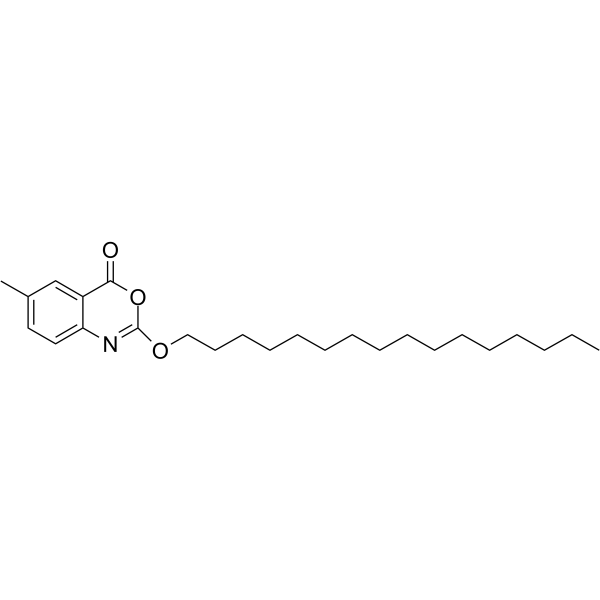
- 分子式: C25H39NO3
- 分子量:401.58
-
保管条件:Powder -20°C, 3 years , 4°C, 2 years ; In solvent -80°C, 2 years , -20°C, 1 year

To place orders, for customer services and technical support, please contact: MedChemExpress USA
Tel: 609-228-6898 E-mail: [email protected] [email protected]


-
 生物活性
生物活性
-
化学情報
-
溶剤 & 溶解度
- プロトコル
- 純度とドキュメンテーション
- 参考文献
-
 Help & FAQs


-
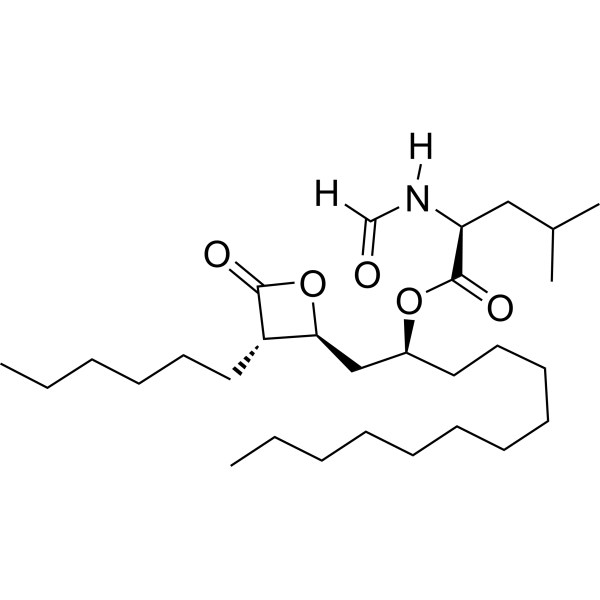
HY-B0218
OrlistatFASN Inhibitor -

HY-14471R
Cetilistat (Standard)Lipase Inhibitor -
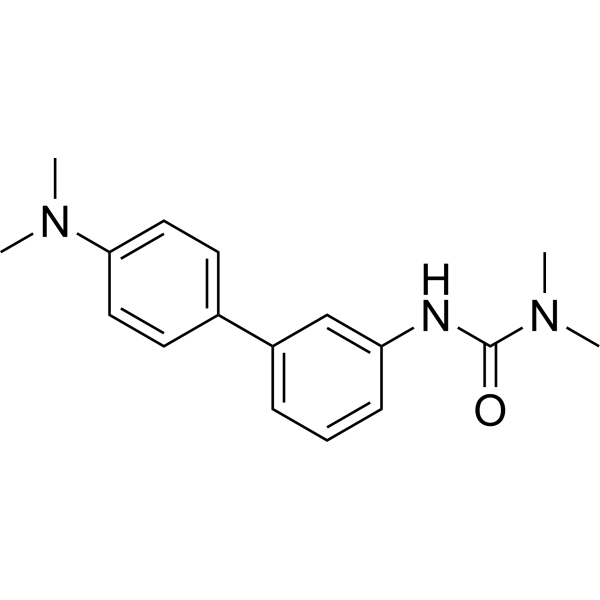
HY-15859
AtglistatinATGL Inhibitor -
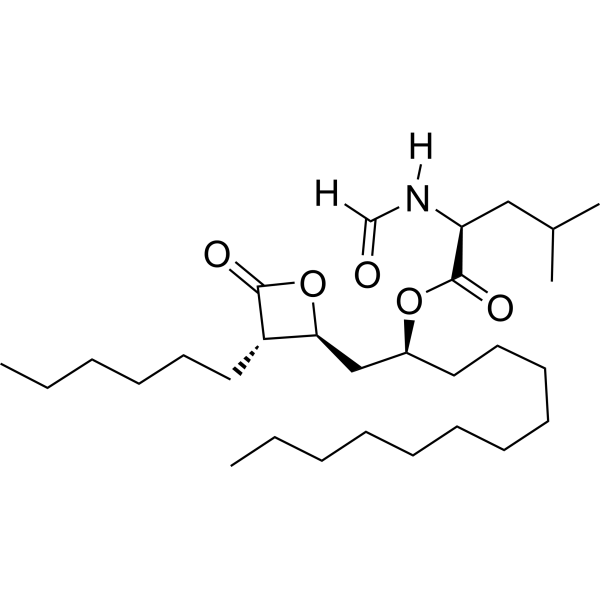
HY-B0218R
Orlistat (Standard) -
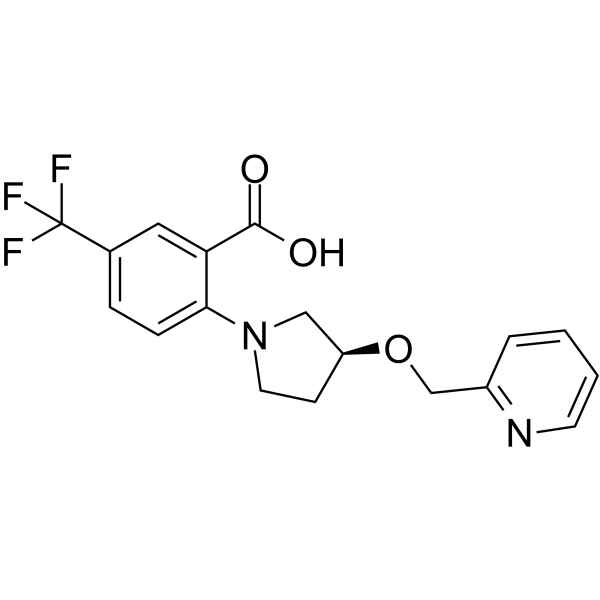
HY-12246
XEN445Endothelial Lipase Inhibitor -
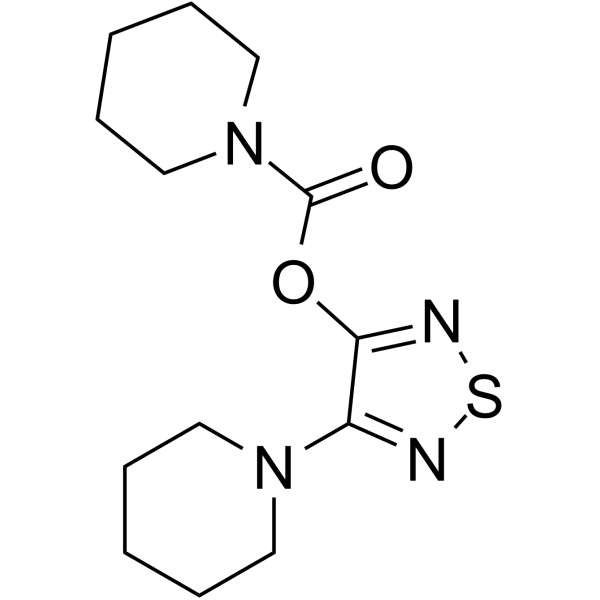
HY-128144
Lalistat 2LAL Inhibitor -
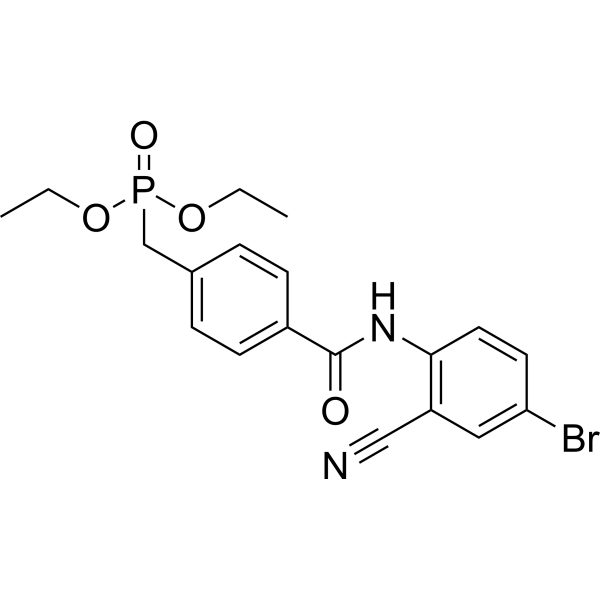
HY-117549
IbrolipimLPL Activator -
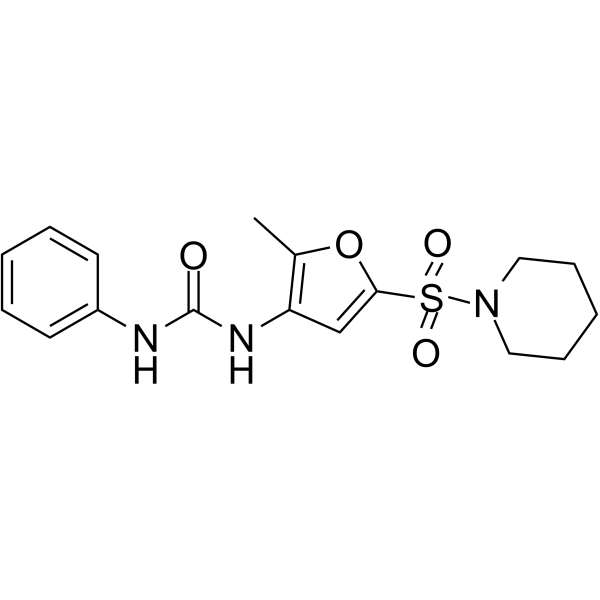
HY-103372
GSK264220AEndothelial Lipase Inhibitor -
HY-15249
JZL 184MAGL Inhibitor -
HY-N1937
PristimerinMGL Inhibitor -
HY-119283
CAY10499Lipase Inhibitor -
HY-N0467
Rebaudioside CTAS1R2/TAS1R3 Activator
MedChemExpress(MCE)の使用を引用している文献 Cetilistat
More

生物活性
製品説明
IC50 & Target
IC50: 54.8 nM (rat pancreatic lipase), 5.95 nM (human pancreatic lipase)[1]
体外実験
Cetilistat inhibits rat pancreatic lipase activity with an IC50 of 54.8 nM. Also, Cetilistat inhibits human pancreatic lipase activity with an IC50 of 5.95 nM, which is 9.2 times more potent than for rat pancreatic lipase[1].
MedChemExpress (MCE) has not independently confirmed the accuracy of these methods. They are for reference only. Further protocols information, click here.
体内実験
Cetilistat (4.9, 14.9, or 50.7 mg/kg; mixed into powdered high-fat diet; once a day; for three weeks) shows anti-obesity and antihyperlipidemic effects on DIO F344 rats by reducing intestinal fat absorption[1].
MedChemExpress (MCE) has not independently confirmed the accuracy of these methods. They are for reference only.
-
Animal Model:Fifty male SD rats (eight weeks of age)[1]
-
Dosage:3, 10, 30, or 100 mg/kg
-
Administration:Orally administered; prepared in 0.5 % methylcellulose (MC) suspension
-
Result:Dose-dependently reduced AUC 0-6 h of plasma triglyceride induced by oral loading of Intrafat 20%. The effect was statistically significant at 3 mg/kg, reaching 45% reduction, while an almost 90 % reduction was achieved at 100 mg/kg.
-
Animal Model:Male diet-induced obesity (DIO) F344 rats (five weeks of age)[1]
-
Dosage:4.9, 14.9, or 50.7 mg/kg
-
Administration:Administered as food admixture in a high-fat diet; once a day; for three weeks
-
Result:Significantly and dose-dependently reduced body weight gain compared with control.
臨床実験
| NCT Number | Sponsor | Condition | Start Date |
Phase

|
|---|---|---|---|---|
| NCT01329991 | Plexxikon| | 2011-05 | PHASE1 |


化学情報
-
CAS 番号 282526-98-1
-
性状 Solid
-
分子量 401.58
-
分子式 C25H39NO3
-
Color White to off-white
-
SMILES
CC1=CC=C(N=C(OCCCCCCCCCCCCCCCC)OC2=O)C2=C1
-
別名
ATL-962
-
輸送条件
Room temperature in continental US; may vary elsewhere.
-
保管条件
Powder -20°C 3 years 4°C 2 years In solvent -80°C 2 years -20°C 1 year


Publications (1)
-
Journal Impact Factor
-
Most Recent


溶剤 & 溶解度
体外:
Ethanol : 2.5 mg/mL (6.23 mM; ultrasonic and warming and heat to 60°C)
DMSO : < 1 mg/mL (insoluble or slightly soluble)
H2O : < 0.1 mg/mL (insoluble)
* Cetilistat is usually formulated as a suspension.
Please refer to the solubility information to select the appropriate solvent. Once prepared, please aliquot and store the solution to prevent product inactivation from repeated freeze-thaw cycles.
Storage method and period of stock solution: -80°C, 2 years; -20°C, 1 year. When stored at -80°C, please use it within 2 years. When stored at -20°C, please use it within 1 year.
Please refer to the solubility information to select the appropriate solvent. Once prepared, please aliquot and store the solution to prevent product inactivation from repeated freeze-thaw cycles.
Storage method and period of stock solution: -80°C, 2 years; -20°C, 1 year. When stored at -80°C, please use it within 2 years. When stored at -20°C, please use it within 1 year.
濃度 (開始) × 体積 (開始) = 濃度 (終了) × 体積 (終了)
体内:
Select the appropriate dissolution method based on your experimental animal and administration route.
- For the following dissolution methods, please ensure to first prepare a clear stock solution using an In Vitro approach and then sequentially add co-solvents:
- To ensure reliable experimental results, the clarified stock solution can be appropriately stored based on storage conditions. As for the working solution for In Vivo experiments, it is recommended to prepare freshly and use it on the same day.
- The percentages shown for the solvents indicate their volumetric ratio in the final prepared solution. If precipitation or phase separation occurs during preparation, heat and/or sonication can be used to aid dissolution.
Add each solvent one by one: 10% EtOH 40% PEG300 5% Tween-80 45% Saline
Solubility: 0.25 mg/mL (0.62 mM); Suspended solution; Need ultrasonic
This protocol yields a suspended solution of 0.25 mg/mL. Suspended solution can be used for oral and intraperitoneal injection.
Taking 1 mL working solution as an example, add 100 μL EtOH stock solution (2.5 mg/mL) to 400 μL PEG300, and mix evenly; then add 50 μL Tween-80 and mix evenly; then add 450 μL Saline to adjust the volume to 1 mL.
Preparation of Saline: Dissolve 0.9 g sodium chloride in ddH₂O and dilute to 100 mL to obtain a clear Saline solution.
Add each solvent one by one: 10% EtOH 90% (20% SBE-β-CD in Saline)
Solubility: 0.25 mg/mL (0.62 mM); Suspended solution; Need ultrasonic
This protocol yields a suspended solution of 0.25 mg/mL. Suspended solution can be used for oral and intraperitoneal injection.
Taking 1 mL working solution as an example, add 100 μL EtOH stock solution (2.5 mg/mL) to 900 μL 20% SBE-β-CD in Saline, and mix evenly.
Preparation of 20% SBE-β-CD in Saline (4°C, storage for one week): 2 g SBE-β-CD powder is dissolved in 10 mL Saline, completely dissolve until clear.
Add each solvent one by one: 10% EtOH 90% Corn Oil
Solubility: ≥ 0.25 mg/mL (0.62 mM); Clear solution
This protocol yields a clear solution of ≥ 0.25 mg/mL (saturation unknown). If the continuous dosing period exceeds half a month, please choose this protocol carefully.
Taking 1 mL working solution as an example, add 100 μL EtOH stock solution (2.5 mg/mL) to 900 μL Corn oil, and mix evenly.
In Vivo Dissolution Calculator
Please enter the basic information of animal experiments:
-
-
-
-
Recommended: Prepare an additional quantity of animals to account for potential losses during experiments.
Working solution concentration: 0.22 mg/mL

プロトコル
-
Research Protocol for Metabolic Diseases
AMP-activated protein kinase, AMPK, is a conserved cellular energy sensor that responds to reduced cellular energy status and coordinates metabolism by increasing ATP-generating catabolic pathways while suppressing ATP-consuming anabolic processes. In metabolic disease research, the AMPK pathway is experimentally relevant because it regulates hepatic lipid synthesis, fatty acid oxidation, glucose production, skeletal-muscle glucose disposal, mTORC1-linked biosynthesis, autophagy, mitochondrial homeostasis, and whole-body energy balance. The central pathway logic is that energy stress, metformin, exercise-like stimulation, or direct AMPK activators increase AMPKα Thr172 phosphorylation and downstream substrate phosphorylation, including ACC and RAPTOR. Phosphorylation of ACC suppresses lipogenesis and supports fatty acid oxidation, whereas phosphorylation of RAPTOR suppresses mTORC1 signaling and links cellular energy status to growth and protein synthesis control. The pathway is linked


純度とドキュメンテーション
-
データシート (268 KB)
-
SDS (393 KB)
- English - EN (393 KB)
- Français - FR (393 KB)
- Deutsch - DE (393 KB)
- Norwegian - NO (393 KB)
- Español - ES (393 KB)
- Swedish - SV (393 KB)
- Italian - IT (393 KB)
- Korean - KR (393 KB)
- Portuguese - PT (393 KB)
-
取扱説明書 (2659 KB)
参考文献


Complete Stock Solution Preparation Table
Please refer to the solubility information to select the appropriate solvent. Once prepared, please aliquot and store the solution to prevent product inactivation from repeated freeze-thaw cycles.
Storage method and period of stock solution: -80°C, 2 years; -20°C, 1 year. When stored at -80°C, please use it within 2 years. When stored at -20°C, please use it within 1 year.
| Optional Solvent | Concentration Solvent Mass | 1 mg | 5 mg | 10 mg | 25 mg |
|---|---|---|---|---|---|
| Ethanol | 1 mM | 2.4902 mL | 12.4508 mL | 24.9016 mL | 62.2541 mL |
| 5 mM | 0.4980 mL | 2.4902 mL | 4.9803 mL | 12.4508 mL |


Cetilistat 関連分類
HY-14471 関連分類
 Powered by Bioz