



Docusate Sodium
Based on 2 publication(s) in Google Scholar
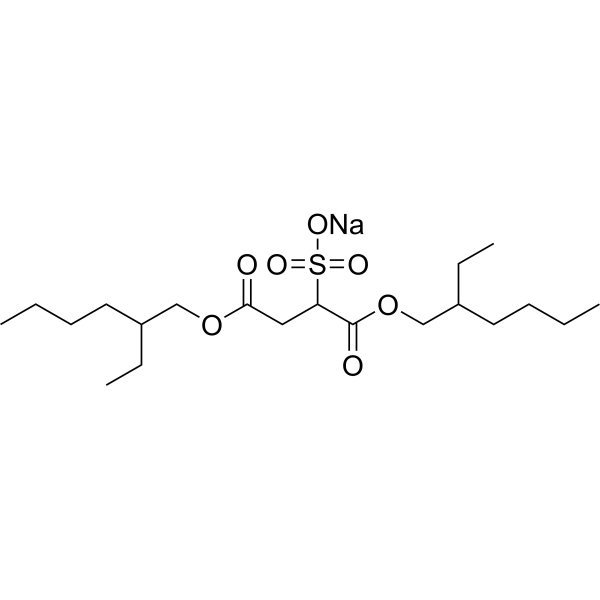
Docusate Sodium (Dioctyl sulfosuccinate sodium salt) is one of the main components in stool softeners. Docusate Sodium is a sulfated surfactant and may inactivate viral pathogens by disrupting viral envelopes and/or denaturing/disassociating proteins. Docusate Sodium is effective in vitro against wild type and drug-resistant strains of HSV type 1 and 2. Docusate Sodium is an obesogen. Docusate Sodium with developmental exposure leads to increased adult adiposity, inflammation, metabolic disorder and dyslipidemia in offspring fed a standard diet in mice.
For research use only. We do not sell to patients.
- Purity : 98.0%
- CAS No.: 577-11-7
- Formula: C20H37NaO7S
- Molecular Weight:444.56
-
Storage:
4°C, sealed storage, away from moisture and light
* In solvent : -80°C, 6 months; -20°C, 1 month (sealed storage, away from moisture and light)

To place orders, for customer services and technical support, please contact: MedChemExpress USA
Tel: 609-228-6898 E-mail: [email protected] [email protected]


-
 Biological Activity
-
Chemical Information
-
Solvent & Solubility
- Protocols
- Purity & Documentation
- References
-
 Help & FAQs


-

HY-B1268R
Docusate Sodium (Standard)HSV Inhibitor -
HY-79457
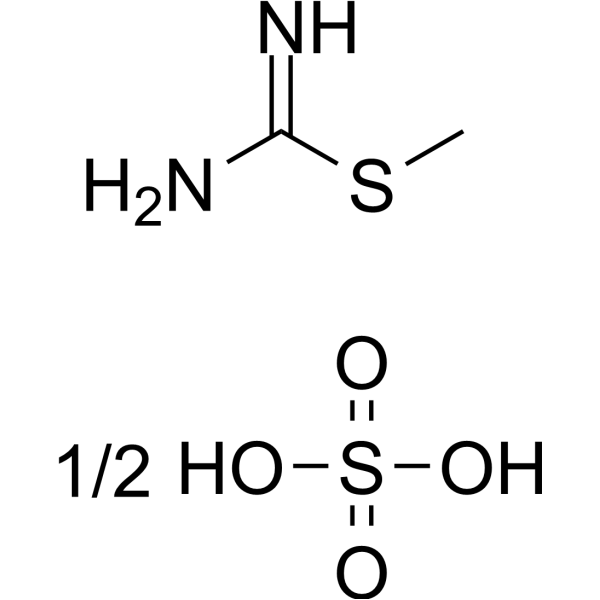
S-Methylisothiourea sulfateiNOS Inhibitor -
HY-W004486
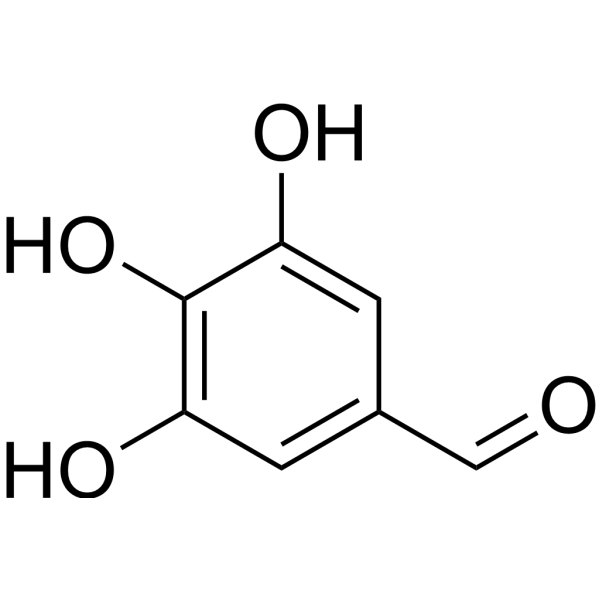
Gallic aldehydeHSV-1 Inhibitor -
HY-15303
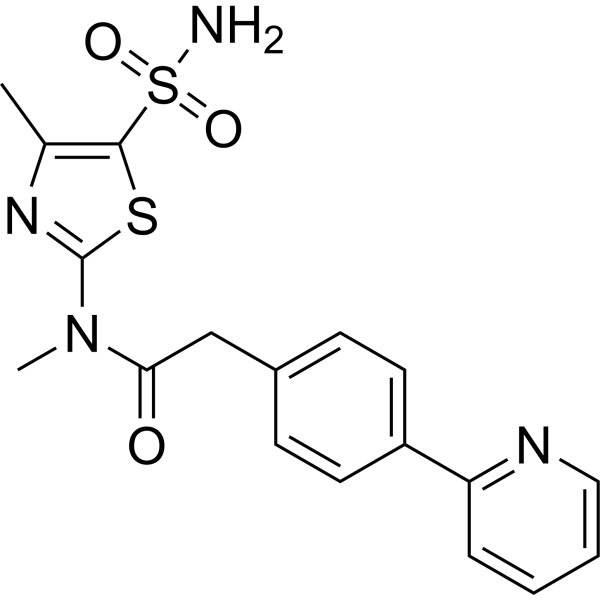
PritelivirHSV Inhibitor -
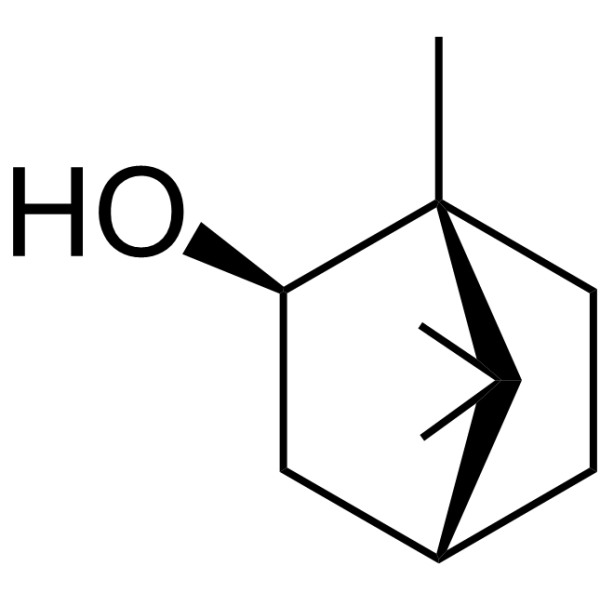
HY-N2004
IsoborneolHSV Inhibitor -
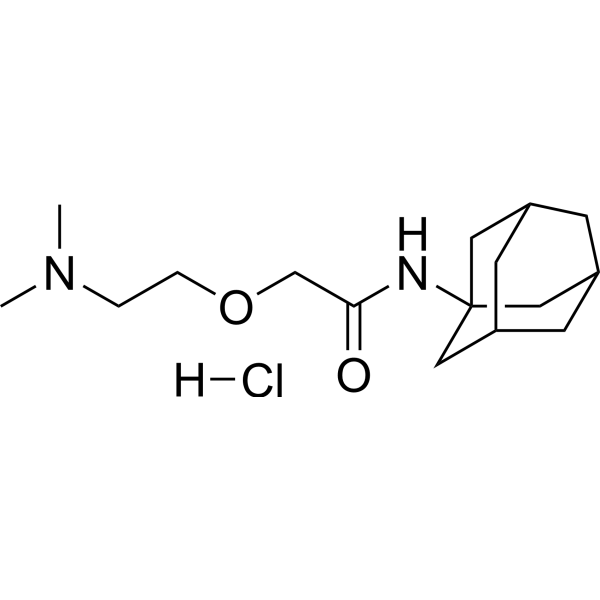
HY-U00124B
Tromantadine hydrochlorideHSV Replication Inhibitor -
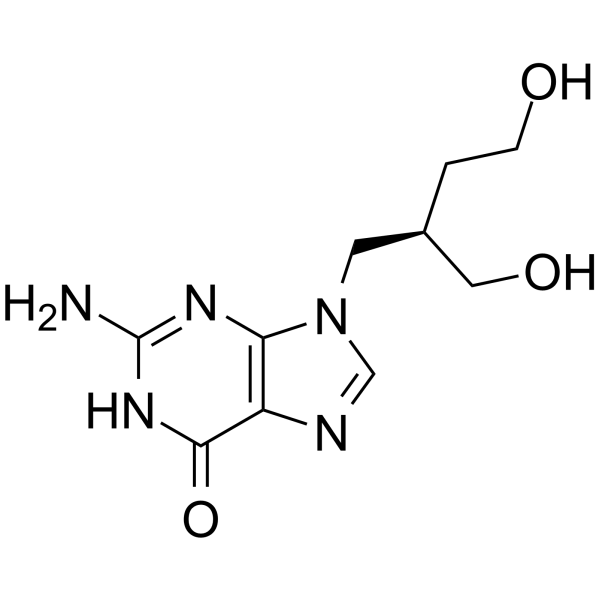
HY-116174
OmaciclovirHerpesvirus Inhibitor -
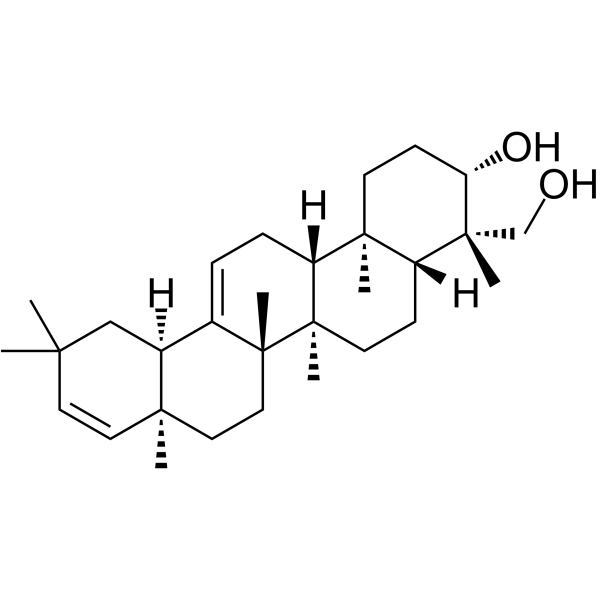
HY-N8156
Soyasapogenol CHSV-1 Inhibitor -
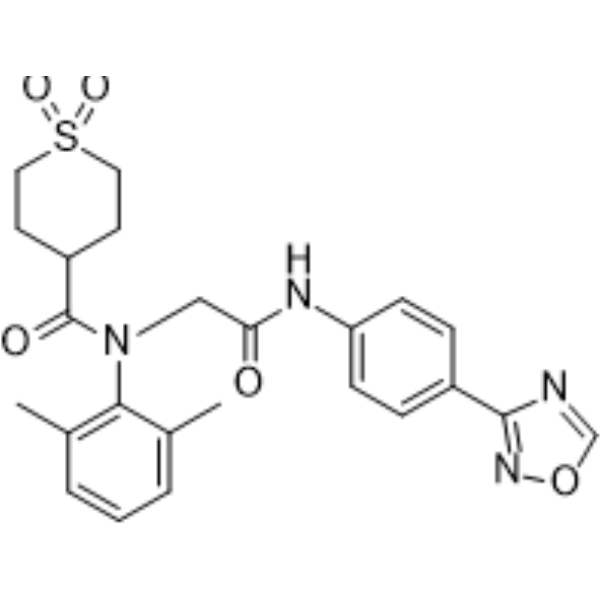
HY-14809
AmenamevirHSV Inhibitor -
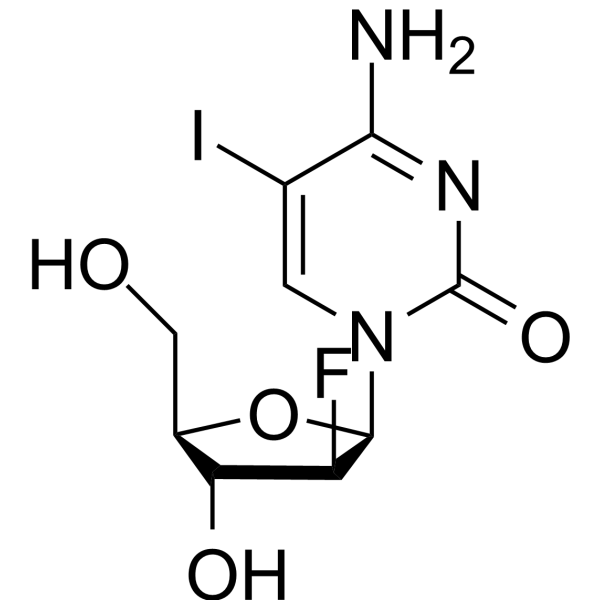
HY-50735
FiacitabineDNA Polymerase Inhibitor -
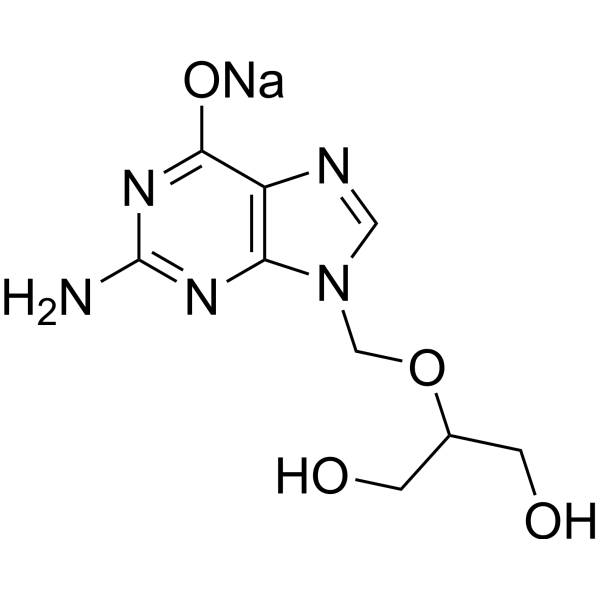
HY-13637A
Ganciclovir sodiumAntiviral Agent -
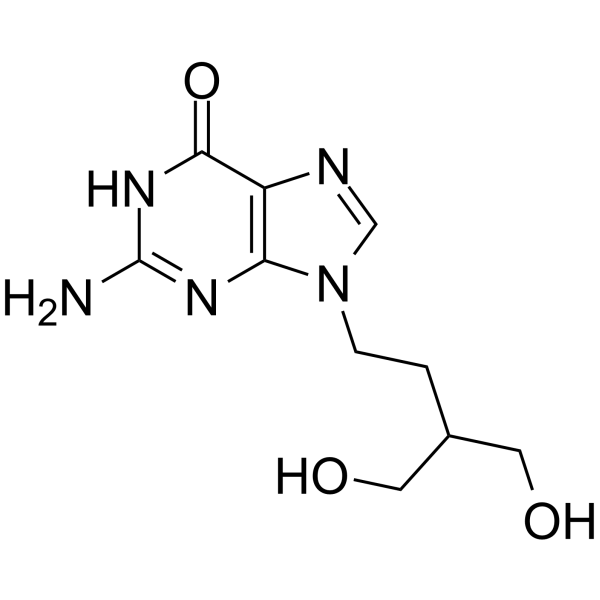
HY-17424
PenciclovirAnti-herpesvirus Agent
Publications Citing Use of MedChemExpress (MCE) Docusate Sodium
More

Biological Activity
Description
IC50 & Target
[1]|
HSV-1 |
HSV-2 |
In Vivo
MedChemExpress (MCE) has not independently confirmed the accuracy of these methods. They are for reference only.
-
Animal Model:Pregnant dams[2]
-
Dosage:31.25 μg/mL
-
Administration:Dissolved in water
-
Result:F1 male offspring from DOSS-treated dams were significantly heavier than control male counterparts at 12 weeks and 16 weeks.
Clinical Trial
| NCT Number | Sponsor | Condition | Start Date |
Phase

|
|---|---|---|---|---|
| NCT01329991 | Plexxikon| | 2011-05 | PHASE1 |


Chemical Information
-
CAS No. 577-11-7
-
Appearance Solid
-
Molecular Weight 444.56
-
Formula C20H37NaO7S
-
Color White to off-white
-
SMILES
O=C(OCC(CC)CCCC)C(S(=O)(O[Na])=O)CC(OCC(CC)CCCC)=O
-
Synonyms
Dioctyl sulfosuccinate sodium salt
-
Shipping
Room temperature in continental US; may vary elsewhere.
-
Storage
4°C, sealed storage, away from moisture and light
* In solvent : -80°C, 6 months; -20°C, 1 month (sealed storage, away from moisture and light)


Publications (2)
-
Journal Impact Factor
-
Most Recent
-
J Biol Chem
α-Crystallin chaperone mimetic drugs inhibit lens γ-crystallin aggregation: Potential role for cataract prevention. [Abstract]2022 Oct;298(10):102417. PMID: 36037967 -


Solvent & Solubility
In Vitro:
H2O : ≥ 20 mg/mL (44.99 mM)
* "≥" means soluble, but saturation unknown.
Please refer to the solubility information to select the appropriate solvent. Once prepared, please aliquot and store the solution to prevent product inactivation from repeated freeze-thaw cycles.
Storage method and period of stock solution: -80°C, 6 months; -20°C, 1 month (sealed storage, away from moisture and light). When stored at -80°C, please use it within 6 months. When stored at -20°C, please use it within 1 month.
* Note: If you choose water as the stock solution, please dilute it to the working solution, then filter and sterilize it with a 0.22 μm filter before use.
Please refer to the solubility information to select the appropriate solvent. Once prepared, please aliquot and store the solution to prevent product inactivation from repeated freeze-thaw cycles.
Storage method and period of stock solution: -80°C, 6 months; -20°C, 1 month (sealed storage, away from moisture and light). When stored at -80°C, please use it within 6 months. When stored at -20°C, please use it within 1 month.
* Note: If you choose water as the stock solution, please dilute it to the working solution, then filter and sterilize it with a 0.22 μm filter before use.
Concentration (start) × Volume (start) = Concentration (final) × Volume (final)
In Vivo:
For the following dissolution methods, please prepare the working solution directly:
It is recommended to prepare fresh solutions and use them promptly within a short period of time.
The percentages shown for the solvents indicate their volumetric ratio in the final prepared solution. If precipitation or phase separation occurs during preparation, heat and/or sonication can be used to aid dissolution.
Add each solvent one by one: PBS
Solubility: 50 mg/mL (112.47 mM); Clear solution; Need ultrasonic

Protocols
-
Research Protocol for Inflammation-related Diseases
The NLRP3 inflammasome is a cytosolic innate immune signaling platform that integrates priming signals and danger-signal activation to promote caspase-1 activation, maturation of IL-1β and IL-18, and gasdermin D-mediated pyroptotic cell death. The core experimental logic is to determine whether inflammatory disease phenotypes are driven by increased NLRP3 expression, ASC-containing inflammasome assembly, caspase-1 cleavage, GSDMD cleavage, and extracellular release of IL-1β/IL-18 rather than by nonspecific cell injury alone. The pathway is strongly linked to inflammation-related disease phenotypes because monosodium urate crystals activate NALP3/NLRP3 inflammasome signaling in gout-like crystal inflammation, cholesterol crystals activate NLRP3 inflammasomes in atherogenesis models, and DSS-induced intestinal inflammation has been reported to involve NLRP3 inflammasome activity. However, experimental colitis studies also show context-dependent protective effects of NLRP3 inflammasome co
-
Research Protocol for Metabolic Diseases
AMP-activated protein kinase, AMPK, is a conserved cellular energy sensor that responds to reduced cellular energy status and coordinates metabolism by increasing ATP-generating catabolic pathways while suppressing ATP-consuming anabolic processes. In metabolic disease research, the AMPK pathway is experimentally relevant because it regulates hepatic lipid synthesis, fatty acid oxidation, glucose production, skeletal-muscle glucose disposal, mTORC1-linked biosynthesis, autophagy, mitochondrial homeostasis, and whole-body energy balance. The central pathway logic is that energy stress, metformin, exercise-like stimulation, or direct AMPK activators increase AMPKα Thr172 phosphorylation and downstream substrate phosphorylation, including ACC and RAPTOR. Phosphorylation of ACC suppresses lipogenesis and supports fatty acid oxidation, whereas phosphorylation of RAPTOR suppresses mTORC1 signaling and links cellular energy status to growth and protein synthesis control. The pathway is linked


Purity & Documentation
-
Data Sheet (271 KB)
-
SDS (477 KB)
- English - EN (477 KB)
- Français - FR (477 KB)
- Deutsch - DE (477 KB)
- Norwegian - NO (477 KB)
- Español - ES (477 KB)
- Swedish - SV (477 KB)
- Italian - IT (477 KB)
- Korean - KR (477 KB)
- Portuguese - PT (477 KB)
-
Handling Instructions (2659 KB)
References
[1]. Y Gong, et al. Preclinical evaluation of docusate as protective agent from herpes simplex viruses. Antiviral Res. 2001 Oct;52(1):25-32. [Content Brief]
[2]. Alexis M Temkin, et al. Increased adiposity, inflammation, metabolic disruption and dyslipidemia in adult male offspring of DOSS treated C57BL/6 dams. Sci Rep. 2019 Feb 6;9(1):1530. [Content Brief]


Complete Stock Solution Preparation Table
Please refer to the solubility information to select the appropriate solvent. Once prepared, please aliquot and store the solution to prevent product inactivation from repeated freeze-thaw cycles.
Storage method and period of stock solution: -80°C, 6 months; -20°C, 1 month (sealed storage, away from moisture and light). When stored at -80°C, please use it within 6 months. When stored at -20°C, please use it within 1 month.
| Optional Solvent | Concentration Solvent Mass | 1 mg | 5 mg | 10 mg | 25 mg |
|---|---|---|---|---|---|
| H2O | 1 mM | 2.2494 mL | 11.2471 mL | 22.4942 mL | 56.2354 mL |
| 5 mM | 0.4499 mL | 2.2494 mL | 4.4988 mL | 11.2471 mL | |
| 10 mM | 0.2249 mL | 1.1247 mL | 2.2494 mL | 5.6235 mL | |
| 15 mM | 0.1500 mL | 0.7498 mL | 1.4996 mL | 3.7490 mL | |
| 20 mM | 0.1125 mL | 0.5624 mL | 1.1247 mL | 2.8118 mL | |
| 25 mM | 0.0900 mL | 0.4499 mL | 0.8998 mL | 2.2494 mL | |
| 30 mM | 0.0750 mL | 0.3749 mL | 0.7498 mL | 1.8745 mL | |
| 40 mM | 0.0562 mL | 0.2812 mL | 0.5624 mL | 1.4059 mL |
* Note: If you choose water as the stock solution, please dilute it to the working solution, then filter and sterilize it with a 0.22 μm filter before use.


Docusate Sodium Related Classifications
HY-B1268 Related Classifications
 Powered by Bioz