



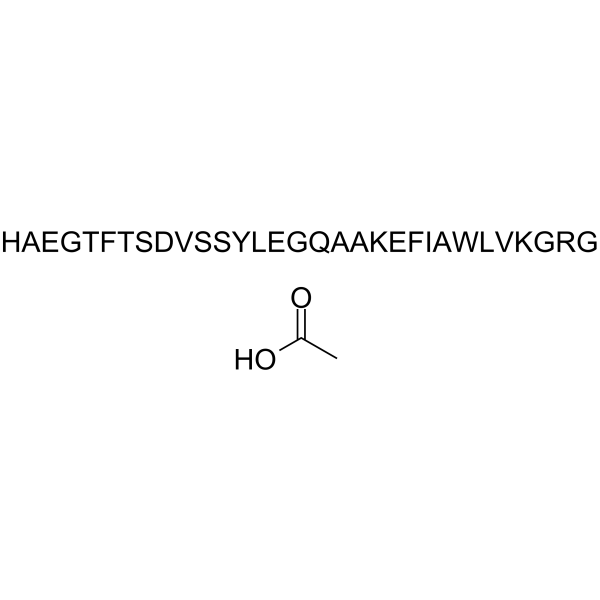
GLP-1(7-37) acetate
Based on 10 publication(s) in Google Scholar
GLP-1(7-37) acetate is an intestinal insulinotropic hormone that augments glucose induced insulin secretion.
For research use only. We do not sell to patients.
- Purity : 99.59%
- CAS No.: 1450806-98-0
- Formula: C151H228N40O47.xC2H4O2
- Molecular Weight:3355.67 (free base)
-
Storage:
Sealed storage, away from moisture and light.
Powder -80°C, 2 years , -20°C, 1 year* In solvent : -80°C, 6 months; -20°C, 1 month (sealed storage, away from moisture and light)

To place orders, for customer services and technical support, please contact: MedChemExpress USA
Tel: 609-228-6898 E-mail: [email protected] [email protected]


-
 Biological Activity
-
Chemical Information
-
Solvent & Solubility
- Protocols
- Purity & Documentation
- References
-
 Help & FAQs


-

HY-13443
Exendin-4GLP-1 Receptor Agonist -

HY-114118
SemaglutideGLP-1R Agonist -

HY-P0014
LiraglutideGLP-1R Agonist -
HY-P0264
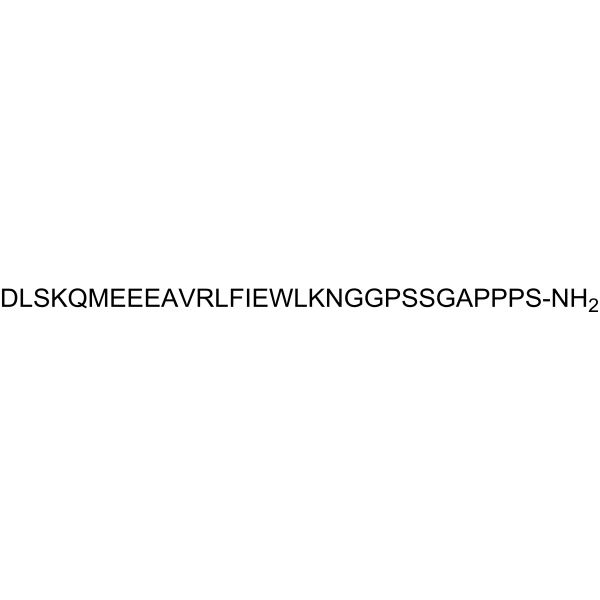
Exendin(9-39) amideGLP-1R Antagonist -
HY-P0276A
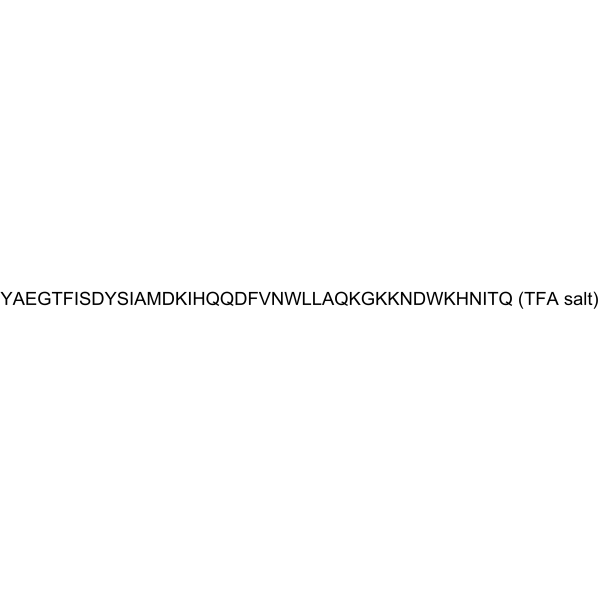
GIP, human TFAInsulin Secretion Stimulator -
HY-103546
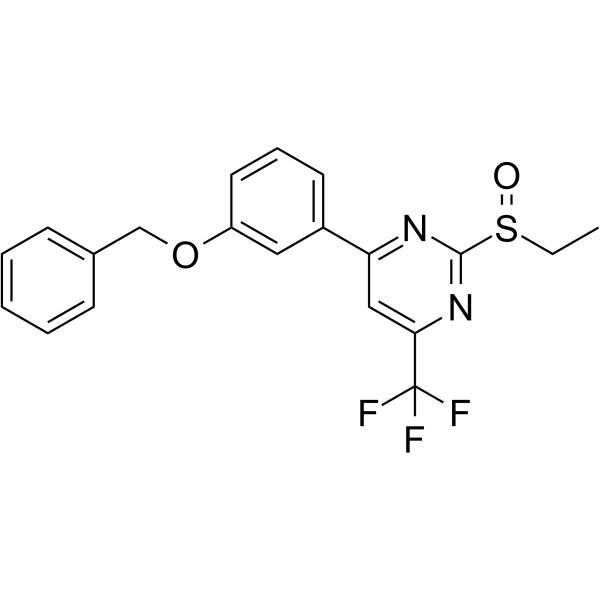
BETPGLP-1 Agonist -

HY-P0054A
GLP-1(7-36), amideGCGR Agonist -
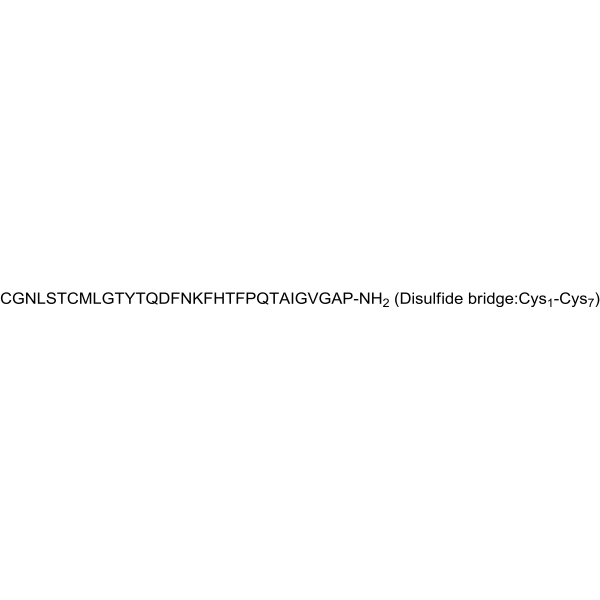
HY-P2273
Calcitonin (human)Hypocalcemic Hormone -
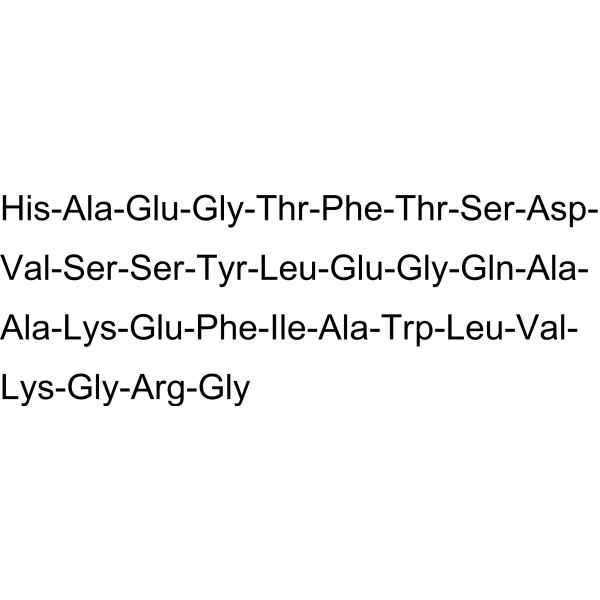
HY-P0055
GLP-1(7-37)Intestinal Insulinotropic Hormone -

HY-P1024
GLP-2(1-33)(human)GCGR Agonist -
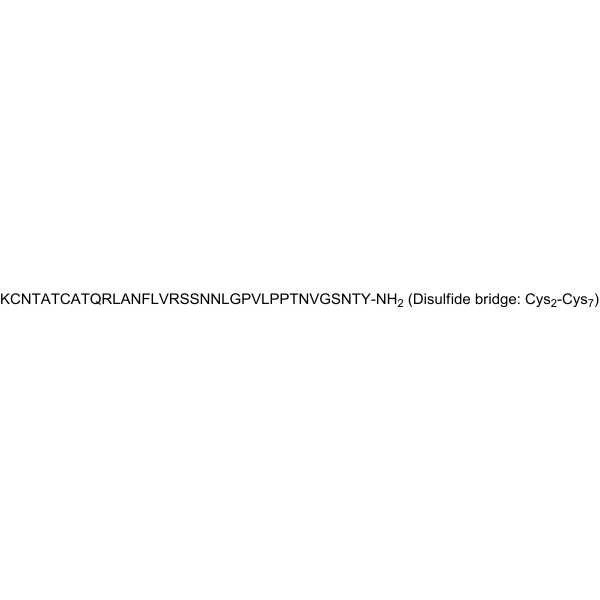
HY-P1464
Amylin, amide, ratAMY1/AMY3 Ligand -
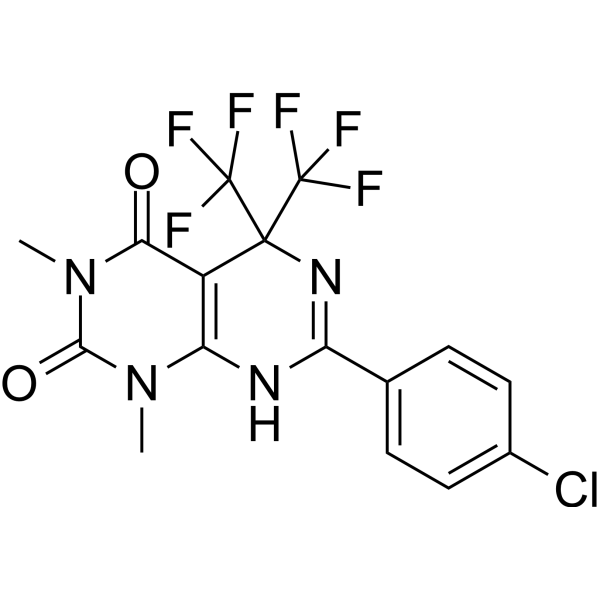
HY-101116
GLP-1R Antagonist 1GLP-1R Antagonist
Publications Citing Use of MedChemExpress (MCE) GLP-1(7-37) acetate
More- J Med Chem. 2026 Feb 26;69(4):4984-5001. [Abstract]
- ACS Med Chem Lett. 2026 May 4;17(5):963-972. [Abstract]
- Pharmaceutical Fronts. 2025; 07(02): e126-e136
- Patent. US12233112.
- Patent. US12233110.
- Patent. US12233111.
- Patent. US20230278991A1.
- Patent. US20230257369A1.
- Patent. US20200283424A1.
- Patent. US20200283424A1.
 Customer Validation & Images

-
Bio/Physico-chemical Assay


Biological Activity
Description
In Vivo
Infusion of GLP-1(7-37) (5 pmol/min/kg) from 1 hour through 7 hours produces a sustained increase in plasma insulin concentration relative to levels in rats infused with vehicle in rats with maintained glucose concentration at 11 mM[2].
MedChemExpress (MCE) has not independently confirmed the accuracy of these methods. They are for reference only.
-
Animal Model:Male Sprague-Dawley rats weighing 300 to 350 g with glucose IV at a variable rate for 7 hours to maintain plasma glucose concentration at 11 mM[2].
-
Dosage:5 pmol/min/kg.
-
Administration:IV from 1 hour through 7 hours[2].
-
Result:Produced a sustained increase in plasma insulin concentration relative to levels in rats infused with vehicle.
-
Animal Model:Male Sprague-Dawley rats weighing 300 to 350 g with maintained plasma glucose concentration at 11 mM[2].
-
Dosage:0.5, 5 or 50 pmol/min/kg.
-
Administration:IV during the second hour of a 2-hour 11-mmol/L hyperglycemic clamp.
-
Result:Produced a dose-related enhancement of the glucose-stimulated increase in plasma insulin concentration and an increased rate of glucose infusion.


Chemical Information
-
CAS No. 1450806-98-0
-
Appearance Solid
-
Molecular Weight 3355.67 (free base)
-
Formula C151H228N40O47.xC2H4O2
-
Color White to off-white
-
Sequence
His-Ala-Glu-Gly-Thr-Phe-Thr-Ser-Asp-Val-Ser-Ser-Tyr-Leu-Glu-Gly-Gln-Ala-Ala-Lys-Glu-Phe-Ile-Ala-Trp-Leu-Val-Lys-Gly-Arg-Gly
-
Sequence Shortening
HAEGTFTSDVSSYLEGQAAKEFIAWLVKGRG
-
Shipping
Room temperature in continental US; may vary elsewhere.
-
Storage
Sealed storage, away from moisture and light
Powder -80°C 2 years -20°C 1 year * In solvent : -80°C, 6 months; -20°C, 1 month (sealed storage, away from moisture and light)


Publications (10)
-
Journal Impact Factor
-
Most Recent
-
J Med Chem
Discovery and Preclinical Evaluation of TPM003: A Novel GLP-1/GIP/Glucagon Triple Hormone Receptor Agonist with Robust Efficacy in Obesity and NASH. [Abstract]2026 Feb 26;69(4):4984-5001. PMID: 41640214
GLP-1(7-37) acetate purchased from MedChemExpress. Usage Cited in: J Med Chem. 2026 Feb 26;69(4):4984-5001. [Abstract]
Concentration response curves of the hit peptides in receptor activation at human GLP-1R, compared with RETA. Human GLP-1(7–37), GIP, and glucagon were selected as positive controls toward their corresponding receptors and generally referred to as NL (native ligands) toward each receptor activation assay.
-
ACS Med Chem Lett
In Vitro Characterization of Agonist and Antagonist Peptide Binding Interaction Kinetics to GLP-1R in HEK293T Cells Using Surface Plasmon Resonance Microscopy. [Abstract]2026 May 4;17(5):963-972. PMID: 42157826 -
-
-
-
-
-
-
-


Solvent & Solubility
In Vitro:
H2O : 50 mg/mL (ultrasonic and adjust pH to 1 with HCl)
In Vivo:
For the following dissolution methods, please prepare the working solution directly:
It is recommended to prepare fresh solutions and use them promptly within a short period of time.
The percentages shown for the solvents indicate their volumetric ratio in the final prepared solution. If precipitation or phase separation occurs during preparation, heat and/or sonication can be used to aid dissolution.
Add each solvent one by one: PBS
Solubility: 2 mg/mL; Clear solution; Need ultrasonic

Protocols
-
Research Protocol for Endocrine Diseases
Endocrine diseases often arise from disrupted hormone production, hormone signaling, or target-tissue responsiveness; for diabetes-focused endocrine disease models, insulin signaling regulates glucose uptake, hepatic glucose output, lipid metabolism, and β-cell compensation. Type 2 diabetes develops through interacting defects in insulin resistance, β-cell dysfunction, adipose inflammation, hepatic glucose overproduction, altered incretin signaling, and ectopic lipid metabolism. A major unresolved question is whether endocrine dysfunction is driven primarily by target-tissue insulin resistance, intrinsic β-cell failure, immune/inflammatory stress, or combined multi-organ failure that differs by disease stage.
-
Human Islet Cell Culture
The method of preserving islets in vitro, with purified reduced immunogenicity. The steps are islet isolation, islet cell purification, in vitro determination of islet function and islet cell culture.


Purity & Documentation
-
Data Sheet (285 KB)
-
SDS (252 KB)
- English - EN (252 KB)
- Français - FR (252 KB)
- Deutsch - DE (252 KB)
- Norwegian - NO (252 KB)
- Español - ES (252 KB)
- Swedish - SV (252 KB)
- Italian - IT (252 KB)
- Korean - KR (252 KB)
- Portuguese - PT (252 KB)
-
Handling Instructions (2659 KB)
References
[1]. Sarrauste de Menthiere, C. et al. Structural requirements of the N-terminal region of GLP-1-[7-37]-NH2 for receptor interaction and cAMP production. European journal of medicinal chemistry 39, 473-480, doi:10.1016/j.ejmech.2004.02.002 (2004). [Content Brief]
[2]. Hargrove DM, et al. Glucose-dependent action of glucagon-like peptide-1 (7-37) in vivo during short- or long-term administration. Metabolism. 1995 Sep;44(9):1231-7. [Content Brief]

Calculators
Concentration (start) × Volume (start) = Concentration (final) × Volume (final)


GLP-1(7-37) acetate Related Classifications
HY-P0055A Related Classifications
 Powered by Bioz