



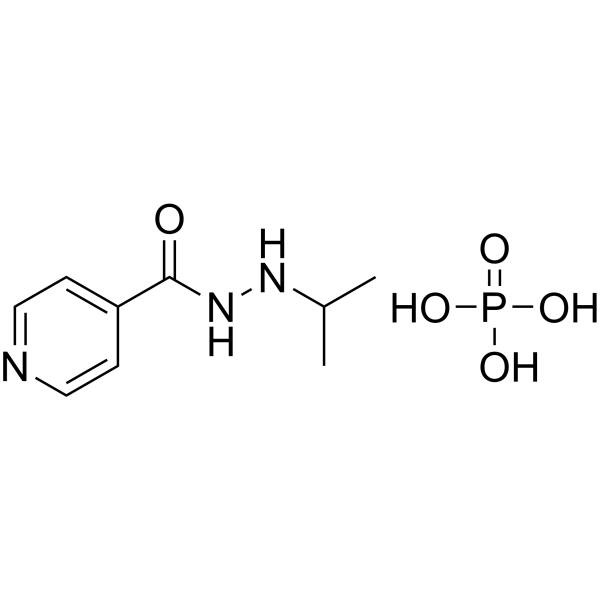
Iproniazid phosphate
Based on 2 publication(s) in Google Scholar
Iproniazid phosphate is an orally active, irreversible, non-selective monoamine oxidase (MAO) inhibitor. Iproniazid phosphate inhibits MAO activity and enhances Rotenone (HY-B1756)-induced Apoptosis. Iproniazid phosphate modulates neurotransmitter levels, affects neuronal function, induces hepatic necrosis, and interferes with the endocrine system. Iproniazid phosphate can be used in the research of depression, Parkinson's disease, and hepatotoxicity.
For research use only. We do not sell to patients.
- Purity : 99.92%
- CAS No.: 305-33-9
- Formula: C9H16N3O5P
- Molecular Weight:277.21
-
Storage:
4°C, sealed storage, away from moisture
* In solvent : -80°C, 6 months; -20°C, 1 month (sealed storage, away from moisture)

To place orders, for customer services and technical support, please contact: MedChemExpress USA
Tel: 609-228-6898 E-mail: [email protected] [email protected]


-
 Biological Activity
-
Chemical Information
-
Solvent & Solubility
- Protocols
- Purity & Documentation
- References
-
 Help & FAQs


-
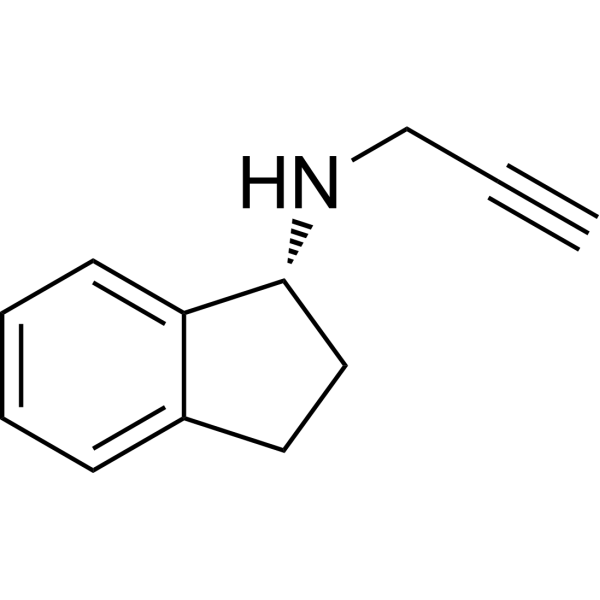
HY-14605A
RasagilineMAO Inhibitor -
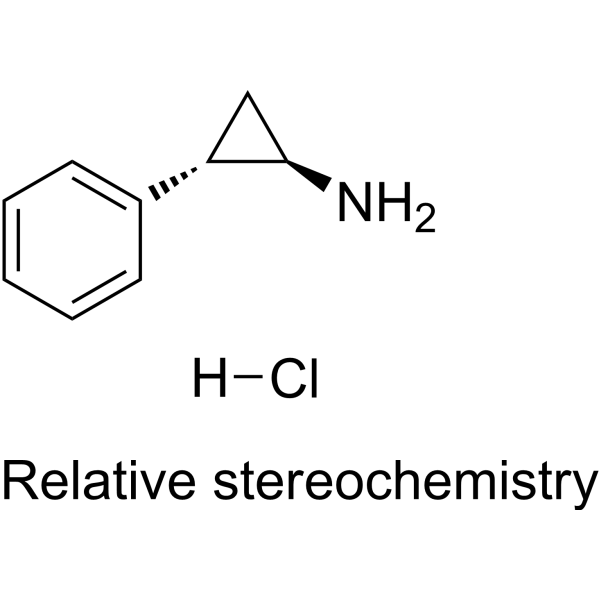
HY-17447A
Tranylcypromine hydrochlorideLSD1/MAO Inhibitor -
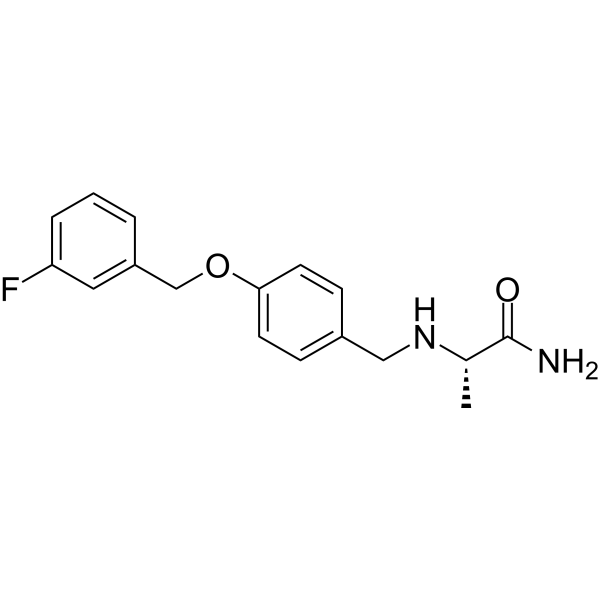
HY-70057
SafinamideMAO-B Inhibitor -
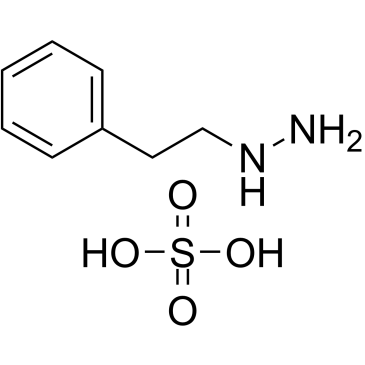
HY-B1018A
Phenelzine sulfateMAO Inhibitor -
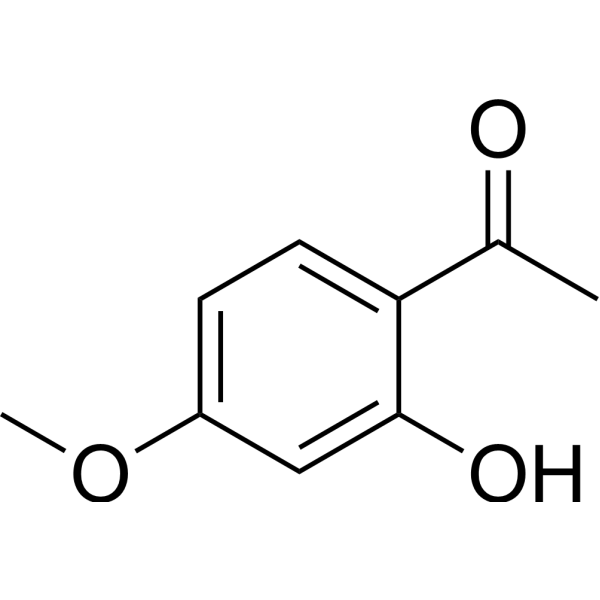
HY-N0159
PaeonolAutophagy Inducer -
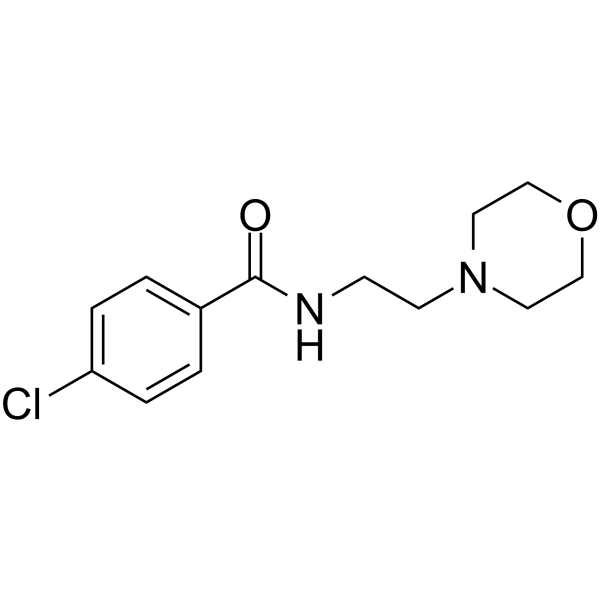
HY-B0534
MoclobemideMAOI Antidepressant -
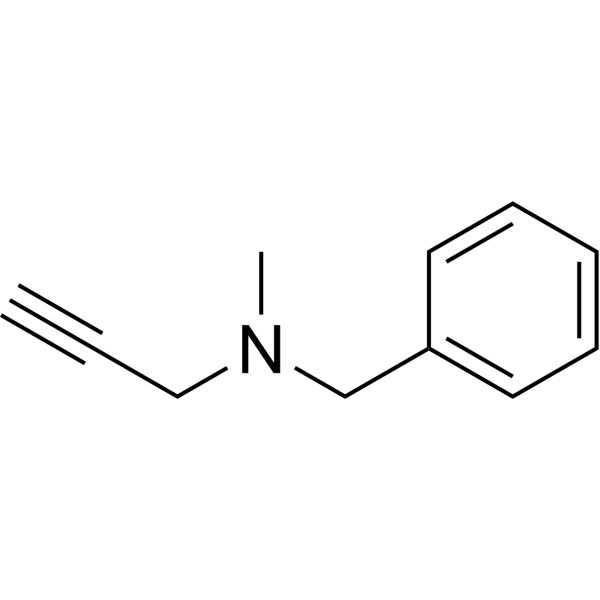
HY-A0091A
PargylineMonoamine Oxidase Inhibitor -
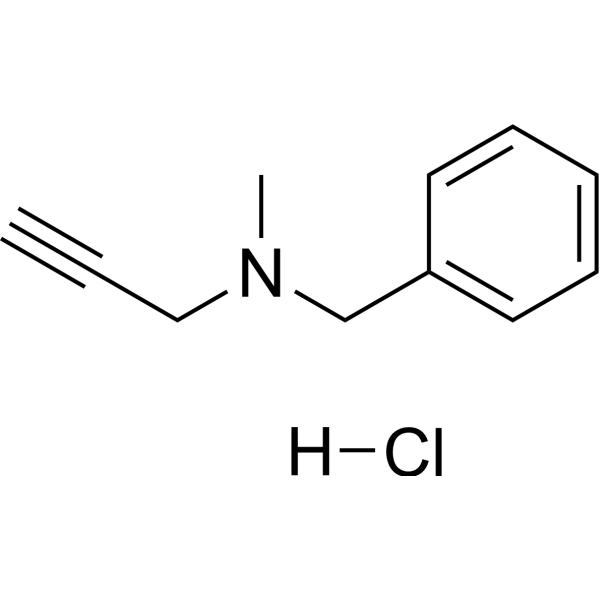
HY-A0091
Pargyline hydrochlorideMonoamine Oxidase Inhibitor -
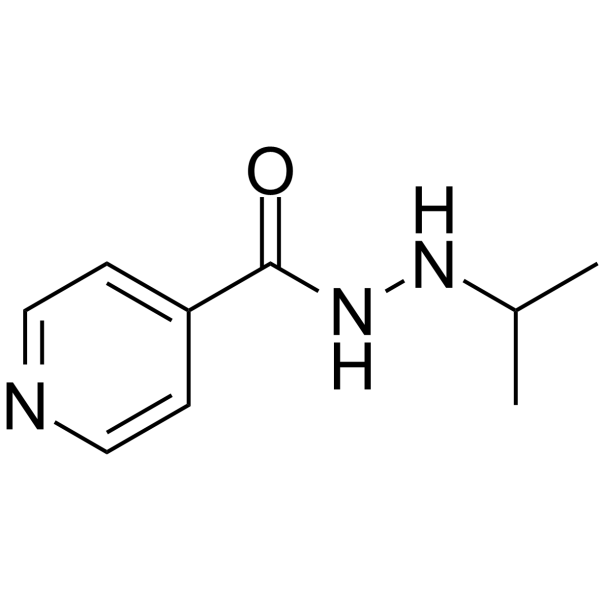
HY-B0886A
IproniazidMAO Inhibitor -
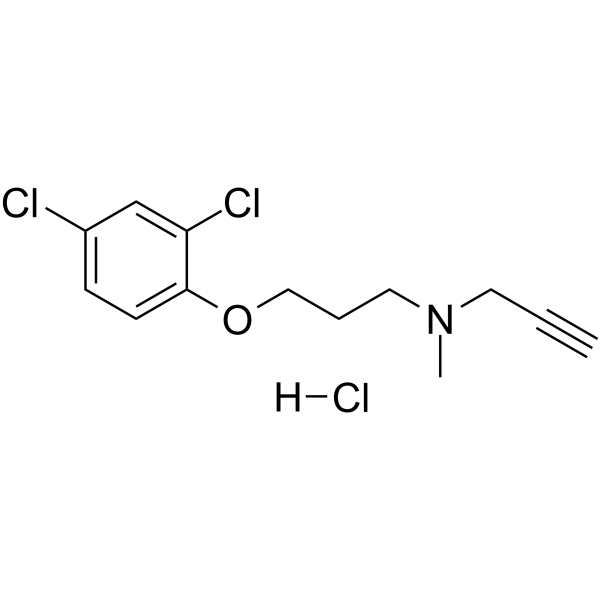
HY-14197A
Clorgyline hydrochlorideMAO-A Inhibitor -
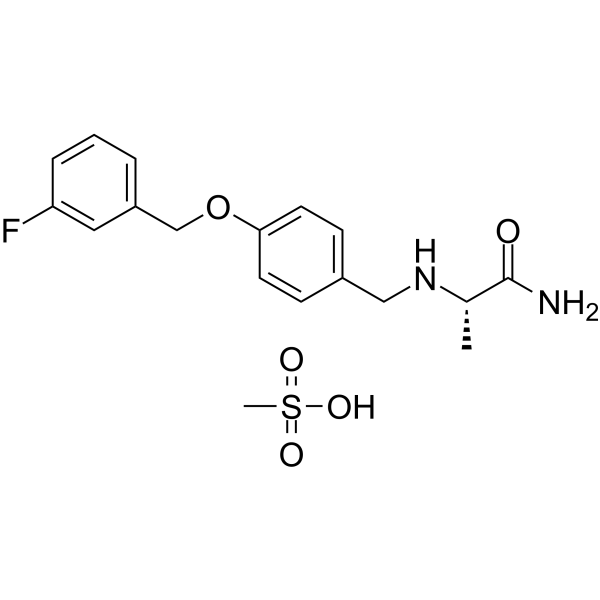
HY-70057A
Safinamide mesylateMAO-B Inhibitor -

HY-N0159R
Paeonol (Standard)Autophagy Inducer
Publications Citing Use of MedChemExpress (MCE) Iproniazid phosphate
More

Biological Activity
Description
Cellular Effect
|
Cell Line

|
Type | Value | Description | References |
|---|---|---|---|---|
| BTI-TN-5B1-4 | IC50 |
6.56 μM
Compound: I
|
Inhibition of human MAO-A expressed in baculovirus infected BTI-TN-5B1-4 cells using p-tyramine as substrate incubated for 15 mins prior to substrate addition measured for 15 mins by Amplex red assay
Inhibition of human MAO-A expressed in baculovirus infected BTI-TN-5B1-4 cells using p-tyramine as substrate incubated for 15 mins prior to substrate addition measured for 15 mins by Amplex red assay
|
[PMID: 23153812] |
| BTI-TN-5B1-4 | IC50 |
6.56 μM
Compound: I
|
Inhibition of human MAO-A expressed in baculovirus infected BTI-TN-5B1-4 insect cells using p-tyramine as substrate assessed as hydrogen peroxide production by fluorimetric method
Inhibition of human MAO-A expressed in baculovirus infected BTI-TN-5B1-4 insect cells using p-tyramine as substrate assessed as hydrogen peroxide production by fluorimetric method
|
10.1039/C0MD00014K |
| BTI-TN-5B1-4 | IC50 |
6.56 μM
Compound: Iproniazid
|
Inhibition of human recombinant MAOA expressed in BTI-TN-5B1-4 cells by para-tyramine oxidation assay
Inhibition of human recombinant MAOA expressed in BTI-TN-5B1-4 cells by para-tyramine oxidation assay
|
[PMID: 20045650] |
| BTI-TN-5B1-4 | IC50 |
6.56 μM
Compound: iproniazid
|
Inhibition of human recombinant MAOA expressed in baculovirus infected insect BTI-TN-5B1-4 cells assessed as production of hydrogen peroxide from p-tyramine by amplex red assay
Inhibition of human recombinant MAOA expressed in baculovirus infected insect BTI-TN-5B1-4 cells assessed as production of hydrogen peroxide from p-tyramine by amplex red assay
|
[PMID: 20715818] |
| BTI-TN-5B1-4 | IC50 |
6.56 μM
Compound: Iproniazid
|
Inhibition of human recombinant MAO-A expressed in baculovirus infected BTI-TN-5B1-4 insect sells assessed as hydrogen peroxide production by fluorimetric method
Inhibition of human recombinant MAO-A expressed in baculovirus infected BTI-TN-5B1-4 insect sells assessed as hydrogen peroxide production by fluorimetric method
|
[PMID: 21405131] |
| BTI-TN-5B1-4 | IC50 |
6.56 μM
Compound: Iproniazid
|
Inhibition of human recombinant MAO-A expressed in baculovirus infected BTI-TN-5B1-4 cells assessed as production of hydrogen peroxide from p-tyramine after 15 mins by microplate fluorescence assay
Inhibition of human recombinant MAO-A expressed in baculovirus infected BTI-TN-5B1-4 cells assessed as production of hydrogen peroxide from p-tyramine after 15 mins by microplate fluorescence assay
|
[PMID: 21872365] |
| BTI-TN-5B1-4 | IC50 |
6.56 μM
Compound: Iproniazid
|
Inhibition of human recombinant MAOA expressed in baculovirus infected BTI-TN-5B1-4 insect cells assessed as hydrogen peroxide production from p-tyramine after 15 mins by amplex red assay
Inhibition of human recombinant MAOA expressed in baculovirus infected BTI-TN-5B1-4 insect cells assessed as hydrogen peroxide production from p-tyramine after 15 mins by amplex red assay
|
[PMID: 22005185] |
| BTI-TN-5B1-4 | IC50 |
6.56 μM
Compound: Iproniazid
|
Inhibition of human recombinant MAO-A expressed in baculovirus infected BTI-TN-5B1-4 insect cells assessed as inhibition of hydrogen peroxide production from p-tryptamine after 15 mins by fluorimetric method
Inhibition of human recombinant MAO-A expressed in baculovirus infected BTI-TN-5B1-4 insect cells assessed as inhibition of hydrogen peroxide production from p-tryptamine after 15 mins by fluorimetric method
|
[PMID: 22222137] |
| BTI-TN-5B1-4 | IC50 |
6.56 μM
Compound: Iproniazid
|
Inhibition of human recombinant microsomal MAO-A expressed in baculovirus infected BTI-TN-5B1-4 cells using p-tyramine as substrate assessed as production of H2O2 incubated for 15 mins followed by substrate addition measured over 15 mins by fluorimetric a
Inhibition of human recombinant microsomal MAO-A expressed in baculovirus infected BTI-TN-5B1-4 cells using p-tyramine as substrate assessed as production of H2O2 incubated for 15 mins followed by substrate addition measured over 15 mins by fluorimetric a
|
[PMID: 23474901] |
| BTI-TN-5B1-4 | IC50 |
6.56 μM
Compound: Iproniazid
|
Inhibition of human recombinant microsomal MAO-A expressed in baculovirus-infected insect BTI-TN-5B1-4 cells assessed as p-tyramine conversion to H2O2 by fluorescence assay
Inhibition of human recombinant microsomal MAO-A expressed in baculovirus-infected insect BTI-TN-5B1-4 cells assessed as p-tyramine conversion to H2O2 by fluorescence assay
|
[PMID: 23927971] |
| BTI-TN-5B1-4 | IC50 |
6.56 μM
Compound: Iproniazid
|
Inhibition of human recombinant MAO-A expressed in baculovirus-infected BTI-TN-5B1-4 cell microsomes assessed as decrease in H2O2 production using p-tyramine as substrate preincubated for 15 mins by Amplex Red reagent based fluorimetric method
Inhibition of human recombinant MAO-A expressed in baculovirus-infected BTI-TN-5B1-4 cell microsomes assessed as decrease in H2O2 production using p-tyramine as substrate preincubated for 15 mins by Amplex Red reagent based fluorimetric method
|
[PMID: 24746464] |
| BTI-TN-5B1-4 | IC50 |
6.56 μM
Compound: Iproniazid
|
Inhibition of human recombinant microsomal MAO-A expressed in baculovirus infected BTI-TN-5B1-4 cells using p-tyramine as substrate assessed as reduction in H2O2 production preincubated for 15 mins followed by substrate addition measured for 15 mins Ample
Inhibition of human recombinant microsomal MAO-A expressed in baculovirus infected BTI-TN-5B1-4 cells using p-tyramine as substrate assessed as reduction in H2O2 production preincubated for 15 mins followed by substrate addition measured for 15 mins Ample
|
[PMID: 27135371] |
| BTI-TN-5B1-4 | IC50 |
6.56 μM
Compound: iproniazide
|
Inhibition of human recombinant MAOA expressed in BTI-TN-5B1-4 cells assessed as effect on H2O2 production from para-tyramine by fluorimetric method
Inhibition of human recombinant MAOA expressed in BTI-TN-5B1-4 cells assessed as effect on H2O2 production from para-tyramine by fluorimetric method
|
[PMID: 19267475] |
| BTI-TN-5B1-4 | IC50 |
6.56 μM
Compound: Iproniazide
|
Inhibition of human recombinant MAO-A expressed in BTI-TN-5B1-4 cells assessed as H2O2 production using para-tyramine substrate by fluorimetric method
Inhibition of human recombinant MAO-A expressed in BTI-TN-5B1-4 cells assessed as H2O2 production using para-tyramine substrate by fluorimetric method
|
[PMID: 21316817] |
| BTI-TN-5B1-4 | IC50 |
6566 nM
Compound: iproniazid
|
Inhibition of human recombinant MAOA expressed in baculovirus infected BTI-TN-5B1-4 insect cells assessed as hydrogen peroxide production from p-tyramine by amplex red assay
Inhibition of human recombinant MAOA expressed in baculovirus infected BTI-TN-5B1-4 insect cells assessed as hydrogen peroxide production from p-tyramine by amplex red assay
|
[PMID: 20579890] |
| BTI-TN-5B1-4 | IC50 |
7.54 μM
Compound: I
|
Inhibition of human MAO-B expressed in baculovirus infected BTI-TN-5B1-4 cells using p-tyramine as substrate incubated for 15 mins prior to substrate addition measured for 15 mins by Amplex red assay
Inhibition of human MAO-B expressed in baculovirus infected BTI-TN-5B1-4 cells using p-tyramine as substrate incubated for 15 mins prior to substrate addition measured for 15 mins by Amplex red assay
|
[PMID: 23153812] |
| BTI-TN-5B1-4 | IC50 |
7.54 μM
Compound: I
|
Inhibition of human MAO-B expressed in baculovirus infected BTI-TN-5B1-4 insect cells using p-tyramine as substrate assessed as hydrogen peroxide production by fluorimetric method
Inhibition of human MAO-B expressed in baculovirus infected BTI-TN-5B1-4 insect cells using p-tyramine as substrate assessed as hydrogen peroxide production by fluorimetric method
|
10.1039/C0MD00014K |
| BTI-TN-5B1-4 | IC50 |
7.54 μM
Compound: Iproniazid
|
Inhibition of human recombinant MAOB expressed in BTI-TN-5B1-4 cells by para-tyramine oxidation assay
Inhibition of human recombinant MAOB expressed in BTI-TN-5B1-4 cells by para-tyramine oxidation assay
|
[PMID: 20045650] |
| BTI-TN-5B1-4 | IC50 |
7.54 μM
Compound: iproniazid
|
Inhibition of human recombinant MAOB expressed in baculovirus infected insect BTI-TN-5B1-4 cells assessed as production of hydrogen peroxide from p-tyramine by amplex red assay
Inhibition of human recombinant MAOB expressed in baculovirus infected insect BTI-TN-5B1-4 cells assessed as production of hydrogen peroxide from p-tyramine by amplex red assay
|
[PMID: 20715818] |
| BTI-TN-5B1-4 | IC50 |
7.54 μM
Compound: Iproniazid
|
Inhibition of human recombinant MAO-B expressed in baculovirus infected BTI-TN-5B1-4 insect sells assessed as hydrogen peroxide production by fluorimetric method
Inhibition of human recombinant MAO-B expressed in baculovirus infected BTI-TN-5B1-4 insect sells assessed as hydrogen peroxide production by fluorimetric method
|
[PMID: 21405131] |
| BTI-TN-5B1-4 | IC50 |
7.54 μM
Compound: Iproniazid
|
Inhibition of human recombinant MAO-B expressed in baculovirus infected BTI-TN-5B1-4 cells assessed as production of hydrogen peroxide from p-tyramine after 15 mins by microplate fluorescence assay
Inhibition of human recombinant MAO-B expressed in baculovirus infected BTI-TN-5B1-4 cells assessed as production of hydrogen peroxide from p-tyramine after 15 mins by microplate fluorescence assay
|
[PMID: 21872365] |
| BTI-TN-5B1-4 | IC50 |
7.54 μM
Compound: Iproniazid
|
Inhibition of human recombinant MAOB expressed in baculovirus infected BTI-TN-5B1-4 insect cells assessed as hydrogen peroxide production from p-tyramine after 15 mins by amplex red assay
Inhibition of human recombinant MAOB expressed in baculovirus infected BTI-TN-5B1-4 insect cells assessed as hydrogen peroxide production from p-tyramine after 15 mins by amplex red assay
|
[PMID: 22005185] |
| BTI-TN-5B1-4 | IC50 |
7.54 μM
Compound: Iproniazid
|
Inhibition of human recombinant MAO-B expressed in baculovirus infected BTI-TN-5B1-4 insect cells assessed as inhibition of hydrogen peroxide production from p-tryptamine after 15 mins by fluorimetric method
Inhibition of human recombinant MAO-B expressed in baculovirus infected BTI-TN-5B1-4 insect cells assessed as inhibition of hydrogen peroxide production from p-tryptamine after 15 mins by fluorimetric method
|
[PMID: 22222137] |
| BTI-TN-5B1-4 | IC50 |
7.54 μM
Compound: Iproniazid
|
Inhibition of human recombinant microsomal MAO-B expressed in baculovirus infected BTI-TN-5B1-4 cells using p-tyramine as substrate assessed as production of H2O2 incubated for 15 mins followed by substrate addition measured over 15 mins by fluorimetric a
Inhibition of human recombinant microsomal MAO-B expressed in baculovirus infected BTI-TN-5B1-4 cells using p-tyramine as substrate assessed as production of H2O2 incubated for 15 mins followed by substrate addition measured over 15 mins by fluorimetric a
|
[PMID: 23474901] |
| BTI-TN-5B1-4 | IC50 |
7.54 μM
Compound: Iproniazid
|
Inhibition of human recombinant microsomal MAO-B expressed in baculovirus-infected insect BTI-TN-5B1-4 cells assessed as p-tyramine conversion to H2O2 by fluorescence assay
Inhibition of human recombinant microsomal MAO-B expressed in baculovirus-infected insect BTI-TN-5B1-4 cells assessed as p-tyramine conversion to H2O2 by fluorescence assay
|
[PMID: 23927971] |
| BTI-TN-5B1-4 | IC50 |
7.54 μM
Compound: Iproniazid
|
Inhibition of human recombinant MAO-B expressed in baculovirus-infected BTI-TN-5B1-4 cell microsomes assessed as decrease in H2O2 production using p-tyramine as substrate preincubated for 15 mins by Amplex Red reagent based fluorimetric method
Inhibition of human recombinant MAO-B expressed in baculovirus-infected BTI-TN-5B1-4 cell microsomes assessed as decrease in H2O2 production using p-tyramine as substrate preincubated for 15 mins by Amplex Red reagent based fluorimetric method
|
[PMID: 24746464] |
| BTI-TN-5B1-4 | IC50 |
7.54 μM
Compound: Iproniazid
|
Inhibition of human recombinant microsomal MAO-B expressed in baculovirus infected BTI-TN-5B1-4 cells using p-tyramine as substrate assessed as reduction in H2O2 production preincubated for 15 mins followed by substrate addition measured for 15 mins Ample
Inhibition of human recombinant microsomal MAO-B expressed in baculovirus infected BTI-TN-5B1-4 cells using p-tyramine as substrate assessed as reduction in H2O2 production preincubated for 15 mins followed by substrate addition measured for 15 mins Ample
|
[PMID: 27135371] |
| BTI-TN-5B1-4 | IC50 |
7.54 μM
Compound: iproniazide
|
Inhibition of human recombinant MAOB expressed in BTI-TN-5B1-4 cells assessed as effect on H2O2 production from para-tyramine by fluorimetric method
Inhibition of human recombinant MAOB expressed in BTI-TN-5B1-4 cells assessed as effect on H2O2 production from para-tyramine by fluorimetric method
|
[PMID: 19267475] |
| BTI-TN-5B1-4 | IC50 |
7.54 μM
Compound: Iproniazide
|
Inhibition of human recombinant MAO-B expressed in BTI-TN-5B1-4 cells assessed as H2O2 production using para-tyramine substrate by fluorimetric method
Inhibition of human recombinant MAO-B expressed in BTI-TN-5B1-4 cells assessed as H2O2 production using para-tyramine substrate by fluorimetric method
|
[PMID: 21316817] |
| BTI-TN-5B1-4 | IC50 |
7547 nM
Compound: iproniazid
|
Inhibition of human recombinant MAOB expressed in baculovirus infected BTI-TN-5B1-4 insect cells assessed as hydrogen peroxide production from p-tyramine by amplex red assay
Inhibition of human recombinant MAOB expressed in baculovirus infected BTI-TN-5B1-4 insect cells assessed as hydrogen peroxide production from p-tyramine by amplex red assay
|
[PMID: 20579890] |
In Vitro
Iproniazid (10 mM; 24 h) phosphate increases intracellular dopamine content and accelerates DNA fragmentation induced by 0.1 μM Rotenone (HY-B1756) in SH-SY5Y cells[2].
Iproniazid (100 μM; 10 min) phosphate inhibits serotonin metabolism by monoamine oxidase in cultured guinea pig tracheal smooth muscle cells[3].
MedChemExpress (MCE) has not independently confirmed the accuracy of these methods. They are for reference only. Further protocols information, click here.
-
Cell Line:human dopaminergic SH-SY5Y cells
-
Concentration:10 mM
-
Incubation Time:24 h
-
Result:Increased intracellular dopamine content and accelerated DNA fragmentation induced by 0.1 μM Rotenone, enhancing Rotenone-induced apoptosis.
In Vivo
Iproniazid (i.p.) phosphate causes hepatic necrosis in Sprague-Dawley and Fischer rats[5].
Iproniazid dihydrochloride (53-224 mg/kg; p.o.; daily) phosphate retards sexual maturation, lengthens the estrous cycle, and inhibits corpus luteum formation in female rats[6].
MedChemExpress (MCE) has not independently confirmed the accuracy of these methods. They are for reference only.
-
Animal Model:female rats (e.g., initial weight 106-130 g, age 35-45 days) [6]
-
Dosage:53, 200, 205, 224 mg/kg
-
Administration:oral, daily, 30, 40, 61, 67 days
-
Result:Retarded sexual maturation (delayed vagina patency), lengthened estrous cycle.
Inhibited corpus luteum formation, caused hypotrophy of ovarian interstitial tissue and retarded uterine development.


Chemical Information
-
CAS No. 305-33-9
-
Appearance Solid
-
Molecular Weight 277.21
-
Formula C9H16N3O5P
-
Color White to off-white
-
SMILES
O=C(C1=CC=NC=C1)NNC(C)C.O=P(O)(O)O
-
Shipping
Room temperature in continental US; may vary elsewhere.
-
Storage
4°C, sealed storage, away from moisture
* In solvent : -80°C, 6 months; -20°C, 1 month (sealed storage, away from moisture)


Publications (2)
-
Journal Impact Factor
-
Most Recent
-
Nat Commun
Palmitoyltransferase DHHC9 and acyl protein thioesterase APT1 modulate renal fibrosis through regulating β-catenin palmitoylation. [Abstract]2023 Oct 21;14(1):6682. PMID: 37865665 -
Biotechnol Bioeng
An integrated biomimetic array chip for establishment of collagen-based 3D primary human hepatocyte model for prediction of clinical drug-induced liver injury. [Abstract]2021 Dec;118(12):4687-4698. PMID: 34478150


Solvent & Solubility
In Vitro:
DMSO : 100 mg/mL (360.74 mM; Need ultrasonic; Hygroscopic DMSO has a significant impact on the solubility of product, please use newly opened DMSO)
H2O : ≥ 50 mg/mL (180.37 mM)
* "≥" means soluble, but saturation unknown.
Please refer to the solubility information to select the appropriate solvent. Once prepared, please aliquot and store the solution to prevent product inactivation from repeated freeze-thaw cycles.
Storage method and period of stock solution: -80°C, 6 months; -20°C, 1 month (sealed storage, away from moisture). When stored at -80°C, please use it within 6 months. When stored at -20°C, please use it within 1 month.
* Note: If you choose water as the stock solution, please dilute it to the working solution, then filter and sterilize it with a 0.22 μm filter before use.
Please refer to the solubility information to select the appropriate solvent. Once prepared, please aliquot and store the solution to prevent product inactivation from repeated freeze-thaw cycles.
Storage method and period of stock solution: -80°C, 6 months; -20°C, 1 month (sealed storage, away from moisture). When stored at -80°C, please use it within 6 months. When stored at -20°C, please use it within 1 month.
* Note: If you choose water as the stock solution, please dilute it to the working solution, then filter and sterilize it with a 0.22 μm filter before use.
Concentration (start) × Volume (start) = Concentration (final) × Volume (final)

Protocols
-
Apoptosis
Apoptosis, also called programmed cell death, is generally characterized by distinct morphological characteristics.
-
TUNEL staining for apoptotic DNA fragmentation
TUNEL staining detects DNA strand breaks by using terminal deoxynucleotidyl transferase to add labeled nucleotides to exposed 3′-OH DNA termini, generating either microscopic staining in fixed cells or tissue sections, or fluorescence/cytometric signal in cell suspensions. TUNEL positivity reflects DNA fragmentation but should not be interpreted alone as definitive apoptosis, because TUNEL can also label necrotic, autolytic, mechanically damaged, or DNA-repair-associated DNA breaks.
-
Annexin V plus membrane-impermeant dye apoptosis staining
Annexin V-based apoptosis assays rely on the detection of phosphatidylserine (PS) externalization from the inner leaflet of the plasma membrane to the outer leaflet, an early biochemical hallmark of apoptosis. Fluorescently labeled Annexin V binds PS in a calcium-dependent manner, enabling identification of early apoptotic cells by flow cytometry or fluorescence microscopy. When combined with a membrane-impermeant DNA-binding dye (e. g. , propidium iodide), this approach allows discrimination between viable (Annexin V−/dye−), early apoptotic (Annexin V+/dye−), and late apoptotic or necrotic (Annexin V+/dye+) cell populations by assessing membrane integrity and PS exposure.
-
Human pluripotent stem cell midbrain dopaminergic neuron differentiation
Human pluripotent stem cells are directed toward midbrain dopaminergic neurons by first inducing a neural floor-plate-like progenitor state, then patterning cells with ventralizing SHH signaling and midbrain/WNT-FGF cues, and finally maturing progenitors into neurons expressing dopaminergic markers such as TH, NURR1/NR4A2, PITX3, DAT/SLC6A3, VMAT2/SLC18A2, GIRK2/KCNJ6, FOXA2, LMX1A, and EN1. The main readouts are loss of pluripotency, acquisition of FOXA2+/LMX1A+ midbrain floor-plate progenitors, emergence of βIII-tubulin+/MAP2+ neurons, and production of TH+ dopaminergic neurons with molecular, dopamine-release, and electrophysiological features of midbrain dopaminergic identity.
-
Apoptosis Solutions
Apoptosis is a regulated, generally non-lytic cell-death pathway that removes unwanted, damaged, infected, or abnormal cells through coordinated morphological changes, caspase activation, DNA fragmentation, and membrane remodeling. The intrinsic apoptosis pathway is controlled mainly by mitochondrial outer membrane permeabilization, BCL-2 family proteins, cytochrome c release, apoptosome formation, caspase-9 activation, and downstream executioner caspase-3/7 activation. The extrinsic apoptosis pathway is initiated by death receptors such as Fas, TNFR, and TRAIL receptors, which recruit adaptor proteins and activate caspase-8 before engaging executioner caspases or mitochondrial amplification through BID cleavage. Apoptosis is linked to many phenotypes, including cancer cell killing, tissue homeostasis, immune regulation, neurodegeneration, infection response, and treatment-induced cytotoxicity; unresolved questions include how apoptosis interacts with necroptosis, pyroptosis, ferroptos
-
Hepatotoxicity Study
This protocol evaluates hepatotoxicity using complementary in vivo mouse APAP acute liver injury and in vitro hepatocyte-based cytotoxicity readouts. In vivo APAP injury is assessed by serum ALT/AST, liver histology, hepatic glutathione, protein adducts, necrosis, inflammation, and regeneration-related endpoints. In vitro hepatotoxicity is assessed by loss of viability, leakage of ALT/AST/LDH, oxidative-stress markers, mitochondrial function, nuclear morphology, intracellular calcium, and high-content imaging endpoints.


Purity & Documentation
-
Data Sheet (276 KB)
-
SDS (481 KB)
- English - EN (481 KB)
- Français - FR (481 KB)
- Deutsch - DE (481 KB)
- Norwegian - NO (481 KB)
- Español - ES (481 KB)
- Swedish - SV (481 KB)
- Italian - IT (481 KB)
- Korean - KR (481 KB)
- Portuguese - PT (481 KB)
-
Handling Instructions (2659 KB)
References
[2]. Watabe M, et al. Mitochondrial complex I inhibitor rotenone-elicited dopamine redistribution from vesicles to cytosol in human dopaminergic SH-SY5Y cells. J Pharmacol Exp Ther. 2007 Nov;323(2):499-507. [Content Brief]
[3]. Dodson AM, et al. Serotonin uptake and metabolism by cultured guinea pig airway smooth muscle cells. Pulm Pharmacol Ther. 2004;17(1):19-25. [Content Brief]
[4]. De Oliveira LF, et al. Effects of 5-hydroxytryptophan, iproniazid and p-chlorophenylalanine on lidocaine seizure threshold of mice. Eur J Pharmacol. 1974 Nov;29(1):5-9. [Content Brief]
[5]. Nelson SD, et al. Hepatotoxicity and metabolism of iproniazid and isopropylhydrazine. J Pharmacol Exp Ther. 1978 Sep;206(3):574-85. [Content Brief]


Complete Stock Solution Preparation Table
Please refer to the solubility information to select the appropriate solvent. Once prepared, please aliquot and store the solution to prevent product inactivation from repeated freeze-thaw cycles.
Storage method and period of stock solution: -80°C, 6 months; -20°C, 1 month (sealed storage, away from moisture). When stored at -80°C, please use it within 6 months. When stored at -20°C, please use it within 1 month.
| Optional Solvent | Concentration Solvent Mass | 1 mg | 5 mg | 10 mg | 25 mg |
|---|---|---|---|---|---|
| H2O / DMSO | 1 mM | 3.6074 mL | 18.0369 mL | 36.0737 mL | 90.1843 mL |
| 5 mM | 0.7215 mL | 3.6074 mL | 7.2147 mL | 18.0369 mL | |
| 10 mM | 0.3607 mL | 1.8037 mL | 3.6074 mL | 9.0184 mL | |
| 15 mM | 0.2405 mL | 1.2025 mL | 2.4049 mL | 6.0123 mL | |
| 20 mM | 0.1804 mL | 0.9018 mL | 1.8037 mL | 4.5092 mL | |
| 25 mM | 0.1443 mL | 0.7215 mL | 1.4429 mL | 3.6074 mL | |
| 30 mM | 0.1202 mL | 0.6012 mL | 1.2025 mL | 3.0061 mL | |
| 40 mM | 0.0902 mL | 0.4509 mL | 0.9018 mL | 2.2546 mL | |
| 50 mM | 0.0721 mL | 0.3607 mL | 0.7215 mL | 1.8037 mL | |
| 60 mM | 0.0601 mL | 0.3006 mL | 0.6012 mL | 1.5031 mL | |
| 80 mM | 0.0451 mL | 0.2255 mL | 0.4509 mL | 1.1273 mL | |
| 100 mM | 0.0361 mL | 0.1804 mL | 0.3607 mL | 0.9018 mL |
* Note: If you choose water as the stock solution, please dilute it to the working solution, then filter and sterilize it with a 0.22 μm filter before use.


Iproniazid phosphate Related Classifications
HY-B0886 Related Classifications
 Powered by Bioz