



Cancer Immunotherapy
Cancer immunotherapy (CIT) is a type of biological therapy, aiming to improve anti-tumor immune responses with fewer off-target effects than chemotherapy. Several types of immunotherapy include: oncolytic virus therapies, cancer vaccines, cytokine therapies, adoptive cell transfer (ACT), and immune checkpoint inhibitors (ICIs). In particular, ICIs and ACT have obtained immense clinical response, but their efficacy varies from person to person. Immune cells can be harnessed to eliminate tumor cells, such as T cells, B cells, NK cells, and myeloid cells. T cells have potent tumor-killing capability, therefore, a plethora of cancer immunotherapy research have focused on inducing T-cell-mediated anti-tumor responses. CTLA-4 and PD-1 are found on the cell surface of T cells as co-inhibitory receptors. The breakthrough in cancer immunotherapy results from the identification and subsequent targeting of checkpoint mechanisms in T cells with monoclonal antibodies against CTLA-4 and programmed death-ligand 1/programmed death-1 (PD-L1/PD-1).
Several types of cancers (e.g., melanoma, mismatch repair-deficient cancers, bladder cancer, and non-small cell lung cancer) have achieved significant clinical responses in T-cell checkpoint blockade therapies. However, single-mode immunotherapy faces challenges such as low immune response, low tumor infiltration, and complex immunosuppressive tumor microenvironment. Recently, combined therapies based on tumor immunity have received extensive attention in the research of enhancing tumor cells immunogenicity and inhibiting their growth. For example, anti CTLA-4 and PD-1, immune checkpoint blockade (ICB) combined with chemotherapy, anti-angiogenic drugs and kinase inhibitors.
-
YSY01A
 0 ImagesCat. No.: HY-162885CAS No.: 1194235-46-5
YSY01A is a proteasome inhibitor that can suppress cancer cell survival by inducing apoptosis (Apoptosis). Its IC50 values are 51.0 nM for HEK293T, 9.2 nM for A549, 5.2 nM for MCF-7, 8.9 nM for MGC-803, and 35.4 nM for PC-3M cells. Additionally, YSY01A eliminates constitutive STAT3 signaling by downregulating gp130 and JAK2 in human A549 lung cancer cells. YSY01A holds promise for research in the field of cancer therapy.
-
CD28-IN-2
 0 ImagesCat. No.: HY-179648CAS No.: 1240857-57-1
CD28-IN-2 is a selective CD28-B7 interaction (IC50: 22.4 μM) inhibitor that binds directly to CD28, with a Kd value of 24.1 μM. CD28-IN-2 inhibits CD28-driven immune activation and blocks T cell costimulation. CD28-IN-2 can be used for the study of antitumor immunity and immune-related disorders.
-
2,4-Dinitrobenzenesulfonic acid
 0 ImagesCat. No.: HY-W095633CAS No.: 89-02-1
2,4-Dinitrobenzenesulfonic acid (Compound 3) is a ecto-5'-Nucleotidase (CD73) inhibitor with a Ki value of 63 μM for human and 144 μM for rat. 2,4-Dinitrobenzenesulfonic acid can inhibit the hydrolysis of adenosine monophosphate (AMP) to generate adenosine. 2,4-Dinitrobenzenesulfonic acid can be used for the research of cancer.
-
HPK1-IN-39
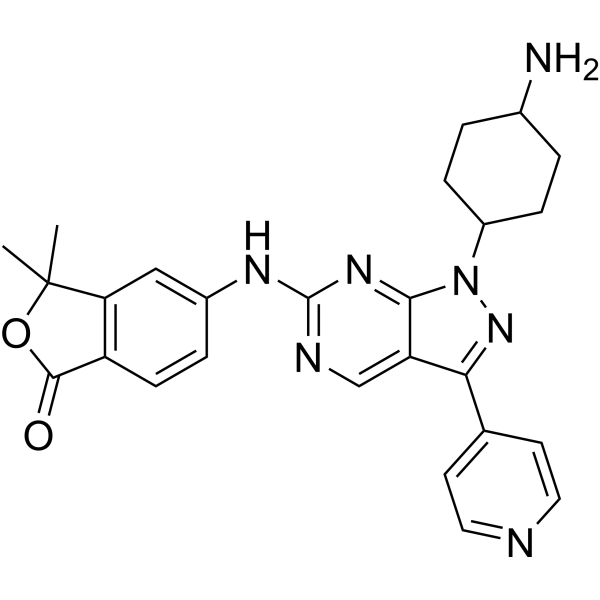 0 ImagesCat. No.: HY-149520
HPK1-IN-39 (Compound 10n) is a selective HPK1 Inhibitor (IC50: 29 nM). HPK1-IN-39 inhibits the phosphorylation of SLP76. HPK1-IN-39 can be used for research of cancer immunotherapy.
-
HK-2-IN-2
 0 ImagesCat. No.: HY-168717CAS No.: 3056278-80-6
HK2-IN-2 (Compound 26) is a Hexokinase 2 inhibitor that demonstrates significant anti-tumor activity by targeting microtubules and Hexokinase 2, with an IC50 value of 0.764 μM against MD-MBA-231 cells. HK2-IN-2 effectively inhibits the activity of Hexokinase 2, leading to the accumulation of Reactive Oxygen Species and dysfunction of the mitochondrial membrane potential (MMP), thereby promoting apoptosis and blocking the cell cycle.

-
HBT-CUR
 0 ImagesCat. No.: HY-189294CAS No.: 2894038-40-3
HBT-CUR is a lysosome-targeted and polarity-responsive tumor photosensitizer. HBT-CUR generates singlet oxygen under light irradiation. HBT-CUR induces photodynamic apoptosis through oxidative stress. As a polarity-sensitive NIR fluorescent probe, HBT-CUR distinguishes tumor cells and tissues from normal ones. HBT-CUR enables tumor-specific in vivo fluorescence imaging with rapid response and long-lasting duration. HBT-CUR is used for breast cancer research.
-
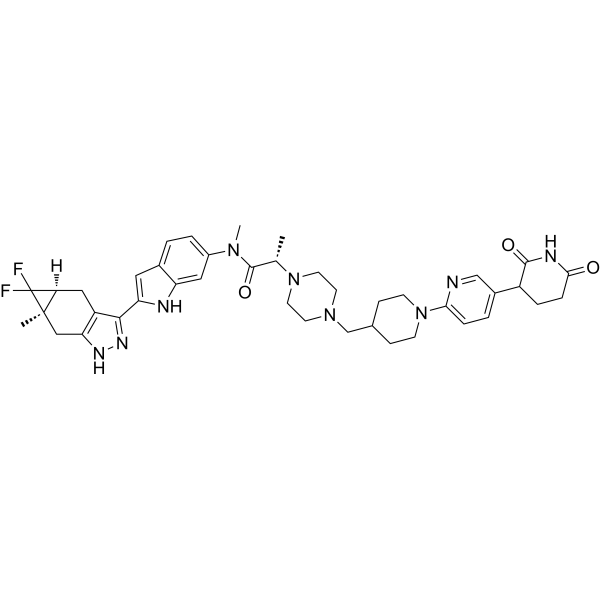
pCR8
 0 ImagesCat. No.: HY-174460
pCR8 is a CR8 prodrug and anticancer agent responsive to H2O2. pCR8 achieves selective release of CR8 via boronate ester oxidation mediated by elevated hydrogen peroxide levels at tumor sites, self-assembles into nanoparticles, and degrades cell cycle-related proteins. A synergistic effect is produced when pCR8 is used in combination with immune checkpoint inhibitors. pCR8 can be used for the research of triple-negative breast cancer.
-
Clotrimazole (Standard)
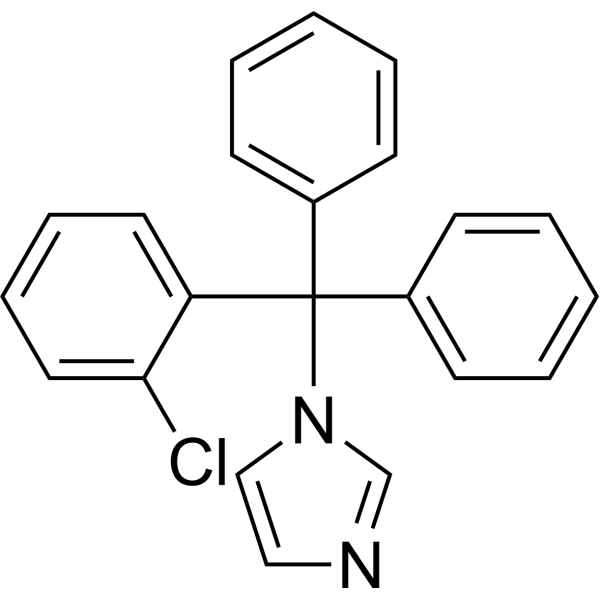 0 Images
Clotrimazole (Standard) is the analytical standard of Clotrimazole. This product is intended for research and analytical applications. Clotrimazole is an imidazole derivative, an antifungal compound and is a CYP (cytochrome P450) inhibitor. Clotrimazole has antibacterial activity.
-
Epaldeudomide
 0 ImagesCat. No.: HY-172430SCAS No.: 1918159-31-5
Epaldeudomide (Compound A406) is the inhibitor for TNF-α (>50% inhibition rate at 100 nM). Epaldeudomide inhibits the proliferation of cancer cells MM.1S (IC50 < 300 nM), WSU-DLCL-2 (IC50 < 100 nM) and Rec-1 (IC50 < 100 nM). Epaldeudomide exhibits antineoplastic activity.
-
DL002
 0 ImagesCat. No.: HY-159668CAS No.: 3049680-91-0
DL002 is a ADC linker that can be used to synthesize antibody-drug conjugates containing BCL-2 family protein degraders, and it's used in tumor research.
-
1,2-Diacetoxy-4,7,8-trihydroxy-3-(4-hydroxyphenyl)dibenzofuran
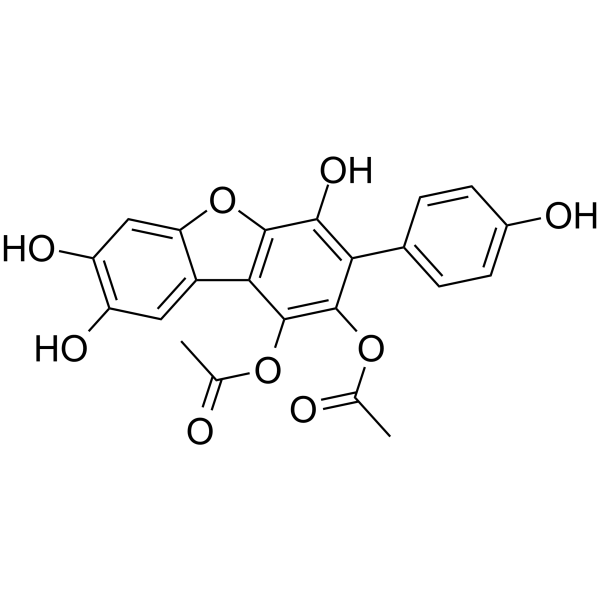 0 ImagesCat. No.: HY-N9283CAS No.: 146905-24-0
1,2-Diacetoxy-4,7,8-trihydroxy-3-(4-hydroxyphenyl)dibenzofuran, isolated from the edible mushroom Sarcodon leucopus, has antioxidant effects in the DPPH scavenging assay with the IC50 of 28 μM, inhibits malondialdehyde (MDA) with the IC50 of 71 μM, and inhibits α-glucosidase with the IC50 of 6.22 μM.
-
ICSN3250 hydrochloride
 0 ImagesCat. No.: HY-112774ACAS No.: 1561902-79-1
ICSN3250 hydrochloride is a halitulin analogue and a mTORC1 inhibitor. ICSN3250 hydrochloride directly binds to mTOR's FRB domain and displaces phosphatidic acid (PA), reversing mTORC1 activation. ICSN3250 hydrochloride shows high cytotoxicity in cancer cells (nanomolar concentration) through a caspase-independent cell death mechanism. ICSN3250 hydrochloride specifically inhibits the mTORC1 pathway, inducing autophagy and G0-G1 cell-cycle arrest in cancer cells. ICSN3250 hydrochloride can be used for the study of cancer .
-
Anti-CD20 Antibody (mAb 1.5.3)
 0 ImagesCat. No.: HY-P991547CAS No.: 922534-56-3
Anti-CD20 Antibody (mAb 1.5.3) is a fully human IgG1 anti-CD20 antibody. Anti-CD20 Antibody (mAb 1.5.3) evokes enhanced pro-apoptotic activity in vitro. Anti-CD20 Antibody (mAb 1.5.3) mediated both complement-dependent cytotoxicity and antibody-dependent cellular cytotoxicity. Anti-CD20 Antibody (mAb 1.5.3) demonstrates enhanced anti-tumor activity in various tumor xenograft models. Anti-CD20 Antibody (mAb 1.5.3) produces a superior B-cell depletion profile in lymph node organs and bone marrow in a primate pharmacodynamic model. Anti-CD20 Antibody (mAb 1.5.3) can be studied in research for B-cell maglignancies.
-
Xentry
 0 ImagesCat. No.: HY-P11083CAS No.: 1352335-71-7
Xentry is a cell-penetrating peptide (CCP) consisting of only 7 amino acids of hepatitis B virus: LCLRPVG. Xentry-linked anti-B-raf antibodies and siRNAs demonstrates the capability to kill B-raf-dependent melanoma cells. Xentry alone or conjugated to β-galactosidase leads to its delivery to most tissues in mice, except circulating blood cells. Xentry can be used for the delivery of large molecules (antibodies, siRNA, enzymes) .
-
ISR/ROS-activator-1
 0 ImagesCat. No.: HY-184243CAS No.: 3099924-90-7
ISR/ROS-activator-1 is a naphthoquinone compound derived from Shikonin (HY-N0822), and also dual activator of the ISR/ROS pathway. ISR/ROS-activator-1 induces Apoptosis and Ferroptosis. ISR/ROS-activator-1 selectively inhibits gastric cancer. ISR/ROS-activator-1 is applicable to gastric cancer-related research.
-
Cymbopogon citratus extract
 0 ImagesCat. No.: HY-N20595Synonyms: Cymbopogon titrtus extract; Lemongrass extract; Cymbopogon extract
Cymbopogon citratus extract (Cymbopogon titrtus extract) is a lemongrass (Cymbopogon Citratus DC (Stapf.)) extract with antibacterial, antiprotozoal, antirheumatic, antitumor, cardioprotective, anti-inflammatory and gastric protective properties.
-
FAP-IN-1
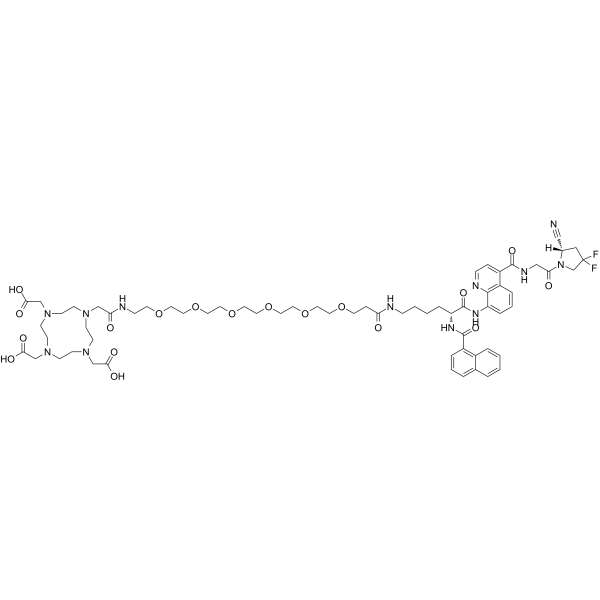 0 ImagesCat. No.: HY-149860CAS No.: 2956858-96-9
-
Dimethyl sulfoxide (suitable for HPLC)
 0 Images
Dimethyl sulfoxide (suitable for HPLC) is an aprotic solvent that can dissolve water-insoluble therapeutic and toxic agents. Dimethyl sulfoxide (DMSO) has a strong affinity for water and has the ability to rapidly penetrate or enhance the penetration of other substances through biological membranes. Dimethyl sulfoxide also has potential free radical scavenging and anticholinesterase effects and may affect coagulation activity. Dimethyl sulfoxide also induces histamine release from mast cells but is thought to have low systemic toxicity. Dimethyl sulfoxide (suitable for HPLC) is suitable for HPLC.



