



Cancer Immunotherapy
Cancer immunotherapy (CIT) is a type of biological therapy, aiming to improve anti-tumor immune responses with fewer off-target effects than chemotherapy. Several types of immunotherapy include: oncolytic virus therapies, cancer vaccines, cytokine therapies, adoptive cell transfer (ACT), and immune checkpoint inhibitors (ICIs). In particular, ICIs and ACT have obtained immense clinical response, but their efficacy varies from person to person. Immune cells can be harnessed to eliminate tumor cells, such as T cells, B cells, NK cells, and myeloid cells. T cells have potent tumor-killing capability, therefore, a plethora of cancer immunotherapy research have focused on inducing T-cell-mediated anti-tumor responses. CTLA-4 and PD-1 are found on the cell surface of T cells as co-inhibitory receptors. The breakthrough in cancer immunotherapy results from the identification and subsequent targeting of checkpoint mechanisms in T cells with monoclonal antibodies against CTLA-4 and programmed death-ligand 1/programmed death-1 (PD-L1/PD-1).
Several types of cancers (e.g., melanoma, mismatch repair-deficient cancers, bladder cancer, and non-small cell lung cancer) have achieved significant clinical responses in T-cell checkpoint blockade therapies. However, single-mode immunotherapy faces challenges such as low immune response, low tumor infiltration, and complex immunosuppressive tumor microenvironment. Recently, combined therapies based on tumor immunity have received extensive attention in the research of enhancing tumor cells immunogenicity and inhibiting their growth. For example, anti CTLA-4 and PD-1, immune checkpoint blockade (ICB) combined with chemotherapy, anti-angiogenic drugs and kinase inhibitors.
-
rel-Boc-Hyp-OMe
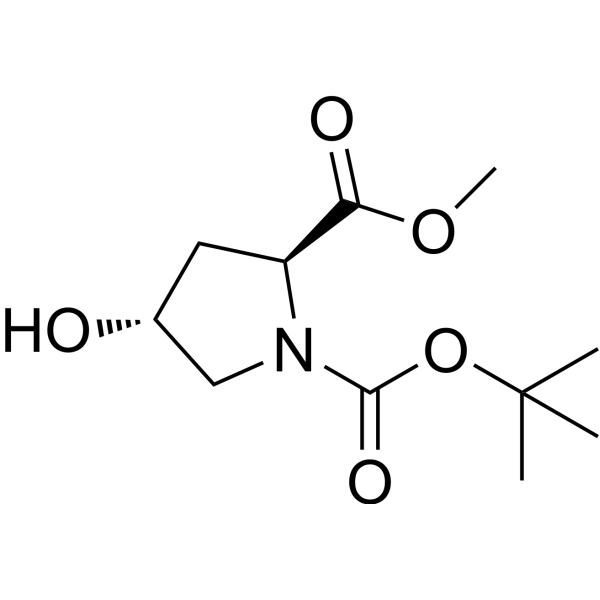 0 ImagesCat. No.: HY-65039ACAS No.: 1145663-09-7
rel-Boc-Hyp-OMe is the isomer of Boc-Hyp-OMe (HY-65039), and can be used as an experimental control. Boc-Hyp-OMe is a non-cleavable ADC linker used in the synthesis of antibody-drug conjugates (ADCs). Boc-Hyp-OMe is also a alkyl chain-based PROTAC linker that can be used in the synthesis of PROTACs.
-
KIT D816H Recombinant Human Active Protein Kinase
 0 ImagesCat. No.: HY-E70735
KIT (CD117) is an important cell surface marker used to identify certain types of hematopoietic(blood) progenitors in the bone marrow. KIT is a cytokine receptor expressed on the surface of hematopoietic stem cells as well as other cell types. Altered forms of this receptor may be associated with some types of cancer. KIT D816H is a mutant of KIT. KIT D816H Recombinant Human Active Protein Kinase is a recombinant KIT D816H protein that can be used to study KIT D816H-related functions.
-
1-Hydroxyauramycin B
 0 ImagesCat. No.: HY-N14847CAS No.: 79206-72-7
1-Hydroxyauramycin B is an anthracycline antibiotic. 1-Hydroxyauramycin B has anti-Gram-positive bacteria and anti-tumor cell activity.
-
Tetrachlorohydroquinone (Standard)
 0 ImagesCat. No.: HY-W144308RCAS No.: 87-87-6Synonyms: TCHQ (Standard); Tetrachloroquinol (Standard)
Tetrachlorohydroquinone (Standard) is the analytical standard of Tetrachlorohydroquinone (HY-W144308). This product is intended for research and analytical applications. Tetrachlorohydroquinone (TCHQ) is a metabolite of Pentachlorophenol. Tetrachlorohydroquinone induces reactive oxidant stress (ROS), inhibits apoptosis and induces necrosis in primary mouse splenocytes. Tetrachlorohydroquinone increases DNA lesions and induces oxidative stress in rodents.
-
PD-1/PD-L1-IN-24
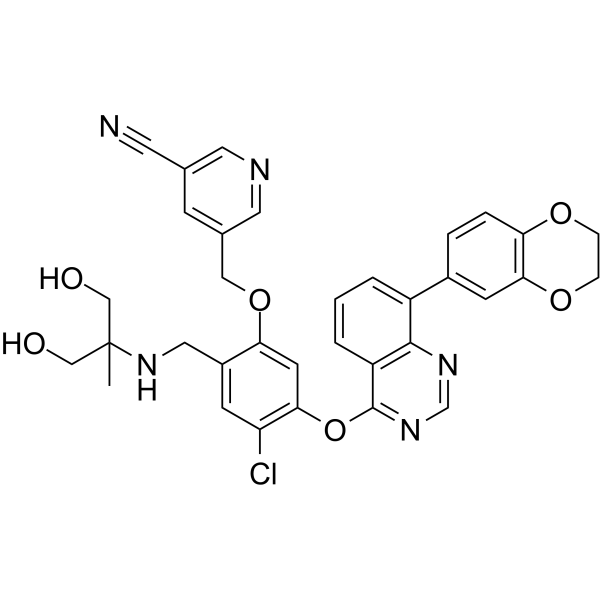 0 ImagesCat. No.: HY-144649CAS No.: 2667680-33-1
PD-1/PD-L1-IN-24 is a highly potent PD-1/PD-L1 inhibitor with IC50 value of 1.57 nM. PD-1/PD-L1-IN-24 can restore T-cell function at the cellular level by significantly elevating the IFN-γ level. PD-1/PD-L1-IN-24 has low toxicity on the PBMCs.
-
MX107
 0 ImagesCat. No.: HY-123870CAS No.: 2170102-50-6
MX107 is a selective and potent survivin inhibitor that suppresses triple-negative breast cancer (TNBC) cell proliferation. MX107 induces degradation of survivin and inhibitor-of-apoptosis proteins (IAPs), which inhibits nuclear factor κB (NF-κB) activation induced by DNA damage. MX107 enhances tumoricidal efficacy of genotoxic treatments synergized with chemotherapeutic drugs.
-
Mycophenolate Mofetil-d4 (hydrochloride)
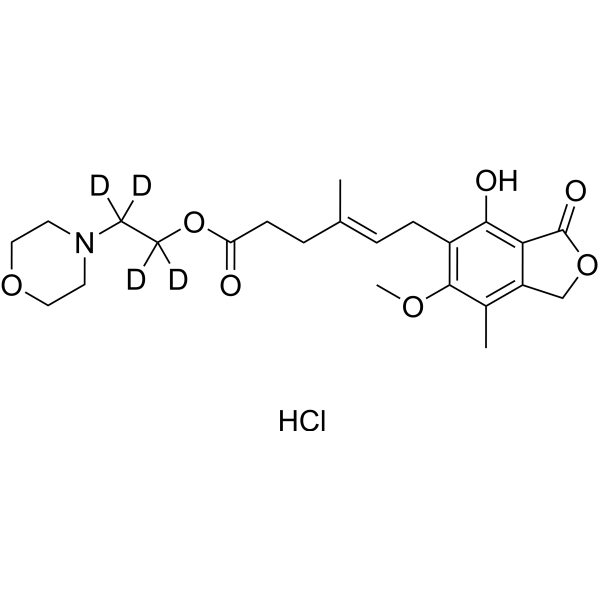 0 ImagesCat. No.: HY-B0199ASSynonyms: RS 61443-d4 hydrochloride; TM-MMF-d4 hydrochloride
Mycophenolate Mofetil-d4 hydrochloride is deuterated labeled Mycophenolate mofetil hydrochloride (HY-B0199A). Mycophenolate mofetil (RS 61443; TM-MMF) hydrochloride is an orally active antimetabolic immunosuppressant with antiproliferative and anti-inflammatory properties. Mycophenolate mofetil hydrochloride significantly inhibits the production of B, T lymphocytes and the proliferation of smooth muscle cells by selectively blocking the de novo purine synthesis pathway. Mycophenolate mofetil hydrochloride effectively reduces adventitial inflammation, medial necrosis and intimal thickening in rat aortic allografts, and decreases the number of lymphocytes expressing the IL-2 receptor, thereby delaying xenograft rejection. Mycophenolate mofetil hydrochloride shows certain toxicity in a hamster-to-rat limb xenotransplantation model when used in combination with FK506 (HY-13756). Mycophenolate mofetil hydrochloride is widely used in studies related to allograft arteriosclerosis (chronic rejection).
-
ITK-IN-7
 0 ImagesCat. No.: HY-184275CAS No.: 3126105-55-0
ITK-IN-7 is a selective ITK inhibitor with an IC50 of 16 nM and a Ki of 0.48 nM. ITK-IN-7 reduces IL-2 secretion levels in T cells and in mouse models stimulated by anti-CD3 monoclonal antibodies. ITK-IN-7 can be used for basic and translational research related to ITK inhibition, such as research on leukemia.
-
CD73-IN-10
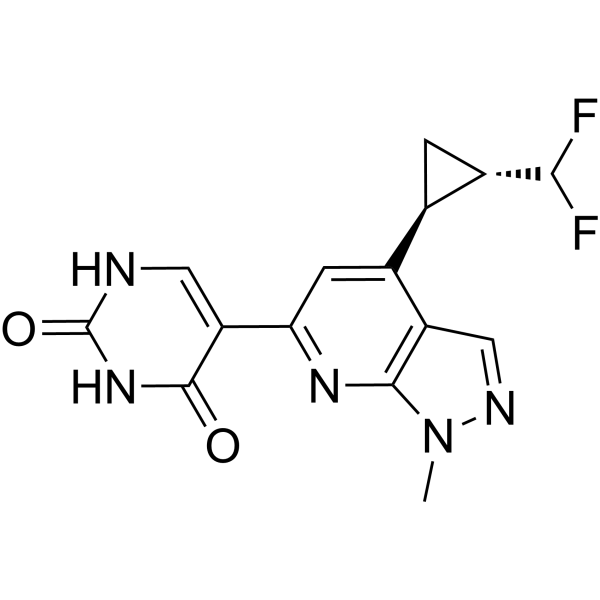 0 ImagesCat. No.: HY-147591CAS No.: 2766565-91-5
CD73-IN-10 (compound 4) is a potent inhibitor of CD73. CD73 can catalyze the production of adenosine from extracellular 5'-phosphate adenosine (5'-AMP), and adenosine can induce immunosuppressive effects and promote tumor proliferation and/or metastasis. CD73-IN-10 can be used for the study of tumor-related diseases.
-
Auristatin S
 0 ImagesCat. No.: HY-164107CAS No.: 3028453-70-2
Auristatin S is a potent Auristatin payload. Auristatin S binds to the vinca-binding site on tubulin, thereby inhibiting microtubule assembly and inducing cell cycle arrest and apoptosis. Auristatin S acts as a cytotoxic component of antibody-drug conjugates (ADCs) and exerts target-specific cytotoxicity against cancer cells. Auristatin S can be used in the research of lymphoma, anaplastic large cell lymphoma and Hodgkin lymphoma.
-
CXJ2080
 0 ImagesCat. No.: HY-183070
CXJ2080 is a selective PROTAC-based CDK7 degrader with a DC50 of 0.88 nM. CXJ2080 recruits VHL E3 ligase to induce ubiquitin-proteasome-dependent CDK7 degradation, disrupts the CDK7-cyclin H-MAT1 complex, suppresses CDK7-dependent phosphorylation of RNA polymerase II CTD Ser5, CDK1 Thr161, and CDK2 Thr160. CXJ2080 activates the p53-p21 axis, suppresses MYC-driven signaling, induces leukemia cell cycle arrest, apoptosis, and differentiation, reduces CD117 expression, spares platelets and normal PBMCs, maintains sustained CDK7 degradation post-washout. CXJ2080 can be used for the research of acute leukemia.
-
Aminooxy-PEG2-alcohol
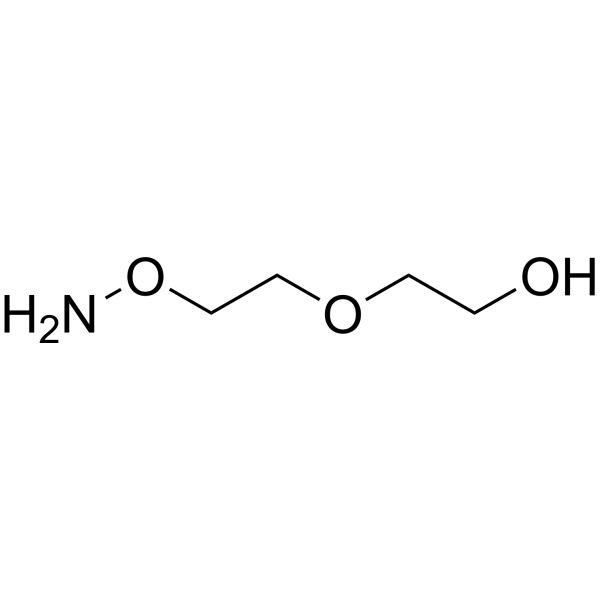 0 ImagesCat. No.: HY-126951CAS No.: 185022-12-2
Aminooxy-PEG2-alcohol is a non-cleavable 2 unit PEG ADC linker used in the synthesis of antibody-drug conjugates (ADCs). Aminooxy-PEG2-alcohol is also a PEG-based PROTAC linker that can be used in the synthesis of PROTACs.
-
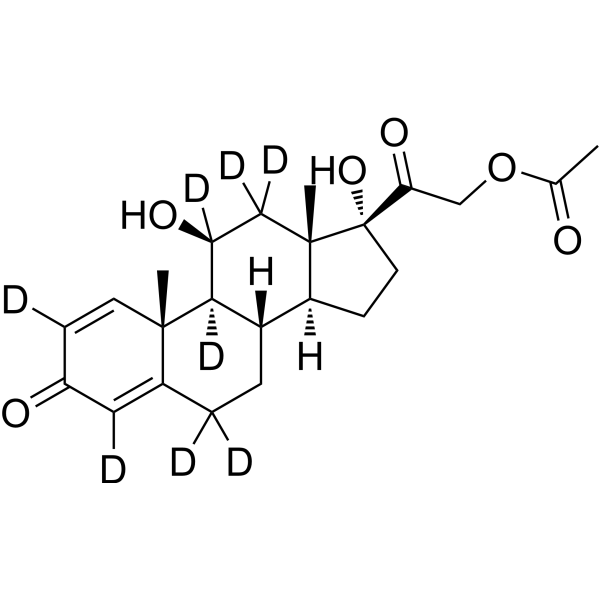
MRC-G-001
 0 ImagesCat. No.: HY-175009
MRC-G-001 is a Genipin (HY-17389) derivative with an IC50 of 117 μM against A549 cancer cells. MRC-G-001 inhibits the phosphorylation of EGFR, JAK1, and STAT3, and modulates epithelial-mesenchymal transition (EMT)-related protein expression, thereby attenuating cell migration and invasion. MRC-G-001 induces cell cycle arrest and cell apoptosis. MRC-G-001 can be used for the study of cancers such as non-small-cell lung cancer.
-
SphK1-IN-2
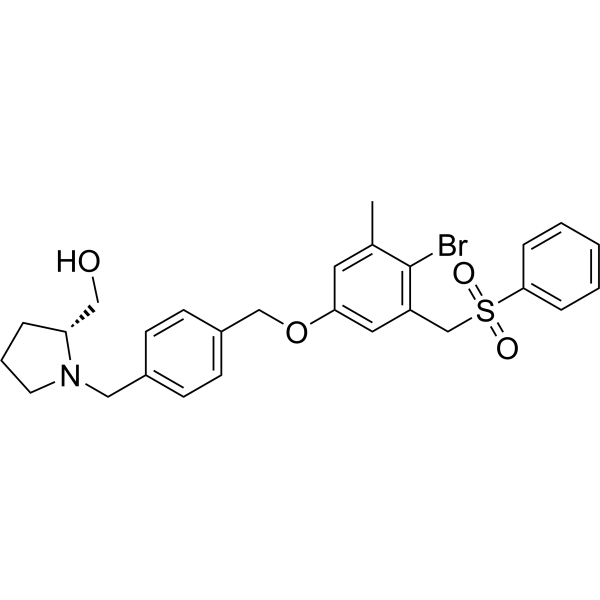 0 ImagesCat. No.: HY-150615CAS No.: 3031483-60-7
-
Naph-Se-TMZ
 0 ImagesCat. No.: HY-169433
Naph-Se-TMZ is a PROTAC-like HDAC1 degrader. Naph-Se-TMZ induces ROS-dependent reduction in HDAC1 protein expression and total HDAC activity, and decreases cell viability in a dose-dependent manner. Naph-Se-TMZ exhibits activity in both TMZ-sensitive and TMZ-resistant glioma cells, and its cytotoxicity is reversed by the ROS scavenger N-acetylcysteine (HY-B0215). Naph-Se-TMZ can be used in studies related to glioblastoma.
Naph-Se-TMZ consists of a target protein ligand (red segment): Temozolomide (HY-17364), a DNA intercalator (blue segment): Nitro-Naphthalimide-C2-acylamide (HY-169437), and a molecular linker (black segment). Meanwhile, the activity control for the target protein ligand is Temozolomide-amino hydrochloride (HY-169439), and the DNA intercalator+linker is NNISC-2 (HY-169438).


-
Trastuzumab deruxtecan (DAR2)
 0 ImagesCat. No.: HY-138298BCAS No.: 1826843-81-5Synonyms: T-DXd (DAR2); DS-8201 (DAR2); DS-8201a (DAR2)
Trastuzumab deruxtecan (DAR2) (T-DXd (DAR2); DS-8201 (DAR2); DS-8201a (DAR2)) is a low-drug-load derivative control preparation of Trastuzumab deruxtecan (HY-138298A) with a drug-to-antibody ratio (DAR) of 2. Trastuzumab deruxtecan (T-DXd; DS-8201a; DS-8201) is an anti-human epidermal growth factor receptor 2 (HER2) antibody-drug conjugate (ADC). Trastuzumab deruxtecan is composed of a humanized anti-HER2 antibody, an enzymatically cleavable peptide-linker, a topoisomerase I inhibitor (a toxin component of Dxd), and the drug-linker conjugate for ADC is Deruxtecan (HY-13631E). Trastuzumab deruxtecan can be used for the research of HER2-positive breast cancer and gastric cancer.
-
Methyl vanillate (Standard)
 0 Images
Methyl vanillate (Standard) is the analytical standard of Methyl vanillate. This product is intended for research and analytical applications. Methyl vanillate, one of the ingredients in Oryza sativa Linn., is a Wnt/β-catenin pathway activator[1]. A benzoate ester that is the methyl ester of vanillic acid. It has a role as an antioxidant and a plant metabolite.



