Infection
-
Infection Related Products (18687)
Related Products (18687)

-
Antibodies (22)
-
Neoprocurcumenol
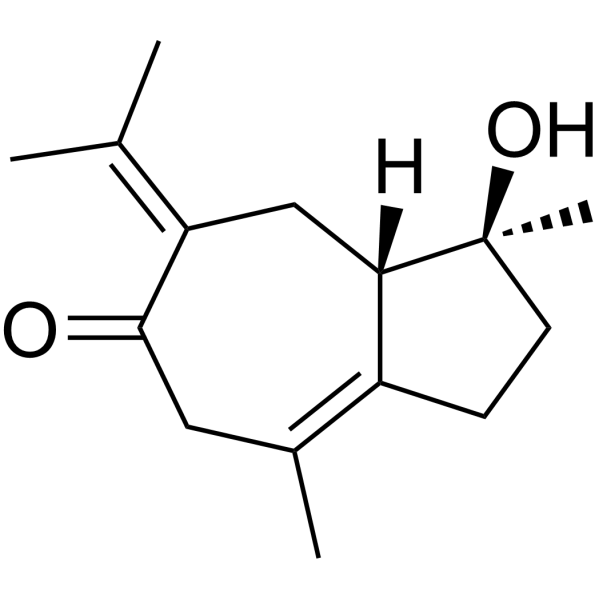 0 ImagesCat. No.: HY-N8585CAS No.: 102130-91-6
Neoprocurcumenol is a larvicidal compound that exerts significant toxicity on mosquito larvae with LC50 and LC 90 values of 13.69 and 23.92 ppm, respectively.
-
Indanazoline hydrochloride
 0 ImagesCat. No.: HY-U00075ACAS No.: 40507-80-0
Indanazoline (hydrochloride) is an orally active imidazoline derivative. Indanazoline (hydrochloride) has a LD50 of 481 mg/kg in rat model. Indanazoline (hydrochloride) can be studied in research on rhinitis.
-
Antibacterial agent 43
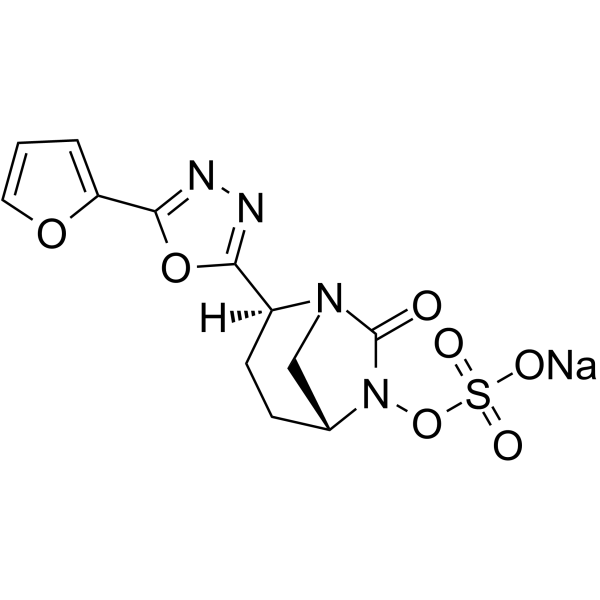 0 ImagesCat. No.: HY-139760CAS No.: 1426572-48-6
Antibacterial agent 43 is an antibacterial agent extracted from patent WO2013030735A1, example 6. Antibacterial agent 43 can be used for the research of bacterial infections.
-
Quinupristin (Standard)
 0 ImagesCat. No.: HY-A0162RCAS No.: 120138-50-3
Bictegravir (sodium) (Standard) is the analytical standard of Bictegravir (sodium). This product is intended for research and analytical applications. Bictegravir sodium is a potent inhibitor of HIV-1 integrase, with an IC50 of 7.5 nM. Bictegravir sodium exhibits potent and selective anti-HIV activity and low cytotoxicity.
-
Aleurodiscal
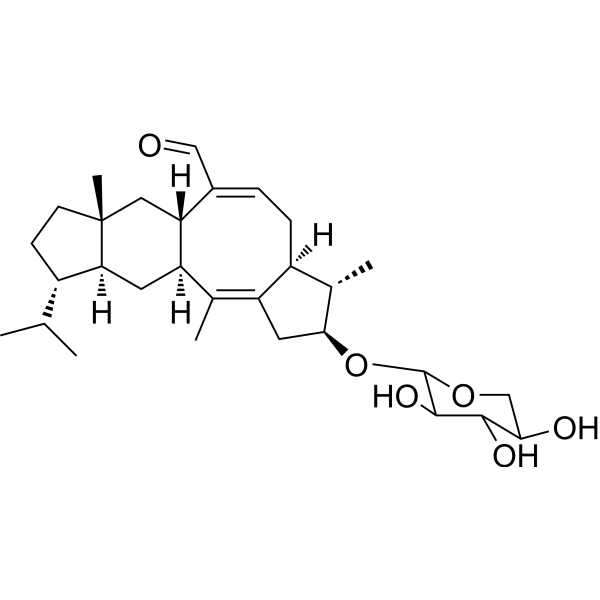 0 ImagesCat. No.: HY-121051CAS No.: 122535-46-0
-
Bz-DL-Arg-βNA hydrochloride
 0 Images
Bz-DL-Arg-βNA hydrochloride is a substrate for endopeptidases but is not hydrolyzed by bacterial dipeptidyl peptidase DPP-III.
-
Z-L(D-Val)G-CHN2
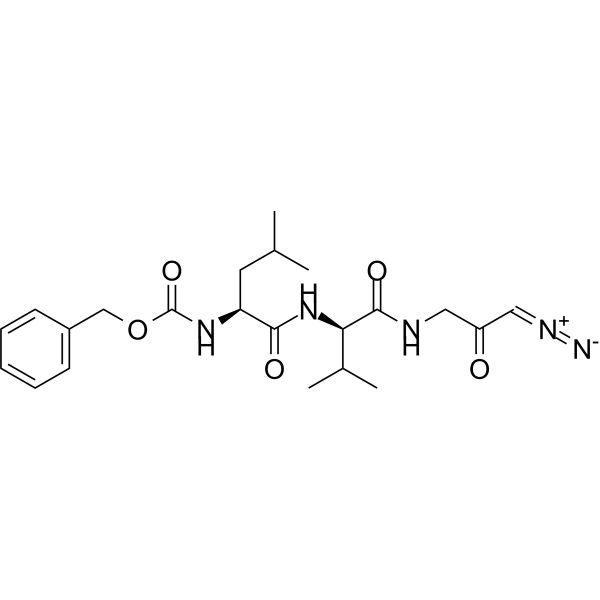 0 ImagesCat. No.: HY-108137APurity: 99.35%
Z-L(D-Val)G-CHN2 is the isoform of Z-LVG-CHN2 (HY-108137). Z-LVG-CHN2 is a cell-permeable and irreversible inhibitor of cysteine proteinase. Z-LVG-CHN2 is a tripeptide derivative and mimics part of the human cysteine proteinase-binding center. Z-LVG-CHN2 displays an inhibition on HSV whereas no significant effect on poliovirus replication. Z-LVG-CHN2 effectively blocks SARS-COV-2 replication (EC50=190 nM) via inhibition of SARS-COV-2 3CL pro protease.
-
SP1
 0 ImagesCat. No.: HY-P10603CAS No.: 858602-44-5
SP1 is an α-peptide encoded by the mating pheromone MFα1 gene in Candida albicans, which can induce cell growth arrest at the mating type locus MTLa in Candida albicans. SP1 can be used in the study of the prevention and treatment of Candida albicans infection.
-
Antifungal agent 34
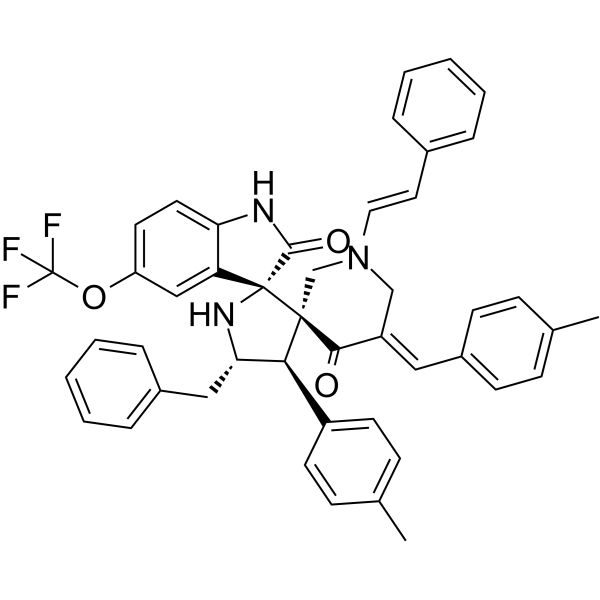 0 ImagesCat. No.: HY-147970CAS No.: 2036123-97-2
Antifungal agent 34 (compound 6i) is a potent antifungal agent. Antifungal agent 34 shows a potent antifungal activity against Candida albicans, with a MIC of 4 µg/mL. Antifungal agent 34 shows significant inhibition on Candida albicans hyphae and biofilm development. Antifungal agent 34 exhibits no cytotoxicity to mammalian cells.
-
16-epi-Latrunculin B
 0 ImagesCat. No.: HY-101848ACAS No.: 444911-05-1
16-epi-latrunculin B is anticancer agent, which can inhibit the growth of HeLa cells with IC50 value of 3.9 uM. 16-epi-latrunculin B has antiviral activity against HSV-1 (ED50 of 1 µg/mL).
-
Drimentine B
 0 ImagesCat. No.: HY-118079CAS No.: 204398-91-4
Drimentine B is a terpenylated diketopiperazine originally isolated from Actinomycete bacteria that has anticancer activity. It inhibits the proliferation of NS-1 murine β lymphocyte myeloma cells by 41 and 59% in vitro when used at concentrations of 50 and 100 μg/mL, respectively.
-
Chromomycin A3 (Standard)
 0 ImagesCat. No.: HY-W040129RCAS No.: 7059-24-7
Chromomycin A3 (Standard) is the analytical standard of Chromomycin A3 (HY-W040129). This product is intended for research and analytical applications. Chromomycin A3 is an inhibitor that selectively binds to GC-rich DNA sequences. Chromomycin A3 targets the DNA minor groove after forming a dimer with Mg2+. Chromomycin A3 inhibits DNA replication and transcription, blocks the binding of Sp1 transcription factor to target gene promoters, downregulates the expression of anti-apoptotic proteins such as FLIP, Mcl-1, and XIAP, and induces S-phase cycle arrest and caspase-dependent apoptosis in tumor cells. Chromomycin A3 can antagonize oxidative stress induced by glutathione depletion and neuronal apoptosis induced by Camptothecin (HY-15660). Chromomycin A3 can be used in basic research on malignant tumors such as cholangiocarcinoma, and is a potential chemosensitizer and GC-rich region probe.
-
Antifungal agent-169
 0 ImagesCat. No.: HY-184728
Antifungal agent-169 (compound 5p) is an antifungal agent that inhibits fluconazole (HY-B0101)-susceptible Candida albicans SC5314 with an MIC50 of 0.28 μM. Antifungal agent-169 reduces the expression levels of cAMP-PKA pathway-related genes including RAS1, EFG1, BCR1, ECE1 and HWP1 in Candida albicans. Antifungal agent-169 inhibits biofilm formation and hyphal growth of Candida albicans. Antifungal agent-169 can be used in studies related to Candida albicans infection.
-
Indigoidine
 0 Images
Indigoidine is a natural biological pigment that appears in a bright blue color and is a natural blue dye with industrial applications. Indigoidine can act as a free radical scavenger, helping plant pathogens tolerate oxidative stress; and it also has antimicrobial activity.
-
3-Cyanovinylcarbazole phosphoramidite
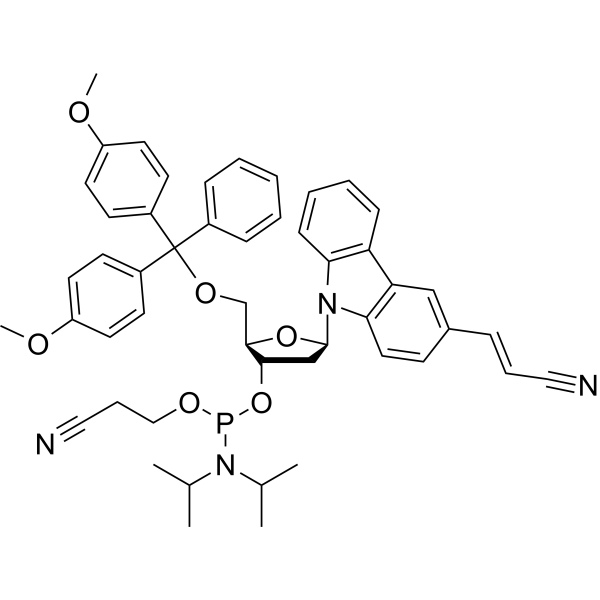 0 ImagesCat. No.: HY-141893CAS No.: 1157899-72-3
3-Cyanovinylcarbazole phosphoramidite is an antiviral agent that inhibits the synthesis of viral DNA. The modified nucleoside in the compound is synthesized by modifying the ribonucleotide with cyano group at the C-3 position, and can be used as a phosphoric acid amide for DNA synthesis.
-
Carbadox-d3
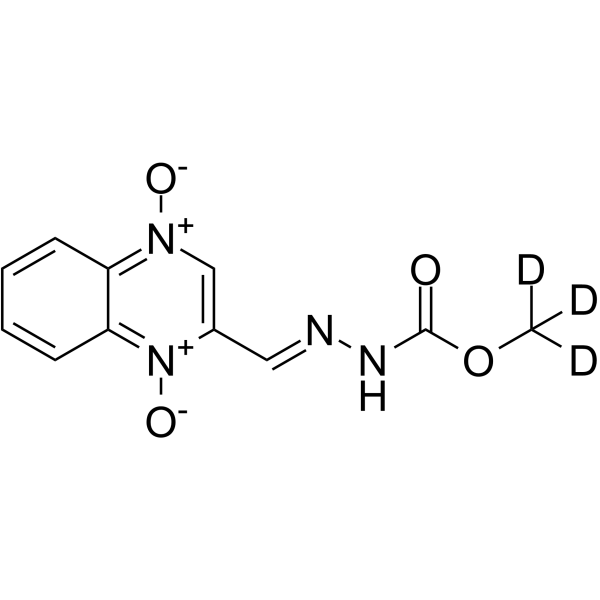 0 ImagesCat. No.: HY-B1340SCAS No.: 1185240-06-5
Carbadox-d3 is the deuterium labeled Carbadox. Carbadox is a quinoxaline-di-N-oxide antibiotic compound which is widely fed to nursery-age pigs to control enteric diseases and improve feed efficiency.
-
SABA1 (Standard)
 0 ImagesCat. No.: HY-144701RCAS No.: 690681-65-3
Fluopicolide (Standard) is the analytical standard of Fluopicolide. This product is intended for research and analytical applications. Fluopicolide is the active compound.
-
Piperolactam A
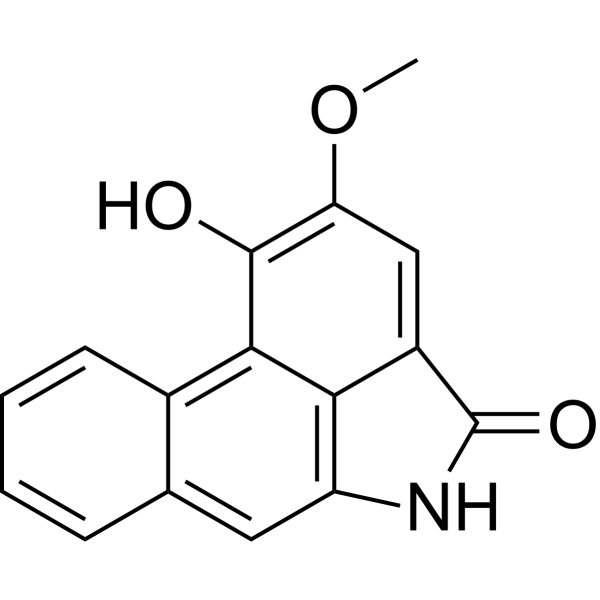 0 ImagesCat. No.: HY-N2894CAS No.: 112501-42-5
Piperolactam A is a natural product that can be isolated from root of Piper betle. Piperolactam A exhibits promising leishmanicidal action against wild type and drug resistant strains of Leishmania donovani.
-
Rosemary extract
 0 ImagesCat. No.: HY-N20530
Rosemary extract is an extract of rosemary (Salvia rosmarinus) with biological activities such as liver protection, antifungal, insecticidal, antioxidant and antibacterial properties.
-
Cefetamet hydrochloride
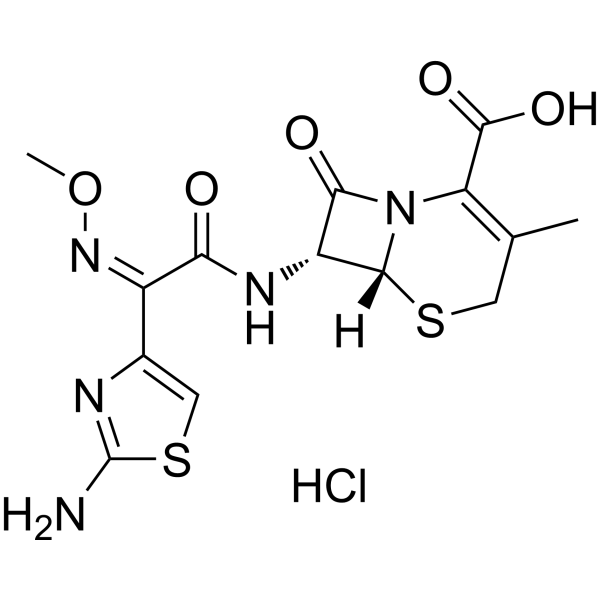 0 ImagesCat. No.: HY-A0111BCAS No.: 724438-16-8Synonyms: Ro 15-8074 hydrochloride; Deacetoxycefotaxime hydrochloride
Cefetamet (Ro 15-8074) hydrochloride is a cephalosporin antibiotic and the active metabolite of Cefetamet pivoxil (HY-B1894A). Cefetamet hydrochloride binds to bacterial penicillin-binding protein (PBP) (IC50 for PBP3 in Escherichia coli W3110 is 2.5 μg/mL). Cefetamet hydrochloride has significant activity against Gram-negative bacteria such as Enterobacteriaceae, Neisseria species, and Haemophilus influenzae, as well as Gram-positive bacteria such as Streptococcus. Cefetamet hydrochloride kills and lyses Treponema pallidum. Cefetamet hydrochloride can be used in the research of respiratory tract, urinary tract, ear, nose and throat infections, and syphilis.