Inflammation/Immunology
-
Inflammation/Immunology Related Products (20747)
Related Products (20747)

-
Antibodies (115)
-
Related Compound Screening Libraries (4)
-
YM 11124
 0 ImagesCat. No.: HY-119681CAS No.: 79889-39-7
YM 11124 is an orally active selective immunosuppressive agent. YM 11124 can inhibit cell-mediated immune responses (type IV allergic reactions, such as delayed-type hypersensitivity and allogenic skin graft rejection) and type III allergic reactions (such as passive Arthus reaction). YM 11124 has no effect on type I, type II allergic reactions or acute inflammation. YM 11124 can be used in research related to organ transplantation and immune hypersensitivity.
-
Dersalazine
 0 ImagesCat. No.: HY-167719CAS No.: 188913-58-8Synonyms: UR-12746 free base
Dersalazine (UR-12746 free base) is an inhibitor of platelet-activating factor, exhibiting intestinal anti-inflammatory activity and potential efficacy in treating ulcerative colitis.
-
AMB8LK
 0 ImagesCat. No.: HY-P992180
AMB8LK is a human monoclonal antibody targeting H-ferritin, with specificity for tumor-associated heterologous ferritin. AMB8LK specifically recognizes and binds to H-ferritin overexpressed on the surface of tumor cells. AMB8LK can be used in research related to cancer and immune diseases.
-
Anti-GPC2/Glypican 2 Antibody
 0 ImagesCat. No.: HY-P990423
Anti-GPC2/Glypican 2 Antibody is a CHO-expressed human antibody that targets GPC2/Glypican 2. Anti-GPC2/Glypican 2 Antibody has a huIgG1 type heavy chain and a huκ type light chain, with a predicted molecular weight (MW) of 150 kDa. For the isotype control of Anti-GPC2/Glypican 2 Antibody, you can refer to Human IgG1 kappa, Isotype Control (HY-P99001).
-
Anti-Mouse IL-4 Antibody (11B.11)
 0 ImagesCat. No.: HY-P992064
Anti-Mouse IL-4 Antibody (11B.11) is an inhibitor of mouse interleukin-4. Anti-Mouse IL-4 Antibody (11B.11) blocks the chemotactic activity of mouse IL-4 on mouse peritoneal macrophages.
-
KRN-330
 0 ImagesCat. No.: HY-P990611
-
DHODH-IN-20
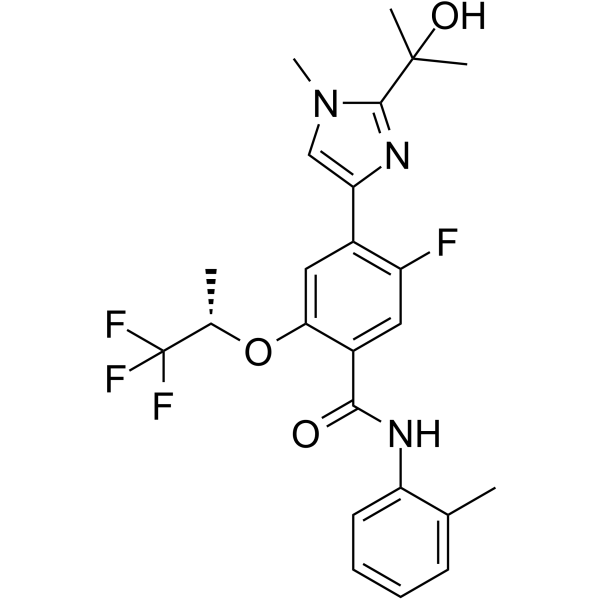 0 ImagesCat. No.: HY-144371CAS No.: 2639835-02-0
DHODH-IN-20 (Compound 133) is a potent inhibitor of DHODH. DHODH is present in the inner membrane of human mitochondria and is an iron-containing flavin-dependent enzyme. DHODH-IN-20 inhibits tumor growth. DHODH-IN-20 has the potential for the research of acute myelogenous leukemia.
-
Tovophyllin A
 0 ImagesCat. No.: HY-N18091CAS No.: 40738-44-1
Tovophyllin A is an orally active xanthonoid compound. Tovophyllin A exerts neuroprotective effects against Parkinson's disease by activating the Akt/GSK3β signaling pathway. Tovophyllin A protects mouse models of liver injury by activating Nrf2. Tovophyllin A exhibits protective anti-inflammatory activity in mouse models of acute lung injury. Tovophyllin A inhibits the activation of NF-κB and subsequent release of pro-inflammatory cytokines. Tovophyllin A reduces apoptotic cell death (Apoptosis). Tovophyllin A has antiplasmodial activity. Tovophyllin A shows cytotoxic activity against lung epithelial cancer cells and breast cancer cells. Tovophyllin A can be used in research related to Parkinson's disease, liver injury, acute lung injury, lung epithelial cancer, and breast cancer.
-
BLT1-IN-1
 0 ImagesCat. No.: HY-181809
BLT1-IN-1 is an orally active and selective BLT1 inhibitor with an IC50 of 8.7 nM and a Kd of 121 nM. BLT1-IN-1 exerts protective effects against acute lung injury and sepsis in in vivo models. BLT1-IN-1 can be used in research related to acute lung injury and sepsis.
-
BRD4 Inhibitor-25
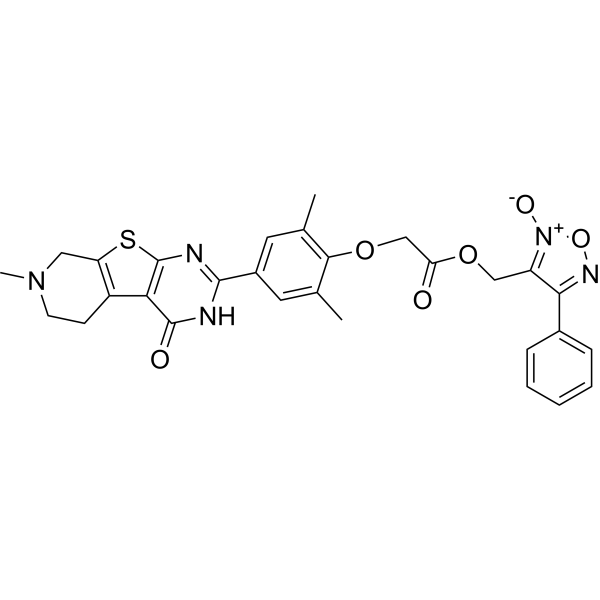 0 ImagesCat. No.: HY-151972CAS No.: 2976403-41-3
BRD4 Inhibitor-25 is a BRD4 inhibitor with IC50s of 0.82 μM, 1.94 μM for BD1 and BD2 domains of BRD4. BRD4 Inhibitor-25 induces apoptotic and autophagy cell death in ovarian cancer cells. BRD4 Inhibitor-25 can be used in the research of cancers, cardiovascular, neuromuscular and inflammatory disorders.
-
Immunoproteasome-IN-2
 0 ImagesCat. No.: HY-179394
Immunoproteasome-IN-2 is selective immunoproteasome inhibitor with IC50 = 232.3 nM for LMP7, IC50 = 9384.9 nM for β5. Immunoproteasome-IN-2 exhibits ancillary inhibitory activity against LMP2 and MECL-1 subunits. Immunoproteasome-IN-2 demonstrates anti-inflammatory efficacy in a mouse model of arthritis and shows a favorable safety profile in toxicological studies with reduced hepatotoxicity and hematotoxicity. Immunoproteasome-IN-2 has LMP7/β5 selectivity directly correlated with lower systemic toxicity. Immunoproteasome-IN-2 can be employed for research in arthritis.
-
mPGES1-IN-9
 0 ImagesCat. No.: HY-171237CAS No.: 556033-92-2
mPGES1-IN-9 (compound 1_8) is a mPGES1 inhibitor (IC50=0.5 μM), which can be used in anti-inflammatory research.
-
1,7-Diphenyl-4-hepten-3-one
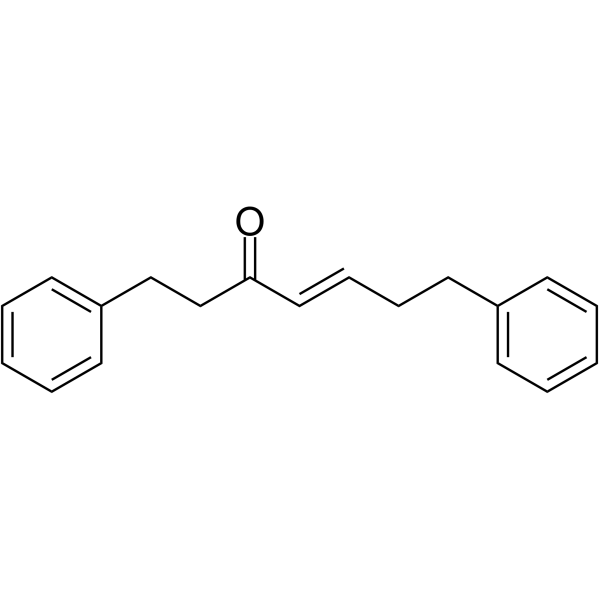 0 ImagesCat. No.: HY-N8826CAS No.: 79559-59-4
1,7-Diphenyl-4-hepten-3-one, isolated from Alpinia officinarum, possess bioactivities against some pests, such as T. castaneum.
-
AM-461
 0 ImagesCat. No.: HY-13214CAS No.: 1203503-64-3
AM-461 is a DP2 receptor (Prostaglandin Receptor) antagonist. AM-461 can be used for the researches of inflammation and immunology, such as asthma.
-
Cynastauoside B
 0 ImagesCat. No.: HY-N21665
Cynastauoside B is a pregnane steroid glycoside found in the roots of Cynanchum stauntonii. Cynastauoside B inhibits nitric oxide production in peritoneal macrophages of C57bl/6j mice.
-
Vinaginsenoside R3
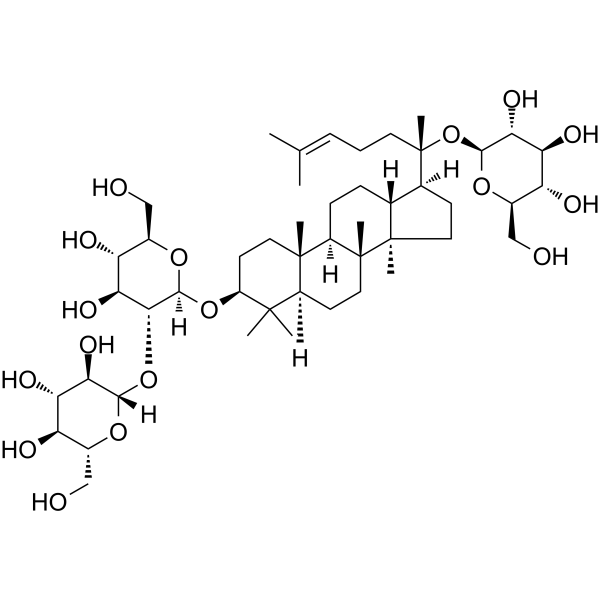 0 ImagesCat. No.: HY-N4264CAS No.: 156012-92-9
Vinaginsenoside R3 is a saponin composition of roots of Panax ginseng. Ginsengs have been not only used as therapeutic agents with tonic, anti-fatigue, and anti-gastric ulcer effect but also marketed as dietary supplements and raw materials of health food.
-
Re 80
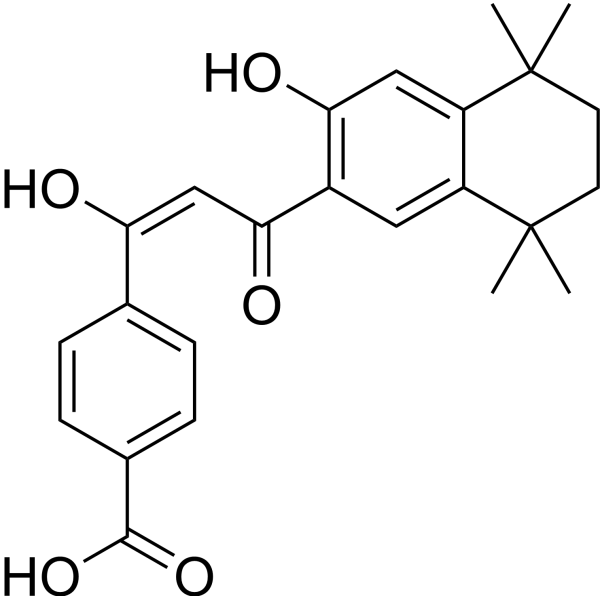 0 ImagesCat. No.: HY-118239CAS No.: 116193-60-3
Re 80 is an anti-angiogenic agent and is a synthetic retinoid.
-
Sinomenine hydrochloride (Standard)
 0 ImagesSynonyms: Cucoline hydrochloride (Standard)
Sinomenine hydrochloride (Standard) is the analytical standard of Sinomenine hydrochloride. This product is intended for research and analytical applications. Sinomenine hydrochloride (Cucoline hydrochloride), an alkaloid extracted from Sinomenium acutum, is a blocker of the NF-κB activation. Sinomenine also is an activator of μ-opioid receptor.

-
HSMO9
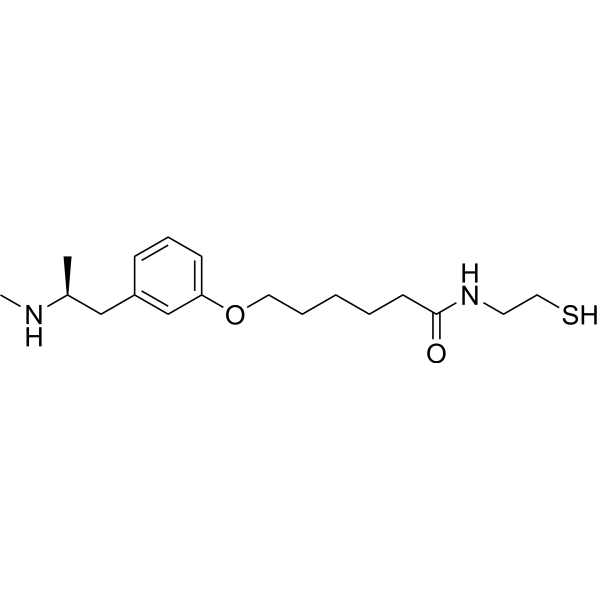 0 ImagesCat. No.: HY-157183CAS No.: 1313762-77-4
HSMO9 is a (+)-methamphetamine (METH)-like hapten that can be coupled to a carrier protein. HSMO9 can be used in vaccine development.