Others
-
Others Related Products (76616)
Related Products (76616)

-
Phenylboronic acid
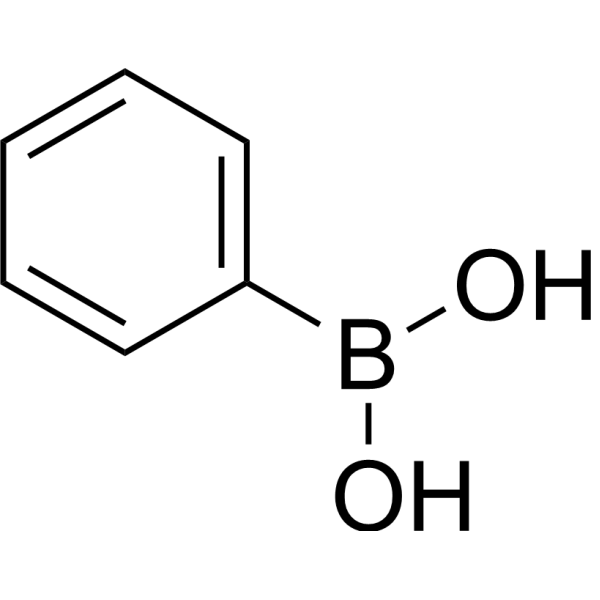 0 ImagesSynonyms: Phenylboron dihydroxide
Phenylboronic acid is a biochemical reagent that can be used as a biological material or organic compound for life science related research.
-
4-Methoxyphenylboronic acid
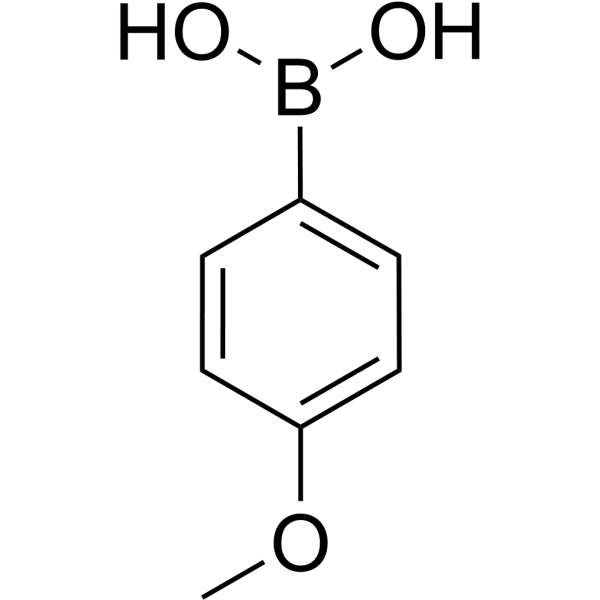 0 ImagesSynonyms: 4-Methoxyphenylboronic acid
4-Methoxyphenylboronic acid is a biochemical reagent that can be used as a biological material or organic compound for life science related research.
-
4-CMTB
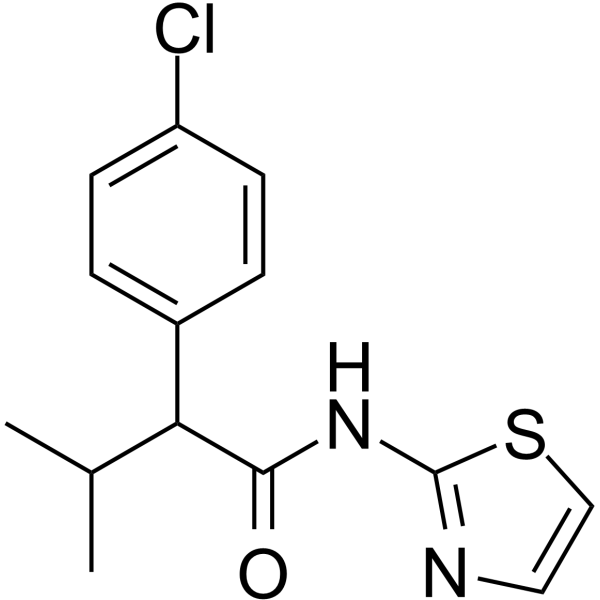 0 Images
4-CMTB is a selective free fatty acid receptor 2 (FFA2/GPR43) agonist and a positive allosteric modulator (pEC50=6.38).


-
H2DCFDA (solution)
 0 ImagesCat. No.: HY-DY1002
H2DCFDA (DCFH-DA) (solution) is a cell-permeable probe used to detect intracellular reactive oxygen species (ROS) (Ex/Em=488/525 nm) .
Solvent and concentration: DMSO: 10 mM.
The 1 mL volume is defined as the base specification. All larger sizes correspond to incremental volumes of this base.

-
Cucurbit[7]uril
![Cucurbit[7]uril](https://file.medchemexpress.com/product_pic/hy-104086.gif "Click to View Cucurbit[7]uril Product Detail") 0 ImagesSynonyms: CB7; Carrier CB7
0 ImagesSynonyms: CB7; Carrier CB7Cucurbit[7]uril is a cyclic organic molecule consisting of seven glycoluril units linked by methylene bridges. It has a rigid barrel-like structure with two identical inlets at both ends to selectively encapsulate guest molecules of appropriate size, shape, and polarity. Cucurbit[7]uril is known for its high binding affinity for a variety of organic and inorganic guests, including drugs, amino acids, peptides, and metal ions. This property makes them promising candidates for various applications in areas such as drug delivery, catalysis, and sensing.
-
Dimethyldioctadecylammonium bromide
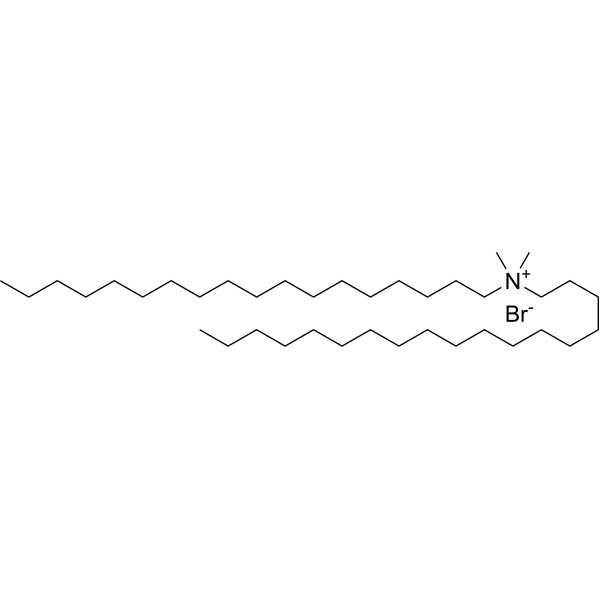 0 ImagesSynonyms: Dioctadecyldimethylammonium bromide; DODAB
Dimethyldioctadecylammonium bromide is a synthetic cationic lipid commonly used in gene delivery and vaccine development. Also known as DODAB or DDAB, it consists of a positively charged ammonium head group and two long hydrophobic tails. These properties make it useful for forming liposomes and other lipid-based nanoparticles that can efficiently deliver genetic material into cells. In addition to its applications in biotechnology, DDAB is also used in surfactants, emulsifiers and fabric softeners. However, due to its potential toxicity and irritation, extreme care should be taken when handling DDAB.
![1,4-Diazabicyclo[2.2.2]octane](https://file.medchemexpress.com/product_pic/hy-y0566.gif "Click to View 1,4-Diazabicyclo[2.2.2]octane Product Detail")
-
Sodium carboxymethyl cellulose (average Mw 90000)
 0 ImagesSynonyms: CMC-Na (average Mw 90000, DS=0.7, Viscosity:50-200 mPa.s)
Sodium carboxymethyl cellulose (average Mw 90000, DS=0.7, Viscosity:50-200 mPa.s) is the sodium salt of cellulose arboxymethyl and frequently used as viscous agent, paste and barrier agent.
-
DSPE-PEG2000-SH
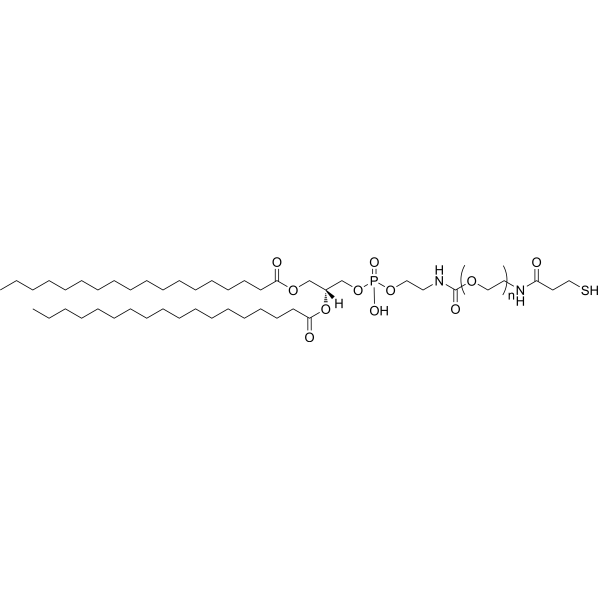 0 ImagesCat. No.: HY-W440896Purity: 99.82%
DSPE-PEG2000-SH is an amphiphilic thiol-functionalized DSPE-PEG molecule. DSPE-PEG2000-SH inserts into extracellular vesicle (EV) bilayer membranes via hydrophobic interactions, displaying surface thiol groups to form EV-SH crosslinkers.DSPE-PEG2000-SH enables crosslinking of EV-SH with 8-arm PEG-norbornene via thiol-ene photochemistry to construct hydrogels, with hydrogel mechanical properties tunable via PEG segment molecular weight variation.DSPE-PEG2000-SH can be used to encapsulate agents for drug delivery system, such as mRNA vaccine.
-
CHAPSO
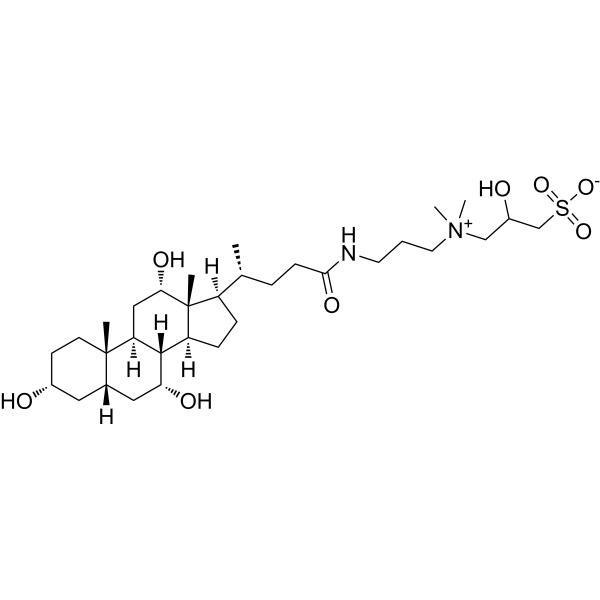 0 ImagesSynonyms: 3-[3-(Cholamidopropyl)dimethylammonio]-2-hydroxy-1-propanesulfonate
CHAPSO is a bile derivative. CHAPSO reduces protein adsorption, improves the cryo-EM imaging quality. CHAPSO can be used as a detergent, or as the membrane protein solubilization and reconstruction reagent in membrane protein structural studies.
-
Fmoc-Lys(Mtt)-OH
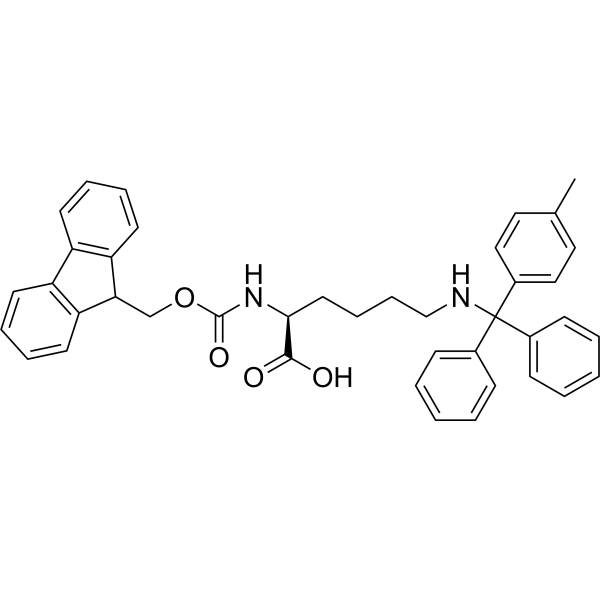 0 Images
Fmoc-Lys(Mtt)-OH is a lysine derivative.
-
(R)-Azetidin-2-ylmethanol
 0 Images
(R)-Azetidin-2-ylmethanol is a drug intermediate for synthesis of various active compounds.
-
Fmoc-D-β-Pro-OH
 0 ImagesSynonyms: (R)-1-Fmoc-3-pyrrolidinecarboxylic acid
Fmoc-D-β-Pro-OH ((R)-1-Fmoc-3-pyrrolidinecarboxylic acid) is a drug intermediate for synthesis of various active compounds.
-
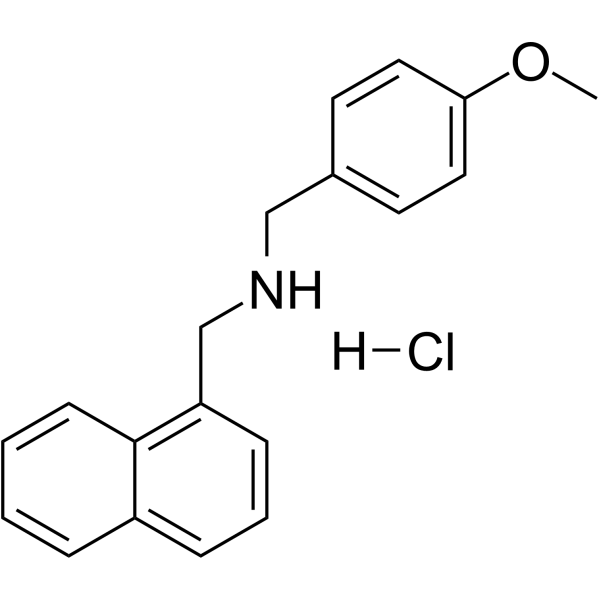
ML133 hydrochloride
 0 Images
ML133 hydrochloride is a selective Kir2 family channels inhibitor, with an IC50 of 1.8 μM at pH 7.4 and 290 nM at pH 8.5.
-
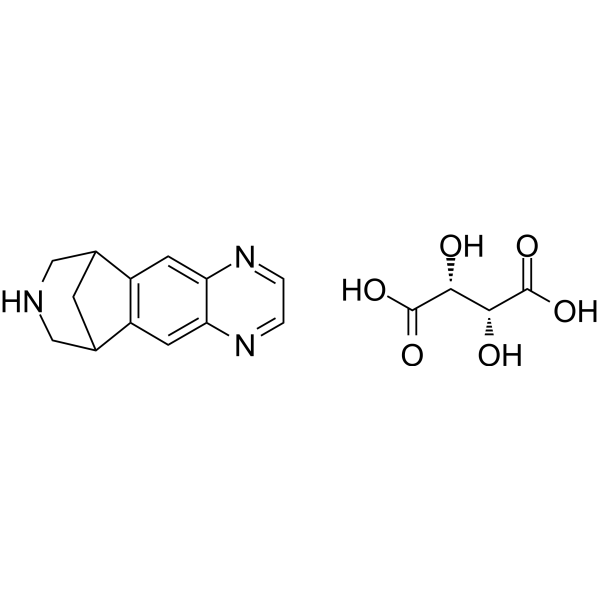
Varenicline Tartrate
 0 ImagesSynonyms: CP 526555-18
Varenicline (CP 526555) is an orally active partial agonist of α4β2 nicotinic acetylcholine receptor (α4β2 nAChR, IC50 = 250 nM), which is the principal mediator of nicotine dependence. Varenicline is also a partial agonist of α6β2 nAChR and a full agonist of α6β2 nAChR. Varenicline blocks the direct agonist effects of nicotine on nAChR while stimulates nAChR in a more moderate way, being widely used as an aid of smoking cessation.
-
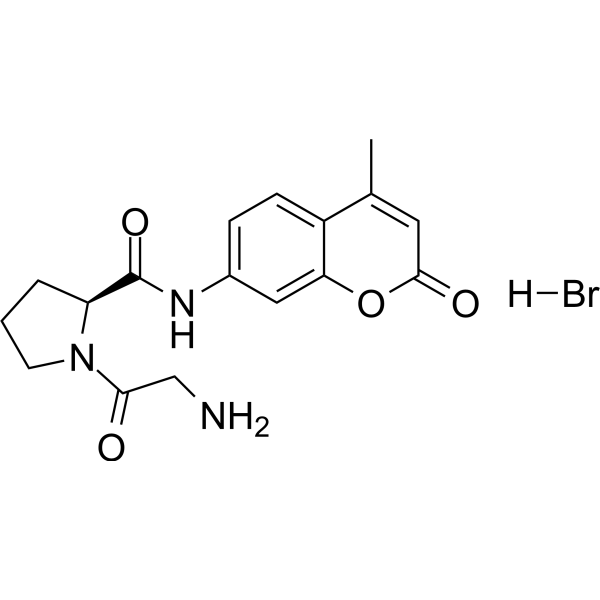
Gly-Pro-AMC hydrobromide
 0 Images
Gly-Pro-AMC hydrobromide is a fluorescent dye, it can be used as a specific fluorescent substrate for detecting Dipeptidyl peptidase IV (DPP-IV) activity.