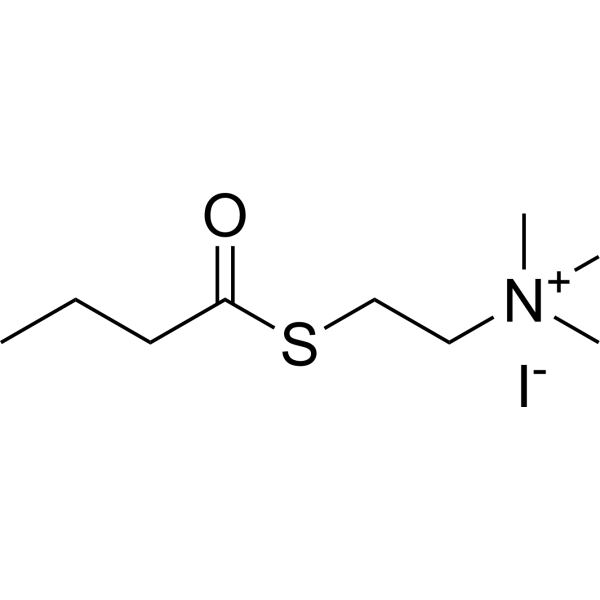
Others
-
Others Related Products (76616)
Related Products (76616)

-
SBB-Analogue (GL13) Biotin
 0 ImagesSynonyms: GL13; SBB-A-B
SBB-Analogue (GL13) Biotin (GL13; SBB-A-B) consists of a Sudan Black B (SBB) (HY-D0213) derivative conjugated with biotin. SBB-Analogue (GL13) Biotin potently detects senescent cells and eliminates the drawback of false-positive staining caused by serum starvation and cell fusion in SA-β-gal assays. SBB-Analogue (GL13) Biotin can be used in flow cytometry, immunofluorescence analysis, and other applications.
-
Azido Myristic Acid
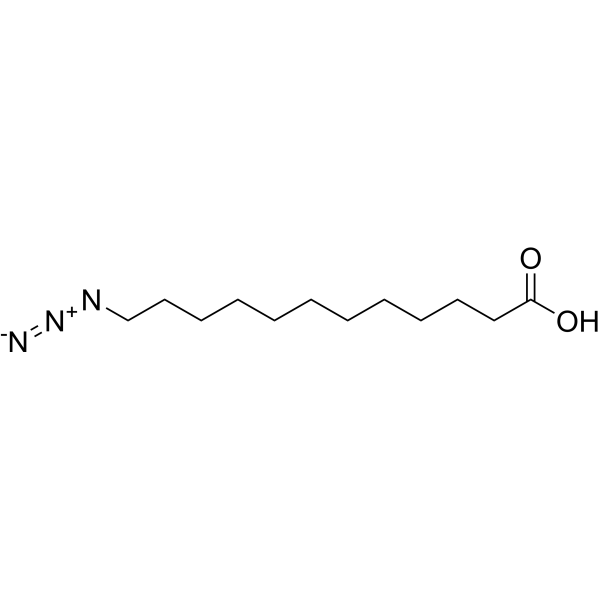 0 Images
Azido Myristic Acid is a click chemistry reagent containing an azide group. Azido Myristic Acid can be used to identify and characterize post-translationally myristylated proteins with using a simple and robust two-step labeling and detection technique. It contains an azide group and can undergo copper-catalyzed azide-alkyne cycloaddition (CuAAc) with molecules containing alkyne groups. It can also undergo ring strain-promoted alkyne-azide cycloaddition (SPAAC) with molecules containing DBCO or BCN groups.
-
tert-Butyl (1S,4S,5R)-5-hydroxy-2-azabicyclo[2.2.1]heptane-2-carboxylate
![tert-Butyl (1S,4S,5R)-5-hydroxy-2-azabicyclo[2.2.1]heptane-2-carboxylate](https://file.medchemexpress.com/product_pic/hy-34550a.gif "Click to View tert-Butyl (1S,4S,5R)-5-hydroxy-2-azabicyclo[2.2.1]heptane-2-carboxylate Product Detail") 0 ImagesCat. No.: HY-34550ACAS No.: 1932042-59-5
0 ImagesCat. No.: HY-34550ACAS No.: 1932042-59-5tert-Butyl (1S,4S,5R)-5-hydroxy-2-azabicyclo[2.2.1]heptane-2-carboxylate is a pharmaceutical intermediate used to synthesize various active compounds, such as FXR receptor agonists.
-
0.5 mL SBS Rack
 0 ImagesCat. No.: HY-E0225
The 0.5 mL SBS Rack is a 96-well biobank storage rack suitable for -80°C environments. It can hold 0.5 mL externally threaded cryogenic vials with 2D codes on the bottom, and supports automated sample tracking, detection, and laboratory information system integration. The 0.5 mL SBS Rack can be used with camera-based reading devices to scan and log biobank vials with 2D codes into databases, enabling rapid identification of aliquoted samples.
-
2-(Isopropylthio)aniline hydrochloride
 0 Images
2-(Isopropylthio)aniline hydrochloride is a drug intermediate for synthesis of various active compounds.
-
1-(tert-Butoxycarbonyl)-2-methylpyrrolidine-2-carboxylic acid
 0 ImagesSynonyms: Boc-α-me-dl-pro-oh
1-(tert-Butoxycarbonyl)-2-methylpyrrolidine-2-carboxylic acid (Boc-α-me-dl-pro-oh) is a drug intermediate for synthesis of various active compounds.
-
i-Inositol (Standard)
 0 ImagesSynonyms: myo-Inositol (Standard); meso-Inositol (Standard)
i-Inositol (Standard) is the analytical standard of i-Inositol. This product is intended for research and analytical applications. i-Inositol (myo-Inositol) is a compound of sugar alcohols. i-Inositol is involved in a series of biological processes such as insulin signal transduction and cytoskeletal transduction. i-Inositol mainly exists in glial cells and plays an osmotic role.
-
MES sodium salt
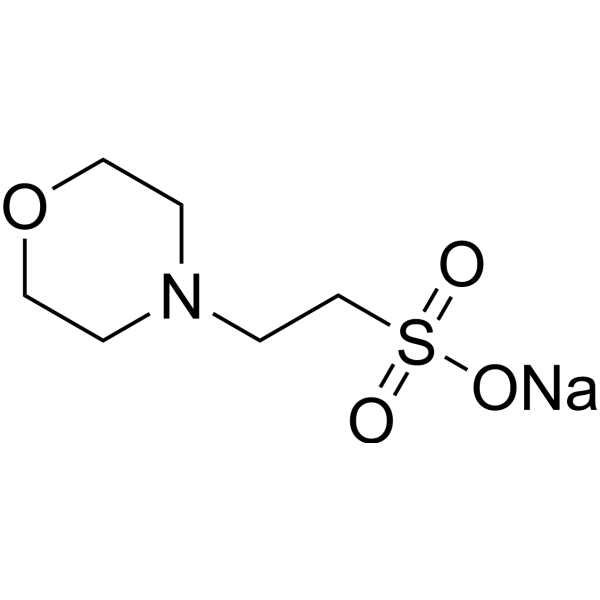 0 ImagesSynonyms: 2-Morpholinoethanesulphonic acid sodium salt
MES sodium salt (2-Morpholinoethanesulphonic acid) is a kind of amphoteric ion buffer, the buffer capacity ranging pH 5.5-7.0. As a Good's buffer, MES sodium salt is widely used in biochemistry and molecular biology experiments, such as cell culture, enzyme activity determination, electrophoresis and protein studies.

-
Coproporphyrin I dihydrochloride
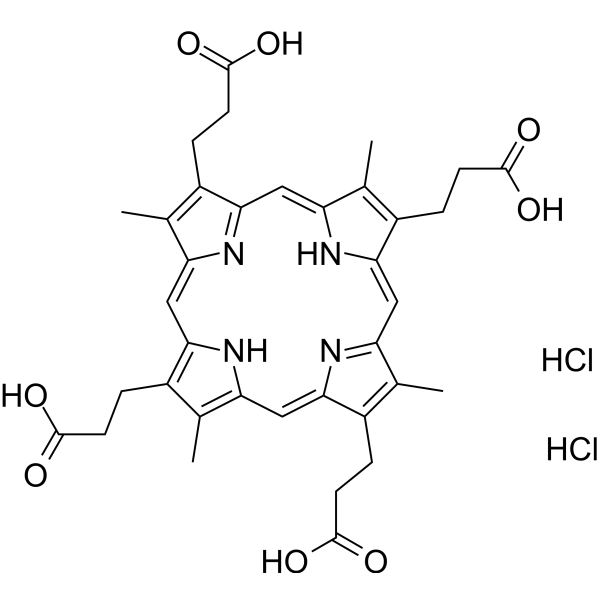 0 Images
Coproporphyrin I dihydrochlorideIt is an organic compound belonging to the class of porphyrins. It is a derivative of heme, an iron-containing molecule found in hemoglobin and other proteins. Coproporphyrin I dihydrochlorideOften used as a biomarker in the assessment of certain liver and metabolic diseases, especially those related to bile synthesis and transport. It can also be used as a reference standard for analytical chemistry and pharmacological research.
-
Hexadecane
 0 ImagesSynonyms: n-Hexadecane; Cetane
Hexadecane (n-Hexadecane; Cetane) is a long-chain n-alkane, oil component, and model hydrophobic compound. Hexadecane acts as a substrate for microbial degradation.Hexadecane induces microbial biosurfactant and bioemulsifier synthesis.
-
4-Azidobutyric acid
 0 Images
4-Azidobutyric acid is a click chemistry reagent featuring azide and carboxylic acid moieties. The carboxylic acid group can conjugate with alcohols or amides, while the azide group serves as a click chemistry handle to react with terminal alkynes or strained cyclooctynes. 4-Azidobutyric acid also acts as a PROTAC linker for the synthesis of PROTACs.
-
Papain inhibitor
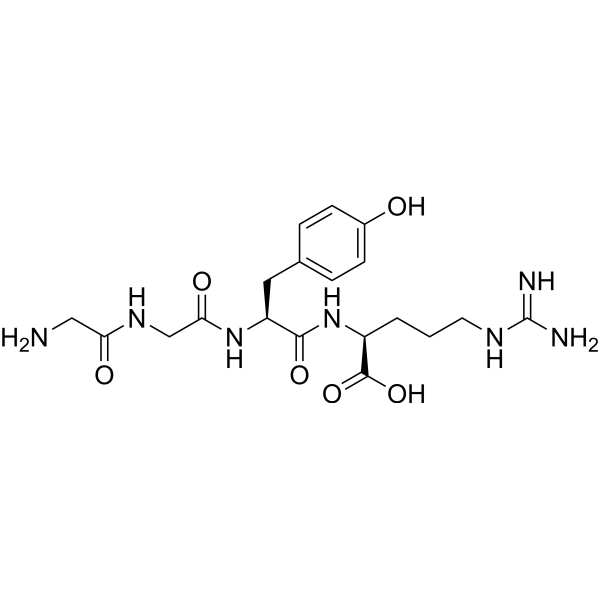 0 ImagesSynonyms: Glycylglycyl-L-tyrosyl-L-arginine
Papain inhibitor (Glycylglycyl-L-tyrosyl-L-arginine) is a competitive papain-targeting enzyme inhibitor with a Ki of 9 μM. Papain inhibitor binds directly to the substrate binding site of papain, inhibiting substrate hydrolysis by the enzyme. Papain inhibitor functions as a component of an electrochemical probe for the detection of papain.
-
3-Methyl-2-oxobutanoic acid (Standard)
 0 Images
3-Methyl-2-oxobutanoic acid (Standard) is the analytical standard of 3-Methyl-2-oxobutanoic acid. This product is intended for research and analytical applications. 3-Methyl-2-oxobutanoic acid is a precursor of pantothenic acid in Escherichia coli.
-
Di(adamantan-1-yl)phosphine
 0 ImagesSynonyms: Di-1-adamantylphosphine
Di(adamantan-1-yl)phosphine (Di-1-adamantylphosphine) is a biological molecule.
-
MeBIO
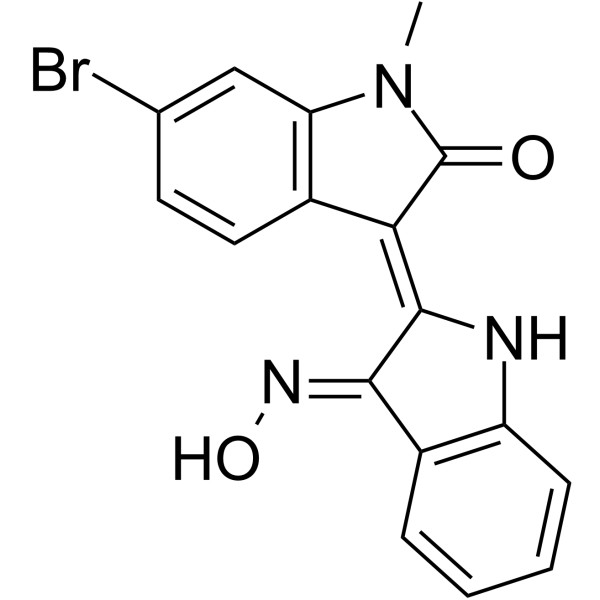 0 Images
MeBIO is a potent AhR (aryl hydrocarbon receptor) agonist, with IC50 of 44 μM (GSK-3) and 55 μM (CDK1/cyclin B), respectively.
-
DMPG sodium
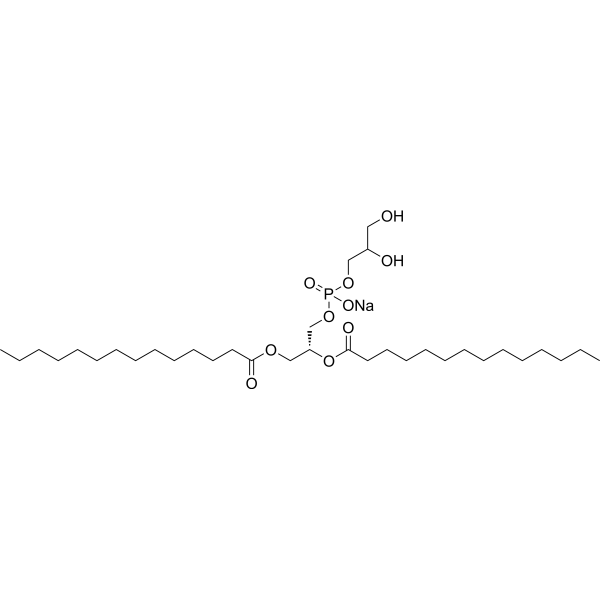 0 Images
DMPG sodium is a biochemical reagent. DMPG sodium is used as a liposome carrier to load 6-shogaol (HY-14616) with anticancer activity.
-
(S)-1-Boc-3-aminopyrrolidine
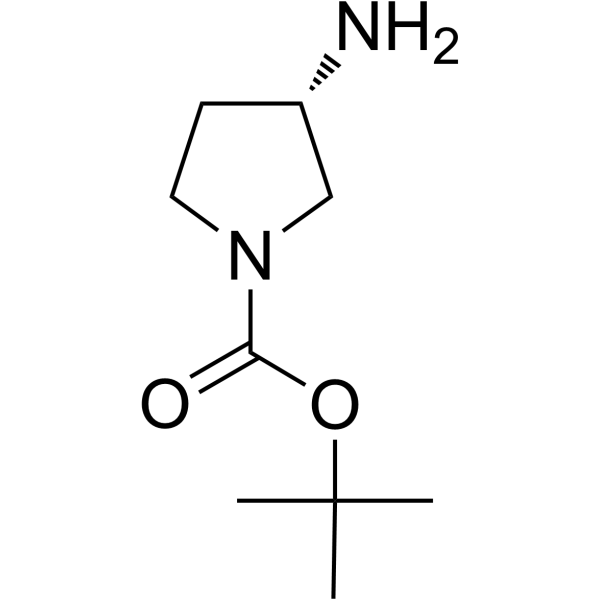 0 Images
(S)-1-Boc-3-aminopyrrolidine is a chiral protected amine reagent as well as a synthetic precursor.
-
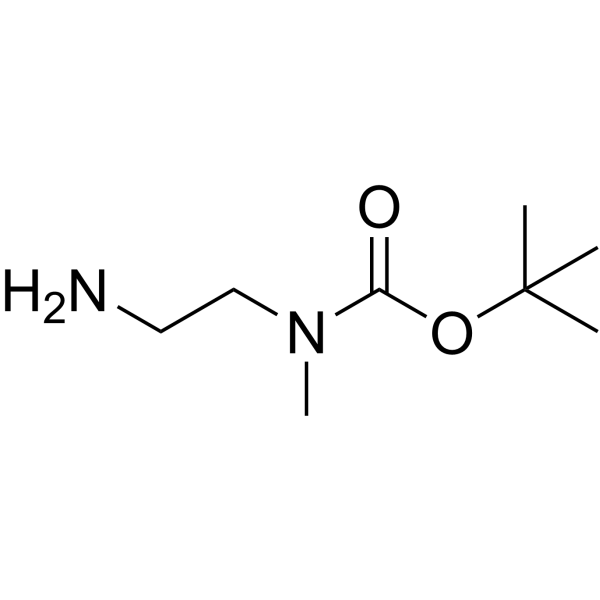
N-Boc-N-methylethylenediamine
 0 Images
tert-Butyl (2-aminoethyl)(methyl)carbamate is a biochemical reagent that can be used as a biological material or organic compound for life science related research.