



MES sodium salt
Based on 5 publication(s) in Google Scholar
MES sodium salt (2-Morpholinoethanesulphonic acid) is a kind of amphoteric ion buffer, the buffer capacity ranging pH 5.5-7.0. As a Good's buffer, MES sodium salt is widely used in biochemistry and molecular biology experiments, such as cell culture, enzyme activity determination, electrophoresis and protein studies.
연구목적의 판매만을 진행합니다. 환자를 대상으로 한 판매는 하지 않습니다.
- Purity : 98.0%
- CAS No.: 71119-23-8
- 화학식: C6H12NNaO4S
- 분자량:217.22
-
보관:
Store at room temperature, keep dry and cool.
In solvent -80°C, 1 year , -20°C, 6 months

To place orders, for customer services and technical support, please contact: MedChemExpress USA
Tel: 609-228-6898 E-mail: [email protected] [email protected]


-
 Biological Activity
-
Chemical Information
-
용액&용해도
- 순도&문서
- References
-
 Help & FAQs


-
HY-D0859A
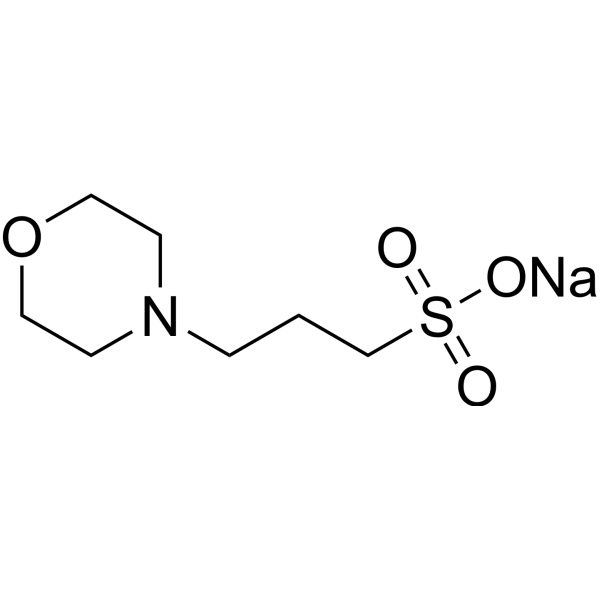
MOPS sodium saltBuffer -
HY-108535
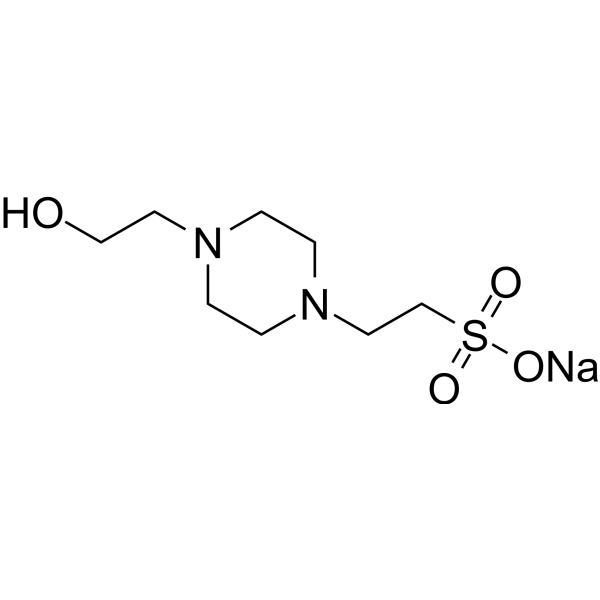
HEPES sodiumZwitterionic Buffer -
HY-10219
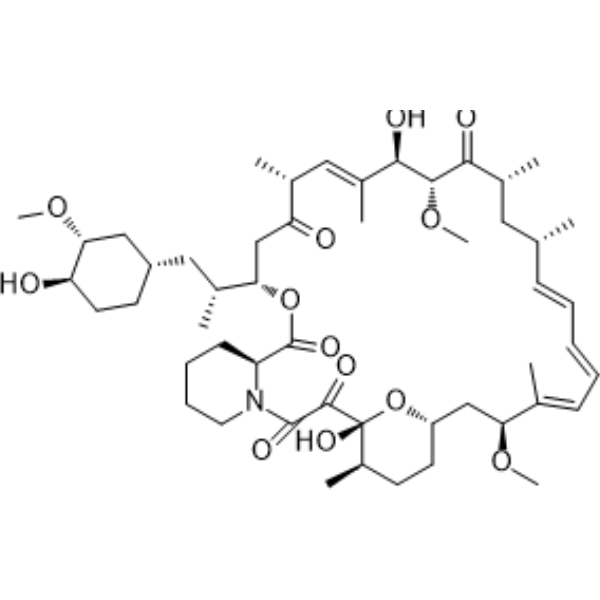
RapamycinmTOR Inhibitor -
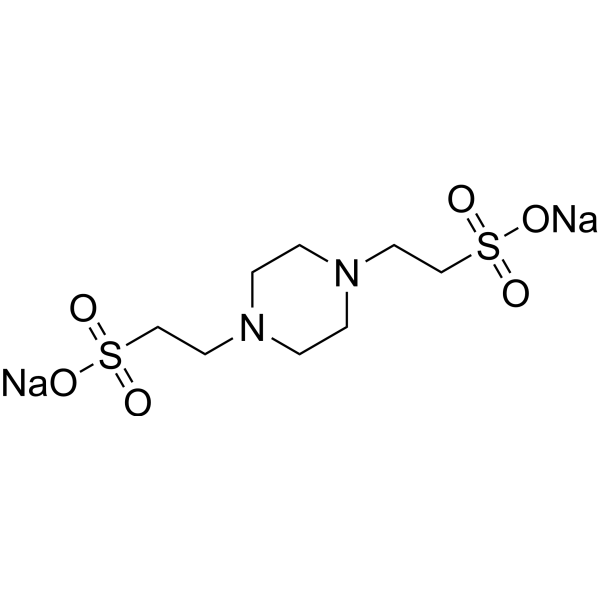
HY-W040147
PIPES disodiumBuffer Agent -
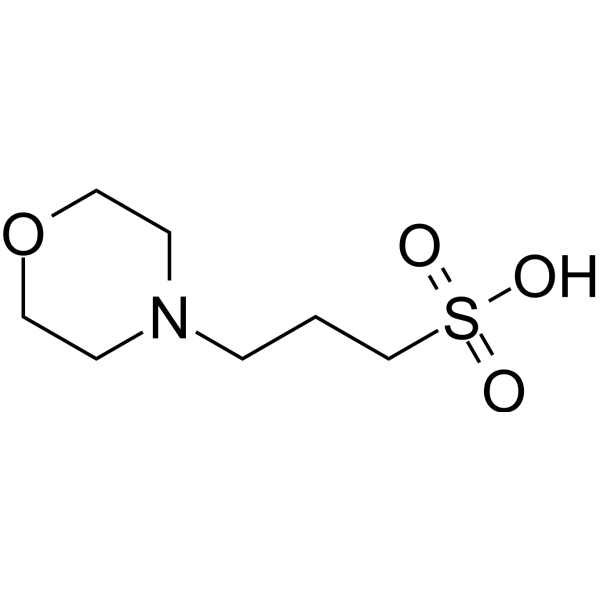
HY-D0859
MOPSBuffering Agent -
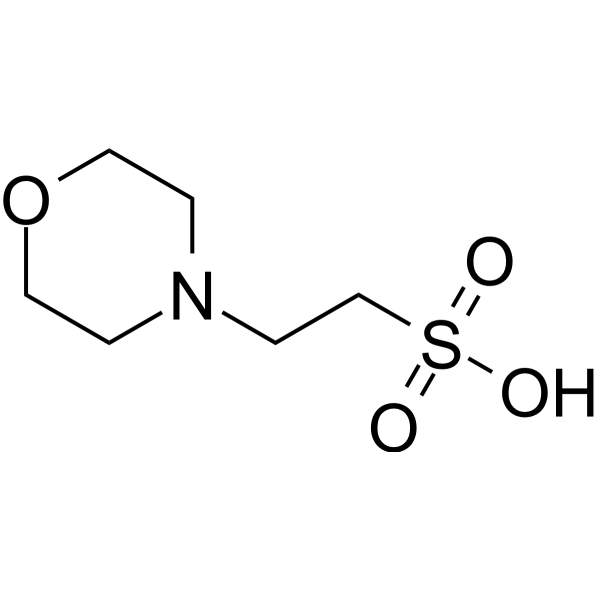
HY-D0858
MESBuffer -
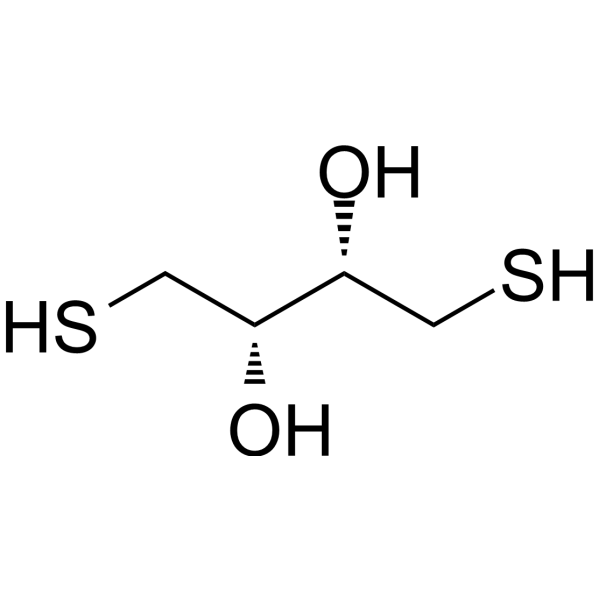
HY-15917
DL-DithiothreitolReducing Agent -
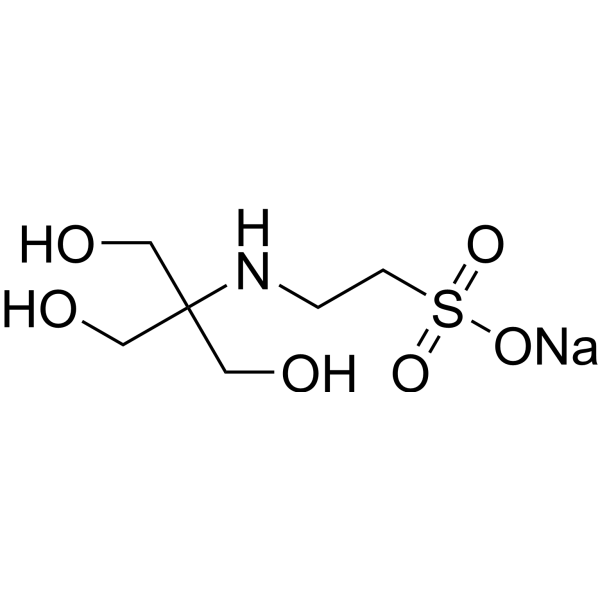
HY-23430A
TES sodiumBuffer -
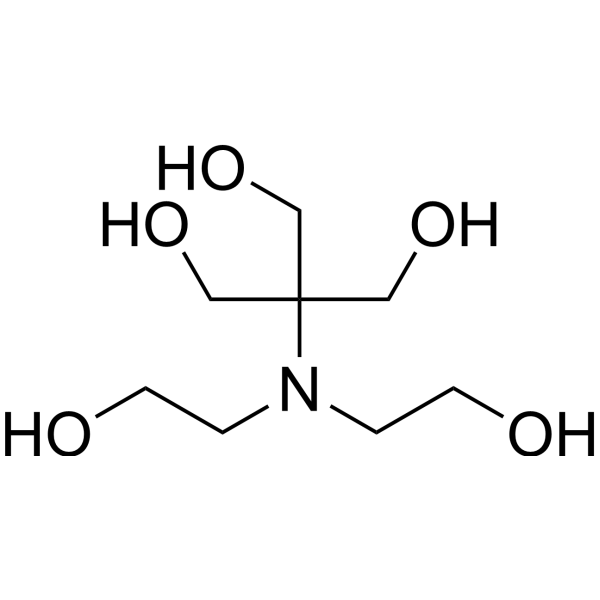
HY-D0856
Bis-TrisBuffer -

HY-D0855A
ADA disodiumAdenosine Deaminase Derivative -

HY-D0837
ImidazoleAChEI Inhibitor, XO Inhibitor, Thromboxane Inhibitor -
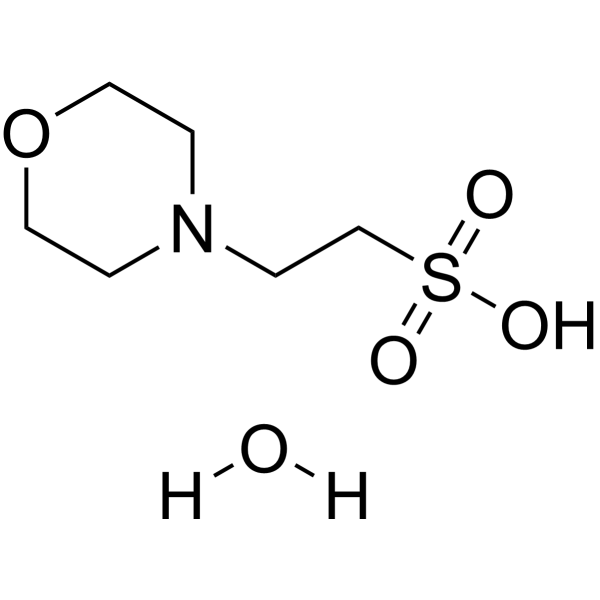
HY-D0858A
MES monohydrateBuffer
Publications Citing Use of MedChemExpress (MCE) MES sodium salt
More

Biological Activity
제품 설명
In Vitro
MES sodium salt is a zwitterionic buffer and can provide effective buffering capacity at around pH 6.15. The pKa value of MES sodium salt changes with temperature, so the change of its pKa value needs to be considered when using it at different temperatures[1].
MES sodium salt shows good buffering properties in biological experiments, exhibits poor affinity with metal ions (binding constants at 20 °C and 0.1 M: Mg2+, 0.8; Ca2+, 0.8; Mn2+, 1.7), thereby can be used in studies involving metal ions[1].
MedChemExpress (MCE) has not independently confirmed the accuracy of these methods. They are for reference only. .


Chemical Information
-
CAS No. 71119-23-8
-
Appearance Solid
-
분자량 217.22
-
화학식 C6H12NNaO4S
-
Color White to off-white
-
SMILES
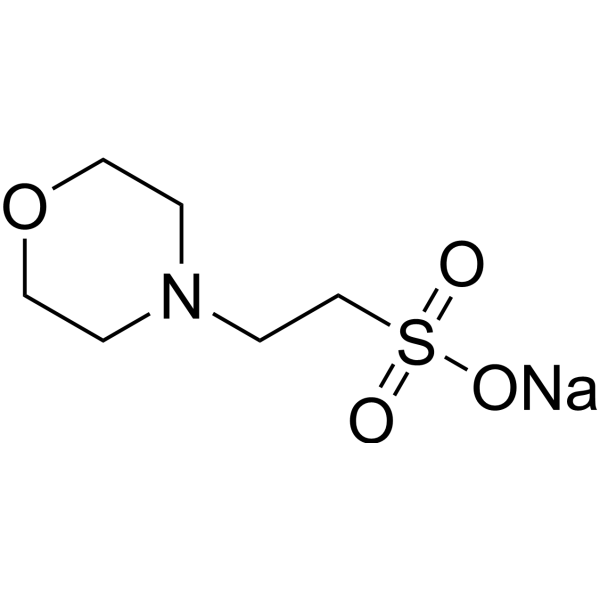
O=S(CCN1CCOCC1)(O[Na])=O
-
Synonyms
2-Morpholinoethanesulphonic acid sodium salt
-
선적
Room temperature in continental US; may vary elsewhere.
-
보관
Store at room temperature, keep dry and cool
In solvent -80°C 1 year -20°C 6 months


Publications (5)
-
Journal Impact Factor
-
Most Recent
-
J Nanobiotechnology
A novel spherical GelMA-HAMA hydrogel encapsulating APET×2 polypeptide and CFIm25-targeting sgRNA for immune microenvironment modulation and nucleus pulposus regeneration in intervertebral discs. [Abstract]2024 Sep 12;22(1):556. PMID: 39267105 -
-
Phytomedicine
Da-Bu-Yin-Wan rescues cognitive deficits in aging and Alzheimer's disease models by Wnt/β-catenin-dependent restoration of lysosomal acidification. [Abstract]2026 Apr:153:157916. PMID: 41662806 -
J Colloid Interface Sci
Enhanced photostability and targeting ability of hollow mesoporous manganese-based nanocarriers for NIR-II fluorescence image-guided surgery and photothermal therapy. [Abstract]2025 Nov 15:698:138094. PMID: 40494115 -
Cell Biol Toxicol
IGFBP3 enhances adipose-derived stem cell function in soft tissue injury repair via ITGB1 and ERK pathway activation. [Abstract]2025 May 15;41(1):85. PMID: 40369223


용액&용해도
In Vitro:
H2O : 25 mg/mL (115.09 mM; Need ultrasonic)
DMSO : 25 mg/mL (115.09 mM; Need ultrasonic; Hygroscopic DMSO has a significant impact on the solubility of product, please use newly opened DMSO)
Please refer to the solubility information to select the appropriate solvent. Once prepared, please aliquot and store the solution to prevent product inactivation from repeated freeze-thaw cycles.
Storage method and period of stock solution: -80°C, 1 year; -20°C, 6 months. When stored at -80°C, please use it within 1 year. When stored at -20°C, please use it within 6 months.
* Note: If you choose water as the stock solution, please dilute it to the working solution, then filter and sterilize it with a 0.22 μm filter before use.
Please refer to the solubility information to select the appropriate solvent. Once prepared, please aliquot and store the solution to prevent product inactivation from repeated freeze-thaw cycles.
Storage method and period of stock solution: -80°C, 1 year; -20°C, 6 months. When stored at -80°C, please use it within 1 year. When stored at -20°C, please use it within 6 months.
* Note: If you choose water as the stock solution, please dilute it to the working solution, then filter and sterilize it with a 0.22 μm filter before use.
Concentration (start) × Volume (start) = Concentration (final) × Volume (final)
In Vivo:
Select the appropriate dissolution method based on your experimental animal and administration route.
- For the following dissolution methods, please ensure to first prepare a clear stock solution using an In Vitro approach and then sequentially add co-solvents:
- To ensure reliable experimental results, the clarified stock solution can be appropriately stored based on storage conditions. As for the working solution for In Vivo experiments, it is recommended to prepare freshly and use it on the same day.
- The percentages shown for the solvents indicate their volumetric ratio in the final prepared solution. If precipitation or phase separation occurs during preparation, heat and/or sonication can be used to aid dissolution.
Add each solvent one by one: 10% DMSO 40% PEG300 5% Tween-80 45% Saline
Solubility: ≥ 2.5 mg/mL (11.51 mM); Clear solution
This protocol yields a clear solution of ≥ 2.5 mg/mL (saturation unknown).
Taking 1 mL working solution as an example, add 100 μL DMSO stock solution (25.0 mg/mL) to 400 μL PEG300, and mix evenly; then add 50 μL Tween-80 and mix evenly; then add 450 μL Saline to adjust the volume to 1 mL.
Preparation of Saline: Dissolve 0.9 g sodium chloride in ddH₂O and dilute to 100 mL to obtain a clear Saline solution.
Add each solvent one by one: 10% DMSO 90% (20% SBE-β-CD in Saline)
Solubility: ≥ 2.5 mg/mL (11.51 mM); Clear solution
This protocol yields a clear solution of ≥ 2.5 mg/mL (saturation unknown).
Taking 1 mL working solution as an example, add 100 μL DMSO stock solution (25.0 mg/mL) to 900 μL 20% SBE-β-CD in Saline, and mix evenly.
Preparation of 20% SBE-β-CD in Saline (4°C, storage for one week): 2 g SBE-β-CD powder is dissolved in 10 mL Saline, completely dissolve until clear.
In Vivo Dissolution Calculator
Please enter the basic information of animal experiments:
-
-
-
-
Recommended: Prepare an additional quantity of animals to account for potential losses during experiments.
Working solution concentration: 0.22 mg/mL
This product has good water solubility, please refer to the measured solubility data in water/PBS/Saline for details.


순도&문서
-
Data Sheet (274 KB)
-
SDS (396 KB)
- English - EN (396 KB)
- Français - FR (396 KB)
- Deutsch - DE (396 KB)
- Norwegian - NO (396 KB)
- Español - ES (396 KB)
- Swedish - SV (396 KB)
- Italian - IT (396 KB)
- Korean - KR (396 KB)
- Portuguese - PT (396 KB)
-
Handling Instructions (2659 KB)
References
[1]. N E Good, et al. Hydrogen ion buffers for biological research. Biochemistry. 1966 Feb;5(2):467-77. [Content Brief]
[2]. Tomoko Kagenishi, et al. MES Buffer Affects Arabidopsis Root Apex Zonation and Root Growth by Suppressing Superoxide Generation in Root Apex. Front Plant Sci. 2016 Feb 18;7:79. [Content Brief]


Complete Stock Solution Preparation Table
Please refer to the solubility information to select the appropriate solvent. Once prepared, please aliquot and store the solution to prevent product inactivation from repeated freeze-thaw cycles.
Storage method and period of stock solution: -80°C, 1 year; -20°C, 6 months. When stored at -80°C, please use it within 1 year. When stored at -20°C, please use it within 6 months.
| Optional Solvent | Concentration Solvent Mass | 1 mg | 5 mg | 10 mg | 25 mg |
|---|---|---|---|---|---|
| H2O / DMSO | 1 mM | 4.6036 mL | 23.0181 mL | 46.0363 mL | 115.0907 mL |
| 5 mM | 0.9207 mL | 4.6036 mL | 9.2073 mL | 23.0181 mL | |
| 10 mM | 0.4604 mL | 2.3018 mL | 4.6036 mL | 11.5091 mL | |
| 15 mM | 0.3069 mL | 1.5345 mL | 3.0691 mL | 7.6727 mL | |
| 20 mM | 0.2302 mL | 1.1509 mL | 2.3018 mL | 5.7545 mL | |
| 25 mM | 0.1841 mL | 0.9207 mL | 1.8415 mL | 4.6036 mL | |
| 30 mM | 0.1535 mL | 0.7673 mL | 1.5345 mL | 3.8364 mL | |
| 40 mM | 0.1151 mL | 0.5755 mL | 1.1509 mL | 2.8773 mL | |
| 50 mM | 0.0921 mL | 0.4604 mL | 0.9207 mL | 2.3018 mL | |
| 60 mM | 0.0767 mL | 0.3836 mL | 0.7673 mL | 1.9182 mL | |
| 80 mM | 0.0575 mL | 0.2877 mL | 0.5755 mL | 1.4386 mL | |
| 100 mM | 0.0460 mL | 0.2302 mL | 0.4604 mL | 1.1509 mL |
* Note: If you choose water as the stock solution, please dilute it to the working solution, then filter and sterilize it with a 0.22 μm filter before use.


MES sodium salt Related Classifications
HY-D0858B Related Classifications
 Powered by Bioz