



α-synuclein
α-Syn
α-Synuclein is an abundant neuronal protein that is highly enriched in presynaptic nerve terminals. α-synuclein regulates synaptic vesicle trafficking and subsequent neurotransmitter release. Genetics and neuropathology studies link α-synuclein to Parkinson's disease (PD) and other neurodegenerative disorders. Accumulation of misfolded oligomers and larger aggregates of α-synuclein defines multiple neurodegenerative diseases called synucleinopathies, but the mechanisms by which α-synuclein acts in neurodegeneration are unknown.
α-synuclein Isoform Specific Products
All Product Categories
-
α-synuclein Inhibitors
(117)
View all products
-
α-synuclein Antagonists
(2)
View all products
-
α-synuclein Activator
(1)
View all products
-
α-synuclein Modulators
(2)
View all products
-
α-synuclein Inducers
(2)
View all products
-
α-synuclein Degraders
(11)
View all products
-
α-synuclein Control
(1)
View all products
-
α-synuclein Ligands
(6)
View all products
-
α-synuclein Related Products (157)
Related Products (157)

-
α-synuclein Isoform Comparison
-
ELN484228
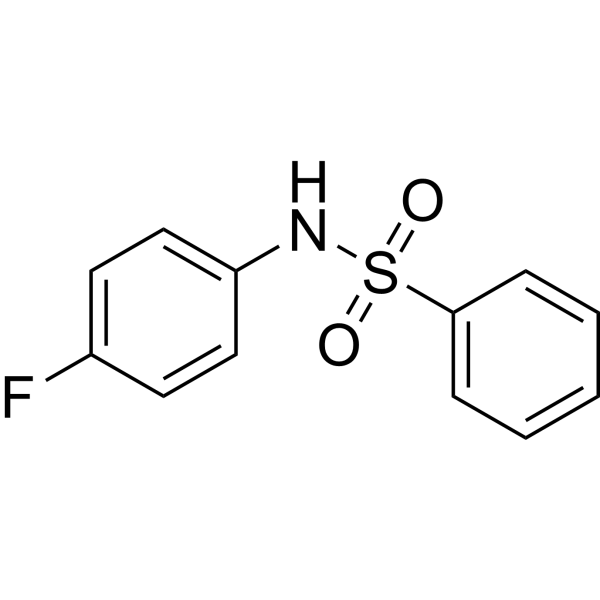 0 ImagesELN484228 is a blocker of α-synuclein which is a key protein in Parkinson’s disease.
-
α-Synuclein (61-95) (human)
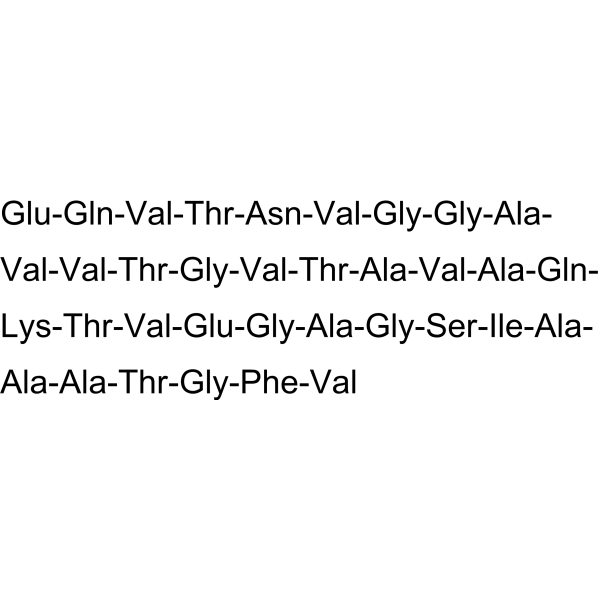 0 ImagesCat. No.: HY-P4704CAS No.: 154040-19-4α-Synuclein (61-95) (human) is the hydrophobic core region of α-synuclein, and induces neuronal cell death. α-Synuclein (61-95) (human) can be used for research of neurodegenerative diseases, including Alzheimer’s disease (AD) and Parkinson’s disease (PD).
-
BTA-1_b
 0 ImagesCat. No.: HY-151035CAS No.: 95856-73-8Synonyms: BTA-1-CH3BTA-1_b (BTA-1-CH3) is a structural analog of BTA-1 (HY-W278021). BTA-1 is an uncharged derivative of Thioflavin-T. It exhibits high affinity for Aβ fibrils and demonstrates excellent brain penetration and clearance capabilities.
-
Movronersen sodium
 0 ImagesCat. No.: HY-177647ASynonyms: BIIB-101 sodium; ION-464 sodiumMovronersen sodium is an antisense oligonucleotide targeted to α-synuclein.
-
Movronersen sodium scrambled negative control
 0 ImagesCat. No.: HY-177647BMovronersen sodium scrambled negative control is the sequence scrambled negative control of Movronersen sodium.
-
Movronersen
 0 ImagesCat. No.: HY-177647CAS No.: 2411937-33-0Synonyms: BIIB-101; ION-464Movronersen is an antisense oligonucleotide targeted to α-synuclein.
-
Crocin II (Standard)
 0 ImagesCat. No.: HY-N0698RCAS No.: 55750-84-0Crocin II (Standard) is the analytical standard of Crocin II. This product is intended for research and analytical applications. Crocin II is an inhibitor targeting α-synuclein aggregation, with a IC50 of 0.541 μM and a EC50 of 3.63 μM. Crocin II inhibits α-synuclein aggregation and dissociates pre-formed α-synuclein fibrils. Crocin II possesses antioxidant, anticancer and antidepressant activities. Crocin II is applicable to research related to neurological disorders such as Parkinson's disease, dementia with Lewy bodies and multiple system atrophy, as well as cancers.
-
ZPD-2
 0 ImagesCat. No.: HY-170553ZPD-2 inhibits the aggregation of C-terminally truncated and full-length α-synuclein. ZPD-2 inhibits the formation and fibrillation of α-Syn, thereby preventing its propagation. ZPD-2 can be used in research of Parkinson's disease.
-
SK-129
 0 ImagesCat. No.: HY-182893CAS No.: 1919889-97-6SK-129 is a blood-brain barrier-permeable inhibitor of α-synuclein (αS) oligomers with a Kd of 221 nM. SK-129 preferentially binds to neurotoxic αS oligomers over physiological αS monomers, inhibits αS aggregation, blocks the interaction and co-aggregation of αS with tau protein, and prevents the maturation of αS-tau condensates into amyloid aggregates. SK-129 reduces ROS production, rescues dopaminergic neuron degeneration, improves motor function, restores endogenous dopamine synthesis, increases the number of Tyrosine Hydroxylase-positive neurons, prevents brain histopathological changes, alleviates neuroinflammation, and improves survival rates in relevant models. SK-129 can be used in research related to Parkinson's disease (PD) and Lewy body dementia (LBD).
-
tau Protein/α-synuclein-IN-2
 0 ImagesCat. No.: HY-159945Tau Protein/α-synuclein-IN-2 (Compound 14T) is a blood-brain barrier penetrating tau and α-syn inhibitor. Through its thiourea linker structure, Tau Protein/α-synuclein-IN-2 dose-dependently reduces α-syn oligomerization. In biosensor cells, Tau Protein/α-synuclein-IN-2 prevents the seeding effect of tau aggregation. In the M17D neuroblastoma model, Tau Protein/α-synuclein-IN-2 exhibits anti-inclusion effects. Additionally, Tau Protein/α-synuclein-IN-2 reduces Aβ plaque formation. Tau Protein/α-synuclein-IN-2 holds promise for Alzheimer's disease and Parkinson's disease research.
-
α-synuclein-IN-16
 0 ImagesCat. No.: HY-175737α-synuclein-IN-16 (Compound H1) is a α-synuclein inhibitor. α-synuclein-IN-16 significantly inhibits the secondary nucleation in α-synuclein aggregation. α-synuclein-IN-16 can be used for Parkinson’s disease research.
-
D-520
 0 ImagesCat. No.: HY-120156CAS No.: 1619269-47-4D-520 is a potent and brain-penetrant dopamine D2/D3 agonist (D2 EC50 = 4.73 nM, Ki = 41.8 nM; D3 EC50 = 2.18 nM, Ki = 0.35 nM). D-520 inhibits the formation of Aβ aggregates in vitro and promotes the disaggregation of both alpha-synuclein (α-syn) and Aβ aggregates. D-520 exhibits efficacious activity in animal models of Parkinson’s disease (PD). D-520 can be used for PD and PD with dementia (PDD) research[1][2].
-
Harmol hydrochloride
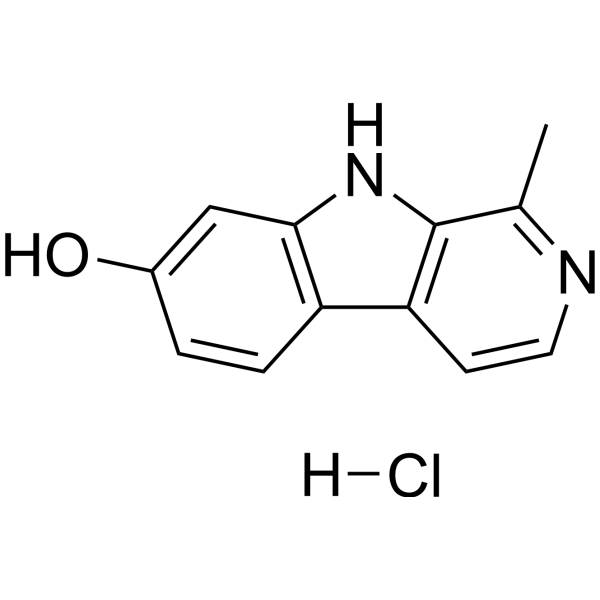 0 ImagesCat. No.: HY-107811ACAS No.: 40580-83-4Harmol hydrochloride is an orally active β-carboline alkaloid. Harmol hydrochloride is a TFEB activator and monoamine oxidase inhibitor. Harmol hydrochloride can induce cell mitosis, Autophagy and Apoptosis. Harmol hydrochloride promotes the degradation of α-synuclein by regulating the autophagy-lysosomal pathway. Harmol hydrochloride has anti-tumor, anti-depressant and anti-aging activities. Harmol hydrochloride improves motor impairment in a mouse Parkinson's disease model.
-
Hordenine-d6 hydrochloride
 0 ImagesCat. No.: HY-N0113BSSynonyms: Ordenina-d6 hydrochloride; Peyocactine-d6 hydrochlorideHordenine-d6 hydrochloride (Ordenina-d6 hydrochloride; Peyocactine-d6 hydrochloride) is the deuterated-labeled Hordenine hydrochloride (HY-N0113B). Hordenine hydrochloride (Ordenina hydrochloride; Peyocactine hydrochloride) is a multifunctional alkaloid with oral activity and blood-brain barrier penetration. Hordenine hydrochloride inhibits LPS-induced phosphorylation of p38, JNK, ERK1/2, p65, IκB, and AKT, prevents p65 nuclear translocation, and suppresses inflammatory cytokines and mediators. Hordenine hydrochloride inhibits melanin synthesis in melanocytes and reconstructed epidermis. Hordenine hydrochloride activates the Wnt/β-catenin signaling pathway. Hordenine hydrochloride activates DRD2, acts as a D3R partial agonist, α2A-AR full agonist, and 5-HT2A-R antagonist, and inhibits SERT and DAT. Hordenine hydrochloride inhibits α-synuclein accumulation and ameliorates motor deficits in Parkinson's disease models. Hordenine hydrochloride limits alcohol intake, reduces relapse drinking behavior. Hordenine hydrochloride can be used for research on mastitis, skin pigmentation, acute lung injury, foodborne diseases, hair loss, Parkinson's disease, bacterial infections, and alcohol use disorder.
-
α-Synuclein inhibitor 9
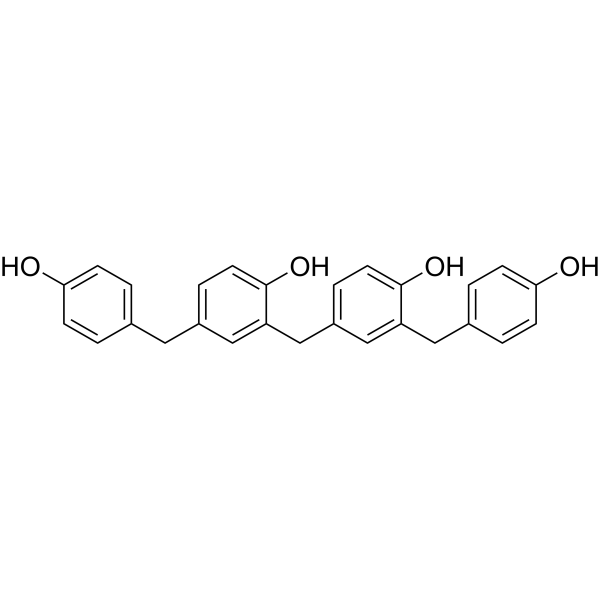 0 ImagesCat. No.: HY-149509CAS No.: 1510825-03-2α-Synuclein inhibitor 9 (Compound 20C) is an α-Synuclein inhibitor. α-Synuclein inhibitor 9 binds to cavities in mature α-synuclein fibrils and reduces the β-sheet structure. α-Synuclein inhibitor 9 inhibits A53T α-Syn aggregation. α-Synuclein inhibitor 9 has neuroprotective effect, improves brain functional connection and relieves motor dysfunction.α-Synuclein inhibitor 9 can be used for Parkinson’s disease (PD) research..
-
MAAAHR
 0 ImagesCat. No.: HY-P12279MAAAHR is a neuroprotective agent. MAAAHR is isolated and purified from C-phycocyanin of Spirulina platensis. MAAAHR induces antioxidant gene expression through activating the Nrf2 signaling pathway. MAAAHR inhibits excessive Autophagy by reducing the expression of proteins such as α-Syn and Parkin. MAAAHR inhibits Apoptosis. MAAAHR scavenges excessive ROS, enhances SOD, CAT, and GSH-Px activities, and reduces protein carbonyl content. MAAAHR inhibits Acetylcholinesterase. MAAAHR protects zebrafish against MPTP (HY-15608)-induced dopaminergic neuronal and neurovascular loss and alleviates motor impairment. MAAAHR can be used for research on Parkinson's disease.
-
HUP-55
 0 ImagesCat. No.: HY-169831CAS No.: 3006795-68-9HUP-55 is a prolyl endopeptidase inhibitor (IC50 = 5 nM). HUP-55 reduces the dimerization of α-synuclein in Neuro2a cells and induces autophagy (Autophagy) in HEK293 cells. It also decreases the increase in reactive oxygen species (ROS) production induced by hydrogen peroxide in SH-SY5Y cells at a concentration of 10 μM. In a mouse Parkinson’s disease model, HUP-55 (10 mg/kg) improves motor function (reduces the use frequency of the impaired paw) and decreases the levels of harmful oligomers of α-synuclein in the striatum caused by overexpression of α-synuclein.
-
NPT100-18A
 0 ImagesCat. No.: HY-156898NPT100-18A is an αSyn oligomerization inhibitor. NPT10018A rescues cleaved caspase-3 levels to control levels. NPT10018A attenuates mitochondrial oxidative stress probe levels in a compartment-specific manner and, at higher concentrations, increases ATP signals. NPT100-18A can be used for the study of Parkinson’s disease (PD).
-
α-Synuclein (45-54) (human)
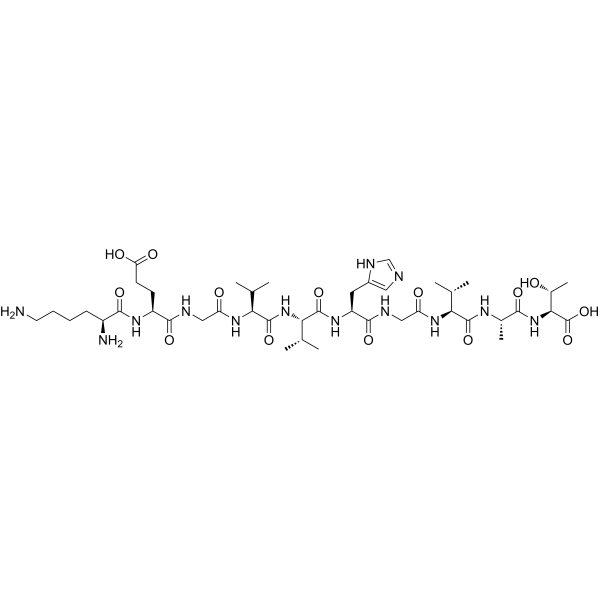 0 ImagesCat. No.: HY-P5044CAS No.: 2243206-98-4α-Synuclein (45-54) (human) is the 45-54 fragment of α-Synuclein. α-Synuclein is an abundant neuronal protein that is highly abundant in presynaptic nerve terminals. α-Synuclein is a biomarker for Parkinson's disease (PD).
-
α-Synuclein inhibitor 8
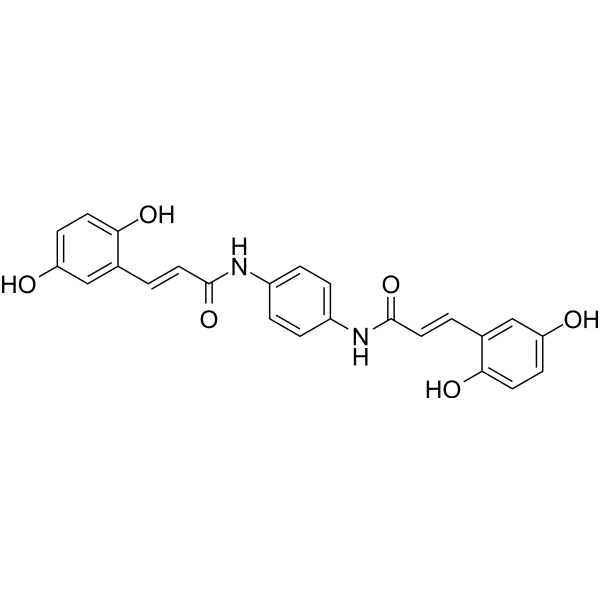 0 ImagesCat. No.: HY-152552CAS No.: 2883627-64-1α-Synuclein inhibitor 8 is an active inhibitor of α-Synuclein with an IC50 value of 2.5 µM. α-Synuclein inhibitor 8 has highly inhibition on the aggregation and disaggregation of α-Synuclein fibers. α-Synuclein inhibitor 8 reduces the formation of inclusions in neurons that can repairs damage neurons and improves Parkinson’s disease (PD)-like symptoms. α-Synuclein inhibitor 8 has high antioxidant activity and low cytotoxicity.



