



Cholinesterase (ChE)
Cholinesterase (ChE) is a family of enzymes present in the central nervous system, particularly in nervous tissue, muscle and red cells, which catalyze the hydrolysis of the neurotransmitter acetylcholine into choline and acetic acid, a reaction necessary to allow a cholinergic neuron to return to its resting state after activation. It is one of many important enzymes needed for the proper functioning of the nervous systems of humans.
There are two types: acetylcholinesterase (AChE, acetylcholine hydrolase) and butyrylcholinesterase (BChE, acylcholine acylhydrolase), also known as nonspecific cholinesterase or pseudocholinesterase. AChE is primarily found in the blood on red blood cell membranes, in neuromuscular junctions, and in neural synapses, while BChE is produced in the liver and found primarily in plasma. The difference between the two types of cholinesterase is their relative preferences for substrates: AChE hydrolyzes acetylcholine faster while BChE hydrolyzes butyrylcholine faster.
Cholinesterase (ChE) Isoform Specific Products
All Product Categories
-
Cholinesterase (ChE) Inhibitors
(922)
View all products
-
Cholinesterase (ChE) Agonists
(5)
View all products
-
Cholinesterase (ChE) Antagonists
(10)
View all products
-
Cholinesterase (ChE) Activators
(33)
View all products
-
Cholinesterase (ChE) Modulators
(11)
View all products
-
Cholinesterase (ChE) Chemical
(1)
View all products
-
Cholinesterase (ChE) Inducer
(1)
View all products
-
Cholinesterase (ChE) Controls
(6)
View all products
-
Cholinesterase (ChE) Substrates
(2)
View all products
-
Cholinesterase (ChE) Related Products (1069)
Related Products (1069)

-
Antibodies (2)
-
Cholinesterase (ChE) Isoform Comparison
-
TAK-802
 0 ImagesCat. No.: HY-19478CAS No.: 263248-16-4TAK-802 is an orally active and potent acetylcholinesterase inhibitor. TAK-802’s distribution in red blood cells has a significant concentration dependence, with the distribution ratio decreasing as the concentration increases. TAK-802 exhibits significant nonlinear pharmacokinetic behavior.
-
7-Acetoxy-1-methylquinolinium iodide
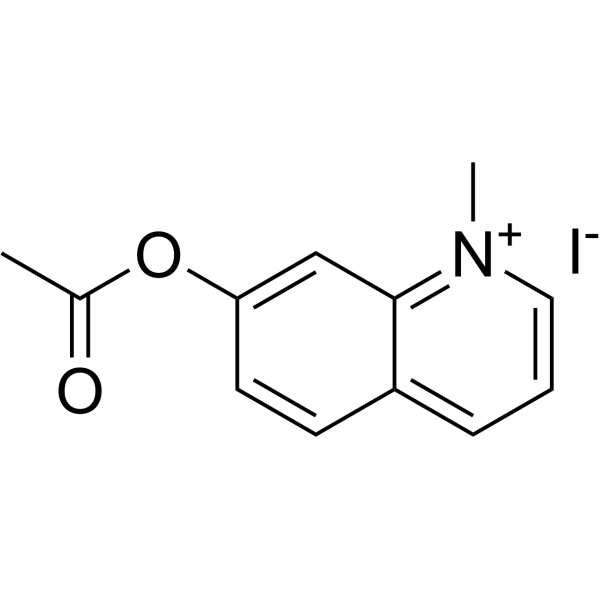 0 Images7-Acetoxy-1-methylquinolinium iodide (AMQI) is a fluorogenic substrate for cholinesterase (Ex = 320 nm, Em = 410 nm). Hydrolysis of 7-acetoxy-1-methylquinolinium iodide is used at the fluorometric flow system for the detection and identification of inhibitors..
-
AChE/BChE/BACE-1-IN-1
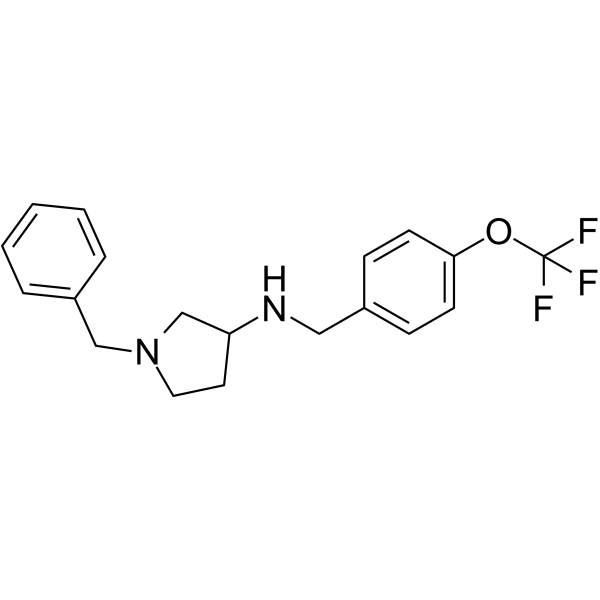 0 ImagesCat. No.: HY-147658CAS No.: 1321361-13-0AChE/BChE/BACE-1-IN-1 (Compound 4k) is an orally active inhibitor of AChE, BChE, and BACE-1 with IC50 values of 0.058, 0.082 and 0.115 μM against hAChE, hBChE and hBACE-1, respectively. AChE/BChE/BACE-1-IN-1 shows considerable PAS-AChE binding capability, excellent brain permeation, potential disassembly of Aβ aggregates, and neuroprotective activity against Aβ-induced stress. AChE/BChE/BACE-1-IN-1 has remarkable antioxidant potential.
-
Dehydrodiscretamine chloride
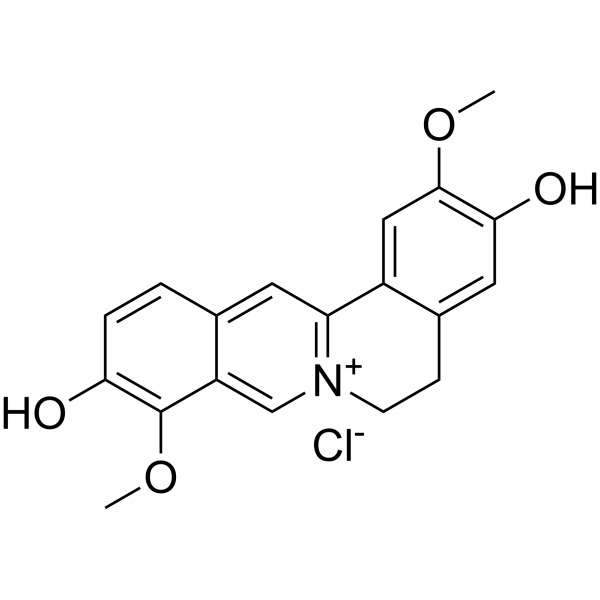 0 ImagesCat. No.: HY-N12075CAS No.: 78134-82-4
-
BChE/hCA II-IN-1
 0 ImagesCat. No.: HY-178017BChE/hCA II-IN-1 (Compound 20) is a dual-functional inhibitor of Butyrylcholinesterase (BChE) and human carbonic anhydrase II (hCA II) with IC50s of 76.50 and 10.69 μM for BChE and hCA II, respectively. BChE/hCA II-IN-1 can be used for neurodegenerative diseases like Alzheimer's and glaucoma research.
-
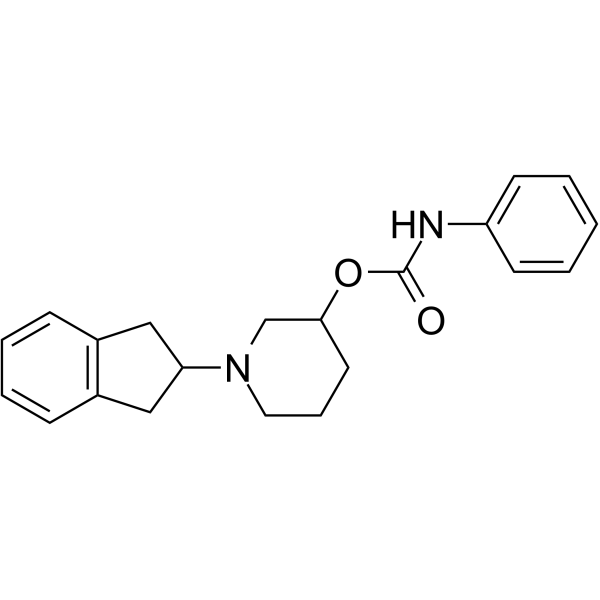
hAChE-IN-9
 0 ImagesCat. No.: HY-168052hAChE-IN-9 (compound 7i) is a selective inhibitor of human acetylcholinesterase (hAChE) with IC50 of 0.05 μM and 2.85 μM for AChE and BChE, respectively. hAChE-IN-9 modulates toxic Aβ oligomer forms into non-toxic ones and has antioxidant and neuroprotective effects against Aβ-induced toxicity. hAChE-IN-9 can be used for the study of Alzheimer's disease.
-
hAChE/hBACE-1-IN-3
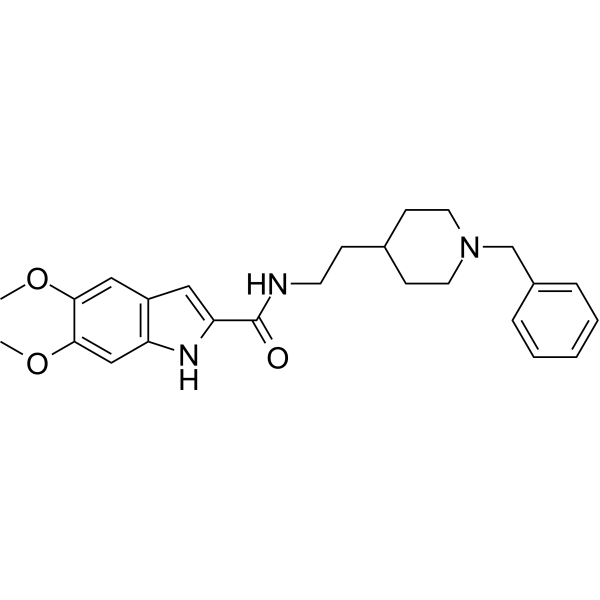 0 ImagesCat. No.: HY-162127CAS No.: 3026984-15-3hAChE/hBACE-1-IN-3 (Compound 23a) is a mixed-type inhibitor of hAChE and hBACE-1 with IC50 values of 0.32 μM and 0.39 μM, respectively, Ki values of 0.26 μM and 0.46 μM, respectively. hAChE/hBACE-1-IN-3 can penetrate the blood-brain barrier.
-
AChE-IN-14
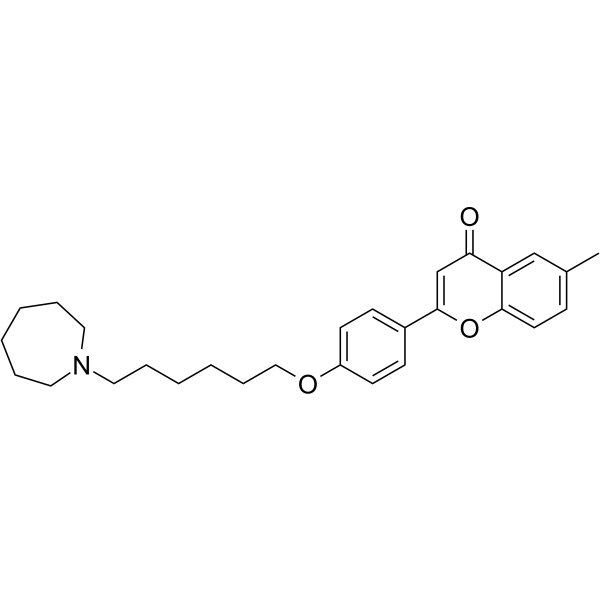 0 ImagesCat. No.: HY-146035CAS No.: 2390042-05-2AChE-IN-14 (compound 5) is a potent cholinesterase inhibitor with IC50s of 0.46 , 0.48, and 0.44 μM for electric eel acetylcholinesterase (eeAChE), human recombinant acetylcholinesterase (hAChE), and equine serum butyrylcholinesterase (eqBuChE), respectively. AChE-IN-14 exhibits high affinity toward human H3 receptor (H3R; Ki= 159.8 nM). AChE-IN-14 can be used for the research of Alzheimer’s disease.
-
Bornaprine
 0 ImagesCat. No.: HY-121603CAS No.: 20448-86-6Bornaprine is an anticholinergic agent that can be used in the study of parkinsonism. Bornaprine shows a pA2 value of 7.27.
-
AChE-IN-100
 0 ImagesCat. No.: HY-180113AChE-IN-100 (Compound 5n) is an AChE inhibitor with an IC50 of 2.38 nM. AChE-IN-100 shows superior ROS-scavenging capabilities. AChE-IN-100 has antioxidant capacity. AChE-IN-100 shows a significant neuroprotective effect against hydrogen peroxide-induced damage. AChE-IN-100 can be used in the research of Alzheimer’s diseases.
-
ChE/GSK-3β-IN-1
 0 ImagesCat. No.: HY-179496ChE/GSK-3β-IN-1 (compound 18o) is a potent dual ChE/GSK-3β inhibitor. ChE/GSK-3β-IN-1 exhibits dual inhibition of AChE (IC50 = 1.7 μM), butyrylcholinesterase (BChE) (IC50 = 5.3 μM), and GSK-3β (IC50 = 5.7 μM). ChE/GSK-3β-IN-1 inhibits Aβ1-42 self-aggregation. ChE/GSK-3β-IN-1 can be used for Alzheimer’s disease (AD) research.
-
Lycoramine hydrobromide
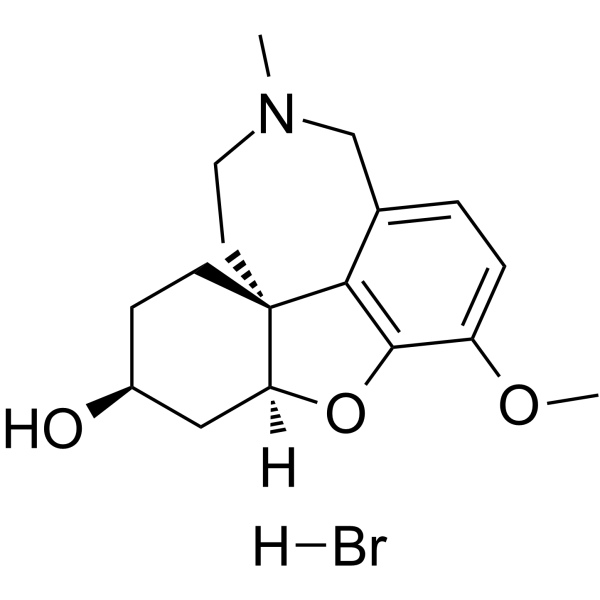 0 ImagesCat. No.: HY-N6619CAS No.: 89505-76-0Lycoramine hydrobromide, a dihydro-derivative of galanthamine, is isolated from Lycoris radiate. Lycoramine hydrobromide is a potent acetylcholinesterase (AChE) inhibitor.
-
COX-2-IN-67
 0 ImagesCat. No.: HY-184292COX-2-IN-67 is an orally active, blood-brain barrier permeable multi-target inhibitor that potently targets COX-2 (IC50=0.07 μM), hCA IX (Ki=62.7 nM) and hBuChE (IC50=0.47 μM). COX-2-IN-67 alleviates oxidative stress and liver stress, improves glucose homeostasis and insulin sensitivity, and optimizes lipid profiles. Meanwhile, COX-2-IN-67 effectively reduces the levels of neuroinflammatory markers and improves hippocampus-dependent cognitive function in a high-fat diet-induced rat model. COX-2-IN-67 can be used for the research of metabolic dysfunction-associated mild cognitive impairment.
-
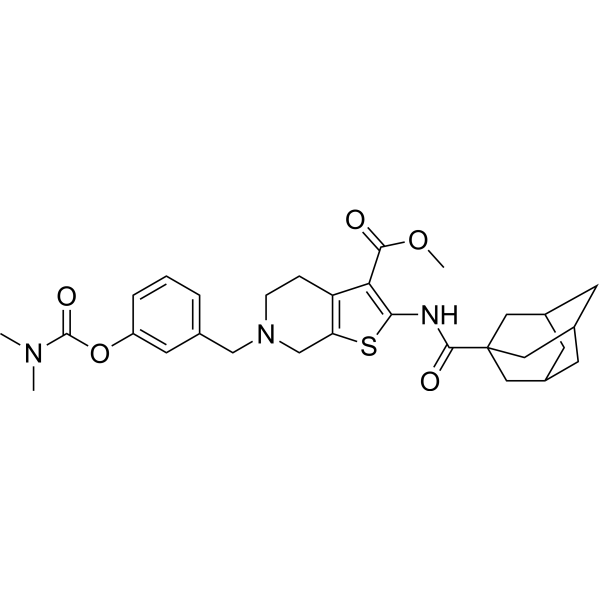
AChE-IN-120
 0 ImagesCat. No.: HY-184791AChE-IN-120 is a blood-brain barrier-permeable AChE inhibitor, with an IC50 of 0.91 μM and a Ki of 1.027 μM against human AChE. AChE-IN-120 exerts neuroprotective effects against oxidative damage. AChE-IN-120 can be used for the research of Alzheimer's disease.
-
GFAP/NF-κB/APOE/NLRP3-IN-1
 0 ImagesCat. No.: HY-183796GFAP/NF-κB/APOE/NLRP3-IN-1 is an orally active, blood-brain barrier-permeable multi-target inhibitor with an IC50 of 3.50 nM against Acetylcholinesterase. GFAP/NF-κB/APOE/NLRP3-IN-1 inhibits BACE-1 with an IC50 of 14.61 nM. GFAP/NF-κB/APOE/NLRP3-IN-1 inhibits Aβ1-42 aggregation with an IC50 of 8.63 μM. GFAP/NF-κB/APOE/NLRP3-IN-1 reduces the levels of GFAP, NLRP3 inflammasome, NF-κB and APOE. GFAP/NF-κB/APOE/NLRP3-IN-1 is applicable for the research of Alzheimer's disease and neuroblastoma.
-
BChE-IN-6
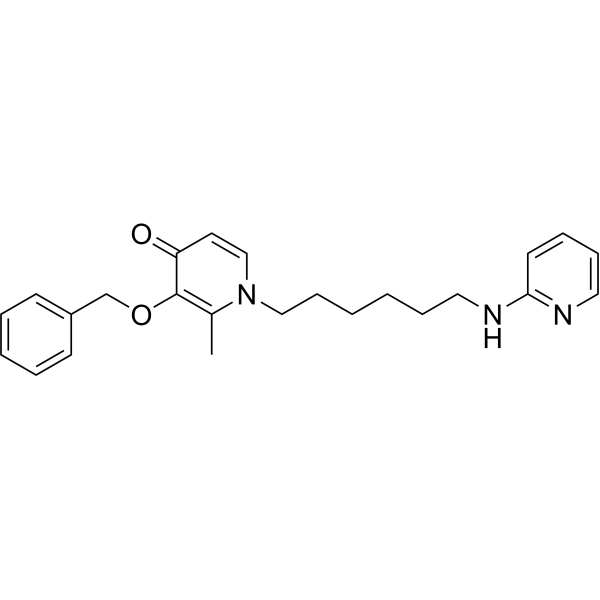 0 ImagesCat. No.: HY-146669CAS No.: 2421121-10-8BChE-IN-6 (compound 12) is a potent BChE inhibitor, with a Ki of 0.182 μM. BChE-IN-6 shows chelating capacity on Zn2+. BChE-IN-6 can be used for Alzheimer’s disease (AD) research.

-
hMAO-B-IN-8
 0 ImagesCat. No.: HY-162523hMAO-B-IN-8 (Compound 23) is a hMAO-B, eeAChE, COX-2 and 5-LOX inhibitor, with IC50 values of 0.037 μM, 0.071 μM, 14.3 μM and 0.59 μM, respectively. hMAO-B-IN-8 can be used for the research of Alzheimer's disease.




