



DYRK1
Dual-specificity tyrosine-regulated kinase 1A (DYRK1A) is a serine/threonine kinase that regulates neuronal differentiation, synaptic plasticity, and cell cycle progression[1][4]. Mechanistically, DYRK1A modulates pre- and post-synaptic signaling and alternative splicing, thereby influencing neuronal development and adult cognitive function[3][1]. DYRK1A activity affects cytoskeletal dynamics through MKL1-mediated pathways, promoting morphogenesis in human neonatal megakaryocytes[2]. Overexpression or dosage imbalance of DYRK1A contributes to neurodevelopmental disorders such as Down syndrome and MRD7, and to neurodegenerative diseases including Alzheimer’s and Parkinson’s disease[1][4][5]. Compared with related isoforms DYRK1B and DYRK2, DYRK1A uniquely regulates central nervous system processes, including tau phosphorylation and APP processing, while DYRK1B predominantly modulates stem cell behavior and metabolic pathways[1][6][7]. Pharmacologically, small molecule inhibitors such as harmine, AnnH75, and thiazoloquinazolines selectively target DYRK1A, enabling modulation of neuronal differentiation, alternative splicing, and pathological tau phosphorylation, with minimal off-target activity[3][4][6][8]. Agonists and inhibitors of DYRK1A also facilitate experimental studies of megakaryocyte morphogenesis, bipolar androgen therapy in prostate cancer, and CNS-related cellular senescence[2][9]. Structural studies reveal that inhibitor binding exploits ATP-competitive mechanisms and hinge region interactions, supporting development of isoform-selective chemical probes for translational research[8].
References:
- [1]. Arbones ML, et al. DYRK1A and cognition: A lifelong relationship. Pharmacol Ther. 2019 Feb;194:199-221. [Content Brief]
- [2]. Elagib KE, et al. Relieving DYRK1A repression of MKL1 confers an adult-like phenotype to human infantile megakaryocytes. J Clin Invest. 2022 Oct 3;132(19):e154839. [Content Brief]
- [3]. Rüben K, et al. Selectivity Profiling and Biological Activity of Novel β-Carbolines as Potent and Selective DYRK1 Kinase Inhibitors. PLoS One. 2015 Jul 20;10(7):e0132453. [Content Brief]
- [4]. Kargbo RB. Selective DYRK1A Inhibitor for the Treatment of Neurodegenerative Diseases: Alzheimer, et al. Selective DYRK1A Inhibitor for the Treatment of Neurodegenerative Diseases: Alzheimer, Parkinson, Huntington, and Down Syndrome. ACS Med Chem Lett. 2020 Jul 9;11(10):1795-1796. [Content Brief]
- [5]. Demuro S, et al. GSK-3β, FYN, and DYRK1A: Master Regulators in Neurodegenerative Pathways. Int J Mol Sci. 2021 Aug 23;22(16):9098. [Content Brief]
- [6]. Foucourt A, et al. Design and synthesis of thiazolo[5,4-f]quinazolines as DYRK1A inhibitors, part II. Molecules. 2014 Sep 26;19(10):15411-39. [Content Brief]
- [7]. Kokkorakis N, et al. Minibrain-related kinase/dual-specificity tyrosine-regulated kinase 1B implication in stem/cancer stem cells biology. World J Stem Cells. 2020 Dec 26;12(12):1553-1575. [Content Brief]
- [8]. Kaltheuner IH, et al. Abemaciclib is a potent inhibitor of DYRK1A and HIP kinases involved in transcriptional regulation. Nat Commun. 2021 Nov 16;12(1):6607. [Content Brief]
- [9]. Atri Roozbahani G, et al. Induction of cellular senescence by androgen receptor agonist or antagonist is mediated via two novel common DYRK1A-DREAM and cyclin G2 signaling pathways in castration-resistant prostate cancer. J Adv Res. 2026 Feb;80:371-392. [Content Brief]
All Product Categories
-
DYRK1 Related Products (64)
Related Products (64)

-
Dyrk1A-IN-11
 0 ImagesCat. No.: HY-168265CAS No.: 3058626-26-6Dyrk1A-IN-11 (compound 166) is a potent dual-specificity tyrosine phosphorylation- regulated 1A (DYRK1A) inhibitor with an EC50 value of 0.0021 µM. Dyrk1A-IN-11 inhibits the Phospho-Tau (Thr212) with an EC50 value of 0.0361 µM.
-
RD0448
 0 ImagesCat. No.: HY-181085RD0448 is a potent inhibitor of DYRK1A, DYRK1B, and DYRK2. RD0448 selectively targets the non-native (folded intermediate) state of DYRK1A and DYRK1B. The binding site of RD0448 is hidden in the native state of DYRK1A and DYRK1B, and as a stabilizing binder, it binds tightly to both DYRK1A and DYRK1B, forming a stable complex with slow dissociation kinetics. In contrast, RD0448 targets the native state of DYRK2 without selectivity between its native and non-native states, acting as a weak binder with weaker binding affinity to DYRK2 and forming a rapidly dissociating complex.
-
Dyrk1A-IN-2
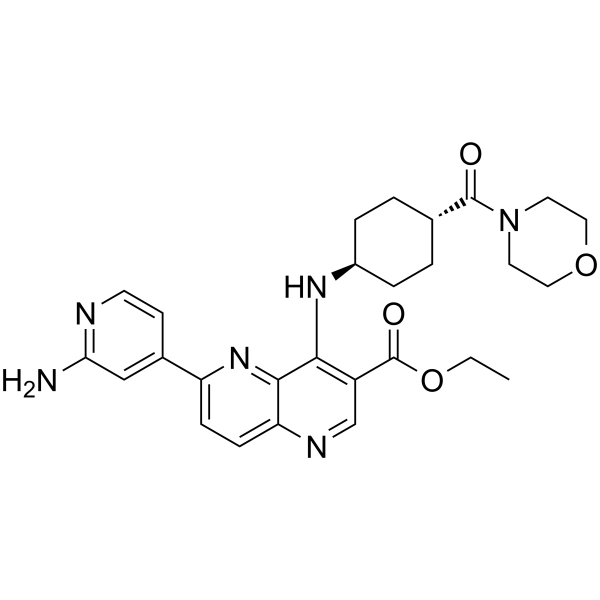 0 ImagesCat. No.: HY-147760CAS No.: 2459657-37-3Dyrk1A-IN-2 (Compound 63) is a DYRK1A inhibitor with an EC50 of 37 nM. Dyrk1A-IN-2 exhibits highly potent human β-cell replication-promoting activity and low cytotoxicity.
-
Dyrk1A-IN-12
 0 ImagesCat. No.: HY-170940CAS No.: 2243701-11-1Dyrk1A-IN-12 (compound S43) is a Dyrk (Dual specificity tyrosine phosphorylation regulated kinase 1A inhibitor. Dyrk1A-IN-12 inhibits Dyrk1A with a IC50 of 95 nM. Dyrk1A-IN-12 shows anti-EV-A71 activity with an EC50 of 4.4 μM, CC50 of 12.8 μM and SI of 2.9. Dyrk1A-IN-12 shows potent inhibition against herpes simplex virus (HSV).



