



Dipeptidyl Peptidase
DPP
Dipeptidyl Peptidases are widely distributed exopeptidases that possess central role in proteolysis. The dipeptidyl peptidase family, including DPP-IV DPP7, DPP8, DPP9, fibroblast activation protein and others, cleave the peptide bond after the penultimate proline residue and are drug target rich.
DPP-IV (DPP4 or CD26) is a serine protease detected on several immune cells and on epithelial cells of various organs. Besides the membrane-bound enzyme, a catalytically active soluble form is detected in several body fluids. Both variants cleave off dipeptides from the N-termini of various chemokines, neuropeptides, and hormones. DPP IV plays a key role in immune-regulation, inflammation, oxidative stress, cell adhesion, and apoptosis by targeting different substrates. DPP IV inhibitors are commonly used as hypoglycemic agents.
DPP8 and DPP9 show DPPIV-like activity and share a very high-sequence similarity to each other. DPP8 and DPP9 are intracellular N-terminal dipeptidyl peptidases (preferentially postproline) associated with pathophysiological roles in immune response and cancer biology.
Dipeptidyl Peptidase Isoform Specific Products
All Product Categories
-
Dipeptidyl Peptidase Inhibitors
(210)
View all products
-
Dipeptidyl Peptidase Antagonist
(1)
View all products
-
Dipeptidyl Peptidase Activator
(1)
View all products
-
Dipeptidyl Peptidase Controls
(7)
View all products
-
Dipeptidyl Peptidase Substrates
(4)
View all products
-
DPP IV/CD26 Proteins
(9)
View all products
-
Dipeptidyl Peptidase Related Products (236)
Related Products (236)

-
Recombinant Proteins (9)
-
Antibodies (1)
-
Dipeptidyl Peptidase Isoform Comparison
-
5-Hydroxy saxagliptin-13C,d2-2 hydrochloride
 0 ImagesCat. No.: HY-W741755S1CAS No.: 1572922-53-25-Hydroxy saxagliptin-13C,d2-2 hydrochloride is the 13C- and deuterium labeled 5-Hydroxy saxagliptin hydrochloride. 5-Hydroxy saxagliptin hydrochloride is an active metabolite of Saxagliptin (HY-10285) and a potent and selective DPP-4 inhibitor. 5-Hydroxy saxagliptin hydrochloride has Ki values of 2.6 nM and 2.9 nM for humans and cynomolgus monkeys, respectively. 5-Hydroxy saxagliptin hydrochloride can be used in the research of type 2 diabetes mellitus.
-
TAK-100
 0 ImagesCat. No.: HY-122188CAS No.: 907609-33-0TAK-100 is a selective and orally active dipeptidyl peptidase IV (DPP-4) inhibitor with an IC50 of 5.3 nM. TAK-100 hass little or no inhibitory effects on other dipeptidyl peptidase members. TAK-100 can be used for the study of diabetes.
-
Propyl-GSK-2793660
 0 ImagesCat. No.: HY-167937CAS No.: 1613458-71-1Propyl-GSK-2793660 (compound 1) is a irreversible and covalent DPP1 inhibitor. Propyl-GSK-2793660 can be used for the study of bronchiectasis.
-
Gemigliptin hydrochloride
 0 ImagesCat. No.: HY-14892CCAS No.: 1523530-62-2Synonyms: LC15-0444 hydrochlorideGemigliptin hydrochloride is the hydrochloride salt of Gemigliptin (HY-14892). Gemigliptin hydrochloride is a highly selective, reversible and competitive dipeptidyl peptidase-4 (DPP-4) inhibitor, with an IC50 of 10.3 nM for human recombinant DPP-4. Gemigliptin hydrochloride exhibits potent anti-glycation properties. Gemigliptin hydrochloride can be used for the research of advanced glycation end products (AGE)-related diabetic complications.
-
Melogliptin
 0 ImagesCat. No.: HY-10288CAS No.: 868771-57-7Melogliptin is a DPP-4 inhibitor. Melogliptin can be used in the research of type 2 diabetes.
-
MK-0626
 0 ImagesCat. No.: HY-179473CAS No.: 690257-74-0MK-0626 is a selective, orally active DPP-4 inhibitor with an IC50 of 6.3 nM. MK-0626 increases endothelial nitric oxide synthetase expression. MK-0626 improves neovascularization, attenuates hepatic steatosis, attenuates pancreatic islet injury. MK-0626 can be used in the research of diabetes and non-alcoholic fatty liver disease.
-
Teneligliptin-d4
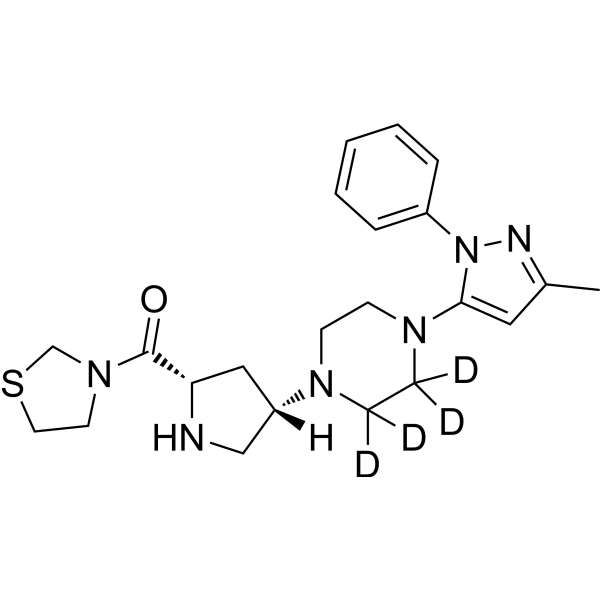 0 ImagesCat. No.: HY-14806S1Synonyms: MP-513-d4Teneligliptin-d4 is deuterium labeled Teneligliptin. Teneligliptin (MP-513) is a potent, orally available, competitive, and long-lasting DPP-4 inhibitor. Teneligliptin competitively inhibits human plasma, rat plasma, and human recombinant DPP-4 in vitro, with IC50s of approximately 1 nM.
-
16-Hydroxycleroda-3,13-dien-15,16-olide
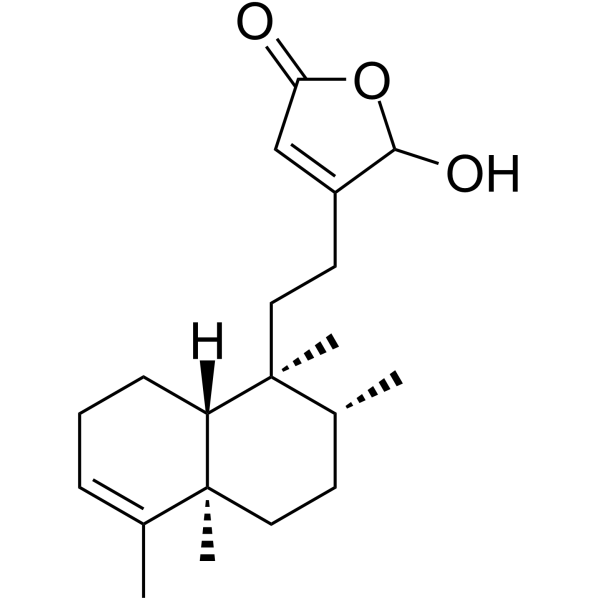 0 ImagesCat. No.: HY-N9725CAS No.: 141979-19-3Synonyms: 16ξ-Hydroxycleroda-3,13-dien-15,16-olide16-Hydroxycleroda-3,13-dien-15,16-olide (16ξ-Hydroxycleroda-3,13-dien-15,16-olide; HCD), a clerodane diterpene, is a potent serine protease dipeptidyl peptidase 4 (DPP-4) inhibitor. 16-Hydroxycleroda-3,13-dien-15,16-olide down-regulates LPS-induced ERK phosphorylation in myocyte but blocks GLP-1 induced PKA expression. 16-Hydroxycleroda-3,13-dien-15,16-olide exhibits hypolipidemic, hepatoprotective, hypoglycemic efficacy.
-
(Rac)-Regaloside D
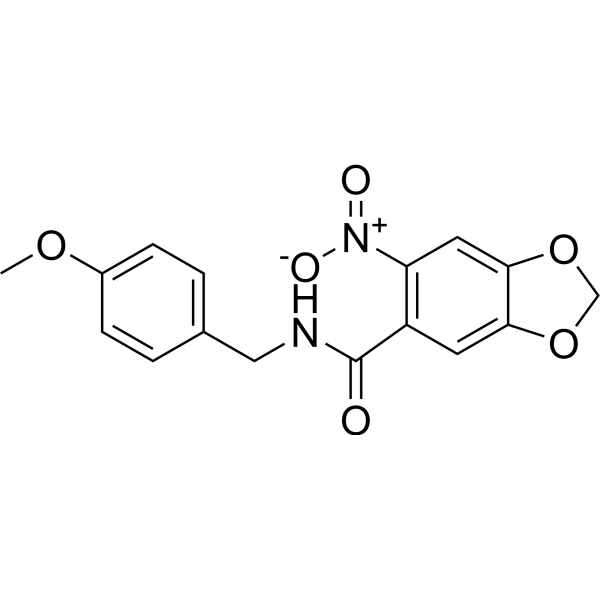
 0 ImagesCat. No.: HY-N17532CAS No.: 1935714-45-6(Rac)-Regaloside D is a phenylpropanoid. (Rac)-Regaloside D can be found in the scaly bulbs of Lilium longiflorum. (Rac)-Regaloside D does not exhibit dipeptidyl peptidase IV (DPP-IV) inhibitory activity in vitro.
-
Carmegliptin hydrochloride
 0 ImagesCat. No.: HY-10289ACAS No.: 813452-14-1Synonyms: RO-4876904 hydrochlorideCarmegliptin hydrochloride (RO-4876904 hydrochloride) is an orally active and potent DPP‑IV inhibitor with a human DPP‑IV IC50 of 6.8 nM. Carmegliptin hydrochloride binds to the S1 pocket of DPP‑IV, blocks the degradation of GLP‑1, potentiates endogenous GLP‑1, increases plasma insulin levels, alleviates hyperglycemia, improves glucose tolerance. Carmegliptin hydrochloride acts as a substrate for human P‑glycoprotein without inhibiting the transporter, shows low in vitro cell permeability. Carmegliptin hydrochloride can be used for the research of type 2 diabetes, non‑insulin‑dependent diabetes mellitus.
-
Linagliptin-d3-1
 0 ImagesCat. No.: HY-10284S3CAS No.: 1398044-48-8Synonyms: BI 1356-d3-1Linagliptin-d3-1 (BI 1356-d3-1) is the deuterium labeled Linagliptin (HY-10284). Linagliptin is a highly potent, selective DPP-4 inhibitor with IC50 of 1 nM.
-
Sulphostin
 0 ImagesCat. No.: HY-176000CAS No.: 307345-51-3Sulphostin is a covalent inhibitor of dipeptidyl peptidase 4 (DPP4), dipeptidyl peptidase 9 (DPP9), and dipeptidyl peptidase 8 (DPP8) with IC50 values of 79, 1392, 6930 nM, respectively. Sulphostin causes phosphosulfamate modification, irreversibly inhibits the enzyme activity. Sulphostin can be used for inflammation and cancer study.
-
P32/98 hemifumarate
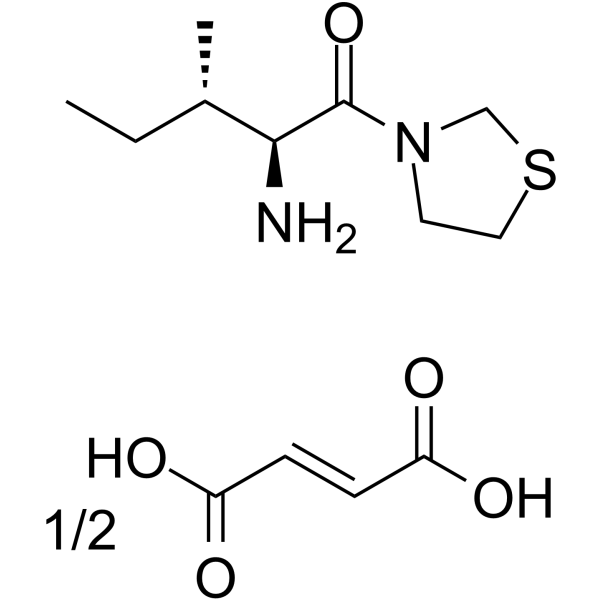 0 ImagesCat. No.: HY-129736CAS No.: 251572-86-8P32/98 hemifumarateis a potent inhibitor of dipeptidyl peptidase IV with a Ki value of 130 nM. P32/98 hemifumarate improves glucose tolerance, insulin sensitivity and β-cell responsiveness in fatty Zucker rat model.
-
Verducatib
 0 ImagesVerducatib (BI 1291583) is an orally active inhibitor of cathepsin C (also known as DPP1). Verducatib restores the protease-inhibitor balance by inhibiting the activation of neutrophil serine proteases, thereby alleviating pulmonary inflammation and regulating infection responses. Verducatib significantly reduces the risk (including severe exacerbations) and frequency of acute exacerbations in bronchiectasis (BE). Verducatib also improves lung function and quality of life, and shortens the duration of antibiotic use. The overall incidence of adverse events of Verducatib is comparable to that of placebo, with only slightly more mild-to-moderate cutaneous adverse events observed in the high-dose group, demonstrating promising clinical application potential.
-
DPP9-IN-1
 0 ImagesCat. No.: HY-172529CAS No.: 3020859-03-1DPP9-IN-1 (Compound 42) is a dipeptidyl peptidase 9 (DPP9) inhibitor with IC50 of 3 nM for DPP9 and 0.6 μM for DPP8. DPP9-IN-1 induces concentration-dependent LDH release in THP-1 cells.
-
P32/98
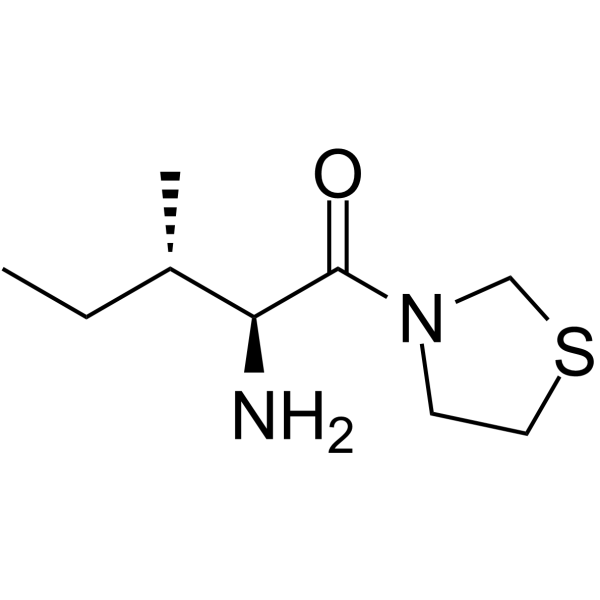 0 ImagesCat. No.: HY-129736ACAS No.: 136259-20-6P32/98 a potent inhibitor of dipeptidyl peptidase IV with a Ki value of 130 nM. P32/98 improves glucose tolerance, insulin sensitivity and β-cell responsiveness in fatty Zucker rat model.
-
Sitagliptin hydrochloride
 0 ImagesCat. No.: HY-13749ECAS No.: 486459-71-6Synonyms: MK-0431 hydrochlorideSitagliptin (MK-0431) hydrochloride is an orally active and highly selective DPP4 inhibitor with an IC50 value of 19 nM. Sitagliptin hydrochloride blocks the degradation of glucagon-like peptide-1 (GLP-1) and glucose-dependent insulinotropic peptide (GIP) by competing inhibition mechanism (Kᵢ = 1 nM), thereby increasing the level of active incretin. Sitagliptin hydrochloride can also directly stimulate the secretion of GLP-1 by intestinal L cells by activating the cAMP/PKA and ERK1/2 pathways, and this effect is independent of DPP-4. Sitagliptin hydrochloride shows protective effects on pancreatic islet grafts in 1-type diabetes models. Sitagliptin hydrochloride can be used for the study of 1-type and 2-type diabetes.
-
SGP8
 0 ImagesCat. No.: HY-P6177CAS No.: 855790-98-6SGP8 (IAVPGEVA) is an octapeptide produced by hydrolysis of soybean 11S globulin, which has the effects of regulating lipid metabolism, inflammation and fibrosis. SGP8 (IAVPGEVA) exhibits inhibitory activity against DPP4 and inhibits the JNK-c-Jun signaling pathway, and has the ability to inhibit non-alcoholic steatohepatitis (NASH).
-
DPP-4-IN-12
 0 ImagesCat. No.: HY-169110DPP-4-IN-12 (compound 46) is a potent DPP-4 inhibitor with IC50 value of 2 nM. DPP-4-IN-12 can be used in the study of type 2 diabetes.




