



FKBP
FK506-binding protein
FKBPs (FK506-binding proteins) belong to a distinct class of immunophilins that interact with immunosuppressants, such as FK506 and Rapamycin. FKBPs use their peptidyl-prolyl isomerase (PPIase) activity to catalyze the cis-trans conversion of prolyl bonds in proteins during protein-folding events. FKBPs also act as a unique group of chaperones. FKBPs are involved in several biochemical processes including protein folding, receptor signaling, protein trafficking and transcription. FKBP family proteins play important functional roles in the T-cell activation, when complexed with their ligands.
FKBPs, through interactions with steroid hormone receptors, kinases, or other cellular factors, play important roles in various physiological processes and, more interestingly, in pathological processes in mammals. Mammalian FKBPs can be divided into four groups: cytoplasmic, TPR domain, endoplasmic reticulum (ER) or secretory pathway and nuclear. The cytoplasmic FKBP isoforms FKBP12 and 12.6 and the nuclear FKBP25 and 133 contain a single PPIase domain. FKBP36, 38, 51 and 52 contain multiple TPR domains. The ER FKBPs: FKBP13, 19, 22, 23, 60 and 65 all contain an N-terminal ER signal peptide.
All Product Categories
-
FKBP Inhibitors
(18)
View all products
-
FKBP Agonists
(3)
View all products
-
FKBP Antagonist
(1)
View all products
-
FKBP Activators
(2)
View all products
-
FKBP Modulators
(6)
View all products
-
FKBP Degraders
(17)
View all products
-
FKBP Controls
(3)
View all products
-
FKBP Substrate
(1)
View all products
-
FKBP Ligands
(7)
View all products
-
FKBP 관련 제품 (91)
관련 제품 (91)

-
Antibodies (5)
-
ElteN378
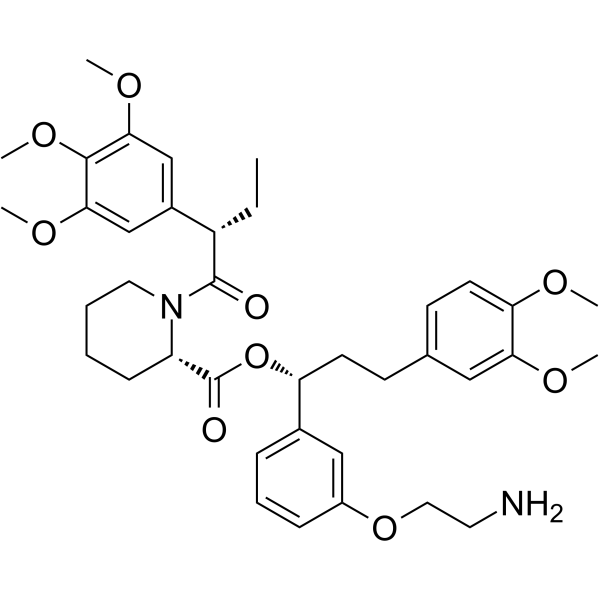
 0 ImagesElteN378 is an inhibitors of FKBP12e. ElteN378 can be used in study Alzheimer disease, Parkinson disease, Amyotrophic Lateral Sclerosis, proliferation disorders and cancer.
-
GPI-1485
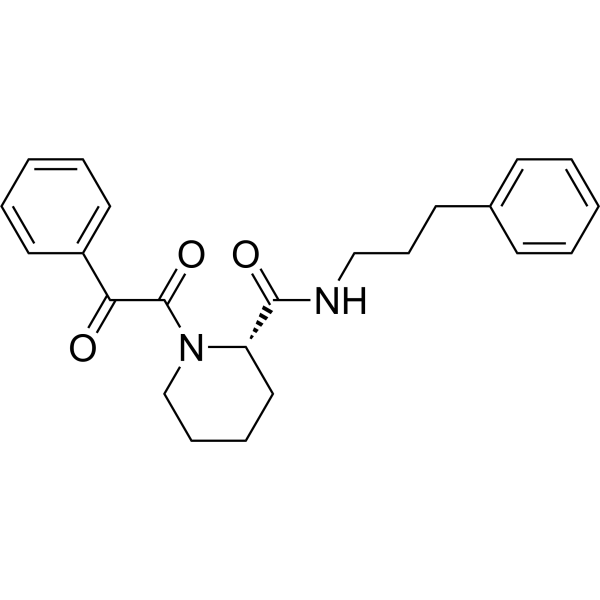
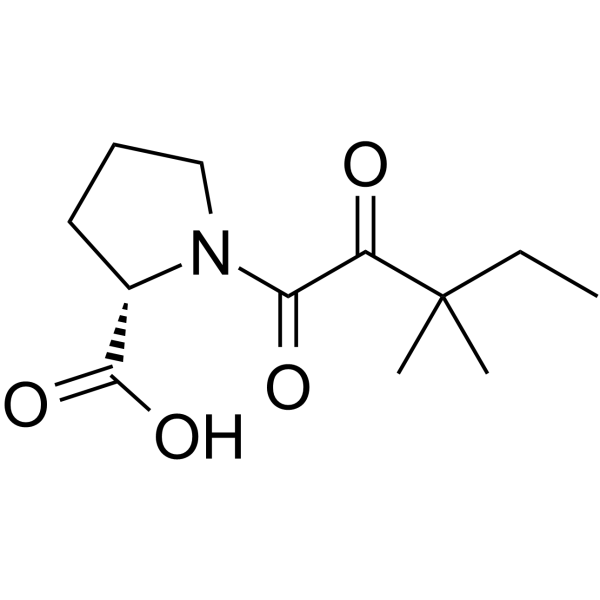 0 ImagesSynonyms: GM1485GPI-1485 (GM1485), a nonimmunosuppressive immunophilin ligand, promotes neurofunctional improvement and neural regeneration following stroke.
-
Rapamycin-13C,d3
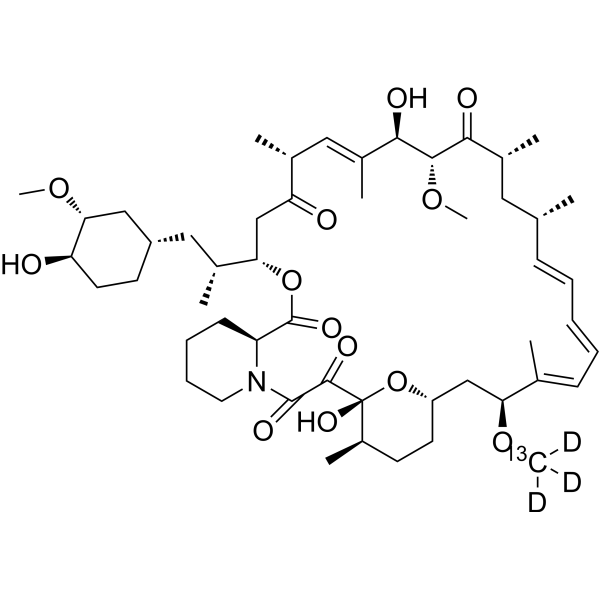 0 ImagesCat. No.: HY-10219S1Synonyms: Sirolimus-13C,d3; AY-22989-13C,d3 NSC 226080-13C,d3Rapamycin-13C,d3 (Sirolimus-13C,d3) is the 13C, deuterated-labeled Rapamycin (HY-10219). Rapamycin (Sirolimus; AY 22989) is a potent and specific blood-brain barrier-transmissible mTOR inhibitor with an IC50 of 0.1 nM in HEK293 cells. Rapamycin is a molecular glue that binds FKBP12 and mTOR proteins together, thereby inhibiting mTOR kinase activity. Rapamycin binds to FKBP12 and specifically acts as an allosteric inhibitor of mTORC1. Rapamycin is an autophagy activator, an immunosuppressant.


-
Ascomycin (Standard)
 0 ImagesSynonyms: Immunomycin (Standard); FR-900520 (Standard); FK520 (Standard)Ascomycin (Standard) is the analytical standard of Ascomycin. This product is intended for research and analytical applications. Ascomycin (Immunomycin; FR-900520; FK520) is an ethyl analog of Tacrolimus (FK506) with strong immunosuppressant properties. Ascomycin is also a macrocyclic polyketide antibiotic with multiple biological activities such as anti-malarial, anti-fungal and anti-spasmodic. Ascomycin prevents graft rejection and has potential for varying skin ailments research[1][2].
-
WAY-380153
 0 ImagesWAY-380153 (Compound 24) is an FKBP12 inhibitor. WAY-380153 exhibits moderate binding affinity for FKBP12, with a KD of 19 μM (measured by ITC) and 15 μM (measured by NMR). WAY-380153 can be used in research related to neurotrophy and neuroprotection.
-
SP3N
 0 ImagesCat. No.: HY-161794SP3N is a specific degrader of the prolyl isomerase FKBP12. As a prodrug, SP3N is metabolized by Diamine oxidase into the active aldehyde metabolite SP3CHO (HY-161795). SP3N induces the proximity of FKBP12 to the SCFFBXO22 E3 ligase complex, thereby triggering the polyubiquitination and proteasomal degradation of FKBP12. SP3N can be used in cancer research.
-
ILS-920
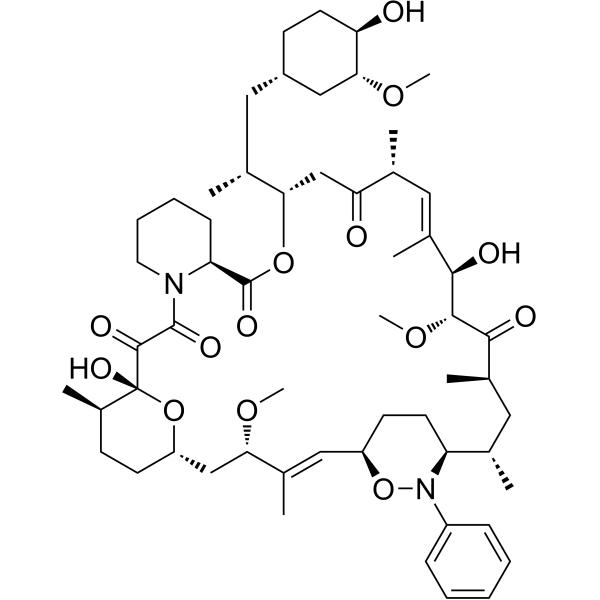 0 ImagesILS-920 is a nonimmunosuppressive Rapamycin analog with reduced immunosuppressive activity and potent neuroprotective activity. ILS-920 binds selectively to the immunophilin FKBP52 and to the β1-subunit of L-type voltage-gated calcium channels (VGCC). ILS-920 shows 200-fold selectivity for FKBP52 versus FKBP12.
-
Tacrolimus-d3
 0 ImagesCat. No.: HY-13756S2Synonyms: FK506-d3; Fujimycin-d3; FR900506-d3Tacrolimus-d3 (FK506-d3) is the deuterated-labeled Tacrolimus (HY-13756). Tacrolimus (FK506), a molecular glue, a macrocyclic lactone, binds to FK506 binding protein (FKBP) to form a complex. Tacrolimus inhibits calcineurin phosphatase, which inhibits T-lymphocyte signal transduction and IL-2 transcription. Immunosuppressive properties.
-
HLDA-212
 0 ImagesCat. No.: HY-173499CAS No.: 3077339-88-6HLDA-212 is a non-covalent RIPTAC that targets FKBP (target protein, TP) and multiple CDK (effector protein, EP). HLDA-212 binds to FKBP and CDK to form a stable ternary complex (TP:RIPTAC:EP), and induces cell death by blocking FKBP function. HLDA-212 selectively inhibits the proliferation of CDK-expressing cells and accumulates in CDK-expressing cells in a CDK-dependent manner. HLDA-212 exhibits antiproliferative activity in 293_HFL cells (with a GI50 of 0.011 μM). HLDA-212 holds promise for the treatment of cancers with high FKBP expression.
-
FKBP12 ligand-2
 0 ImagesCat. No.: HY-176501CAS No.: 3036243-81-6FKBP12 ligand-2 (compound d) is a high affinity ligand targeting FKBP12. FKBP12 ligand-2 can be used to selectively enhance the binding of heterobifunctional molecules to BRD4, enriching the drug intracellularly through the "CellTrap" effect to form a ternary complex of FKBP12-ligand-BRD4. This ternary complex has inhibitory activity against BRD4, thereby inhibiting the expression of BRD4 target genes (such as MYC) and inducing tumor cell death. FKBP12 ligand-2 can be used for selective cancer research based on differences in intracellular presenter protein levels.

-
BRD4/FKBP12 ligand 2
 0 ImagesCat. No.: HY-176476BRD4/FKBP12 ligand 2 is a heterobifunctional BRD4 and FKBP12 (Kd of 1.0 nM) ligand. BRD4/FKBP12 ligand 2 has positive cooperativity in BRD4 binding when pre-bound to FKBP12, and FKBP12-dependent cytotoxicity in cancer cells via the CellTrap effect. BRD4/FKBP12 ligand 2 can be used for the research of hematopoietic malignancy, multiple myeloma, prostate carcinoma, acute myeloid leukemia.
-
FKBP51F67V-selective antagonist Ligand2
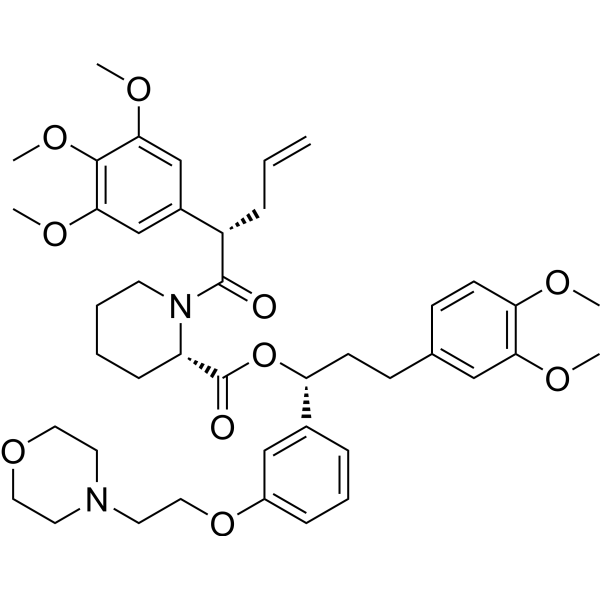 0 ImagesCat. No.: HY-153990CAS No.: 1680228-76-5FKBP51F67V-selective antagonist Ligand2 (example 3-3) is a potent FKBP51 F67V-selective antagonist ligand. FKBP51F67V-selective antagonist Ligand2 reverses the anxiogenic phenotype induced by overexpression of FKBP51 F67V in the amygdala. FKBP51F67V-selective antagonist Ligand2 binds to FKBP51 F67V, but not to wild-type FKBP51 or FKBP52.
-
dTAGV-1-NEG TFA
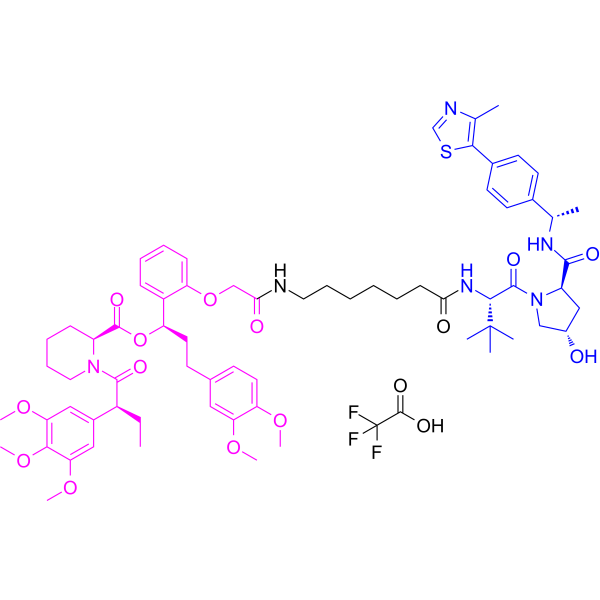 0 ImagesCat. No.: HY-145514BdTAGV-1-NEG TFA is an inactive FKBP12F36V PROTAC degrader, the diastereomer of dTAGV-1 (HY-145514D), and a heterobifunctional negative control molecule. dTAGV-1-NEG TFA does not degrade any protein.
-
FKBP51-Hsp90-IN-1
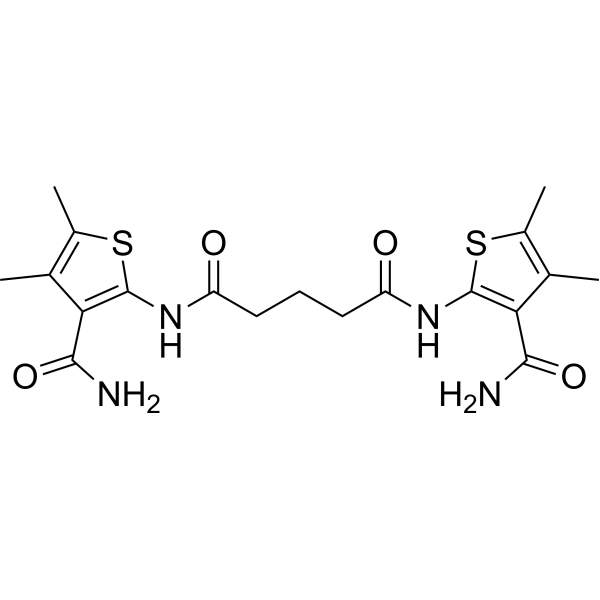 0 ImagesCat. No.: HY-158130CAS No.: 433313-64-5FKBP51-Hsp90-IN-1 (Compound D10) is a selective inhibitor of the FKBP51-Hsp90 protein-protein interaction, with an IC50 value of 0.1 μM against FKBP51. FKBP51-Hsp90-IN-1 can be used in the research of stress-related diseases, Alzheimer's disease, and metabolic disorders.
-
10-SLF
 0 ImagesCat. No.: HY-173082CAS No.: 2765058-89-510-SLF is an FKBP12 PROTAC degrader. 10-SLF covalently interacts with the cysteine residue of FBXW7R465C, forms a ternary complex with FKBP12, and promotes FBXW7-R465C-dependent proteasomal degradation of FKBP12. 10-SLF can be used for the research of pancreatic cancer.




