



GSK-3
Glycogen synthase kinase-3; Glycogen synthase kinase 3
Glycogen synthase kinase 3 (GSK-3) is a multifunctional serine/threonine kinase consisting of two isoforms, alpha and beta. It is a highly conserved negative regulator of receptor tyrosine kinase, cytokine, and Wnt signaling pathways. Stimulation of these pathways inhibits GSK-3 to modulate diverse downstream effectors that include transcription factors, nutrient sensors, glycogen synthesis, mitochondrial function, circadian rhythm, and cell fate. GSK-3 also regulates alternative splicing in response to T-cell receptor activation, and recent phosphoproteomic studies have revealed that multiple splicing factors and regulators of RNA biosynthesis are phosphorylated in a GSK-3-dependent manner.
The malfunction or aberrant activity of GSK-3 leads to several of disorders, such as Alzheimer's disease (AD) and other neurodegenerative pathologies, and other type of diseases as diabetes, cardiovascular disorders and cancer. GSK-3 is also related to innate immune response against pathogens, which makes GSK-3 an excellent target for therapeutic intervention.
GSK-3 Isoform Specific Products
All Product Categories
-
GSK-3 Inhibitors
(276)
View all products
-
GSK-3 Agonist
(1)
View all products
-
GSK-3 Activators
(46)
View all products
-
GSK-3 Modulators
(4)
View all products
-
GSK-3 Chemicals
(2)
View all products
-
GSK-3 Degraders
(3)
View all products
-
GSK-3 Ligand
(1)
View all products
-
Glycogen Synthase Kinase-3 (GSK-3) Proteins
(6)
View all products
-
GSK-3 alpha Proteins
(1)
View all products
-
GSK-3 beta Proteins
(5)
View all products
-
GSK-3 Related Products (356)
Related Products (356)

-
Recombinant Proteins (6)
-
Antibodies (9)
-
GSK-3 Signaling Pathway
-
GSK-3 Isoform Comparison
-
Degalactotigonin
 0 ImagesCat. No.: HY-N9684CAS No.: 39941-51-0Degalactotigonin is a saponin-selective inhibitor targeting the EGFR, GSK3β and Hedgehog/Gli1 pathways and can be isolated from Solanum nigrum (Solanum nigrum). Degalactotigonin inhibits EGFR phosphorylation and the downstream Akt/ERK signaling pathway, and at the same time inhibits the Hedgehog/Gli1 pathway through GSK3β inactivation, thereby inducing cancer cell apoptosis, arresting the cell cycle, and inhibiting migration and invasion. Degalactotigonin can be used in targeted research on malignant tumors such as pancreatic cancer and osteosarcoma.

-
AKI-062a
 0 ImagesCat. No.: HY-181584CAS No.: 1093303-07-1AKI-062a is a non-selective kinase inhibitor, such as a CK1γ inhibitor. AKI-062a binds to and inhibits WNT pathway kinases and GSK3β. At a concentration of 1 μM, AKI-062a binds to 17 kinases, with a binding activity of <10% of that of the control group.
-
Aloisine A
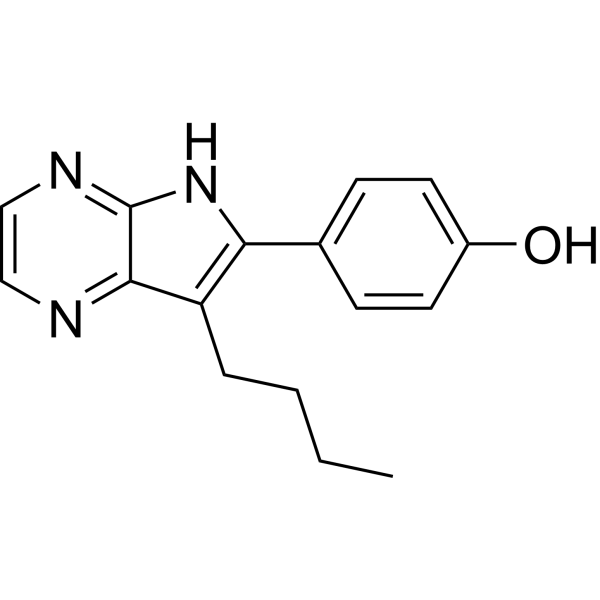 0 ImagesCat. No.: HY-112363CAS No.: 496864-16-5Synonyms: RP107Aloisine A (RP107) is a a potent cyclin-dependent kinase (CDK) inhibitor with IC50s of 0.15 μM, 0.12 μM, 0.4 μM, 0.16 μM for CDK1/cyclin B, CDK2/cyclin A, CDK2/cyclin E, CDK5/p35, respectively. Aloisine A ininhibits GSK-3α (IC50=0.5 μM) and GSK-3β (IC50=1.5 μM). Aloisine A stimulates wild-type CFTR and mutated CFTR, with submicromolar affinity by a cAMP-independent mechanism. Aloisine A has the potential for CFTR-related diseases, including cystic fibrosis research.
-
ARN25657
 0 ImagesCat. No.: HY-176287ARN25657 is a dual-acting D3R/GSK-3β modulator. ARN25657 has both partial D3R agonist activity (EC50 = 15.2 nM, Ki =1.5 nM) and potent GSK-3β inhibitor activity (IC50 = 19.3 nM). ARN25657 exhibits excellent GSK-3β selectivity over FYN, PKA, and CDK5/p35. ARN25657 inhibits P-glycoprotein (P-gP)-mediated acetoxymethyl calcein efflux and improves in vitro ADME properties while maintaining a balanced dual-target profile. ARN25657 is useful for studying bipolar disorder and related neuropsychiatric disorders.
-
Erlotinib-13C6 hydrochloride
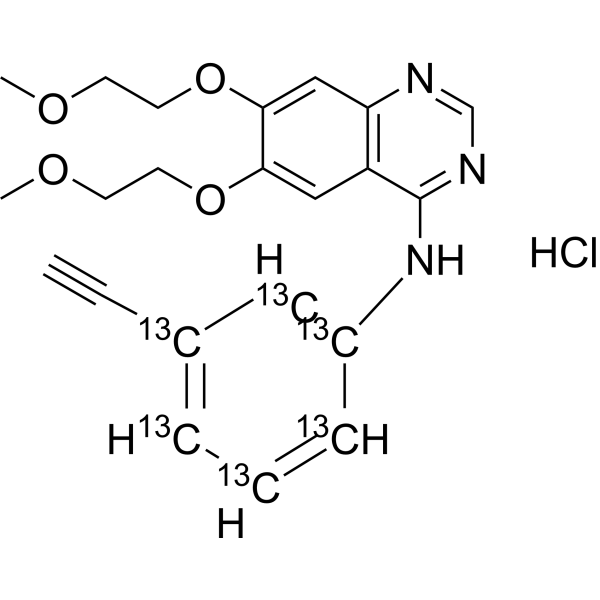 0 ImagesCat. No.: HY-12008S1CAS No.: 1210610-07-3Synonyms: CP-358774-13C6 hydrochloride; NSC 718781-13C6 hydrochloride; OSI-774-13C6 hydrochlorideErlotinib-13C6 hydrochloride (CP-358774-13C6 hydrochloride) is the 13C-labeled Erlotinib Hydrochloride (HY-12008). Erlotinib (CP-358774) Hydrochloride is a selective, orally active EGFR tyrosine kinase inhibitor. Erlotinib Hydrochloride also acts as a substrate and inhibitor of OATP2B1, with an IC50 of approximately 0.079 μM for inhibiting OATP2B1-mediated uptake of estrone 3-sulfate. Erlotinib Hydrochloride blocks EGFR phosphorylation, downstream signal transduction, as well as the growth and proliferation of cancer cells. Erlotinib Hydrochloride inhibits MMP-10-mediated renal injury, fibrotic lesions, the ERK1/2, GSK-3β and β-catenin signaling pathways, as well as the deposition of fibronectin, α-SMA, collagen and renal injury markers. Erlotinib Hydrochloride is metabolized via CYP3A to produce the active metabolite OSI-420. Erlotinib Hydrochloride can be used in research related to non-small cell lung cancer, gastric cancer, papillary renal cell carcinoma, EGFR inhibitor resistance and renal fibrosis.
-
CDK5-IN-4
 0 ImagesCat. No.: HY-161595CAS No.: 1212711-91-5
-
JZ19
 0 ImagesCat. No.: HY-173005JZ19 reduces the LDH and ROS levels, and exhibits antioxidant activity against oxygen-glucose deprivation (OGD)-induced cardiomyocyte injury. JZ19 reverses Isoproterenol (HY-B0468)-induced cardiomyocyte hypertrophy and apoptosis through PI3K-AKT-GSK3β signaling pathway. JZ19 alleviates Isoproterenol (HY-B0468)-induced heart failure in mouse models.
-
AChE/BACE1/GSK3β-IN-1
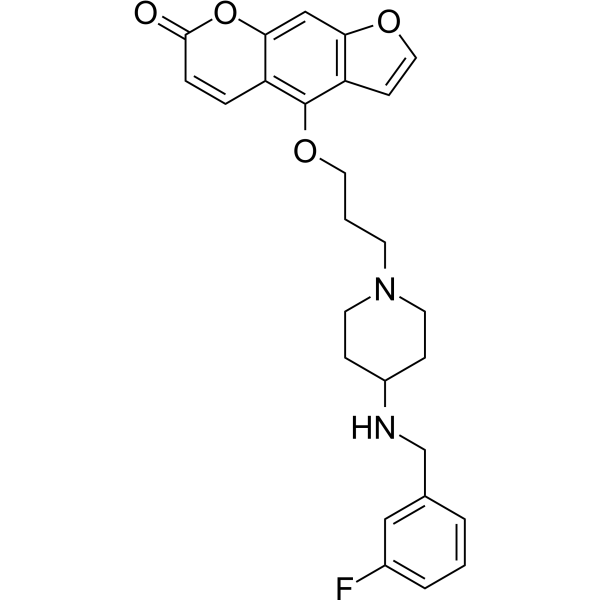 0 ImagesCat. No.: HY-151260CAS No.: 2866066-81-9AChE/BACE1/GSK3β-IN-1 is an orally active triple inhibitor of AChE/BACE1/GSK3β. AChE/BACE1/GSK3β-IN-1 has effective inhibitory activity against AChE, BACE1 and GSK3β with IC50 values of 1.0 μM, 20 μM and 15 μM, respectively. AChE/BACE1/GSK3β-IN-1 has good blood-brain barrier penetrability, suitable bioavailability. AChE/BACE1/GSK3β-IN-1 can be used for the research of Alzheimer's disease (AD).
-
GSK-3β inhibitor 19
 0 ImagesCat. No.: HY-169024GSK-3β inhibitor 19 (compound 36) is a GSK-3β inhibitor, with IC50 of 70 nM. GSK-3β inhibitor 19 can be used in anti-inflammatory and Alzheimer's disease related research.
-
ZLWH-23
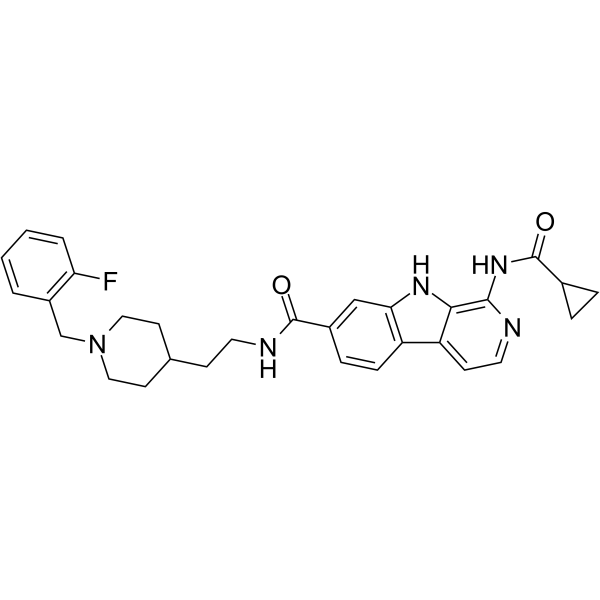 0 ImagesCat. No.: HY-144316CAS No.: 2765251-12-3
-
GSK-3β inhibitor 12
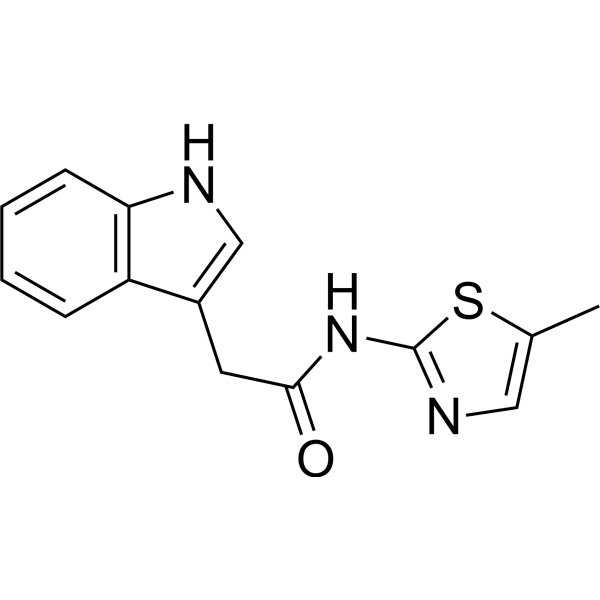 0 ImagesGSK-3β inhibitor 12 (Compound 15) is a GSK-3β inhibitor. GSK-3β inhibitor 12 is applicable to the research of Alzheimer's disease.
-
GSK-3β/HDAC-IN-1
 0 ImagesCat. No.: HY-161667GSK-3β/HDAC-IN-1 (Compd 4) is a brain-penetrant and first in class dual non-ATP-competitive Glycogen Synthase Kinase 3β/Histone Deacetylases (GSK-3β/HDACs) Inhibitor with IC50s of 0.142, 0.03 and 0.045 μM against GSK-3β, HDAC2 and HDAC6, respectively. GSK-3β/HDAC-IN-1 can be used for Alzheimer’s disease research.

-
BRD1172
 0 ImagesCat. No.: HY-120917CAS No.: 1597438-86-2Synonyms: ML320BRD1172 (ML320) is a selectivity GSK3β inhibitor with an IC50 of 24 nM for GSK3β over CDK5. BRD1172 significantly inhibits GSK3β-mediated Tau phosphorylation in SH-SY5Y cells, and relieves negative regulation by GSK3β on β-catenin degradation and TCF/LEF promoter activities. BRD1172 can be used for Alzheimer’s disease, cardiac hypertrophy and cancers research.
-
AR-A014418-d3
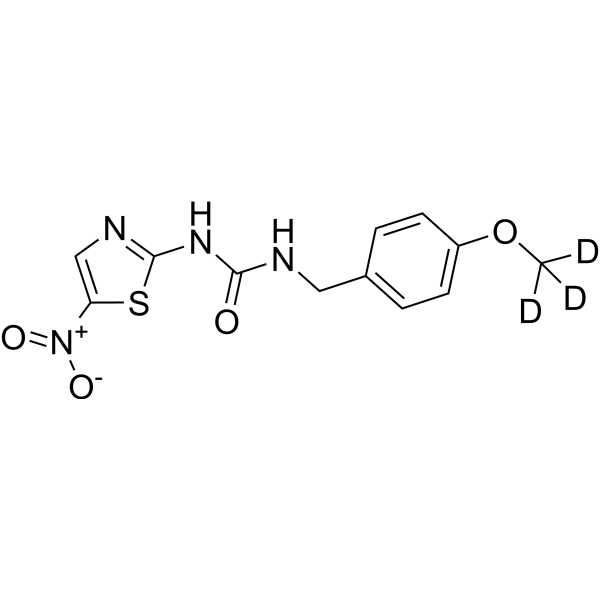 0 ImagesCat. No.: HY-10512SCAS No.: 1216908-63-2Synonyms: AR 0133418-d3; GSK 3β inhibitor VIII-d3; AR 014418-d3AR-A014418-d3 is the deuterium labeled AR-A014418. AR-A014418 is a potent, selective, and ATP-competitive GSK3β inhibitor (IC50=104 nM; Ki=38 nM).
-
ARN25699
 0 ImagesCat. No.: HY-183584ARN25699 is a kinase inhibitor with an IC50 of 5.5 nM against GSK-3β, 2.2 nM against FYN-α, and 242.3 nM against DYRK1A, and it exhibits oral bioavailability. ARN25699 reduces hyperphosphorylation of tau protein and promotes microtubule bundle formation. ARN25699 has a broader kinome inhibitory profile and targets kinases associated with the pathogenic mechanisms linked to Alzheimer's disease. ARN25699 can be used in the research of Alzheimer's disease and related tauopathies.
-
3F8
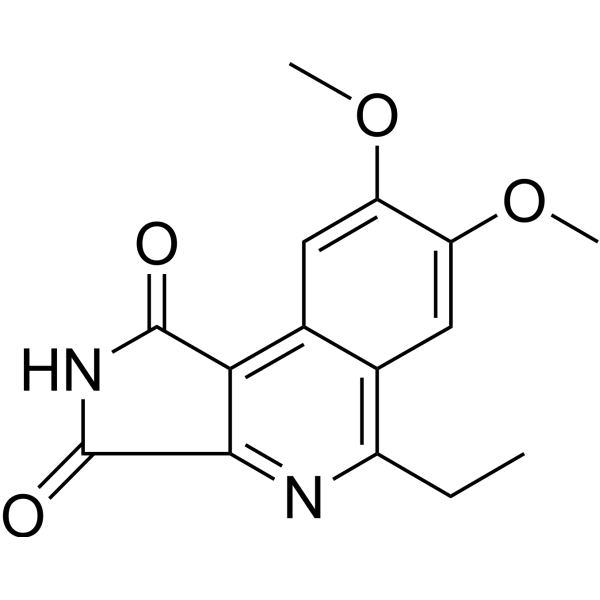 0 ImagesCat. No.: HY-107530CAS No.: 159109-11-23F8 is a potent and selective GSK-3β inhibitor that could be useful as new reagent and potential therapeutic candidate for GSK3 related diseases.
-
hAChE/hBuChE/GSK-3β-IN-1
 0 ImagesCat. No.: HY-170417hAChE/hBuChE/GSK-3β-IN-1 (Compound 6c) is a BBB-penetrable and multi-target anti-Alzheimer's disease compound. hAChE/hBuChE/GSK-3β-IN-1 is the inhibitors of hAChE (IC50: 28.88 nM), hBuChE (IC50: 131.90 nM) and GSK-3β (IC50: 51.42 nM). hAChE/hBuChE/GSK-3β-IN-1 is the tau and Aβ protein aggregation inhibitors.
-
GSK3-IN-10
 0 ImagesCat. No.: HY-172198CAS No.: 844441-56-1GSK3-IN-10 (Compound 4) is a multi-target inhibitor, that mainly targets GSK3α and GSK3β with IC50 of 1.0 nM and 2.0 nM. GSK3-IN-10 inhibits the activation of β-catenin, promotes the neuronal survival, and exhibits a protective effect against endoplasmic reticulum stress.




