



XIAP
XIAP is a core inhibitor of apoptosis protein that directly restrains executioner caspase-3 and caspase-7 through BIR2-region mechanisms and inhibits initiator caspase-9 through BIR3 binding[1][2][3]. Mechanistically, its RING domain also supports E3 ubiquitin-ligase activity, linking XIAP biology to protein stability, apoptosis regulation, and non-apoptotic signaling contexts[4]. In innate immune signaling, XIAP ubiquitylates RIPK2 and recruits LUBAC after NOD2 stimulation, thereby enabling NF-κB activation and proinflammatory cytokine secretion[5]. In disease models and patient studies, XIAP deficiency associates with Crohn disease-like inflammatory bowel disease and defective NOD2 function in monocytes[6]. Compared with related cIAP1 and cIAP2 isoforms, XIAP has the clearest biochemical role as a direct caspase inhibitor, whereas cIAP1 and cIAP2 bind but do not efficiently inhibit caspases[7]. For experimental applications, selective XIAP antagonism can block NOD2-mediated inflammatory signaling by disrupting the XIAP-RIPK2 interaction, while broader IAP antagonists are used to test apoptosis sensitization mechanisms involving XIAP and cIAP proteins[8][9].- XIAP directly controls caspase-dependent apoptosis and connects apoptosis biology with inflammatory NOD2 signaling[1][5].- XIAP differs from cIAP1/cIAP2 because it directly inhibits caspase activity[7].- XIAP-RIPK2 antagonism provides a practical model for studying NOD2-driven inflammation[8].
References:
- [1]. Riedl SJ, et al. Structural basis for the inhibition of caspase-3 by XIAP. Cell. 2001 Mar 9;104(5):791-800. [Content Brief]
- [2]. Chai J, et al. Structural basis of caspase-7 inhibition by XIAP. Cell. 2001 Mar 9;104(5):769-80. [Content Brief]
- [3]. Shiozaki EN, et al. Mechanism of XIAP-mediated inhibition of caspase-9. Mol Cell. 2003 Feb;11(2):519-27. [Content Brief]
- [4]. Galbán S, et al. XIAP as a ubiquitin ligase in cellular signaling. Cell Death Differ. 2010 Jan;17(1):54-60. [Content Brief]
- [5]. Damgaard RB, et al. The ubiquitin ligase XIAP recruits LUBAC for NOD2 signaling in inflammation and innate immunity. Mol Cell. 2012 Jun 29;46(6):746-58. [Content Brief]
- [6]. Aguilar C, et al. Characterization of Crohn disease in X-linked inhibitor of apoptosis-deficient male patients and female symptomatic carriers. J Allergy Clin Immunol. 2014 Nov;134(5):1131-41.e9. [Content Brief]
- [7]. Eckelman BP, et al. The human anti-apoptotic proteins cIAP1 and cIAP2 bind but do not inhibit caspases. J Biol Chem. 2006 Feb 10;281(6):3254-60. [Content Brief]
- [8]. Goncharov T, et al. Disruption of XIAP-RIP2 Association Blocks NOD2-Mediated Inflammatory Signaling. Mol Cell. 2018 Feb 15;69(4):551-565.e7. [Content Brief]
- [9]. Ndubaku C, et al. Antagonism of c-IAP and XIAP proteins is required for efficient induction of cell death by small-molecule IAP antagonists. ACS Chem Biol. 2009 Jul 17;4(7):557-66. [Content Brief]
All Product Categories
-
XIAP Inhibitors
(13)
View all products
-
XIAP Antagonists
(13)
View all products
-
XIAP Activator
(1)
View all products
-
XIAP Modulator
(1)
View all products
-
XIAP Inducer
(1)
View all products
-
XIAP Degraders
(4)
View all products
-
XIAP Ligands
(4)
View all products
-
X-Linked Inhibitor Of Apoptosis (XIAP) Proteins
(3)
View all products
-
XIAP Related Products (39)
Related Products (39)

-
Recombinant Proteins (3)
- 1
- 2

-
Tolinapant dihydrochloride
 0 ImagesCat. No.: HY-109565BCAS No.: 1799328-50-9Synonyms: ASTX660 dihydrochlorideTolinapant dihydrochloride (ASTX660 dihydrochloride) is an orally active cIAP1/2 and XIAP antagonist, with an IC50 of < 40 nM against XIAP and an IC50 of <12 nM against cIAP1. Tolinapant dihydrochloride triggers TNFα-dependent Apoptosis in cancer cells. Tolinapant dihydrochloride inhibits tumor growth in mouse xenograft models. Tolinapant dihydrochloride can be used in research related to breast cancer, melanoma, lymphoma, multiple myeloma, acute lymphoblastic leukemia and advanced solid tumors.
-
TP-110
 0 ImagesCat. No.: HY-118522CAS No.: 688737-95-3TP-110 is a proteasome inhibitor. TP-110 specifically inhibits the protease-like activity of the 20S proteasome, but does not affect the trypsin-like or peptidyl-glutamyl peptide hydrolysis activity. TP-110 inhibits the NF-κB pathway, activates caspase-8, -9, and -3, and causes PARP cleavage, significantly reducing the levels of cIAP-1 and XIAP. TP-110 causes cell cycle arrest at the G2/M phase and promotes apoptosis of cancer cells. TP-110 can be used in cancer research of prostate cancer and multiple myeloma, etc.
-
Topoisomerase I inhibitor 17
 0 ImagesCat. No.: HY-168739CAS No.: 2413582-45-1Topoisomerase I inhibitor 17 (Compound 7h) is a Topoisomerase I (Top1) inhibitor. Topoisomerase I inhibitor 17 reduces DDX5 and reverses the locking of Top1 activity by DDX5. Topoisomerase I inhibitor 17 induces Top1-mediated DNA damage and promotes reactive oxygen species (ROS) production. Topoisomerase I inhibitor 17 induces Apoptosis (reduces antiapoptotic proteins XIAP, Bcl-2, Survivin and up-regulates pro-apoptotic proteins Bax, γH2AX). Topoisomerase I inhibitor 17 also blocks the progression of the G2/M checkpoint and induces cell cycle arrest. Topoisomerase I inhibitor 17 significantly inhibits colony formation and cell migration in colorectal cancer cells. Topoisomerase I inhibitor 17 effectively reduces tumors in human PDX tumor mice.

-
XIAP/cIAP1 antagonist-1
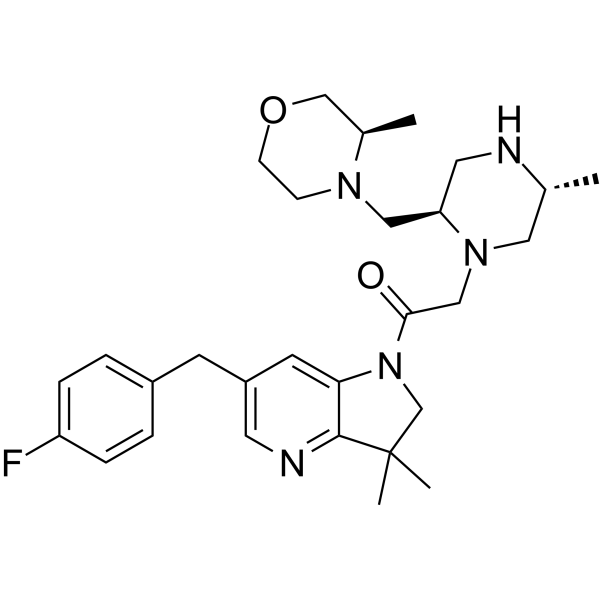 0 ImagesCat. No.: HY-102051CAS No.: 1403898-55-4
-
K882
 0 ImagesCat. No.: HY-168893K882 (Compound 4e) is a Src inhibitor, with KD of 0.315 μM. K882 induces Apoptosis. K882 inhibits XIAP and Survivin. K882 inhibits the activation of PI3K/Akt/mTOR, Jak1/Stat3, Ras/MAPK signaling pathways. K882 shows anti-tumor activity against non-small cell lung cancer.
-
MRS2693 ammonium
 0 ImagesCat. No.: HY-117356ACAS No.: 911391-37-2MRS2693 ammonium is a selective P2Y6 receptor agonist. MRS2693 ammonium exerts biological effects by activating the Gq-coupled P2Y6 receptor, the ERK1/2 pathway, and the P2RY6-PLCB3-CAMKK2-PRKAA1-ULK1 signaling cascade. MRS2693 ammonium attenuates TNFα-induced NF-κB activation, stabilizes XIAP via AKT-mediated phosphorylation, induces autophagy, and reactivates PRKAA1. MRS2693 ammonium can be used in research on diseases including skeletal muscle ischemia/reperfusion injury, TNFα-induced skeletal muscle apoptosis, chronic myelomonocytic leukemia, colorectal cancer, and dry eye disease.
-
CSLP43
 0 ImagesCat. No.: HY-123925CAS No.: 2244988-80-3CSLP43 is a selective RIPK2 and XIAP inhibitor with an IC50 of 19.9 nM against human RIPK2. CSLP43 binds to the ATP-binding pocket of RIPK2 and disrupts the interaction between RIPK2 and the BIR2 domain of XIAP or cIAP1. CSLP43 inhibits RIPK2 ubiquitination, NOD1-dependent inflammatory signaling pathways, NOD2-dependent inflammatory signaling pathways, as well as NF-κB activation associated with NOD agonists. CSLP43 is selective for the NOD1/NOD2 signaling pathway and does not inhibit the kinase activity of RIPK1 or RIPK3. CSLP43 is applicable to research related to Crohn's disease, Blau syndrome, early-onset sarcoidosis and early-onset inflammatory bowel disease.
-
(2''S)-2'',3''-Dihydrodelicaflavone
 0 ImagesCat. No.: HY-N18315CAS No.: 3035699-17-0(2''S)-2'',3''-Dihydrodelicaflavone is a biflavonoid compound present in the whole herb of Selaginella doederleinii, which exhibits antiproliferative and apoptosis-inducing activities against non-small cell lung cancer cells. (2''S)-2'',3''-Dihydrodelicaflavone can be used in the research of non-small cell lung cancer.
-
IAP ligand 9
 0 ImagesCat. No.: HY-181533IAP ligand 9 is an ASX-series, non-peptidic SMAC mimetic and IAP binder with high cell permeability. IAP ligand 9 selectively targets cIAP1-BIR3, XIAP-BIR3, exhibits extremely weak binding affinity for XIAP-BIR2, with a KD of 100 nM for cIAP1-BIR3 and 10 nM for XIAP-BIR2. IAP ligand 9 can be used to synthesize IAP-recruiting protein degraders (IPD), and can calibrate the cell permeability and cellular-level target binding assays of the IPD molecule SNIPER (TEAD)-1 (HY-181607). IAP ligand 9 and its series of degraders can be used in the research of solid tumors such as malignant pleural mesothelioma associated with abnormal activation of the Hippo pathway.

-
XIAP ligand 5
 0 ImagesCat. No.: HY-175449XIAP ligand 5 is a XIAP antagonist. XIAP ligand 5 is an E3 ligase ligand. XIAP ligand 5 can be used for synthesis of PROTAC GNE-1567 (HY-175448).
-
IAP ligand 8
 0 ImagesCat. No.: HY-181532IAP ligand 8 is an ASX-series, non-peptidic SMAC mimetic and IAP binder with high cell permeability. IAP ligand 8 selectively targets cIAP1-BIR3, XIAP-BIR2 (with a KD of 15.8 nM for both). IAP ligand 8 serves as an IAP ligand moiety to synthesize IAP-recruiting protein degrader (IPD) (HY-181590). This IPD simultaneously forms two ternary complexes, cIAP1-A538-TEAD1 and XIAP-A538-TEAD1, and efficiently degrades TEAD1 via a dual E3 recruitment mechanism, while inducing the autodegradation of cIAP1. IAP ligand 8 and its series of degraders are applicable to targeted research on Hippo pathway-dysregulated cancers such as NF2-mutant mesothelioma.
-
GNE-1567
 0 ImagesCat. No.: HY-175448GNE-1567 is a potent ERα PROTAC degrader and a XIAP antagonist with a Kd of 0.03 μM. GNE-1567 induces ubiquitination and degradation of ERα by recruiting the E3 ubiquitin ligase XIAP, thereby achieving the dual effects of ERα protein elimination and abrogation of XIAP-mediated apoptosis inhibition simultaneously. GNE-1567 can be used in studies related to ERα-dependent breast cancer.
-
T-3256336
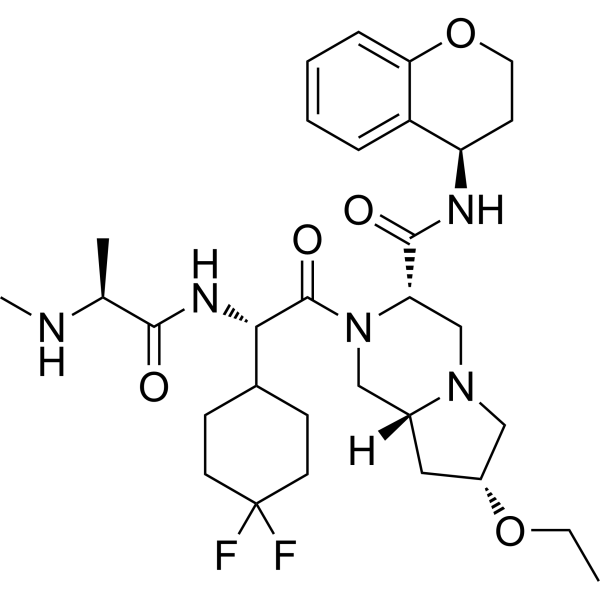 0 ImagesCat. No.: HY-100682CAS No.: 1266227-69-3
-
Jolkinolide B (Standard)
 0 ImagesCat. No.: HY-N0732RCAS No.: 37905-08-1Jolkinolide B (Standard) is the analytical standard of Jolkinolide B (HY-N0732). This product is intended for research and analytical applications. Jolkinolide B is a bioactive diterpene isolated from the roots of Euphorbia fischeriana Steud with oral activity. Jolkinolide B downregulates XIAP, cIAP1, cIAP2, and phosphorylated Akt, upregulates Smac, activates caspase-3 and caspase-9, and inhibits NF-κB, TGFβ/smad3 and JAK/STAT3 pathways. Jolkinolide B exerts comprehensive biological effects including inducing cancer cell apoptosis, suppressing inflammatory responses, improving lung function, alleviating hepatic steatosis and eliminating intracellular Mycobacterium tuberculosis. Jolkinolide B can be used for the research of leukemia, histiocytic lymphoma, asthma, metabolic dysfunction-associated steatotic liver disease and tuberculosis.

-
GO-Y078
 0 ImagesCat. No.: HY-137059CAS No.: 1217503-60-0GO-Y078 is a curcumin (HY-N0005) analog. GO-Y078 activates p38/JNK1/2. GO-Y078 activates the MAPK pathway, Caspase 3/8/9, PARP, AP-1, DR5, and TP53, while inhibiting cIAP-1, XIAP, and NF-κB. GO-Y078 induces sub-G1/G2/M phase arrest and Apoptosis. GO-Y078 impairs angiogenesis. GO-Y078 can be used in research related to osteosarcoma, cervical cancer, oral squamous cell carcinoma, and peritoneal metastasis of gastric cancer.
- 1
- 2




