



PROTACs
PROTAC (PROteolysis-TArgeting Chimera) is a heterobifunctional nanomolecule containing two different ligands, ligand for ubiquitin E3 and ligand for target protein. The two parts are connected by linker to form a "three-unit" polymer, target protein ligand-linker-E3 ligase ligand. Building blocks of PROTAC molecules include PROTAC Linker, Ligand for Target Protein for PROTAC, Ligand for E3 Ligase, E3 Ligase Ligand-Linker Conjugate, Target Protein Ligand-Linker Conjugate, etc.
PROTACs Isoform Specific Products
All Product Categories
-
PROTACs Related Products (1353)
Related Products (1353)

-
Antibodies (1)
-
PROTACs Isoform Comparison
-
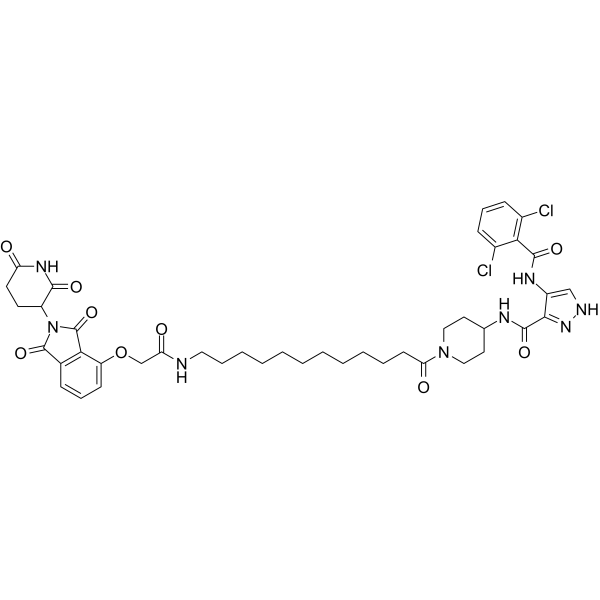
PROTAC GPX4 degrader-4
 0 ImagesPROTAC GPX4 degrader-4 is a potent GPX4 PROTAC degrader, with DC50 values of 1366.67 nM and 475.15 nM in T24 and RT4 cells, respectively. PROTAC GPX4 degrader-4 targets and degrades GPX4 protein via the ubiquitin-proteasome system, thereby inducing cellular ferroptosis. PROTAC GPX4 degrader-4 can be used for research on bladder cancer.
-
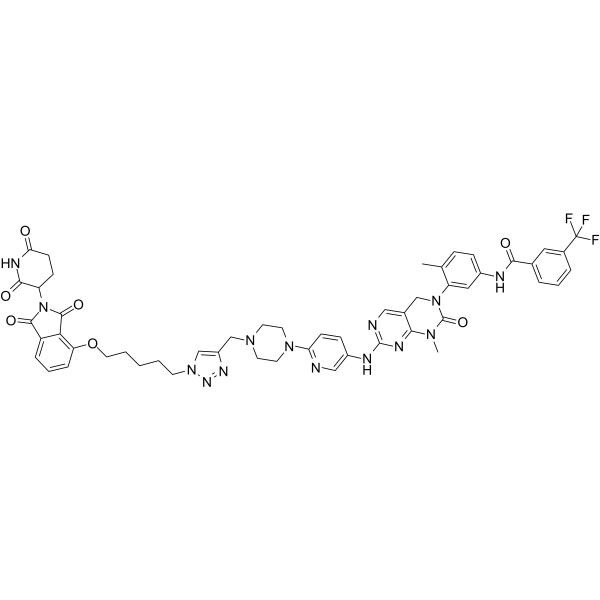
WH-10417-099
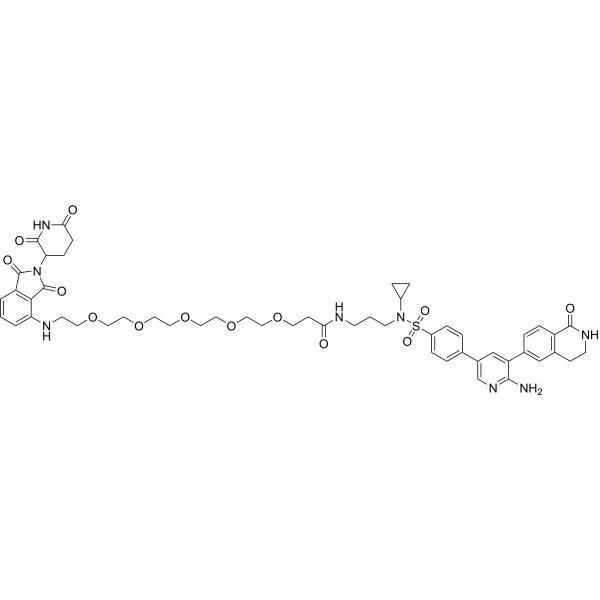 0 ImagesWH-10417-099 is a CRBN-based PROTAC multi-kinase degrader that induces the degradation of the maximum number of unique kinases (over 125 unique kinases, such as CSNK1E and PI3Kγ) simultaneously. WH-10417-099 induces protein degradation via the ubiquitin biotinylation (E-STUB) pathway, exhibits synergistic effects with SB-405483 (HY-W1135319). The E3 ligase ligand and linker of WH-10417-099 can form the conjugate Pomalidomide 4'-PEG5-acid (HY-131647).

-
ZXH-4-130
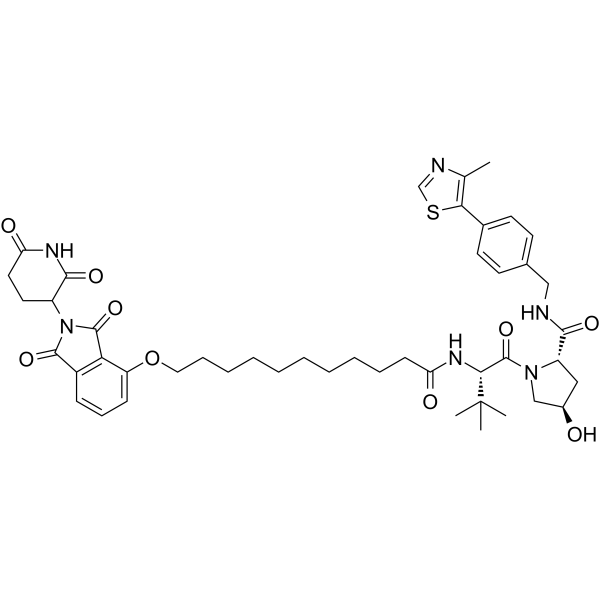 0 ImagesZXH-4-130 is a highly potent and selective degrader of CRBN. ZXH-4-130 is a CRBN-VHL compound (hetero-PROTAC).

-
α1A-AR Degrader 9c
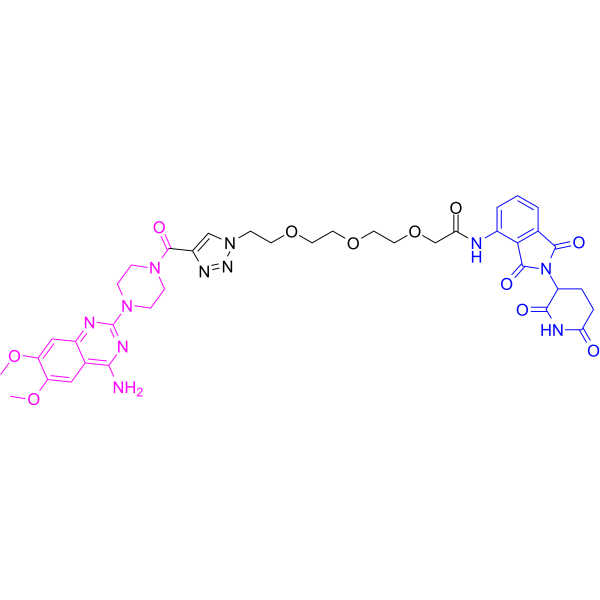 0 ImagesCat. No.: HY-147100CAS No.: 2863635-02-1α1A-AR Degrader 9c (compound 9c) is a potent, selective and reversible α1A-AR (Adrenergic receptor) PROTAC degrader, with a DC50 of 2.86 μM. α1A-AR Degrader 9c induces α1A-AR degradation can be attributed to proteasomal degradation. α1A-AR Degrader 9c inhibits the proliferation of PC-3 cells, with an IC50 of 6.12 μM. α1A-AR Degrader 9c shows antitumor activity, and can be used for prostate cancer research.
-
PROTAC PARP2 degrader-1
 0 ImagesCat. No.: HY-183013CAS No.: 2925182-32-5PROTAC PARP2 degrader-1 is an orally active PARP2 PROTAC degrader with a DC50 of 2 μM. PROTAC PARP2 degrader-1 potently inhibits the enzymatic activities of PARP1 (IC50 = 2.74 nM) and PARP2 (IC50 = 0.32 nM), with approximately 10-fold higher selectivity for PARP2. PROTAC PARP2 degrader-1 induces cell cycle arrest and apoptosis, and exhibits significant anti-tumor efficacy in mouse models. PROTAC PARP2 degrader-1 can be used for the research of triple-negative breast cancer.

-
BT-O2C
 0 ImagesBT-O2C is a highly selective p300 PROTAC degrader. BT-O2C can significantly degrade the level of p300 in HAP1 cells. BT-O2C has significant cytotoxicity in CIC:DUX4 sarcoma (CDS) cell lines (IC50 ranges from 152 to 221 nM) and significantly reduces the expression of CDS target genes (ETV1, ETV4, ETV5). BT-O2C can be used for research on cancer.
-
PPM-3
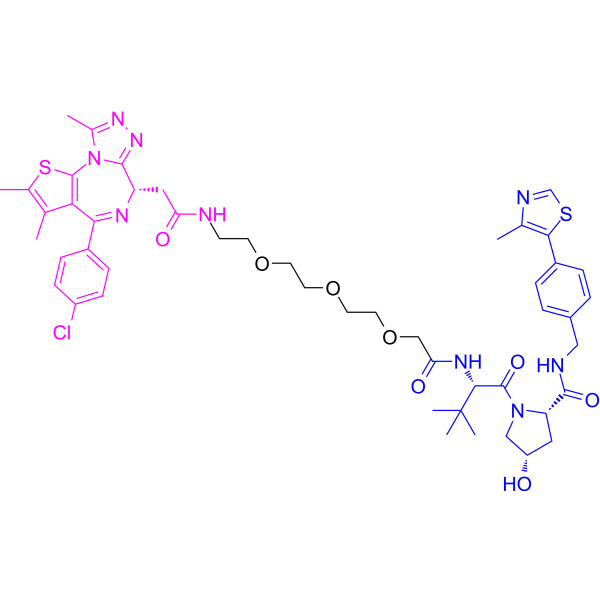
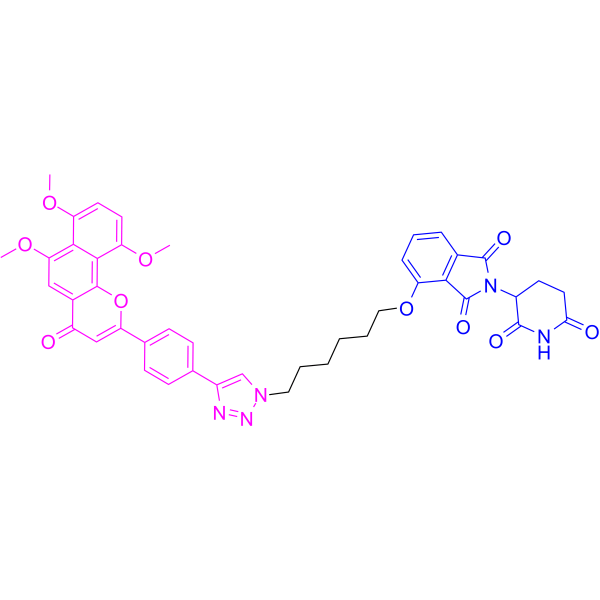
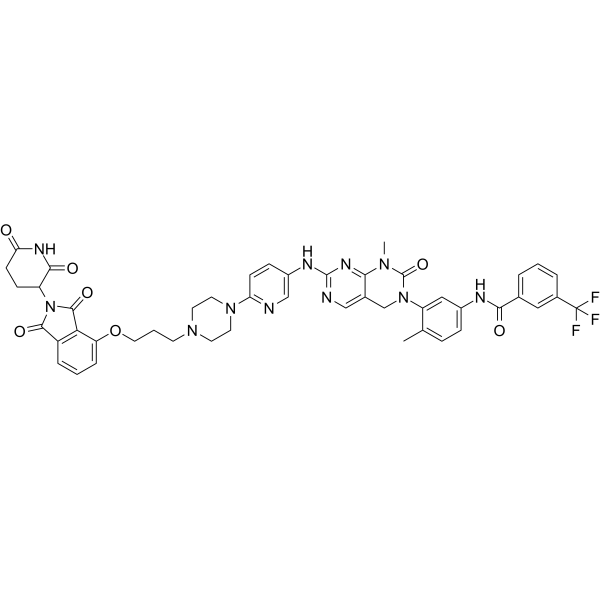
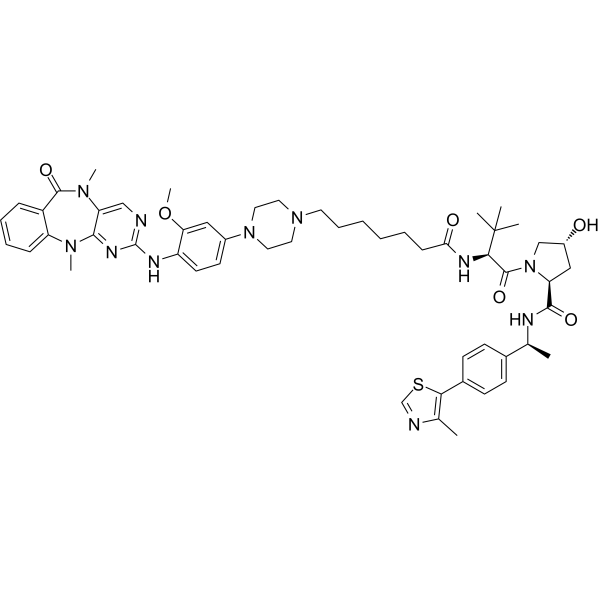 0 ImagesCat. No.: HY-149616CAS No.: 3032388-42-1PPM-3 is a potent and selective PROTAC ERK5 degrader, with an IC50 of 62.4 nM. PPM-3 did not influence tumor cell growth directly. PPM-3 influences tumor development by affecting the differentiation of macrophages.
-
dAurAB2
 0 ImagesdAurAB2 is a dual-degrading PROTAC that potently degrades Aurora-A and Aurora-B with DC50s of 59 nM and 39 nM, respectively. dAurAB2 reduces N-Myc levels in MYCN-amplified IMR32 neuroblastoma cells. dAurAB2 can be used for the study of neuroblastoma. (Pink, Aurora ligand (HY-10804); Blue, E3 ligand: (HY-103597); Black, linker (HY-W105740)).
-
AZ'3137
 0 ImagesAZ‘3137 is an orally active PROTAC-type androgen receptor (AR) degrader with a DC50 value of 22 nM. AZ‘3137 can degrade L702H mutant AR (DC50 of 92 nM). AZ'3137 can inhibit cell proliferation of LNCaP, with a GI50 value of 74 nM. AZ'3137 can inhibit AR signaling and tumor growth in prostate cancer mice.
-
TAT-PiET-PROTAC
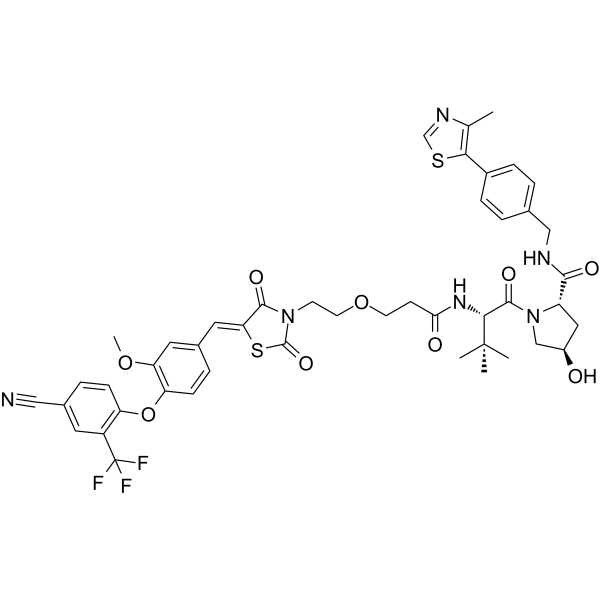
 0 ImagesTAT-PiET-PROTAC is a proteolysis-targeting chimera (PROTAC)-modified TAT-PiET (HY-P10445), which is a cell-penetrating peptide targeting the extra-terminal (ET) domain of BRD4. TAT-PiET-PROTAC can reduce BRD4 and JMJD6 levels and inhibit cell proliferation. TAT-PiET-PROTAC also resists the endocrine resistance of ERα-positive breast cancer cells. TAT-PiET-PROTAC can be used for the research of cancer, such as breast cancer.
-
DGY-09-192
 0 ImagesDGY-09-192 is a PROTAC FGFR1/2 degrader (FGFR1: DC50 = 4.35 nM; FGFR2: DC50 = 70 nM). DGY-09-192 preferentially degrades wild-type FGFR1/2 and multiple FGFR2 fusion proteins (including FGFR2-PHGDH and FGFR2-OPTN). DGY-09-192 suppresses downstream FGFR signaling (reducing phosphorylation of FRS2 Y196 and ERK1/2 T202/Y204) in vitro and vivo. DGY-09-192 can be used for the study of FGFR-driven cancers.




