



SARS-CoV
SARS coronavirus
SARS-CoV is the coronavirus (CoV) that causes severe acute respiratory syndrome (SARS). CoVs are enveloped viruses with a positive-sense, single-stranded RNA and can cause health-threatening outbreaks by targeting human respiratory system, including not only SARS, but also Middle East respiratory syndrome (MERS) and SARS-CoV-2 (the cause of COVID-19).
CoVs have four main structural proteins: spike(S), membrane (M), envelope (E), and nucleocapsid (N) proteins. An S protein mediates the CoV entry into host cells by attaching to a cellular receptor (ACE2 for SARS-CoV and SARS-CoV-2, DPP4 for MERS-CoV), followed by fusion between virus and host cell membranes. Genome replication and subgenomic RNA transcription after entry carry on with the participation of many nonstructural proteins such as Mpro (main protease or 3CLpro), PLpro (papain-like protease) and RdRp (RNA-dependent RNA polymerase). Then the structural proteins are translated, assembled into mature virions, and released via vesicles by exocytosis. It is worth mentioning that a protease called TMPRSS2 (transmembrane protease, serine 2) play important roles throughout the whole life of CoVs (such as attachment, assembling and release) by cleaving S protein. All the proteins and subcellular structures participated in the life cycle of CoVs are promising targets for treatment of disease caused by CoVs.
All Product Categories
-
SARS-CoV Related Products (1200)
Related Products (1200)

-
Recombinant Proteins (196)
-
Chlorphenoxamine hydrochloride
 0 ImagesChlorphenoxamine hydrochloride, an antihistamine and anticholinergic agent is a GPCR antagonist. Chlorphenoxamine hydrochloride inhibits multiple lethal viral diseases, such as SARS-CoV, MERS-CoV, EBOV and malaria. Chlorphenoxamine hydrochloride shows anti-filovirus activity against both EBOV and Marburg virus (MARV) with IC50s of 1.1 μM and 6.2 μM, respectively. Chlorphenoxamine hydrochloride is used for allergic conditions, urticaria, viral diseases and Parkinson’s disease.
-
Virapinib
 0 ImagesVirapinib is a macropinocytosis inhibitor with antiviral activity. Virapinib exhibits broad-spectrum antiviral activity against SARS-CoV-2, monkeypox virus, tick-borne encephalitis virus, and Ebola pseudotyped vesicular stomatitis virus, and it enhances Dengue Virus infection. Virapinib blocks viral entry by inhibiting macropinocytosis, reduces syncytium formation in SARS-CoV-2-infected cells, and impairs cellular entry of SARS-CoV-2 variants. Virapinib upregulates the expression of genes related to sterol biosynthesis. Virapinib can be used in studies related to COVID-19, monkeypox, tick-borne encephalitis, and Ebola virus infection.
-
CK2-IN-15
 0 ImagesCat. No.: HY-174350CK2-IN-15 (Compound Biv5) is a selective and potent bivalent protein kinase CK2 inhibitor with an IC50 value of 51 pM. CK2-IN-15 significantly reduces the replication of SARS-CoV-2 in HEK-ACE2-TMPRSS2 and Vero cells, and also reduces viral replication in an ex vivo model of human nasal epithelial cells. CK2-IN-15 is promising for research of β-coronavirus infection-related diseases.
-
SARS-CoV-2 Mpro-IN-1
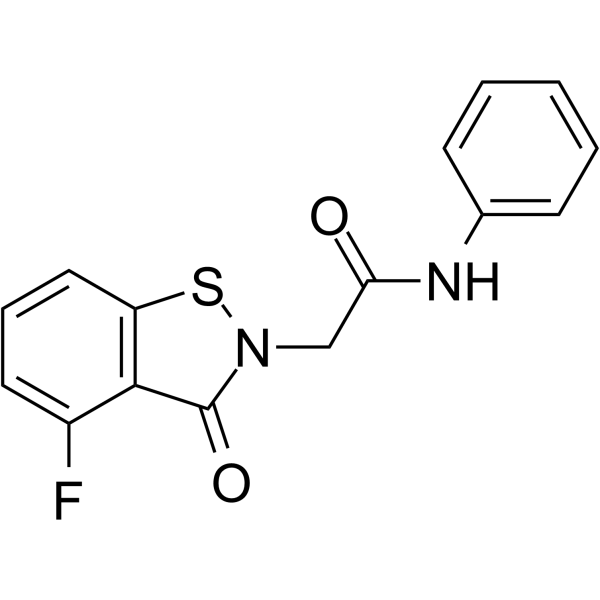 0 ImagesCat. No.: HY-144464CAS No.: 2758359-91-8SARS-CoV-2 Mpro-IN-1 (compound 16b-3) is a potent, selective and irreversible inhibitor of SARS-CoV-2 main protease (Mpro), with an IC50 of 116 nM.
-
GC-78-HCl
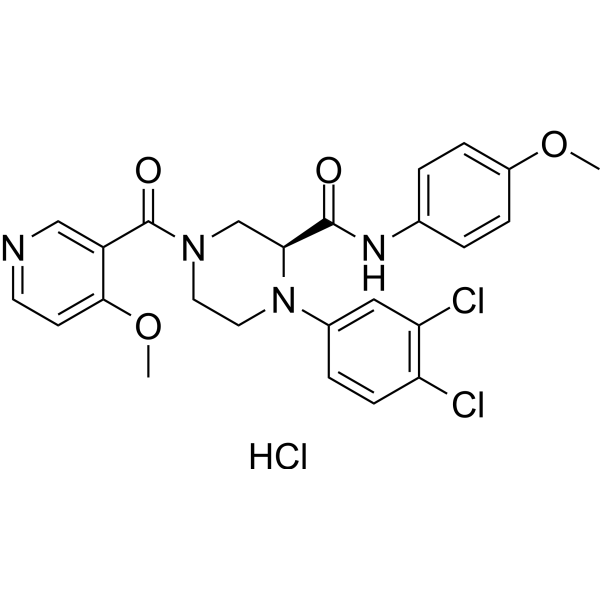 0 ImagesCat. No.: HY-149774CAS No.: 3022242-53-8GC-78-HCl is an orally and nonpeptidic SARS-CoV-2 Mpro inhibitor, with an IC50 of 0.19 μM for enzyme. GC-78-HCl has excellent antiviral activity and favorable pharmacokinetic properties.
-
4-[(7-Chloro-4-quinolinyl)amino]-1-pentanol-d4
![4-[(7-Chloro-4-quinolinyl)amino]-1-pentanol-d4](https://file.medchemexpress.com/product_pic/hy-w777545.gif "Click to View 4-[(7-Chloro-4-quinolinyl)amino]-1-pentanol-d4 Product Detail") 0 ImagesCat. No.: HY-W777545CAS No.: 1215752-28-54-[(7-Chloro-4-quinolinyl)amino]-1-pentanol-d4 is the deuterium labeled Hydroxychloroquine Impurity E (HY-131262). Hydroxychloroquine Impurity E is the impurity of Hydroxychloroquine. Hydroxychloroquine is a synthetic antimalarial agent which can also inhibit Toll-like receptor 7/9 (TLR7/9) signaling. Hydroxychloroquine is efficiently inhibits SARS-CoV-2 infection in vitro.
0 ImagesCat. No.: HY-W777545CAS No.: 1215752-28-54-[(7-Chloro-4-quinolinyl)amino]-1-pentanol-d4 is the deuterium labeled Hydroxychloroquine Impurity E (HY-131262). Hydroxychloroquine Impurity E is the impurity of Hydroxychloroquine. Hydroxychloroquine is a synthetic antimalarial agent which can also inhibit Toll-like receptor 7/9 (TLR7/9) signaling. Hydroxychloroquine is efficiently inhibits SARS-CoV-2 infection in vitro.
-
Anti-Nucleocapsid Antibody (N-P10)
 0 ImagesCat. No.: HY-P992282Anti-Nucleocapsid Antibody (N-P10) is a highly specific SARS-CoV-2 Nucleocapsid (N) protein-targeted recombinant monoclonal antibody. Anti-Nucleocapsid Antibody (N-P10) can be used for research on SARS-CoV-2 infection.
-
SARS-CoV-2-IN-66
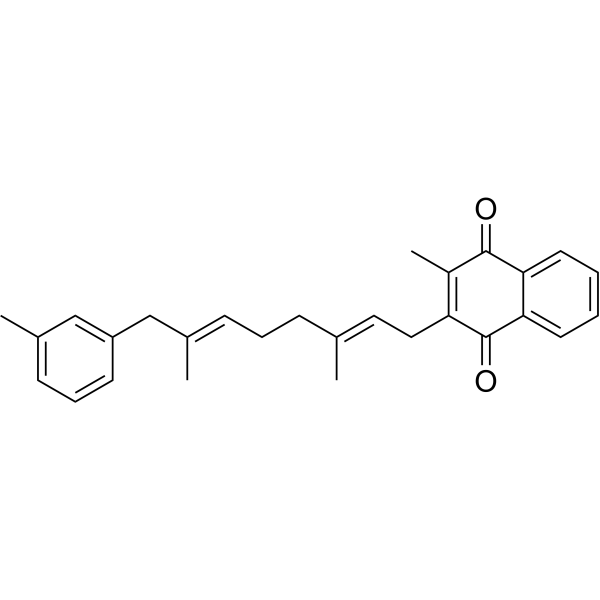 0 ImagesCat. No.: HY-157021CAS No.: 1807620-38-7SARS-CoV-2-IN-66 (1), a vitaminK derivative, is a SARS-CoV-2 inhibitor, with an EC50 of 70.8 μM in VeroE6/TMPRSS2 cells.
-
Riamilovir sodium
 0 ImagesCat. No.: HY-109072ACAS No.: 116061-59-7Riamilovir sodium is an oral, broad-spectrum antiviral agent. Riamilovir sodium can directly act on the virus's RNA-dependent RNA polymerase, thereby inhibiting viral replication, reducing viral load, and helping to alleviate the severity of the disease. Riamilovir sodium can be used in research on acute respiratory viral infections caused by novel variants of SARS-CoV-2.
-
SARS-CoV-2-IN-29 disodium
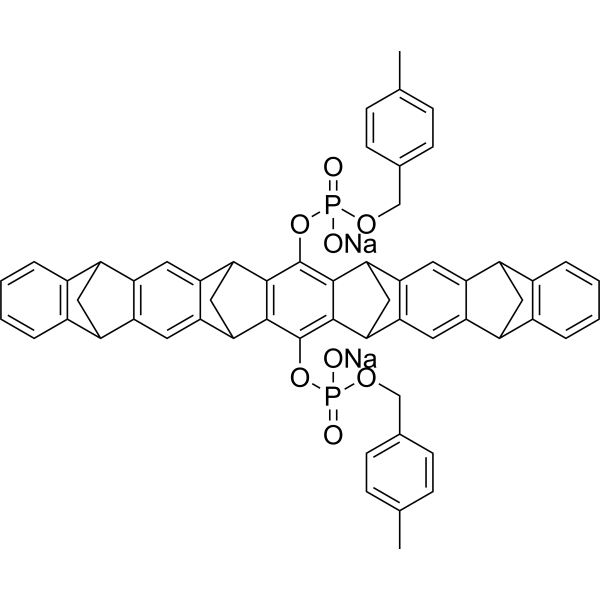 0 ImagesCat. No.: HY-151276ASARS-CoV-2-IN-29 disodium is a two-armed diphosphate ester with benzene system and molecular tweezers. SARS-CoV-2-IN-29 disodium exhibits antiviral activity with IC50s of 1.5 μM and 1.6 μM against SARS-CoV-2 activity and the spike pseudoparticle transduction, respectively. SARS-CoV-2-IN-29 disodium induces liposomal membrane disruption with an EC50 value of 3.0 μM.
-
SARS-CoV-2 nsp14-IN-1
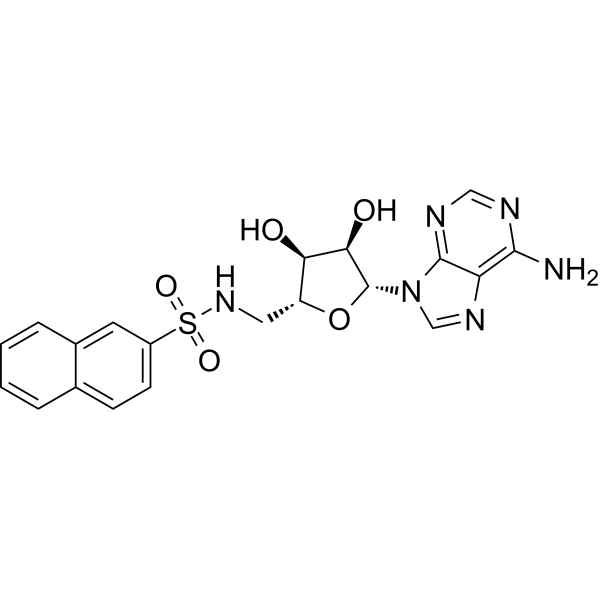 0 ImagesCat. No.: HY-150680CAS No.: 2816165-02-1SARS-CoV-2 nsp14-IN-1 (Compound 3) is a prototypic bisubstrate inhibitor of SARS-CoV-2 Nsp14 MTase with an IC50 value of 0.061 μM. SARS-CoV-2 nsp14-IN-1 (Compound 3) has an excellent selectivity profile over a panel of human methyltransferases, can against apanel of 10 human MTases including histone lysine, proteinarginine, and DNA and RNA MTases.
-
SARS-CoV-2-IN-100
 0 ImagesCat. No.: HY-169224CAS No.: 374543-46-1
-
Jun13698
 0 ImagesCat. No.: HY-181263Jun13698 is a SARS-CoV-2 main protease (Mpro) inhibitor with Ki values of 65.6 nM, 510.0 nM, and 117.5 nM against the wild-type, E166V, and E166A mutants, respectively. Jun13698 forms stable complexes with wild-type and mutant Mpro to mediate enzyme inhibition. Jun13698 exhibits antiviral activity against SARS-CoV-2 variants carrying the E166V/A mutation. Jun13698 is applicable to COVID-19-related research.
-
SARS-CoV-2-IN-76
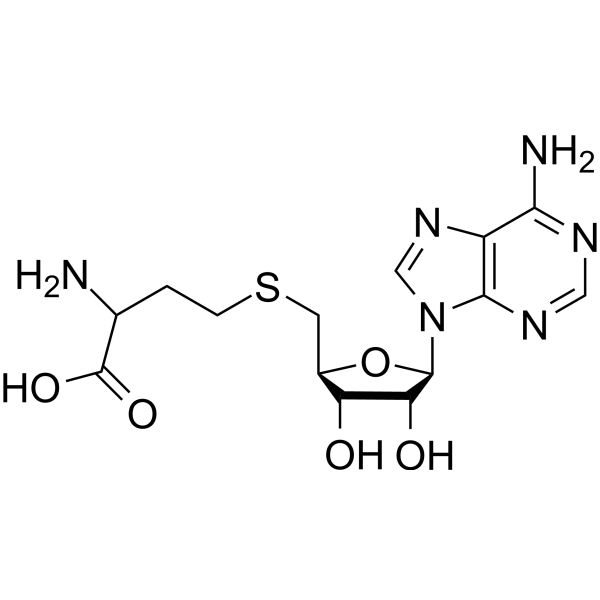 0 ImagesCat. No.: HY-W423489CAS No.: 58976-18-4Synonyms: S-Adenosyl-DL-homocysteineSARS-CoV-2-IN-76 (compound 1) is a nsp14-viral cap N7 methyltranferase and PLpro inhibitor of severe acute respiratory syndrome corona virus (SARS-CoV-2).

-
Fluoroneplanocin A-8N
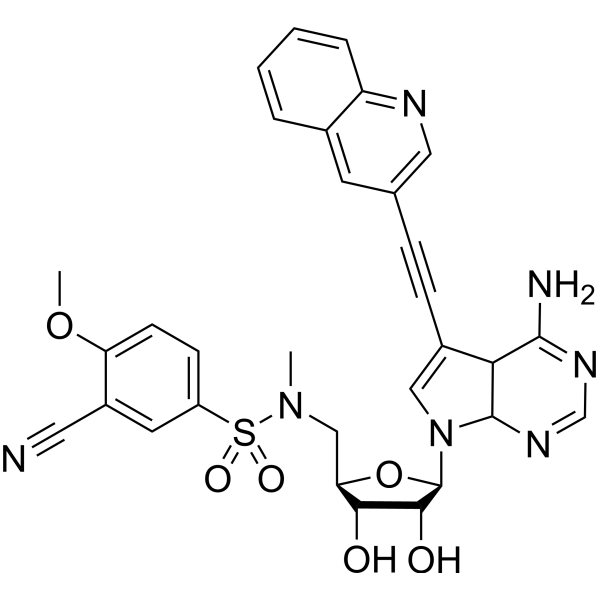
 0 ImagesCat. No.: HY-179249Fluoroneplanocin A-8N (Compound 3a) is an inhibitor targeting SAH hydrolase (IC50 = 1.51 μM) and viral RNA polymerase. Fluoroneplanocin A-8N exhibits broad-spectrum anti-SARS-CoV-2 and dengue virus activity, with EC50 values of 12.2 and 37.4 μM respectively. Fluoroneplanocin A-8N has no cytotoxicity. Fluoroneplanocin A-8N can be used for anti-positive-strand viruses.
-
Isorhamnetin 7-O-α-L-rhamnoside
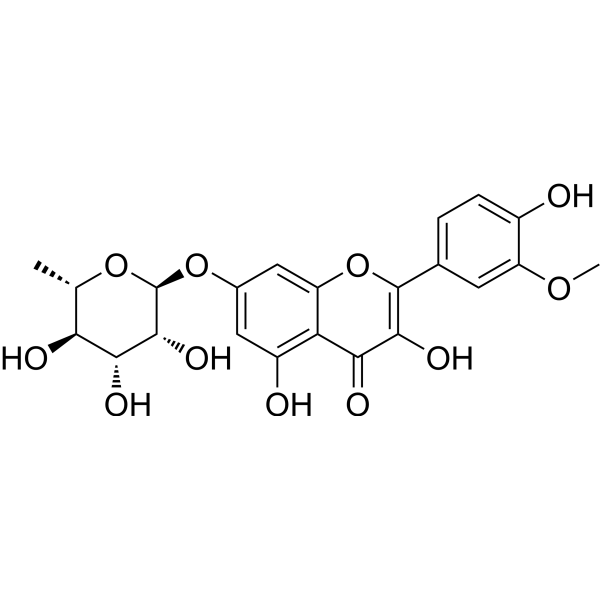 0 ImagesCat. No.: HY-N5068CAS No.: 17331-72-5Isorhamnetin 7-O-α-L-rhamnoside shows binding affinity with COVID-19 virus main protease.
-
SARS-CoV-2-IN-80
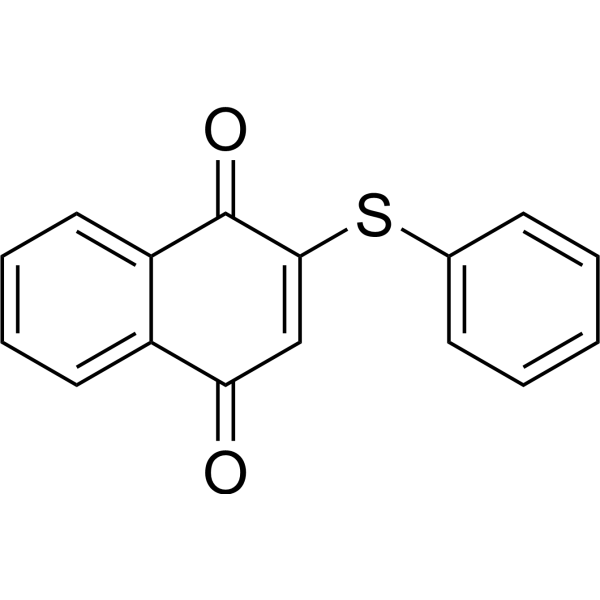 0 ImagesCat. No.: HY-162236CAS No.: 57341-12-5SARS-CoV-2-IN-80 (compound 13) is a potent SARS-CoV-2 3CLpro inhibitor with an IC50 value of 0.964 µM.
-
Telaprevir (Standard)
 0 ImagesCat. No.: HY-10235RCAS No.: 402957-28-2Synonyms: VX-950 (Standard)Telaprevir (Standard) is the analytical standard of Telaprevir. This product is intended for research and analytical applications. Telaprevir (VX-950) is a highly selective, reversible, and potent peptidomimetic inhibitor of the HCV NS3-4A protease, the steady-state inhibitory constant (Ki) of Telaprevir is 7 nM against a genotype 1 (H strain) NS3 protease domain plus a NS4A cofactor peptide. Telaprevir inhibits SARS-CoV-2 3CLpro activity.




