



Sirtuin
Sirtuin (Sir2 proteins) are a class of proteins that possess either mono-ADP-ribosyltransferase, or deacylase activity, including deacetylase, desuccinylase, demalonylase, demyristoylase and depalmitoylase activity. Sirtuins regulate important biological pathways in bacteria, archaeaand eukaryotes. Sirtuins have been implicated in influencing a wide range of cellular processes like aging, transcription, apoptosis, inflammation and stress resistance, as well as energy efficiency and alertness during low-calorie situations. Sirtuins can also control circadian clocks and mitochondrial biogenesis.
Sirtuin Isoform Specific Products
All Product Categories
-
Sirtuin Inhibitors
(168)
View all products
-
Sirtuin Agonists
(11)
View all products
-
Sirtuin Activators
(101)
View all products
-
Sirtuin Modulators
(12)
View all products
-
Sirtuin Degraders
(3)
View all products
-
Sirtuin Control
(1)
View all products
-
Sirtuin Substrates
(4)
View all products
-
Sirtuin Ligand
(1)
View all products
-
Sirtuin Related Products (320)
Related Products (320)

-
Antibodies (9)
-
Sirtuin Isoform Comparison
-
SIRT1-IN-7
 0 ImagesCat. No.: HY-184372CAS No.: 720672-18-4
-
IMU-856
 0 ImagesCat. No.: HY-177878CAS No.: 2303528-97-2IMU-856 is an orally active and systemic action SIRT6 small molecule regulator. IMU-856 effectively and selectively inhibits the deacetylase activity of SIRT6, while increasing the protein level of SIRT6. IMU-856 can restore intestinal barrier function and can be used for research on celiac disease.
-
Nicotinamide riboside triflate
 0 ImagesCat. No.: HY-123033DCAS No.: 445489-49-6Nicotinamide riboside triflate, an orally active NAD+ precursor, increases NAD+ levels and activates SIRT1 and SIRT3. Nicotinamide riboside triflate is a source of vitamin B3 (niacin) and enhances oxidative metabolism, protection against high fat diet-induced metabolic abnormalities. Nicotinamide riboside triflate reduces cognitive deterioration in a transgenic mouse model of Alzheimer’s disease.
-
Resveratrol (GMP)
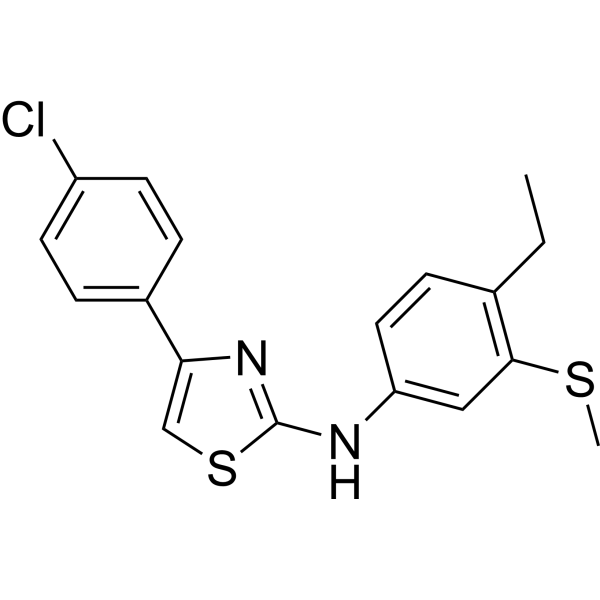
 0 ImagesResveratrol (GMP) is Resveratrol (HY-16561) produced by using GMP guidelines. GMP small molecules work appropriately as an auxiliary reagent for cell therapy manufacture. Resveratrol (trans-Resveratrol; SRT501), a natural polyphenolic phytoalexin that possesses anti-oxidant, anti-inflammatory, cardioprotective, and anti-cancer properties. Resveratrol (SRT 501) has a wide spectrum of targets including mTOR, JAK, β-amyloid, Adenylyl cyclase, IKKβ, DNA polymerase. Resveratrol also is a specific SIRT1 activator. Resveratrol is a potent pregnane X receptor (PXR) inhibitor. Resveratrol is an Nrf2 activator, ameliorates aging-related progressive renal injury in mice model. Resveratrol increases production of NO in endothelial cells.
-
SRTCX1002
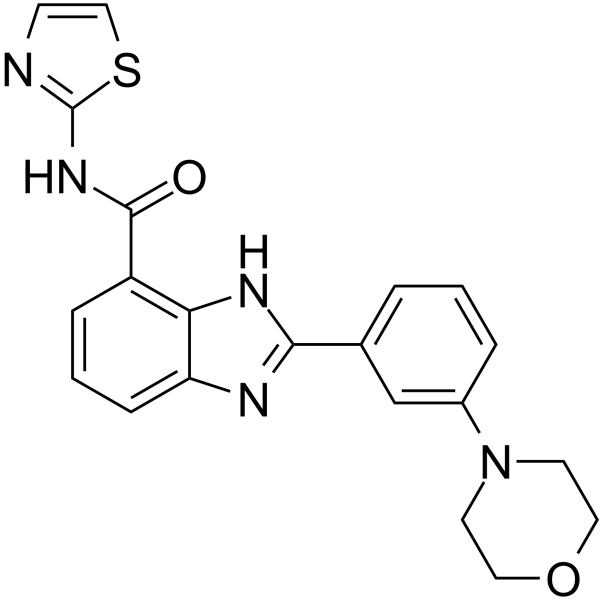 0 ImagesCat. No.: HY-114981CAS No.: 1203479-63-3SRTCX1002 is a potent activator of SIRT1 (STAC), suppresses inflammatory responses through promotion of p65 deacetylation and inhibition of NF-κB Activity. SRTCX1002 suppresses stimuli-induced NF-κB transcriptional activation and LPS-induced TNFα secretion with IC50s of 0.71 and 7.58 µM, respectively.

-
Butrin
 0 ImagesButrin is a compound found in Butea monosperma flowers. Butrin reduces expression of SIRT1, AURKB, cyclin D1, pAKT, GSK-3β, β-catenin, and TGF-3β expression, enhances apoptosis and ROS production in cancer cells. Butrin downregulates Wnt and NF-κB signaling, mitigates oxidative stress, reduces proinflammatory cytokine (TNF-α, IL-6 and IL-8) production and suppresses neuroinflammation. Butrin inhibits IKK enzyme activity. Butrin can be used for the researches of colorectal cancer, Alzheimer’s disease, and rheumatoid arthritis.

-
SRTCX1003
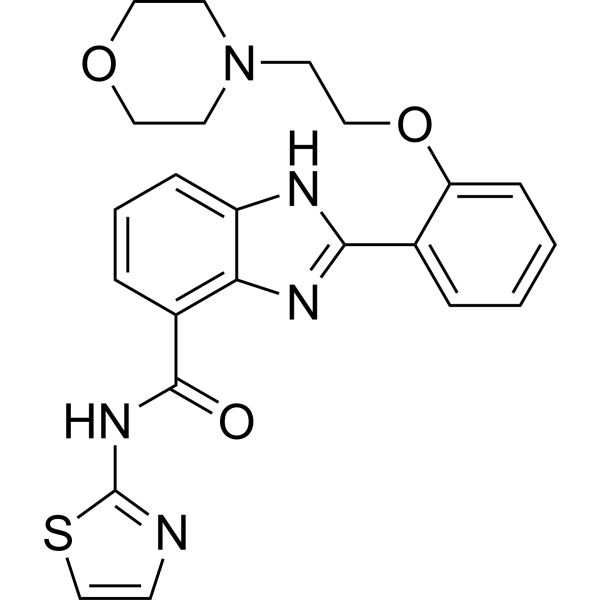 0 ImagesCat. No.: HY-124240CAS No.: 1203480-86-7SRTCX1003 is an orally active SIRT1 activator. SRTCX1003 suppresses inflammatory responses.
-
SIRT6-IN-4
 0 ImagesCat. No.: HY-170402CAS No.: 3075160-74-3SIRT6-IN-4 (Compound 10d) is a selective inhibitor for SIRT6 with an IC50 of 5.68 μM. SIRT6-IN-4 inhibits the proliferation of MCF-7 with an IC50 of 8.30 μM. SIRT6-IN-4 arrests the cell cycle at G2/M phase, inhibits thecell migration and invasion of MCF-7, and induces apoptosis. SIRT6-IN-4 exhibits antitumor efficacy in mouse models.
-
PRMT/HKMT-IN-1
 0 ImagesCat. No.: HY-114510CAS No.: 1020399-52-3PRMT/HKMT-IN-1 is an epigenetic multi-target protein arginine methyltransferases (PRMTs) and histone lysine methyltransferases (HKMTs) inhibitor. PRMT/HKMT-IN-1 inhibits Aspergillus nidulans RmtA with an IC50 of 29 μM. PRMT/HKMT-IN-1 inhibits human PRMT1, p300/CBP HAT, CARM1, SET7, SIRT1 and SIRT2. PRMT/HKMT-IN-1 inhibits methylation of histone H3K4, H4R3, and H3R17 residues. CBP/p300-IN-23 induces apoptosis, arrests cell cycle in S phase, and triggers granulocytic differentiation in leukemia cells. PRMT/HKMT-IN-1 can be used for the research of leukemia.
-
BF-175
 0 ImagesCat. No.: HY-138443ACAS No.: 1333375-02-2BF-175 is a selective SIRT1 agonist. BF175 increases SIRT1-mediated activation of PGC1-α, induces Apoptosis, induces Autophagy and inhibits SREBP activity. BF-175 protects against high glucose-mediated mitochondrial injury. BF-175 attenuates diabetic kidney disease progression. BF175 inhibits endometrial carcinoma.
-
Cudraflavone B
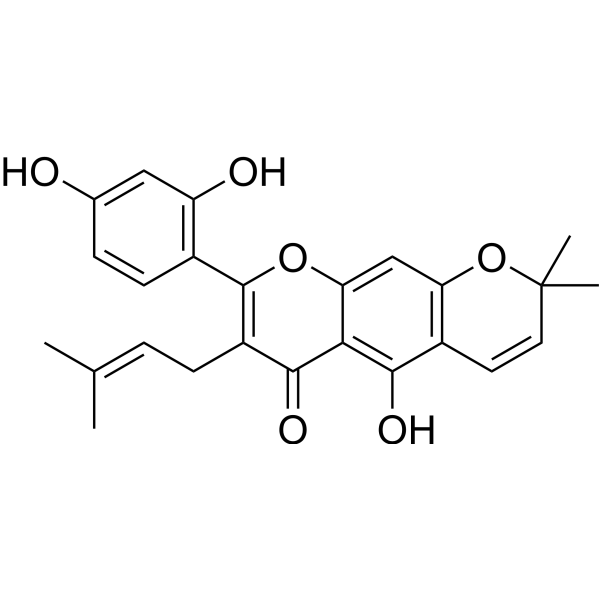 0 ImagesCat. No.: HY-N10009CAS No.: 19275-49-1Cudraflavone B is a prenylated flavonoid with anti-inflammatory and anti-tumor properties. Cudraflavone B is also a dual inhibitor of COX-1 and COX-2. Cudraflavone B blocks the translocation of nuclear factor κB (NF-κB) from the cytoplasm to the nucleus in macrophages. Thus, Cudraflavone B inhibits tumor necrosis factor α (TNFα) gene expression and secretion. Cudraflavone B also triggers the mitochondrial apoptotic pathway, activates NF-κB, the MAPK p38, and ERK, and induced the expression of SIRT1. Thus Cudraflavone B inhibits the growth of human oral squamous cell carcinoma cells.
-
4-Hydroxyestrone-13C6
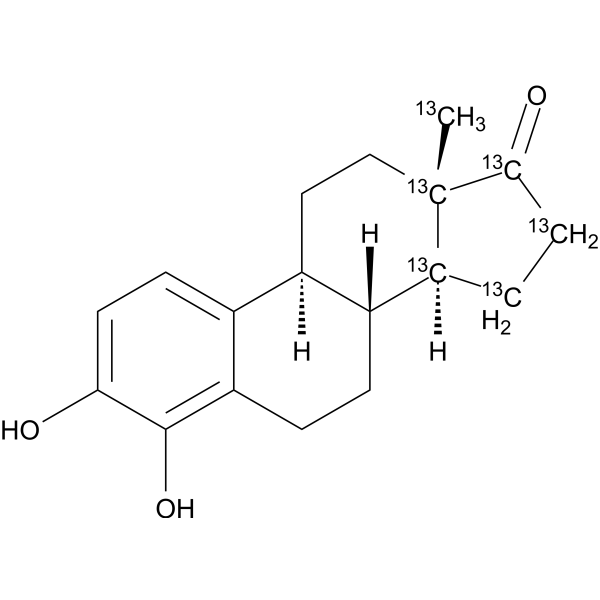 0 ImagesCat. No.: HY-W009300S1Synonyms: 4-OHE1-13C64-Hydroxyestrone (4-OHE1)-13C6 is a 13C-labeled 4-Hydroxyestrone (HY-W009300). 4-Hydroxyestrone is a brain-penetrant estrogen metabolite. 4-Hydroxyestrone shows neuroprotective effects involving increased cytoplasmic localization of p53 resulting from SIRT1-mediated p53 deacetylation. 4-Hydroxyestrone relies on PDI to mediate its protective effect against chemically induced ferroptosis in estrogen receptor-negative cancer cells. 4-Hydroxyestrone inhibits lipid peroxidation and lipid-ROS accumulation. 4-Hydroxyestrone blocks preovulatory luteinizing hormone surges in Rattus norvegicus. 4-Hydroxyestrone can be used for the researches of neurodegeneration, breast cancer and endocrine disease.
-
Ac-QPKK(Ac)-AMC
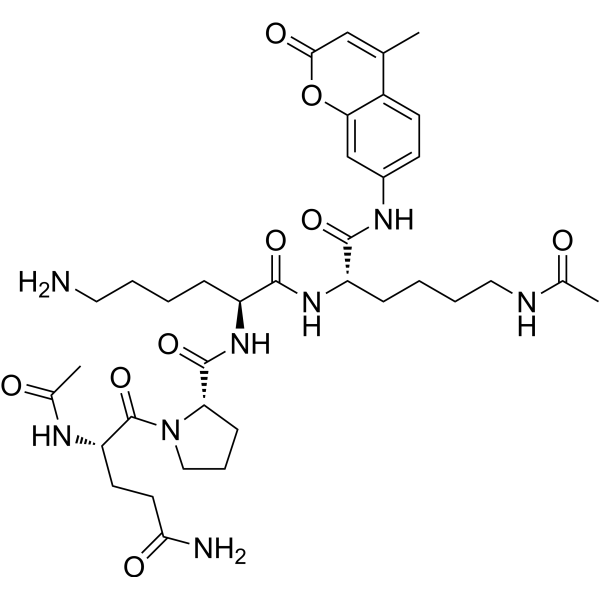 0 ImagesCat. No.: HY-P3364CAS No.: 1387005-23-3Ac-QPKK(Ac)-AMC is a p53-derived peptide conjugated with a fluorophore, which serves as a fluorescent peptide substrate for detecting the deacylase activity of zinc-dependent HDACs and sirtuins (Ex = 360 nm; Em = 460 nm).
-
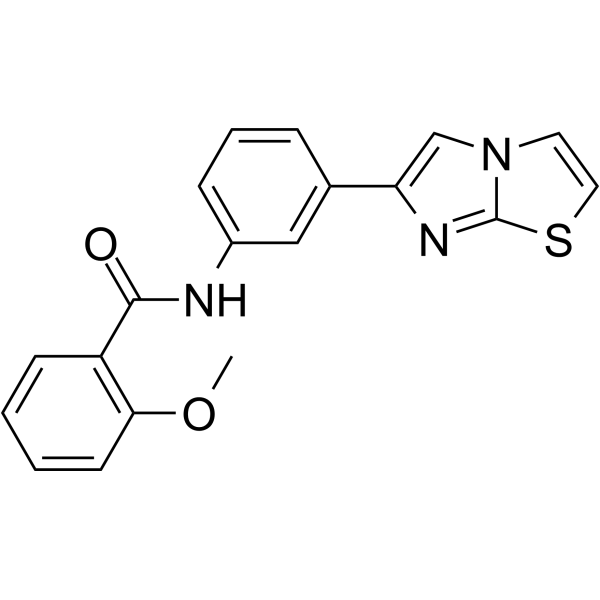
ZINC08792229
 0 ImagesCat. No.: HY-123241CAS No.: 904514-73-4
-
Aristoforin
 0 ImagesCat. No.: HY-133849CAS No.: 849215-53-8Aristoforin, a hypericin derivative, inhibits the activities of SIRT1 and SIRT2. Aristoforin induces G1 phase cell cycle arrest, scavenges hydroxyl free radicals, and exhibits protective activity against Fe2+-induced DNA breakage. Aristoforin can be used in studies related to breast cancer and colon adenocarcinoma.
-
Ganoderic acid D (Standard)
 0 ImagesCat. No.: HY-N1511RCAS No.: 108340-60-9Ganoderic acid D (Standard) is the analytical standard of Ganoderic acid D. This product is intended for research and analytical applications. Ganoderic acid D, a highly oxygenated tetracyclic triterpenoid, is the major active component of Ganoderma lucidum. Ganoderic acid D upregulates the protein expression of SIRT3 and induces the deacetylated cyclophilin D (CypD) by SIRT3. Ganoderic acid D inhibits the energy reprogramming of colon cancer cells including glucose uptake, lactate production, pyruvate and acetyl-coenzyme production in colon cancer cells. Ganoderic acid D induces HeLa human cervical carcinoma apoptosis.




