



Toll-like Receptor (TLR) Activator
-
ssRNA42 sodium
 0 ImagesCat. No.: HY-160231Purity: 98.62%
ssRNA42 (sodium) is a 20-mer phosphothioate protected single-stranded RNA oligonucleotide. ssRNA42 (sodium) derives from ssRNA40 by replacement of all G nucleotides with adenosine. ssRNA42 activated human PBMCs to secrete IFN-α, TNF-a, IL- 12p40, and IL-6, but ssRNA42 failed to stimulated murine pDCs and PBMCs.
-
Benzyl alcohol (Standard)
 0 Images
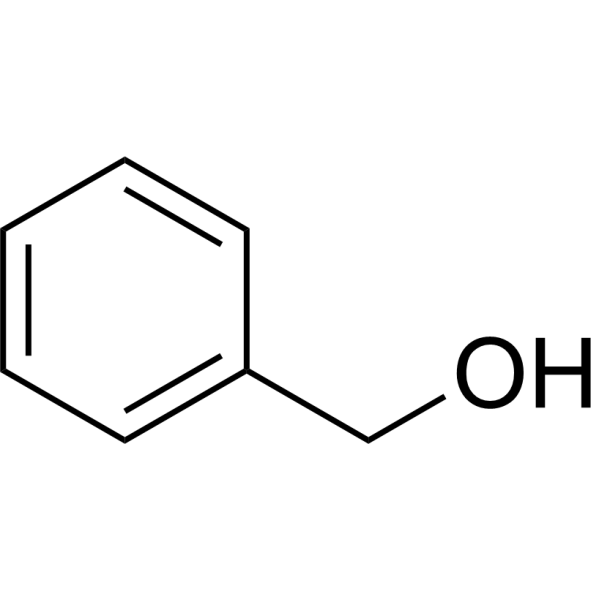
Benzyl alcohol (Standard) is the analytical standard of Benzyl alcohol. This product is intended for research and analytical applications. Benzyl alcohol is an aromatic alcohol, a colorless liquid with a mild aromatic odor.
-
Tris(2-chloroethyl)phosphate-d12
 0 ImagesSynonyms: TCEP-d12
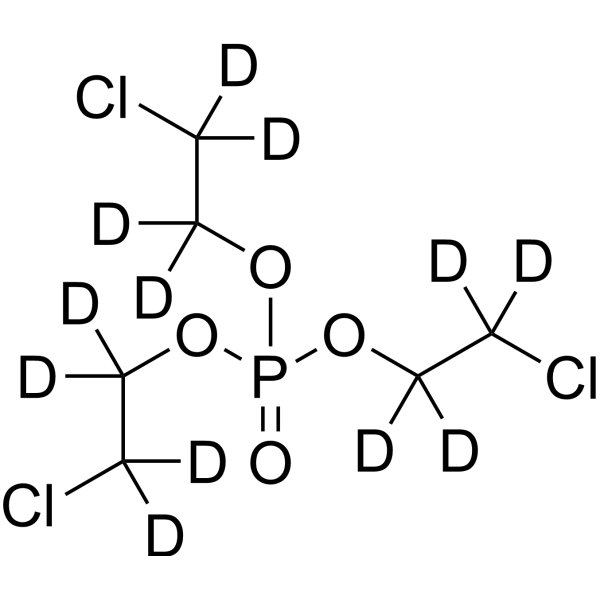
Tris(2-chloroethyl)phosphate-d12 is the deuterium labeled Tris(β-chloroethyl) phosphate. Tris(2-chloroethyl) phosphate is a widely used organic phosphorus flame retardant, mainly used as a plasticizer. Tris(2-chloroethyl) phosphate has orally active hepatotoxicity, inducing an increase in reactive oxygen species (ROS) and calcium ions (Ca²⁺) influx, a decrease in mitochondrial membrane potential (△Ψm), and causing DNA damage and cell apoptosis. Tris(2-chloroethyl) phosphate directly binds to FXR, inducing obesity and the formation of fatty liver in mice. Chloroethyl) phosphate activates the TLR4/NF-κB pathway, triggering liver inflammation.
-
Lipopolysaccharides, from Salmonella typhosa
 0 ImagesCat. No.: HY-D1056B4Synonyms: LPS, from bacterial (Salmonella typhosa)
Lipopolysaccharides, from Salmonella typhosa are lipopolysaccharide endotoxins and TLR-4 activators derived from Salmonella typhosa, classified as S-type LPS, which can activate pathogen-associated molecular patterns (PAMP) of the immune system and induce cellular secretion of migrasomes. Lipopolysaccharides, from Salmonella typhosa exhibit a typical three-part structure: O-antigen, core oligosaccharide, and lipid A. Lipopolysaccharides, from Salmonella typhosa can serve as vaccine adjuvants and demonstrate adjuvant activity targeting B cells in immune responses in vivo.
It is recommended to prepare a solution with concentration ≥2 mg/mL. Vortex thoroughly for more than 10 minutes. Due to the adsorption characteristics of LPS, silanized container or low adsorption centrifuge tubes should be used for aliquoting and storage, and mix thoroughly before use.
-
Pinus pinaster bark extract
 0 ImagesCat. No.: HY-N14039CAS No.: 90082-75-0
Pinus pinaster bark extract is extracted from the bark of pine bark with antioxidant, anti-inflammatory and neuroprotective effects. Pinus pinaster bark extract increases toll-like receptor (TLR) activity, inducing production of IL-10.
-
Lipopolysaccharides, from E. coli K-235
 0 ImagesCat. No.: HY-D1056A5Synonyms: LPS, from Escherichia coli (K-235)
Lipopolysaccharides, from E. coli (Escherichia coli) K-235 are lipopolysaccharide endotoxins and TLR-4 activators derived from E. coli, classified as S-type LPS, which can activate pathogen-associated molecular patterns (PAMP) of the immune system and induce cellular secretion of migrasomes. Lipopolysaccharides, from E. coli K-235 exhibit a typical three-part structure: O-antigen (O-antigen), core oligosaccharide (core oligosaccharide), and lipid A (Lipid A). Lipopolysaccharides, from E. coli K-235 have a mitogenic effect on C57BL/10ScN spleen cells. Additionally, LPS purified using butanol and deoxycholic acid methods stimulates spleen cells in C57BL/10ScCR and C3H/HeJ mice.
It is recommended to prepare a solution with concentration ≥2 mg/mL. Vortex thoroughly for more than 10 minutes. Due to the adsorption characteristics of LPS, silanized container or low adsorption centrifuge tubes should be used for aliquoting and storage, and mix thoroughly before use.
-
8-Mercaptoguanosine
 0 ImagesSynonyms: 8-Thioguanosine
8-Mercaptoguanosine is an immunoadjuvant that affects the in vivo antibody response to the T-cell-independent antigen TNP-Ficoll. 8-Mercaptoguanosine enhances IgG1, IgG2, and IgG3 antibody responses, but has no effect on IgM antibody responses. 8-Mercaptoguanosine also enhances antibody responses to very weak antigens such as pneumococcal polysaccharide and restores antibody responses in immunodeficient xid mice that are non-reactive to TNP-Ficoll.
-
Methylchloroisothiazolinone
 0 ImagesCat. No.: HY-W041608CAS No.: 26172-55-4
Methylchloroisothiazolinone is a widely used fungicide and also an aquatic pollutant with pro-inflammatory activity and neurotoxicity. Methylchloroisothiazolinone induces the production of pro-inflammatory cytokines (such as IL-1β, TNF-α, IL-6) by activating the NF-κB signaling pathway and upregulating TLR4 expression, thereby triggering allergic contact dermatitis. Methylchloroisothiazolinone reduces cholinesterase activity and exacerbates oxidative stress by impairing catalase activity and disrupting redox balance. Methylchloroisothiazolinone poses significant harm to Mediterranean mussels, reducing the viability of hemocytes and digestive gland cells, inhibiting immune phagocytic function, and disrupting osmoregulatory capacity. Methylchloroisothiazolinone is used in studies on allergic contact dermatitis and related immunotoxicity mechanisms.
-
Ergosta-7,22-dien-3-one
 0 ImagesCat. No.: HY-N3844CAS No.: 32507-77-0
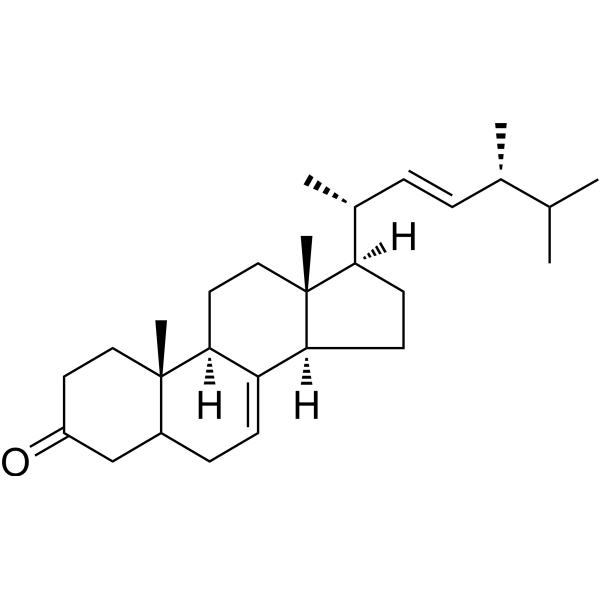
Ergosta-7,22-dien-3-on is a lanosterane isolated from the fruiting bodies of Ganoderma lucidum. ent-16-Kaurene-3b,15b,18-triol inhibits platelet aggregation. Ergosta-7,22-dien-3-on is able to stimulate nitric oxide production, induce the expression of genes, and induce the production of TLRs, cytokines, chemokines, and cellular adhesion molecules in vitro.
-
ORN 06
 0 ImagesCat. No.: HY-160227CAS No.: 1116698-32-8
ORN 06 (Compound R-0006), a U-rich single-stranded RNA (containing 6 repeats of the UUG sequence motif), is a TLR7/8 agonist. ORN 06 stimulates human TLR7/8-mediated or murine TLR7-mediated immunity.
-
HS105
 0 ImagesCat. No.: HY-159753
HS105 is a vaccine adjuvant and a key component in vaccines. Adjuvants can be divided into immunostimulants and delivery systems. Adjuvants can not only enhance the intensity and durability of immune responses, but also affect the type of immune responses. On the one hand, immunostimulants promote the production of antigen signals and co-stimulatory signals by targeting Toll-like receptors (TLRs) and other pattern recognition receptors (PRRs), leading to the maturation and activation of antigen presenting cells (APCs), thereby enhancing adaptive immune responses; on the other hand, delivery systems are carrier materials that promote antigen delivery by prolonging the bioavailability of loaded antigens and targeting antigens to lymph nodes or APCs. Several common adjuvants include: saponins, TLRs agonists, polysaccharides, nanoparticles, cytokines, and mucosal adjuvants.
-
ORN 02
 0 ImagesCat. No.: HY-160228CAS No.: 937769-72-7
ORN 02 is a synthetic single-stranded U-rich RNA and contains 6 repeats of UUAU sequence motif. The AU-rich oligoribonucleotides (ORNs) are able to stimulate TLR8.
-
ArMan
 0 ImagesCat. No.: HY-175421
ArMan is a co-activator of DC-SIGN (CD209) and TLR7. ArMan can selectively bind to DC-SIGN, promoting receptor-mediated endocytosis of the virus-like particle (VLP) platform, thereby enhancing co-binding with TLR7. ArMan can drive dendritic cell activation, shifting the immune response from humoral immunity to type 1 cellular immunity. ArMan can be used in melanoma research.
-
Lipopolysaccharides, from S. enterica serotype abortus equi
 0 ImagesCat. No.: HY-D1056C4Synonyms: LPS, from Salmonella enterica (Serotype abortus equi)
Lipopolysaccharides, from S. enterica (Salmonella enterica) serotype Abortusequi are lipopolysaccharide endotoxins and TLR-4 activators derived from the Abortusequi serotype of S. enterica, classified as a mutated R-type LPS, which can activate pathogen-associated molecular patterns (PAMP) of the immune system and induce cellular secretion of migrasomes. Lipopolysaccharides, from S. enterica serotype abortus equi consist of core oligosaccharide (core oligosaccharide) and lipid A (Lipid A). S. enterica serotype Abortusequi is a major pathogen causing abortion in mares and is also associated with neonatal sepsis, multiple abscesses, orchitis, and polyarthritis in equids. It is primarily grouped based on lipopolysaccharides (O-antigen) and flagellin (H-antigen).
It is recommended to prepare a solution with concentration ≥2 mg/mL. Vortex thoroughly for more than 10 minutes. Due to the adsorption characteristics of LPS, silanized container or low adsorption centrifuge tubes should be used for aliquoting and storage, and mix thoroughly before use.
-
Macrophage-activating lipopeptide 2
 0 ImagesCat. No.: HY-P10586CAS No.: 250718-44-6Synonyms: MALP-2
Macrophage-activating lipopeptide 2 (MALP-2) is an agonist of Toll like receptors TLR-2/TLR-6. Macrophage-activating lipopeptide-2 can enhance endothelial nitric oxide synthase (eNOS) phosphorylation and endothelial cell release of NO, thereby improving vasodilation. Macrophage-activating lipopeptide-2 can enhance endothelial adhesion of white blood cells and improve perfusion recovery and collateral growth in the hind limbs of hypercholesterolemic Apoe deficient mice undergoing experimental femoral artery ligation (FAL).
-
HE-S2
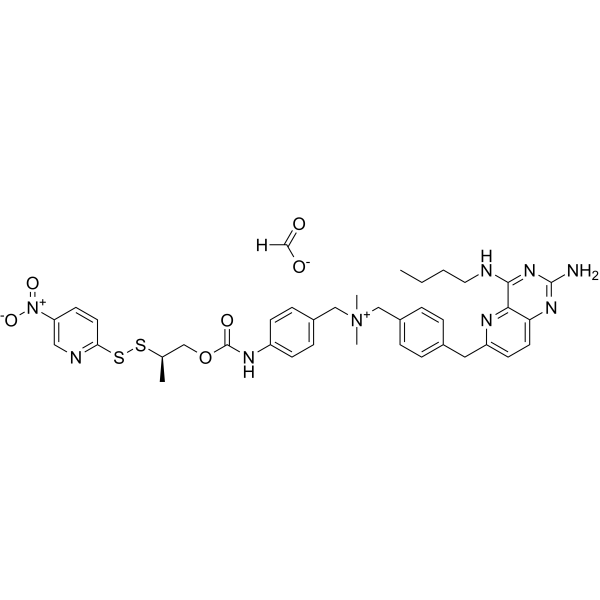 0 ImagesCat. No.: HY-144497CAS No.: 2939851-67-7
HE-S2 is an antibody-drug conjugate triggering a potent antitumor immune response. HE-S2 acts by blocking the PD-1/PD-L1 interaction and activating the Toll-like receptor 7/8 (TLR7/8) signaling pathway. HE-S2 has remarkable antitumor activity.
-
ORN 02 sodium
 0 ImagesCat. No.: HY-160228A
ORN 02 (sodium) is a synthetic single-stranded U-rich RNA and contains 6 repeats of UUAU sequence motif. The AU-rich oligoribonucleotides (ORNs) are able to stimulate TLR8.
-
CCL-34
 0 ImagesCat. No.: HY-176755CAS No.: 943316-60-7
CCL-34 is a Toll-like receptor 4 (TLR4) activator. CCL-34 significantly induced dendritic cell (DC) CD83 expression and IL-12p70 production in a dose-dependent manner, thereby inducing DC maturation. CCL-34 enhanced the allostimulatory activity of DC on naive CD4+CD45+RA+ T cell proliferation and IFN-γ secretion. CCL-34 further induced antigen presentation ability in mice inoculated with doxorubicin-treated colorectal cancer cells. CCL-34 can be used in studies of immune stimulation.
-
Liposomal adjuvant (M103)
 0 ImagesCat. No.: HY-159744
Liposomal adjuvant (M103) is mainly composed of phospholipids and prepared with highly purified immunostimulatory substances (polysaccharides), with a pH value of 6.2-6.8. This adjuvant is safe, non-toxic, and metabolizable. It can induce cellular and humoral immunity, has a sustained-release effect, and can prolong the residence time of antigens in the body. This adjuvant is suitable for various veterinary vaccines, including inactivated vaccines and genetically engineered subunit vaccines. It is recommended for use in rabies, porcine circovirus, , foot-and-mouth disease (FMD), and blue ear disease, etc.




