



ANGPTL4
ANGPTL4 (angiopoietin-like 4) is a secreted glycoprotein that functions as a central regulator of lipid metabolism through inhibition of lipoprotein lipase (LPL), thereby controlling triglyceride hydrolysis and fatty acid partitioning among tissues[1][2]. Mechanistically, ANGPTL4 is induced by fasting, fatty acids, hypoxia, and peroxisome proliferator-activated receptor (PPAR) signaling, linking metabolic adaptation to nutrient availability and cellular stress responses[1][3]. Proteolytic processing generates distinct N-terminal and C-terminal fragments with divergent biological activities; the N-terminal domain primarily mediates LPL inhibition, whereas the C-terminal fragment regulates angiogenesis, vascular permeability, cell adhesion, and tissue remodeling[1][4]. In disease models, ANGPTL4 contributes to metabolic disorders, cardiovascular disease, inflammation, and cancer progression through regulation of lipid flux, endothelial barrier integrity, and cellular migration pathways[1][3][5]. ANGPTL4 also modulates inflammatory responses and vascular leakage during pulmonary injury, highlighting its role in tissue-specific stress adaptation and disease pathogenesis[5][4]. Compared with related angiopoietin-like family members, ANGPTL4 is distinguished by its strong responsiveness to fasting and lipid-derived signals and by the functional separation of its N-terminal lipid-regulatory and C-terminal non-metabolic activities[1][4][5]. For experimental applications, neutralizing antibodies targeting ANGPTL4 have been used to investigate triglyceride metabolism and inflammatory injury models, supporting its value as a mechanistic target in metabolic and vascular research[5][6].
Références:
- [1]. Kersten S. Role and mechanism of the action of angiopoietin-like protein ANGPTL4 in plasma lipid metabolism. J Lipid Res. 2021;62:100150.
- [2]. Lucidi A, et al. Emergency delivery in pregnancies at high probability of placenta accreta spectrum on prenatal imaging: a systematic review and meta-analysis. Am J Obstet Gynecol MFM. 2024 Oct;6(10):101432. [Content Brief]
- [3]. Khalid N, et al. Editorial commentary: Out on a limb: The critical need for high-quality evidence in critical limb ischemia. Trends Cardiovasc Med. 2020 Apr;30(3):131-132. [Content Brief]
- [4]. Li L, et al. Angiopoietin-like 4 Increases Pulmonary Tissue Leakiness and Damage during Influenza Pneumonia. Cell Rep. 2015 Feb 10;10(5):654-663. [Content Brief]
- [5]. La Paglia L, et al. Potential Role of ANGPTL4 in the Cross Talk between Metabolism and Cancer through PPAR Signaling Pathway. PPAR Res. 2017;2017:8187235. [Content Brief]
- [6]. Desai U, et al. Lipid-lowering effects of anti-angiopoietin-like 4 antibody recapitulate the lipid phenotype found in angiopoietin-like 4 knockout mice. Proc Natl Acad Sci U S A. 2007 Jul 10;104(28):11766-71. [Content Brief]
All Product Categories
-
ANGPTL4 Produits associés (2)
Produits associés (2)

-
Anti-ANGPTL4 Antibody
 0 ImagesCat. No.: HY-P990335Anti-ANGPTL4 Antibody is a CHO expressed human antibody targeting ANGPTL4. Anti-ANGPTL4 Antibody has a huIgG1-type heavy chain and a huλ-type light chain with a predicted molecular weight (MW) of 150 kDa. An isotype control for Anti-ANGPTL4 Antibody can be found in Human IgG1 kappa, Isotype Control (HY-P99001).
-
JTE-907
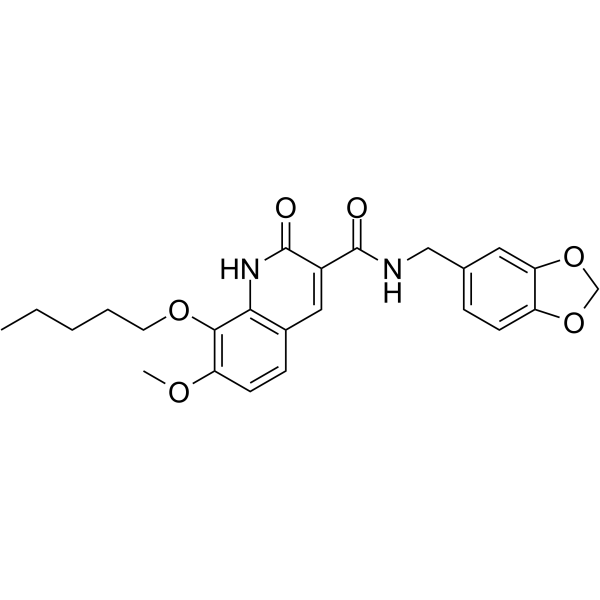 0 ImagesJTE-907 is a selective and orally active cannabinoid CB2 receptor inverse agonist and exerts anti-inflammatory effects. JTE-907 upregulates IL-6, MCP-1, IL-1β, VEGF, ANGPTL4, and TRPV1 in mature adipocytes. JTE-907 downregulates CB1, MCP-1, and IL-1β in preadipocytes. JTE-907 inhibits ear swelling in mice. JTE-907 reverses the protective effects of CB2 agonists and Anandamide (HY-10863) against cytokine-evoked colonic mucosal damage. JTE-907 can be used for the research of allergic dermatitis, obesity, and colitis.



