



Flavivirus
Flavivirus
Flavivirus is a group of single-stranded positive-sense RNA viruses that are mainly transmitted by arthropods such as mosquitoes and ticks. The viral particles of the Flavivirus are spherical, with a diameter of approximately 40-60 nanometers and have an envelope. The envelope is embedded with spike glycoproteins, which play a crucial role in the recognition and binding process between the virus and host cells. Flavivirus contains a variety of viruses, such as the yellow fever virus and the dengue virus, etc., which can cause a variety of serious diseases and have a significant impact on global public health security[1].
All Product Categories
-
Flavivirus Related Products (194)
Related Products (194)

-
Antibodies (1)
-
HZ-1157
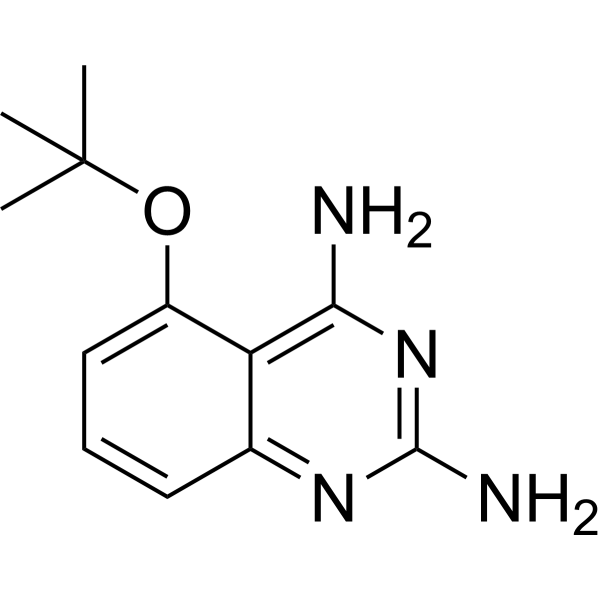 0 ImagesHZ-1157 inhibits HCV NS3/4A protease with an IC50 of 1.0 μmol/L. HZ-1157 (4a) has a high dengue virus inhibitory activity (EC50 = 0.15 μM) and is a relatively nontoxic (CC50 > 10 μM) dengue antiviral agent.
-
LabMol-319
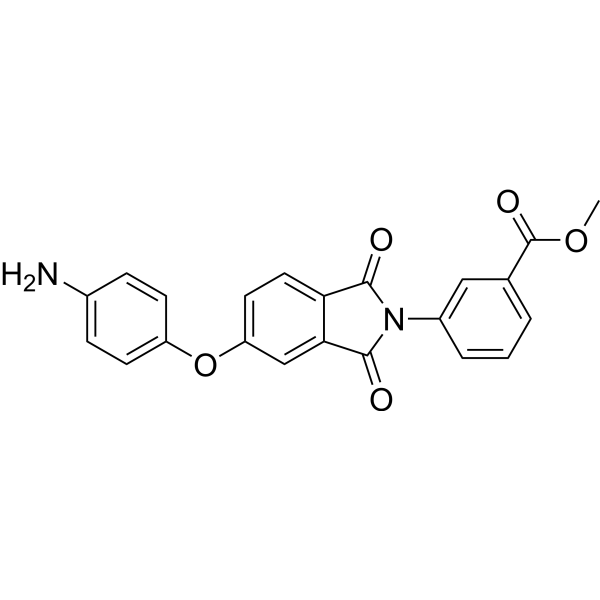 0 ImagesCat. No.: HY-150234CAS No.: 381188-63-2LabMol-319 is a potent zika virus (ZIKV) NS5 RdRp inhibitor with an IC50 of 1.6 μM. LabMol-319 is an antiviral agent.
-
Temephos
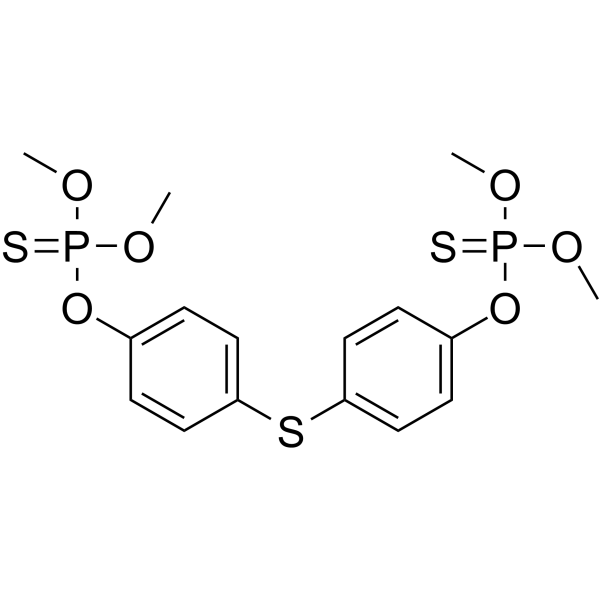 0 ImagesTemephos (Temefos) is an orally active, blood-brain barrier-permeable organophosphate insecticide and AChE inhibitor. By irreversibly inhibiting AChE to induce cholinergic overactivation, Temephos effectively blocks larval development of Aedes aegypti (yellow fever mosquito) and Aedes albopictus (Asian tiger mosquito), and is commonly used in studies related to Dengue Virus, Zika Virus and other relevant pathogens. Temephos exhibits genotoxicity and neurodevelopmental toxicity, and may also cause liver injury, reproductive system abnormalities and cholinergic poisoning symptoms in mammals. Temephos tends to accumulate in adipose tissues and aquatic organisms, and is excreted via feces after metabolism through oxidation and hydrolysis. Note that CYP-mediated metabolic detoxification may reduce the actual larvicidal efficacy of Temephos against some mosquito species. Temephos can be used in research related to dengue fever, Zika virus disease, chikungunya and dracunculiasis.
-
Nafamostat
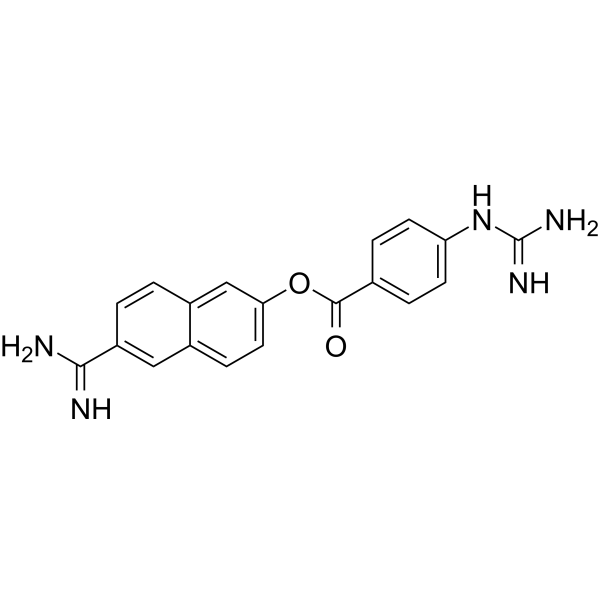 0 ImagesCat. No.: HY-B0190CAS No.: 81525-10-2Nafamostat, an anticoagulant, is a synthetic serine protease inhibitor. Nafamostat has anticancer and antivirus effect. Nafamostat induce apoptosis by up-regulating the expression of tumor necrosis factor receptor-1 (TNFR1). Nafamostat can be used in the development of the pathological thickening of the arterial wall.
-
Celgosivir
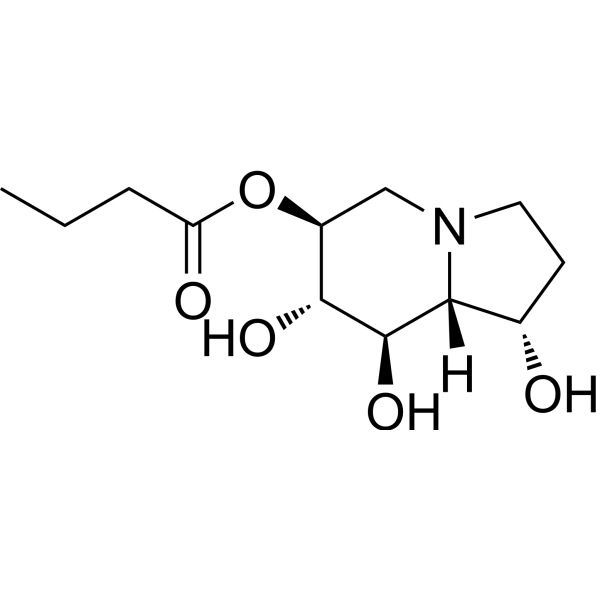 0 ImagesSynonyms: MBI 3253; MDL 28574; MX3253Celgosivir (MBI 3253; MDL 28574; MX3253) is an α-glucosidase I inhibitor; inhibits bovine viral diarrhoea virus (BVDV) with an IC50 of 1.27 μM in in vitro assay.
-
Golgicide A-2
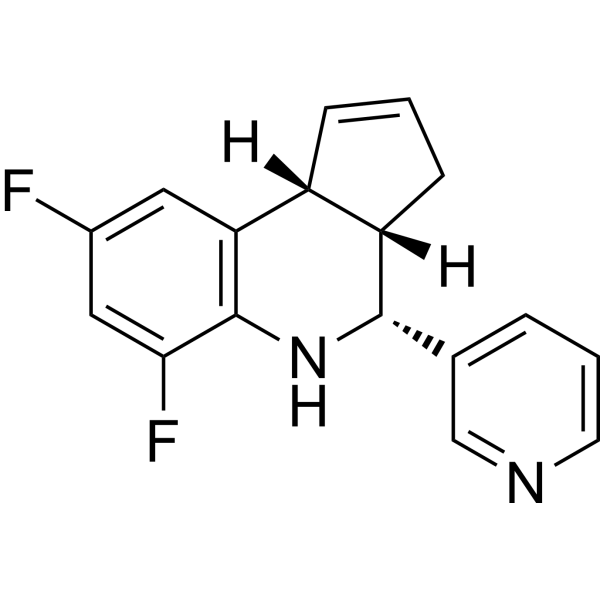 0 ImagesSynonyms: GCA-2Golgicide A-2 (GCA-2), a Golgicide A (GCA) derivative, is the most active enantiomer of GCA. Golgicide A-2 displays high selectivity and efficiency in killing An. stephensi larvae and can be used for the research of dengue virus related diseases.
-
Retrocyclin-101 TFA
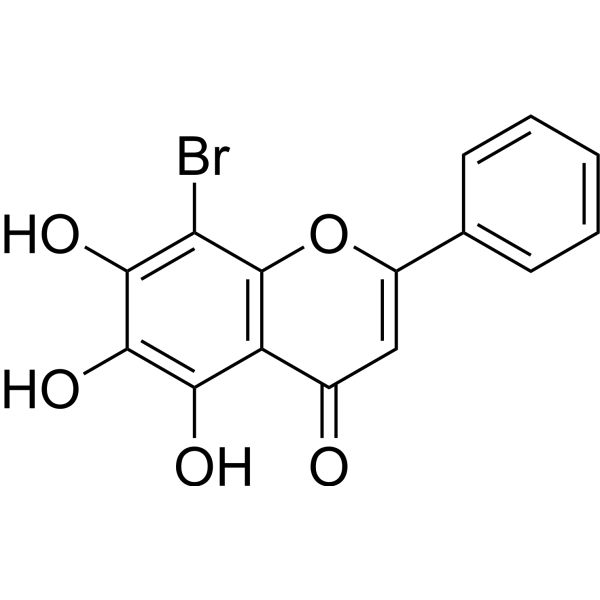
 0 ImagesCat. No.: HY-P5642ASynonyms: RC-101 TFARetrocyclin-101 (RC-101) TFA is an artificially synthesized, cyclic-structured θ-defensin, a broad-spectrum agent with antimicrobial (covering viruses, bacteria, and fungi) activity and anti-inflammatory activity. Retrocyclin-101 TFA can inhibit the serine protease activity of ZIKV NS2B-NS3, with an IC50 of 7.20 μM. Retrocyclin-101 TFA has significant inhibitory activity against HIV, SARS-CoV-2, flaviviruses, influenza viruses, HSV-1/2, Staphylococcus aureus, etc. Retrocyclin-101 TFA inhibits the signal transduction mediated by TLR4 and TLR2, reducing the expression of pro-inflammatory cytokines.
-
Theaflavin 3,3'-digallate (Standard)
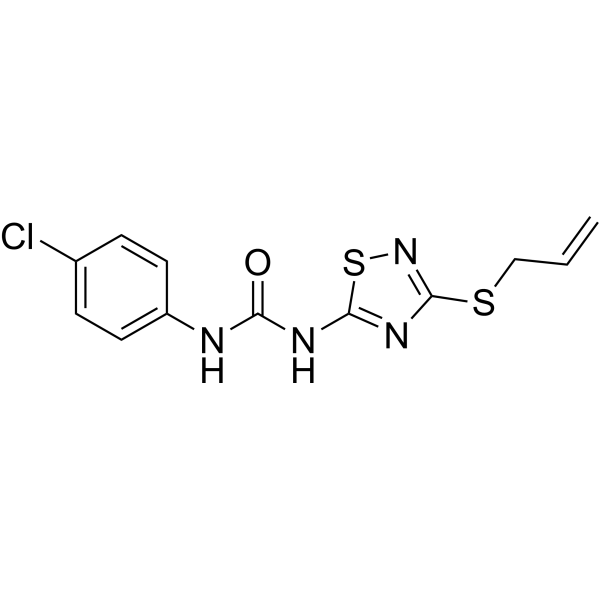
 0 ImagesSynonyms: TF-3 (Standard); ZP10 (Standard)Theaflavin 3,3'-digallate (Standard) is the analytical standard of Theaflavin 3,3'-digallate. This product is intended for research and analytical applications. Theaflavin 3,3'-digallate (TF-3) is a potent Zika virus (ZIKV) protease inhibitor with an IC50 of 2.3 μM. Theaflavin 3,3'-digallat directly binds to ZIKVpro (Kd=8.86 μM) and inhibits ZIKV replication. Theaflavin 3,3'-digallat inhibits the activity of gp41 and NS2B-3 protease and has antiviral activity against HSV and HIV-1. Theaflavin 3,3'-digallate, the typical pigment in black tea, is a potent antitumor agent.
-
Nimbin
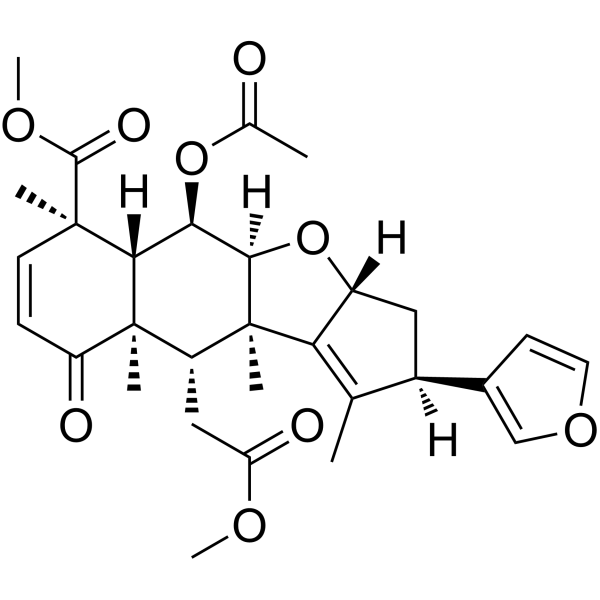 0 ImagesNimbin is an orally active intermediate limonoid found in Azadirachta. Nimbin prevents tau aggregation and increases cell viability. Nimbin is effective inhibits the envelope protein of dengue virus. Nimbin has anti-inflammatory, antipyretic, antifungal, antihistamine, antiseptic, antioxidant, anti-cancer and anti-viral properties. Nimbin is promising for research of neurodegenerative diseases and viral infections.
-
γ-Carboline
 0 ImagesSynonyms: 5H-Pyrido[4,3-b]indoleγ-Carboline is a skeleton and antiviral agent. γ-Carboline shows anti-BVDV activity, with an EC50 of 2.0 μM. γ-Carboline derivatives show anti-BVDV, antibacterial, antifungal, antitumor activity.
-
Nafamostat mesylate (Standard)
 0 ImagesSynonyms: FUT-175 (Standard)Nafamostat (mesylate) (Standard) is the analytical standard of Nafamostat (mesylate). This product is intended for research and analytical applications. Nafamostat mesylate (FUT-175), an anticoagulant, is a synthetic serine protease inhibitor. Nafamostat mesylate has anticancer and antivirus effect. Nafamostat mesylate induce apoptosis by up-regulating the expression of tumor necrosis factor receptor-1 (TNFR1). Nafamostat mesylate can be used in the development of the pathological thickening of the arterial wall.
-
Dodecyl gallate (Standard)
 0 ImagesSynonyms: Lauryl gallate (Standard)Dodecyl gallate (Standard) is the analytical standard of Dodecyl gallate. This product is intended for research and analytical applications. Dodecyl gallate (Lauryl gallate) has been widely used as an antioxidant in food manufacturing, as well as in the pharmaceutical and cosmetic industries. Dodecyl gallate also is active against a highly relevant animal virus such as African swine fever virus (ASFV).
-
Palonosetron
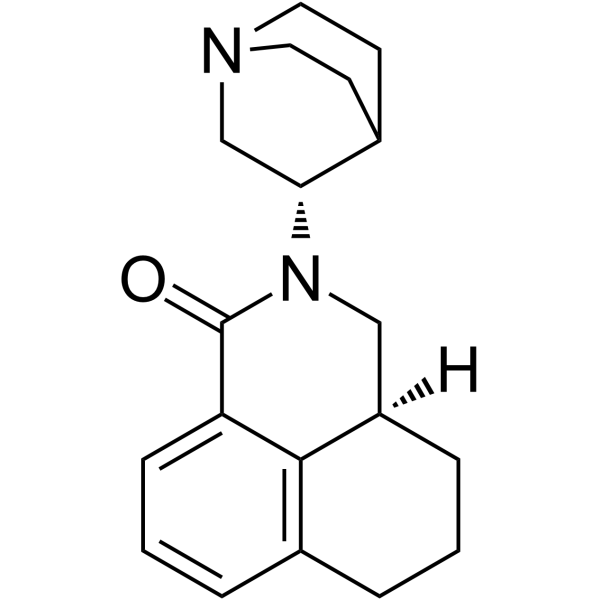 0 ImagesCat. No.: HY-A0018CAS No.: 135729-61-2Palonosetron is a 5-HT3 antagonist primarily used to prevent acute, delayed, and overall chemotherapy-induced nausea and vomiting. Palonosetron exhibits moderate anti-flavivirus activity and potent anti-Zika virus activity in mammalian cells. Palonosetron also possesses antidepressant activity.
-
ddhCTP trisodium solution (100 mM ± 3 mM)
 0 ImagesCat. No.: HY-128788APurity: 98.04%ddhCTP trisodium solution (100 mM ± 3 mM) is an endogenously produced pyrimidine base analog with a Kd of 17.0 nM for LLDH and an IC50 of 55.8 μM for GAPDH. By inhibiting key metabolic enzymes such as GAPDH, ddhCTP trisodium reduces glycolytic flux and shifts metabolic flow toward the pentose phosphate pathway, thereby regulating the redox balance of cells. As a competitive CTP analog, ddhCTP trisodium terminates RNA synthesis by flavivirus RdRps and SARS-CoV-2 RdRp, and inhibits Zika virus replication in vivo. ddhCTP trisodium can be used in studies related to viral infections, COVID-19 and Zika virus infections.
-
IRBM-Z-1
 0 ImagesIRBM-Z-1 is a non-competitive inhibitor of Zika virus (ZIKV) NS2B-NS3 protease, with an IC50 of 1.8 μM. IRBM-Z-1 also exhibits inhibitory activity against the NS2B-NS3 proteases of T156I-mutated dengue virus 2 (DENV2) and West Nile virus (WNV), with IC50 values of 3.9 μM and 4.7 μM, respectively. IRBM-Z-1 inhibits ZIKV replication, attenuates virus-induced cytopathic effects. IRBM-Z-1 is applicable to research related to ZIKV infection.
-
Quinine (Standard)
 0 ImagesQuinine (Standard) is the analytical standard of Quinine (HY-D0143). This product is intended for research and analytical applications. Quinineis an orally active alkaloid extracted from cinchona bark, possessing various biological activities including antimalarial, antidengue virus (DENV), and anticancer properties. Quinine is a potassium channel inhibitor that inhibits WT mouse Slo3 (KCa5.1) channel currents evoked by voltage pulses to +100 mV with an IC50 of 169 μM.




