



Flavivirus
Flavivirus
Flavivirus is a group of single-stranded positive-sense RNA viruses that are mainly transmitted by arthropods such as mosquitoes and ticks. The viral particles of the Flavivirus are spherical, with a diameter of approximately 40-60 nanometers and have an envelope. The envelope is embedded with spike glycoproteins, which play a crucial role in the recognition and binding process between the virus and host cells. Flavivirus contains a variety of viruses, such as the yellow fever virus and the dengue virus, etc., which can cause a variety of serious diseases and have a significant impact on global public health security[1].
All Product Categories
-
Flavivirus Related Products (196)
Related Products (196)

-
Antibodies (1)
-
Nafamostat hydrochloride
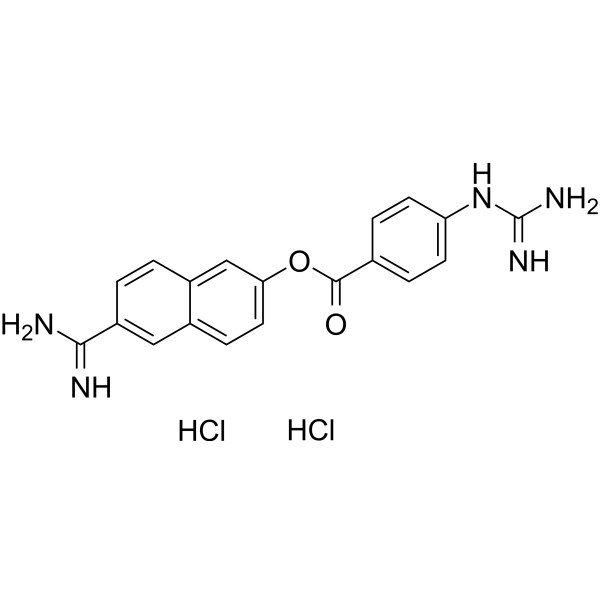 0 ImagesCat. No.: HY-B0190BCAS No.: 80251-32-7Nafamostat hydrochloride, an anticoagulant, is a synthetic serine protease inhibitor. Nafamostat hydrochloride has anticancer and antivirus effect. Nafamostat hydrochloride induces apoptosis by up-regulating the expression of tumor necrosis factor receptor-1 (TNFR1). Nafamostat hydrochloride can be used in the development of the pathological thickening of the arterial wall.
-
FGI-106
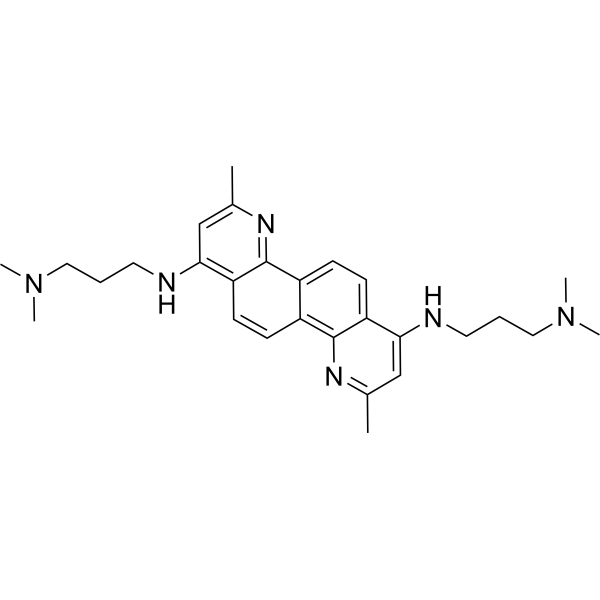 0 ImagesCat. No.: HY-124618CAS No.: 501081-38-5FGI-106 is a potent and broad-spectrum inhibitor with inhibitory activity against multiple viruses. FGI-106 is active against Ebola, Rift Valley and Dengue Fever viruses with EC50s of 100 nM, 800 nM and 400-900 nM, respectively. FGI-106 also inhibits non-hemorrhagic fever viruses HCV and HIV-1 with EC50s of 200 nM and 150 nM, respectively.
-
Quinine hemisulfate
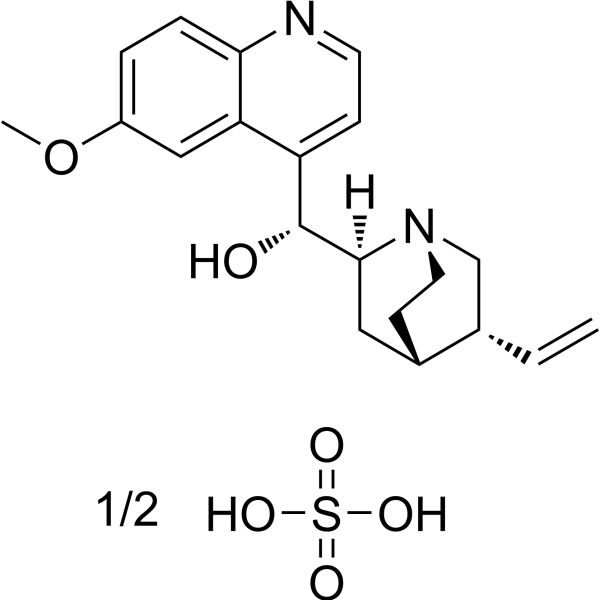 0 ImagesQuinine hemisulfate is an orally active alkaloid extracted from cinchona bark and can be used in anti-malarial studies. Quinine hemisulfate is a potassium channel inhibitor that inhibits WT mouse Slo3 (KCa5.1) channel currents evoked by voltage pulses to +100 mV with an IC50 of 169 μM.
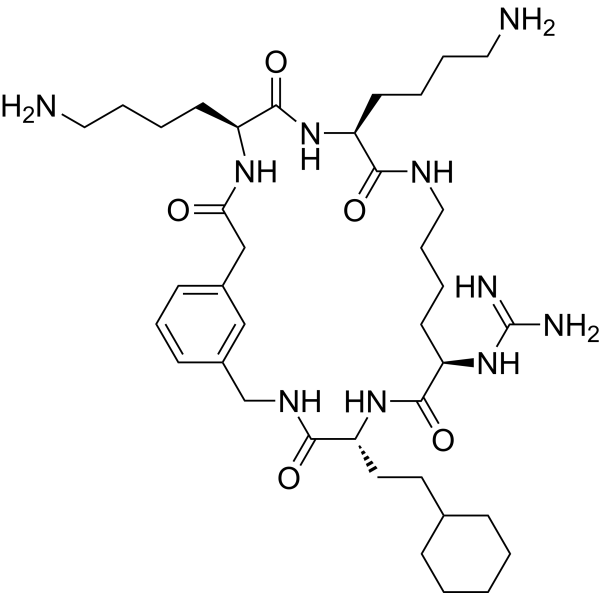
-
ZIKV-IN-6
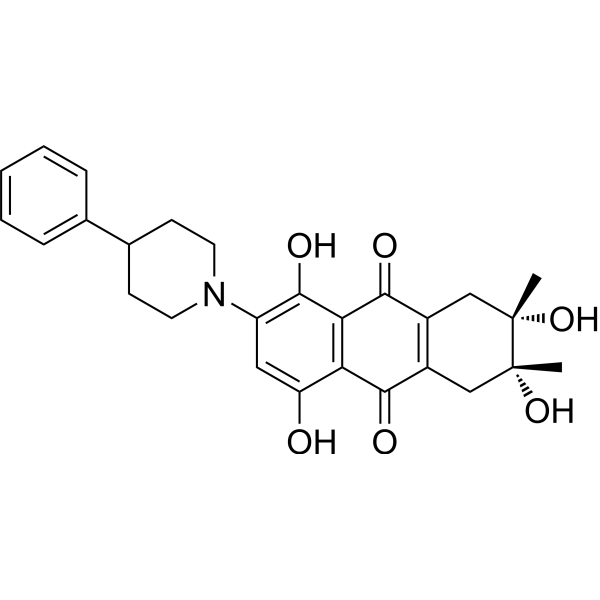 0 ImagesCat. No.: HY-155053ZIKV-IN-6 (compound 22) is an inhibitor of Zika virus (ZIKV), with low cytotoxicity (CC50>50 μM). ZIKV-IN-6 binds to ZIKV RdRp directly and inhibits viral RNA synthesis by ZIKV NS5. ZIKV-IN-6 suppresses the excessive inflammatory response and pyroptosis.
-
Mycophenolic acid-13C17
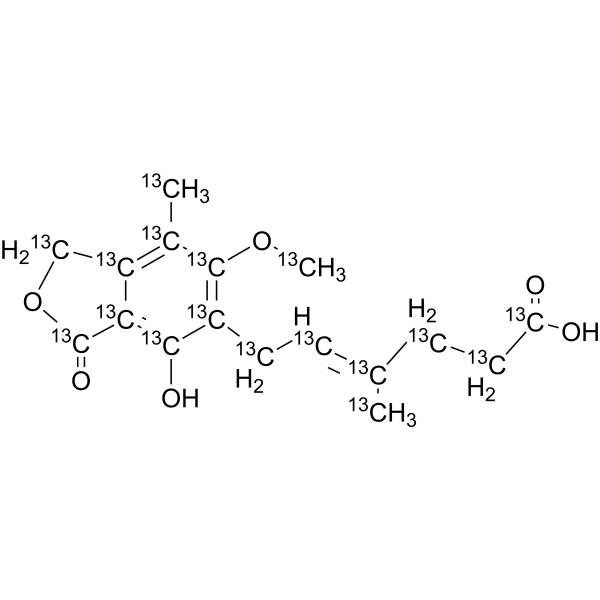 0 ImagesCat. No.: HY-B0421S2CAS No.: 1202866-92-9Synonyms: Mycophenolate-13C17Mycophenolic acid-13C17 (Mycophenolate-13C17) is the 13C labeled Mycophenolic acid (HY-B0421). Mycophenolic acid is a potent uncompetitive inosine monophosphate dehydrogenase (IMPDH) inhibitor with an EC50 of 0.24 μM. Mycophenolic acid demonstrates antiviral effects against a wide range of RNA viruses including influenza. Mycophenolic acid is an immunosuppressive agent. Antiangiogenic and antitumor effects.
-
Anti-PEDV agent 1
 0 ImagesCat. No.: HY-172772Anti-PEDV agent 1 (Compound D39) is a highly effective anti-Porcine epidemic diarrhea virus (PEDV) agent with an EC50 value of 0.09 μM. Anti-PEDV agent 1 blocks the early internalization of PEDV during viral entry by modulating intracellular Ca2+ homeostasis. Anti-PEDV agent 1 is promising for research of PEDV infections.
-
Temephos-d12
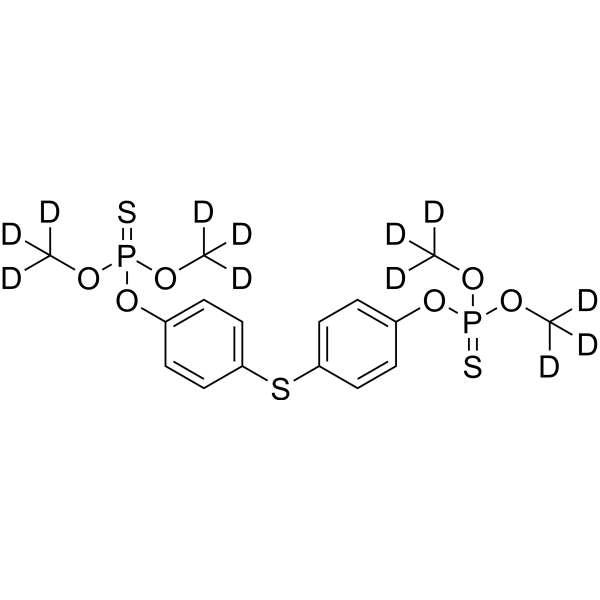 0 ImagesCat. No.: HY-B1120SCAS No.: 1219795-39-7Synonyms: Temefos-d12Temephos-d12 is the deuterium labeled Temephos. Temephos (Temefos) is an orally active, blood-brain barrier-permeable organophosphate insecticide and AChE inhibitor. By irreversibly inhibiting AChE to induce cholinergic overactivation, Temephos effectively blocks larval development of Aedes aegypti (yellow fever mosquito) and Aedes albopictus (Asian tiger mosquito), and is commonly used in studies related to Dengue Virus, Zika Virus and other relevant pathogens. Temephos exhibits genotoxicity and neurodevelopmental toxicity, and may also cause liver injury, reproductive system abnormalities and cholinergic poisoning symptoms in mammals. Temephos tends to accumulate in adipose tissues and aquatic organisms, and is excreted via feces after metabolism through oxidation and hydrolysis. Note that CYP-mediated metabolic detoxification may reduce the actual larvicidal efficacy of Temephos against some mosquito species. Temephos can be used in research related to dengue fever, Zika virus disease, chikungunya and dracunculiasis.
-
VGD020
 0 ImagesCat. No.: HY-182674CAS No.: 1322645-32-8VGD020 is a highly potent and selective Sec61 translocon inhibitor. VGD020 suppresses the expression of cell surface CD4 by inhibiting signal peptide-dependent co-translational ER translocation, interferes with the initiation of ER translocation of dengue virus polyprotein, and reduces the expression of Sortilin in breast cancer cells. VGD020 exhibits broad anti-flavivirus and anti-HIV activities. VGD020 can be used in research related to dengue virus infection, Zika virus infection, yellow fever virus infection, human immunodeficiency virus infection, and breast cancer.
-
Palonosetron hydrochloride solution
 0 ImagesCat. No.: HY-FLA0021CAS No.: 135729-62-3Palonosetron hydrochloride solution is mainly composed of Palonosetron hydrochloride (HY-A0021). Palonosetron hydrochloride is a 5-HT3 antagonist primarily used to prevent acute, delayed, and overall chemotherapy-induced nausea and vomiting. In addition, Palonosetron hydrochloride exhibits moderate anti-flavivirus activity and potent anti-Zika virus activity in mammalian cells. Palonosetron hydrochloride also possesses antidepressant activity.
-
ddhCTP
 0 ImagesCat. No.: HY-128788CAS No.: 2279171-34-3ddhCTP is an endogenously produced pyrimidine base analog with a Kd of 17.0 nM for LLDH and an IC50 of 55.8 μM for GAPDH. By inhibiting key metabolic enzymes such as GAPDH, ddhCTP reduces glycolytic flux and shifts metabolic flow toward the pentose phosphate pathway, thereby regulating the redox balance of cells. As a competitive CTP analog, ddhCTP terminates RNA synthesis by flavivirus RdRps and SARS-CoV-2 RdRp, and inhibits Zika virus replication in vivo. ddhCTP can be used in studies related to viral infections, COVID-19 and Zika virus infections.
-
Zika virus-IN-3
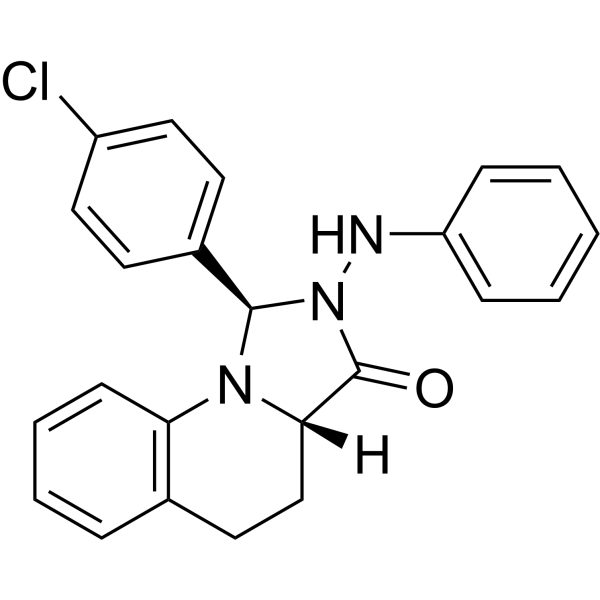 0 ImagesCat. No.: HY-146193CAS No.: 2527915-11-1Zika virus-IN-3 (Compd 7) is a Zika virus inhibitor, with an EC50 of 3.4 μM .
-
OSL-95II
 0 ImagesCat. No.: HY-165485CAS No.: 946603-07-2OSL-95II is an antiviral agent. OSL-95II is a potent BVDV and WNV inhibitor. OSL-95II is a better inhibitor of HBV than SP169. OSL-95II inhibits dengue virus production.
-
(2R,3S)-Emricasan
 0 ImagesCat. No.: HY-10396ACAS No.: 409369-54-6Synonyms: (2R,3S)-PF 03491390; (2R,3S)-IDN-6556
-
Quinine sulfate hydrate (Standard)
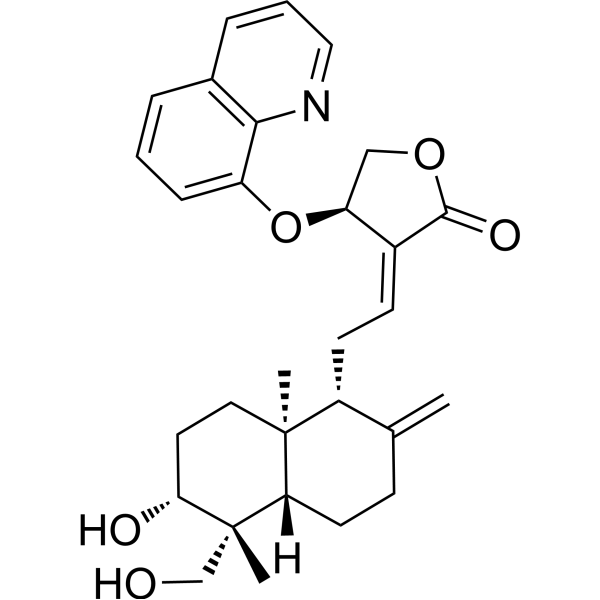
 0 ImagesCat. No.: HY-W010668RCAS No.: 6119-70-6Quinine (sulfate hydrate) (Standard) is the analytical standard of Quinine (sulfate hydrate). This product is intended for research and analytical applications. Quinine sulfate hydrate (2:1:4) is an orally active alkaloid extracted from cinchona bark and can be used in anti-malarial studies. Quinine sulfate hydrate (2:1:4) is a potassium channel inhibitor that inhibits WT mouse Slo3 (KCa5.1) channel currents evoked by voltage pulses to +100?mV with an IC50 of 169 μM.
-
DENV-2/ZIKV-IN-1
 0 ImagesCat. No.: HY-161642DENV-2/ZIKV-IN-1 (Compd 16a) is a dual inhibitor of Dengue virus (DENV) and Zika virus (ZIKV) with EC50s of 1.4 and 2.4 μM, respectively.
-
Palonosetron-d3 hydrochloride
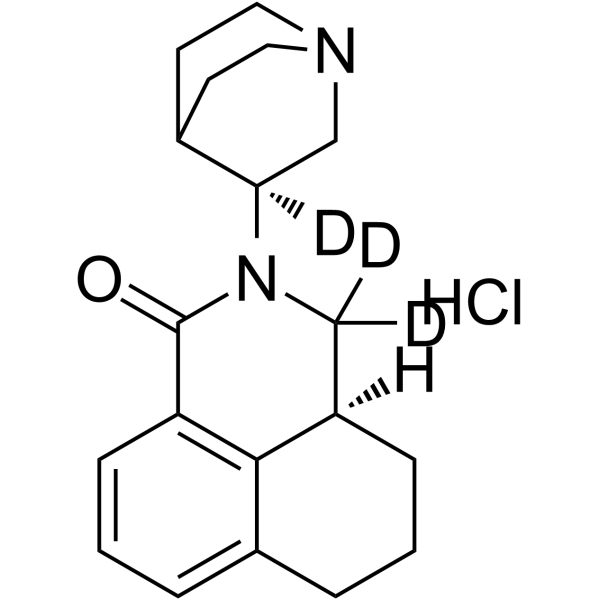 0 ImagesCat. No.: HY-A0021SCAS No.: 1246816-81-8Palonosetron-d3 hydrochloride is the deuterium labeled Palonosetron hydrochloride (HY-A0021). Palonosetron hydrochloride is a 5-HT3 antagonist primarily used to prevent acute, delayed, and overall chemotherapy-induced nausea and vomiting. In addition, Palonosetron hydrochloride exhibits moderate anti-flavivirus activity and potent anti-Zika virus activity in mammalian cells. Palonosetron hydrochloride also possesses antidepressant activity.
-
DENV-IN-7
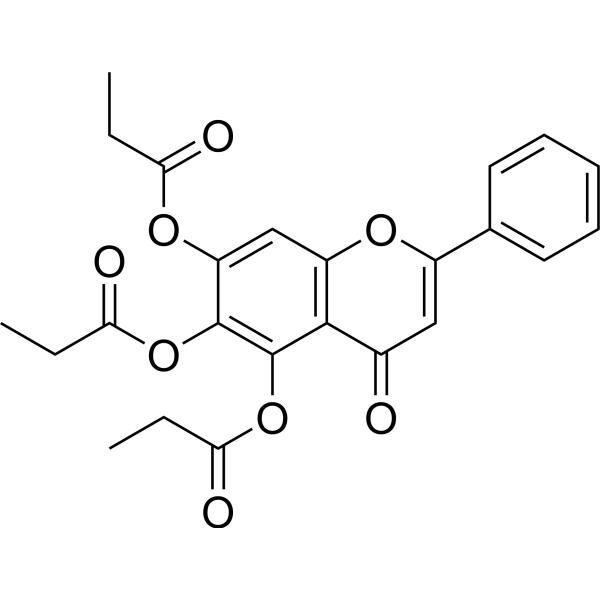 0 ImagesCat. No.: HY-152081CAS No.: 2499537-22-1DENV-IN-7, a flavone analog, is a dengue virus (DENV) inhibitor with an EC50 value of 70 nM. DENV-IN-7 has low toxicity against normal cell and anti-dengue activity.
-
Anti-Powassan virus E protein Antibody (POWV-63)
 0 ImagesCat. No.: HY-P991767Anti-Powassan virus E protein Antibody (POWV-63) reacts with the envelope (E) protein of Powassan virus (POWV). Anti-Powassan virus E protein Antibody (POWV-63) shows significant protection against POWV-SPO, TBFVs, and Langat virus (LGTV) in vivo. Recommend Isotype Controls: Mouse IgG2c kappa, Isotype Control (HY-P99981).




