



Isotope-Labeled Compounds
Isotope-labeled compounds are chemical substances in which some atoms in their molecules are replaced by isotope atoms. The range of stable isotope products can cover from gases to complex molecules. Isotope-labeled compounds could provide a site-specific investigation of structures, making molecules easily detectable by mass spectrometry and NMR, and maintaining the physico-chemical properties of the target molecule at the same time.
MCE isotope-labeled compounds are all stable isotope-labeled compounds and are non-radioactive labeled substances. MCE isotope-labeled compounds are unique tools for identifying and understanding biological and chemical processes. Stable isotope-labeled products are now getting more and more popular among scientists. The scope of application is gradually penetrating into various scientific fields, such as life sciences, food and medicine, agriculture, environment, geology, etc. Stable isotope-labeled compounds have a wide range of applications in the Life Science areas, such as Metabolomics, Proteomics, Clinical studies, Deuterium drugs, etc.
All Product Categories
-
Isotope-Labeled Compounds Related Products (11102)
Related Products (11102)

-
Dapagliflozin-d5
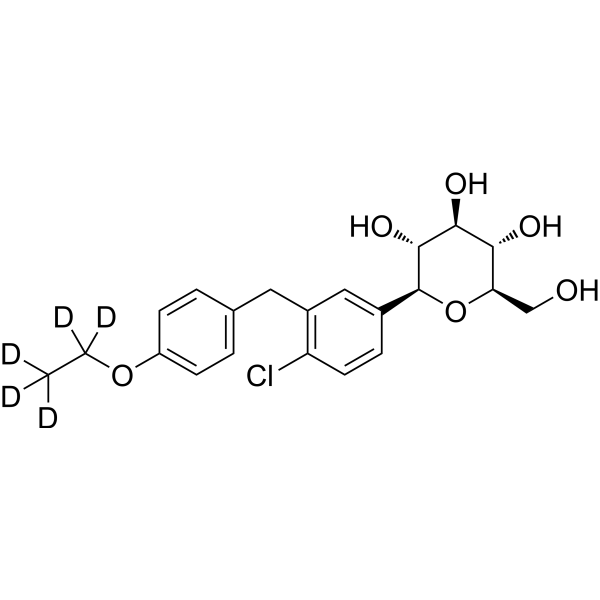 0 ImagesSynonyms: BMS-512148-d5Dapagliflozin-d5 is a deuterium labeled Dapagliflozin (HY-10450). Dapagliflozin is a competitive SGLT2 inhibitor.
-
L-Glucose-13C6
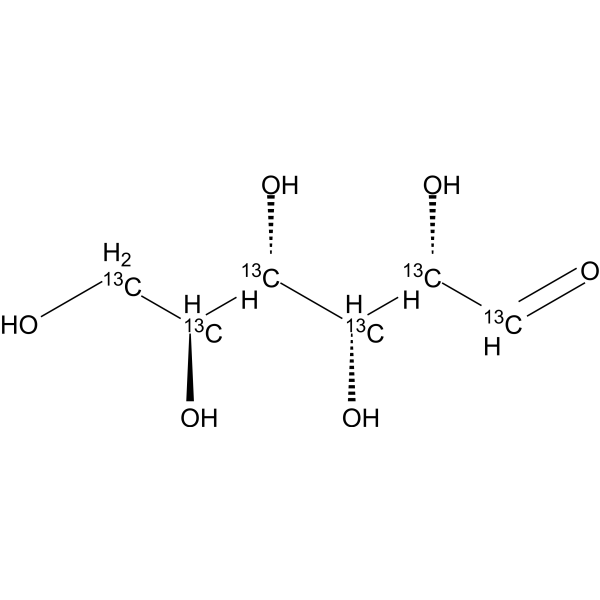 0 ImagesCat. No.: HY-W010042S3Purity: 99.43%Synonyms: L-(-)-Glucose-13C6L-Glucose-13C6 (L-(-)-Glucose-13C6) is C13-labeled L-Glucose. L-Glucose is an enantiomer of D-glucose. L-Glucose enhances food intake.
-
Fmoc-Gly-OH-d2
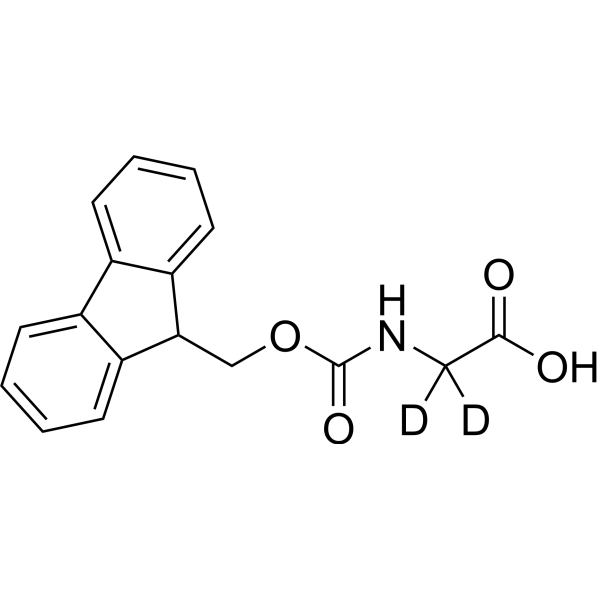 0 ImagesSynonyms: Fmoc-glycine-d2Fmoc-Gly-OH-2,2-d2 (Fmoc-glycine-2,2-d2) is the deuterium labeled Fmoc-Gly-OH (HY-Y1250). Fmoc-Gly-OH (Fmoc glycine) is a Fmoc-protected glycine derivative, can be used for the synthesis of compounds.
-
D-Erythro-dihydrosphingosine-d7
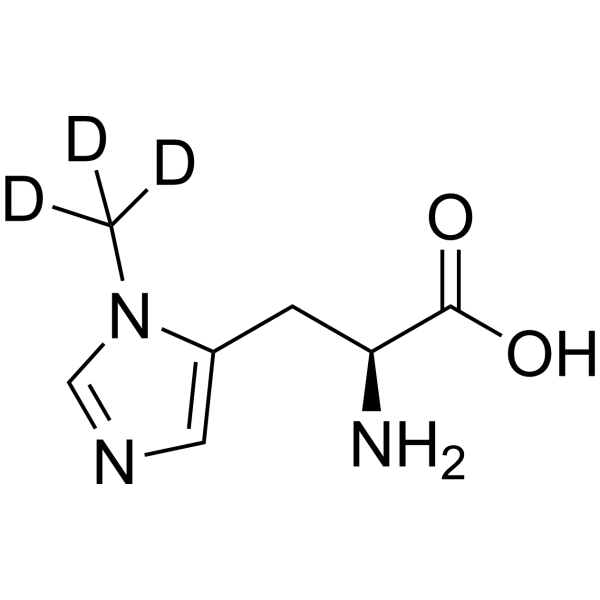
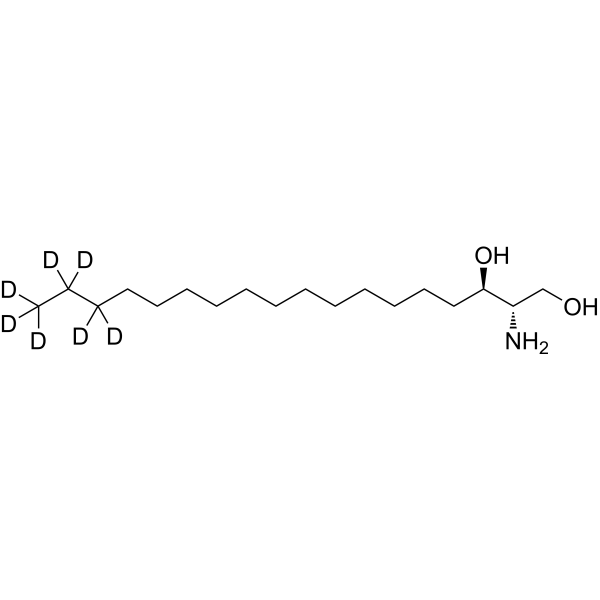 0 ImagesSynonyms: Sphinganine (d18:0)-d7D-Erythro-dihydrosphingosine-d7 is the deuterium labeled D-Erythro-dihydrosphingosine. D-Erythro-dihydrosphingosin directly inhibits cytosolic phospholipase A2α (cPLA2α) activity.
-
Elexacaftor-d3
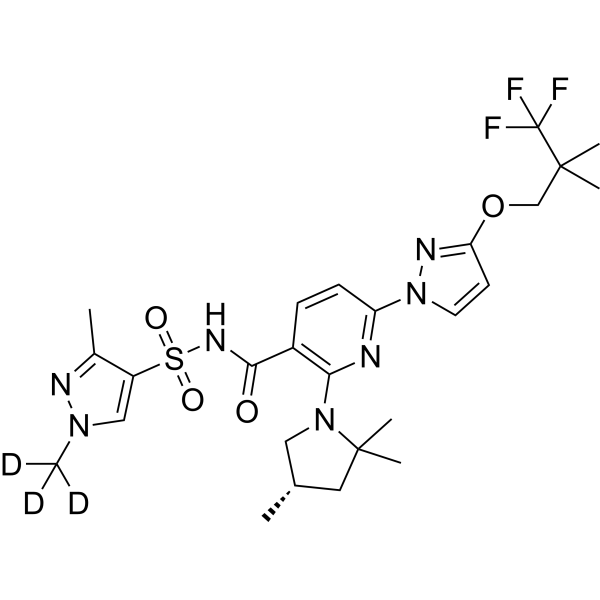 0 ImagesCat. No.: HY-111772S1Purity: 98.28%Synonyms: VX-445-d3
-
Nicorandil-d4
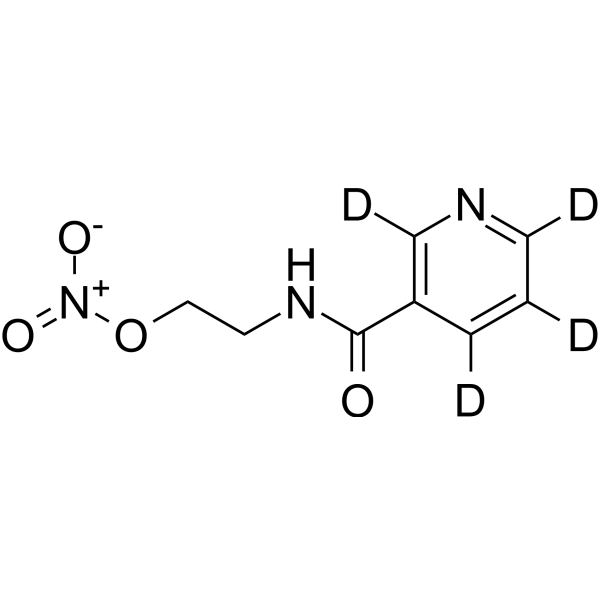 0 ImagesNicorandil-d4 (SG-75-d4) is the deuterium labeled Nicorandil. Nicorandil (SG-75) is a potent potassium channel activator and targets vascular nucleoside diphosphate-dependent K+ channels and cardiac ATP-sensitive K+ channels (KATP). Nicorandil is a nicotinamide ester with vasodilatory and cardioprotective effects and has the potential for angina and forischemic heart diseases.
-
L-Threonine-d2
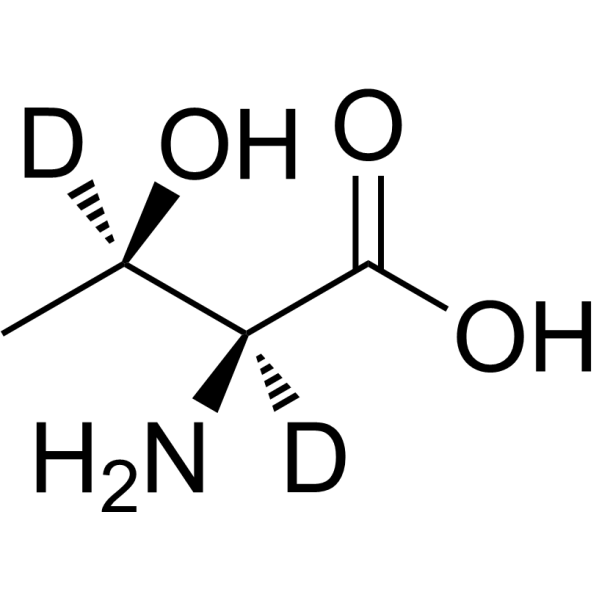 0 ImagesL-Threonine-d2 is the deuterium labeled L-Threonine. L-Threonine is a natural amino acid, can be produced by microbial fermentation, and is used in food, medicine, or feed.
-
N-Acetyl-L-methionine-d3
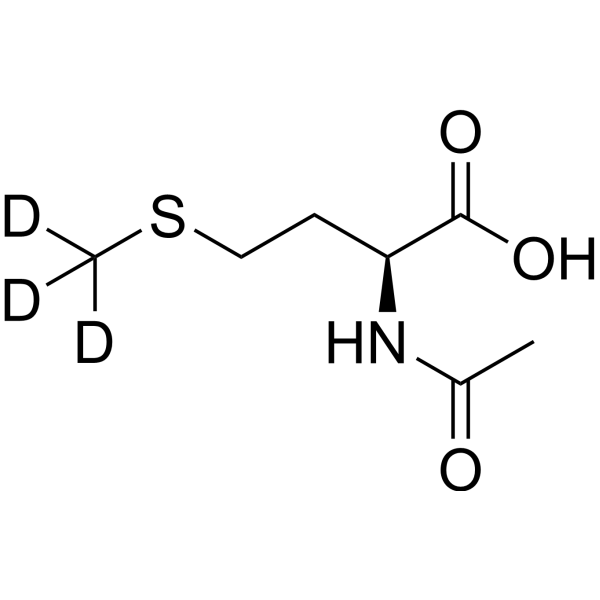 0 ImagesCat. No.: HY-W012499SPurity: 99.87%Synonyms: N-Acetylmethionine-d3N-Acetyl-L-methionine-d3 is the deuterium labeled N-Acetyl-L-methionine. N-Acetyl-L-methionine, a human metabolite, is nutritionally and metabolically equivalent to L-methionine. L-methionine is an indispensable amino acid required for normal growth and development.
-
5-Methylcytosine-d4
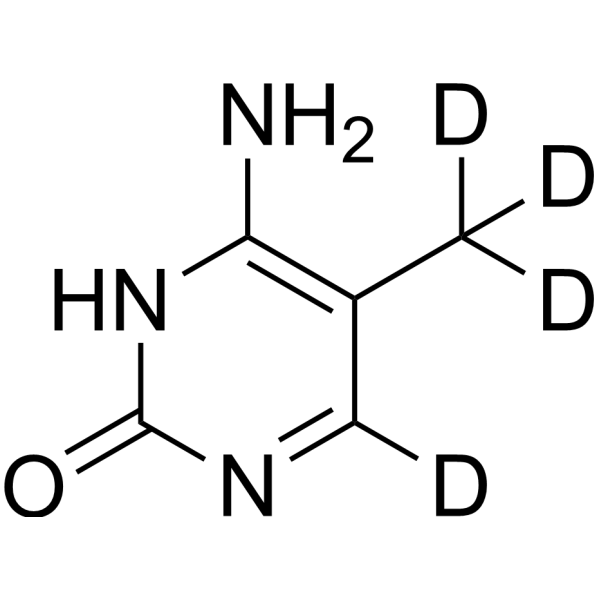 0 Images5-Methylcytosine-d4 is the deuterium labeled 5-Methylcytosine (HY-W008091). 5-Methylcytosine is a well-characterized DNA modification in prokaryotes and eukaryotes. 5-Methylcytosine forms symmetrical methylation on CpG dinucleotides in DNA, stabilizes tRNA/rRNA structure in RNA, and affects mRNA translation. 5-Methylcytosine can be oxidized to generate 5hmC, 5fC, and 5caC. 5-Methylcytosine can be used in epigenetics, developmental biology, and the study of diseases such as colorectal cancer and hepatocellular carcinoma.
-
1-Bromo-4-chlorobenzene-d4
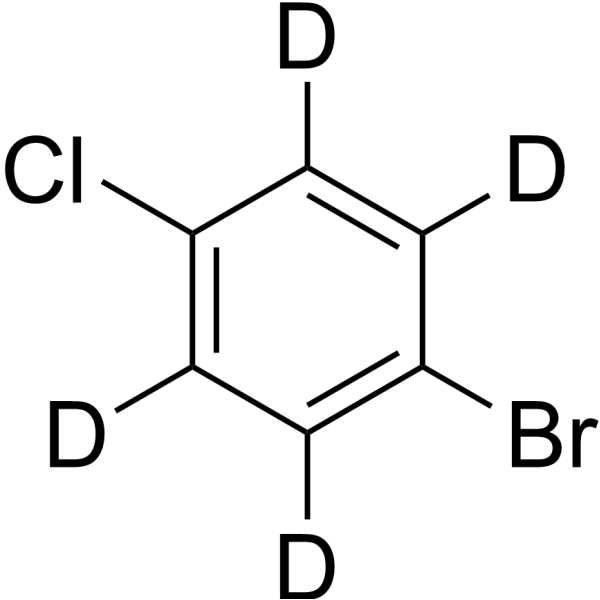 0 Images1-Bromo-4-chlorobenzene-d4 is the deuterium labeled 1-Bromo-4-chlorobenzene.
-
Cholesteryl oleate-d7
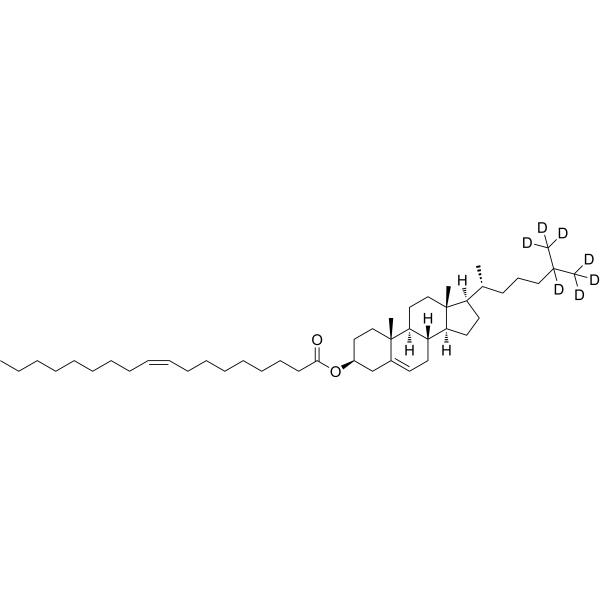 0 ImagesCat. No.: HY-113217SCAS No.: 1416275-35-8Cholesteryl oleate-d7 is deuterium labeled Cholesteryl oleate. Cholesteryl oleate is an ester compound formed from Cholesterol (HY-N0322) and Oleic acid (HY-N1446), which is involved in lipid transport, storage and cell membrane formation in living organisms. Cholesteryl oleate may serve as a potential biomarker for prostate cancer. Cholesteryl oleate can also prepare cationic solid lipid nanoparticles (SLNs) for efficient gene silencing.
-
L-Carnosine-d4
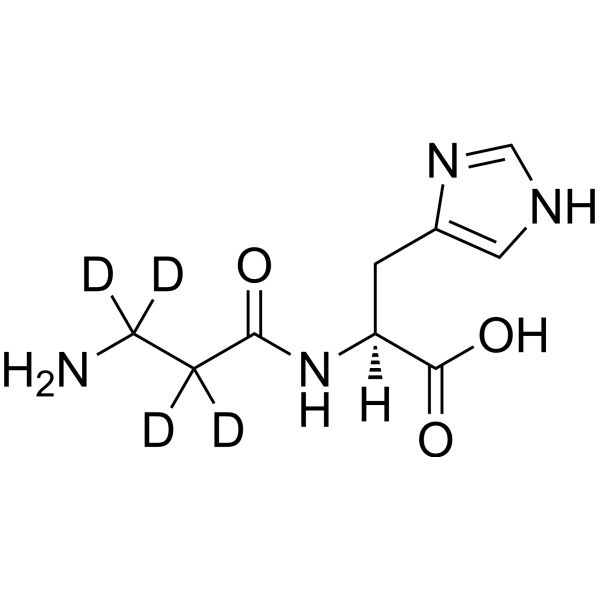 0 ImagesL-Carnosine-d4 is the deuterium labeled L-Carnosine. L-Carnosine is a dipeptide of the amino acids beta-alanine and histidine and has the potential to suppress many of the biochemical changes that accompany aging.
-
L-Methionine-13C,d5
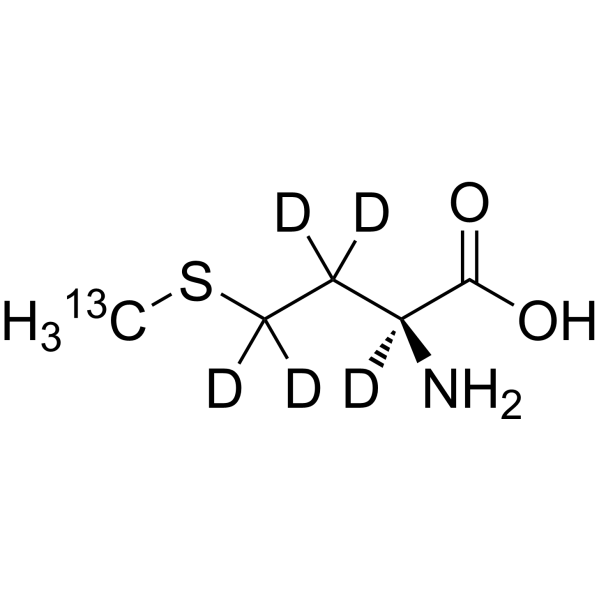 0 ImagesL-Methionine-13C,d5 is the 13C- and deuterium labeled L-Methionine. L-Methionine is the L-isomer of Methionine, an essential amino acid for human development. Methionine acts as a hepatoprotectant.
-
D-(+)-Trehalose-13C12
 0 ImagesSynonyms: D-Trehalose-13C12; α,α-Trehalose-13C12D-(+)-Trehalose-13C12 is a 13C isotope labeled version of D-(+)-Trehalose (HY-N1132). D-(+)-Trehalose,which is widespread, can be used as a food ingredient and pharmaceutical excipient.
-
(3R)-3-Hydroxybutyric acid-1-13C
 0 ImagesCat. No.: HY-W654002(3R)-3-Hydroxybutyric acid-1-13C is 13C labeled (R)-3-Hydroxybutanoic acid. (R)-3-Hydroxybutanoic acid is a metabolite, and converted from acetoacetic acid catalyzed by 3-hydroxybutyrate dehydrogenase. (R)-3-Hydroxybutanoic acid has applications as a nutrition source and as a precursor for vitamins, antibiotics and pheromones.
-
Dioctyl phthalate-d4
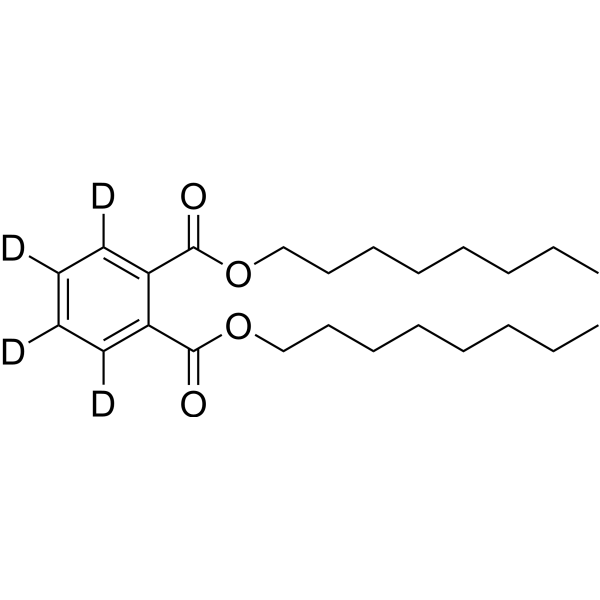 0 ImagesSynonyms: DNOP-d4; Di-n-octyl phthalate-d4; Phthalic acid dioctyl ester-d4Dioctyl phthalate-d4 (DNOP-d4) is the d4-labeled Dioctyl phthalate (HY-W013755). Dioctyl phthalate (DNOP) is a plasticizer. Dioctyl phthalate increases the activities of alanine aminotransferase (ALT) and alkaline phosphatase (ALP) in the liver, as well as the levels of creatinine and urea in the kidney. Exposure to Dioctyl phthalate disrupts the homeostasis of the intestinal microbial community, increases the abundance of pathogenic bacteria, and reduces the abundance of beneficial bacteria such as Lactobacillus. Dioctyl phthalate induces significant and dose-dependent inflammatory responses in the liver, spleen and kidney of mice.
-
Monoolein-d7
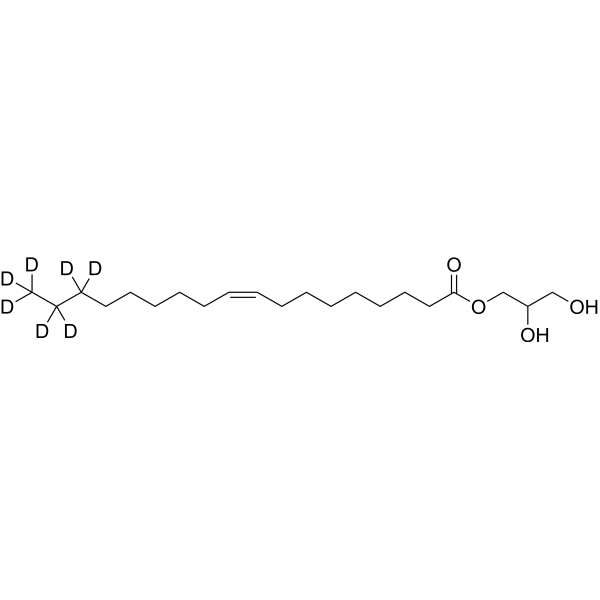 0 ImagesMonoolein-d7 is deuterium labeled Monoolein. Monoolein is an endogenous metabolite.
-
Praziquantel-d11
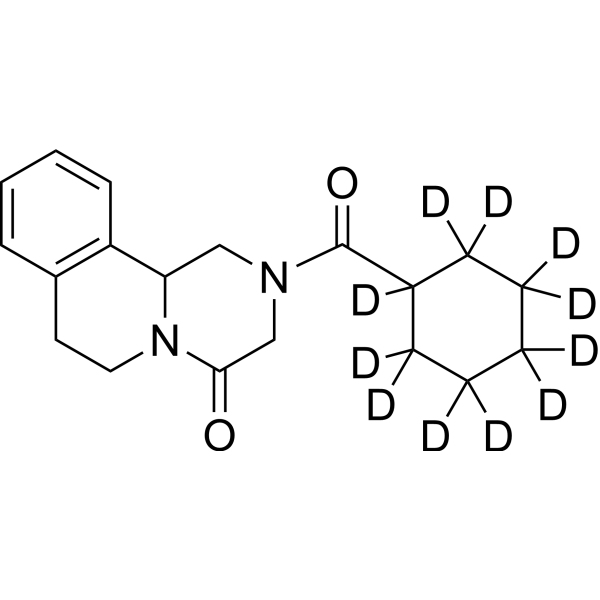 0 ImagesPraziquantel-d11 is the deuterium labeled Praziquantel, which is an anthelmintic.



