



Isotope-Labeled Compounds
Isotope-labeled compounds are chemical substances in which some atoms in their molecules are replaced by isotope atoms. The range of stable isotope products can cover from gases to complex molecules. Isotope-labeled compounds could provide a site-specific investigation of structures, making molecules easily detectable by mass spectrometry and NMR, and maintaining the physico-chemical properties of the target molecule at the same time.
MCE isotope-labeled compounds are all stable isotope-labeled compounds and are non-radioactive labeled substances. MCE isotope-labeled compounds are unique tools for identifying and understanding biological and chemical processes. Stable isotope-labeled products are now getting more and more popular among scientists. The scope of application is gradually penetrating into various scientific fields, such as life sciences, food and medicine, agriculture, environment, geology, etc. Stable isotope-labeled compounds have a wide range of applications in the Life Science areas, such as Metabolomics, Proteomics, Clinical studies, Deuterium drugs, etc.
All Product Categories
-
Isotope-Labeled Compounds Related Products (11101)
Related Products (11101)

-
12-Hydroxystearic acid-d5
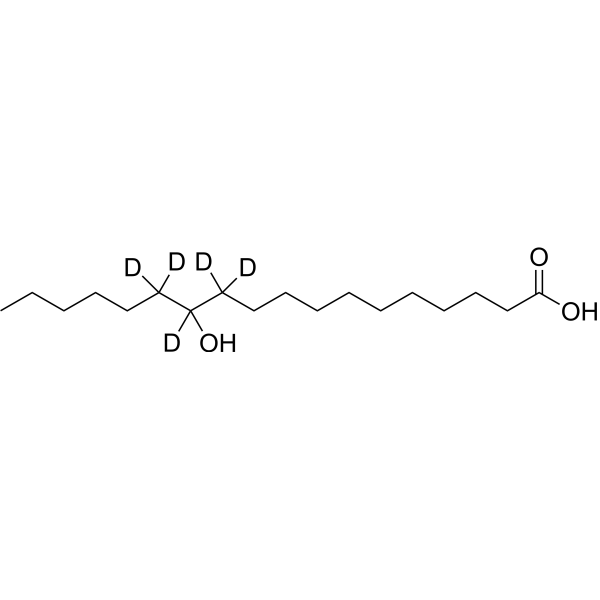 0 Images12-Hydroxystearic acid-d5 is the deuterium labeled 12-Hydroxystearic acid.
-
Triclabendazole-13C,d3
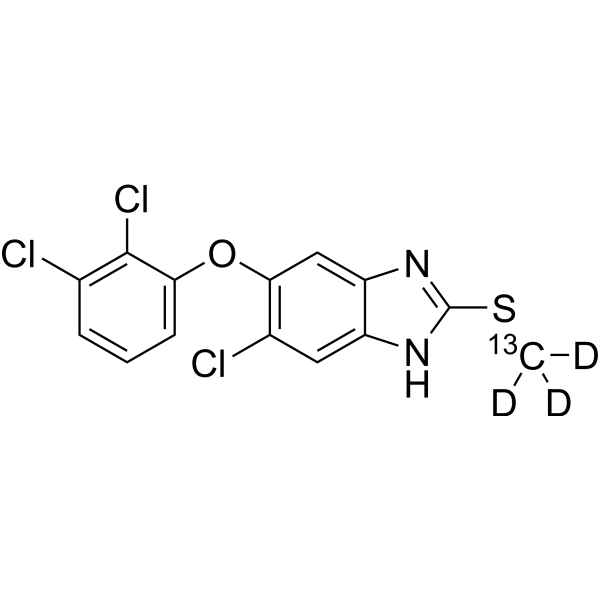 0 ImagesCat. No.: HY-B0621S1CAS No.: 2938916-53-9Synonyms: CGA89317-13C,d3Triclabendazole-13C,d3 is the 13C- and deuterium labeled Triclabendazole.
-
20:1 SM (d18:1/20:1)-d9
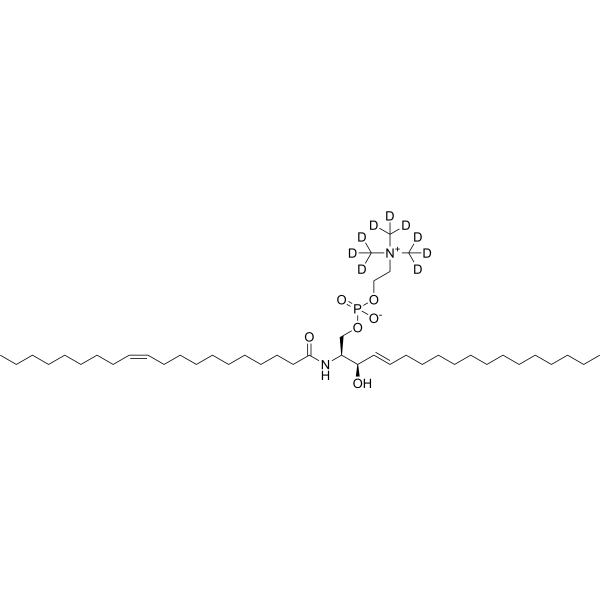 0 ImagesCat. No.: HY-146931SCAS No.: 2342574-48-320:1 SM (d18:1/20:1)-d9 is deuterium labeled 20:1 SM (d18:1/20:1).
-
(2,3,4,5-Tetrafluoro-6-methylphenyl)methanol-d5
 0 ImagesCat. No.: HY-W653296S(2,3,4,5-Tetrafluoro-6-methylphenyl)methanol-d5 is the deuterium labeled (2,3,4,5-Tetrafluoro-6-methylphenyl)methanol (HY-W653296).
-
Sulfalene-13C6
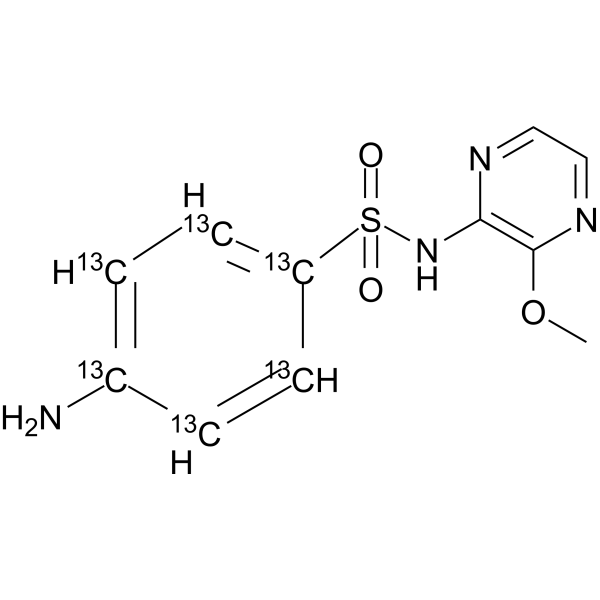 0 ImagesCat. No.: HY-A0130SPurity: 99.0%Synonyms: Sulfametopyrazine-13C6; AS-18908-13C6Sulfalene-13C6 is the 13C6 labeled Sulfalene. Sulfalene (Sulfametopyrazine) is an antimalarial agent. Sulfalene is also a long-acting sulfonamide antibacterial.
-
Epothilone B-d3 (synthetic)
 0 ImagesCat. No.: HY-W754654Epothilone B-d3 (synthetic) is the deuterium labeled Epothilone B (HY-17029). Epothilone B is a microtubule stabilizer with a Ki of 0.71μM. It acts by binding to the αβ-tubulin heterodimer subunit which causes decreasing of αβ-tubulin dissociation.
-
Sumatriptan-d6 formate
 0 ImagesCat. No.: HY-B0121BS3Synonyms: GR 43175 free base-d6 formateSumatriptan-d6 (formate) (GR 43175 free base-d6 (formate)) is deuterium labeled Sumatriptan. Sumatriptan (GR 43175) is an orally active 5-HT1 receptor agonist with IC50s of 7.3 nm, 9.3nm and 17.8 nm for 5-HT1D, 5-HT1B and 5-HT1F receptors, respectively. Sumatriptan can be used for migraine headache research.
-
Dodecane-1,12-diol-d24
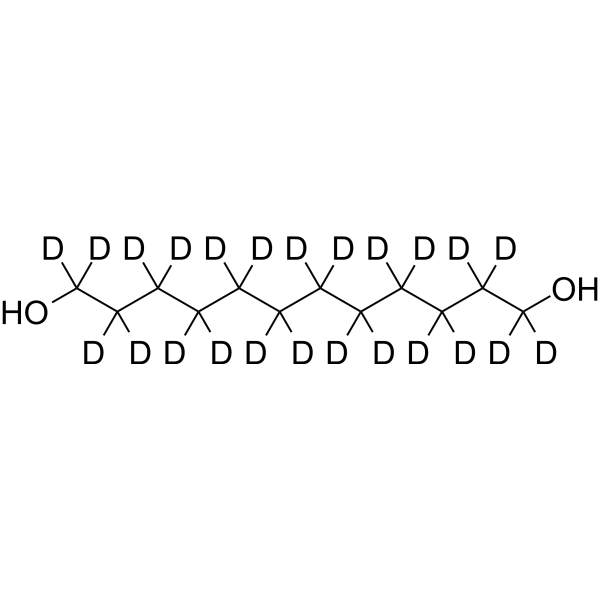 0 ImagesSynonyms: Dodecamethylene glycol-d24Dodecane-1,12-diol-d24 is the deuterium labeled Dodecane-1,12-diol.
-
rac-Metalaxyl carboxylic acid-d6
 0 ImagesCat. No.: HY-W714700rac-Metalaxyl carboxylic acid-d6 is the deuterium labeled rac-Metalaxyl carboxylic acid.
-
3-Ethoxy-4-methoxy-Dopamine-d7 hydrochloride
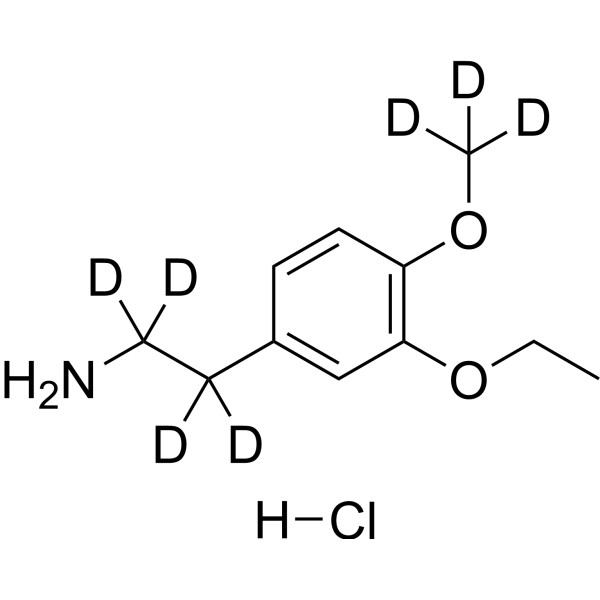 0 ImagesCat. No.: HY-W236847AS1CAS No.: 1398065-60-53-Ethoxy-4-methoxy-Dopamine-d7 (hydrochloride) is the deuterium labeled 3-Ethoxy-4-methoxy-Dopamine hydrochloride.
-
5-Acetyl-d3-uracil
 0 ImagesCat. No.: HY-W251493SSynonyms: 5-Acetyl-1H-pyrimidine-2,4-dione-d35-Acetyl-d3-uracil (5-Acetyl-1H-pyrimidine-2,4-dione-d3) is the deuterium labeled 3-Azidopropyl 4-methylbenzenesulfonate.
-
Binimetinib-d3
 0 ImagesCat. No.: HY-15202S1CAS No.: 2890696-59-8Synonyms: MEK162-d3; ARRY-162-d3; ARRY-438162-d3Binimetinib-d3 (MEK162-d3) is deuterium labeled Binimetinib. Binimetinib (MEK162) is an oral and selective MEK1/2 inhibitor. Binimetinib (MEK162) inhibits MEK with an IC50 of 12 nM.
-
1,2-DLPC-d55
 0 ImagesCat. No.: HY-107737SSynonyms: 1,2-Dilauroyl-sn-glycero-3-phosphocholine-d551,2-DLPC-d55 (1,2-Dilauroyl-sn-glycero-3-phosphocholine-d55) is the deuterium labeled 1,2-DLPC. 1,2-DLPC (1,2-Dilauroyl-sn-glycero-3-phosphocholine) is a ligand for LRH-1 agonists. 1,2-DLPC is a phospholipid used in the synthesis of liposomes. 1,2-DLPC enhances fat breakdown and apoptosis in fat cells through a TNFα-dependent pathway, while also inhibiting palmitate-induced insulin resistance through PPARα-mediated inflammation in muscle cells.
-
Chlorambucil-d8-1
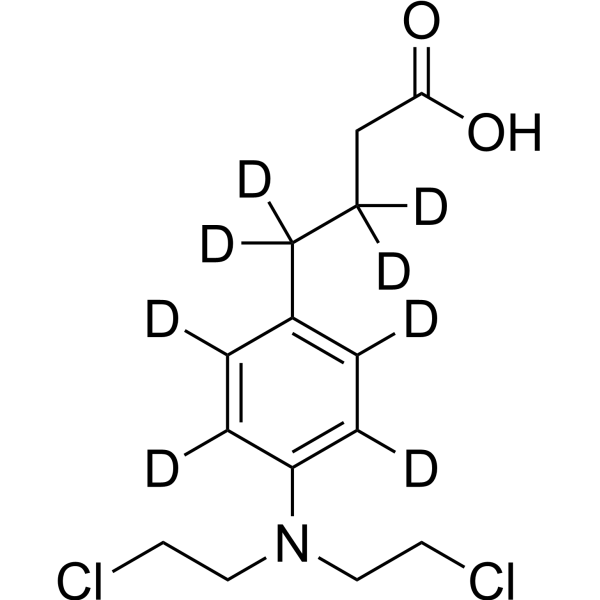 0 ImagesCat. No.: HY-13593S1CAS No.: 2733532-57-3Synonyms: CB-1348-d8-1; WR-139013-d8-1Chlorambucil-d8-1 is the deuterium labeled Chlorambucil. Chlorambucil (CB-1348), an orally active antineoplastic agent, is a bifunctional alkylating agent belonging to the nitrogen mustard group. Chlorambucil can be used for the research of lymphocytic leukemia, ovarian and breast carcinomas, and Hodgkin’s disease.
-
Tripentadecanoin-d5
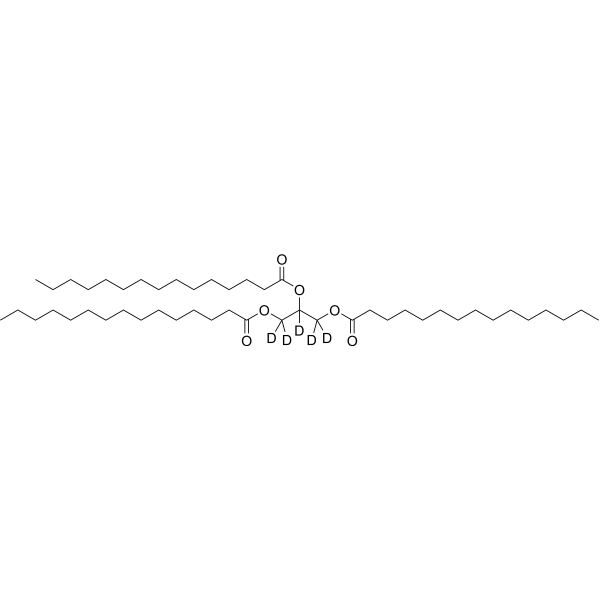 0 ImagesCat. No.: HY-146737SCAS No.: 1219804-57-5Synonyms: TG(15:0/15:0/15:0)-d5; 1,2,3-Tripentadecanoyl glycerol-d5Tripentadecanoin-d5 is the deuterium labeled Tripentadecanoin.
-
Pazufloxacin-d4
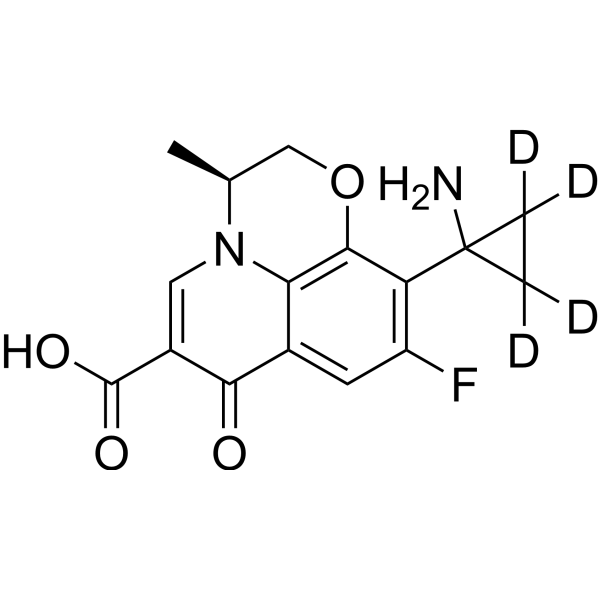 0 ImagesCat. No.: HY-B0724BSCAS No.: 1346602-96-7Synonyms: T3761-d4Pazufloxacin-d4 is deuterium labeled Pazufloxacin (HY-B0724B). Pazufloxacin is an orally active fluoroquinolone antimicrobial agent. Pazufloxacin inhibits DNA gyrase with IC50 values of 0.88 μg/mL (E. coli) and 1.9 μg/mL (P. aeruginosa). Pazufloxacin exhibits broad-spectrum antimicrobial activity, with MIC90 values ranging from 0.025 to 100 μg/mL against Gram-positive and Gram-negative bacteria, non-fermenting bacteria, Legionella spp., and anaerobic bacteria. Pazufloxacin is indicated for research on systemic infections, lung infections, urinary tract infections, and Legionella pneumonia.
-
Nelfinavir-d4
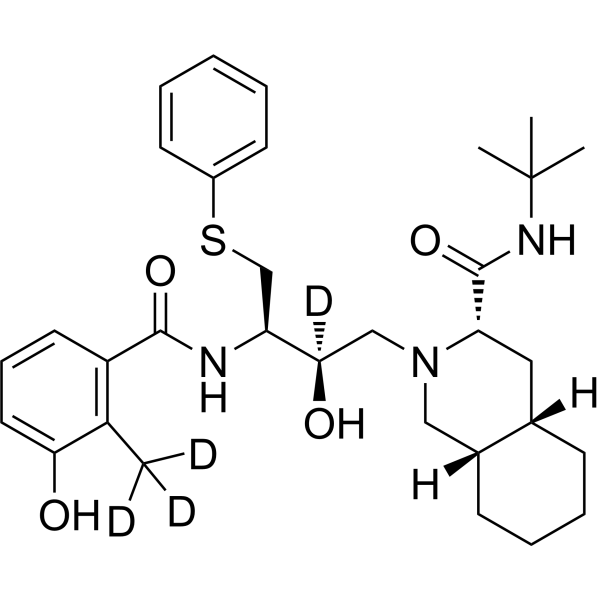 0 ImagesCat. No.: HY-15287S1Nelfinavir-d4 is deuterated labeled Nelfinavir (HY-15287). Nelfinavir (AG-1341) is a potent and orally bioavailable HIV-1 protease inhibitor (Ki=2 nM) for HIV infection. Nelfinavir is a broad-spectrum, anticancer agent.
-
Cladribine-13C3,15N3
 0 ImagesCat. No.: HY-13599S3Synonyms: 2-Chloro-2′-deoxyadenosine-13C3,15N3; CldAdo-13C3,15N3; 2CdA-13C3,15N3Cladribine-13C3,15N3 (2-Chloro-2′-deoxyadenosine-13C3,15N3) is the 13C- and 15N-labeled Cladribine (HY-13599). Cladribine (2-Chloro-2′-deoxyadenosine), a purine nucleoside analog, is an orally active adenosine deaminase inhibitor. Cladribine functions as an inhibitor of DNA synthesis to block the repair of the damaged DNA. Cladribine can inhibit DNA methylation. Cladribine has anti-lymphoma activity. Cladribine can be used for the research of several hematologic malignancies and multiple sclerosis.
-
Antioxidant 245-d12
 0 ImagesCat. No.: HY-136779SSynonyms: AO-245-d12Antioxidant 245-d12 (AO-245-d12) is the deuterium labeled Antioxidant 245 (HY-136779). Antioxidant 245 (AO-245) is a hindered phenol antioxidant. Antioxidant 245 can be used in the research of nanocomposites.
-
2,3-Dimethylpyridine-d9
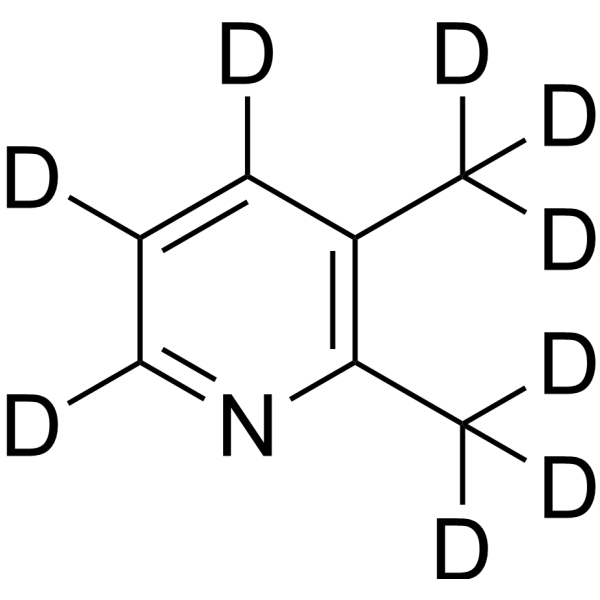 0 ImagesCat. No.: HY-W010574SCAS No.: 350818-65-42,3-Dimethylpyridine-d9 is the deuterium labeled 2,3-Dimethylpyridine.



