MOFs
Metal-Organic Frameworks
MOFs (Metal-Organic Frameworks) have significant applications in biomedicine, such as serving as drug carriers for targeted delivery and controlled release to enhance therapeutic efficacy and reduce side effects. They are also used in bioimaging, disease diagnosis, and catalytic therapies (e.g., for cancer treatment).
-
MOFs Related Products (3081)
Related Products (3081)

-
2,6-Di(1-pyrazolyl)pyridine
 0 ImagesCat. No.: HY-W038413CAS No.: 123640-38-0Synonyms: 2,6-Bis(pyrazol-1-yl)pyridine2,6-Di(1-pyrazolyl)pyridine (2,6-Bis(pyrazol-1-yl)pyridine) is a metal-organic framework (MOF).
-
FeTCPP chloride
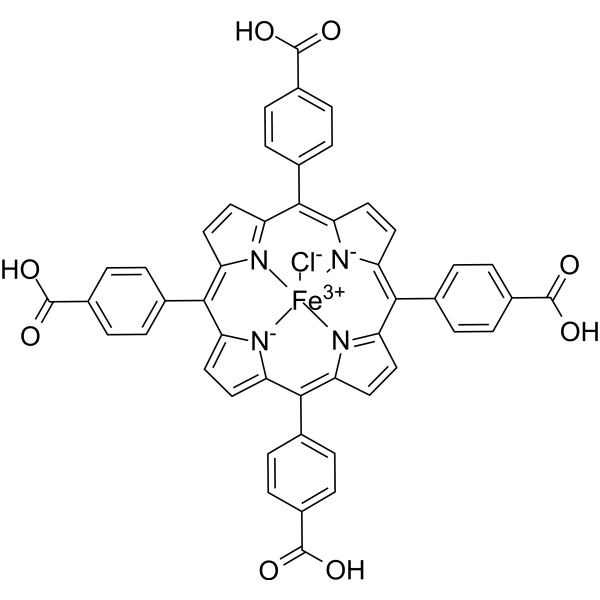 0 ImagesCat. No.: HY-W075707CAS No.: 55266-17-6Synonyms: Iron(III) meso-Tetra(4-carboxyphenyl)porphine chlorideFeTCPP chloride (Iron(III) meso-Tetra(4-carboxyphenyl)porphine chloride) is a metallic porphyrin compound formed by the coordination of a central iron ion (Fe3+) with four 4-carboxyphenylporphyrins (TCPP). FeTCPP chloride can be used as a catalyst for catalytic, electrochemical, photochemical and biomedical research. FeTCPP chloride has high photocatalytic performance for p-nitrophenol under visible light. FeTCPP chloride also has peroxisase-like activity, which is used in bionic catalysis research.
-
FeTMPyP
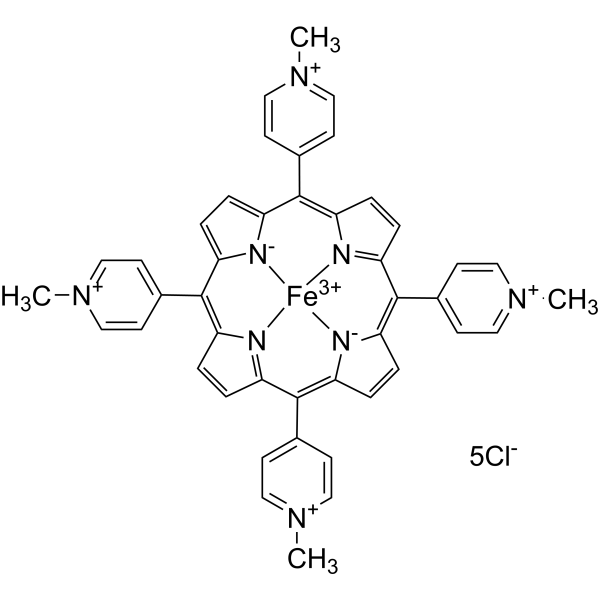 0 ImagesFeTMPyP is an orally active poly (ADP-ribose) polymerase (PARP) inhibitor. FeTMPyP inhibits cell death, nitrotyrosine formation, and depolarization of mitochondrial transmembrane potential. FeTMPyP reduces homocysteine-induced nitrosative stress and partially restores TFEB protein and mRNA levels. FeTMPyP improves functional and behavioral deficits caused by chronic constriction injury in rats. FeTMPyP alleviates acute cerebral infarction in a rat model of middle cerebral artery occlusion with mild hyperglycemia. FeTMPyP can be used in studies related to neuropathic pain, renal aging, ischemic penumbra, and hyperglycemic stroke.
-
2,4,6-Tri-2-pyridinyl-1,3,5-triazine
 0 Images2,4,6-Tri-2-pyridinyl-1,3,5-triazine (NSC 112125) is a colorimetric reagent for detecting iron. 2,4,6-Tri-2-pyridinyl-1,3,5-triazine forms a complex with Fe (II) and can be quantified as a measure of iron concentration by colorimetric detection at 594 nm.
-
Glutaric acid
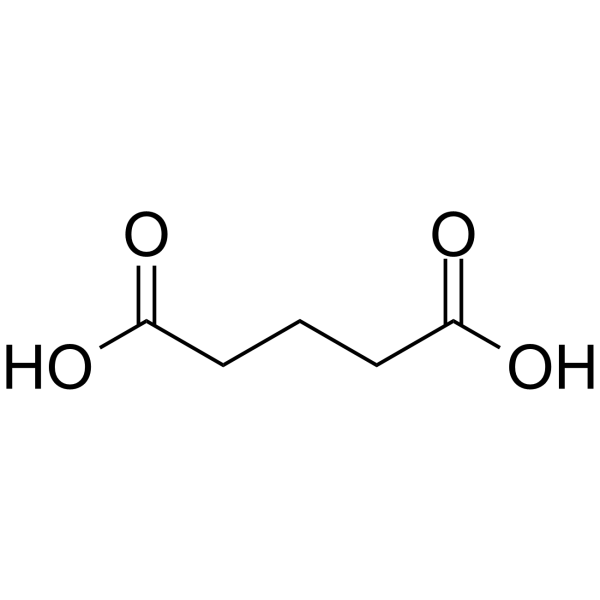 0 ImagesGlutaric acid, C5 dicarboxylic acid, is an intermediate during the catabolic pathways of lysine and tryptophan. Glutaric acid affects pericyte contractility and migration. Glutaric acid is an indicator of glutaric aciduria type I.
-
FeTPPS
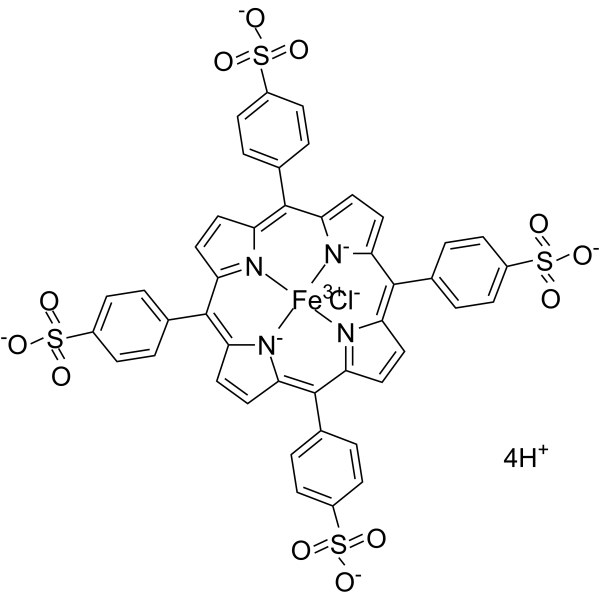 0 ImagesFeTPPS, a 5,10,15,20-tetrakis (4-sulfonatophenyl) porphyrin iron III chloride peroxynitrite decomposition catalyst, possesses evident neuroprotective effects in a experimental model of spinal cord damage. FeTPPS acts as a peroxynitrite scavenger and anti-nitrating agent in vivo. FeTPPS reduces nitric oxide (NO) production and apoptosis process.
-
1H-1,2,4-Triazol-3-amine
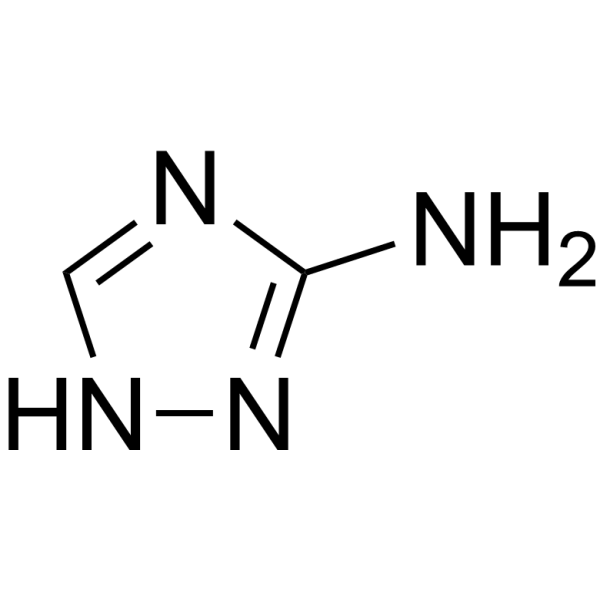 0 Images1H-1,2,4-Triazol-3-amine consists of a triazole ring system and an amino group attached to carbon atom 3. The compound has potential applications in various fields such as medicinal chemistry, agrochemicals and material science. In medicinal chemistry, 1H-1,2,4-Triazol-3-amine is used as a starting material for the synthesis of pharmaceutical compounds such as antifungal agents, anticancer agents, and enzyme inhibitors associated with cardiovascular disease. In agrochemicals, it can be used as a raw material for the synthesis of herbicides, fungicides and insecticides. Furthermore, 1H-1,2,4-Triazol-3-amine is used as a ligand in coordination chemistry and as a precursor for the production of new functional materials such as polymers and metal-organic frameworks.
-
o-Phenanthroline monohydrate
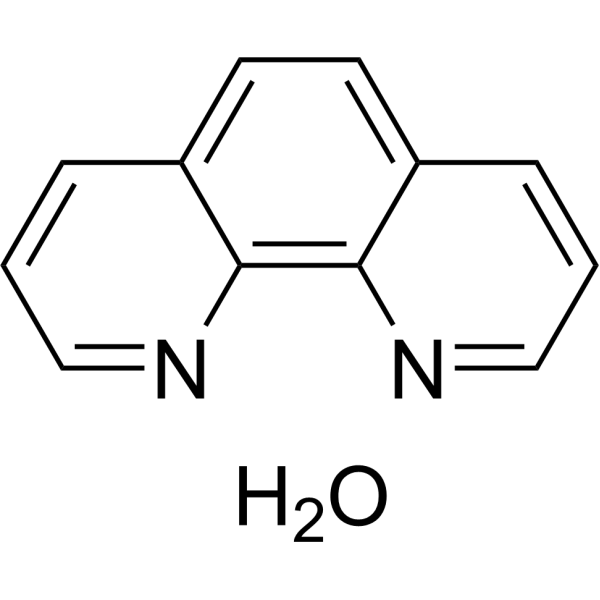 0 Imageso-Phenanthroline (1,10-Phenanthroline) monohydrate, a metal chelator, prevents the induction of chromosomal aberrations in streptozotocin-treated cells. o-Phenanthroline monohydrate forms a red chelate with Fe2+ that absorbs maximally at 510 nm. o-Phenanthroline (1,10-Phenanthroline) monohydrate is also a MMP inhibitor.
-
1,3-Bis(2,6-diisopropylphenyl)imidazolium chloride
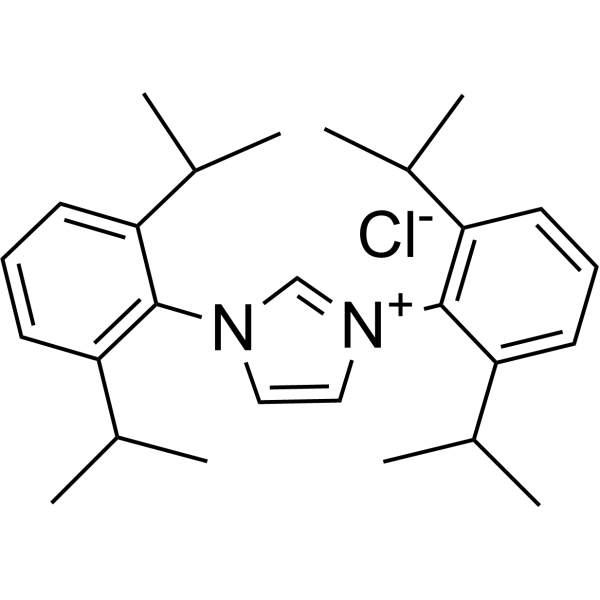 0 Images1,3-Bis(2,6-diisopropylphenyl)imidazolium chloride is a biochemical reagent that can be used as a biological material or organic compound for life science related research.
-
2-Aminoterephthalic acid
 0 Images2-Aminoterephthalic acid is a biochemical reagent that can be used as a biological material or organic compound for life science related research.
-
Topiroxostat
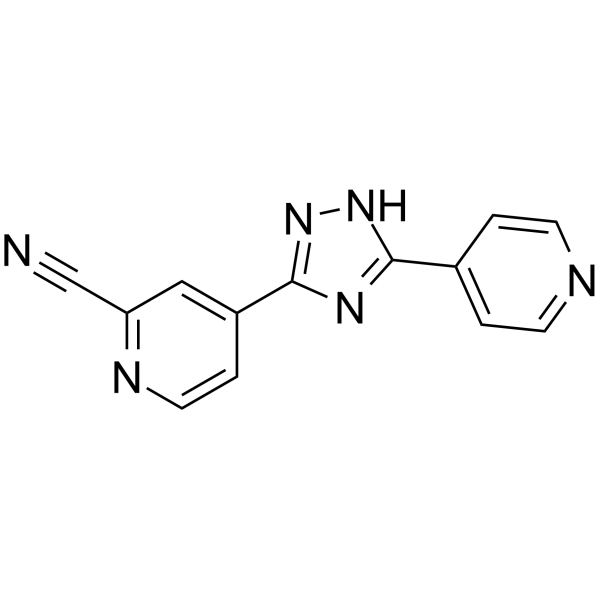 0 ImagesSynonyms: FYX-051Topiroxostat (FYX-051) is a potent and orally active xanthine oxidoreductase (XOR) inhibitor with an IC50 value of 5.3 nM and a Ki value of 5.7 nM. Topiroxostat exhibits weak CYP3A4-inhibitory activity (18.6%). Topiroxostat has the potential for hyperuricemia treatment.
-
Coproporphyrin III dihydrochloride
 0 ImagesSynonyms: Zincphyrin dihydrochlorideCoproporphyrin III dihydrochloride (Zincphyrin dihydrochlorid) is a naturally occurring porphyrin derivative that is mainly found in urine.
-
Di(1H-pyrrol-2-yl)methane
 0 ImagesSynonyms: DipyrrolylmethaneDi(1H-pyrrol-2-yl)methane (Dipyrrolylmethane) is a metal-organic framework (MOF).
-
MeO-bpy
 0 ImagesSynonyms: 4,4'-Dimethoxy-2,2'-bipyridineMeO-bpy (4,4'-Dimethoxy-2,2'-bipyridine) is a metal-organic framework (MOF).
-
t-Bu-terpy
 0 ImagesCat. No.: HY-W008672CAS No.: 115091-29-7Synonyms: 4,4',4''-Tri-tert-butyl-2,2':6',2''-terpyridinet-Bu-terpy (4,4',4''-Tri-tert-butyl-2,2':6',2''-terpyridine) is a metal-organic framework (MOF).
-
Benzene-1,3,5-tricarboxylic acid
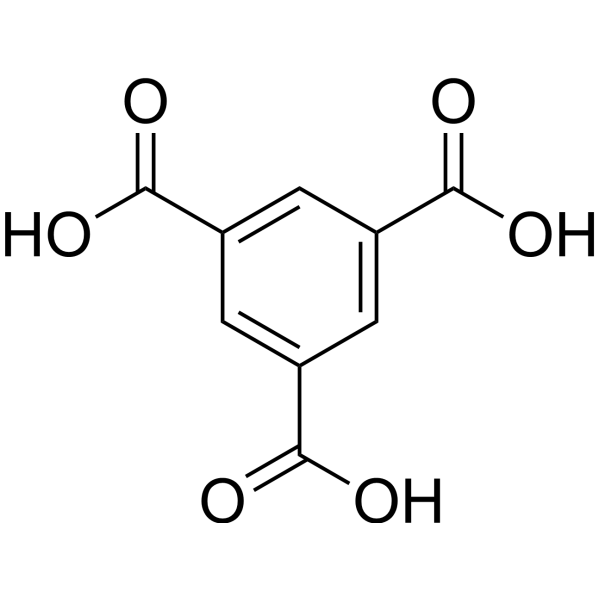 0 ImagesBenzene-1,3,5-tricarboxylic acid (Trimesic acid) is a rigid planar small-molecule scaffold and crosslinker. Benzene-1,3,5-tricarboxylic acid induces bicyclic peptides to adopt a planar conformation, so as to maximize surface area and bind to the flat protein surfaces involved in protein-protein interactions. Benzene-1,3,5-tricarboxylic acid forms ionic crosslinks, hydrogen bonds and π-π bonds with chitosan, thereby constructing a hydrogel network. Benzene-1,3,5-tricarboxylic acid endows chitosan hydrogel systems with specific mechanical properties, enabling sustained release of cancer therapeutic drugs including 5-Fluorouracil (HY-90006).
-
Coproporphyrin I dihydrochloride
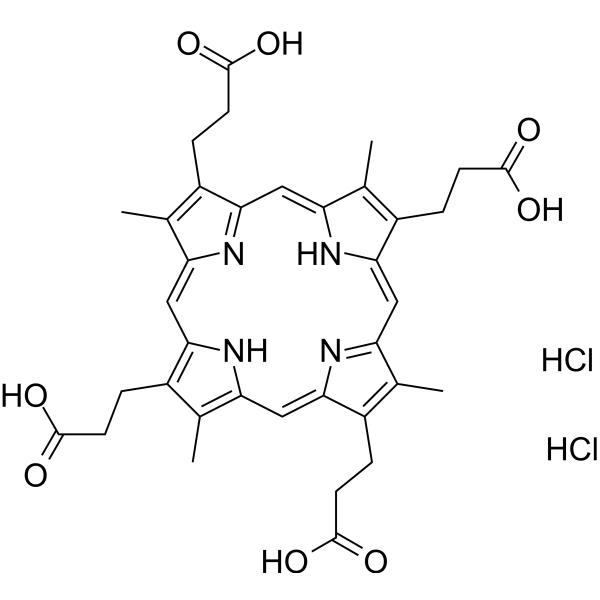 0 ImagesCoproporphyrin I dihydrochlorideIt is an organic compound belonging to the class of porphyrins. It is a derivative of heme, an iron-containing molecule found in hemoglobin and other proteins. Coproporphyrin I dihydrochlorideOften used as a biomarker in the assessment of certain liver and metabolic diseases, especially those related to bile synthesis and transport. It can also be used as a reference standard for analytical chemistry and pharmacological research.