



NQO1
NQO1 (NAD(P)H:quinone oxidoreductase 1) is a cytosolic flavoprotein that catalyzes the obligate two-electron reduction of endogenous and exogenous quinones to hydroquinones, thereby limiting semiquinone formation, redox cycling, and reactive oxygen species generation[1][2]. Through this catalytic activity, NQO1 functions as a major cellular defense enzyme that supports redox homeostasis and protects cells from oxidative and electrophilic stress[1][3]. Mechanistically, NQO1 is a prominent downstream target of the Keap1-Nrf2-ARE signaling pathway, and its transcription is strongly induced during oxidative stress and xenobiotic exposure, linking environmental stress responses to cytoprotective gene expression programs[3][4]. In disease contexts, NQO1 is frequently overexpressed in multiple solid tumors, including lung, breast, liver, colon, and pancreatic cancers, where elevated expression is associated with adaptation to oxidative stress and altered responses to therapeutic agents[3][5][6]. Compared with the related isoform NQO2, NQO1 is the predominant stress-inducible quinone reductase and utilizes NADH or NADPH as reducing cofactors, whereas NQO2 exhibits distinct cofactor preferences and biological regulation, supporting nonredundant cellular functions[7][6]. For experimental applications, NQO1 is widely used as a model enzyme for investigating redox regulation, quinone metabolism, and cytoprotective signaling pathways, while the inhibitor dicoumarol remains a commonly employed pharmacological tool for probing NQO1-dependent biological mechanisms[2][6].
References:
- [1]. Dinkova-Kostova AT, et al. NAD(P)H:quinone acceptor oxidoreductase 1 (NQO1), a multifunctional antioxidant enzyme and exceptionally versatile cytoprotector. Arch Biochem Biophys. 2010 Sep 1;501(1):116-23. [Content Brief]
- [2]. Bianchet MA, et al. Structure and mechanism of NAD[P]H:quinone acceptor oxidoreductases (NQO). Methods Enzymol. 2004;382:144-74. [Content Brief]
- [3]. Lee WS, et al. Roles of NAD(P)H:quinone Oxidoreductase 1 in Diverse Diseases. Life (Basel). 2021 Nov 26;11(12):1301. [Content Brief]
- [4]. Ross D, et al. Functions of NQO1 in Cellular Protection and CoQ10 Metabolism and its Potential Role as a Redox Sensitive Molecular Switch. Front Physiol. 2017 Aug 24;8:595. [Content Brief]
- [5]. Yang Y, et al. Clinical implications of high NQO1 expression in breast cancers. J Exp Clin Cancer Res. 2014 Feb 5;33(1):14. [Content Brief]
- [6]. Pey AL, et al. NAD(P)H quinone oxidoreductase (NQO1): an enzyme which needs just enough mobility, in just the right places. Biosci Rep. 2019 Jan 3;39(1):BSR20180459. [Content Brief]
- [7]. Jaiswal AK, et al. Localization of human NQO1 gene to chromosome 16q22 and NQO2-6p25 and associated polymorphisms. Pharmacogenetics. 1999 Jun;9(3):413-8. [Content Brief]
-
NQO1 Related Products (13)
Related Products (13)

- 1
-
KI696
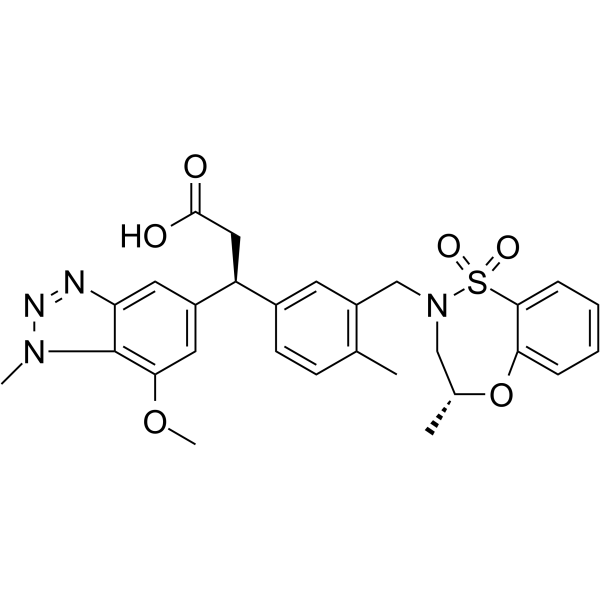 0 ImagesKI696 is a selective KEAP1/NRF2 protein-protein interaction inhibitor with a human Kd value of 1.3 nM. KI696 acts by competitively occupying the NRF2-binding pocket of the KEAP1 Kelch domain. KI696 blocks KEAP1-mediated ubiquitination and degradation of NRF2, promotes the translocation of NRF2 to the nucleus, activates the expression of downstream antioxidant genes, increases intracellular glutathione levels, and alleviates oxidative stress-induced cell damage and inflammatory cell infiltration in the lungs. KI696 reduces ozone-induced pulmonary oxidative damage and inflammatory cell accumulation in rats, and upregulates pulmonary antioxidant genes. KI696 can be used in research related to chronic obstructive pulmonary disease, oxidative stress and inflammation.
-
Methylnissolin-3-O-glucoside
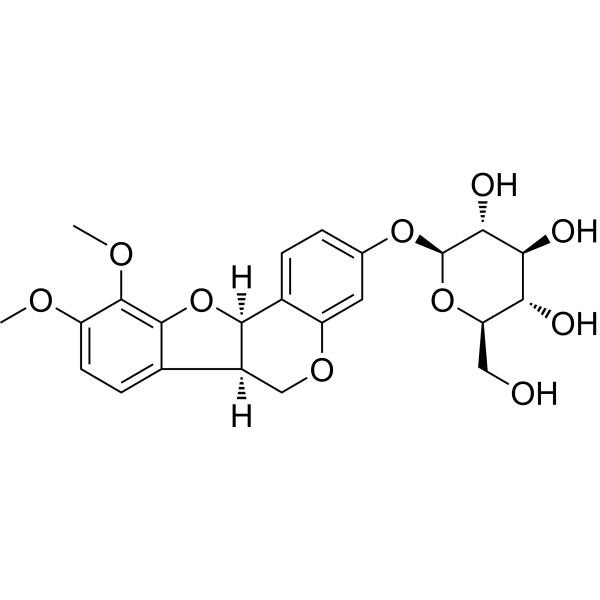 0 ImagesMethylnissolin-3-O-glucoside is a flavonoid glycoside derivative of Methylnissolin (HY-N2484). Methylnissolin-3-O-glucoside is isolated from plants of the genus Astragalus (Leguminosae). Methylnissolin-3-O-glucoside effectively induces the expression of AKT/Nrf2 and its downstream target genes HO-1 and NQO1. Methylnissolin-3-O-glucoside inhibits TNF-α-induced phosphorylation of MEK and ERK. Methylnissolin-3-O-glucoside exhibits free radical scavenging activity. Methylnissolin-3-O-glucoside inhibits cell proliferation and cell migration. Methylnissolin-3-O-glucoside is used in research on esophageal squamous cell carcinoma.
-
NIR-ASM
 0 ImagesCat. No.: HY-D3209CAS No.: 2646628-35-3NIR-ASM is a near-infrared fluorescent probe that can cross cell membranes and be activated by NQO1. NIR-ASM can distinguish NQO1-expressing cancer cells from normal cells via fluorescence microscopy and flow cytometry. NIR-ASM generates near-infrared fluorescence with a high signal-to-noise ratio in tumor models with NQO1 activity, enabling the detection of endogenous NQO1 activity in vivo. NIR-ASM is applicable to the research of lung cancer and breast cancer.
-
FXR agonist 18
 0 ImagesCat. No.: HY-183692CAS No.: 3061938-00-6FXR agonist 18 is an orally active FXR agonist, with an EC50 of 10 nM against human FXR and an EC50 of 1360 nM against human TGR5. FXR agonist 18 inhibits inflammatory responses by reducing nitrite production, downregulating the expression of pro-inflammatory genes (Tnf, Adgre1, Cyp8b1, upregulating the expression of FXR, Hmox1, Nqo1, Nrf2, and enhancing antioxidant responses. FXR agonist 18 ameliorates liver fibrosis in mice, exhibits protective effects in mice with cholestatic liver injury, and shows anti-MASH efficacy. FXR agonist 18 can be used in studies of metabolic dysfunction-associated steatohepatitis.
-
Ola-NC-SS-PEG-Lap
 0 ImagesCat. No.: HY-181017Ola-NC-SS-PEG-Lap is a selective immunogenic cell death inducer. Ola-NC-SS-PEG-Lap exploits the synergistic interplay between an NQO1-bioactivated compound and a PARP inhibitor to selectively induce immunogenic cell death in tumor cells without harming normal cells. Ola-NC-SS-PEG-Lap induces ROS accumulation, increases DNA damage. Ola-NC-SS-PEG-Lap can be activated by GSH and release Ola, ultimately producing the synergistic antitumor effect with the Lap portion. Ola-NC-SS-PEG-Lap has anti-cancer activity against colon cancer.
-
Keap1/Nrf2/ARE activator 2
 0 ImagesCat. No.: HY-180155CAS No.: 3105470-83-2Keap1/Nrf2/ARE activator 2 is an activator of Keap1/Nrf2/ARE pathway and non-competitively inhibits AChE with an IC50 of 14.79 μM and a Ki of 1.35 μM. Keap1/Nrf2/ARE activator 2 promotes Nrf2 nuclear translocation, leading to antioxidant gene upregulation and enhanced cellular defense against oxidative stress. Keap1/Nrf2/ARE activator exhibits robust neuroprotection against both H2O2- and Scopolamine (SCA) (HY-N0296)-induced injury in PC12 cells. Keap1/Nrf2/ARE activator 2 ameliorates memory impairment and the neuro-inflammation associated with SCA-initiated cognitive dysfunction in a zebrafish model. Keap1/Nrf2/ARE activator 2 can be used for the research of Alzheimer's disease.
-
Nrf2 activator-27
 0 ImagesCat. No.: HY-184690Nrf2 activator-27 is a Nrf2 activator with anti-inflammatory activity. Nrf2 activator-27 increases the expression level of Nrf2, promotes its nuclear translocation, and upregulates the downstream target proteins HO-1 and NQO1. Nrf2 activator-27 reduces the production of NO, TNF-α, IL-1β and IL-6 in LPS-stimulated macrophages. Nrf2 activator-27 can be used for the research of inflammation-related diseases.
-
SHN7
 0 ImagesCat. No.: HY-184706CAS No.: 3126116-06-8SHN7 is a selective HDAC1/HDAC6 inhibitor, NQO1 substrate and ROS inducer, with an IC50 of 30 nM against HDAC1 and an IC50 of 10 nM against HDAC6. SHN7 inhibits STAT3 with a Kd of 8.9 μM. SHN7 arrests the cell cycle at the G2/M phase and induces Apoptosis. SHN7 exhibits anti-tumor effects in triple-negative breast cancer (TNBC) xenograft models. SHN7 can be used for the research of triple-negative breast cancer.
-
Keap1-Nrf2-IN-30
 0 ImagesCat. No.: HY-184761Keap1-Nrf2-IN-30 is an orally active, blood-brain barrier-permeable Keap1-Nrf2 protein-protein interaction inhibitor with a Keap1 Kd value of 157 nM. Keap1-Nrf2-IN-30 selectively inhibits the Keap1-Nrf2 protein-protein interaction, promotes Nrf2 nuclear translocation, suppresses induced ferroptosis, reduces the expression of Aβ and p-Tau, and upregulates the expression of GPX4 and SLC7A11. Keap1-Nrf2-IN-30 upregulates the expression of HO-1 and NQO1, alleviates neuronal damage, and improves cognitive and spatial memory deficits. Keap1-Nrf2-IN-30 can be used in the research of Alzheimer's disease.
-
TBE 31
 0 ImagesCat. No.: HY-141439CAS No.: 936475-62-6TBE 31 is an orally active Keap1/Nrf2 pathway activator and NQO1 inducer with a Dm value of 1.1 nM for NQO1. TBE 31 binds to cysteine residues of Keap1, inhibits ubiquitination and degradation of Nrf2, thereby activating the expression of ARE-dependent genes. TBE 31 induces cytoprotective enzymes including NQO1 and GST isoforms, promotes Nrf2 accumulation, and upregulates Nrf2-regulated genes related to antioxidation and lipid metabolism. TBE 31 inhibits pro-inflammatory responses, formation of AFB1-DNA adducts, endoplasmic reticulum stress, cell apoptosis (apoptosis), hepatic fibrosis, oxidative stress, and the expression of ChREBP. TBE 31 reduces the number of tumors in a mouse model of ultraviolet-induced skin carcinogenesis. TBE 31 enhances nerve growth factor-induced neurite outgrowth. TBE 31 attenuates LPS-induced serum TNF-α levels and immobility time in mice. TBE 31 can be used in research related to liver cancer, skin cancer, inflammation-related depression, and non-alcoholic steatohepatitis.
-
Antitumor agent-195
 0 ImagesCat. No.: HY-170947Antitumor agent-195 (compound 16c) is a dual targeting agent of STAT3 and NQO1. Antitumor agent-195 significantly inhibits phosphorylation of STAT3 at Tyr705 at a concentration of 1 μM and effectively induce Apoptosis in MDAMB-231 and MDA-MB-468 breast cancer cells. Antitumor agent-195 as a NQO1 substrate strongly increases ROS generation and causes severe DNA damage in a dose-dependent manner. Antitumor agent-195 shows encouraging anti-tumor efficacy in the MDA-MB-231 xenograft model.
-
Glucocamelinin
 0 ImagesCat. No.: HY-N20735CAS No.: 67884-10-0Synonyms: 10-(Methylsulfinyl)decylglucosinolate; GSL 10Glucocamelinin (GSL 10) is a sulfinyl glucosinolate identified from seeds of Camelina sativa and an upregulator of quinone reductase (NQO1). Glucocamelinin upregulates the activity of phase II detoxifying enzymes, exhibits selective cytotoxic activity against lung cancer cells, and possesses in vitro antioxidant activity. Glucocamelinin can be used in studies related to non-small cell lung cancer.
-
Methylnissolin-3-O-glucoside (Standard)
 0 ImagesCat. No.: HY-N2473RCAS No.: 94367-42-7Methylnissolin-3-O-glucoside (Standard) is the analytical standard of Methylnissolin-3-O-glucoside (HY-N2473). This product is intended for research and analytical applications. Methylnissolin-3-O-glucoside is a flavonoid glycoside derivative of Methylnissolin (HY-N2484). Methylnissolin-3-O-glucoside is isolated from plants of the genus Astragalus (Leguminosae). Methylnissolin-3-O-glucoside effectively induces the expression of AKT/Nrf2 and its downstream target genes HO-1 and NQO1. Methylnissolin-3-O-glucoside inhibits TNF-α-induced phosphorylation of MEK and ERK. Methylnissolin-3-O-glucoside exhibits free radical scavenging activity. Methylnissolin-3-O-glucoside inhibits cell proliferation and cell migration. Methylnissolin-3-O-glucoside is used in research on esophageal squamous cell carcinoma.
- 1



