



Thonzonium bromide
Based on 6 publication(s) in Google Scholar
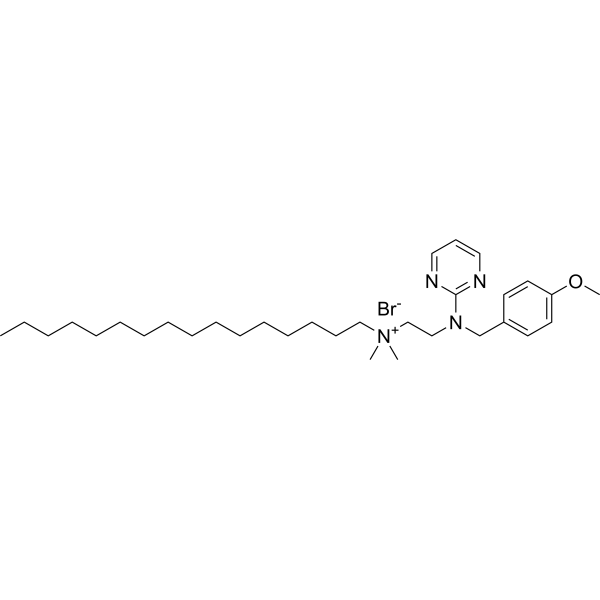
Thonzonium bromide is an antibacterial agent that is structurally similar to Farnesol (HY-Y0248A). Thonzonium bromide is also a monocationic surface-active agent, which inhibits RANKL-induced osteoclast formation and bone resorption in vitro and prevents LPS-induced bone loss in vivo. Thonzonium bromide inhibits proton transport in a dose-dependent manner (EC50=69 μM).
For research use only. We do not sell to patients.
- Purity : 99.81%
- CAS No.: 553-08-2
- Formula: C32H55BrN4O
- Molecular Weight:591.71
-
Storage:
4°C, stored under nitrogen, away from moisture
* In solvent : -80°C, 6 months; -20°C, 1 month (stored under nitrogen, away from moisture)

To place orders, for customer services and technical support, please contact: MedChemExpress USA
Tel: 609-228-6898 E-mail: [email protected] [email protected]


-
 Biological Activity
-
Chemical Information
-
Solvent & Solubility
- Protocols
- Purity & Documentation
- References
-
 Help & FAQs


-
HY-15142
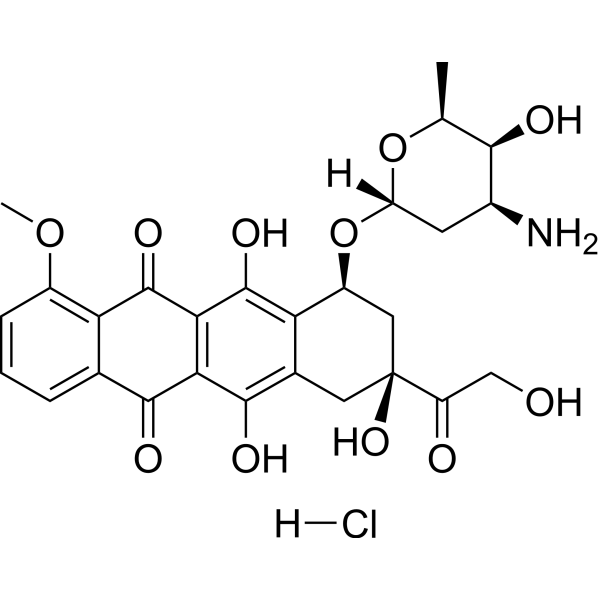
Doxorubicin hydrochlorideTopoisomerase Inhibitor -
HY-13259
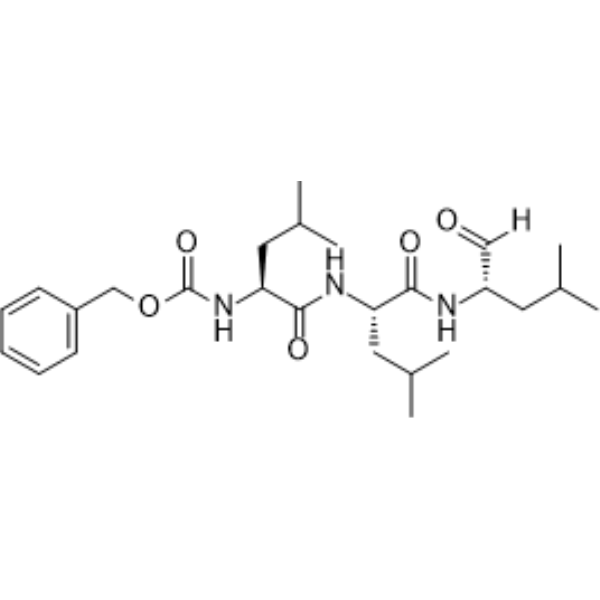
MG-132Proteasome Inhibitor -

HY-B1246R
Thonzonium bromide (Standard)Antibacterial/Monocationic Surface-active Agent -
HY-17021
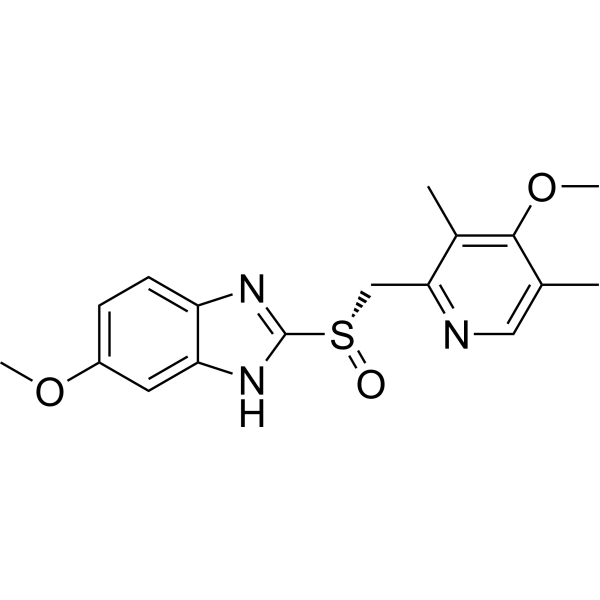
EsomeprazoleH+, K+-ATPase Inhibitor -

HY-17021R
Esomeprazole (Standard)H+, K+-ATPase Inhibitor -
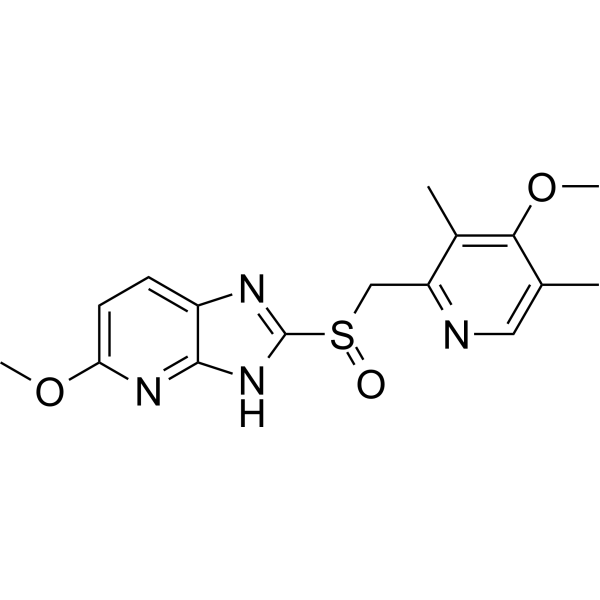
HY-17421
TenatoprazoleProton Pump Inhibitor -
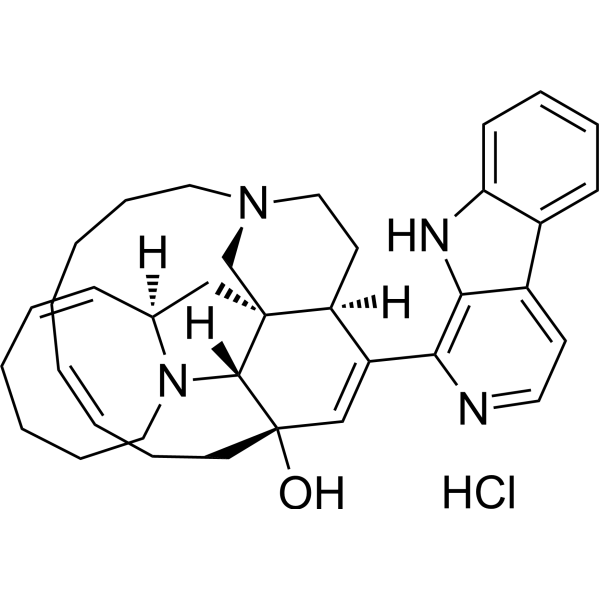
HY-117025A
Manzamine A hydrochlorideGSK-3β Inhibitor -
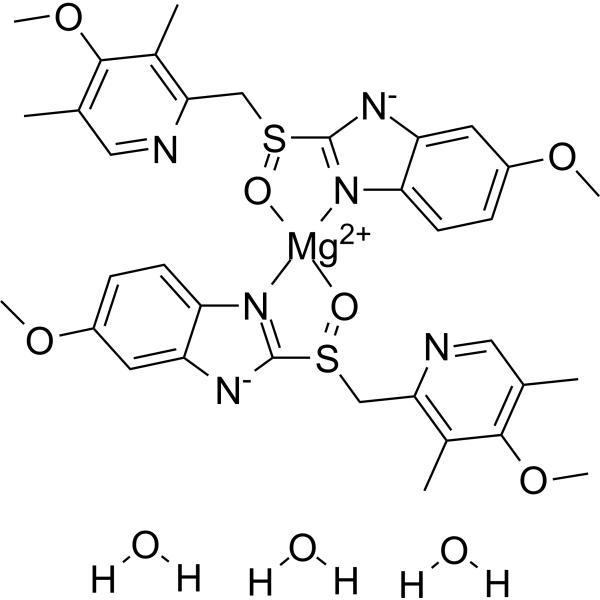
HY-17022
Esomeprazole magnesium trihydrateH+, K+-ATPase Inhibitor -
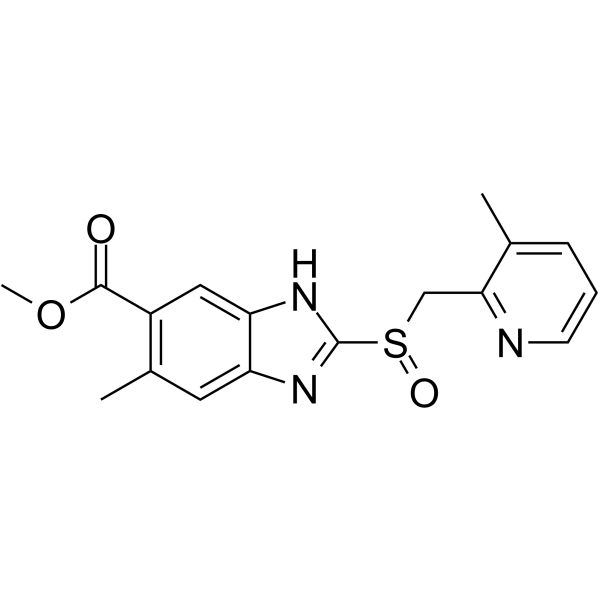
HY-15384
PicoprazoleProton Pump Inhibitor -

HY-17421R
Tenatoprazole (Standard)Proton Pump Inhibitor
Publications Citing Use of MedChemExpress (MCE) Thonzonium bromide
More

Biological Activity
Description
Cellular Effect
|
Cell Line

|
Type | Value | Description | References |
|---|---|---|---|---|
| HepG2 | EC50 |
11.2 μM
Compound: Thonzonium Bromide
|
Activation of human PXR expressed in human HepG2 (DPX-2) cells assessed as induction of CYP3A4 after 24 hrs by luminescent analysis
Activation of human PXR expressed in human HepG2 (DPX-2) cells assessed as induction of CYP3A4 after 24 hrs by luminescent analysis
|
[PMID: 20966043] |
In Vitro
Thonzonium bromide inhibits RANKL-induced OC formation, the appearance of OC-specific marker genes and bone-resorbing activity in vitro. Thonzonium bromide blocks the RANKL-induced activation of NF-κB, ERK and c-Fos as well as the induction of NFATc1 which is essential for OC formation. Thonzonium bromide disrupts F-actin ring formation resulting in disturbances in cytoskeletal structure in mature OCs during bone resorption. Thonzonium bromide exhibits protective effects in an in vivo murine model of LPS-induced calvarial osteolysis[1].
MedChemExpress (MCE) has not independently confirmed the accuracy of these methods. They are for reference only. Further protocols information, click here.


Chemical Information
-
CAS No. 553-08-2
-
Appearance Solid
-
Molecular Weight 591.71
-
Formula C32H55BrN4O
-
Color White to off-white
-
SMILES
CCCCCCCCCCCCCCCC[N+](C)(CCN(CC1=CC=C(OC)C=C1)C2=NC=CC=N2)C.[Br-]
-
Shipping
Room temperature in continental US; may vary elsewhere.
-
Storage
4°C, stored under nitrogen, away from moisture
* In solvent : -80°C, 6 months; -20°C, 1 month (stored under nitrogen, away from moisture)


Publications (6)
-
Journal Impact Factor
-
Most Recent
-
Drug Deliv Transl Res
Leveraging quantum chemical properties in transfer learning for predicting blood-brain barrier permeability of drugs. [Abstract]2025 Oct 29. PMID: 41160380 -
Cancers (Basel)
2022 May 20;14(10):2527. PMID: 35626133 -
ACS Chem Neurosci
Identification of FDA-Approved Small Molecules Capable of Disrupting the Calmodulin-Adenylyl Cyclase 8 Interaction through Direct Binding to Calmodulin. [Abstract]2018 Feb 21;9(2):346-357. PMID: 28968502 -
Viruses
M Segment-Based Minigenome System of Severe Fever with Thrombocytopenia Syndrome Virus as a Tool for Antiviral Drug Screening. [Abstract]2021 Jun 3;13(6):1061. PMID: 34205062 -
Vet Parasitol
Screening of a drug repurposing library with a nematode motility assay identifies promising anthelmintic hits against Cooperia oncophora and other ruminant parasites. [Abstract]2019 Jan:265:15-18. PMID: 30638515 -


Solvent & Solubility
In Vitro:
H2O : 100 mg/mL (169.00 mM; Need ultrasonic)
DMSO : ≥ 30 mg/mL (50.70 mM; Hygroscopic DMSO has a significant impact on the solubility of product, please use newly opened DMSO)
* "≥" means soluble, but saturation unknown.
Please refer to the solubility information to select the appropriate solvent. Once prepared, please aliquot and store the solution to prevent product inactivation from repeated freeze-thaw cycles.
Storage method and period of stock solution: -80°C, 6 months; -20°C, 1 month (stored under nitrogen, away from moisture). When stored at -80°C, please use it within 6 months. When stored at -20°C, please use it within 1 month.
* Note: If you choose water as the stock solution, please dilute it to the working solution, then filter and sterilize it with a 0.22 μm filter before use.
Please refer to the solubility information to select the appropriate solvent. Once prepared, please aliquot and store the solution to prevent product inactivation from repeated freeze-thaw cycles.
Storage method and period of stock solution: -80°C, 6 months; -20°C, 1 month (stored under nitrogen, away from moisture). When stored at -80°C, please use it within 6 months. When stored at -20°C, please use it within 1 month.
* Note: If you choose water as the stock solution, please dilute it to the working solution, then filter and sterilize it with a 0.22 μm filter before use.
Concentration (start) × Volume (start) = Concentration (final) × Volume (final)

Protocols
-
Research Protocol for Infectious Diseases
Infectious-disease experiments test how pathogens interact with host barriers, innate immune receptors, inflammatory signaling, pathogen replication, and tissue injury; pattern-recognition receptors such as TLRs, RIG-I-like receptors, NOD-like receptors, and inflammasomes detect microbial molecules and activate NF-κB, interferon, and cytokine responses. The central hypothesis is that infection severity reflects the balance between pathogen burden and host response: protective inflammation restricts pathogen growth, whereas excessive or mislocalized inflammation contributes to tissue damage and disease phenotype. Unresolved questions include which host pathways are protective versus pathogenic, why some infection models fail to translate to human disease, and which combined readouts best predict clinically relevant infection outcomes.
-
Osteoclast differentiation from monocyte/macrophage precursors
Osteoclast differentiation is an in vitro induction assay in which monocyte/macrophage-lineage precursors are exposed to macrophage colony-stimulating factor (M-CSF) and receptor activator of NF-κB ligand (RANKL), generating multinucleated osteoclasts that are commonly identified by tartrate-resistant acid phosphatase (TRAP) staining and functionally confirmed by resorption pits on dentin, bone, or mineralized substrates. M-CSF supports survival and expansion of osteoclast precursors, while RANKL binding to RANK drives osteoclast commitment, fusion, maturation, and resorptive function; osteoprotegerin inhibits this pathway by binding RANKL and preventing RANK activation. The main readouts are the number of TRAP-positive multinucleated cells, formation of F-actin rings, and resorbed surface area; TRAP-positive multinucleated cells indicate osteoclast differentiation, whereas pit formation on dentin, bone, or mineralized coating indicates functional bone-resorbing activity.


Purity & Documentation
-
Data Sheet (269 KB)
-
SDS (476 KB)
- English - EN (476 KB)
- Français - FR (476 KB)
- Deutsch - DE (476 KB)
- Norwegian - NO (476 KB)
- Español - ES (476 KB)
- Swedish - SV (476 KB)
- Italian - IT (476 KB)
- Korean - KR (476 KB)
- Portuguese - PT (476 KB)
-
Handling Instructions (2659 KB)
References
[1]. Zhu X, et al. Thonzonium bromide inhibits RANKL-induced osteoclast formation and bone resorption in vitro and prevents LPS-induced bone loss in vivo. Biochem Pharmacol. 2016;104:118-130. [Content Brief]
[2]. Chan CY, et al. Inhibitors of V-ATPase proton transport reveal uncoupling functions of tether linking cytosolic and membrane domains of V0 subunit a (Vph1p). J Biol Chem. 2012;287(13):10236-10250. [Content Brief]
[3]. Sims KR, et al. Enhanced design and formulation of nanoparticles for anti-biofilm drug delivery. Nanoscale. 2018;11(1):219-236. [Content Brief]


Complete Stock Solution Preparation Table
Please refer to the solubility information to select the appropriate solvent. Once prepared, please aliquot and store the solution to prevent product inactivation from repeated freeze-thaw cycles.
Storage method and period of stock solution: -80°C, 6 months; -20°C, 1 month (stored under nitrogen, away from moisture). When stored at -80°C, please use it within 6 months. When stored at -20°C, please use it within 1 month.
| Optional Solvent | Concentration Solvent Mass | 1 mg | 5 mg | 10 mg | 25 mg |
|---|---|---|---|---|---|
| DMSO / H2O | 1 mM | 1.6900 mL | 8.4501 mL | 16.9002 mL | 42.2504 mL |
| 5 mM | 0.3380 mL | 1.6900 mL | 3.3800 mL | 8.4501 mL | |
| 10 mM | 0.1690 mL | 0.8450 mL | 1.6900 mL | 4.2250 mL | |
| 15 mM | 0.1127 mL | 0.5633 mL | 1.1267 mL | 2.8167 mL | |
| 20 mM | 0.0845 mL | 0.4225 mL | 0.8450 mL | 2.1125 mL | |
| 25 mM | 0.0676 mL | 0.3380 mL | 0.6760 mL | 1.6900 mL | |
| 30 mM | 0.0563 mL | 0.2817 mL | 0.5633 mL | 1.4083 mL | |
| 40 mM | 0.0423 mL | 0.2113 mL | 0.4225 mL | 1.0563 mL | |
| 50 mM | 0.0338 mL | 0.1690 mL | 0.3380 mL | 0.8450 mL | |
| H2O | 60 mM | 0.0282 mL | 0.1408 mL | 0.2817 mL | 0.7042 mL |
| 80 mM | 0.0211 mL | 0.1056 mL | 0.2113 mL | 0.5281 mL | |
| 100 mM | 0.0169 mL | 0.0845 mL | 0.1690 mL | 0.4225 mL |
* Note: If you choose water as the stock solution, please dilute it to the working solution, then filter and sterilize it with a 0.22 μm filter before use.


Thonzonium bromide Related Classifications
HY-B1246 Related Classifications
 Powered by Bioz