



Neflamapimod
Based on 11 publication(s) in Google Scholar
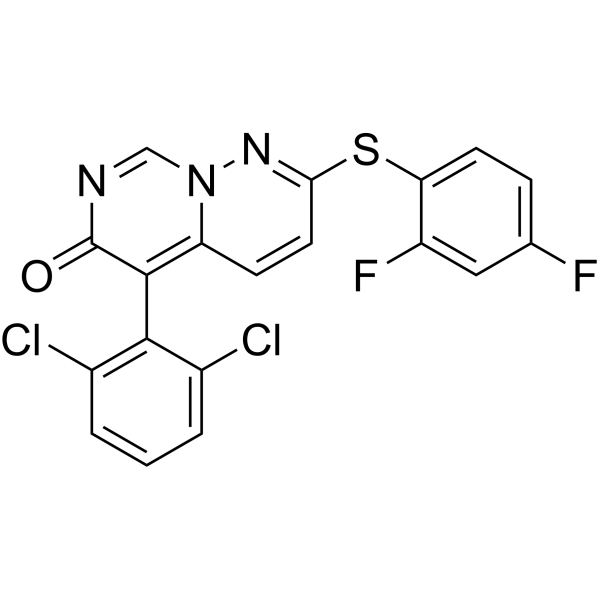
Neflamapimod (VX-745) is a potent, blood-brain barrier penetrant, highly selective inhibitor of p38α inhibitor with an IC50 for p38α of 10 nM and for p38β of 220 nM. Neflamapimod (VX-745) possesses anti-inflammatory activity.
For research use only. We do not sell to patients.
- Purity : 99.32%
- CAS No.: 209410-46-8
- Formula: C19H9Cl2F2N3OS
- Molecular Weight:436.26
-
Storage:Powder -20°C, 3 years , 4°C, 2 years ; In solvent -80°C, 6 months , -20°C, 1 month

To place orders, for customer services and technical support, please contact: MedChemExpress USA
Tel: 609-228-6898 E-mail: [email protected] [email protected]


-
 Biological Activity
-
Chemical Information
-
Solvent & Solubility
- Protocols
- Purity & Documentation
- References
-
 Help & FAQs


-
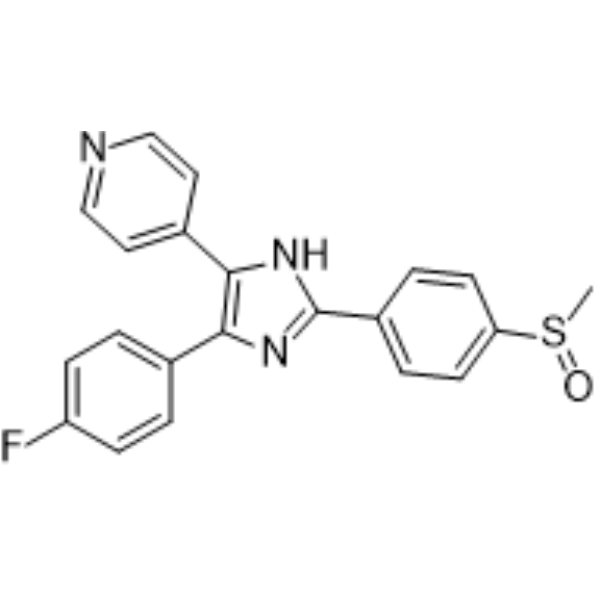
HY-10256
Adezmapimodp38 MAPK Inhibitor -
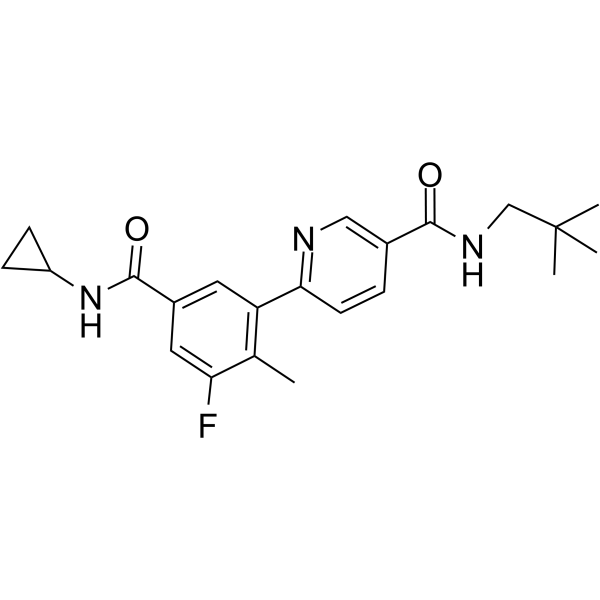
HY-10402
Losmapimodp38α/β MAPK Inhibitor -
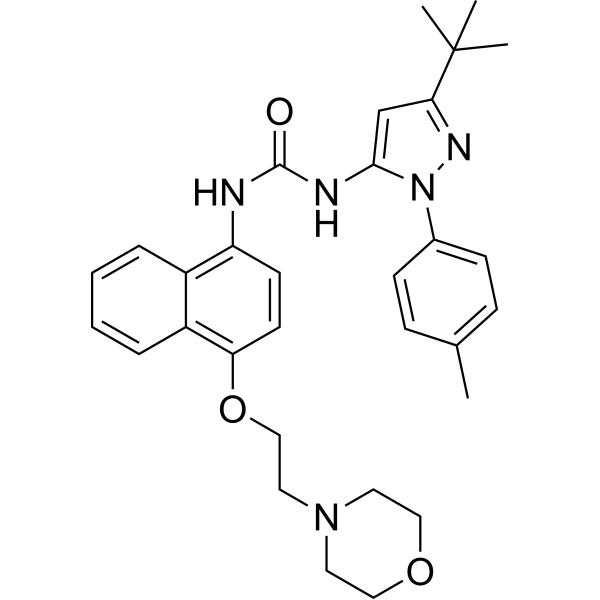
HY-10320
Doramapimodp38 MAPK Inhibitor -
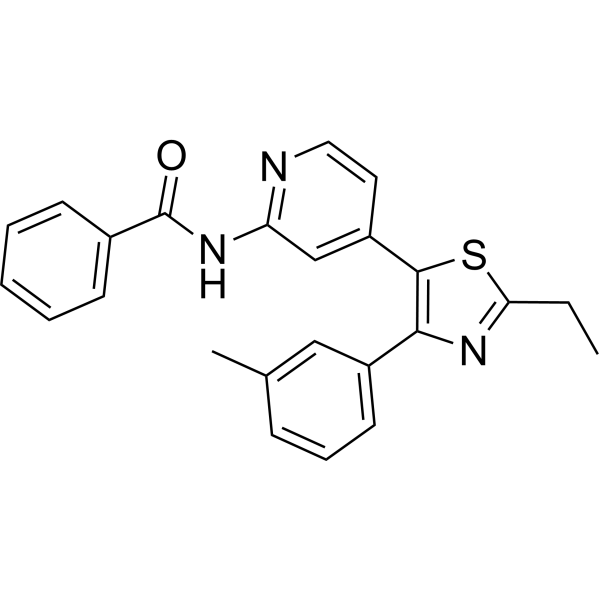
HY-10456
TAK-715p38 MAPK Inhibitor -
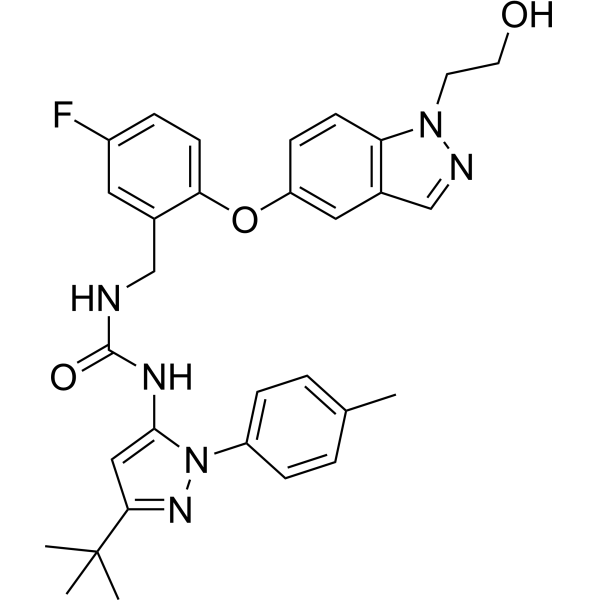
HY-16782
PexmetinibTie-2/p38 MAPK Inhibitor -
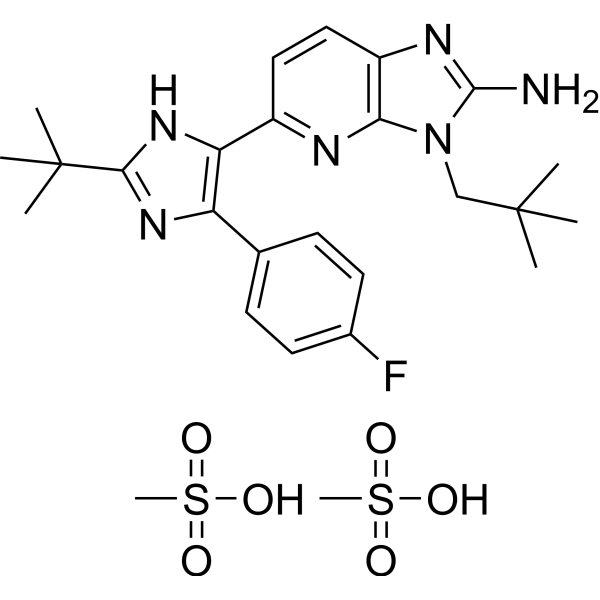
HY-13241
Ralimetinib dimesylateApoptosis Inducer -
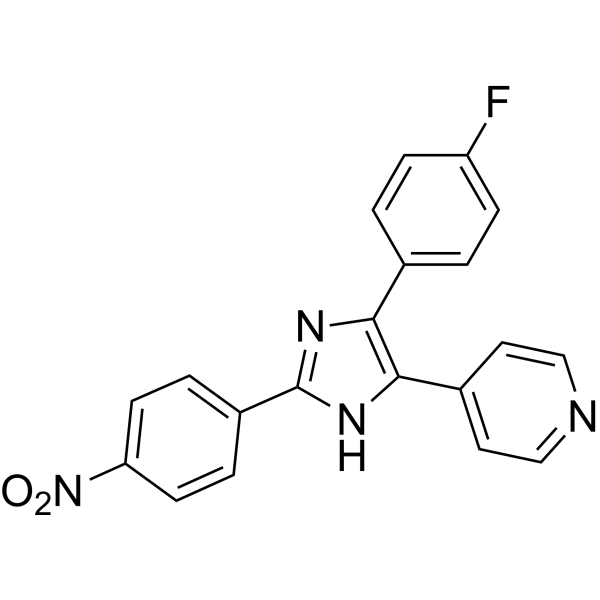
HY-10578
PD 169316p38 MAP Kinase Inhibitor -
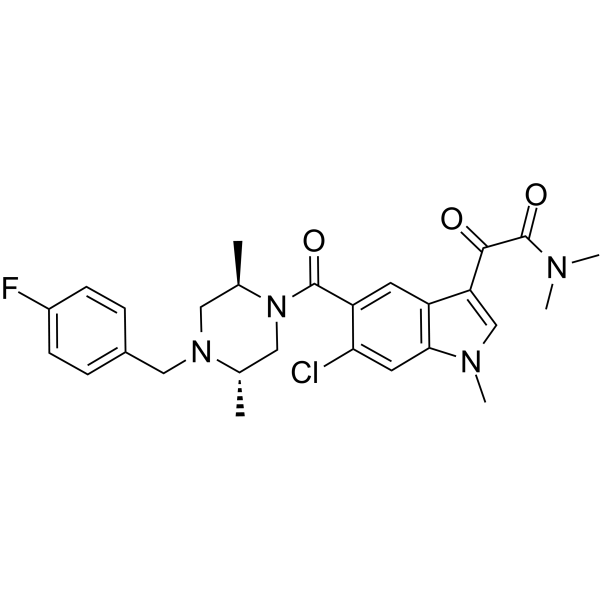
HY-10406
Talmapimodp38α MAPK Inhibitor -
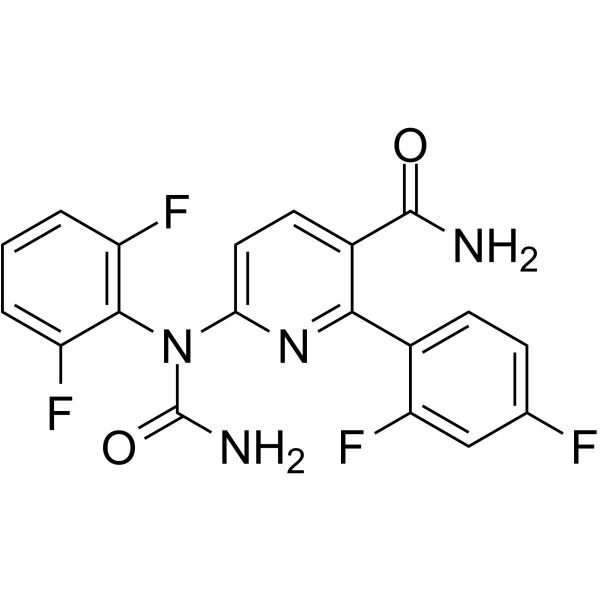
HY-10401
VX-702p38α MAPK Inhibitor -
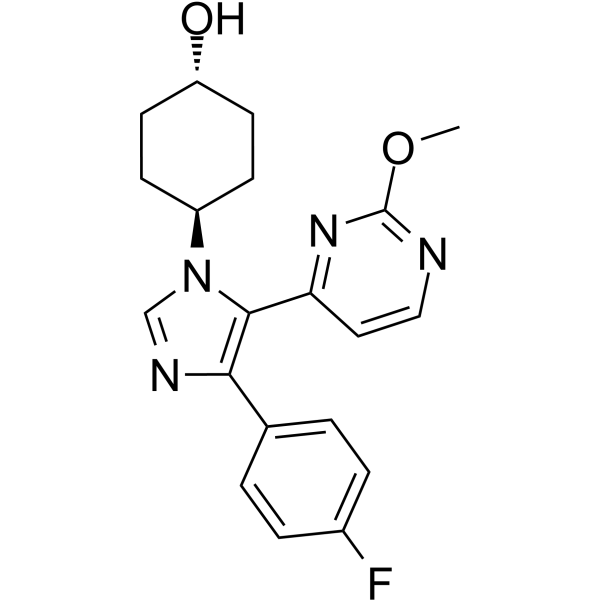
HY-11068
SB 239063p38 MAPK Inhibitor -
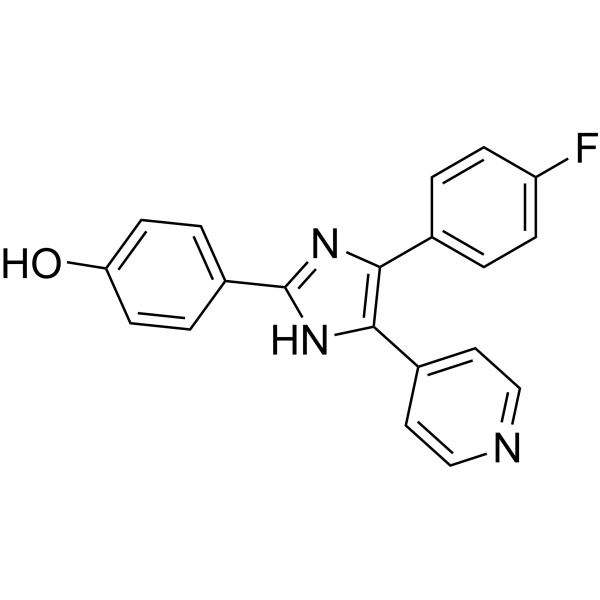
HY-10295
SB 202190p38 MAPK Inhibitor -
HY-10403
PH-797804p38α/β Inhibitor
Publications Citing Use of MedChemExpress (MCE) Neflamapimod
More- Nat Nanotechnol. 2021 Jul;16(7):830-839. [Abstract]
- Nat Commun. 2026 Feb 12;17(1):1214. [Abstract]
- Sci Transl Med. 2018 Jul 18;10(450):eaaq1093. [Abstract]
- Biochem Pharmacol. 2023 Aug:214:115683. [Abstract]
- Colloids Surf B Biointerfaces. 2026 May 19:266:115827. [Abstract]
- bioRxiv. 2023 Jun 25.
- bioRxiv. 2023 Jan 17.
- Research Square Preprint. 2022 May.
- Research Square Preprint. 2022 May.
- Research Square Preprint. 2021 Dec.
- bioRxiv. 2020 Apr.
 Customer Validation & Images

-
Cell Proliferation/Viability Assay
-
Cell Proliferation/Viability Assay
-
ELISA

-
WB

-
IF


Biological Activity
Description
IC50 & Target
[5]|
p38α 10 nM (IC50) |
p38β 220 nM (IC50) |
Cellular Effect
|
Cell Line

|
Type | Value | Description | References |
|---|---|---|---|---|
| THP-1 | IC50 |
0.039 μM
Compound: VX-745
|
Inhibition of LPS-induced TNFalpha production in human THP1 cells
Inhibition of LPS-induced TNFalpha production in human THP1 cells
|
[PMID: 18325768] |
| THP-1 | IC50 |
150 nM
Compound: 3
|
Inhibition of LPS-induced p38-related Tumor necrosis factor alpha release by THP-1 cells
Inhibition of LPS-induced p38-related Tumor necrosis factor alpha release by THP-1 cells
|
[PMID: 12540232] |
| THP-1 | IC50 |
56 nM
Compound: VX-745
|
Inhibition of LPS-stimulated TNFalpha production in THP1 cells
Inhibition of LPS-stimulated TNFalpha production in THP1 cells
|
[PMID: 16750367] |
In Vitro
Neflamapimod (VX-745) exhibits PBMC IL-1β and TNFα IC50 values of 45 and 51 nM, respectively. Neflamapimod is also effective in whole blood, blocking IL-1β and TNFα release with IC50 values of 150 and 180 nM, respectively[1].
Neflamapimod shows a promising selectivity profile, with 20-fold selectivity for p38α over p38β (Ki=220 nM)[1].
Neflamapimod (VX-745) solutions in DMSO/DMEM inhibits the IL-6 production with IC50 of 15±9 nM[2].
Neflamapimod (VX-745; 5.0 nM) displays potent activity and 1000-fold selectivity over closely related kinases, including ERK1, JNK1-3 and MK2. Neflamapimod (10 nM-50 μM) increasingly inhibits the anisomycin-induced activity of p38α[3].
Neflamapimod (VX-745; 0.06 μM-20 μM) inhibits IL-6 and VEGF secretion in BMSCs. Neflamapimod can inhibit cytokine (TNF-α, IL-6, VEGF)-induced paracrine MM cell growth, survival, and drug resistance in the BM microenvironment. Neflamapimod induces modest growth inhibition of MM.1S, RPMI8226, and U266 cell lines in a dose-dependent fashion, with inhibitory concentration of 50% (IC50) of 10 μM[4].
MedChemExpress (MCE) has not independently confirmed the accuracy of these methods. They are for reference only. Further protocols information, click here.
In Vivo
MedChemExpress (MCE) has not independently confirmed the accuracy of these methods. They are for reference only.
Clinical Trial
| NCT Number | Sponsor | Condition | Start Date |
Phase
|
|---|---|---|---|---|
| NCT01329991 | Plexxikon| | 2011-05 | PHASE1 |


Chemical Information
-
CAS No. 209410-46-8
-
Appearance Solid
-
Molecular Weight 436.26
-
Formula C19H9Cl2F2N3OS
-
Color Light yellow to yellow
-
SMILES
O=C1N=CN(C(C=C2)=C1C3=C(Cl)C=CC=C3Cl)N=C2SC4=CC=C(F)C=C4F
-
Synonyms
VX-745
-
Shipping
Room temperature in continental US; may vary elsewhere.
-
Storage
Powder -20°C 3 years 4°C 2 years In solvent -80°C 6 months -20°C 1 month


Publications (11)
-
Journal Impact Factor
-
Most Recent
-
Nat Nanotechnol
Therapeutically reprogrammed nutrient signalling enhances nanoparticulate albumin bound drug uptake and efficacy in KRAS-mutant cancer. [Abstract]2021 Jul;16(7):830-839. PMID: 33958764 -
Nat Commun
Human iPSC-based Modeling of Pulmonary Fibrosis Reveals p300/CBP Inhibition Suppresses Alveolar Transitional Cell State. [Abstract]2026 Feb 12;17(1):1214. PMID: 41680175 -
Sci Transl Med
PP2A inhibition is a druggable MEK inhibitor resistance mechanism in KRAS-mutant lung cancer cells. [Abstract]2018 Jul 18;10(450):eaaq1093. PMID: 30021885 -
Biochem Pharmacol
Neflamapimod inhibits endothelial cell activation, adhesion molecule expression, leukocyte attachment and vascular inflammation by inhibiting p38 MAPKα and NF-κB signaling. [Abstract]2023 Aug:214:115683. PMID: 37429422
Neflamapimod purchased from MedChemExpress. Usage Cited in: Biochem Pharmacol. 2023 Aug:214:115683. [Abstract]
Neflamapimod (Nefla, 10-100 nM; 16 h) inhibited LPS-stimulated induction of ICAM-1 on MECs. Mean ELISA data showing induction of ICAM-1 by LPS (10 µg) and suppression of ICAM-1 expression by 10 and 100 nM Neflamapimod.
Neflamapimod purchased from MedChemExpress. Usage Cited in: Biochem Pharmacol. 2023 Aug:214:115683. [Abstract]
Neflamapimod (Nefla, 10-100 nM; 16 h) inhibited LPS-stimulated induction of ICAM-1 on MECs. Representative Western blot images showing ICAM-1 induction by LPS and inhibition of ICAM-1 expression by 1, 10 and 100 nM Neflamapimod treatment in MECs.
Neflamapimod purchased from MedChemExpress. Usage Cited in: Biochem Pharmacol. 2023 Aug:214:115683. [Abstract]
Neflamapimod (Nefla, 2.5-10 mg/kg; p.o.; twice daily for two days) treatment reduced LPS-mediated ICAM-1 induction in rat aortas in vivo.

Neflamapimod purchased from MedChemExpress. Usage Cited in: Biochem Pharmacol. 2023 Aug:214:115683. [Abstract]
Neflamapimod (Nefla, 2.5-10 mg/kg; p.o.; twice daily for two days) treatment reduced LPS-mediated VCAM-1 induction in rat aortas in vivo.
-
Colloids Surf B Biointerfaces
Nanotechnology-based encapsulation of neflamapimod: A new therapeutic strategy for lewy body dementia. [Abstract]2026 May 19:266:115827. PMID: 42160963
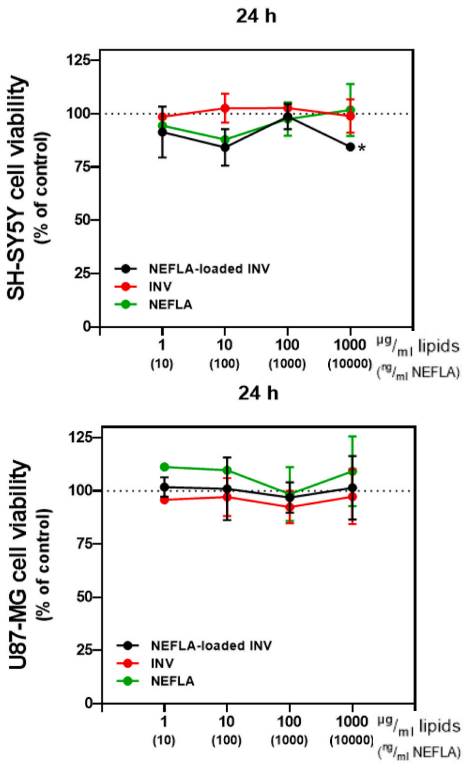
Neflamapimod purchased from MedChemExpress. Usage Cited in: Colloids Surf B Biointerfaces. 2026 May 19:266:115827. [Abstract]
Cell viability of SH-SY5Y and U87-MG treated cells. Cells were exposed to INV-NEFLA (black), unloaded INV (red), or Neflamapimod (NEFLA) alone (green) at concentrations ranging from 1 to 1000 μg/ml lipids, and cell viability was assessed at 24 h using XTT assay.
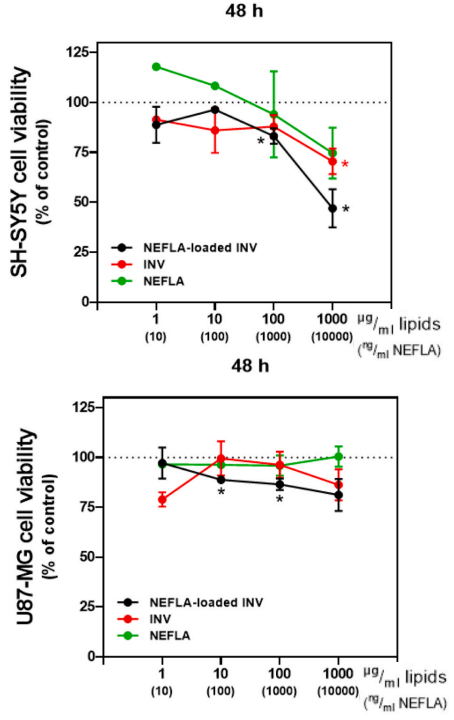
Neflamapimod purchased from MedChemExpress. Usage Cited in: Colloids Surf B Biointerfaces. 2026 May 19:266:115827. [Abstract]
Cell viability of SH-SY5Y and U87-MG treated cells. Cells were exposed to INV-NEFLA (black), unloaded INV (red), or Neflamapimod (NEFLA) alone (green) at concentrations ranging from 1 to 1000 μg/ml lipids, and cell viability was assessed at 48 h using XTT assay.
-
-
-
-
-
-


Solvent & Solubility
In Vitro:
DMSO : 12.5 mg/mL (28.65 mM; Need ultrasonic; Hygroscopic DMSO has a significant impact on the solubility of product, please use newly opened DMSO)
Please refer to the solubility information to select the appropriate solvent. Once prepared, please aliquot and store the solution to prevent product inactivation from repeated freeze-thaw cycles.
Storage method and period of stock solution: -80°C, 6 months; -20°C, 1 month. When stored at -80°C, please use it within 6 months. When stored at -20°C, please use it within 1 month.
Please refer to the solubility information to select the appropriate solvent. Once prepared, please aliquot and store the solution to prevent product inactivation from repeated freeze-thaw cycles.
Storage method and period of stock solution: -80°C, 6 months; -20°C, 1 month. When stored at -80°C, please use it within 6 months. When stored at -20°C, please use it within 1 month.
Concentration (start) × Volume (start) = Concentration (final) × Volume (final)
In Vivo:
For the following dissolution methods, please prepare the working solution directly:
It is recommended to prepare fresh solutions and use them promptly within a short period of time.
The percentages shown for the solvents indicate their volumetric ratio in the final prepared solution. If precipitation or phase separation occurs during preparation, heat and/or sonication can be used to aid dissolution.
Add each solvent one by one: 50% PEG300 50% Saline
Solubility: 5 mg/mL (11.46 mM); Suspended solution; Need ultrasonic

Protocols
-
Cell Cytotoxicity Assay
Cytotoxicity assays are usually based on the assessment of cell membrane damage, which can also be indirectly detected by measuring cell viability. Detection methods include MTT assay, CKK-8 assay, LDH assay and ATP assay, etc.
-
Cotton Pellet Granuloma
Cotton pellet granuloma is a classical in vivo chronic inflammation model used to evaluate the anti-inflammatory potential of test substances by measuring their ability to inhibit granuloma tissue formation around an implanted foreign body (cotton pellet) in rodents. The method is based on the biological response to a sterile implanted material, which induces proliferative phase inflammation characterized by fibroblast proliferation and collagen-rich granuloma formation, and the final readout reflects the extent of chronic inflammatory tissue growth surrounding the pellet. In multiple preclinical pharmacological evaluations, inhibition of cotton pellet-induced granuloma formation has been used as an indicator of anti-inflammatory activity in both synthetic and natural product screening contexts.
-
Carrageenan-Induced Paw Edema
Carrageenan-induced paw edema is an acute inflammation model in which intraplantar injection of carrageenan induces localized inflammatory swelling characterized by vascular permeability, leukocyte infiltration, and production of inflammatory mediators such as prostaglandins and cytokines, making it widely used to evaluate anti-inflammatory agents in vivo. The resulting paw volume or thickness increase is quantified over time as a direct readout of inflammatory intensity and drug efficacy, typically reflecting cyclooxygenase-mediated prostaglandin-driven edema formation and immune cell recruitment in peripheral tissue[20].
-
Research Protocol for Inflammation-related Diseases
The NLRP3 inflammasome is a cytosolic innate immune signaling platform that integrates priming signals and danger-signal activation to promote caspase-1 activation, maturation of IL-1β and IL-18, and gasdermin D-mediated pyroptotic cell death. The core experimental logic is to determine whether inflammatory disease phenotypes are driven by increased NLRP3 expression, ASC-containing inflammasome assembly, caspase-1 cleavage, GSDMD cleavage, and extracellular release of IL-1β/IL-18 rather than by nonspecific cell injury alone. The pathway is strongly linked to inflammation-related disease phenotypes because monosodium urate crystals activate NALP3/NLRP3 inflammasome signaling in gout-like crystal inflammation, cholesterol crystals activate NLRP3 inflammasomes in atherogenesis models, and DSS-induced intestinal inflammation has been reported to involve NLRP3 inflammasome activity. However, experimental colitis studies also show context-dependent protective effects of NLRP3 inflammasome co


Purity & Documentation
-
Data Sheet (285 KB)
-
SDS (393 KB)
- English - EN (393 KB)
- Français - FR (393 KB)
- Deutsch - DE (393 KB)
- Norwegian - NO (393 KB)
- Español - ES (393 KB)
- Swedish - SV (393 KB)
- Italian - IT (393 KB)
- Korean - KR (393 KB)
- Portuguese - PT (393 KB)
-
Handling Instructions (2659 KB)
References
[1]. Duffy JP, et al. The Discovery of VX-745: A Novel and Selective p38α Kinase Inhibitor. ACS Med Chem Lett. 2011 Jul 28;2(10):758-63. [Content Brief]
[2]. Cicenas J, et al. JNK, p38, ERK, and SGK1 Inhibitors in Cancer. Cancers (Basel). 2017 Dec 21;10(1). [Content Brief]
[3]. Pradal J, et al. Intra-articular bioactivity of a p38 MAPK inhibitor and development of an extended-release system. Eur J Pharm Biopharm. 2015 Jun;93:110-7. [Content Brief]
[4]. Alam JJ. Selective Brain-Targeted Antagonism of p38 MAPKα Reduces Hippocampal IL-1β Levels and Improves Morris Water Maze Performance in Aged Rats. J Alzheimers Dis. 2015;48(1):219-27. [Content Brief]
[5]. Bagley MC, et al. Rapid synthesis of VX-745: p38 MAP kinase inhibition in Werner syndrome cells. Bioorg Med Chem Lett. 2007 Sep 15;17(18):5107-10. Epub 2007 Jul 13. [Content Brief]
[6]. Hideshima T, et al. Targeting p38 MAPK inhibits multiple myeloma cell growth in the bone marrow milieu. Blood, 2003, 101(2), 703-705. [Content Brief]


Complete Stock Solution Preparation Table
Please refer to the solubility information to select the appropriate solvent. Once prepared, please aliquot and store the solution to prevent product inactivation from repeated freeze-thaw cycles.
Storage method and period of stock solution: -80°C, 6 months; -20°C, 1 month. When stored at -80°C, please use it within 6 months. When stored at -20°C, please use it within 1 month.
| Optional Solvent | Concentration Solvent Mass | 1 mg | 5 mg | 10 mg | 25 mg |
|---|---|---|---|---|---|
| DMSO | 1 mM | 2.2922 mL | 11.4611 mL | 22.9221 mL | 57.3053 mL |
| 5 mM | 0.4584 mL | 2.2922 mL | 4.5844 mL | 11.4611 mL | |
| 10 mM | 0.2292 mL | 1.1461 mL | 2.2922 mL | 5.7305 mL | |
| 15 mM | 0.1528 mL | 0.7641 mL | 1.5281 mL | 3.8204 mL | |
| 20 mM | 0.1146 mL | 0.5731 mL | 1.1461 mL | 2.8653 mL | |
| 25 mM | 0.0917 mL | 0.4584 mL | 0.9169 mL | 2.2922 mL |


Neflamapimod Related Classifications
HY-10328 Related Classifications
 Powered by Bioz