



WAY-204688

Based on 1 Customer Validation
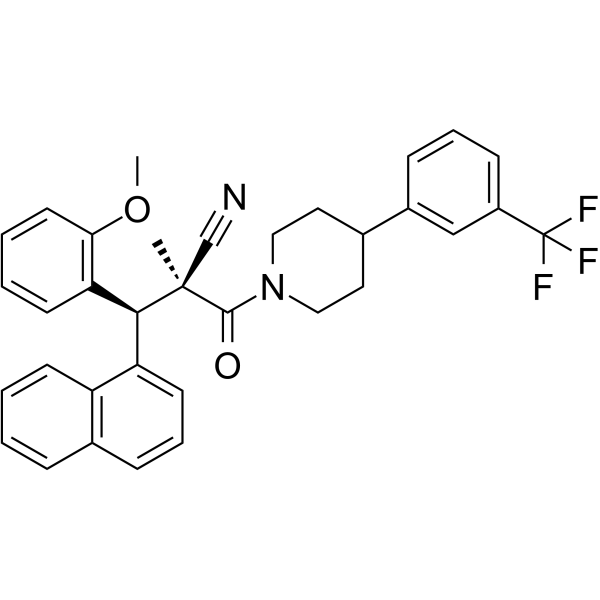
WAY-204688 is an estrogen receptor (ER-α) selective, orally active inhibitor of NF-κB transcriptional activity with an IC50 of 122 ± 30 nM for NF-κB-luciferase (NF-κB-luc) in HAECT-1 cells.
For research use only. We do not sell to patients.
- Purity : 98.74%
- CAS No.: 796854-35-8
- Formula: C34H31F3N2O2
- Molecular Weight:556.62
-
Storage:Powder -20°C, 3 years , 4°C, 2 years ; In solvent -80°C, 6 months , -20°C, 1 month

To place orders, for customer services and technical support, please contact: MedChemExpress USA
Tel: 609-228-6898 E-mail: [email protected] [email protected]


-
 Biological Activity
-
Chemical Information
-
Solvent & Solubility
- Protocols
- Purity & Documentation
- References
-
 Help & FAQs


-
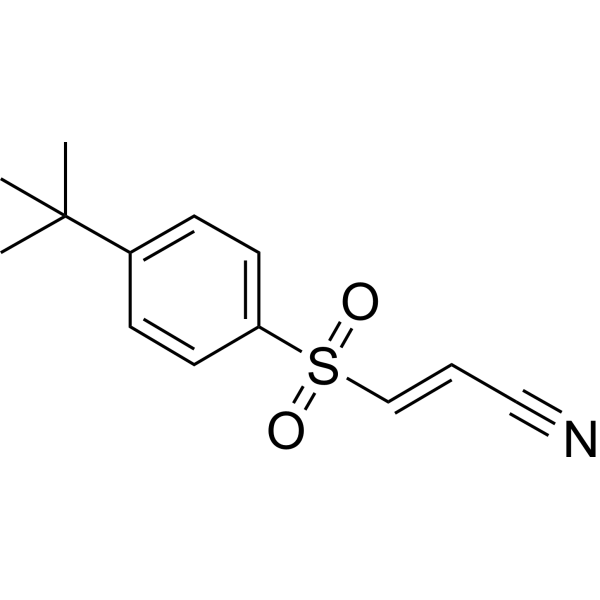
HY-10257
BAY 11-7085NF-κB Activation Inhibitor -
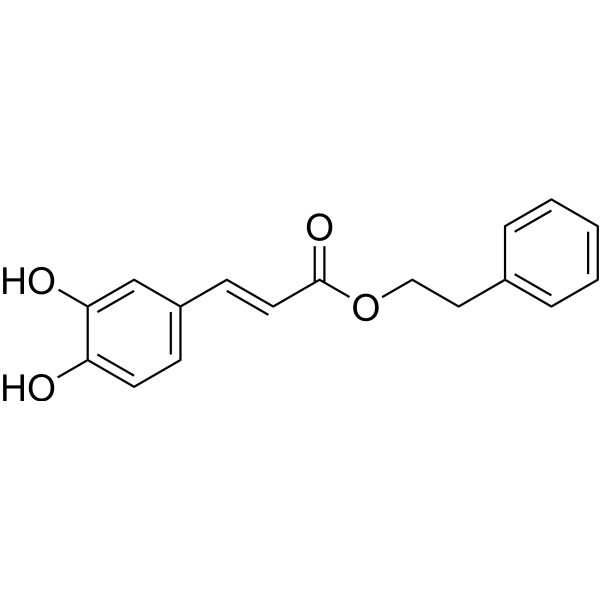
HY-N0274
Caffeic acid phenethyl esterApoptosis Inducer -
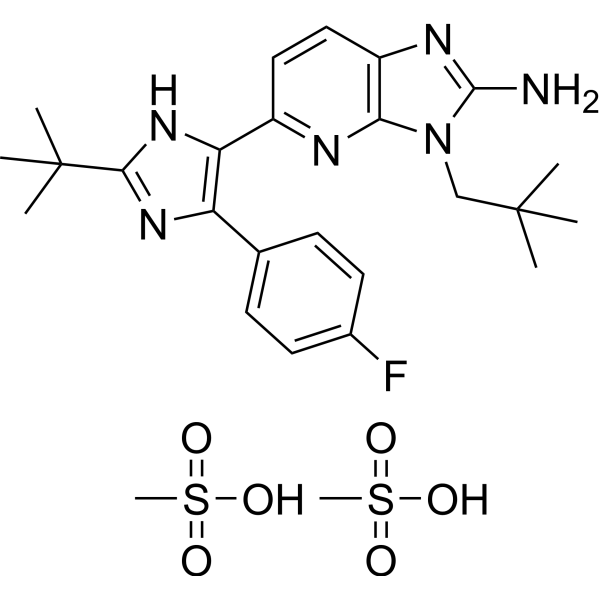
HY-13241
Ralimetinib dimesylateApoptosis Inducer -
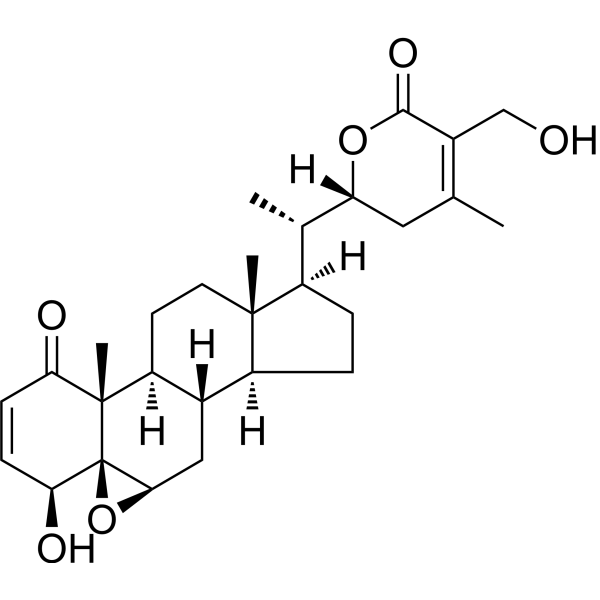
HY-N2065
Withaferin ANF-κB Inhibitor -
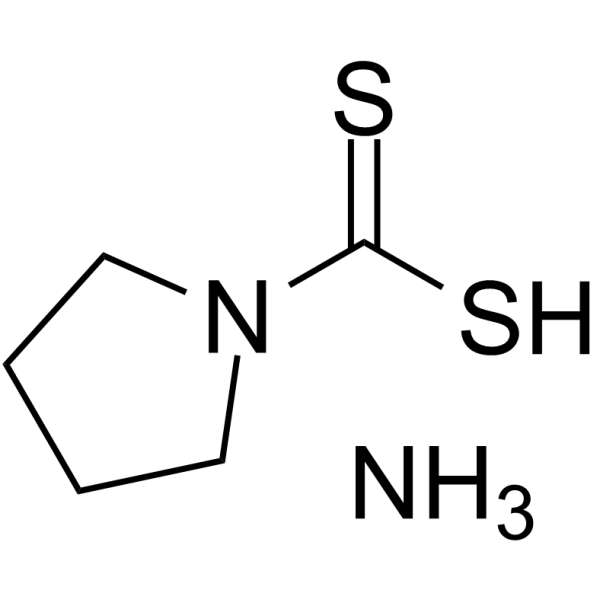
HY-18738
Pyrrolidinedithiocarbamate ammoniumSelective NF-κB Inhibitor -
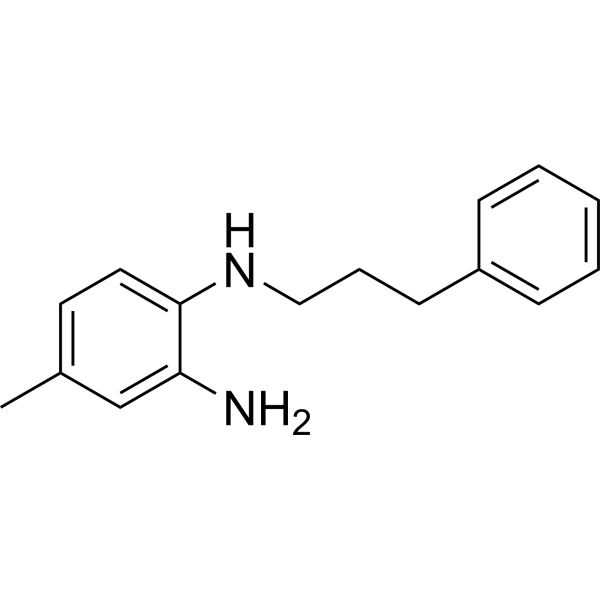
HY-13982
JSH-23NF-κB Inhibitor -
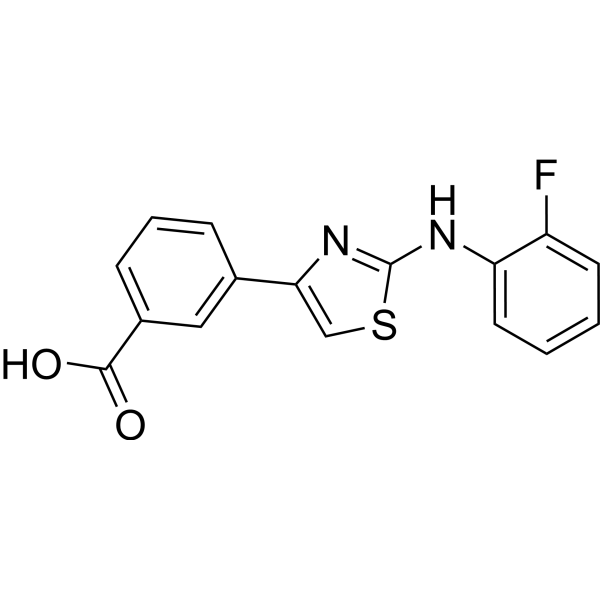
HY-134476
NF-κΒ activator 1NF-κB Activator -

HY-P0151
SN50NF-κB Translocation Inhibitor -

HY-N0274R
Caffeic acid phenethyl ester (Standard)Apoptosis Inducer -
HY-N0191
AndrographolideNF-κB Inhibitor -
HY-17630
Edasalonexent -

HY-N2065R
Withaferin A (Standard)NF-κB Inhibitor


Biological Activity
Description
IC50 & Target
[1]|
NF-κB-luc 122 nM (IC50, in HAECT-1 cell) |
NF-κB |
In Vitro
WAY-204688 is ER-dependenrt (activity seen only when hER is coexpressed with NF-κB-luciferase in human aortic endothelial cell lines (HAECT-1) cells). The interaction of WAY-204688 with ERα and ERβ is examined in vitro. WAY-204688 displaces [3H]E2 from the ERα ligand binding domain protein (LBD) with IC50=2.43 μM and from the ERβ ligand binding domain protein (LBD) with IC50=1.5 μM[1].
MedChemExpress (MCE) has not independently confirmed the accuracy of these methods. They are for reference only. Further protocols information, click here.
In Vivo
MedChemExpress (MCE) has not independently confirmed the accuracy of these methods. They are for reference only.


Chemical Information
-
CAS No. 796854-35-8
-
Appearance Solid
-
Molecular Weight 556.62
-
Formula C34H31F3N2O2
-
Color White to off-white
-
SMILES
COC1=C([C@H](C2=CC=CC3=C2C=CC=C3)[C@@](C)(C#N)C(N4CCC(C5=CC(C(F)(F)F)=CC=C5)CC4)=O)C=CC=C1
-
Synonyms
SIM-688
-
Shipping
Room temperature in continental US; may vary elsewhere.
-
Storage
Powder -20°C 3 years 4°C 2 years In solvent -80°C 6 months -20°C 1 month


Solvent & Solubility
In Vitro:
DMSO : 100 mg/mL (179.66 mM; Need ultrasonic; Hygroscopic DMSO has a significant impact on the solubility of product, please use newly opened DMSO)
Please refer to the solubility information to select the appropriate solvent. Once prepared, please aliquot and store the solution to prevent product inactivation from repeated freeze-thaw cycles.
Storage method and period of stock solution: -80°C, 6 months; -20°C, 1 month. When stored at -80°C, please use it within 6 months. When stored at -20°C, please use it within 1 month.
Please refer to the solubility information to select the appropriate solvent. Once prepared, please aliquot and store the solution to prevent product inactivation from repeated freeze-thaw cycles.
Storage method and period of stock solution: -80°C, 6 months; -20°C, 1 month. When stored at -80°C, please use it within 6 months. When stored at -20°C, please use it within 1 month.
Concentration (start) × Volume (start) = Concentration (final) × Volume (final)
In Vivo:
Select the appropriate dissolution method based on your experimental animal and administration route.
- For the following dissolution methods, please ensure to first prepare a clear stock solution using an In Vitro approach and then sequentially add co-solvents:
- To ensure reliable experimental results, the clarified stock solution can be appropriately stored based on storage conditions. As for the working solution for In Vivo experiments, it is recommended to prepare freshly and use it on the same day.
- The percentages shown for the solvents indicate their volumetric ratio in the final prepared solution. If precipitation or phase separation occurs during preparation, heat and/or sonication can be used to aid dissolution.
In Vivo Dissolution Calculator
Please enter the basic information of animal experiments:
-
-
-
-
Recommended: Prepare an additional quantity of animals to account for potential losses during experiments.
Please enter your animal formula composition:
-
%DMSO +
Recommended: Keep the proportion of DMSO in working solution below 2% if your animal is weak.
-
%+
-
+%Tween-80 + +
-
%Saline +
The co-solvents required include: DMSO, . All of co-solvents are available by MedChemExpress (MCE). , Tween 80. All of co-solvents are available by MedChemExpress (MCE).
Working solution concentration: 0.22 mg/mL
Method for preparing stock solution: mg drug dissolved in μL DMSO. Stock solution concentration: mg/mL.
1. Take μL DMSO stock solution;
2. Add μL .
μL , mix evenly;
3. Then add μL Tween 80, mix evenly;
4. Then add μL
Please ensure that the stock solution in the first step is dissolved to a clear state, and add co-solvents in sequence. You can use ultrasonic heating (ultrasonic cleaner, recommended frequency 20-40 kHz), vortexing, etc. to assist dissolution.

Protocols
-
Dual Luciferin reporter gene assay
Luciferin reporter gene assay is a reporting system to detect the activity of Firefly Luciferase using luciferin as a substrate, which is often used in the research of miRNA target gene verification and promoter transcriptive activity regulation. Dual luciferase usually refers to Firefly luciferase and Renilla luciferase.
-
Cell Cytotoxicity Assay
Cytotoxicity assays are usually based on the assessment of cell membrane damage, which can also be indirectly detected by measuring cell viability. Detection methods include MTT assay, CKK-8 assay, LDH assay and ATP assay, etc.
-
Research Protocol for Endocrine Diseases
Endocrine diseases often arise from disrupted hormone production, hormone signaling, or target-tissue responsiveness; for diabetes-focused endocrine disease models, insulin signaling regulates glucose uptake, hepatic glucose output, lipid metabolism, and β-cell compensation. Type 2 diabetes develops through interacting defects in insulin resistance, β-cell dysfunction, adipose inflammation, hepatic glucose overproduction, altered incretin signaling, and ectopic lipid metabolism. A major unresolved question is whether endocrine dysfunction is driven primarily by target-tissue insulin resistance, intrinsic β-cell failure, immune/inflammatory stress, or combined multi-organ failure that differs by disease stage.
-
Research Protocol for Inflammation-related Diseases
The NLRP3 inflammasome is a cytosolic innate immune signaling platform that integrates priming signals and danger-signal activation to promote caspase-1 activation, maturation of IL-1β and IL-18, and gasdermin D-mediated pyroptotic cell death. The core experimental logic is to determine whether inflammatory disease phenotypes are driven by increased NLRP3 expression, ASC-containing inflammasome assembly, caspase-1 cleavage, GSDMD cleavage, and extracellular release of IL-1β/IL-18 rather than by nonspecific cell injury alone. The pathway is strongly linked to inflammation-related disease phenotypes because monosodium urate crystals activate NALP3/NLRP3 inflammasome signaling in gout-like crystal inflammation, cholesterol crystals activate NLRP3 inflammasomes in atherogenesis models, and DSS-induced intestinal inflammation has been reported to involve NLRP3 inflammasome activity. However, experimental colitis studies also show context-dependent protective effects of NLRP3 inflammasome co


Purity & Documentation
-
Data Sheet (276 KB)
-
SDS (252 KB)
- English - EN (252 KB)
- Français - FR (252 KB)
- Deutsch - DE (252 KB)
- Norwegian - NO (252 KB)
- Español - ES (252 KB)
- Swedish - SV (252 KB)
- Italian - IT (252 KB)
- Korean - KR (252 KB)
- Portuguese - PT (252 KB)
-
Handling Instructions (2659 KB)
References
[1]. Caggiano TJ, et al. Estrogen receptor dependent inhibitors of NF-kappaB transcriptional activation-1 synthesis and biological evaluation of substituted 2-cyanopropanoic acid derivatives: pathway selective inhibitors of NF-kappaB, a potential treatment for rheumatoid arthritis. J Med Chem. 2007 Nov 1;50(22):5245-8. [Content Brief]


Complete Stock Solution Preparation Table
Please refer to the solubility information to select the appropriate solvent. Once prepared, please aliquot and store the solution to prevent product inactivation from repeated freeze-thaw cycles.
Storage method and period of stock solution: -80°C, 6 months; -20°C, 1 month. When stored at -80°C, please use it within 6 months. When stored at -20°C, please use it within 1 month.
| Optional Solvent | Concentration Solvent Mass | 1 mg | 5 mg | 10 mg | 25 mg |
|---|---|---|---|---|---|
| DMSO | 1 mM | 1.7966 mL | 8.9828 mL | 17.9656 mL | 44.9139 mL |
| 5 mM | 0.3593 mL | 1.7966 mL | 3.5931 mL | 8.9828 mL | |
| 10 mM | 0.1797 mL | 0.8983 mL | 1.7966 mL | 4.4914 mL | |
| 15 mM | 0.1198 mL | 0.5989 mL | 1.1977 mL | 2.9943 mL | |
| 20 mM | 0.0898 mL | 0.4491 mL | 0.8983 mL | 2.2457 mL | |
| 25 mM | 0.0719 mL | 0.3593 mL | 0.7186 mL | 1.7966 mL | |
| 30 mM | 0.0599 mL | 0.2994 mL | 0.5989 mL | 1.4971 mL | |
| 40 mM | 0.0449 mL | 0.2246 mL | 0.4491 mL | 1.1228 mL | |
| 50 mM | 0.0359 mL | 0.1797 mL | 0.3593 mL | 0.8983 mL | |
| 60 mM | 0.0299 mL | 0.1497 mL | 0.2994 mL | 0.7486 mL | |
| 80 mM | 0.0225 mL | 0.1123 mL | 0.2246 mL | 0.5614 mL | |
| 100 mM | 0.0180 mL | 0.0898 mL | 0.1797 mL | 0.4491 mL |


WAY-204688 Related Classifications
HY-19498 Related Classifications
 Powered by Bioz