



ABN401

Based on 1 Customer Validation
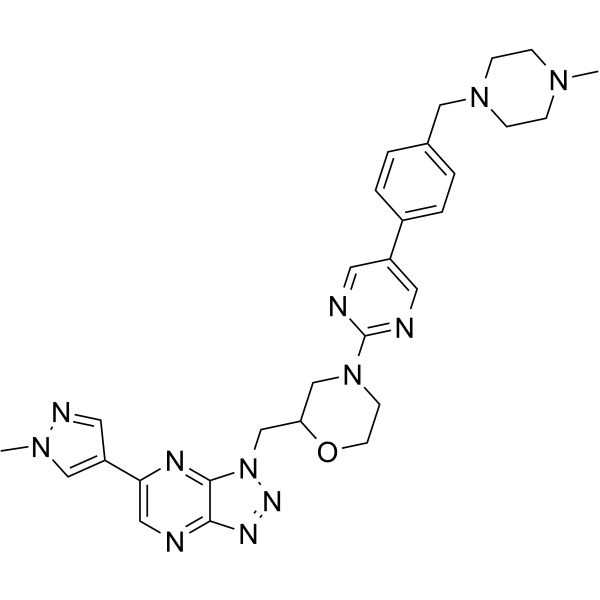
ABN401 is an orally active and selective ATP-competitive c-MET inhibitor with an IC50 of 10 nM. ABN401 is cytotoxic to MET-addicted cancer cells with the IC50 of 2-43 nM. ABN401 has bioavailability in rats and dogs of 42.1-56.2% and 27.4-37.7%, respectively. ABN401 has antitumor activity.
For research use only. We do not sell to patients.
- Purity : 98.82%
- CAS No.: 2242563-15-9
- Formula: C29H34N12O
- Molecular Weight:566.66
-
Storage:
4°C, sealed storage, away from moisture and light
* In solvent : -80°C, 6 months; -20°C, 1 month (sealed storage, away from moisture and light)

To place orders, for customer services and technical support, please contact: MedChemExpress USA
Tel: 609-228-6898 E-mail: [email protected] [email protected]


-
 Biological Activity
-
Chemical Information
-
Solvent & Solubility
- Protocols
- Purity & Documentation
- References
-
 Help & FAQs


-
HY-10421
Tyrosine kinase inhibitorTyrosine kinase inhibitor -
HY-137455
Terevalefimc-Met Receptor Activator -
HY-114363A
SRI 31215 TFAMatriptase/Hepsin/HGFA Inhibitor -
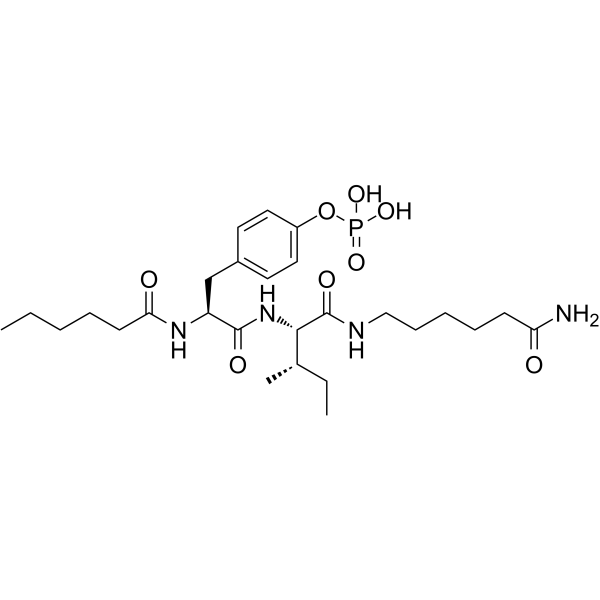
HY-132814
Fosgonimetonc-Met Agonist -
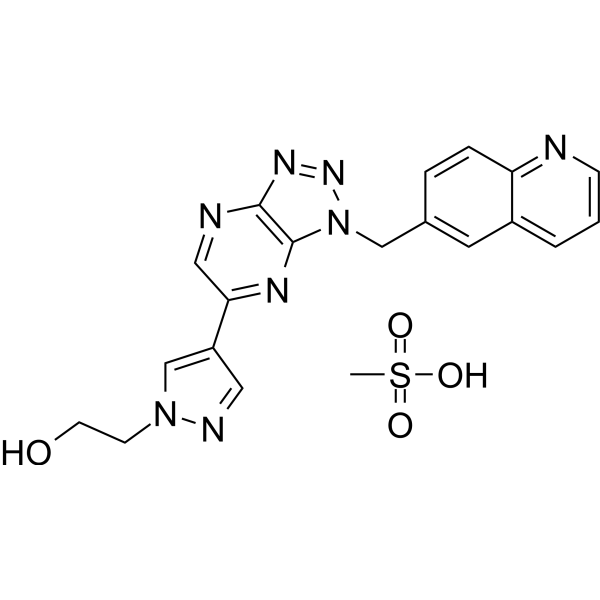
HY-12017A
PF-04217903 mesylatec-Met Kinase Inhibitor -
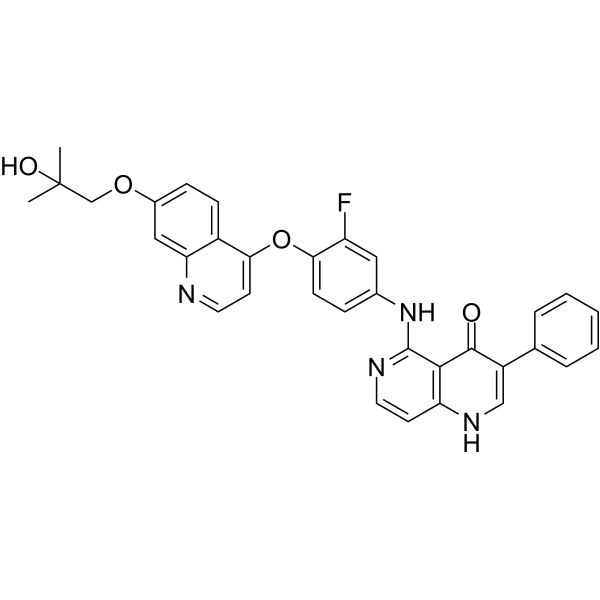
HY-131065
MET kinase-IN-2MET Kinase Inhibitor -
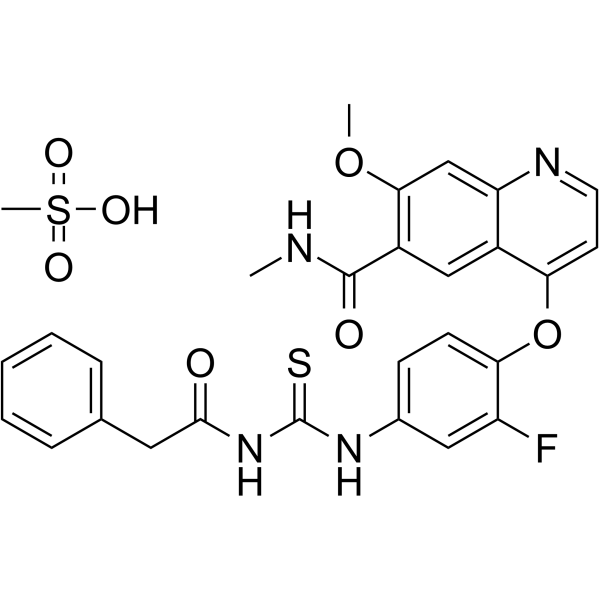
HY-12423A
Pamufetinib mesylateVEGFR/c-Met/HGFR Inhibitor -
HY-12019
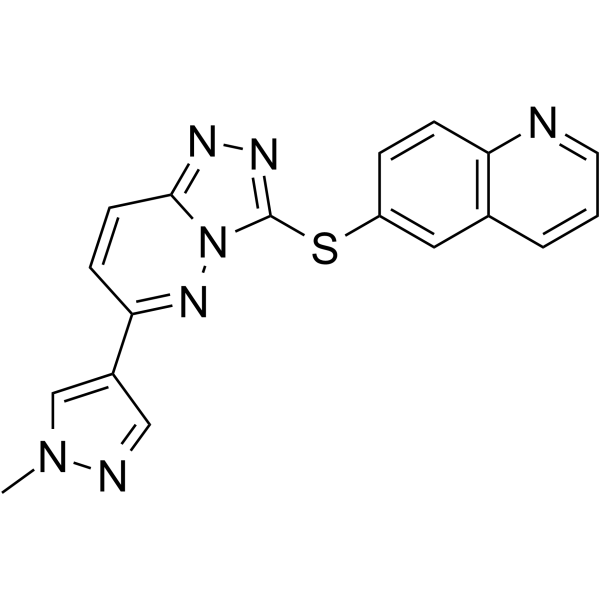
SGX-523MET Inhibitor -
HY-111050
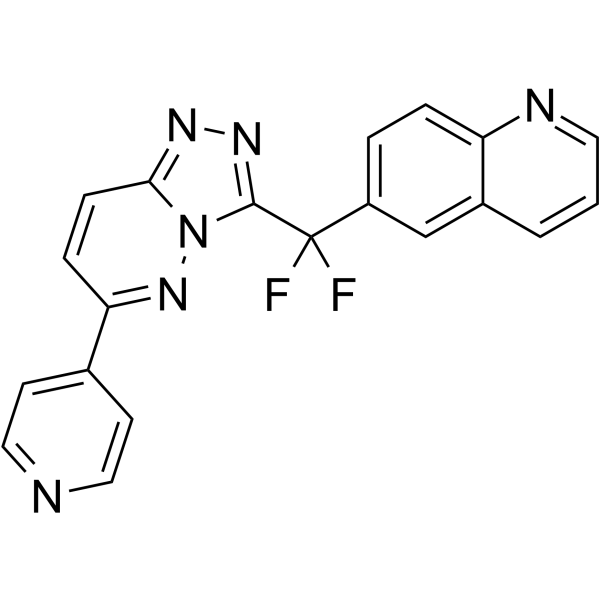
JNJ-38877618c-Met/HGFR Inhibitor -
HY-13299A
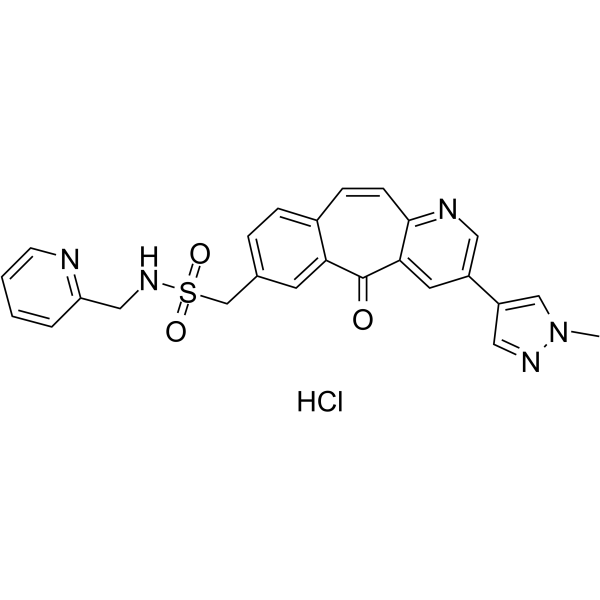
MK-8033 hydrochloridec-Met/Ron Inhibitor -
HY-148810
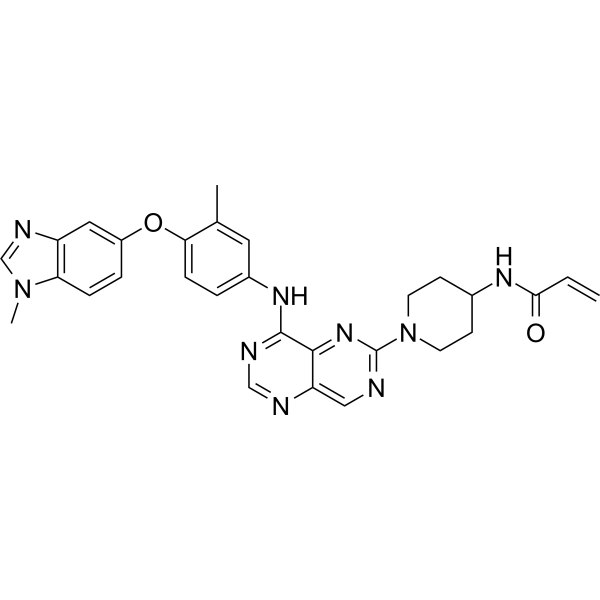
ZongertinibTyrosine Kinase Inhibitor. -

HY-18711
SCR-1481B1GSDMD Inhibitor


Biological Activity
Description
IC50 & Target
IC50: 10 nM (c-MET)[1]
Cellular Effect
|
Cell Line

|
Type | Value | Description | References |
|---|---|---|---|---|
| EBC-1 | IC50 |
2.22 nM
Compound: 73; ABN401
|
Antiproliferative activity against human EBC-1 cells assessed as inhibition of cell growth
Antiproliferative activity against human EBC-1 cells assessed as inhibition of cell growth
|
[PMID: 37262349] |
| Hs746T | IC50 |
2 nM
Compound: 73; ABN401
|
Antiproliferative activity against human Hs746T cells assessed as inhibition of cell growth
Antiproliferative activity against human Hs746T cells assessed as inhibition of cell growth
|
[PMID: 37262349] |
| MKN-45 | IC50 |
3.18 nM
Compound: 73; ABN401
|
Antiproliferative activity against human MKN-45 cells assessed as inhibition of cell growth
Antiproliferative activity against human MKN-45 cells assessed as inhibition of cell growth
|
[PMID: 37262349] |
| SNU-5 | IC50 |
4.34 nM
Compound: 73; ABN401
|
Antiproliferative activity against human SNU-5 cells assessed as inhibition of cell growth
Antiproliferative activity against human SNU-5 cells assessed as inhibition of cell growth
|
[PMID: 37262349] |
In Vitro
ABN401 (0.1-10 μM; 72 h) inhibits c-MET activation and downstream signaling pathway, and induces apoptosis signaling pathway activation in MET addicted cancer cells[1].
MedChemExpress (MCE) has not independently confirmed the accuracy of these methods. They are for reference only. Further protocols information, click here.
-
Cell Line:SNU5, SNU638, Hs746T, EBC-1 and H1993 cells
-
Concentration:0.1, 1 and 10 μM
-
Incubation Time:72 h
-
Result:Inhibited the phosphorylation levels of MET, AKT and ERK1/2.
Increased the levels of cleaved caspase-3 and cleaved PARP-1.
In Vivo
ABN401 (3-30 mg/kg; oral administration; once a day for 3 weeks) shows antitumor activity in a xenograft model derived from patients with non-small cell lung cancer in mice, and the combination with Erlotinib (HY-50896) has better effect[2].
MedChemExpress (MCE) has not independently confirmed the accuracy of these methods. They are for reference only.
-
Animal Model:SNU5, EBC-1 and SNU638 treated BALB/c-nude mice[1]
-
Dosage:3, 10 and 30 mg/kg
-
Administration:Oral administration (p.o.); Five consecutive days a week for three weeks
-
Result:Significantly inhibited tumor growth in a dose-dependent manner.
Significantly suppressed SNU-5 tumor growth with a TGI index of 24.47% and 89.49% at doses of 3 and 30 mg/kg, respectively.
Inhibited EBC-1 tumor growth with a TGI index of 51.26% and 77.85% at doses of 10 and 30 mg/kg, respectively.
Suppressed SNU638 tumor growth with a TGI index of 65.31% and 78.68% at doses of 10 and 30 mg/kg, respectively.
Clinical Trial
| NCT Number | Sponsor | Condition | Start Date |
Phase
|
|---|---|---|---|---|
| NCT01329991 | Plexxikon| | 2011-05 | PHASE1 |


Chemical Information
-
CAS No. 2242563-15-9
-
Appearance Solid
-
Molecular Weight 566.66
-
Formula C29H34N12O
-
Color Off-white to light yellow
-
SMILES
CN1N=CC(C2=CN=C3C(N(CC4CN(C5=NC=C(C6=CC=C(CN7CCN(C)CC7)C=C6)C=N5)CCO4)N=N3)=N2)=C1
-
Shipping
Room temperature in continental US; may vary elsewhere.
-
Storage
4°C, sealed storage, away from moisture and light
* In solvent : -80°C, 6 months; -20°C, 1 month (sealed storage, away from moisture and light)


Solvent & Solubility
In Vitro:
DMSO : 10 mg/mL (17.65 mM; ultrasonic and warming and heat to 60°C; Hygroscopic DMSO has a significant impact on the solubility of product, please use newly opened DMSO)
Please refer to the solubility information to select the appropriate solvent. Once prepared, please aliquot and store the solution to prevent product inactivation from repeated freeze-thaw cycles.
Storage method and period of stock solution: -80°C, 6 months; -20°C, 1 month (sealed storage, away from moisture and light). When stored at -80°C, please use it within 6 months. When stored at -20°C, please use it within 1 month.
Please refer to the solubility information to select the appropriate solvent. Once prepared, please aliquot and store the solution to prevent product inactivation from repeated freeze-thaw cycles.
Storage method and period of stock solution: -80°C, 6 months; -20°C, 1 month (sealed storage, away from moisture and light). When stored at -80°C, please use it within 6 months. When stored at -20°C, please use it within 1 month.
Concentration (start) × Volume (start) = Concentration (final) × Volume (final)
In Vivo:
Select the appropriate dissolution method based on your experimental animal and administration route.
- For the following dissolution methods, please ensure to first prepare a clear stock solution using an In Vitro approach and then sequentially add co-solvents:
- To ensure reliable experimental results, the clarified stock solution can be appropriately stored based on storage conditions. As for the working solution for In Vivo experiments, it is recommended to prepare freshly and use it on the same day.
- The percentages shown for the solvents indicate their volumetric ratio in the final prepared solution. If precipitation or phase separation occurs during preparation, heat and/or sonication can be used to aid dissolution.
Add each solvent one by one: 10% DMSO 40% PEG300 5% Tween-80 45% Saline
Solubility: ≥ 1 mg/mL (1.76 mM); Clear solution
This protocol yields a clear solution of ≥ 1 mg/mL (saturation unknown).
Taking 1 mL working solution as an example, add 100 μL DMSO stock solution (10.0 mg/mL) to 400 μL PEG300, and mix evenly; then add 50 μL Tween-80 and mix evenly; then add 450 μL Saline to adjust the volume to 1 mL.
Preparation of Saline: Dissolve 0.9 g sodium chloride in ddH₂O and dilute to 100 mL to obtain a clear Saline solution.
Add each solvent one by one: 10% DMSO 90% (20% SBE-β-CD in Saline)
Solubility: ≥ 1 mg/mL (1.76 mM); Clear solution
This protocol yields a clear solution of ≥ 1 mg/mL (saturation unknown).
Taking 1 mL working solution as an example, add 100 μL DMSO stock solution (10.0 mg/mL) to 900 μL 20% SBE-β-CD in Saline, and mix evenly.
Preparation of 20% SBE-β-CD in Saline (4°C, storage for one week): 2 g SBE-β-CD powder is dissolved in 10 mL Saline, completely dissolve until clear.
In Vivo Dissolution Calculator
Please enter the basic information of animal experiments:
-
-
-
-
Recommended: Prepare an additional quantity of animals to account for potential losses during experiments.
Please enter your animal formula composition:
-
%DMSO +
Recommended: Keep the proportion of DMSO in working solution below 2% if your animal is weak.
-
%+
-
+%Tween-80 + +
-
%Saline +
The co-solvents required include: DMSO, . All of co-solvents are available by MedChemExpress (MCE). , Tween 80. All of co-solvents are available by MedChemExpress (MCE).
Working solution concentration: 0.22 mg/mL
Method for preparing stock solution: mg drug dissolved in μL DMSO. Stock solution concentration: mg/mL. * In solvent : -80°C, 6 months; -20°C, 1 month (sealed storage, away from moisture and light)
1. Take μL DMSO stock solution;
2. Add μL .
μL , mix evenly;
3. Then add μL Tween 80, mix evenly;
4. Then add μL
Please ensure that the stock solution in the first step is dissolved to a clear state, and add co-solvents in sequence. You can use ultrasonic heating (ultrasonic cleaner, recommended frequency 20-40 kHz), vortexing, etc. to assist dissolution.

Protocols
-
Cell Cytotoxicity Assay
Cytotoxicity assays are usually based on the assessment of cell membrane damage, which can also be indirectly detected by measuring cell viability. Detection methods include MTT assay, CKK-8 assay, LDH assay and ATP assay, etc.
-
Protocol for Pharmacokinetic Study
Pharmacokinetic studies quantify how an organism handles a drug over time through absorption, distribution, metabolism, and excretion, and the core experimental readout is the concentration-time profile of parent drug and, when relevant, metabolites in biological matrices such as plasma, whole blood, urine, bile, or tissue. Pharmacokinetic analysis links dose, route, exposure, clearance, half-life, distribution, bioavailability, and systemic exposure to drug efficacy and toxicity hypotheses rather than measuring a signaling pathway directly. The literature links pharmacokinetics to drug-development phenotypes by showing that drug metabolism and pharmacokinetics influence compound progression, exposure-response interpretation, safety margins, dosing strategy, and failure risk during discovery and development. DMPK science contributes to compound optimization by integrating physicochemical properties, in vitro metabolism, transporter behavior, in vivo exposure, and pharmacodynamic contex
-
Subcutaneous Cell-Line-Derived Xenograft
Subcutaneous cell-line-derived xenograft (CDX) models are established by implanting cultured human cancer cell lines into immunodeficient mice, where the injected cells form localized tumors that can be monitored in vivo as a measure of tumorigenic potential, growth kinetics, and treatment response. These models are widely used in oncology research because they allow reproducible tumor formation and enable comparative assessment of tumor growth between different cell lines or genetic manipulations in a controlled in vivo microenvironment. Subcutaneous implantation of cancer cells in immunodeficient mice is a standard approach for evaluating tumor growth behavior and therapeutic response across multiple cancer types, including prostate, esophageal, pancreatic, and colon cancer models.
-
Cell Viability Determination by MTT Colorimetric Assay
The following protocol uses the MTT colorimetric assay as a classic literature-established method for assessing cell viability/metabolic activity in cultured mammalian cells. MTT[3-(4,5-dimethylthiazol-2-yl)-2,5-diphenyltetrazolium bromide] is reduced by metabolically active cells to a colored formazan product; the amount of formazan is quantified spectrophotometrically and provides an indirect measure of metabolically active viable cells. Importantly, MTT reduction reflects cellular oxidoreductase/metabolic activity rather than an absolute direct count of living cells, so changes in cellular metabolism can alter the signal independently of cell number.


Purity & Documentation
-
Data Sheet (275 KB)
-
SDS (252 KB)
- English - EN (252 KB)
- Français - FR (252 KB)
- Deutsch - DE (252 KB)
- Norwegian - NO (252 KB)
- Español - ES (252 KB)
- Swedish - SV (252 KB)
- Italian - IT (252 KB)
- Korean - KR (252 KB)
- Portuguese - PT (252 KB)
-
Handling Instructions (2659 KB)
References
[1]. Kim J, et al. Therapeutic Efficacy of ABN401, a Highly Potent and Selective MET Inhibitor, Based on Diagnostic Biomarker Test in MET-Addicted Cancer. Cancers (Basel). 2020;12(6):1575. Published 2020 Jun 15. [Content Brief]
[2]. Kim NA, et al. New Preclinical Development of a c-Met Inhibitor and Its Combined Anti-Tumor Effect in c-Met-Amplified NSCLC. Pharmaceutics. 2020 Feb 3;12(2):121. [Content Brief]


Complete Stock Solution Preparation Table
Please refer to the solubility information to select the appropriate solvent. Once prepared, please aliquot and store the solution to prevent product inactivation from repeated freeze-thaw cycles.
Storage method and period of stock solution: -80°C, 6 months; -20°C, 1 month (sealed storage, away from moisture and light). When stored at -80°C, please use it within 6 months. When stored at -20°C, please use it within 1 month.
| Optional Solvent | Concentration Solvent Mass | 1 mg | 5 mg | 10 mg | 25 mg |
|---|---|---|---|---|---|
| DMSO | 1 mM | 1.7647 mL | 8.8236 mL | 17.6473 mL | 44.1182 mL |
| 5 mM | 0.3529 mL | 1.7647 mL | 3.5295 mL | 8.8236 mL | |
| 10 mM | 0.1765 mL | 0.8824 mL | 1.7647 mL | 4.4118 mL | |
| 15 mM | 0.1176 mL | 0.5882 mL | 1.1765 mL | 2.9412 mL |


ABN401 Related Classifications
HY-147040 Related Classifications
 Powered by Bioz