



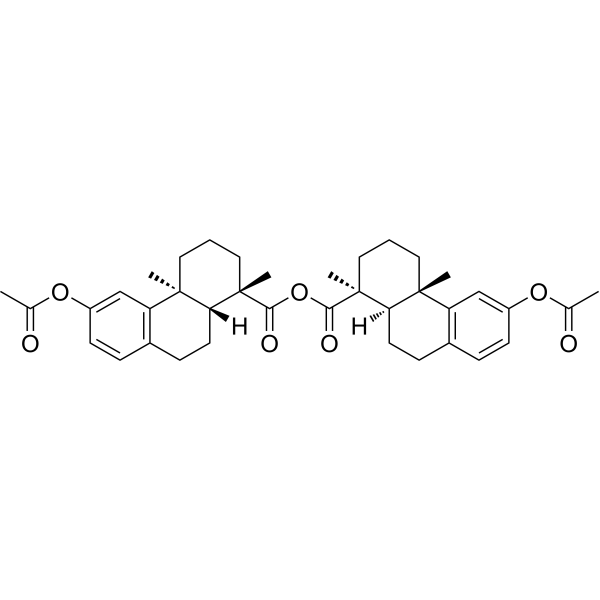
Acetyl podocarpic acid anhydride

Based on 1 Customer Validation
Acetyl podocarpic acid anhydride is a potent, semisynthetic liver X receptor(LXR) agonist derived from extracts of the mayapple. Acetyl podocarpic acid anhydride has the potential to be useful for the prevention and research of atherosclerosis, especially in the context of low HDL levels.
For research use only. We do not sell to patients.
- Purity : 99.0%
- CAS No.: 344327-48-6
- Formula: C38H46O7
- Molecular Weight:614.77
-
Storage:Powder -20°C, 3 years ; In solvent -80°C, 6 months , -20°C, 1 month

To place orders, for customer services and technical support, please contact: MedChemExpress USA
Tel: 609-228-6898 E-mail: [email protected] [email protected]


-
 Biological Activity
-
Chemical Information
-
Solvent & Solubility
- Protocols
- Purity & Documentation
- References
-
 Help & FAQs


-
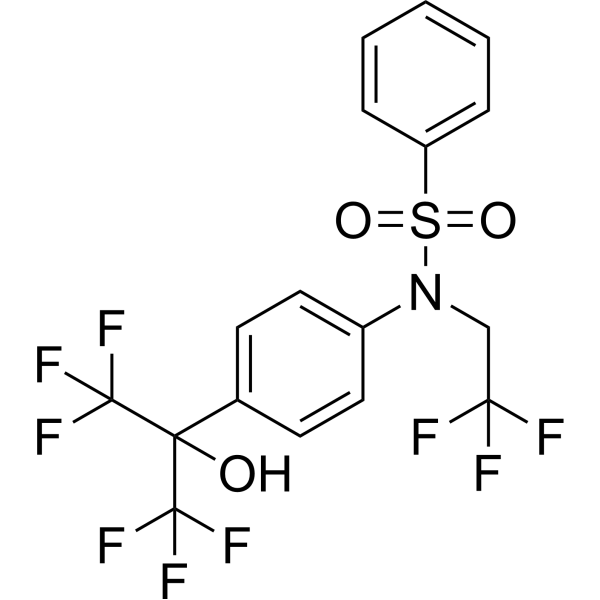
HY-10626
T0901317LXR Agonist -
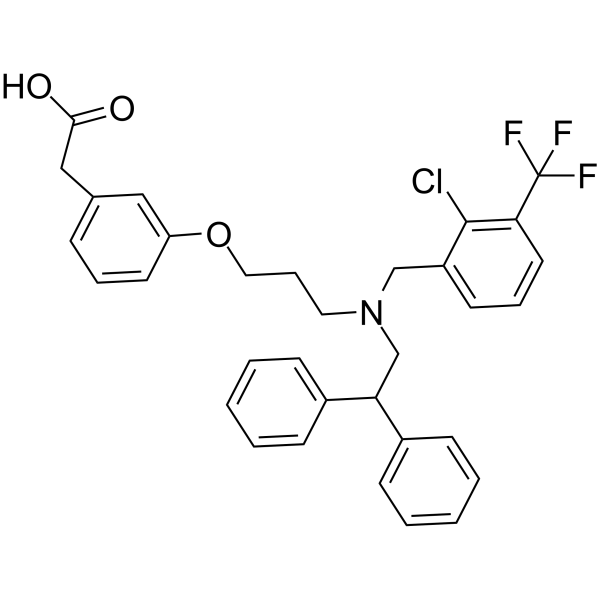
HY-10627
GW3965LXR Agonist -
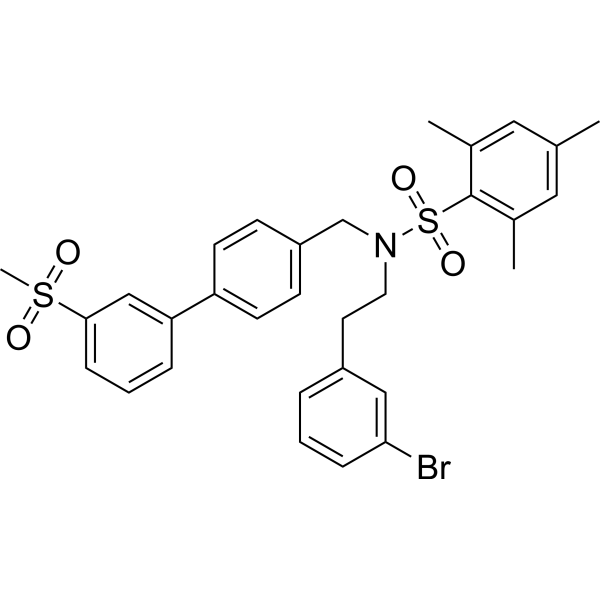
HY-16972
SR9243LXR Inverse Agonist -
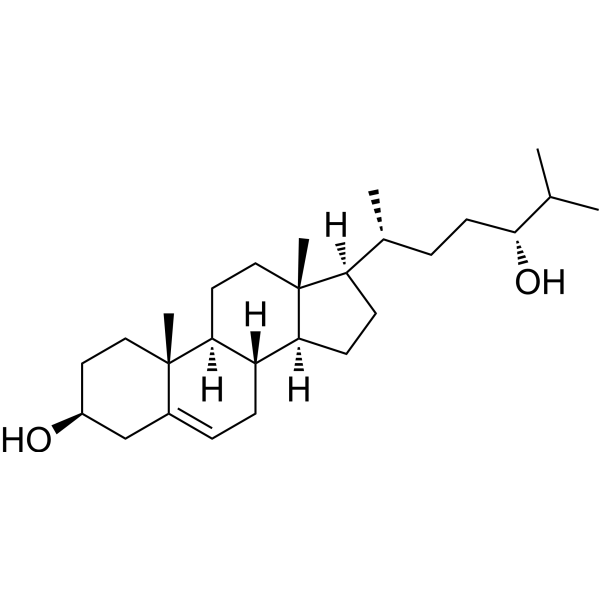
HY-16940A
24(R)-HydroxycholesterolTacalcitol Intermediate -
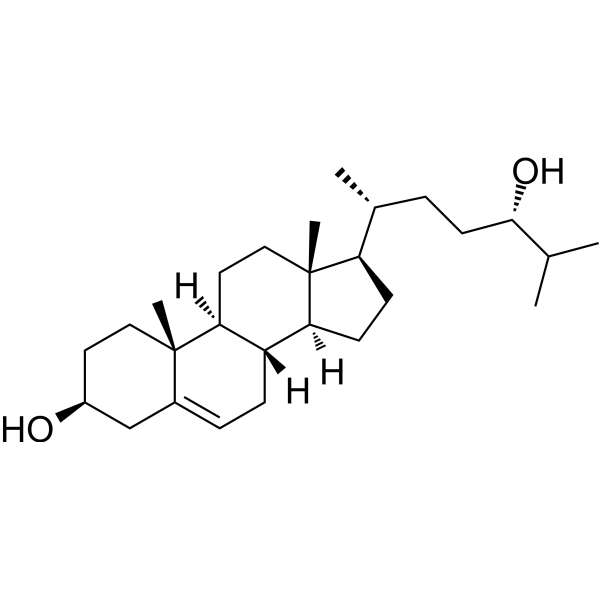
HY-16940
24(S)-HydroxycholesterolEndogenous Metabolite -
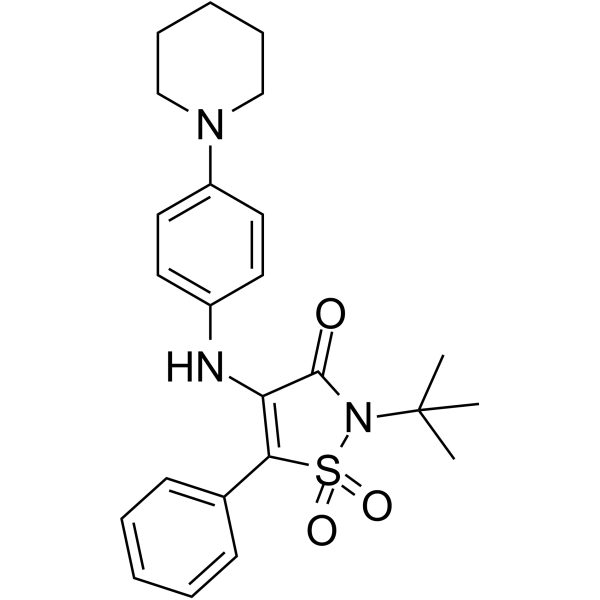
HY-18282
AZ876LXR Agonist -
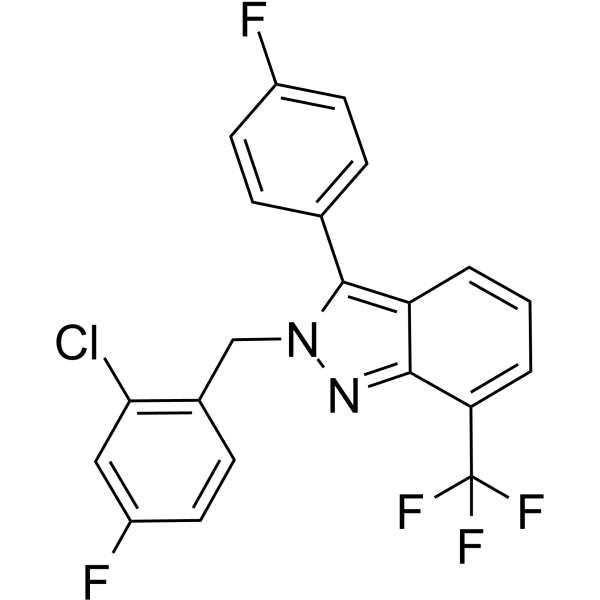
HY-10629
LXR-623LXRα/β Agonist -
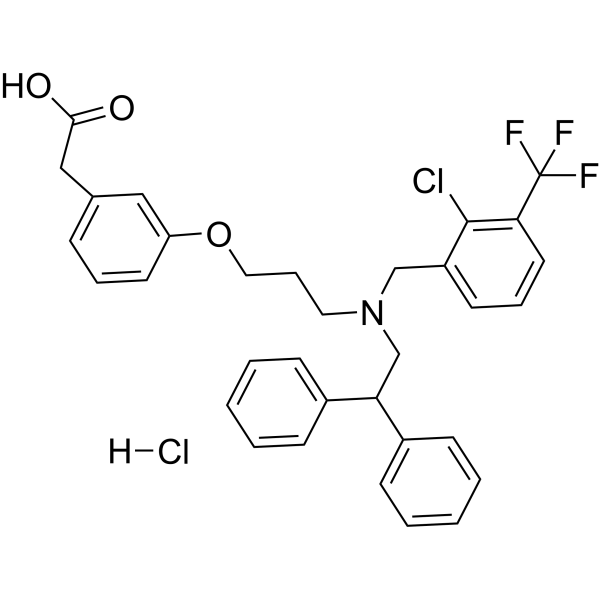
HY-10627A
GW3965 hydrochlorideLXR Agonist -
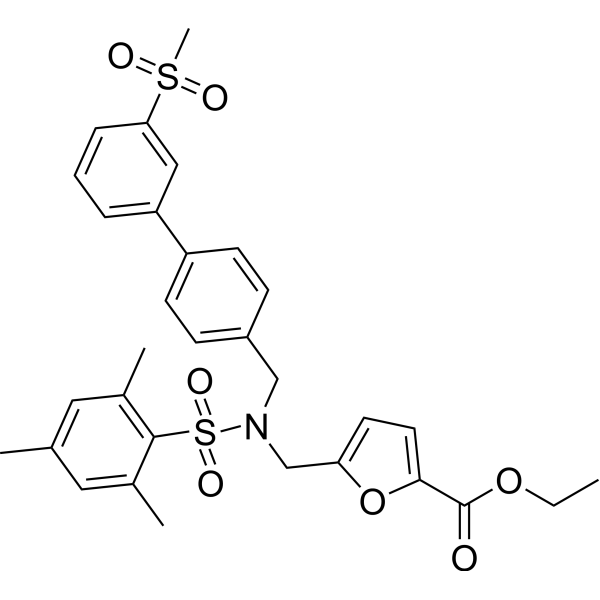
HY-101442
SR9238LXR Inverse Agonist -

HY-10626R
T0901317 (Standard)LXR Agonist -

HY-10627R
GW3965 (Standard)Reference Standard -
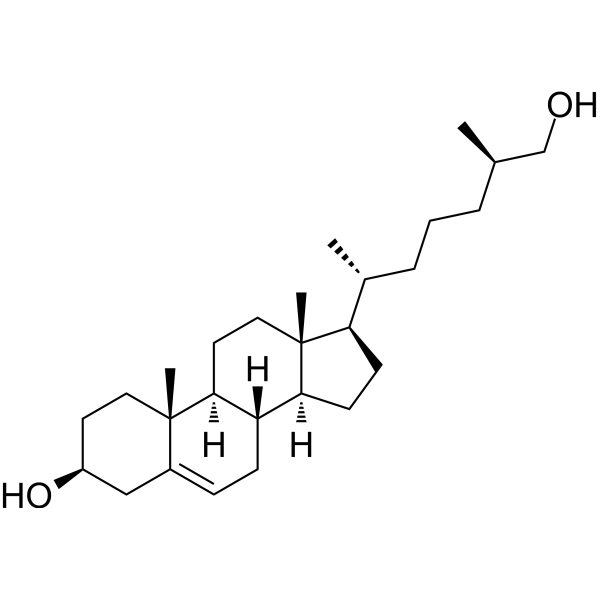
HY-N2371
27-HydroxycholesterolLXR Agonist


Biological Activity
Description
Clinical Trial
| NCT Number | Sponsor | Condition | Start Date |
Phase

|
|---|---|---|---|---|
| NCT01329991 | Plexxikon| | 2011-05 | PHASE1 |


Chemical Information
-
CAS No. 344327-48-6
-
Appearance Solid
-
Molecular Weight 614.77
-
Formula C38H46O7
-
Color White to off-white
-
SMILES
O=C(OC([C@@]1(C)CCC[C@]2(C)C3=C(CC[C@@]12[H])C=CC(OC(C)=O)=C3)=O)[C@@]4(C)CCC[C@]5(C)C6=C(CC[C@@]45[H])C=CC(OC(C)=O)=C6
-
Synonyms
Acetylpodocarpic dimer; APD
-
Shipping
Room temperature in continental US; may vary elsewhere.
-
Storage
Powder -20°C 3 years In solvent -80°C 6 months -20°C 1 month


Solvent & Solubility
In Vitro:
DMF : 1 mg/mL (1.63 mM; Need ultrasonic and warming)
Please refer to the solubility information to select the appropriate solvent. Once prepared, please aliquot and store the solution to prevent product inactivation from repeated freeze-thaw cycles.
Storage method and period of stock solution: -80°C, 6 months; -20°C, 1 month. When stored at -80°C, please use it within 6 months. When stored at -20°C, please use it within 1 month.
Please refer to the solubility information to select the appropriate solvent. Once prepared, please aliquot and store the solution to prevent product inactivation from repeated freeze-thaw cycles.
Storage method and period of stock solution: -80°C, 6 months; -20°C, 1 month. When stored at -80°C, please use it within 6 months. When stored at -20°C, please use it within 1 month.
Concentration (start) × Volume (start) = Concentration (final) × Volume (final)

Protocols
-
Research Protocol for Cardiovascular Diseases
Cardiovascular disease can be modeled as maladaptive cardiac remodeling, where ischemic injury or pressure overload activates inflammatory signaling, fibroblast activation, extracellular-matrix deposition, cardiomyocyte hypertrophy, vascular remodeling, and progressive ventricular dysfunction. The TGF-β/SMAD axis is a central profibrotic pathway after myocardial injury and pressure overload, while innate immune and cytokine pathways regulate leukocyte recruitment, scar formation, and adverse remodeling. Key unresolved questions include which inflammatory signals are reparative versus harmful, when fibrosis is protective versus maladaptive, and whether pathway inhibition improves function without weakening necessary infarct healing or compensatory remodeling.


Purity & Documentation
-
Data Sheet (266 KB)
-
SDS (251 KB)
- English - EN (251 KB)
- Français - FR (251 KB)
- Deutsch - DE (251 KB)
- Norwegian - NO (251 KB)
- Español - ES (251 KB)
- Swedish - SV (251 KB)
- Italian - IT (251 KB)
- Korean - KR (251 KB)
- Portuguese - PT (251 KB)
-
Handling Instructions (2659 KB)
References


Complete Stock Solution Preparation Table
Please refer to the solubility information to select the appropriate solvent. Once prepared, please aliquot and store the solution to prevent product inactivation from repeated freeze-thaw cycles.
Storage method and period of stock solution: -80°C, 6 months; -20°C, 1 month. When stored at -80°C, please use it within 6 months. When stored at -20°C, please use it within 1 month.
| Optional Solvent | Concentration Solvent Mass | 1 mg | 5 mg | 10 mg | 25 mg |
|---|---|---|---|---|---|
| DMF | 1 mM | 1.6266 mL | 8.1331 mL | 16.2662 mL | 40.6656 mL |


Acetyl podocarpic acid anhydride Related Classifications
HY-125772 Related Classifications
 Powered by Bioz