



Acid Black 2

Based on 1 Customer Validation
Acid Black 2 (Nigrosine) is an alcohol-soluble absorber used to mimic skin pigmentation in tissue-mimicking phantoms. Acid Black 2 acts as an absorber in silicone-based thin tissue phantoms to simulate varying melanosome volume fractions in skin. Acid Black 2 can be used as a component of Eosin-Nigrosin Sperm Viability Staining Solution (HY-DY2022) to assess sperm viability and identify the integrity of the membrane structure and function of inactive sperm.
Para uso exclusivo en investigación. No vendemos a pacientes.
- No. CAS: 8005-03-6
-
Almacenamiento:
4°C, protect from light
* In solvent : -80°C, 6 months; -20°C, 1 month (protect from light)


To place orders, for customer services and technical support, please contact: MedChemExpress USA
Tel: 609-228-6898 E-mail: [email protected] [email protected]


-
 Actividad biológica
-
Chemical Information
-
Solvente y solubilidad
- Protocolo
- Pureza y Documentación
- Referencias
-
 Help & FAQs


-
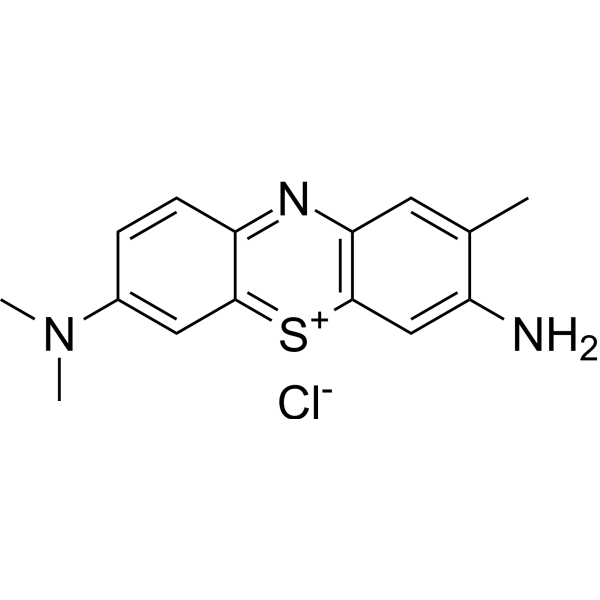
HY-D0220
Toluidine BlueBasic Dye -

HY-D1542
MucicarmineMucin Stain -
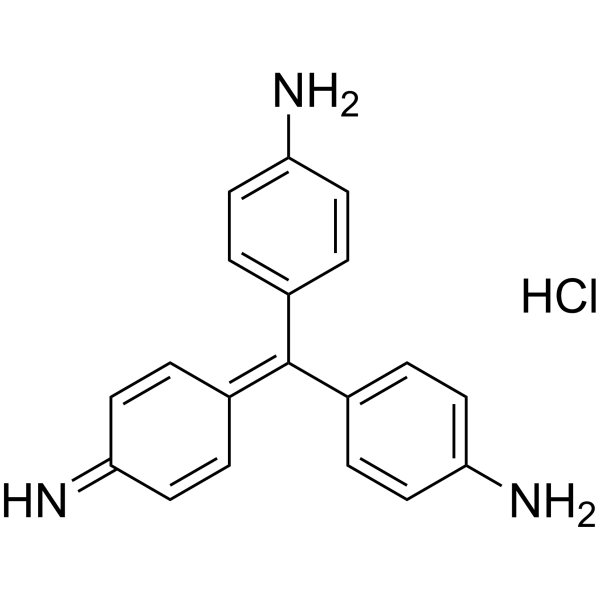
HY-W127770
Pararosaniline hydrochlorideBasic Dye -

HY-W250148
Solvent black 5Biochemical Assay Reagent -
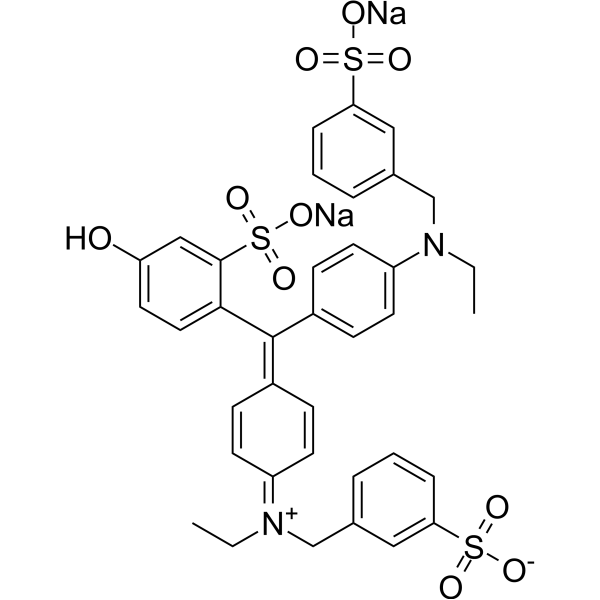
HY-D0914
Fast Green FCFSea Green Triarylmethane Food Dye -
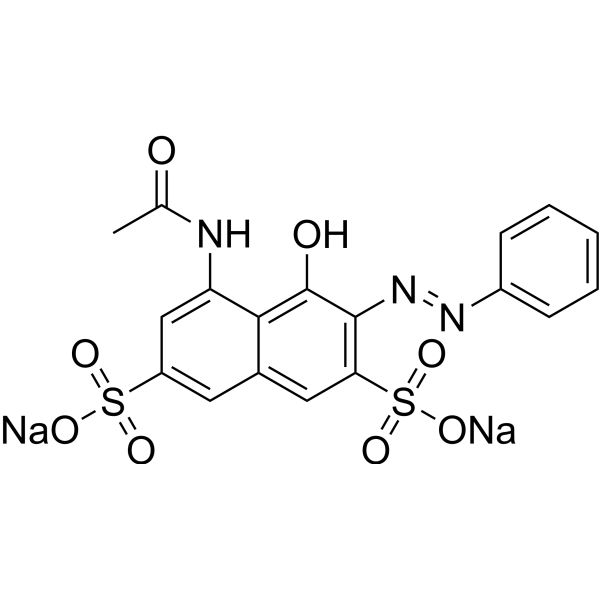
HY-D1379
AzophloxineRed Azo Dye -
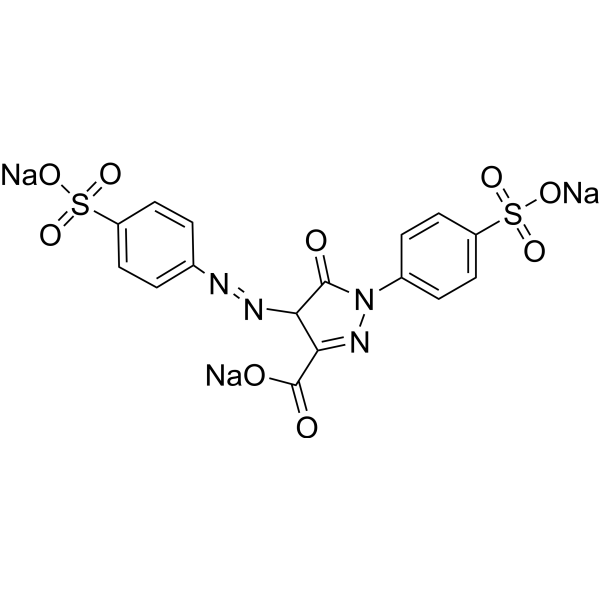
HY-D0257
TartrazineAzo Dye -
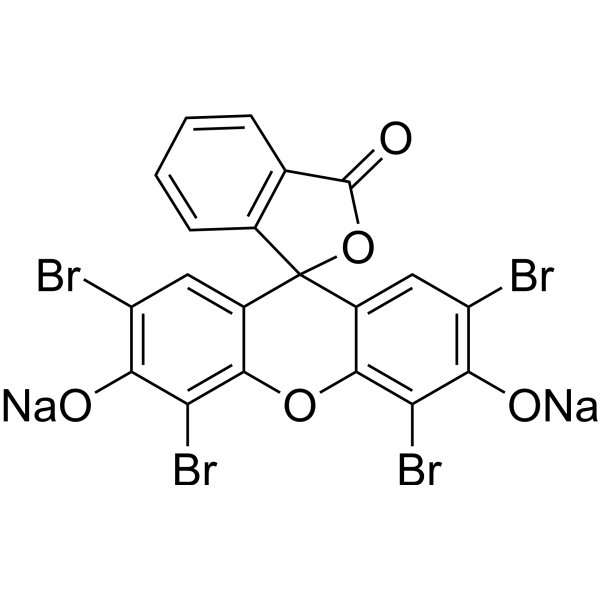
HY-D0505A
Eosin Y disodiumDye Molecule -
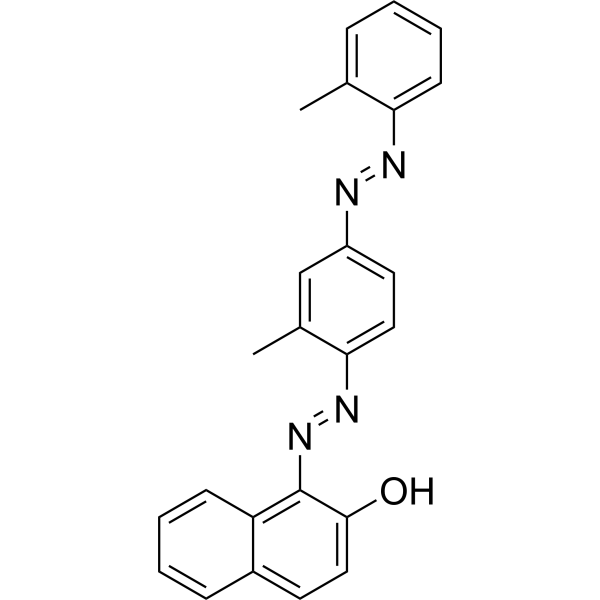
HY-D0932
Sudan IVDisazo Dye -

HY-D0932R
Sudan IV (Standard)Standard of Sudan IV -
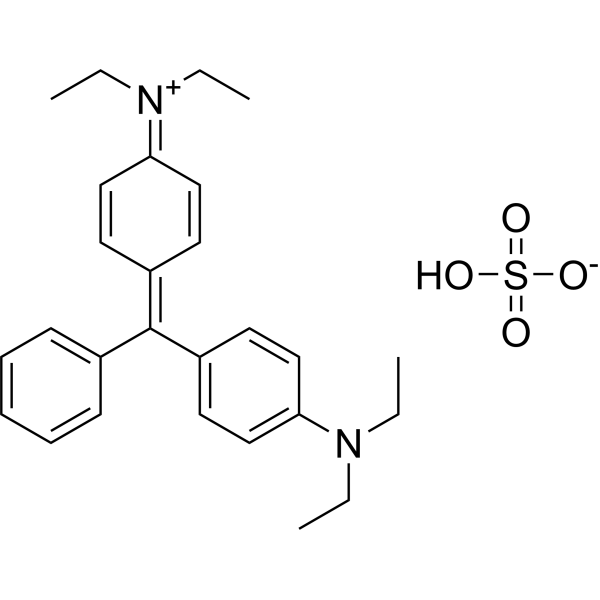
HY-D0008
Brilliant greenCationic Dye -

HY-D0257R
Tartrazine (Standard)Azo Dye


Actividad biológica
Descripciòn
In Vitro
Acid Black 2 (1.95-42.33 mg; 6 h) produces silicone-based tissue-mimicking skin phantoms with Mf=2%, 6%, 14%, 30%, and 43% that have nominal μa values of 3.4, 10.2, 23.9, 51.2, and 73.5 cm-1 at 685 nm, respectively, for simulating varying skin pigmentation levels[1].
MedChemExpress (MCE) has not independently confirmed the accuracy of these methods. They are for reference only. Further protocols information, click here.


Chemical Information
-
No. CAS 8005-03-6
-
Appearance Solid
-
Color Dark purple to black
-
SMILES
[Acid Black 2]
-
Synonyms
Nigrosine
-
Envío
Room temperature in continental US; may vary elsewhere.
-
Almacenamiento
4°C, protect from light
* In solvent : -80°C, 6 months; -20°C, 1 month (protect from light)


Solvente y solubilidad
In Vitro:
H2O : 2.86 mg/mL (ultrasonic and warming and heat to 60°C)

Protocolo
-
Mammalian live/dead viability and cytotoxicity staining
Live/dead viability and cytotoxicity staining assays are based on the simultaneous detection of intracellular esterase activity in metabolically active (viable) cells and membrane integrity loss in non-viable cells. In commonly used dual-staining approaches, membrane-permeant fluorogenic substrates are converted by intracellular esterases into fluorescent products in live cells, while impermeant DNA-binding dyes selectively enter cells with compromised plasma membranes and label nucleic acids in dead or dying cells, enabling discrimination between viable and non-viable populations by fluorescence microscopy or flow cytometry.
-
Sperm Thawing for Functional Recovery
Sperm thawing for functional recovery is a post-cryopreservation procedure designed to restore and measure sperm motility, viability, membrane/acrosome integrity, DNA integrity, and usable motile sperm yield after freezing-induced injury; published human studies show that cryopreservation reduces motility and viability and can damage the plasmalemma, acrosome, tail, and DNA integrity. The experimental readout is generated by comparing post-thaw motility recovery, viability, acrosomal status, DNA integrity, and recovered motile sperm after thawing and optional sperm-selection steps; thawing at 40°C improved motility recovery compared with 20-37°C without significant differences in viability, ATP content, acrosomal status, or DNA integrity in one human donor-semen study.
-
Cell Viability Determination by MTT Colorimetric Assay
The following protocol uses the MTT colorimetric assay as a classic literature-established method for assessing cell viability/metabolic activity in cultured mammalian cells. MTT[3-(4,5-dimethylthiazol-2-yl)-2,5-diphenyltetrazolium bromide] is reduced by metabolically active cells to a colored formazan product; the amount of formazan is quantified spectrophotometrically and provides an indirect measure of metabolically active viable cells. Importantly, MTT reduction reflects cellular oxidoreductase/metabolic activity rather than an absolute direct count of living cells, so changes in cellular metabolism can alter the signal independently of cell number.


Pureza y Documentación
-
Ficha de datos (273 KB)
-
SDS (418 KB)
- English - EN (418 KB)
- Français - FR (418 KB)
- Deutsch - DE (418 KB)
- Norwegian - NO (418 KB)
- Español - ES (418 KB)
- Swedish - SV (418 KB)
- Italian - IT (418 KB)
- Korean - KR (418 KB)
- Portuguese - PT (418 KB)
-
Instrucciones de manejo (2659 KB)
Referencias

Calculators
Concentration (start) × Volume (start) = Concentration (final) × Volume (final)


Acid Black 2 Related Classifications
HY-W250145 Related Classifications
 Powered by Bioz