



Adebrelimab

Based on 1 Customer Validation
Adebrelimab (SHR-1316) is a humanized IgG4 monoclonal PD-L1 (PD-1/PD-L1) antibody. Adebrelimab has promising antitumor activity in solid tumors including extensive-stage small-cell lung cancer (SCLC).
For research use only. We do not sell to patients.
- Purity : 99.06%
- CAS No.: 2247114-85-6
- Molecular Weight:145.56 kDa
-
Storage:
Please store the product under the recommended conditions in the Certificate of Analysis.


To place orders, for customer services and technical support, please contact: MedChemExpress USA
Tel: 609-228-6898 E-mail: [email protected] [email protected]


-
 Biological Activity
-
Chemical Information
- Protocols
- Purity & Documentation
- References
-
 Help & FAQs


-

HY-P9904
AtezolizumabAnti-PD-L1 Antibody -

HY-P9919
DurvalumabPD-L1 Blocking Antibody -

HY-P99114
SugemalimabAnti-PD-L1 Antibody -

HY-P99833
CosibelimabAnti-PD-L1 Antibody -

HY-108730
AvelumabAnti-PD-L1 Antibody -

HY-P99115
EnvafolimabAnti PD-L1 Antibody -

HY-P99052
TislelizumabPD-1 Inhibitor -

HY-P9978
ToripalimabPD-1 Inhibitor -

HY-P99203
CemiplimabPD-1 Inhibitor -

HY-P99675
IvonescimabPD-1/VEGF Bispecific Antibody -

HY-P99594
SocazolimabAnti-PD-L1 mAb -

HY-P99544
TagitanlimabHumanized Anti-PD-L1 mAb


Biological Activity
Description
Isotype
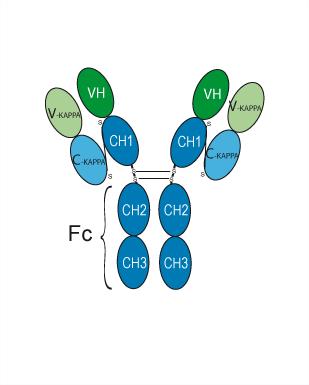
Human IgG4 kappa
Recommend Isotype Controls
Species Reactivity
Human
IC50 & Target
B7-H1/PD-L1/CD274
In Vitro
Adebrelimab (SHR-1316; 0.06-1mg/mL; 48 hours) inhibits effects on the cell proliferation, migration, invasion of SK-BR-3 and AU565 cells[1].
Adebrelimab (SHR-1316; 0.1-1mg/mL; 48 hours) downregulateds the expression of PD-L1, p-PI3K, p-AKT and upregulates the expression FOXO1[1].
MedChemExpress (MCE) has not independently confirmed the accuracy of these methods. They are for reference only. Further protocols information, click here.
-
Cell Line:SK-BR-3 and AU565 cells
-
Concentration:0.06 mg/mL, 0.13 mg/mL, 0.25 mg/mL, 0.5 mg/mL, 1 mg/mL
-
Incubation Time:48 hours
-
Result:The viability of SK-BR-3 and AU565 cells decreased gradually.
-
Cell Line:SK-BR-3 and AU565 cells
-
Concentration:0.1 mg/mL, 1 mg/mL
-
Incubation Time:48 hours
-
Result:Promoted cell apoptosis.
-
Cell Line:SK-BR-3 and AU565 cells
-
Concentration:0.1 mg/mL, 1 mg/mL
-
Incubation Time:48 hours
-
Result:Decreased the migration rate of SK-BR -3 and AU565 cells.
-
Cell Line:SK-BR-3 and AU565 cells
-
Concentration:0.1 mg/mL, 1 mg/mL
-
Incubation Time:48 hours
-
Result:Downregulated the expression of PD-L1, p-PI3K, p-AKT and upregulated the expression FOXO1.
In Vivo
MedChemExpress (MCE) has not independently confirmed the accuracy of these methods. They are for reference only.
-
Animal Model:Pathogen free (SPF) BALB/c nude female mice (aged 5-6 weeks) injected with SK-BR-3 cells[1]
-
Dosage:200 μg
-
Administration:Three times a week; for 21 days
-
Result:Significantly inhibited tumor growth.
Clinical Trial
| NCT Number | Sponsor | Condition | Start Date |
Phase

|
|---|---|---|---|---|
| NCT01329991 | Plexxikon| | 2011-05 | PHASE1 |
Gene ID
Accession
Conjugated
Unconjugated
Reconsititution
The product can be reconstituted/diluted with sterile PBS or saline.
Format
-
Human IgG4 kappa
Application
ELISA, FACS, Functional assay
Verified Bioactivity
-
 Flow cytometric analysis of 1.5X10⁶ MDA-MB-231 cells labeling Adebrelimab (HY-P99422, red). Cells were fixed with 4% paraformaldehyde. Then stained with the primary antibody at 1/200 dilution for an hour at 4℃. Goat Anti-Human IgG H&L (AF488) (HY-P83776) was used as the secondary antibody at 1/1,000 dilution for 30 minutes at 4℃. Human IgG4 kappa (HY-P99003, blue) was used as the isotype control, cells without incubation with primary antibody were used as the unlabeled control (black).
 -
 Immobilized HuPD-L1-hFc can bind Adebrelimab. The EC50 for this effect is 4.213 ng/mL.


Chemical Information
-
CAS No. 2247114-85-6
-
Appearance Liquid
-
Molecular Weight 145.56 kDa
-
Color Colorless to light yellow
-
SMILES
[Adebrelimab]
-
Synonyms
SHR-1316
-
Shipping
Shipping with dry ice.
-
Formulation
Please refer to the lot-specific COA for specific buffer information.
-
Storage
Please store the product under the recommended conditions in the Certificate of Analysis.

Protocols
-
Subcutaneous Cell-Line-Derived Xenograft
Subcutaneous cell-line-derived xenograft (CDX) models are established by implanting cultured human cancer cell lines into immunodeficient mice, where the injected cells form localized tumors that can be monitored in vivo as a measure of tumorigenic potential, growth kinetics, and treatment response. These models are widely used in oncology research because they allow reproducible tumor formation and enable comparative assessment of tumor growth between different cell lines or genetic manipulations in a controlled in vivo microenvironment. Subcutaneous implantation of cancer cells in immunodeficient mice is a standard approach for evaluating tumor growth behavior and therapeutic response across multiple cancer types, including prostate, esophageal, pancreatic, and colon cancer models.


Purity & Documentation
-
Data Sheet (261 KB)
-
SDS (251 KB)
- English - EN (251 KB)
- Français - FR (251 KB)
- Deutsch - DE (251 KB)
- Norwegian - NO (251 KB)
- Español - ES (251 KB)
- Swedish - SV (251 KB)
- Italian - IT (251 KB)
- Korean - KR (251 KB)
- Portuguese - PT (251 KB)
-
Inhibitory Antibodies User Guide (603 KB)
References

Calculators
Concentration (start) × Volume (start) = Concentration (final) × Volume (final)


Adebrelimab Related Classifications
HY-P99422 Related Classifications
 Powered by Bioz