



Beta Actin Antibody(YA3459)
(Synonyms: ACTIN; ACTB; BETA-ACTIN; beta actin; actin beta)Based on 1 publication(s) in Google Scholar
Beta Actin Antibody is a non-conjugated and Rabbit origined IgG monoclonal antibody, targeting to Beta Actin. It can be used as a loading control antibody.
-
Host:
Rabbit
-
Isotype:
IgG
-
Application:
WB, IHC-P, ICC/IF
-
Reactivity :
Human, Mouse, Rat
-
Formulation:
Supplied in 1xPBS(pH 7.4), 150mM NaCl, 50% Glycerol, 0.02% Sodium azide and 0.05% BSA.
-
Conjugation:
Non-conjugated


To place orders, for customer services and technical support, please contact: MedChemExpress USA
Tel: 609-228-6898 E-mail: [email protected] [email protected]



-

HY-P8001
HRP-conjugated Goat Anti-Rabbit IgG H&L -
HY-P80137
GAPDH Antibody (YA418) -
HY-K0010
Protease Inhibitor Cocktail (EDTA-Free, 100× in DMSO) -
HY-P83694
ZO-1/TJP1 Antibody (YA3430) -
HY-P8004
HRP-conjugated Goat Anti-Mouse IgG H&L -
HY-P80450
GPX4 Antibody (YA399) -
HY-P81051
Nrf2 Antibody(YA895) -
HY-P80487
Beta Tubulin Antibody (YA585) -
HY-P86420
Occludin Antibody (YA6112) -
HY-P81222A
Claudin 1 Antibody (YA3551) -
HY-P85789
Vinculin Antibody (YA5481)
Publications Citing Use of MedChemExpress (MCE) Beta Actin Antibody(YA3459)
More
 1 Publications Citing Use of MCE Beta Actin Antibody(YA3459) (5)
-
WB

-
WB

-
WB

-
WB

-
WB


Applications
| Application |
WB

WB: Western Blot
|
IHC-P
IHC-P: Immunohistochemistry-Paraffin
|
ICC/IF
ICC/IF: Immunocytochemistry/
Immunofluorescence |
|---|---|---|---|
| Dilution Ratio | 1:5000-1:10000 | 1:50-1:200 | 1:100-1:200 |


Product Details
Beta Actin Antibody is a non-conjugated and Rabbit origined IgG monoclonal antibody, targeting to Beta Actin. It can be used as a loading control antibody.
-
Host Rabbit

-
Clonality Monoclonal,Recombinant

-
Species ReactivityHuman, Mouse, Rat
-
Observed Molecular WeightObserved band size: 42 kDa
Note: Due to possible protein modifications or aggregation, the molecular weight should be confirmed by actual measurement, and the predicted value is for reference only.

-
Calculated Molecular Weight Predicted band size: 42 kDa

A synthesized peptide derived from human beta Actin
Protein A affinity purified.
Non-conjugated
Unmodified
IgG


Product Properties
-
Appearance
Liquid
-
Formulation
Supplied in 1xPBS(pH 7.4), 150mM NaCl, 50% Glycerol, 0.02% Sodium azide and 0.05% BSA.
-
Concentration
Batch-dependent, Please check the COA for the concentration of each lot. Check Lot Concentration
-
Storage & Stability
Stored at -20°C for 1 year. Avoid repeated freeze / thaw cycles.
-
Shipping
Shipping with blue ice.


Publications (1)
-
Journal Impact Factor
-
Most Recent
-
Int J Biol Macromol
The LincRNA8058-mediated chi-miR-342-5p/SCARA5 axis regulates milk fat metabolism in dairy goats. [Abstract]2026 Jan;340(Pt 2):150254. PMID: 41539521
Beta Actin Antibody(YA3459) purchased from MedChemExpress. Usage Cited in: Int J Biol Macromol. 2026 Jan;340(Pt 2):150254. [Abstract]
Effect of linc8058 interference on the expression of SCARA5 at the protein level. Primary antibody: Beta Actin Antibody (YA3459) (1:2000), SCARA5 (1:1000).
Beta Actin Antibody(YA3459) purchased from MedChemExpress. Usage Cited in: Int J Biol Macromol. 2026 Jan;340(Pt 2):150254. [Abstract]
Effect of linc8058 overexpression on the expression of SCARA5 at the protein level. Primary antibody: Beta Actin Antibody (YA3459) (1:2000), SCARA5 (1:1000).
Beta Actin Antibody(YA3459) purchased from MedChemExpress. Usage Cited in: Int J Biol Macromol. 2026 Jan;340(Pt 2):150254. [Abstract]
Effect of the chi-miR-342-5p mimic on the protein expression of the SCARA5 gene. Primary antibody: Beta Actin Antibody (YA3459) (1:2000), SCARA5 (1:1000).
Beta Actin Antibody(YA3459) purchased from MedChemExpress. Usage Cited in: Int J Biol Macromol. 2026 Jan;340(Pt 2):150254. [Abstract]
Effect of an inhibitor of chi-miR-342-5p on the protein expression of the SCARA5 gene. Primary antibody: Beta Actin Antibody (YA3459) (1:2000), SCARA5 (1:1000).
Beta Actin Antibody(YA3459) purchased from MedChemExpress. Usage Cited in: Int J Biol Macromol. 2026 Jan;340(Pt 2):150254. [Abstract]
Effect of linc8058 overexpression on the PI3K/AKT pathway. Primary antibody: Beta Actin Antibody (YA3459) (1:2000), PI3K (WL03380; 1:1000), p-AKT (WLP001a; 1:1000), AKT (WL0003b; 1:1000).


Verification Images
-
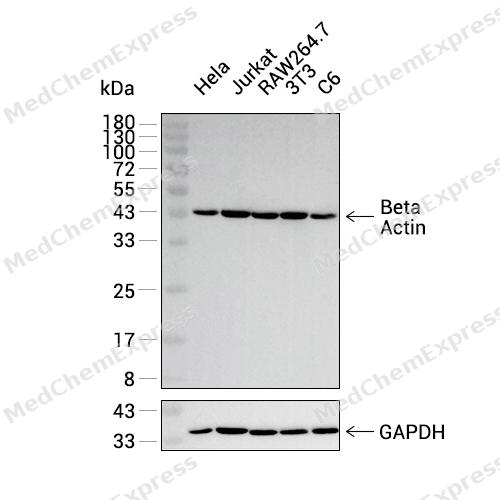 Western blot analysis was performed on extracts from Hela (lane 1, 15 μg), Jurkat (lane 2, 15 μg), RAW264.7 (lane 3, 15 μg), 3T3 (lane 4, 15 μg), and C6 (lane 5, 15 μg) using beta Actin Rabbit mAb.Proteins were transferred to a PVDF membrane and blocked with 5% non-fat milk in TBST at 4°C overnight.The primary antibody (1:20000 dilution) and the loading control antibody (GAPDH, HY-P80137, 1:80000 dilution) were incubated in 5% non-fat milk in TBST for 1 hour at 37°C.Goat Anti-Rabbit IgG-HRP Secondary Antibody (1:20000 dilution) was then applied for 40 minutes at 37°C.
 -
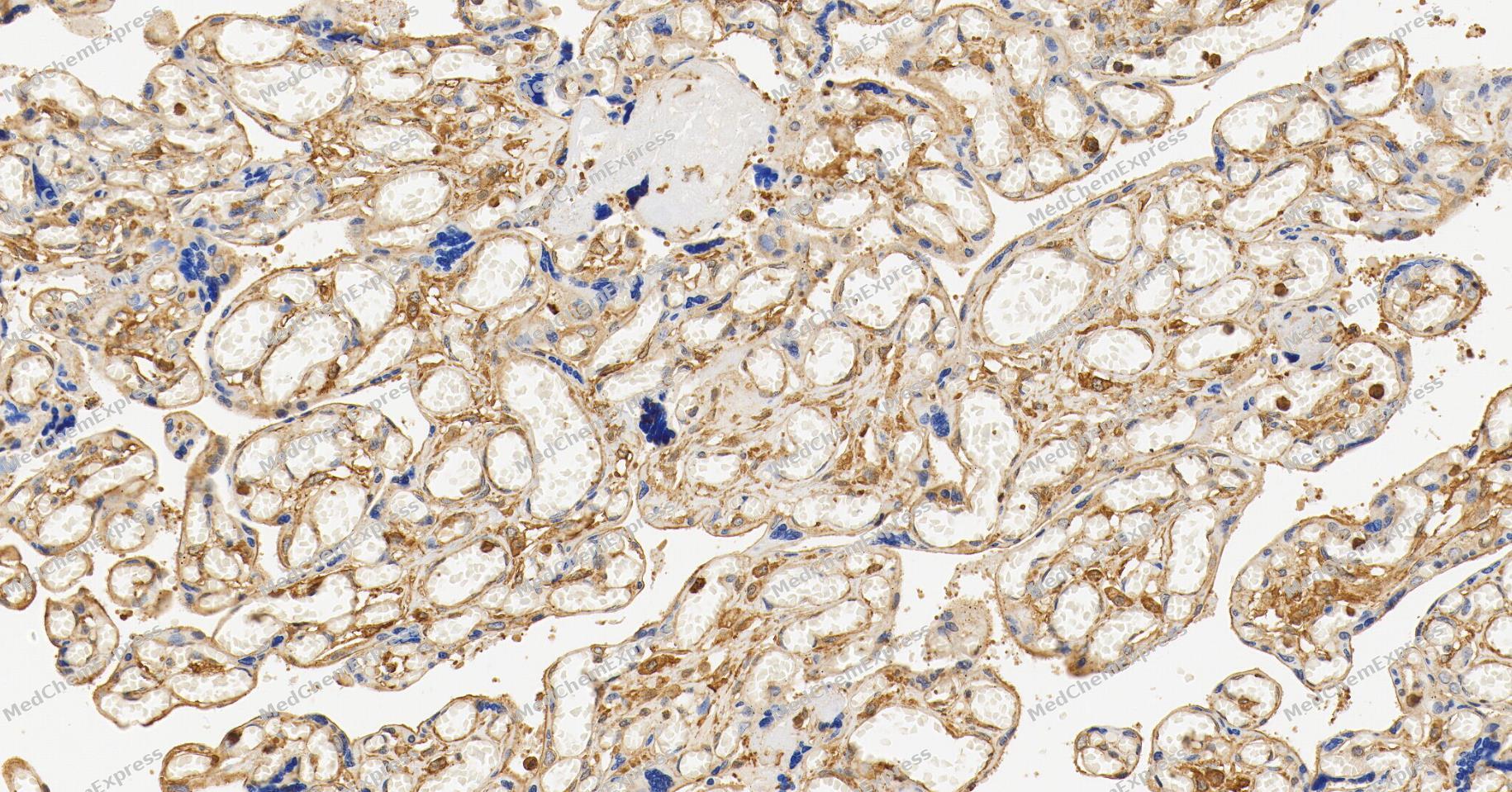 Immunohistochemical analysis of paraffin-embedded human placenta tissue using Beta Actin Antibody(YA3459). The section was pre-treated using heat mediated antigen retrieval with Tris/EDTA buffer (pH 9.0) for 20 minutes. The tissues were probed with the primary antibody (HY-P83730, 1/300) overnight at 4℃. The detection was performed using an HRP conjugated compact polymer system. DAB was used as the chromogen. Tissues were counterstained with hematoxylin and mounted with neutral balsam.
 -
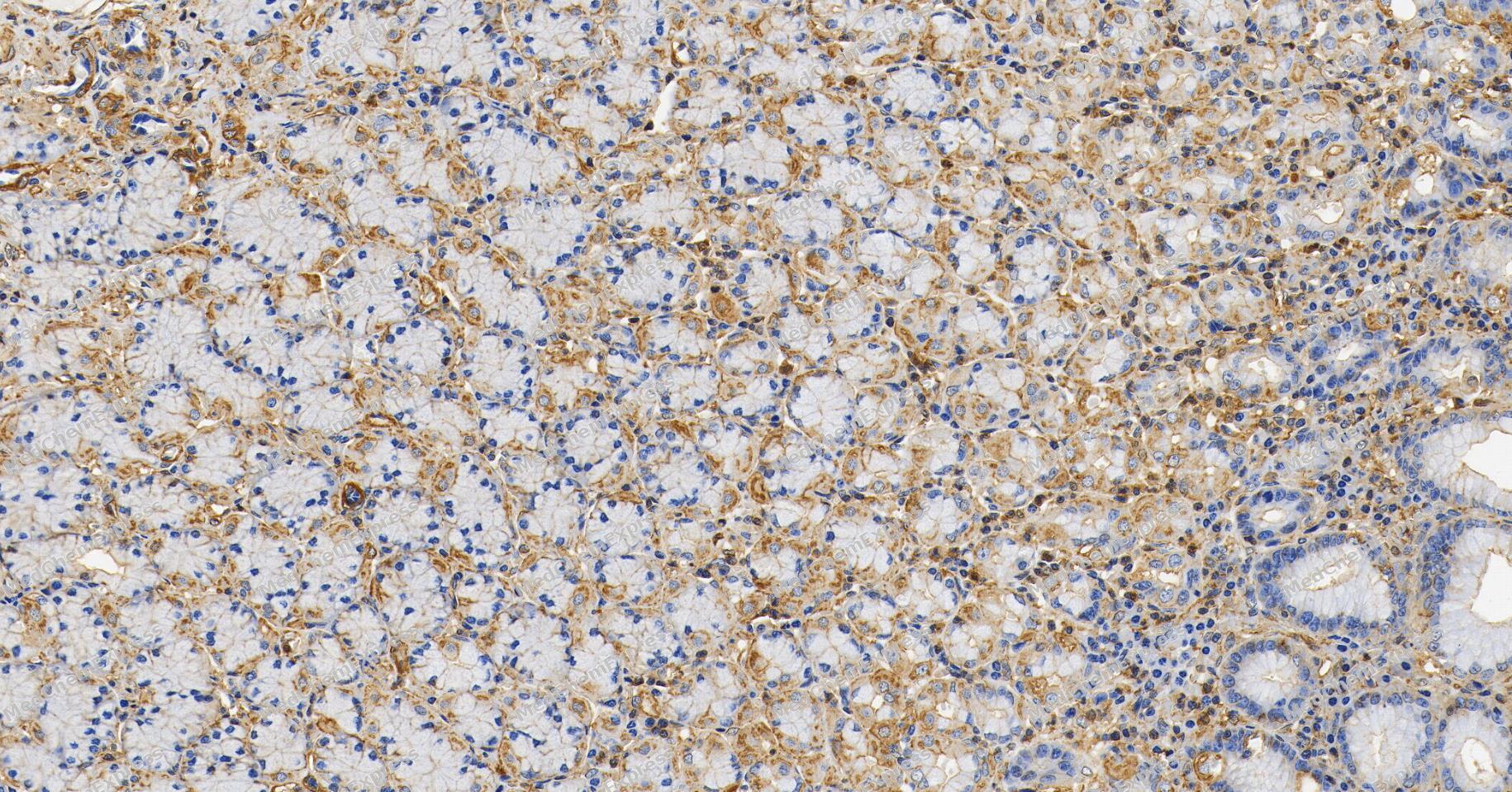 Immunohistochemical analysis of paraffin-embedded human stomach tissue using Beta Actin Antibody(YA3459). The section was pre-treated using heat mediated antigen retrieval with Tris/EDTA buffer (pH 9.0) for 20 minutes. The tissues were probed with the primary antibody (HY-P83730, 1/300) overnight at 4℃. The detection was performed using an HRP conjugated compact polymer system. DAB was used as the chromogen. Tissues were counterstained with hematoxylin and mounted with neutral balsam.
 -
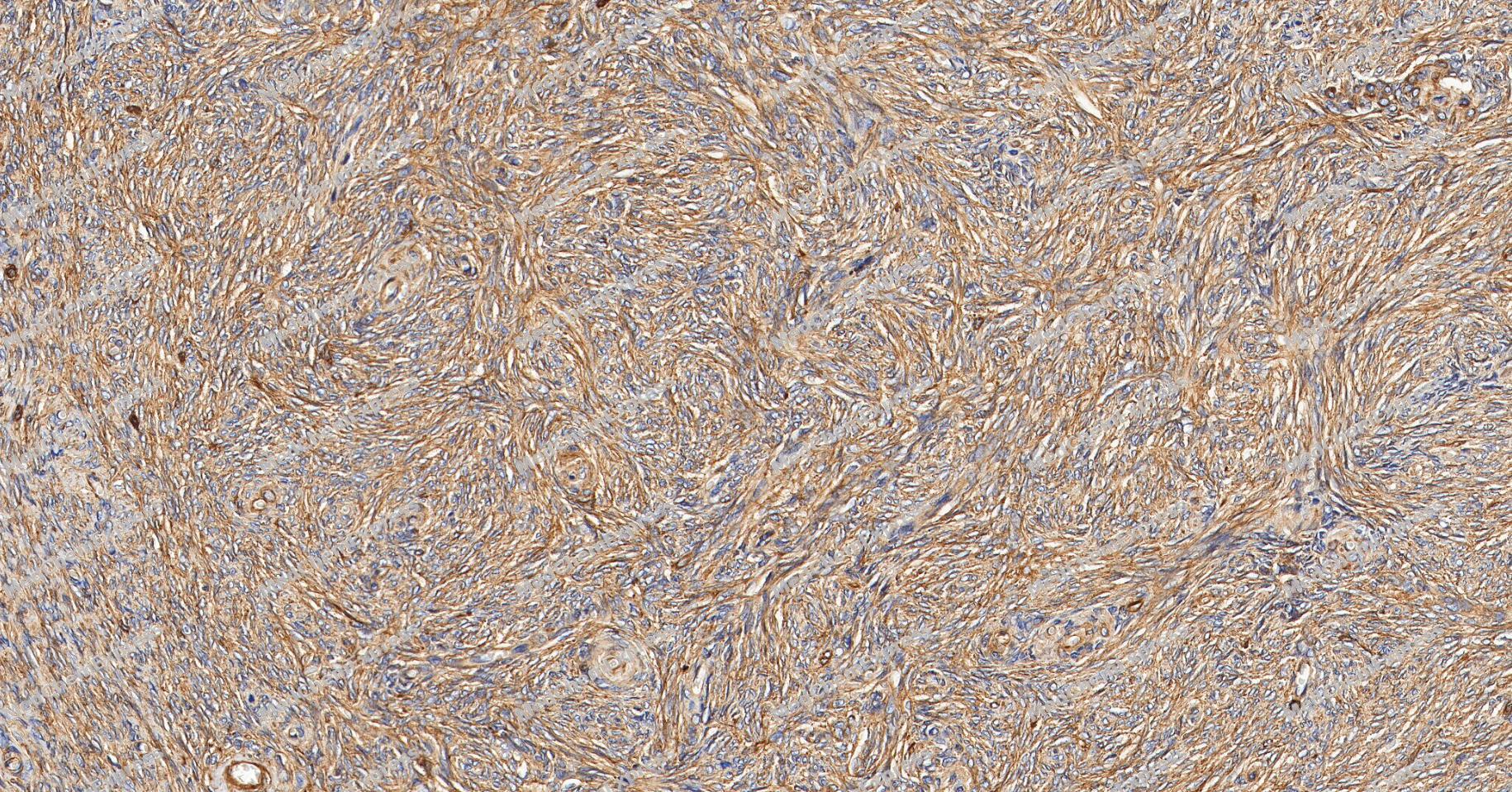 Immunohistochemical analysis of paraffin-embedded human ovary tissue using Beta Actin Antibody(YA3459). The section was pre-treated using heat mediated antigen retrieval with Tris/EDTA buffer (pH 9.0) for 20 minutes. The tissues were probed with the primary antibody (HY-P83730, 1/300) overnight at 4℃. The detection was performed using an HRP conjugated compact polymer system. DAB was used as the chromogen. Tissues were counterstained with hematoxylin and mounted with neutral balsam.
 -
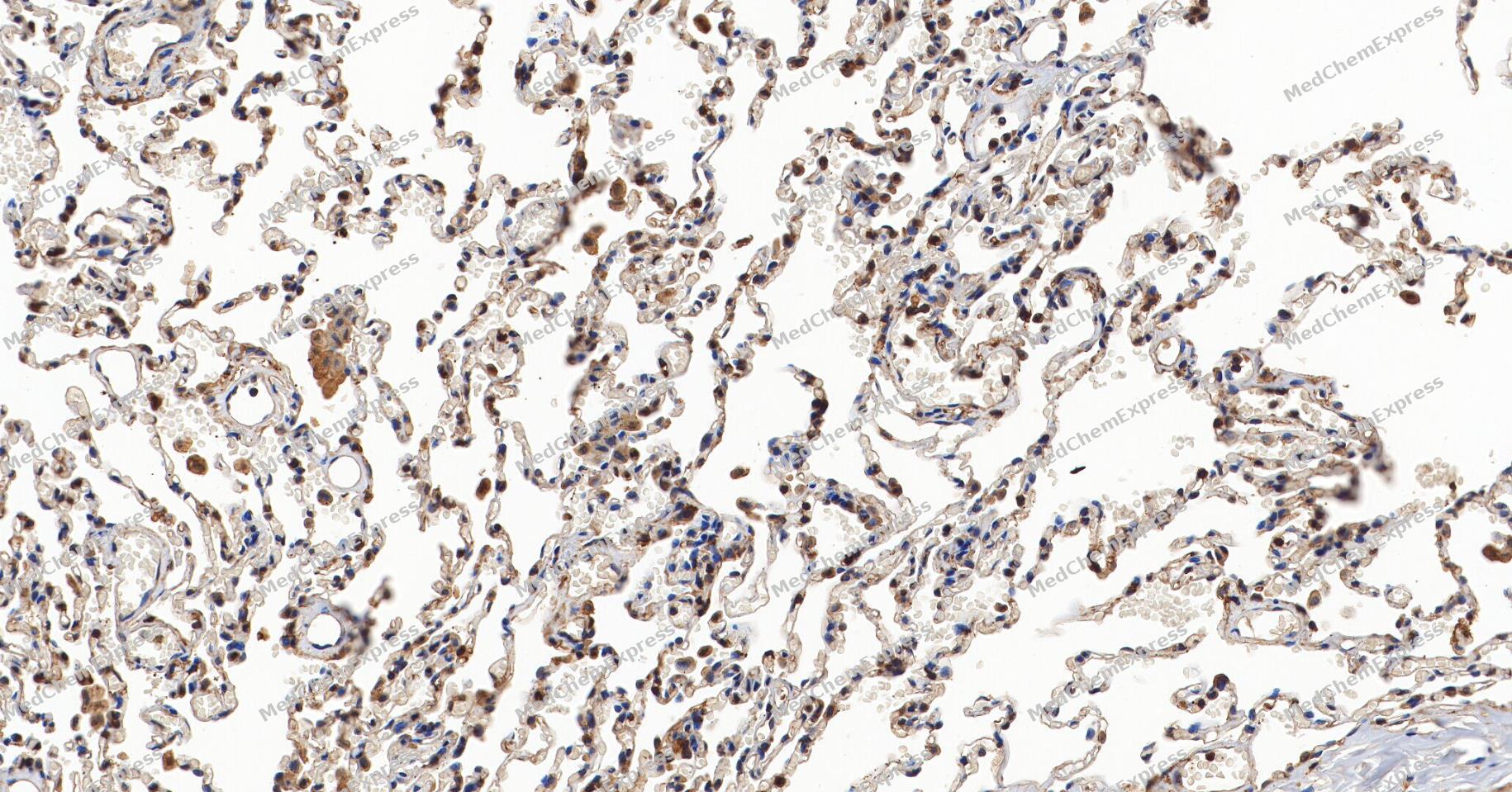 Immunohistochemical analysis of paraffin-embedded human lung tissue using Beta Actin Antibody(YA3459). The section was pre-treated using heat mediated antigen retrieval with Tris/EDTA buffer (pH 9.0) for 20 minutes. The tissues were probed with the primary antibody (HY-P83730, 1/300) overnight at 4℃. The detection was performed using an HRP conjugated compact polymer system. DAB was used as the chromogen. Tissues were counterstained with hematoxylin and mounted with neutral balsam.
 -
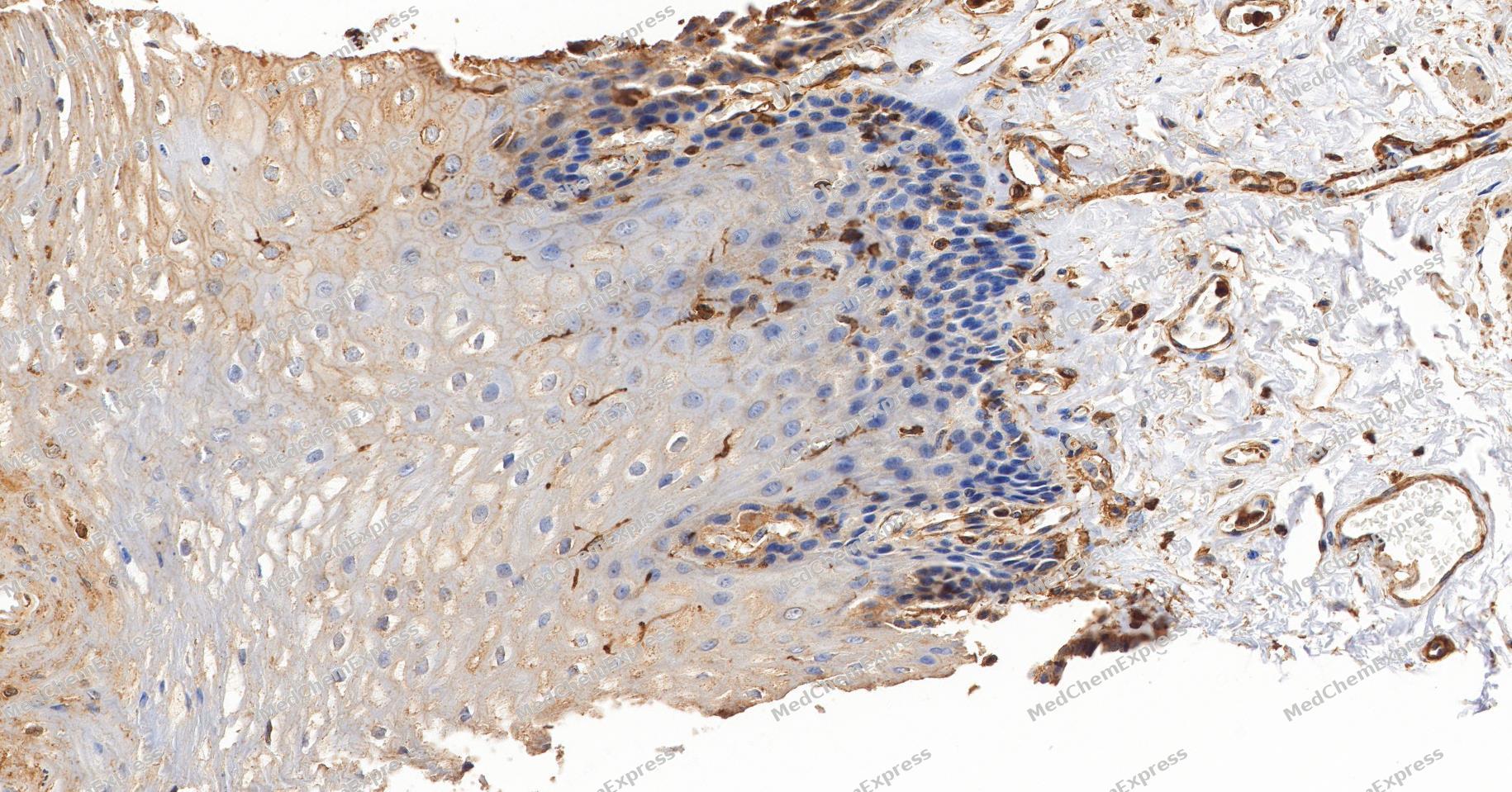 Immunohistochemical analysis of paraffin-embedded human esophagus tissue using Beta Actin Antibody(YA3459). The section was pre-treated using heat mediated antigen retrieval with Tris/EDTA buffer (pH 9.0) for 20 minutes. The tissues were probed with the primary antibody (HY-P83730, 1/300) overnight at 4℃. The detection was performed using an HRP conjugated compact polymer system. DAB was used as the chromogen. Tissues were counterstained with hematoxylin and mounted with neutral balsam.
 -
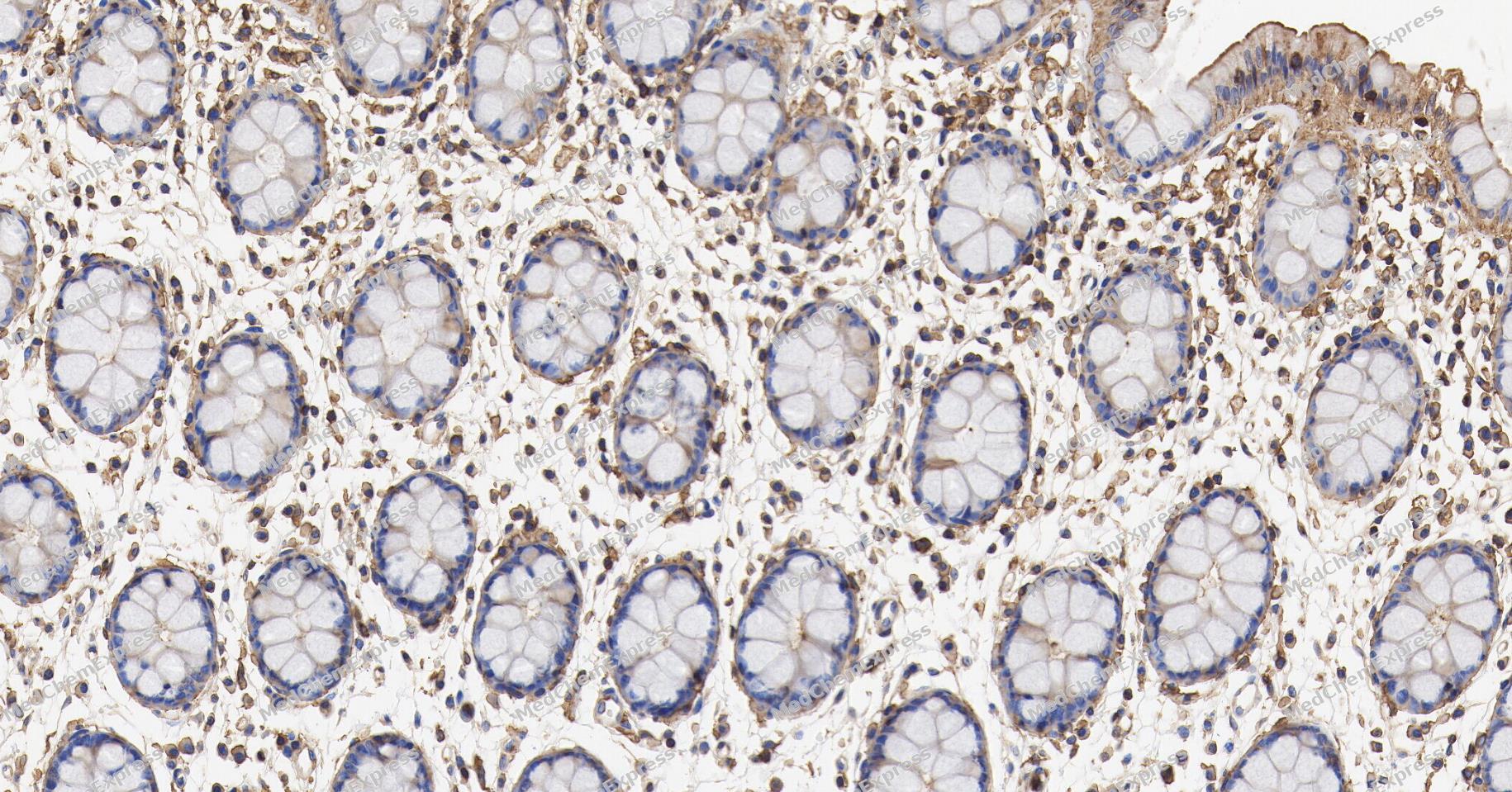 Immunohistochemical analysis of paraffin-embedded human colon tissue using Beta Actin Antibody(YA3459). The section was pre-treated using heat mediated antigen retrieval with Tris/EDTA buffer (pH 9.0) for 20 minutes. The tissues were probed with the primary antibody (HY-P83730, 1/300) overnight at 4℃. The detection was performed using an HRP conjugated compact polymer system. DAB was used as the chromogen. Tissues were counterstained with hematoxylin and mounted with neutral balsam.
 -
 Immunohistochemical analysis of paraffin-embedded rat testis tissue using Beta Actin Antibody (HY-P83730, 1/100). The section was pretreated using heat mediated antigen retrieval with sodium citrate buffer (pH 6.0) for 8 minutes. The tissues were blocked with quick block buffer for 0.5 hours at room temperature, washed with PBS and PBST, and then incubated with the primary antibody overnight at 4℃. The detection was performed using an HRP conjugated compact polymer system. DAB was used as the chromogen. Tissues were counterstained with hematoxylin and mounted with DPX.
 -
 Immunohistochemical analysis of paraffin-embedded rat lung tissue using Beta Actin Antibody (HY-P83730, 1/100). The section was pretreated using heat mediated antigen retrieval with sodium citrate buffer (pH 6.0) for 8 minutes. The tissues were blocked with quick block buffer for 0.5 hours at room temperature, washed with PBS and PBST, and then incubated with the primary antibody overnight at 4℃. The detection was performed using an HRP conjugated compact polymer system. DAB was used as the chromogen. Tissues were counterstained with hematoxylin and mounted with DPX.
 -
 Immunohistochemical analysis of paraffin-embedded rat salivary gland tissue using Beta Actin Antibody (HY-P83730, 1/100). The section was pretreated using heat mediated antigen retrieval with sodium citrate buffer (pH 6.0) for 8 minutes. The tissues were blocked with quick block buffer for 0.5 hours at room temperature, washed with PBS and PBST, and then incubated with the primary antibody overnight at 4℃. The detection was performed using an HRP conjugated compact polymer system. DAB was used as the chromogen. Tissues were counterstained with hematoxylin and mounted with DPX.
 -
 Immunohistochemical analysis of paraffin-embedded rat rectum tissue using Beta Actin Antibody (HY-P83730, 1/100). The section was pretreated using heat mediated antigen retrieval with sodium citrate buffer (pH 6.0) for 8 minutes. The tissues were blocked with quick block buffer for 0.5 hours at room temperature, washed with PBS and PBST, and then incubated with the primary antibody overnight at 4℃. The detection was performed using an HRP conjugated compact polymer system. DAB was used as the chromogen. Tissues were counterstained with hematoxylin and mounted with DPX.
 -
 Immunohistochemical analysis of paraffin-embedded mouse endometrium tissue using Beta Actin Antibody (HY-P83730, 1/100). The section was pretreated using heat mediated antigen retrieval with sodium citrate buffer (pH 6.0) for 8 minutes. The tissues were blocked with quick block buffer for 0.5 hours at room temperature, washed with PBS and PBST, and then incubated with the primary antibody overnight at 4℃. The detection was performed using an HRP conjugated compact polymer system. DAB was used as the chromogen. Tissues were counterstained with hematoxylin and mounted with DPX.
 -
 Immunohistochemical analysis of paraffin-embedded mouse heart muscle tissue using Beta Actin Antibody (HY-P83730, 1/100). The section was pretreated using heat mediated antigen retrieval with sodium citrate buffer (pH 6.0) for 8 minutes. The tissues were blocked with quick block buffer for 0.5 hours at room temperature, washed with PBS and PBST, and then incubated with the primary antibody overnight at 4℃. The detection was performed using an HRP conjugated compact polymer system. DAB was used as the chromogen. Tissues were counterstained with hematoxylin and mounted with DPX.


Background
-
Function
Beta Actin is an Actin is a highly conserved protein that polymerizes to produce filaments that form cross-linked networks in the cytoplasm of cells. Actin exists in both monomeric (G-actin) and polymeric (F-actin) forms, both forms playing key functions, such as cell motility and contraction. In addition to their role in the cytoplasmic cytoskeleton, G- and F-actin also localize in the nucleus, and regulate gene transcription and motility and repair of damaged DNA. Plays a role in the assembly of the gamma-tubulin ring complex (gTuRC), which regulates the minus-end nucleation of alpha-beta tubulin heterodimers that grow into microtubule protafilaments. Part of the ACTR1A/ACTB filament around which the dynactin complex is built. The dynactin multiprotein complex activates the molecular motor dynein for ultra-processive transport along microtubules[1][2][3][4][5].
-
Subcellular Localization
Cytoplasm, cytoskeleton; Nucleus
-
Subunit
Polymerization of globular actin (G-actin) leads to a structural filament (F-actin) in the form of a two-stranded helix (PubMed:16685646, PubMed:28604741). Each actin can bind to 4 others (PubMed:16685646, PubMed:28604741). Identified in a IGF2BP1-dependent mRNP granule complex containing untranslated mRNAs (PubMed:17289661). Component of the BAF complex, which includes at least actin (ACTB), ARID1A, ARID1B/BAF250, SMARCA2, SMARCA4/BRG1, ACTL6A/BAF53, ACTL6B/BAF53B, SMARCE1/BAF57 SMARCC1/BAF155, SMARCC2/BAF170, SMARCB1/SNF5/INI1, and one or more of SMARCD1/BAF60A, SMARCD2/BAF60B, or SMARCD3/BAF60C (PubMed:18765789). In muscle cells, the BAF complex also contains DPF3 (PubMed:18765789). Found in a complex with XPO6, Ran, ACTB and PFN1 (PubMed:14592989). Interacts with PFN1 (PubMed:10411937, PubMed:25255767). Interacts with XPO6 and EMD (PubMed:15328537). Interacts with ERBB2 (PubMed:21555369). Interacts with GCSAM (PubMed:17823310). Interacts with TBC1D21 (By similarity). Interacts with CPNE1 (via VWFA domain) and CPNE4 (via VWFA domain) (By similarity). Interacts with DHX9 (via C-terminus); this interaction is direct and mediates the attachment to nuclear ribonucleoprotein complexes (PubMed:11687588). Interacts with FAM107A (PubMed:21969592, PubMed:28604741). Associates with the gamma-tubulin ring complex (gTuRC) consisting of TUBGCP2, TUBGCP3, TUBGCP4, TUBGCP5 and TUBGCP6 and gamma-tubulin TUBG1 or TUBG2; within the complex, interacts with TUBGCP3 and TUBGCP6 to form a luminal bridge with MZT1 that stabilizes the initial structure during complex assembly (PubMed:39321809, PubMed:38609661). Part of the ACTR1A/ACTB filament around which the dynactin complex is built (By similarity). The filament contains 8 copies of ACTR1A and 1 ACTB (By similarity). Interacts with TPRN which forms ring-like structures in the stereocilium taper region; the interaction may stabilize stereocilia in inner ear hair cells (By similarity). Interacts with AMOTL2 (via N-terminus), the interaction facilitates binding of cell junction complexes to actin fibers in endothelial cells (By similarity)
-
SwissProt ID
-
Synonyms
ACTIN; ACTB; BETA-ACTIN; beta actin; actin beta
-
Research Field
Cell Biology
Documentation
-
Data Sheet (234 KB)
-
SDS (251 KB)
- English - EN (251 KB)
- Français - FR (251 KB)
- Deutsch - DE (251 KB)
- Norwegian - NO (251 KB)
- Español - ES (251 KB)
- Swedish - SV (251 KB)
- Italian - IT (251 KB)
- Korean - KR (251 KB)
- Portuguese - PT (251 KB)
-
User Guide for Antibodies (1077 KB)

 Powered by Bioz
