



BTRC Antibody (YA4585)
(Synonyms: FWD1; FBW1A; FBXW1; bTrCP; FBXW1A; bTrCP1; betaTrCP; BETA-TRCP)
Based on 1 Customer Validation
BTRC Antibody (YA4585) is a Mouse-derived and non-conjugated IgG1 monoclonal antibody, targeting to BTRC.
-
Host:
Mouse
-
Isotype:
IgG1
-
Application:
WB, IHC-P, FC, ELISA
-
Reactivity :
Human
-
Formulation:
Supplied in PBS with 0.05% sodium azide
-
Conjugation:
Non-conjugated


To place orders, for customer services and technical support, please contact: MedChemExpress USA
Tel: 609-228-6898 E-mail: [email protected] [email protected]





Applications
| Application |
WB

WB: Western Blot
|
IHC-P
IHC-P: Immunohistochemistry-Paraffin
|
FC
FC: Flow Cytometry
|
ELISA
ELISA: Enzyme Linked Immunosorbent Assay
|
|---|---|---|---|---|
| Dilution Ratio | 1:500-1:2000 | 1:200-1:1000 | 1:200-1:400 | 1:10000 |


Product Details
BTRC Antibody (YA4585) is a Mouse-derived and non-conjugated IgG1 monoclonal antibody, targeting to BTRC.
-
Host Mouse

-
Clonality Monoclonal

-
Species ReactivityHuman
-
Observed Molecular WeightObserved band size: 69 kDa
Note: Due to possible protein modifications or aggregation, the molecular weight should be confirmed by actual measurement, and the predicted value is for reference only.

-
Calculated Molecular Weight Predicted band size: 69 kDa

Purified recombinant fragment of human BTRC (AA: 24-151) expressed in E. Coli.
affinity purified.
Non-conjugated
Unmodified
IgG1


Product Properties
-
Appearance
Solution
-
Formulation
Supplied in PBS with 0.05% sodium azide
-
Concentration
Batch-dependent, Please check the COA for the concentration of each lot. Check Lot Concentration
-
Storage & Stability
Stored at -20°C for 1 year. Avoid repeated freeze / thaw cycles.
-
Shipping
Shipping with blue ice.


Verification Images
-
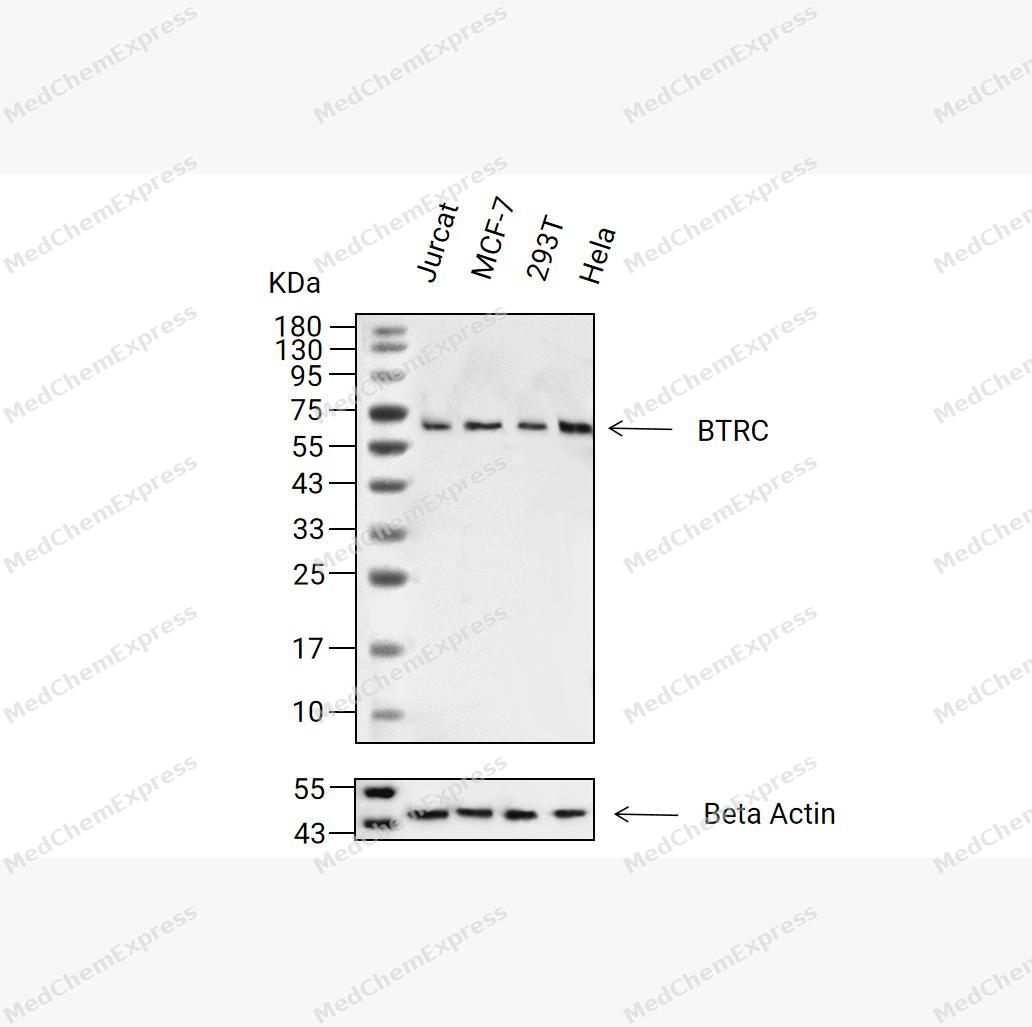 Western blot analysis of extracts from Jurkat (lane 2(20μg), MCF-7 (lane 3(20μg), 293 T (lane 4(20μg) and Hela (lane 5(20μg) using BTRC Antibody (HY-P84888) Mouse mAb. Proteins were transferred to a PVDF membrane and blocked with 5% non-fat milk in TBST for 2 hour at room temperature. The primary antibody (1/1000)and Loading control antibody (Beta Actin, HY-P80993, 1/10000) was used in 5% non-fat milk in TBST at 4°C overnight. Goat Anti-Mouse IgG-HRP Secondary Antibody (1/10000) was used for 1 hour at room temperature.
 -
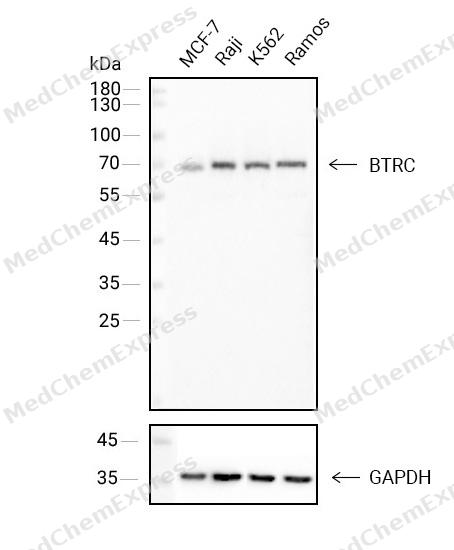 Western blot analysis of extracts from MCF-7(lane 1(40μg) )
 -
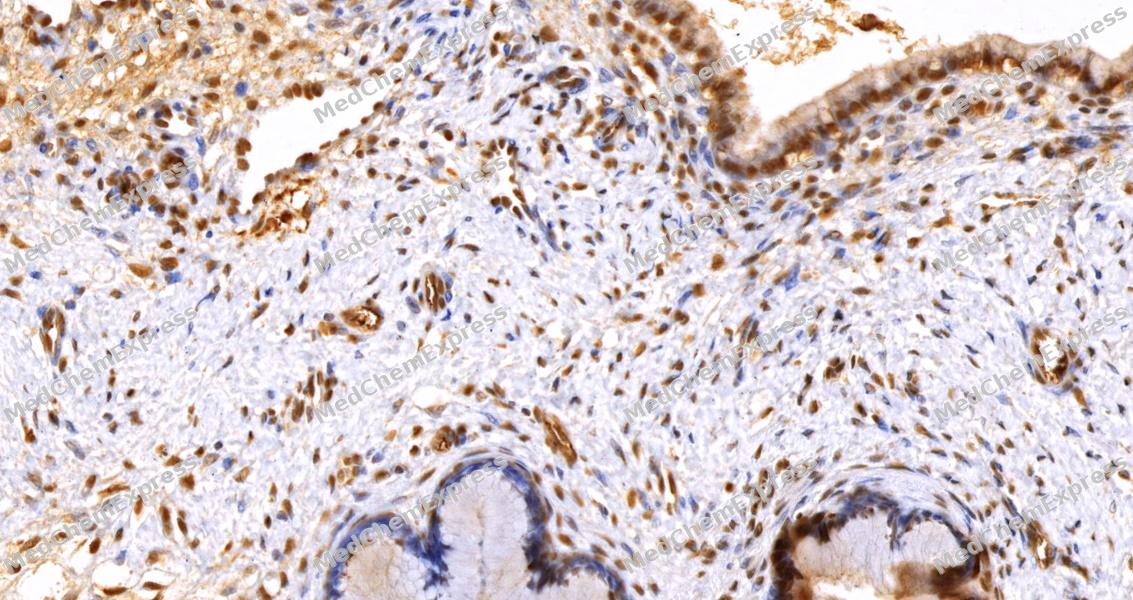 Immunohistochemical analysis of paraffin-embedded human cervix tissue using BTRC Antibody (HY-P84888, 1/500). The section was pretreated using heat mediated antigen retrieval with sodium citrate buffer (pH 6.0) for 8 minutes. The tissues were blocked with quick block buffer for 0.5 hours at room temperature, washed with PBS and PBST, and then incubated with the primary antibody overnight at 4℃. The detection was performed using an HRP conjugated compact polymer system. DAB was used as the chromogen. Tissues were counterstained with hematoxylin and mounted with DPX.
 -
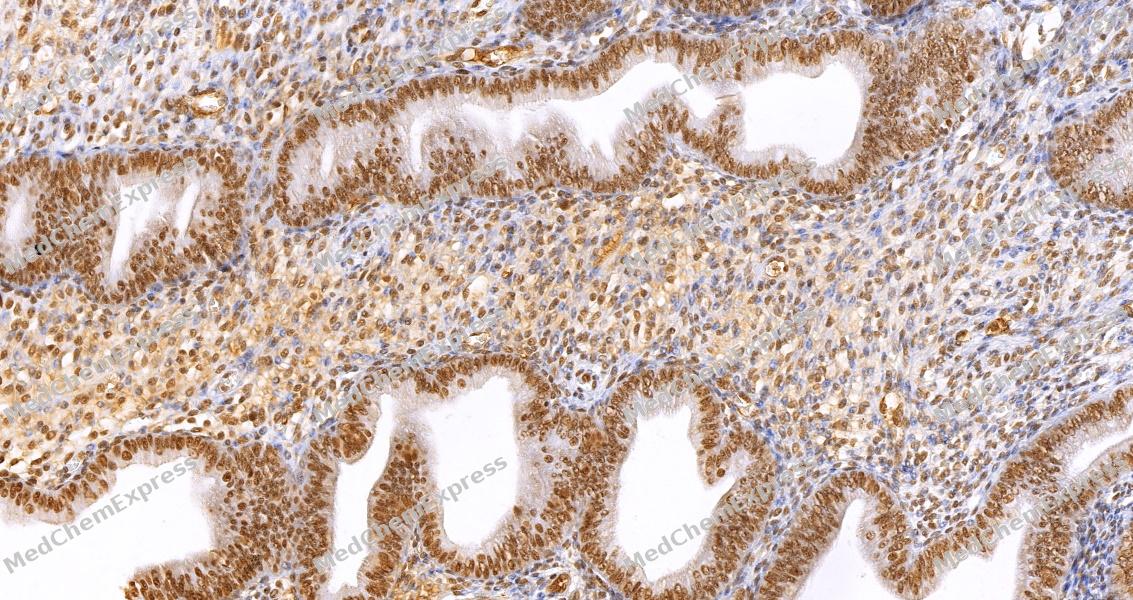 Immunohistochemical analysis of paraffin-embedded human endometrium tissue using BTRC Antibody (HY-P84888, 1/500). The section was pretreated using heat mediated antigen retrieval with sodium citrate buffer (pH 6.0) for 8 minutes. The tissues were blocked with quick block buffer for 0.5 hours at room temperature, washed with PBS and PBST, and then incubated with the primary antibody overnight at 4℃. The detection was performed using an HRP conjugated compact polymer system. DAB was used as the chromogen. Tissues were counterstained with hematoxylin and mounted with DPX.
 -
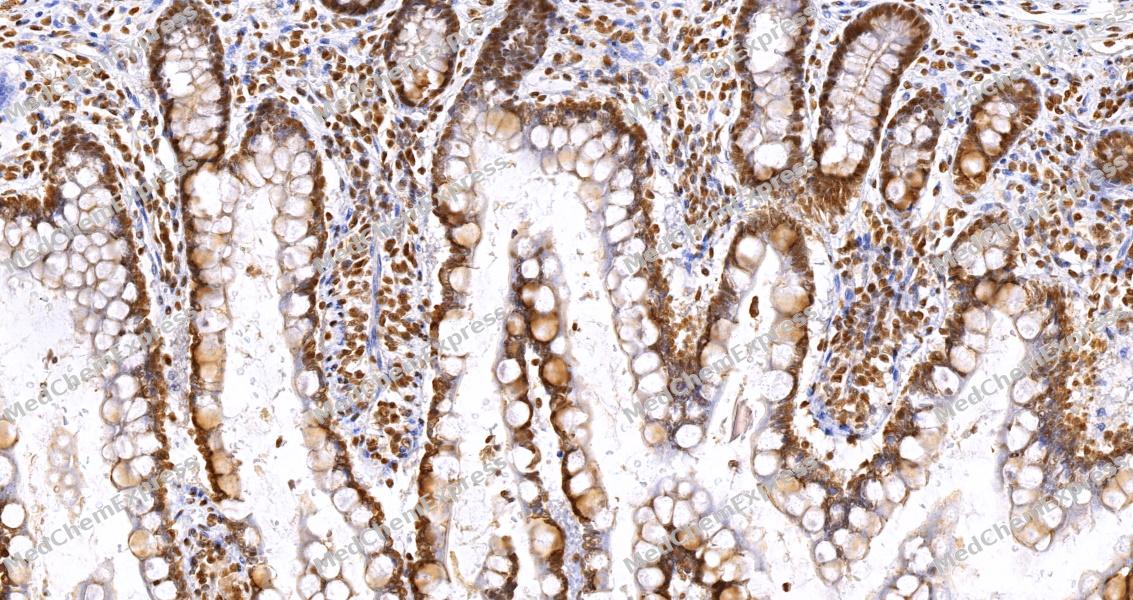 Immunohistochemical analysis of paraffin-embedded human small intestine tissue using BTRC Antibody (HY-P84888, 1/500). The section was pretreated using heat mediated antigen retrieval with sodium citrate buffer (pH 6.0) for 8 minutes. The tissues were blocked with quick block buffer for 0.5 hours at room temperature, washed with PBS and PBST, and then incubated with the primary antibody overnight at 4℃. The detection was performed using an HRP conjugated compact polymer system. DAB was used as the chromogen. Tissues were counterstained with hematoxylin and mounted with DPX.
 -
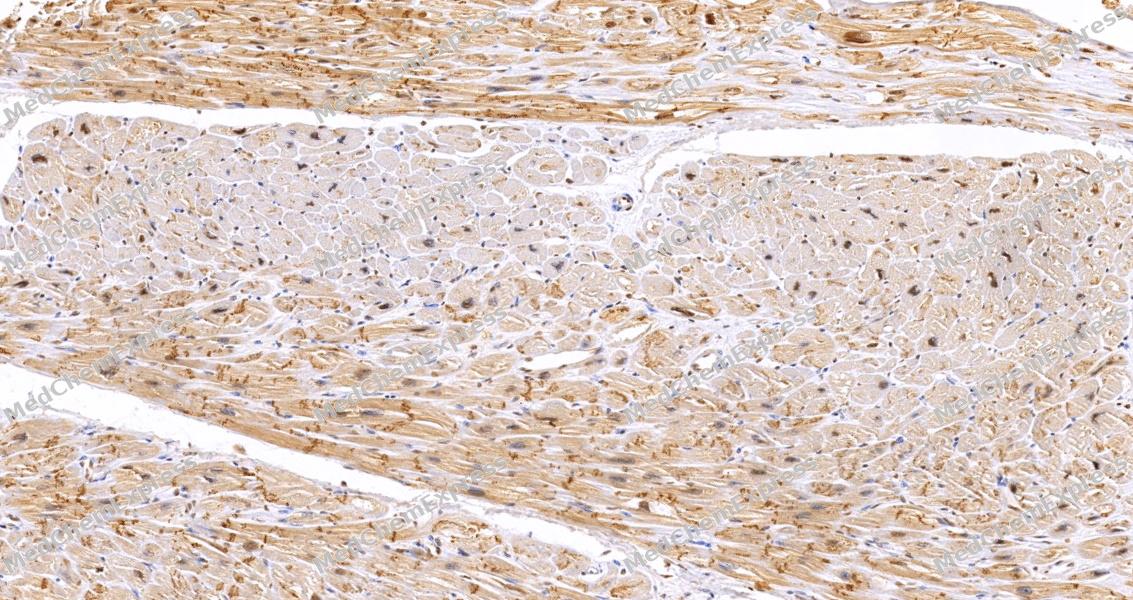 Immunohistochemical analysis of paraffin-embedded human heart tissue using BTRC Antibody (HY-P84888, 1/500). The section was pretreated using heat mediated antigen retrieval with sodium citrate buffer (pH 6.0) for 8 minutes. The tissues were blocked with quick block buffer for 0.5 hours at room temperature, washed with PBS and PBST, and then incubated with the primary antibody overnight at 4℃. The detection was performed using an HRP conjugated compact polymer system. DAB was used as the chromogen. Tissues were counterstained with hematoxylin and mounted with DPX.
 -
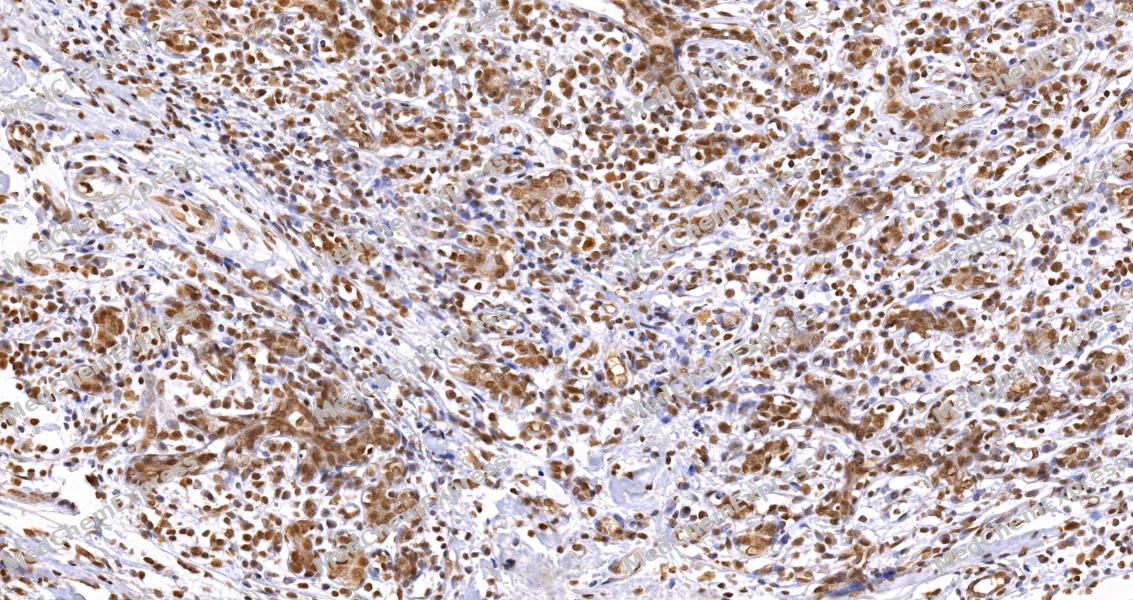 Immunohistochemical analysis of paraffin-embedded human breast tissue using BTRC Antibody (HY-P84888, 1/500). The section was pretreated using heat mediated antigen retrieval with sodium citrate buffer (pH 6.0) for 8 minutes. The tissues were blocked with quick block buffer for 0.5 hours at room temperature, washed with PBS and PBST, and then incubated with the primary antibody overnight at 4℃. The detection was performed using an HRP conjugated compact polymer system. DAB was used as the chromogen. Tissues were counterstained with hematoxylin and mounted with DPX.
 -
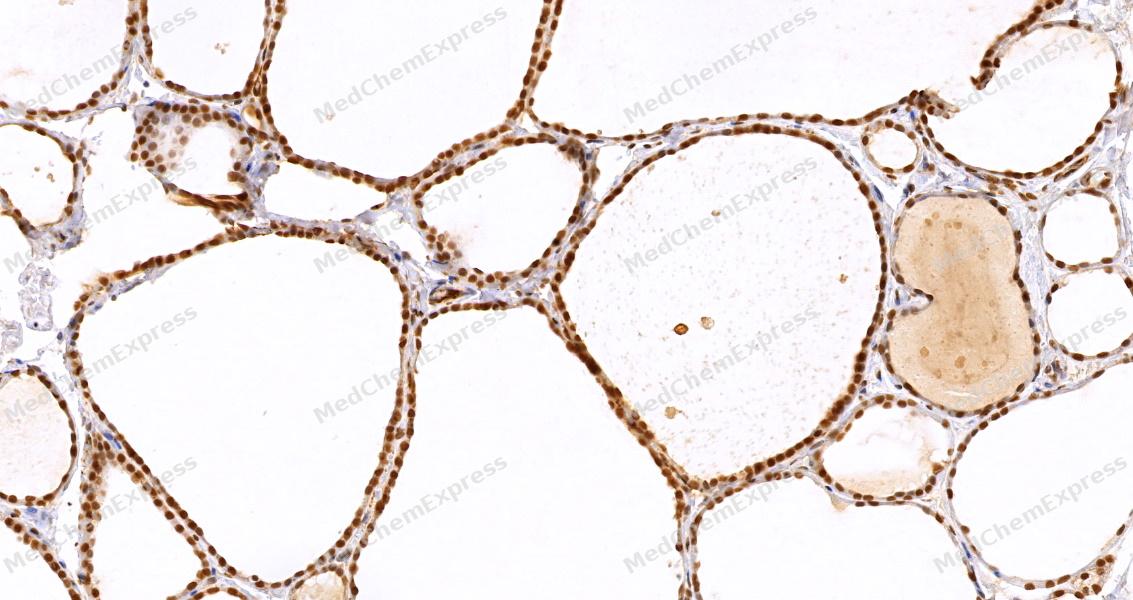 Immunohistochemical analysis of paraffin-embedded human thyroid gland tissue using BTRC Antibody (HY-P84888, 1/500). The section was pretreated using heat mediated antigen retrieval with sodium citrate buffer (pH 6.0) for 8 minutes. The tissues were blocked with quick block buffer for 0.5 hours at room temperature, washed with PBS and PBST, and then incubated with the primary antibody overnight at 4℃. The detection was performed using an HRP conjugated compact polymer system. DAB was used as the chromogen. Tissues were counterstained with hematoxylin and mounted with DPX.


Background
-
Function
BTRC is a Substrate recognition component of a SCF (SKP1-CUL1-F-box protein) E3 ubiquitin-protein ligase complex which mediates the ubiquitination and subsequent proteasomal degradation of target proteins. Recognizes and binds to phosphorylated target proteins. SCF(BTRC) mediates the ubiquitination of CTNNB1 and participates in Wnt signaling. SCF(BTRC) mediates the ubiquitination of phosphorylated NFKB1, ATF4, CDC25A, DLG1, FBXO5, PER1, SMAD3, SMAD4, SNAI1 and probably NFKB2. SCF(BTRC) mediates the ubiquitination of NFKBIA, NFKBIB and NFKBIE; the degradation frees the associated NFKB1 to translocate into the nucleus and to activate transcription. Ubiquitination of NFKBIA occurs at 'Lys-21' and 'Lys-22'. The SCF(FBXW11) complex also regulates NF-kappa-B by mediating ubiquitination of phosphorylated NFKB1: specifically ubiquitinates the p105 form of NFKB1, leading to its degradation. SCF(BTRC) mediates the ubiquitination of CEP68; this is required for centriole separation during mitosis. SCF(BTRC) mediates the ubiquitination and subsequent degradation of nuclear NFE2L1. Has an essential role in the control of the clock-dependent transcription via degradation of phosphorylated PER1 and PER2. May be involved in ubiquitination and subsequent proteasomal degradation through a DBB1-CUL4 E3 ubiquitin-protein ligase. Required for activation of NFKB-mediated transcription by IL1B, MAP3K14, MAP3K1, IKBKB and TNF. Required for proteolytic processing of GLI3. Mediates ubiquitination of REST, thereby leading to its proteasomal degradation. SCF(BTRC) mediates the ubiquitination and subsequent proteasomal degradation of KLF4; thereby negatively regulating cell pluripotency maintenance and embryogenesis. SCF(BTRC) acts as a regulator of mTORC1 signaling pathway by catalyzing ubiquitination and subsequent proteasomal degradation of phosphorylated DEPTOR, TFE3 and MITF. SCF(BTRC) directs 'Lys-48'-linked ubiquitination of UBR2 in the T-cell receptor signaling pathway[1][2][3][4][5][6][7][8][9][10][11][12][13][14][15][16][17][18][19][20][21][22][23][24][25][26][27][28][29][30][31][32].
-
Subcellular Localization
Cytoplasm; Nucleus
-
Expression
Tissue_specificity:Expressed in epididymis (at protein level) -
Isoforms & Post-Translational Modification
Q9Y297 has 2 isomers: Q9Y297-1: 68867 Da (predicted); Q9Y297-2: 65049 Da (predicted).
Ubiquitinated (PubMed:33110214). Deubiquitinated by OTUD5, promoting its stability (PubMed:33110214) -
Subunit
Homodimer. Self-associates. Component of the SCF(BTRC) complex formed of CUL1, SKP1, RBX1 and a BTRC dimer (PubMed:10066435, PubMed:22017875, PubMed:22017876, PubMed:22017877, PubMed:36608670, PubMed:9990852). Direct interaction with SKP1 occurs via the F-box domain. Interacts with phosphorylated ubiquitination substrates SMAD3 and SMAD4. Interacts with phosphorylated ubiquitination substrates CTNNB1, NFKBIA, NFKBIB, NFKBIE, NFKB1/nuclear factor NF-kappa-B p105 subunit, ATF4, CDC25A, DLG1, FBXO5 and SNAI1; the interaction requires the phosphorylation of the 2 serine residues in the substrate destruction motif D-S-G-X(2,3,4)-S. Binds UBQLN1. Interacts with CDC34 and UBE2R2. Interacts with FBXW11. Interacts with CUL4A and DDB1. Part of a SCF(BTRC)-like complex lacking CUL1, which is associated with phosphorylated NKBIA and RELA; RELA interacts directly with NFKBIA. Interacts with the phosphorylated form of GLI3. Interacts with CLU. Interacts with PER1 (phosphorylated), PER2 (phosphorylated) and PER3. Interacts with phosphorylated ubiquitination substrate CEP68 (PubMed:25503564, PubMed:25704143). Interacts with ZC3H12A; this interaction occurs when ZC3H12A is phosphorylated in a IKBKB/IKKB-dependent manner (By similarity). Interacts with HSF1; this interaction occurs during mitosis and induces HSF1 ubiquitin-dependent degradation, a process inhibited by CDC20 (PubMed:18794143). Interacts with NFE2L1 (By similarity). Interacts with INAVA (PubMed:29420262). Interacts with IL10RA; this interaction leads to IL10RA ubiquitination and subsequent degradation (PubMed:22087322). Interacts with REST (PubMed:18354482). Interacts with KLF4; this interaction leads to KLF4 ubiquitination and subsequent degradation (By similarity). Interacts with UBR2, as part of a SCF(BTRC) complex; the interaction mediates 'Lys-48'-linked ubiquitination of UBR2 and is regulated by DUSP22 in the T-cell receptor signaling pathway (PubMed:38225265)
-
SwissProt ID
-
Synonyms
FWD1; FBW1A; FBXW1; bTrCP; FBXW1A; bTrCP1; betaTrCP; BETA-TRCP


Documentation
-
Data Sheet (235 KB)
-
SDS (251 KB)
- English - EN (251 KB)
- Français - FR (251 KB)
- Deutsch - DE (251 KB)
- Norwegian - NO (251 KB)
- Español - ES (251 KB)
- Swedish - SV (251 KB)
- Italian - IT (251 KB)
- Korean - KR (251 KB)
- Portuguese - PT (251 KB)
-
User Guide for Antibodies (1077 KB)

 Powered by Bioz
