



MAP3K4 Antibody (YA3050)
(Synonyms: MTK1; MEKK4; MEKK 4; MAPKKK4; PRO0412)
Based on 1 Customer Validation
MAP3K4 Antibody (YA3050) is a Rabbit-derived and non-conjugated IgG monoclonal antibody, targeting to MAP3K4.
-
Host:
Rabbit
-
Isotype:
IgG
-
Application:
WB, IHC-F, IHC-P, ICC/IF
-
Reactivity :
Human
-
Formulation:
Supplied in 50mM Tris-Glycine(pH 7.4), 0.15M NaCl, 40% Glycerol, 0.01% Sodium azide and 0.05% BSA
-
Conjugation:
Non-conjugated


To place orders, for customer services and technical support, please contact: MedChemExpress USA
Tel: 609-228-6898 E-mail: [email protected] [email protected]





Applications
| Application |
WB

WB: Western Blot
|
IHC-P
IHC-P: Immunohistochemistry-Paraffin
|
IHC-F
IHC-F: Immunohistochemistry-Frozen
|
ICC/IF
ICC/IF: Immunocytochemistry/
Immunofluorescence |
|---|---|---|---|---|
| Dilution Ratio | 1:500-1:1000 | 1:50-1:100 | 1:50-1:100 | 1:50-1:200 |


Product Details
MAP3K4 Antibody (YA3050) is a Rabbit-derived and non-conjugated IgG monoclonal antibody, targeting to MAP3K4.
-
Host Rabbit

-
Clonality Recombinant,Monoclonal

-
Species ReactivityHuman
-
Observed Molecular WeightObserved band size: 200 kDa
Note: Due to possible protein modifications or aggregation, the molecular weight should be confirmed by actual measurement, and the predicted value is for reference only.

-
Calculated Molecular Weight Predicted band size: 182 kDa

A synthetic peptide of human MAP3K4
Endogenous
Affinity Purified
Non-conjugated
Unmodified
IgG


Product Properties
-
Appearance
Solution
-
Formulation
Supplied in 50mM Tris-Glycine(pH 7.4), 0.15M NaCl, 40% Glycerol, 0.01% Sodium azide and 0.05% BSA
-
Concentration
Batch-dependent, Please check the COA for the concentration of each lot. Check Lot Concentration
-
Storage & Stability
Stored at -20°C for 1 year. Avoid repeated freeze / thaw cycles.
-
Shipping
Shipping with blue ice.


Verification Images
-
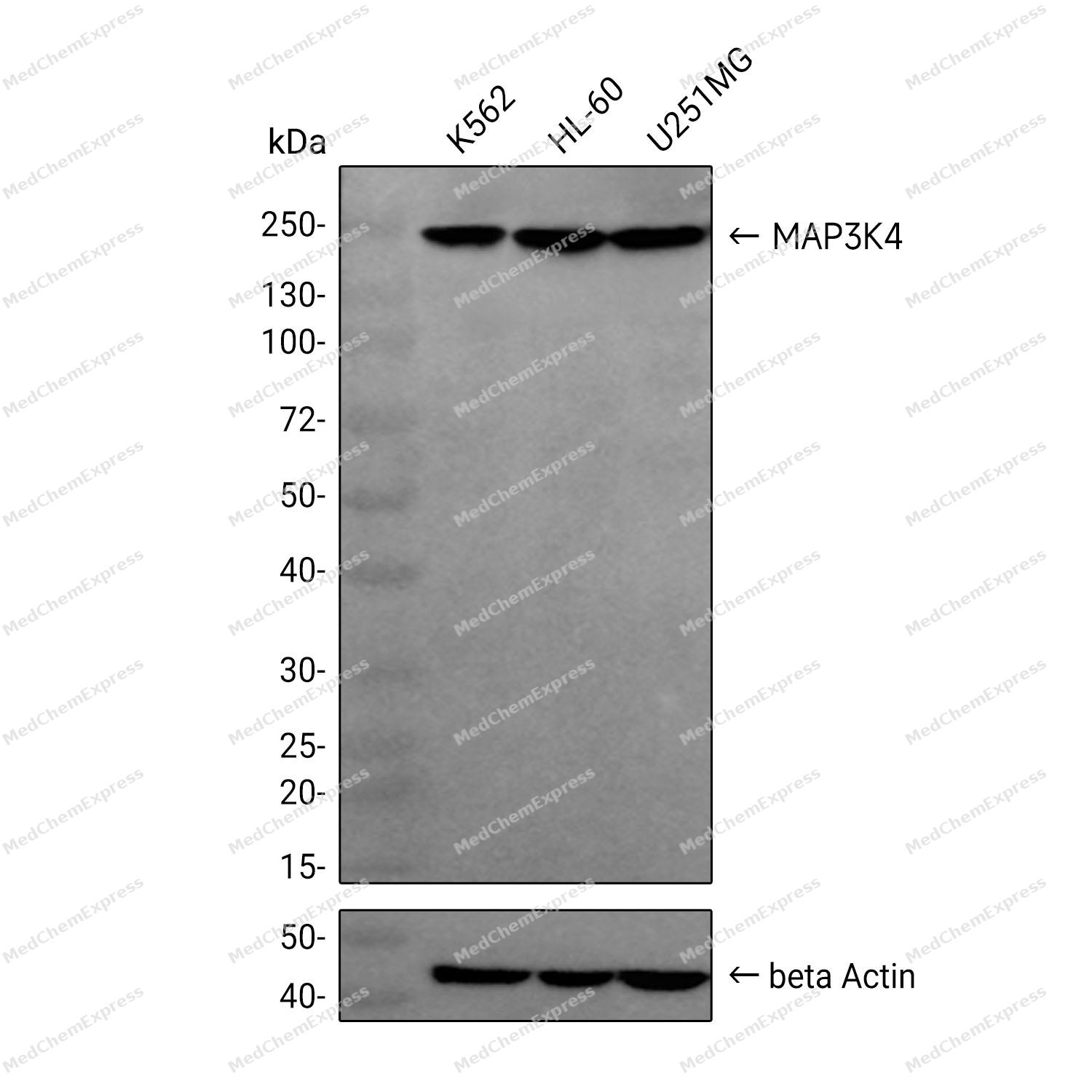
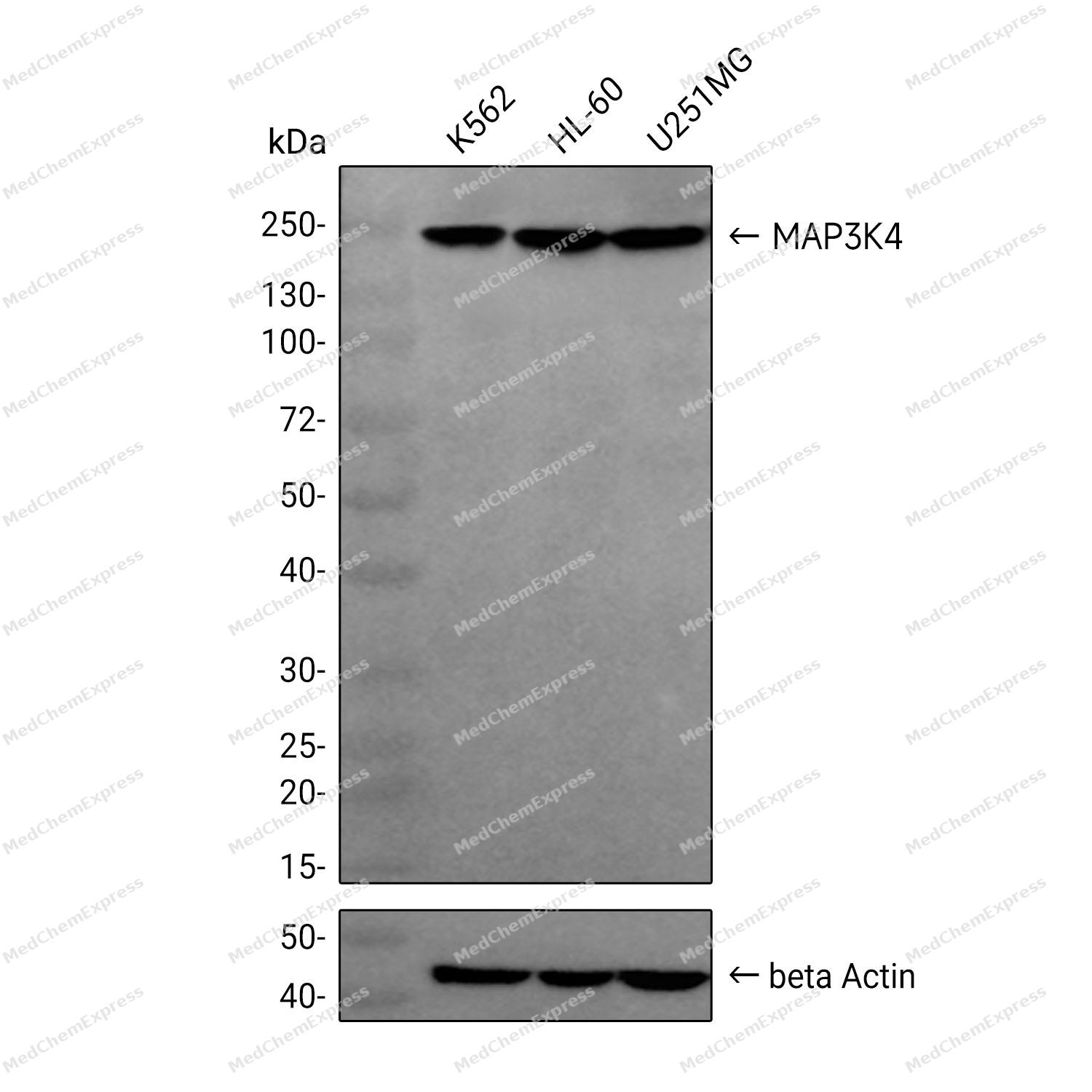 Western blot analysis was performed on extracts from K562 (lane 1, 15 μg), HL-60 (lane 2, 15 μg), and U251MG (lane 3, 15 μg) using MAP3K4 Rabbit mAb.Proteins were transferred to a PVDF membrane and blocked with 5% non-fat milk in TBST at 4°C overnight.The primary antibody (1:1000 dilution) and the loading control antibody (beta-Actin, HY-P80438, 1:5000 dilution) was incubated in 5% non-fat milk in TBST for 1 hour at 37°C.Goat Anti-Rabbit IgG-HRP Secondary Antibody (1:20000 dilution) was then applied for 40 minutes at 37°C.
 -
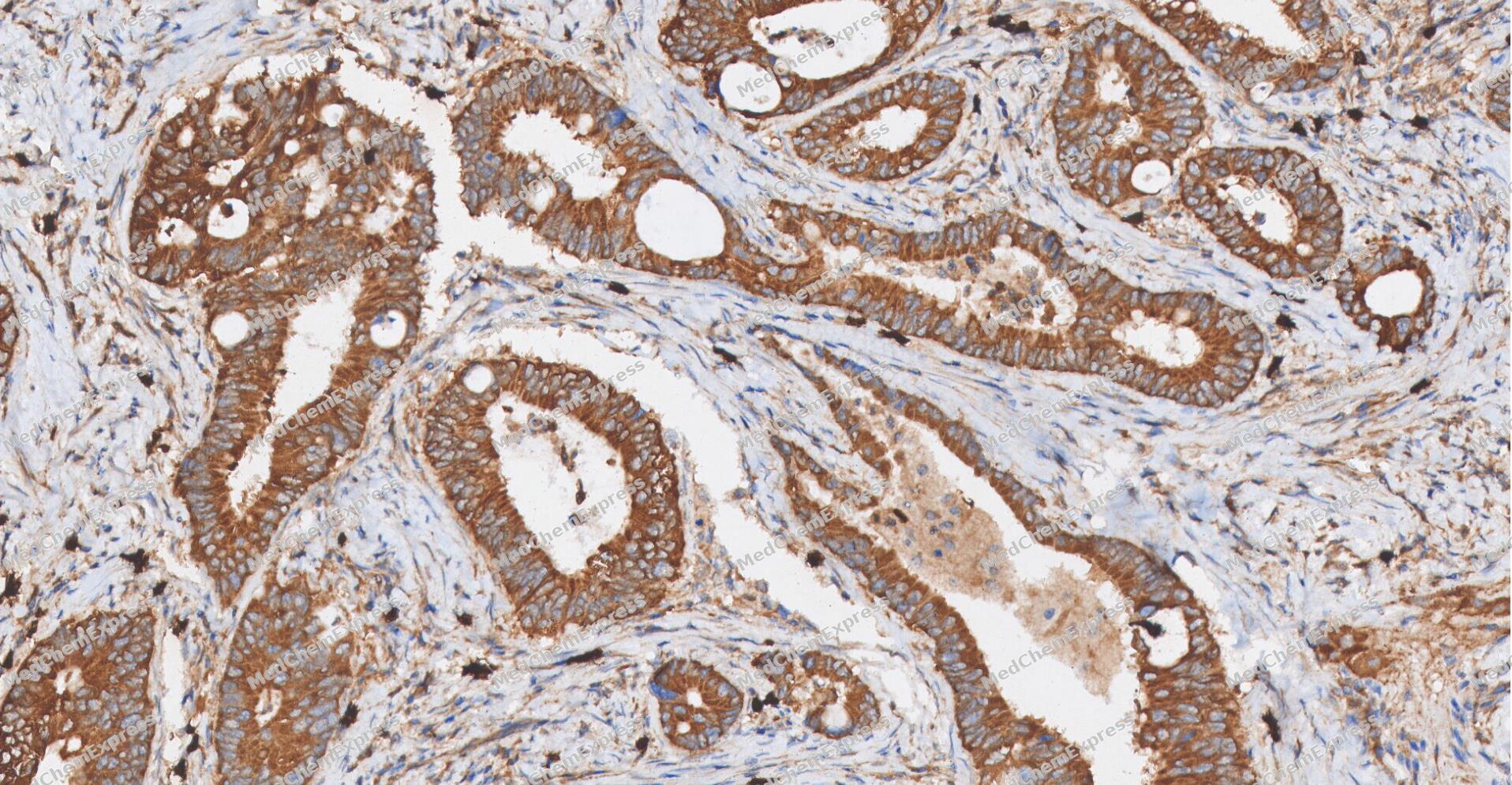 Immunohistochemical analysis of paraffin-embedded human Colon cancer tissue using MAP3K4 antibody was performed. The section was pretreated using high-temperature and high-pressure mediated EDTA antigen retrieval buffer (pH 9.0), for 5 minutes. The tissues were incubated with primary antibody (HY-P83305, 1:300 dilution) at room temperature for 60 minutes. Detection was performed using an HRP conjugated compact polymer system. DAB was used as the chromogen. The tissues were counterstained with hematoxylin and mounted with neutral balsam mounting medium.
 -
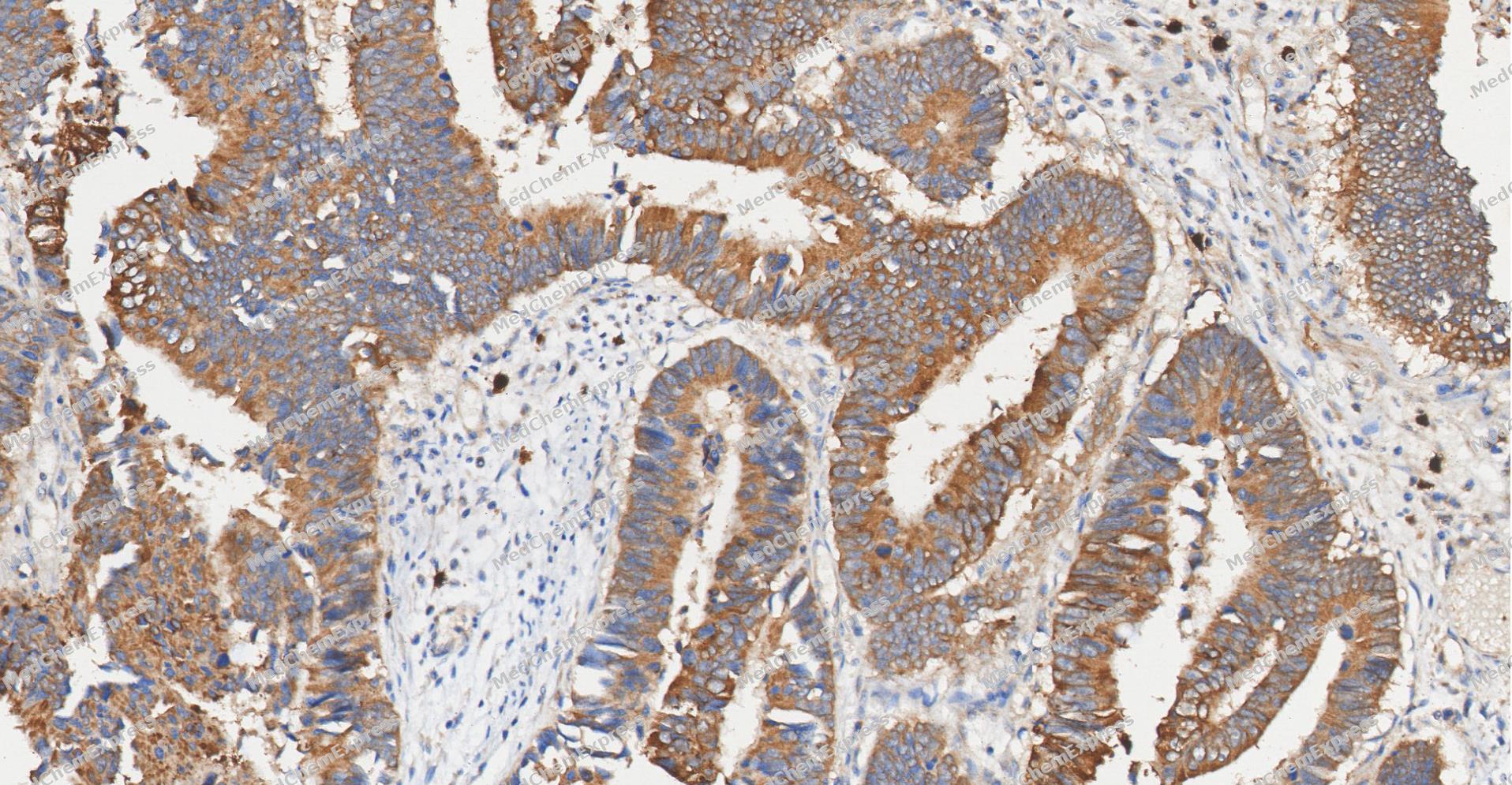 Immunohistochemical analysis of paraffin-embedded human Colon cancer tissue using MAP3K4 antibody was performed. The section was pretreated using high-temperature and high-pressure mediated EDTA antigen retrieval buffer (pH 9.0), for 5 minutes. The tissues were incubated with primary antibody (HY-P83305, 1:300 dilution) at room temperature for 60 minutes. Detection was performed using an HRP conjugated compact polymer system. DAB was used as the chromogen. The tissues were counterstained with hematoxylin and mounted with neutral balsam mounting medium.
 -
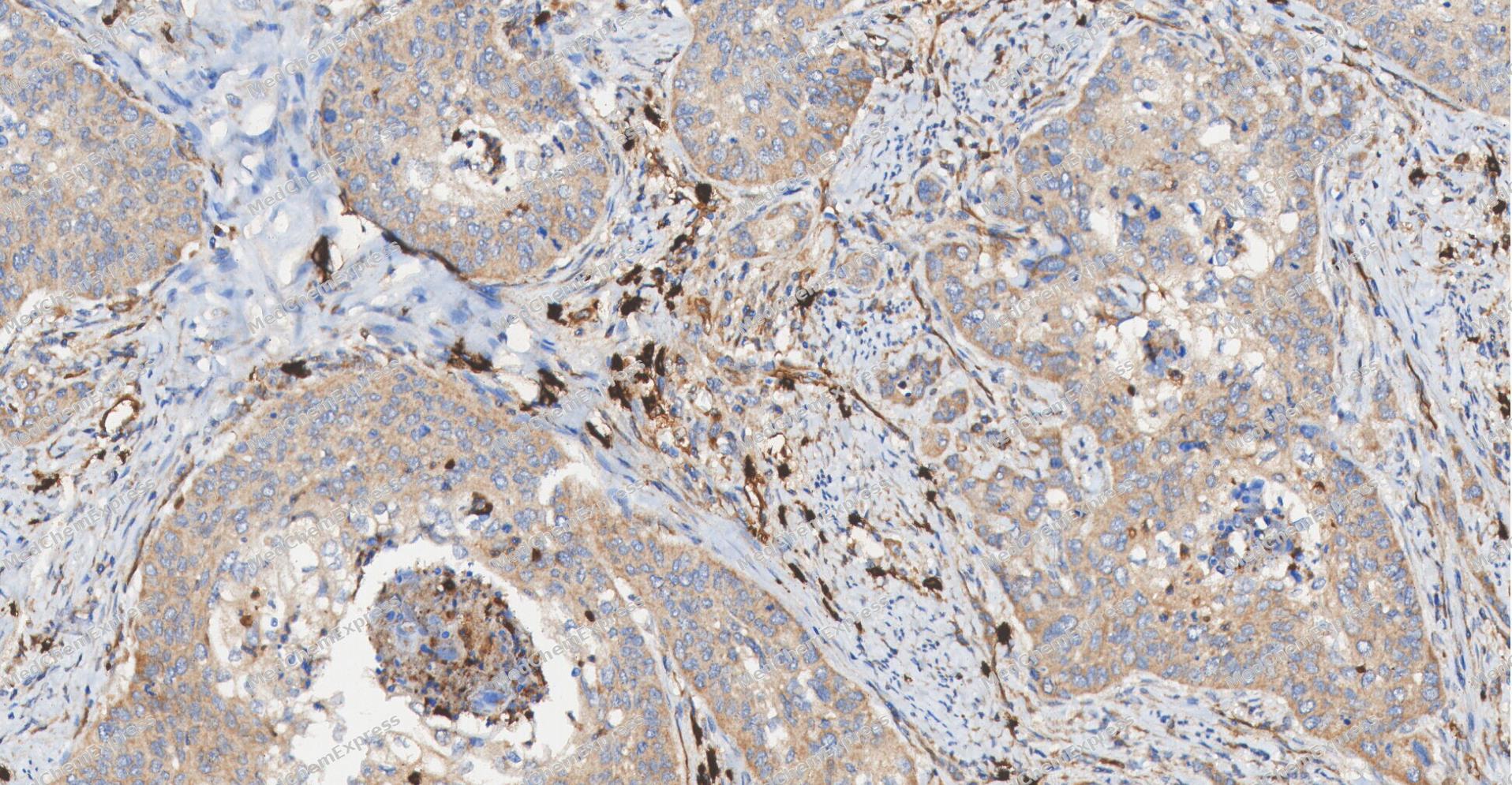 Immunohistochemical analysis of paraffin-embedded human Esophageal Carcinoma tissue using MAP3K4 antibody was performed. The section was pretreated using high-temperature and high-pressure mediated EDTA antigen retrieval buffer (pH 9.0), for 5 minutes. The tissues were incubated with primary antibody (HY-P83305, 1:300 dilution) at room temperature for 60 minutes. Detection was performed using an HRP conjugated compact polymer system. DAB was used as the chromogen. The tissues were counterstained with hematoxylin and mounted with neutral balsam mounting medium.
 -
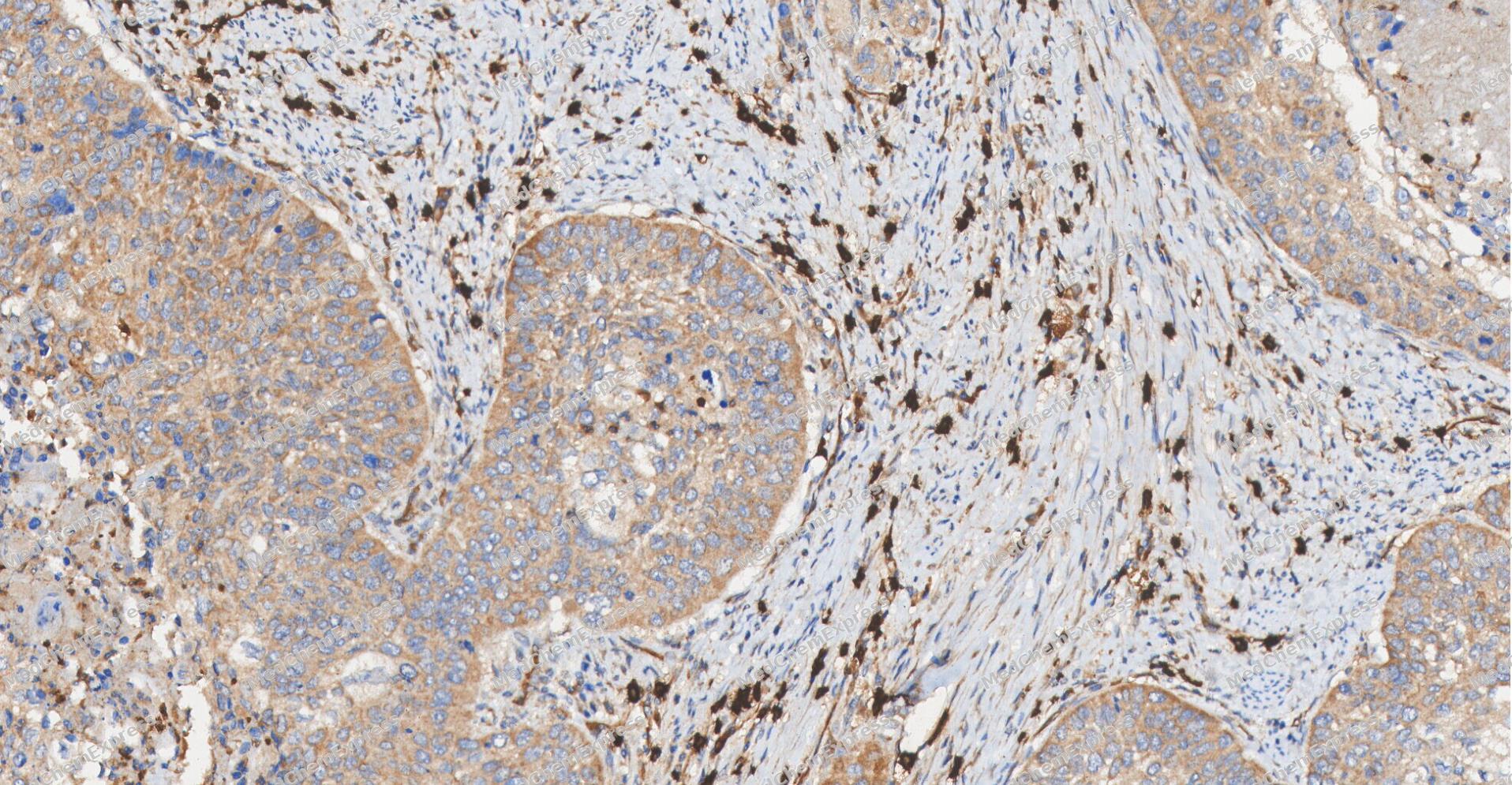 Immunohistochemical analysis of paraffin-embedded human Esophageal Carcinoma tissue using MAP3K4 antibody was performed. The section was pretreated using high-temperature and high-pressure mediated EDTA antigen retrieval buffer (pH 9.0), for 5 minutes. The tissues were incubated with primary antibody (HY-P83305, 1:300 dilution) at room temperature for 60 minutes. Detection was performed using an HRP conjugated compact polymer system. DAB was used as the chromogen. The tissues were counterstained with hematoxylin and mounted with neutral balsam mounting medium.
 -
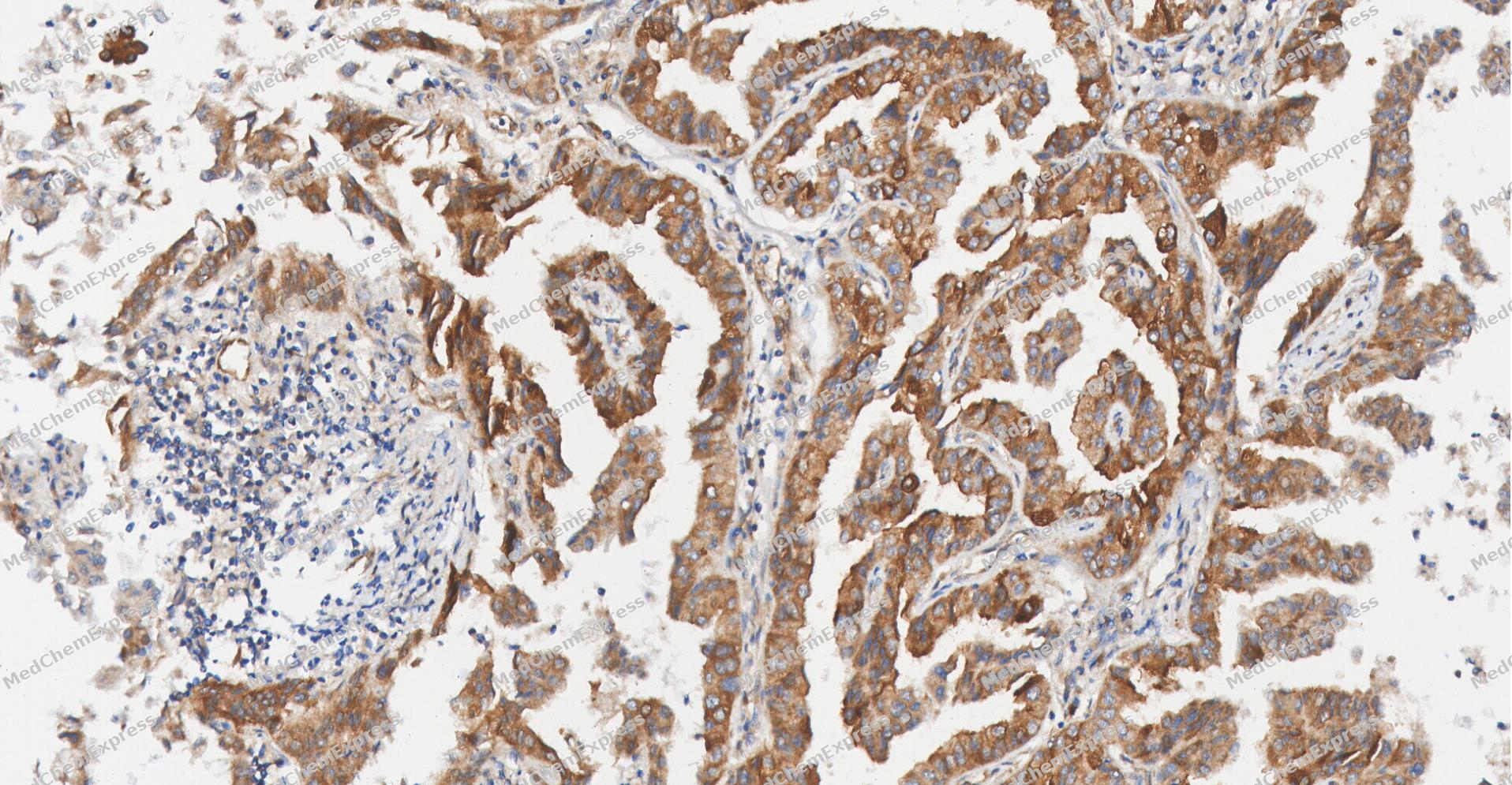 Immunohistochemical analysis of paraffin-embedded human Lung Adenocarcinom tissue using MAP3K4 antibody was performed. The section was pretreated using high-temperature and high-pressure mediated EDTA antigen retrieval buffer (pH 9.0), for 5 minutes. The tissues were incubated with primary antibody (HY-P83305, 1:300 dilution) at room temperature for 60 minutes. Detection was performed using an HRP conjugated compact polymer system. DAB was used as the chromogen. The tissues were counterstained with hematoxylin and mounted with neutral balsam mounting medium.
 -
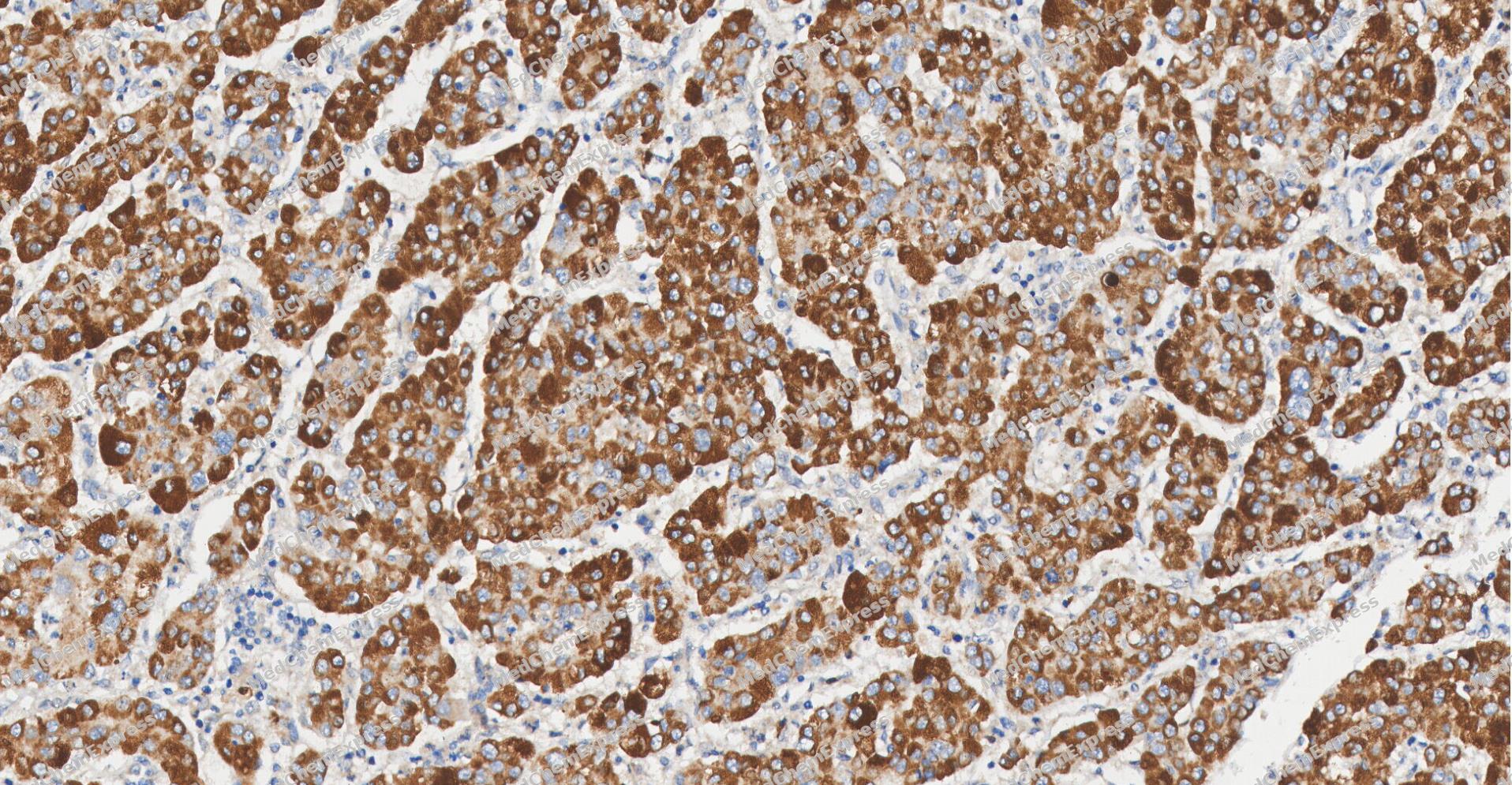 Immunohistochemical analysis of paraffin-embedded human Liver cancer tissue using MAP3K4 antibody was performed. The section was pretreated using high-temperature and high-pressure mediated EDTA antigen retrieval buffer (pH 9.0), for 5 minutes. The tissues were incubated with primary antibody (HY-P83305, 1:300 dilution) at room temperature for 60 minutes. Detection was performed using an HRP conjugated compact polymer system. DAB was used as the chromogen. The tissues were counterstained with hematoxylin and mounted with neutral balsam mounting medium.
 -
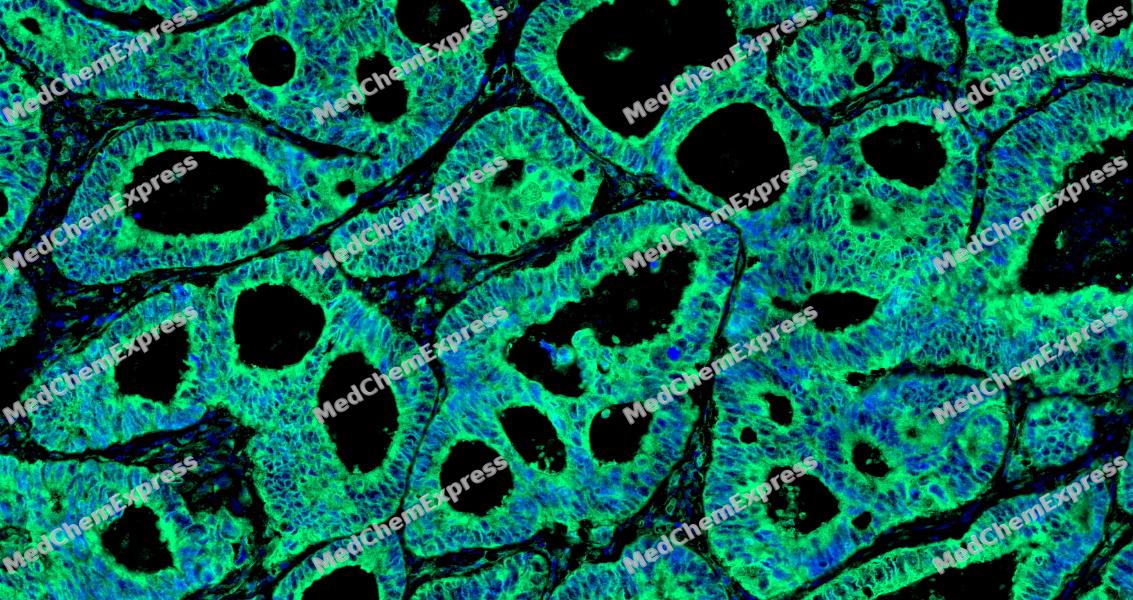 Tyramide signaling amplification based immunofluorescence was performed on paraffin-embedded human Colon cancer tissue using MAP3K4 antibody. Antigen retrieval was performed in EDTA buffer pH 9.0 (95 °C, 20 min) followed by cooling to RT. Then incubated with primary antibody (HY-P83305, 1:800 dilution) at room temperature for 60 minutes and HRP conjugated secondary antibody for 10 minutes. Fluorescence was then developed with Vari Fluor 532 TSA (200×)(HY-D1832). The tissues were counterstained with DAPI and mounted with Anti-fade mounting medium.
 -
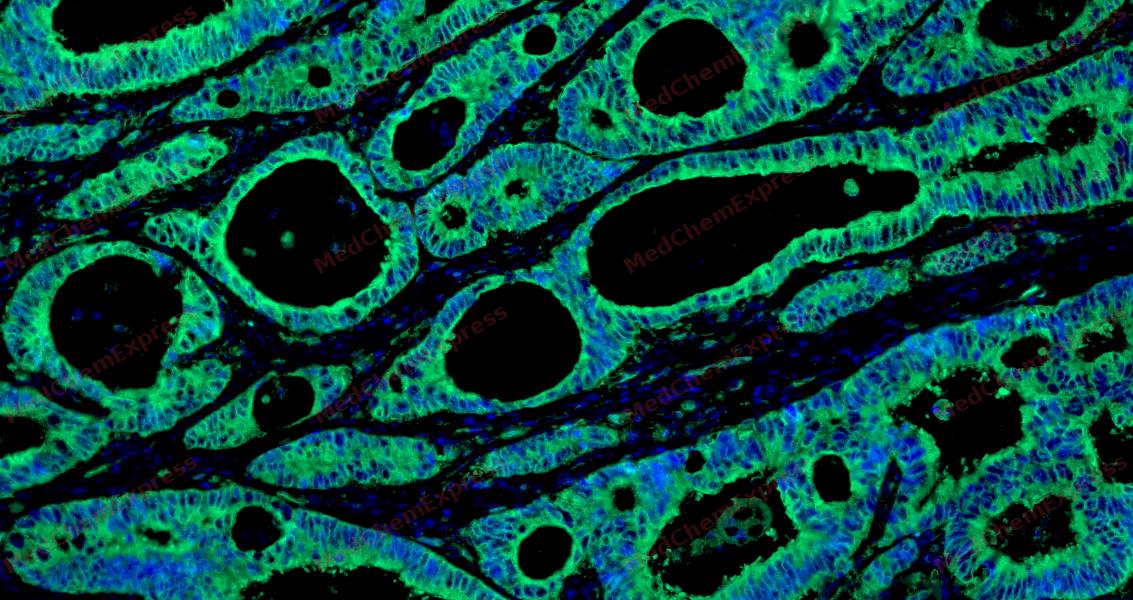 Tyramide signaling amplification based immunofluorescence was performed on paraffin-embedded human Colon cancer tissue using MAP3K4 antibody. Antigen retrieval was performed in EDTA buffer pH 9.0 (95 °C, 20 min) followed by cooling to RT. Then incubated with primary antibody (HY-P83305, 1:800 dilution) at room temperature for 60 minutes and HRP conjugated secondary antibody for 10 minutes. Fluorescence was then developed with Vari Fluor 532 TSA (200×)(HY-D1832). The tissues were counterstained with DAPI and mounted with Anti-fade mounting medium.
 -
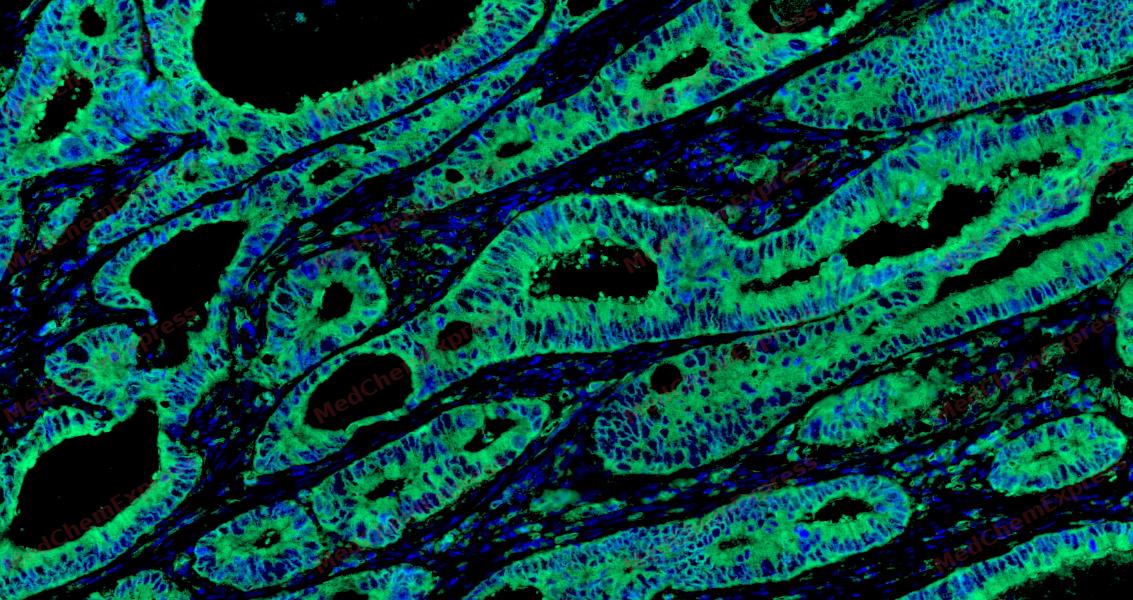 Tyramide signaling amplification based immunofluorescence was performed on paraffin-embedded human Colon cancer tissue using MAP3K4 antibody. Antigen retrieval was performed in EDTA buffer pH 9.0 (95 °C, 20 min) followed by cooling to RT. Then incubated with primary antibody (HY-P83305, 1:800 dilution) at room temperature for 60 minutes and HRP conjugated secondary antibody for 10 minutes. Fluorescence was then developed with Vari Fluor 532 TSA (200×)(HY-D1832). The tissues were counterstained with DAPI and mounted with Anti-fade mounting medium.
 -
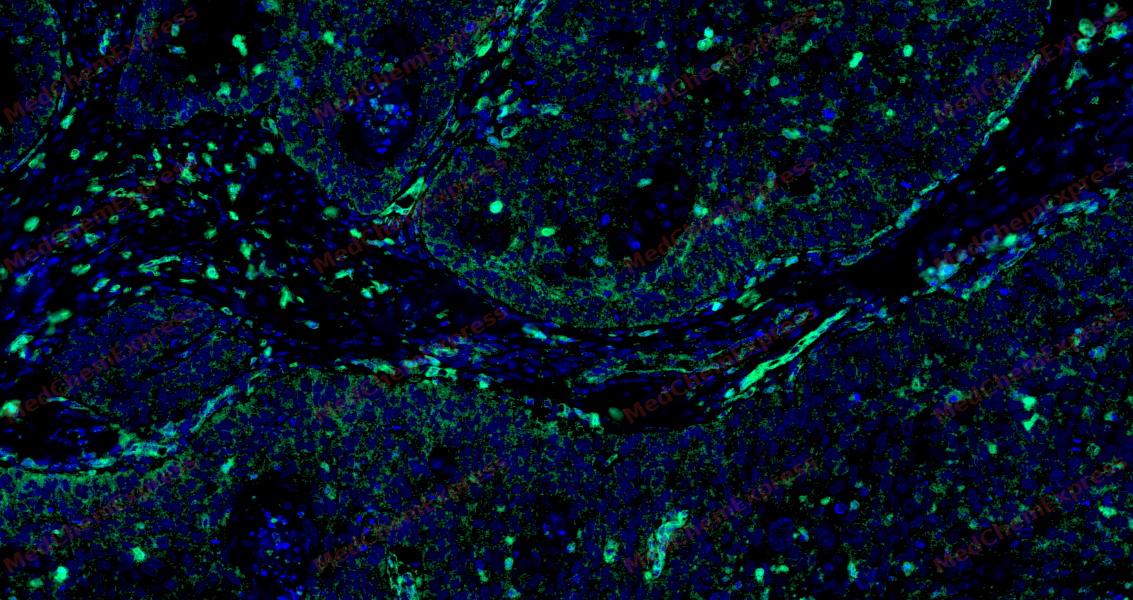 Tyramide signaling amplification based immunofluorescence was performed on paraffin-embedded human Esophageal Carcinoma tissue using MAP3K4 antibody. Antigen retrieval was performed in EDTA buffer pH 9.0 (95 °C, 20 min) followed by cooling to RT. Then incubated with primary antibody (HY-P83305, 1:800 dilution) at room temperature for 60 minutes and HRP conjugated secondary antibody for 10 minutes. Fluorescence was then developed with Vari Fluor 532 TSA (200×)(HY-D1832). The tissues were counterstained with DAPI and mounted with Anti-fade mounting medium.
 -
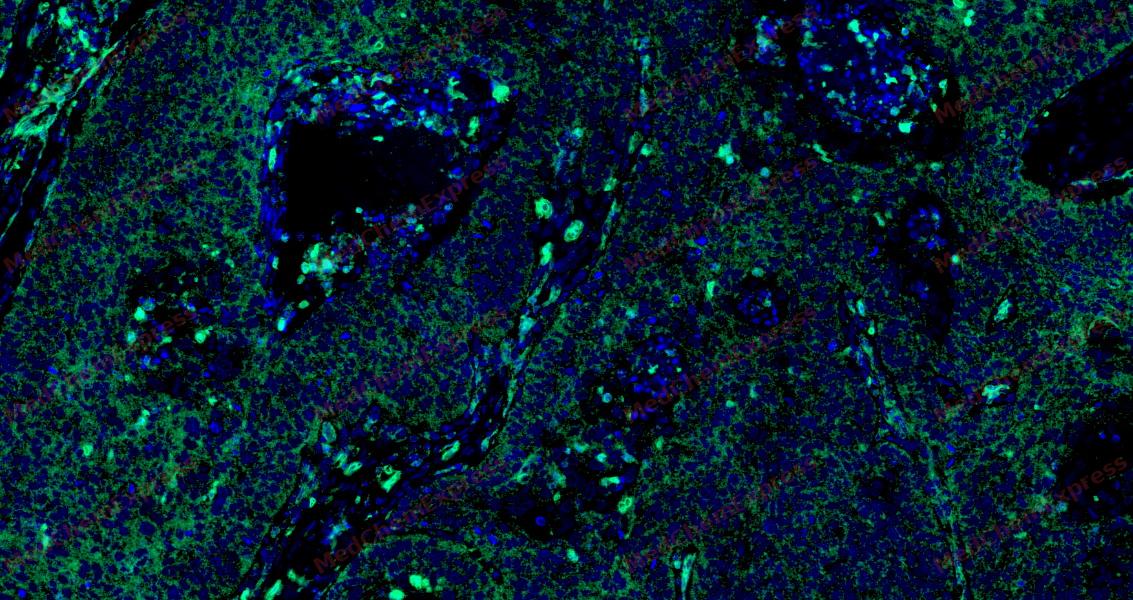 Tyramide signaling amplification based immunofluorescence was performed on paraffin-embedded human Esophageal Carcinoma tissue using MAP3K4 antibody. Antigen retrieval was performed in EDTA buffer pH 9.0 (95 °C, 20 min) followed by cooling to RT. Then incubated with primary antibody (HY-P83305, 1:800 dilution) at room temperature for 60 minutes and HRP conjugated secondary antibody for 10 minutes. Fluorescence was then developed with Vari Fluor 532 TSA (200×)(HY-D1832). The tissues were counterstained with DAPI and mounted with Anti-fade mounting medium.
 -
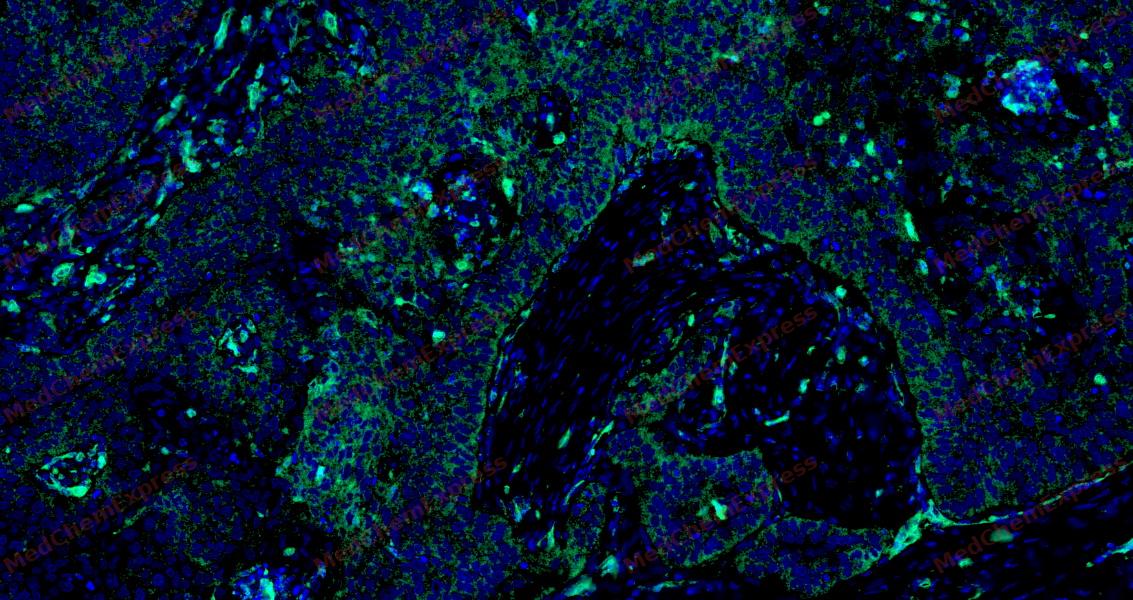 Tyramide signaling amplification based immunofluorescence was performed on paraffin-embedded human Esophageal Carcinoma tissue using MAP3K4 antibody. Antigen retrieval was performed in EDTA buffer pH 9.0 (95 °C, 20 min) followed by cooling to RT. Then incubated with primary antibody (HY-P83305, 1:800 dilution) at room temperature for 60 minutes and HRP conjugated secondary antibody for 10 minutes. Fluorescence was then developed with Vari Fluor 532 TSA (200×)(HY-D1832). The tissues were counterstained with DAPI and mounted with Anti-fade mounting medium.


Background
-
Function
MAP3K4, also called MEKK4/MTK1, encodes a MAP kinase kinase kinase that links environmental stress to p38 MAPK and JNK signaling while sparing the ERK pathway[1]. Compared with related MEKK1/2/3 kinases, early cloning work distinguished MEKK4 by selective stress-pathway activation and absence of ERK activation[2]. Mechanistically, GADD45α/β/γ bind the MTK1 N-terminal domain and activate MTK1/MEKK4 kinase activity, connecting DNA-damage and environmental stress signals to p38/JNK activation[3][4]. In developmental models, MAP3K4 supports epithelial state control because MAP3K4/CBP-regulated H2B acetylation maintains trophoblast stem cell epithelial identity and restrains EMT[5]. Loss of MAP3K4 activity elevates HDAC6, weakens tight-junction gene regulation, and drives trophoblast stem cells toward epithelial-to-mesenchymal transition[6]. MAP3K4 kinase inactivation also causes fetal growth restriction through placental insufficiency and reduced IGF1R/IR-Akt signaling[7]. In disease models, MAP3K4 deficiency promotes invasive growth and EMT in intrahepatic cholangiocarcinoma, making MAP3K4 a practical target for studying stress signaling, EMT, placental development, and cancer invasion[8]. For experimental design, published studies support kinase-inactive MAP3K4 models, GADD45-mediated activation systems, and HDAC6 knockdown approaches rather than validated MAP3K4-specific agonists or inhibitors[3][4][6].
-
Subcellular Localization
Cytoplasm, perinuclear region
-
Expression
Tissue_specificity:Expressed at high levels in heart, placenta, skeletal muscle and pancreas, and at lower levels in other tissues -
Isoforms & Post-Translational Modification
Q9Y6R4 has 2 isomers: Q9Y6R4-1: 181685 Da (predicted); Q9Y6R4-2: 177014 Da (predicted).
-
Subunit
Monomer and homodimer. Homodimerization enhances kinase activity. Interacts with TRAF4; this promotes homodimerization (PubMed:16157600). Binds both upstream activators and downstream substrates in multimolecular complexes. Interacts with AXIN1 and DIXDC1; interaction with DIXDC1 prevents interaction with AXIN1 (PubMed:15262978). Interacts with GADD45 and MAP2K6 (PubMed:12052864). Interacts with ZFP36; this interaction enhances the association with SH3KBP1/CIN85 (PubMed:20221403). Interacts with SH3KBP1; this interaction enhances the association with ZFP36 (PubMed:20221403). Interacts with CDC42 (By similarity)
-
SwissProt ID
-
Synonyms
MTK1; MEKK4; MEKK 4; MAPKKK4; PRO0412
-
Research Field
Signal Transduction


Documentation
-
Data Sheet (262 KB)
-
SDS (251 KB)
- English - EN (251 KB)
- Français - FR (251 KB)
- Deutsch - DE (251 KB)
- Norwegian - NO (251 KB)
- Español - ES (251 KB)
- Swedish - SV (251 KB)
- Italian - IT (251 KB)
- Korean - KR (251 KB)
- Portuguese - PT (251 KB)
-
User Guide for Antibodies (1077 KB)
References
[1]. Takekawa M, et al. A human homolog of the yeast Ssk2/Ssk22 MAP kinase kinase kinases, MTK1, mediates stress-induced activation of the p38 and JNK pathways. EMBO J. 1997 Aug 15;16(16):4973-82. [Content Brief]
[2]. Gerwins P, et al. Cloning of a novel mitogen-activated protein kinase kinase kinase, MEKK4, that selectively regulates the c-Jun amino terminal kinase pathway. J Biol Chem. 1997 Mar 28;272(13):8288-95. [Content Brief]
[3]. Takekawa M, et al. A family of stress-inducible GADD45-like proteins mediate activation of the stress-responsive MTK1/MEKK4 MAPKKK. Cell. 1998 Nov 13;95(4):521-30. [Content Brief]
[4]. Mita H, et al. Regulation of MTK1/MEKK4 kinase activity by its N-terminal autoinhibitory domain and GADD45 binding. Mol Cell Biol. 2002 Jul;22(13):4544-55. [Content Brief]
[5]. Abell AN, et al. MAP3K4/CBP-regulated H2B acetylation controls epithelial-mesenchymal transition in trophoblast stem cells. Cell Stem Cell. 2011 May 6;8(5):525-37. [Content Brief]
[6]. Mobley RJ, et al. MAP3K4 Controls the Chromatin Modifier HDAC6 during Trophoblast Stem Cell Epithelial-to-Mesenchymal Transition. Cell Rep. 2017 Mar 7;18(10):2387-2400. [Content Brief]
[7]. Perry CH, et al. MAP3K4 promotes fetal and placental growth by controlling the receptor tyrosine kinases IGF1R/IR and Akt signaling pathway. J Biol Chem. 2022 Sep;298(9):102310. [Content Brief]
[8]. Yang LX, et al. Mitogen-activated protein kinase kinase kinase 4 deficiency in intrahepatic cholangiocarcinoma leads to invasive growth and epithelial-mesenchymal transition. Hepatology. 2015 Dec;62(6):1804-16. [Content Brief]

 Powered by Bioz
