



MMP3 Antibody (YA286)
(Synonyms: STMY1, MMP3, Stromelysin-1, SL-1, Matrix metalloproteinase-3, Transin-1, MMP-3)
Based on 1 Customer Validation
MMP3 Antibody (YA286) is a Rabbit-derived and non-conjugated IgG monoclonal antibody, targeting to MMP3.
-
Host:
Rabbit
-
Isotype:
IgG
-
Application:
WB, IHC-P
-
Reactivity :
Human, Mouse, Rat
-
Formulation:
Supplied in 1*TBS (pH7.4), 0.05% BSA and 40% Glycerol. Preservative: 0.05% Sodium Azide.
-
Conjugation:
Non-conjugated


To place orders, for customer services and technical support, please contact: MedChemExpress USA
Tel: 609-228-6898 E-mail: [email protected] [email protected]





Applications
| Application |
WB

WB: Western Blot
|
IHC-P
IHC-P: Immunohistochemistry-Paraffin
|
|---|---|---|
| Dilution Ratio | 1:500-1:2000 | 1:50-1:200 |


Product Details
MMP3 Antibody (YA286) is a Rabbit-derived and non-conjugated IgG monoclonal antibody, targeting to MMP3.
-
Host Rabbit

-
Clonality Recombinant,Monoclonal

-
Species ReactivityHuman, Mouse, Rat
-
Observed Molecular WeightObserved band size: 50 kDa
Note: Due to possible protein modifications or aggregation, the molecular weight should be confirmed by actual measurement, and the predicted value is for reference only.

-
Calculated Molecular Weight Predicted band size: 54 kDa

Entrez Gene: 4314 Human ; 17392 Mouse ;
SwissProt: P08254 Human ; P28862 Mouse ; P03957 Rat
OMIM: 614466 Human
Synthetic peptide within C-terminal human MMP3.
Endogenous
Protein A affinity purified.
Non-conjugated
Unmodified
IgG


Product Properties
-
Appearance
Solution
-
Formulation
Supplied in 1*TBS (pH7.4), 0.05% BSA and 40% Glycerol. Preservative: 0.05% Sodium Azide.
-
Concentration
Batch-dependent, Please check the COA for the concentration of each lot. Check Lot Concentration
-
Storage & Stability
Stored at -20°C for 1 year. Avoid repeated freeze / thaw cycles.
-
Shipping
Shipping with blue ice.


Verification Images
-
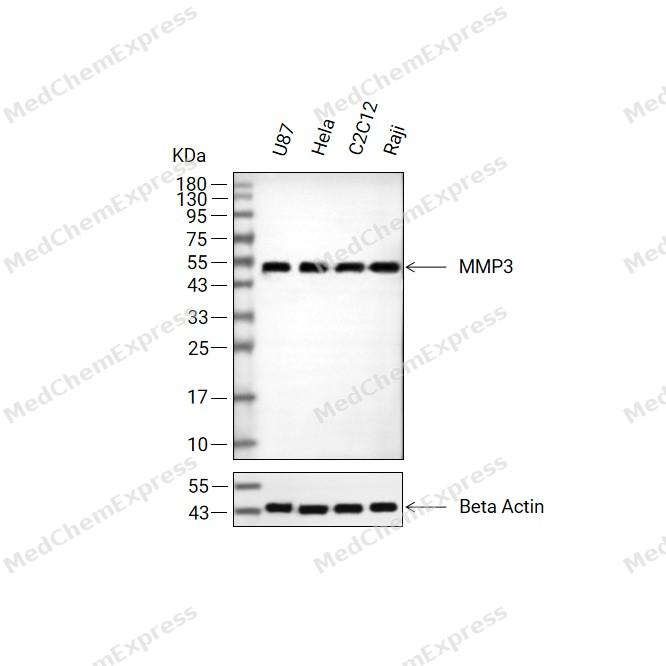 Western blot analysis of extracts from U87(lane 2(20μg) , Hela (lane 3(20μg) ,C2C12(lane 4(20μg)and Raji( lane 5(20μg) using MMP3 Antibody(HY-P80424).Proteins were transferred to a PVDF membrane and blocked with 5% non-fat milk in TBST for 2 hour at room temperature. The primary antibody ( 1/1000) and Loading control antibody (Beta Actin, HY-P80993,1/10000) was used in 5% non-fat milk in TBST at 4°C overnight. Goat Anti-Rabbit IgG-HRP Secondary Antibody (HY-P8001,1/10,000) was used for 1 hour at room temperature.
 -
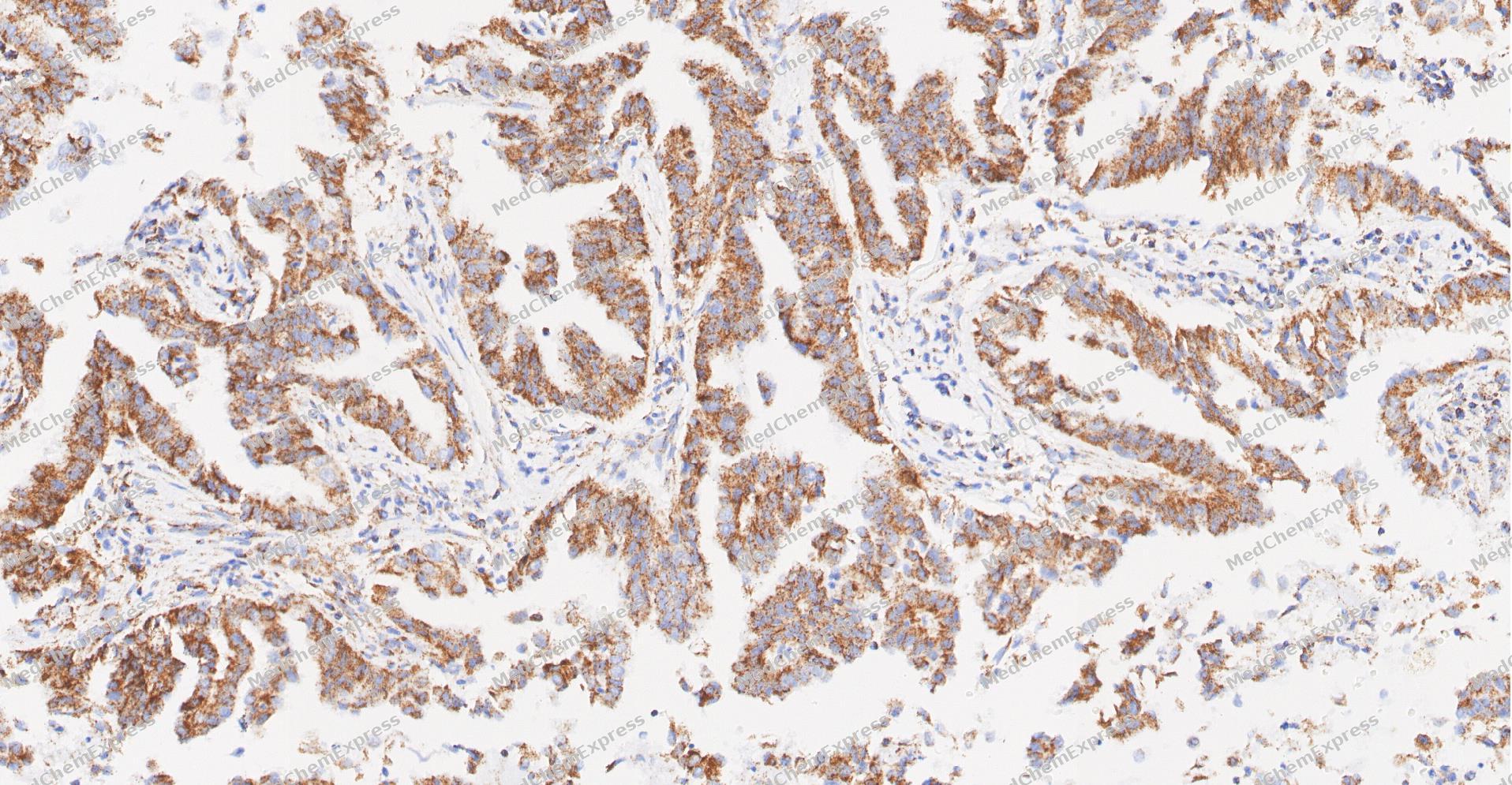 Immunohistochemical analysis of paraffin-embedded human Lung Adenocarcinoma tissue using MMP3 antibody was performed. The section was pretreated using high-temperature and high-pressure mediated EDTA antigen retrieval buffer (pH 9.0), for 5 minutes. The tissues were incubated with primary antibody (HY-P80424, 1:100 dilution) at room temperature for 60 minutes. Detection was performed using an HRP conjugated compact polymer system. DAB was used as the chromogen. The tissues were counterstained with hematoxylin and mounted with neutral balsam mounting medium.
 -
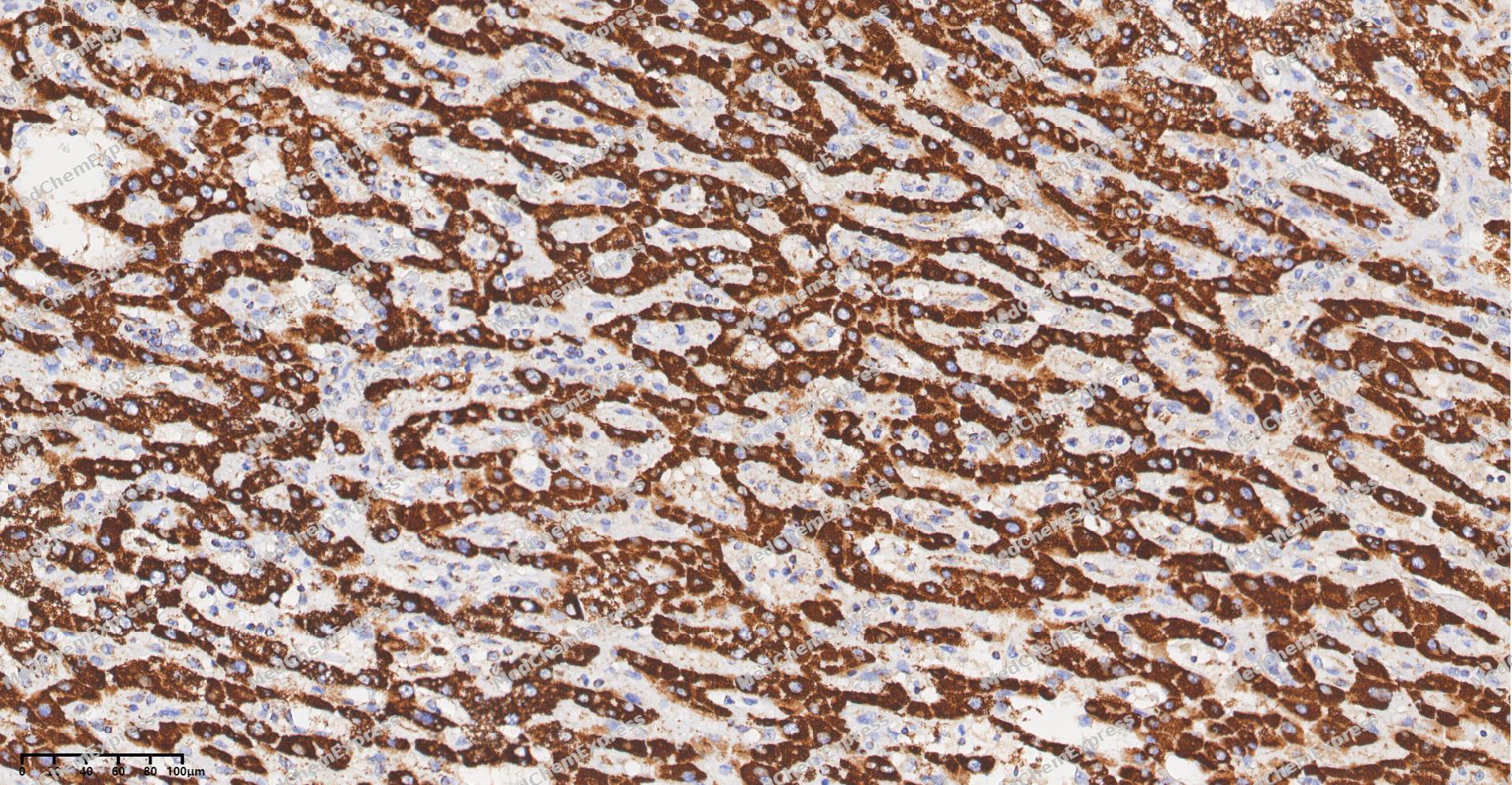 Immunohistochemical analysis of paraffin-embedded human Liver tissue using MMP3 antibody was performed. The section was pretreated using high-temperature and high-pressure mediated EDTA antigen retrieval buffer (pH 9.0), for 5 minutes. The tissues were incubated with primary antibody (HY-P80424, 1:100 dilution) at room temperature for 60 minutes. Detection was performed using an HRP conjugated compact polymer system. DAB was used as the chromogen. The tissues were counterstained with hematoxylin and mounted with neutral balsam mounting medium.
 -
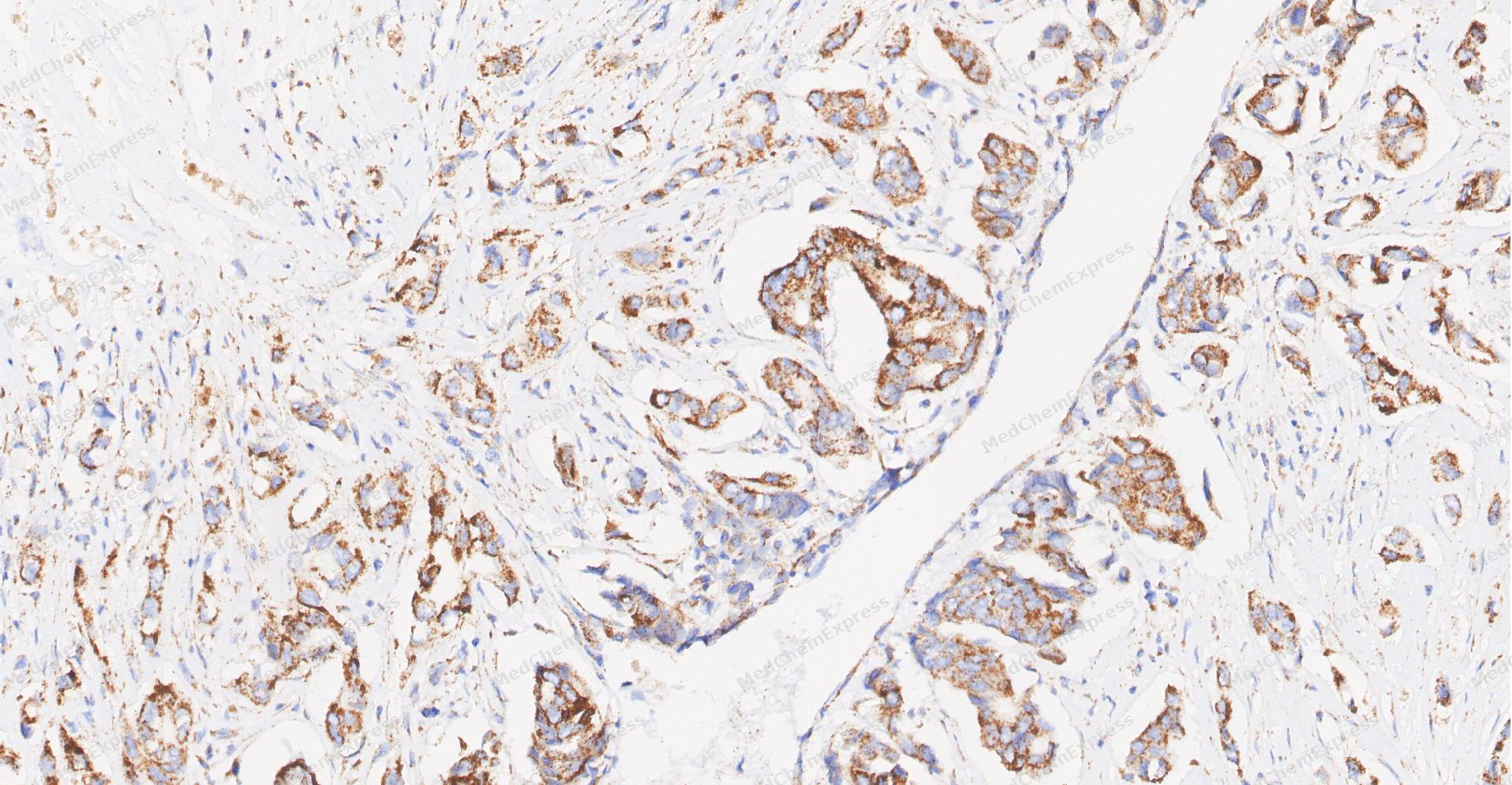 Immunohistochemical analysis of paraffin-embedded human Breast Cancer tissue using MMP3 antibody was performed. The section was pretreated using high-temperature and high-pressure mediated EDTA antigen retrieval buffer (pH 9.0), for 5 minutes. The tissues were incubated with primary antibody (HY-P80424, 1:100 dilution) at room temperature for 60 minutes. Detection was performed using an HRP conjugated compact polymer system. DAB was used as the chromogen. The tissues were counterstained with hematoxylin and mounted with neutral balsam mounting medium.
 -
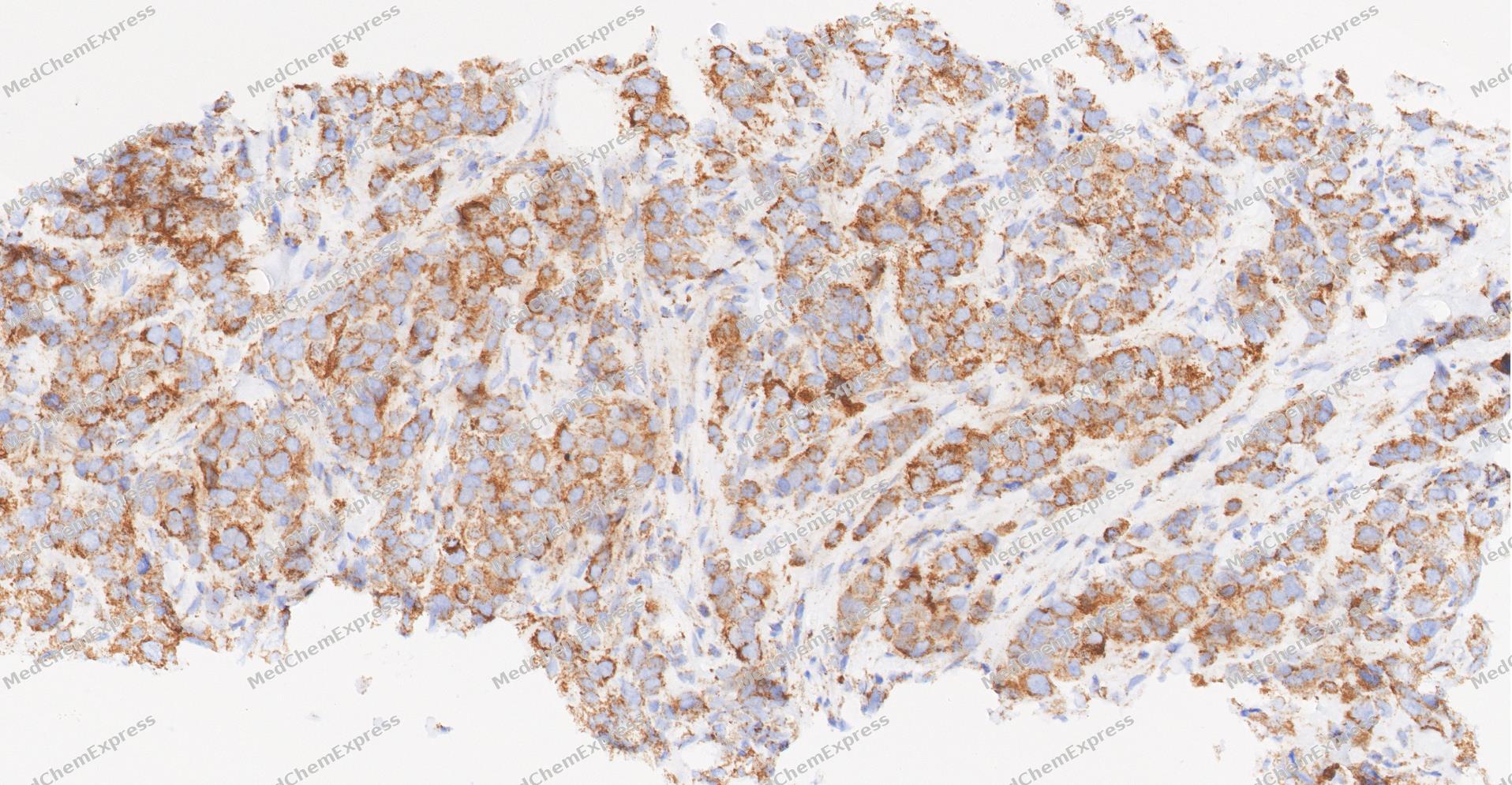 Immunohistochemical analysis of paraffin-embedded human Breast Cancer tissue using MMP3 antibody was performed. The section was pretreated using high-temperature and high-pressure mediated EDTA antigen retrieval buffer (pH 9.0), for 5 minutes. The tissues were incubated with primary antibody (HY-P80424, 1:100 dilution) at room temperature for 60 minutes. Detection was performed using an HRP conjugated compact polymer system. DAB was used as the chromogen. The tissues were counterstained with hematoxylin and mounted with neutral balsam mounting medium.
 -
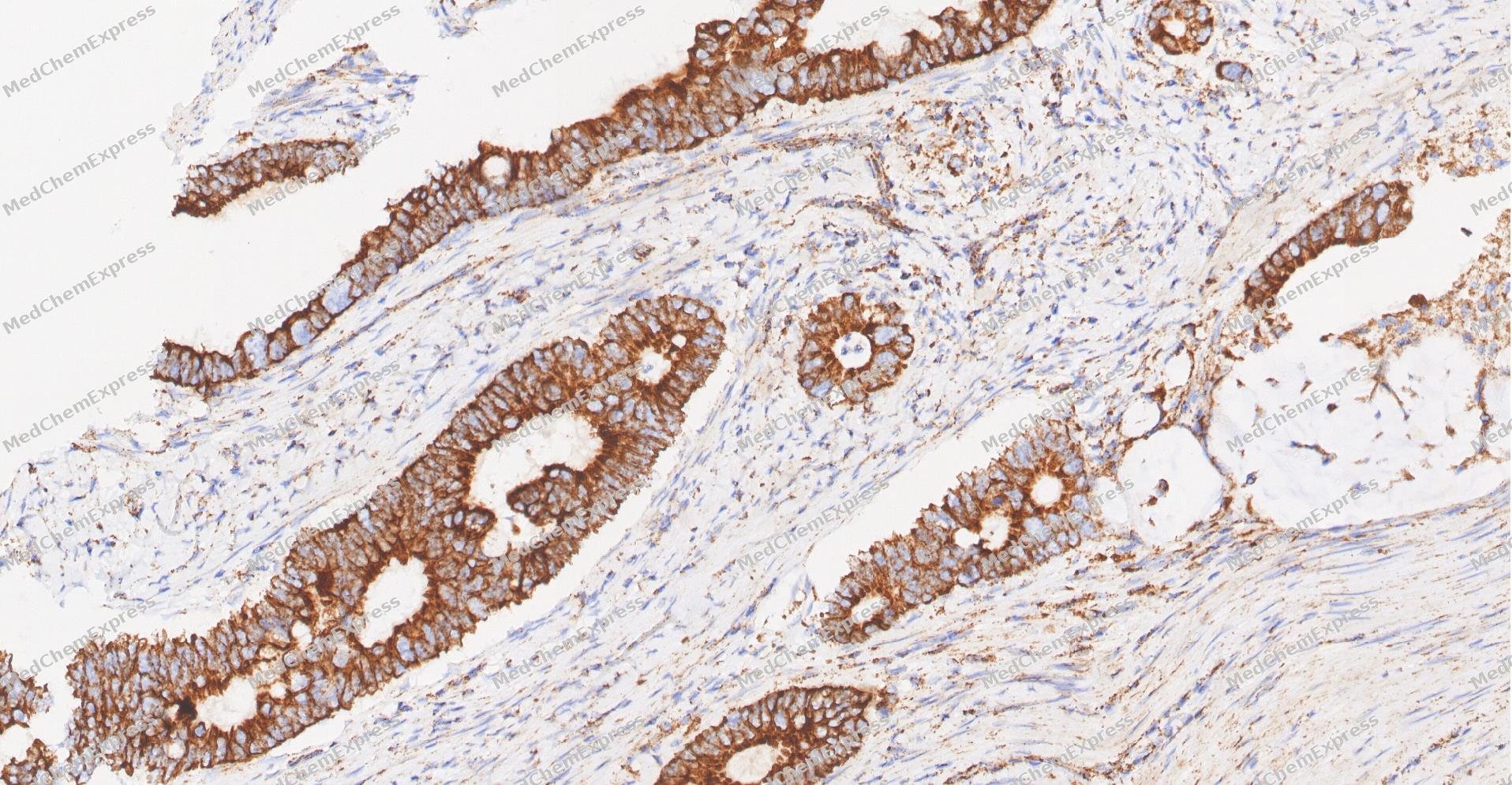 Immunohistochemical analysis of paraffin-embedded human Colon cancer tissue using MMP3 antibody was performed. The section was pretreated using high-temperature and high-pressure mediated EDTA antigen retrieval buffer (pH 9.0), for 5 minutes. The tissues were incubated with primary antibody (HY-P80424, 1:100 dilution) at room temperature for 60 minutes. Detection was performed using an HRP conjugated compact polymer system. DAB was used as the chromogen. The tissues were counterstained with hematoxylin and mounted with neutral balsam mounting medium.
 -
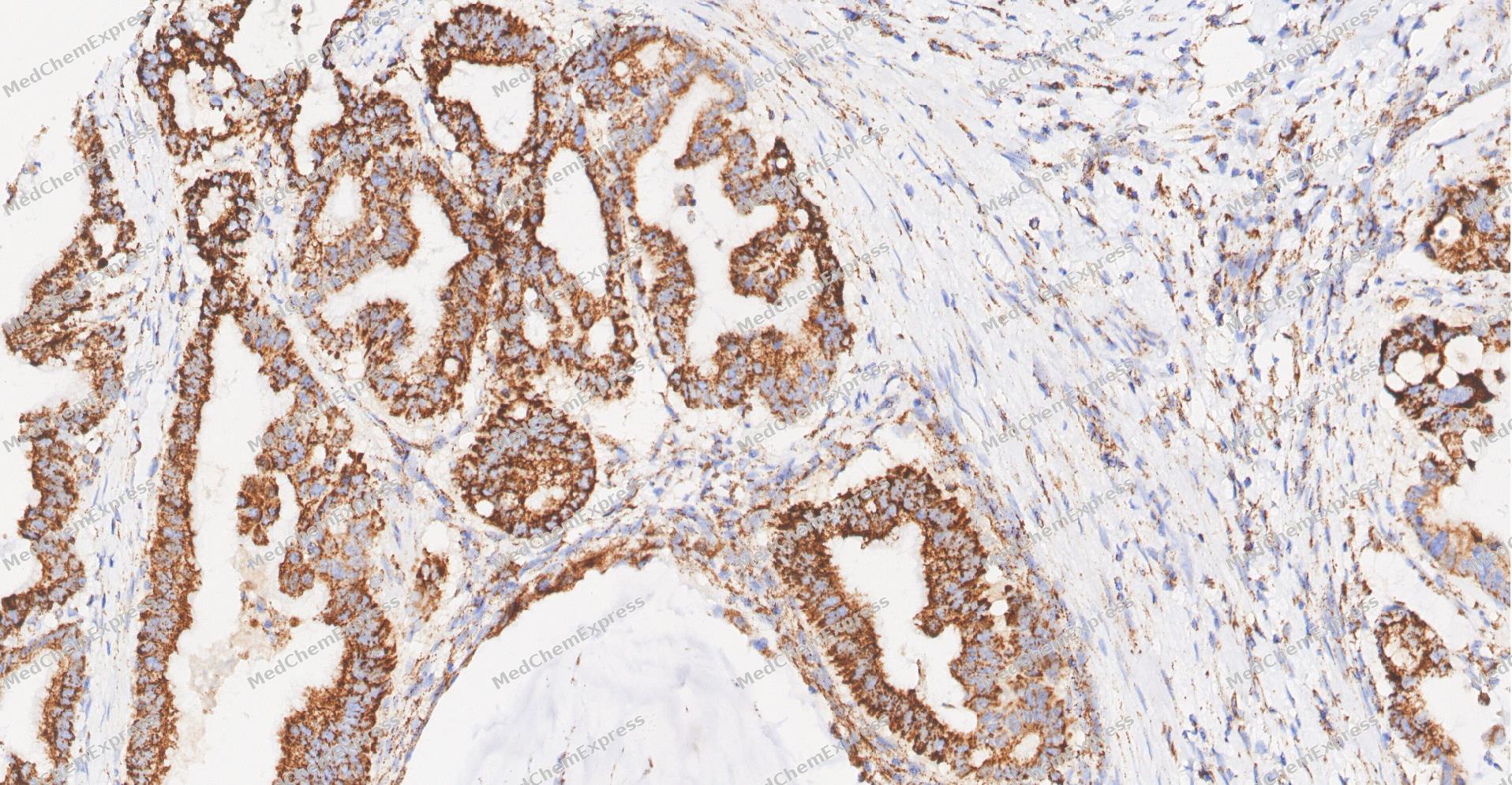 Immunohistochemical analysis of paraffin-embedded human Gastric Cancer tissue using MMP3 antibody was performed. The section was pretreated using high-temperature and high-pressure mediated EDTA antigen retrieval buffer (pH 9.0), for 5 minutes. The tissues were incubated with primary antibody (HY-P80424, 1:100 dilution) at room temperature for 60 minutes. Detection was performed using an HRP conjugated compact polymer system. DAB was used as the chromogen. The tissues were counterstained with hematoxylin and mounted with neutral balsam mounting medium.


Background
-
Function
Matrix metalloproteinase-3 (MMP-3) is a stromelysin that degrades a broad spectrum of extracellular matrix (ECM) proteins, including proteoglycans, laminins, fibronectin, vitronectin, and several collagen types[1]. MMP-3 expression is transcriptionally regulated by inflammatory cytokines such as tumor necrosis factor-α (TNF-α) and interleukin-1β (IL-1β), and its induction involves cooperative signaling through syndecan 4 and the MAPK-NF-κB axis in nucleus pulposus cells[2]. Mechanistically, MMP-3 mediates matrix catabolism in intervertebral disc degeneration and contributes to tissue remodeling in chronic inflammatory conditions[2][1]. Compared with related stromelysin isoforms such as MMP-10 and MMP-11, MMP-3 exhibits unique promoter responsiveness to TNF-α via p38 and ERK2 signaling, highlighting isoform-specific regulation[3]. Experimental inhibition of MMP-3 using MAPK or NF-κB pathway inhibitors, or through TGF-β treatment, demonstrates that selective pathway modulation can effectively reduce cytokine-induced MMP-3 expression[2]. These properties make MMP-3 a valuable biomarker and experimental target in studies of disc degeneration, arthritis, and ECM remodeling, while its selective modulation aids in evaluating therapeutic strategies for inflammatory and degenerative diseases[2][1].
-
Subcellular Localization
Secreted, extracellular space, extracellular matrix; Nucleus; Cytoplasm
-
SwissProt ID
-
Synonyms
STMY1, MMP3, Stromelysin-1, SL-1, Matrix metalloproteinase-3, Transin-1, MMP-3
-
Research Field
Cardiovascular


Documentation
-
Data Sheet (262 KB)
-
SDS (251 KB)
- English - EN (251 KB)
- Français - FR (251 KB)
- Deutsch - DE (251 KB)
- Norwegian - NO (251 KB)
- Español - ES (251 KB)
- Swedish - SV (251 KB)
- Italian - IT (251 KB)
- Korean - KR (251 KB)
- Portuguese - PT (251 KB)
-
User Guide for Antibodies (1077 KB)
References
[1]. Wang X, et al. Tumor necrosis factor-α- and interleukin-1β-dependent matrix metalloproteinase-3 expression in nucleus pulposus cells requires cooperative signaling via syndecan 4 and mitogen-activated protein kinase-NF-κB axis: implications in inflammatory disc disease. Am J Pathol. 2014 Sep;184(9):2560-72. [Content Brief]
[2]. Kunisch E, et al. Predominant activation of MAP kinases and pro-destructive/pro-inflammatory features by TNF alpha in early-passage synovial fibroblasts via TNF receptor-1: failure of p38 inhibition to suppress matrix metalloproteinase-1 in rheumatoid arthritis. Ann Rheum Dis. 2007 Aug;66(8):1043-51. [Content Brief]
[3]. Díez J. Emerging role of matrix metalloproteinases in the pathophysiology of cardiac diseases. Eur J Clin Invest. 2002 May;32(5):291-4. doi: 10.1046/j.1365-2362.2002.00980.x. PMID: 12027866. et al. Emerging role of matrix metalloproteinases in the pathophysiology of cardiac diseases. Eur J Clin Invest. 2002 May;32(5):291-4. [Content Brief]

 Powered by Bioz
