



NF-KB p65 Antibody (YA267)
(Synonyms: NF-κB p65 Antibody )Based on 7 publication(s) in Google Scholar
NF-KB p65 Antibody (YA267) is a Rabbit-derived and non-conjugated IgG monoclonal antibody, targeting to NF-KB p65.
-
Host:
Rabbit
-
Isotype:
IgG
-
Application:
WB, ICC/IF, IHC-P, IP, FC
-
Reactivity :
Human, Mouse
-
Formulation:
Supplied in 1*TBS (pH7.4), 0.05% BSA and 40% Glycerol. Preservative: 0.05% Sodium Azide.
-
Conjugation:
Non-conjugated


To place orders, for customer services and technical support, please contact: MedChemExpress USA
Tel: 609-228-6898 E-mail: [email protected] [email protected]



-

HY-P80839
Phospho-NF-KB p65 (Ser536) Antibody -
HY-P81238
Phospho-NF-κB p65 (Ser536) Antibody -
HY-P8001
HRP-conjugated Goat Anti-Rabbit IgG H&L -
HY-P80718
IKB alpha Antibody (YA350) -
HY-P80470
Phospho-NF-κB p65 (Ser529) Antibody (YA170) -
HY-D0940
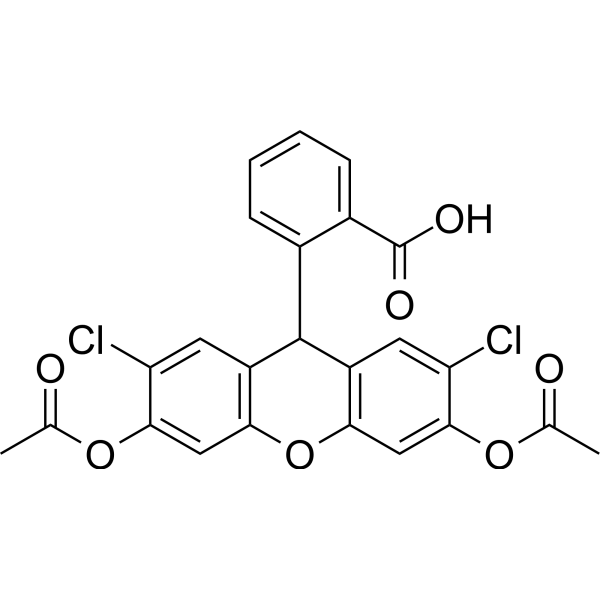
H2DCFDA -
HY-13453
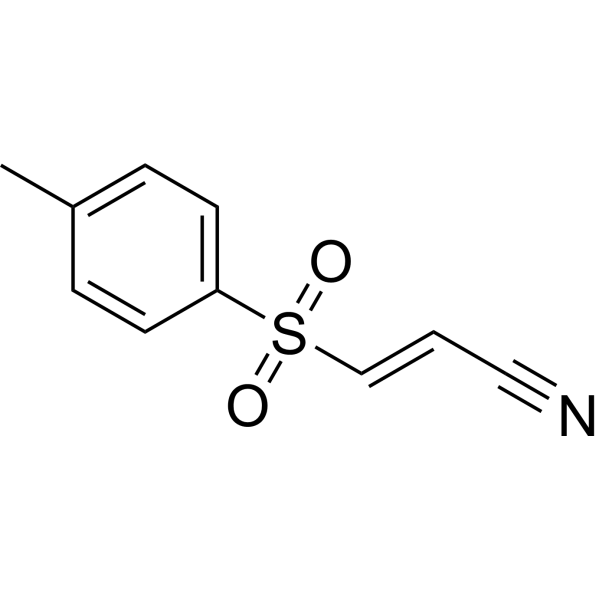
BAY 11-7082 -
HY-P80535
AKT1+AKT2+AKT3 Antibody (YA635) -
HY-P80720
IL-1 beta Antibody -
HY-P8004
HRP-conjugated Goat Anti-Mouse IgG H&L -
HY-P80137
GAPDH Antibody (YA418) -
HY-P86197
IκB-α Antibody (YA5889)
Publications Citing Use of MedChemExpress (MCE) NF-KB p65 Antibody (YA267)
More- J Control Release. 2025 Aug 10:384:113956. [Abstract]
- Food Biosci. 2025 Jun.
- Polymers. 2025 Jul 9;17(14):1900. [Abstract]
- Molecules. 2024 Apr 30;29(9):2080. [Abstract]
- Surg Endosc. 2026 Jun;40(6):4827-4838. [Abstract]
- Adipocyte. 2025 Dec;14(1):2549456. [Abstract]
- Biomed Pharmacother. 2024 Oct:179:117412. [Abstract]

 7 Publications Citing Use of MCE NF-KB p65 Antibody (YA267) (5)
-
WB

-
WB

-
WB

-
WB

-
WB


Applications
| Application |
WB

WB: Western Blot
|
ICC/IF
ICC/IF: Immunocytochemistry/
Immunofluorescence |
IHC-P
IHC-P: Immunohistochemistry-Paraffin
|
FC
FC: Flow Cytometry
|
IP
IP: Immunoprecipitation
|
|---|---|---|---|---|---|
| Dilution Ratio | 1:500-1:2000 | 1:50-1:200 | 1:50-1:200 | 1:50-1:100 | Use at an assay dependent concentration. |


Product Details
NF-KB p65 Antibody (YA267) is a Rabbit-derived and non-conjugated IgG monoclonal antibody, targeting to NF-KB p65.
-
Host Rabbit

-
Clonality Recombinant,Monoclonal

-
Species ReactivityHuman, Mouse
-
Observed Molecular WeightObserved band size: 65 kDa
Note: Due to possible protein modifications or aggregation, the molecular weight should be confirmed by actual measurement, and the predicted value is for reference only.

-
Calculated Molecular Weight Predicted band size: 65 kDa

Synthetic peptide corresponding to Human NF-kB p65.AA range:490-540.
Endogenous
Protein A affinity purified.
Non-conjugated
Unmodified
IgG


Product Properties
-
Appearance
Solution
-
Formulation
Supplied in 1*TBS (pH7.4), 0.05% BSA and 40% Glycerol. Preservative: 0.05% Sodium Azide.
-
Concentration
Batch-dependent, Please check the COA for the concentration of each lot. Check Lot Concentration
-
Storage & Stability
Stored at -20°C for 1 year. Avoid repeated freeze / thaw cycles.
-
Shipping
Shipping with blue ice.


Publications (7)
-
Journal Impact Factor
-
Most Recent
-
J Control Release
Nanomedicine-mediated macrophage polarization enhances the iron-depleting effect of desferrioxamine for breast cancer immunotherapy. [Abstract]2025 Aug 10:384:113956. PMID: 40516575
NF-KB p65 Antibody (YA267) purchased from MedChemExpress. Usage Cited in: J Control Release. 2025 Aug 10:384:113956. [Abstract]
Protein expression levels of NF-κB (NF-KB p65) and P-NF-κB in RAW 264.7 cells with different treatments by western blot.
-
NF-KB p65 Antibody (YA267) purchased from MedChemExpress. Usage Cited in: Food Biosci. 2025 Jun.
Effects of JPA on the expression levels of nuclear factor-κB (NF-κB) p65 and NF-κB p-p65 proteins.
-
Polymers
Combating Traumatic Brain Injury: A Dual-Mechanism Hydrogel Delivering Salvianolic Acid A and Hydroxysafflor Yellow A to Block TLR4/NF-κB and Boost Angiogenesis. [Abstract]2025 Jul 9;17(14):1900. PMID: 40732779
NF-KB p65 Antibody (YA267) purchased from MedChemExpress. Usage Cited in: Polymers. 2025 Jul 9;17(14):1900. [Abstract]
Protein expression levels of TLR4 and NF-κB (NF-KB p65 Antibody; 1:1000 for WB). The results showed that both TLR4 and NF-κB expression were suppressed after SAA/HSYA administration compared to the LPS group.
-
Molecules
2024 Apr 30;29(9):2080. PMID: 38731569
NF-KB p65 Antibody (YA267) purchased from MedChemExpress. Usage Cited in: Molecules. 2024 Apr 30;29(9):2080. [Abstract]
Effects of 150 μg/mL, 200 μg/mL, 250 μg/mL and 300 μg/mL BEO on the expression of NF-κB (NF-KB p65)/p-IκBα protein.
-
Surg Endosc
A mechanistic exploration of IL-1β / p38 MAPK / MMP-2 pathway in inguinal hernia: evidence from clinical specimens and in vitro model. [Abstract]2026 Jun;40(6):4827-4838. PMID: 42257932 -
Adipocyte
2025 Dec;14(1):2549456. PMID: 41381093 -
Biomed Pharmacother
2024 Oct:179:117412. PMID: 39255734
NF-KB p65 Antibody (YA267) purchased from MedChemExpress. Usage Cited in: Biomed Pharmacother. 2024 Oct:179:117412. [Abstract]
The effect of IDO1 inhibitors on the expression of NF-κB (NF-KB p65 Antibody; 1:1000 for WB) and phospho-NF-κB (p-NF-κB) protein in CT26 and MC38 cells were investigated by western blotting.


Verification Images
-
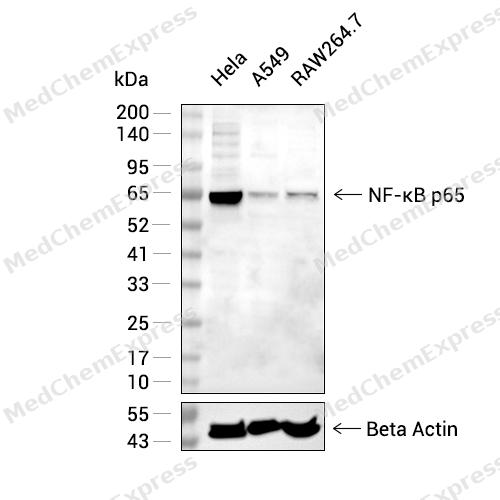 Western blot analysis of extracts from Hela (lane 2(20μg) , A549 (lane 3(20μg) , RAW264.7 (lane 4(20μg),using NF-KB p65 Antibody (HY-P80245). Proteins were transferred to a PVDF membrane and blocked with 5% BSA in TBST for 2 hour at room temperature. The primary antibody and Loading control antibody (Beta Actin, HY-P80438, 1/3000) was used in 5% BSA in TBST at 4°C overnight. Goat Anti-Mouse/Rabbit IgG-HRP Secondary Antibody (HY-P8004/HY-P8001, 1/10,000) was used for 1 hour at room temperature.
 -
 Immunocytochemistry analysis of HepG2 cells labeling NF-KB p65 with NF-KB p65 Antibody (HY-P80245) at 1/50 dilution. Cells were fixed in 4% paraformaldehyde for 15 minutes at room temperature, permeabilized with 0.1% Triton X-100 for 10 minutes at room temperature, then blocked with QuickBlock™ Blocking Buffer for Immunol Staining for 10 min at room temperature. Cells were then incubated with NF-KB p65 Antibody (HY-P0245) at 1/50 dilution in QuickBlock™ Blocking Buffer for Immunol Staining at 4 ℃. Alexa Fluor® 488-conjugated AffiniPure Goat Anti-Rabbit IgG H&L(HY-P8002, Green) was used as the secondary antibody at 1/1,000 dilution. PBS instead of the primary antibody was used as the secondary antibody only control. The Nuclear counterstain was DAPI (Blue).
 -
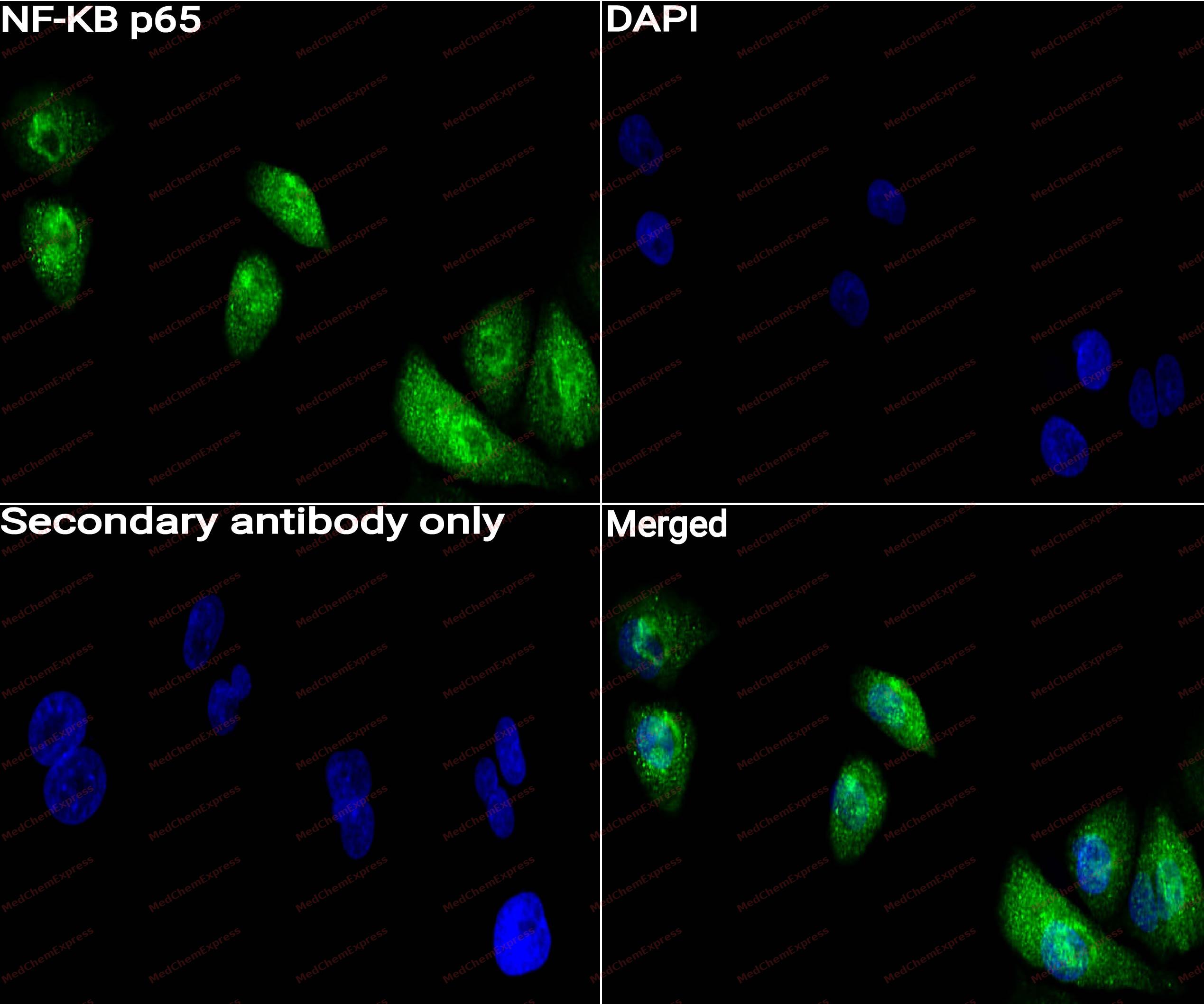 Immunocytochemistry analysis of A549 cells labeling NF-KB p65 with NF-KB p65 Antibody (HY-P80245) at 1/50 dilution. Cells were fixed in 4% paraformaldehyde for 15 minutes at room temperature, permeabilized with 0.1% Triton X-100 for 10 minutes at room temperature, then blocked with QuickBlock™ Blocking Buffer for Immunol Staining for 10 min at room temperature. Cells were then incubated with NF-KB p65 Antibody (HY-P80245)at 1/50 dilution in QuickBlock™ Blocking Buffer for Immunol Staining at 4 ℃. Alexa Fluor® 488-conjugated AffiniPure Goat Anti-Rabbit IgG H&L(HY-P8002,Green) was used as the secondary antibody at 1/1,000 dilution. PBS instead of the primary antibody was used as the secondary antibody only control. The Nuclear counterstain was DAPI (Blue).
 -
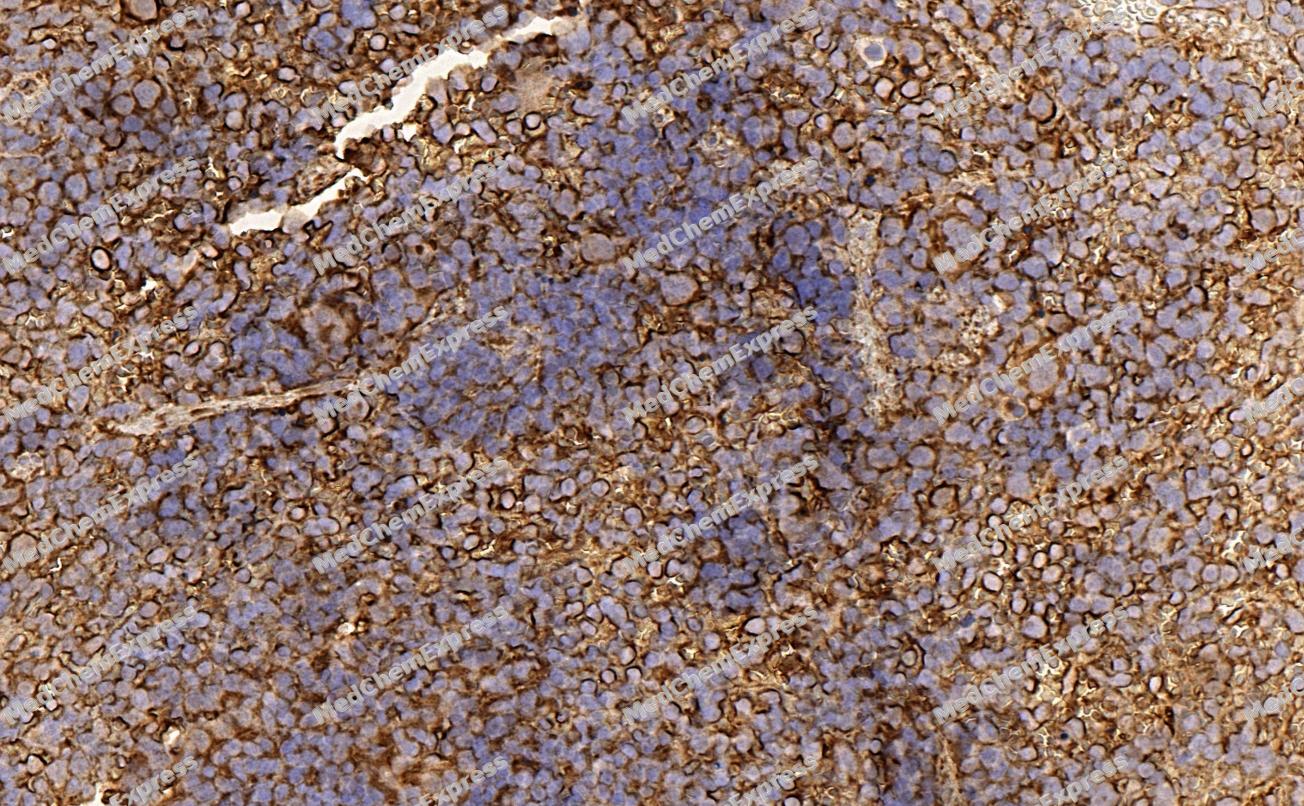 Immunohistochemical analysis of paraffin-embedded Mouse spleen tissue using NF-KB p65 Antibody (YA267). The section was pre-treated using heat mediated antigen retrieval with sodium citrate buffer (pH 6.0) for 8 minutes. The tissues were blocked in QuickBlock for 20 minutes at room temperature, washed with ddH2O and PBS, and then probed with the primary antibody (HY-P80245, 1/200) in 4℃ overnight. The detection was performed using an HRP conjugated compact polymer system. DAB was used as the chromogen. Tissues were counterstained with hematoxylin and mounted with DPX.
 -
 Immunohistochemical analysis of paraffin-embedded Mouse spleen tissue using NF-KB p65 Antibody (YA267). The section was pre-treated using heat mediated antigen retrieval with sodium citrate buffer (pH 6.0) for 8 minutes. The tissues were blocked in QuickBlock for 20 minutes at room temperature, washed with ddH2O and PBS, and then probed with the primary antibody (HY-P80245, 1/200) in 4℃ overnight. The detection was performed using an HRP conjugated compact polymer system. DAB was used as the chromogen. Tissues were counterstained with hematoxylin and mounted with DPX.
 -
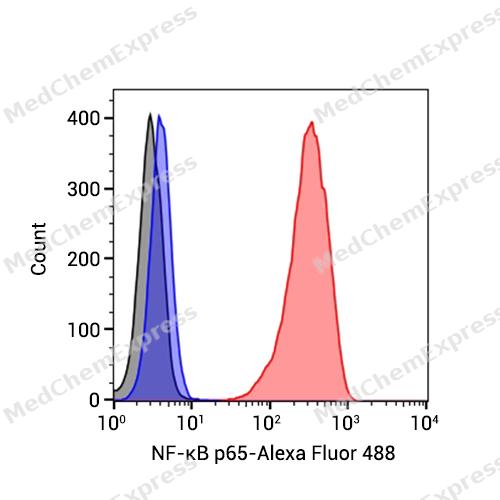 Flow cytometric analysis of 1X10^6 Hela cells labeling NF-KB p65 Antibody(HY-P80245, red). Cells were fixed with 4% paraformaldehyde and permeabilised with 90% methanol. Then stained with the primary antibody at 1/1000 dilution for an hour at 4℃. Alexa Fluor® 488-conjugated AffiniPure Goat Anti-Rabbit IgG H&L (HY-P8002) was used as the secondary antibody at 1/1,000 dilution for 30 minutes at 4℃. Rabbit IgG Isotype Control (HY-P80879, blue) was used as the isotype control, cells without incubation with primary antibody were used as the unlabeled control (black).
 -
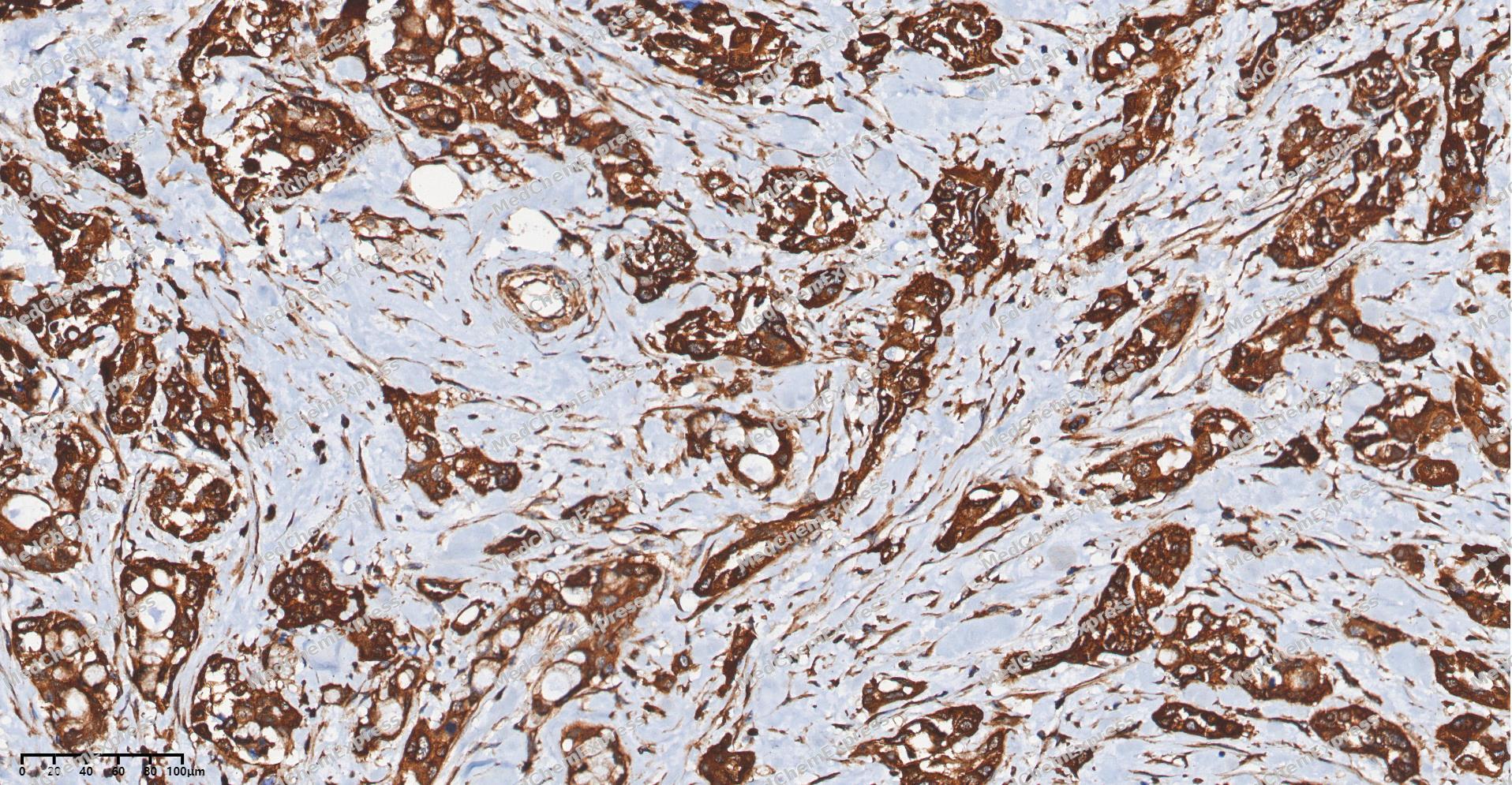 Immunohistochemical analysis of paraffin-embedded human Pancreatic carcinoma tissue using NF-KB p65 antibody was performed. The section was pretreated using high-temperature and high-pressure mediated EDTA antigen retrieval buffer (pH 9.0), for 5 minutes. The tissues were incubated with primary antibody (HY-P80245, 1:100 dilution) at room temperature for 60 minutes. Detection was performed using an HRP conjugated compact polymer system. DAB was used as the chromogen. The tissues were counterstained with hematoxylin and mounted with neutral balsam mounting medium.
 -
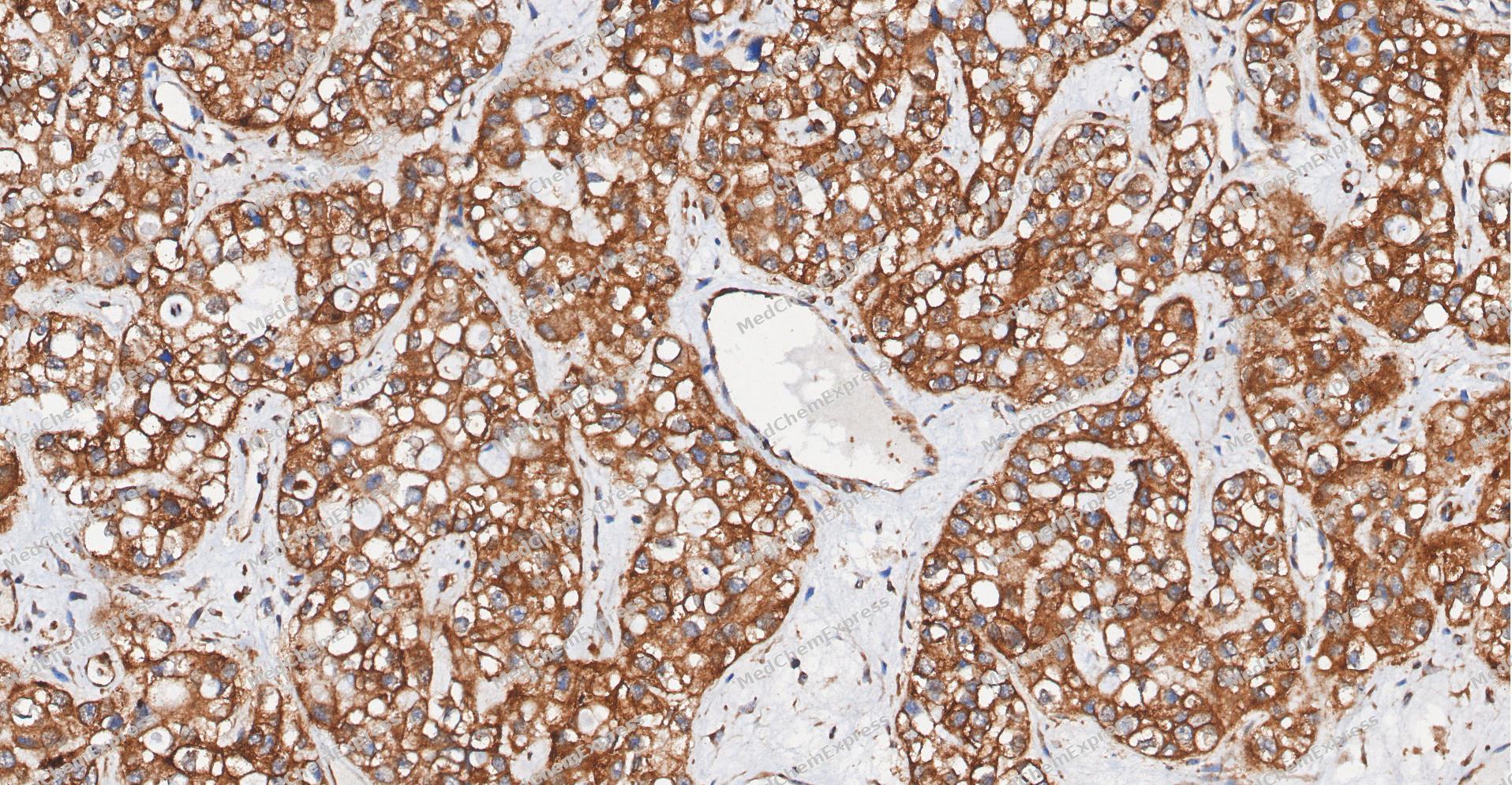 Immunohistochemical analysis of paraffin-embedded human ovarian carcinoma tissue using NF-KB p65 antibody was performed. The section was pretreated using high-temperature and high-pressure mediated EDTA antigen retrieval buffer (pH 9.0), for 5 minutes. The tissues were incubated with primary antibody (HY-P80245, 1:100 dilution) at room temperature for 60 minutes. Detection was performed using an HRP conjugated compact polymer system. DAB was used as the chromogen. The tissues were counterstained with hematoxylin and mounted with neutral balsam mounting medium.
 -
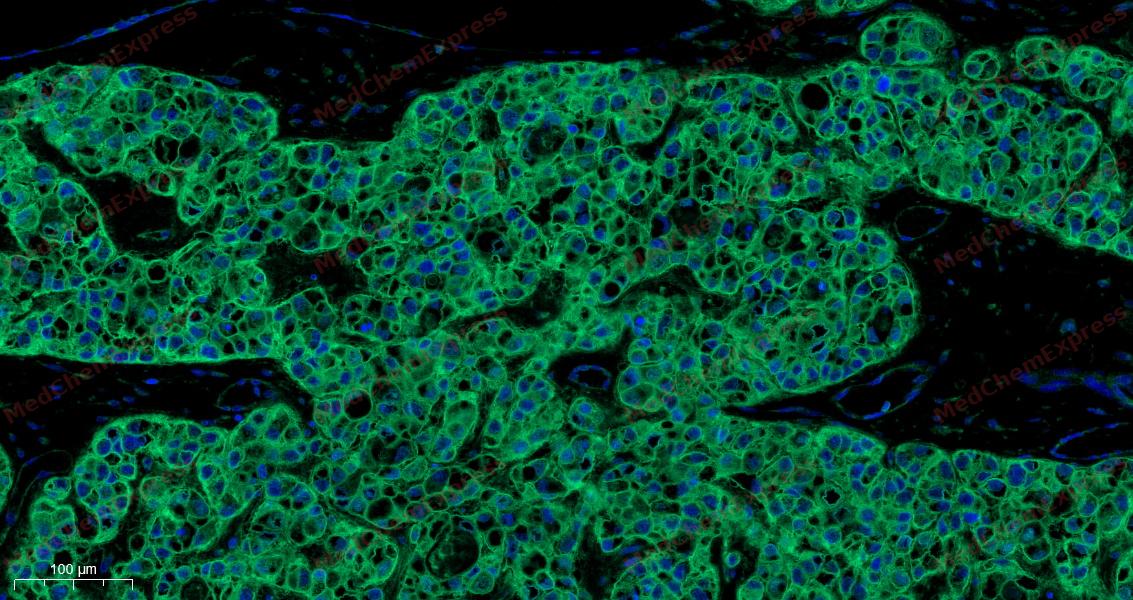 Tyramide signaling amplification based immunofluorescence was performed on paraffin-embedded human ovarian carcinoma (sample 1) tissue using NF-KB p65 antibody. Antigen retrieval was performed in EDTA buffer pH 9.0 (95 °C, 20 min) followed by cooling to RT. Then incubated with primary antibody (HY-P80245, 1:100 dilution) at room temperature for 60 minutes and HRP conjugated secondary antibody for 10 minutes. Fluorescence was then developed with TSA520 . The tissues were counterstained with DAPI and mounted with Anti-fade mounting medium.
 -
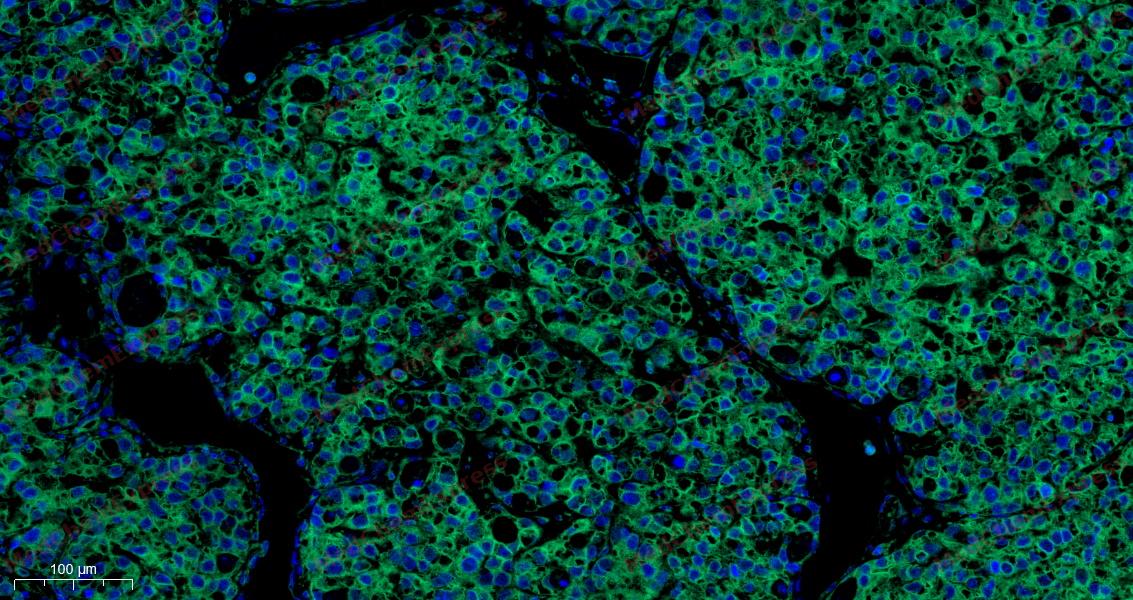 Tyramide signaling amplification based immunofluorescence was performed on paraffin-embedded human ovarian carcinoma (sample 2) tissue using NF-KB p65 antibody. Antigen retrieval was performed in EDTA buffer pH 9.0 (95 °C, 20 min) followed by cooling to RT. Then incubated with primary antibody (HY-P80245, 1:100 dilution) at room temperature for 60 minutes and HRP conjugated secondary antibody for 10 minutes. Fluorescence was then developed with TSA520 . The tissues were counterstained with DAPI and mounted with Anti-fade mounting medium.


Background
-
Function
NF-kappa-B is a pleiotropic transcription factor present in almost all cell types and is the endpoint of a series of signal transduction events that are initiated by a vast array of stimuli related to many biological processes such as inflammation, immunity, differentiation, cell growth, tumorigenesis and apoptosis. NF-kappa-B is a homo- or heterodimeric complex formed by the Rel-like domain-containing proteins RELA/p65, RELB, NFKB1/p105, NFKB1/p50, REL and NFKB2/p52. The heterodimeric RELA-NFKB1 complex appears to be most abundant one. The dimers bind at kappa-B sites in the DNA of their target genes and the individual dimers have distinct preferences for different kappa-B sites that they can bind with distinguishable affinity and specificity. Different dimer combinations act as transcriptional activators or repressors, respectively. The NF-kappa-B heterodimeric RELA-NFKB1 and RELA-REL complexes, for instance, function as transcriptional activators. NF-kappa-B is controlled by various mechanisms of post-translational modification and subcellular compartmentalization as well as by interactions with other cofactors or corepressors. NF-kappa-B complexes are held in the cytoplasm in an inactive state complexed with members of the NF-kappa-B inhibitor (I-kappa-B) family. In a conventional activation pathway, I-kappa-B is phosphorylated by I-kappa-B kinases (IKKs) in response to different activators, subsequently degraded thus liberating the active NF-kappa-B complex which translocates to the nucleus. The inhibitory effect of I-kappa-B on NF-kappa-B through retention in the cytoplasm is exerted primarily through the interaction with RELA. RELA shows a weak DNA-binding site which could contribute directly to DNA binding in the NF-kappa-B complex. Besides its activity as a direct transcriptional activator, it is also able to modulate promoters accessibility to transcription factors and thereby indirectly regulate gene expression. Associates with chromatin at the NF-kappa-B promoter region via association with DDX1. Essential for cytokine gene expression in T-cells. The NF-kappa-B homodimeric RELA-RELA complex appears to be involved in invasin-mediated activation of IL-8 expression. Key transcription factor regulating the IFN response during SARS-CoV-2 infection
-
Subcellular Localization
Nucleus; Cytoplasm
-
Isoforms & Post-Translational Modification
NF-κB has 4 isomers: Q04206-1: 60219 Da (predicted); Q04206-2: 58807 Da (predicted); Q04206-3: 59068 Da (predicted); Q04206-4: 59910 Da (predicted).
Ubiquitinated by RNF182, leading to its proteasomal degradation (PubMed:31432514). Degradation is required for termination of NF-kappa-B response. Polyubiquitinated via 'Lys-29'-linked ubiquitin; leading to lysosomal degradation (PubMed:21518757);Monomethylated at Lys-310 by SETD6 (PubMed:21515635). Monomethylation at Lys-310 is recognized by the ANK repeats of EHMT1 and promotes the formation of repressed chromatin at target genes, leading to down-regulation of NF-kappa-B transcription factor activity. Phosphorylation at Ser-311 disrupts the interaction with EHMT1 without preventing monomethylation at Lys-310 and relieves the repression of target genes (By similarity);Phosphorylation at Ser-311 disrupts the interaction with EHMT1 and promotes transcription factor activity (By similarity). Phosphorylation on Ser-536 stimulates acetylation on Lys-310 and interaction with CBP; the phosphorylated and acetylated forms show enhanced transcriptional activity. Phosphorylation at Ser-276 by RPS6KA4 and RPS6KA5 promotes its transactivation and transcriptional activities;Phosphorylation at Ser-75 by herpes simplex virus 1/HHV-1 inhibits NF-kappa-B activation;Reversibly acetylated; the acetylation seems to be mediated by CBP, the deacetylation by HDAC3 and SIRT2. Acetylation at Lys-122 enhances DNA binding and impairs association with NFKBIA. Acetylation at Lys-310 is required for full transcriptional activity in the absence of effects on DNA binding and NFKBIA association. Acetylation at Lys-310 promotes interaction with BRD4. Acetylation can also lower DNA-binding and results in nuclear export. Interaction with BRMS1 promotes deacetylation of Lys-310. Lys-310 is deacetylated by SIRT2;S-nitrosylation of Cys-38 inactivates the enzyme activity;Sulfhydration at Cys-38 mediates the anti-apoptotic activity by promoting the interaction with RPS3 and activating the transcription factor activity;Sumoylation by PIAS3 negatively regulates DNA-bound activated NF-kappa-B;Proteolytically cleaved within a conserved N-terminus region required for base-specific contact with DNA in a CPEN1-mediated manner, and hence inhibits NF-kappa-B transcriptional activity (PubMed:18212740) -
Subunit
Component of the NF-κB p65-p50 complex. Interacts with NFKBIA. Interacts with NFKBIE. Interacts with NFKBIZ. Interacts with EHMT1 (via ANK repeats). Part of a 70-90 kDa complex at least consisting of CHUK, IKBKB, NFKBIA, RELA, ELP1 and MAP3K14. Interacts with HDAC3; HDAC3 mediates the deacetylation of RELA. Interacts with HDAC1; the interaction requires non-phosphorylated RELA. Interacts with CBP; the interaction requires phosphorylated RELA. Interacts (phosphorylated at 'Thr-254') with PIN1; the interaction inhibits p65 binding to NFKBIA. Interacts with SOCS1. Interacts with UXT. Interacts with MTDH and PHF11. Interacts with ARRB2. Interacts with NFKBIA (when phosphorylated), the interaction is direct; phosphorylated NFKBIA is part of a SCF(BTRC)-like complex lacking CUL1. Interacts with RNF25. Interacts (via C-terminus) with DDX1. Interacts with UFL1 and COMMD1. Interacts with BRMS1; this promotes deacetylation of 'Lys-310'. Directly interacts with MEN1; this interaction represses NFKB-mediated transactivation. Interacts with AKIP1, which promotes the phosphorylation and nuclear retention of RELA. Interacts (via the RHD) with GFI1; the interaction, after bacterial lipopolysaccharide (LPS) stimulation, inhibits the transcriptional activity by interfering with the DNA-binding activity to target gene promoter DNA. Interacts (when acetylated at Lys-310) with BRD4; leading to activation of the NF-κB pathway. Interacts with MEFV. Interacts (via N-terminus) with CPEN1. Interacts with FOXP3. Interacts with CDK5RAP3. Interacts with DHX9; this interaction is direct and activates NF-κB-mediated transcription. Interacts with LRRC25. Interacts with ZBTB7A; involved in the control by RELA of the accessibility of target gene promoters. Directly interacts with DDX3X; this interaction may trap RELA in the cytoplasm, impairing nuclear relocalization upon TNF activating signals.
-
SwissProt ID
-
Synonyms
NF-κB p65 Antibody
-
Research Field
Cell Biology
Documentation
-
Data Sheet (235 KB)
-
SDS (252 KB)
- English - EN (252 KB)
- Français - FR (252 KB)
- Deutsch - DE (252 KB)
- Norwegian - NO (252 KB)
- Español - ES (252 KB)
- Swedish - SV (252 KB)
- Italian - IT (252 KB)
- Korean - KR (252 KB)
- Portuguese - PT (252 KB)
-
User Guide for Antibodies (1077 KB)

 Powered by Bioz
