



Phospho-NF-κB p65 (Ser536) Antibody
(Synonyms: Phospho-NF-KB p65 (Ser536) ; NF-kB p65 (phospho S536); p-NF-κB p65(Phospho-Ser536); RELA(phospho S536); NF kB P65; NF-kB p65; NFKBp65; NF-κBp65; p65 NF kappaB; p65 NFkB; NFKBp65; RELA; Transcription Factor p65; v rel avian reticuloendotheliosis viral oncogene homolog A (nuclear factor of kappa light polypeptide gene enhancer in B cells 3 (p65)); V Rel Avian Reticuloendotheliosis Viral Oncogene Homolog A; v rel reticuloendotheliosis viral oncogene homolog A (avian); v-rel reticuloendotheliosis viral oncogene homolog A; p65NFKB; Avian reticuloendotheliosis viral (v rel) oncogene homolog A; MGC131774; NFKB 3; NFKB3; Nuclear Factor NF Kappa B p65 Subunit; Nuclear factor of kappa light polypeptide gene enhancer in B cells 3; Nuclear Factor Of Kappa Light Polypeptide Gene Enhancer In B Cells; TF65_HUMAN. NFκB-p65; NFκB p65; NF κB-p65; NFκBp65; )Based on 4 publication(s) in Google Scholar
Phospho-NF-κB p65 (Ser536) Antibody is a Rabbit-derived and non-conjugated IgG polyclonal antibody, targeting to Phospho-NF-κB p65 (Ser536).
-
Host:
Rabbit
-
Isotype:
IgG
-
Application:
WB, IHC-P, ICC/IF, IP, ELISA
-
Reactivity :
Human, Mouse, Rat, Monkey
-
Formulation:
Supplied in PBS containing 50% glycerol, 0.5% BSA and 0.02% sodium azide, pH 7.3.
-
Conjugation:
Non-conjugated


To place orders, for customer services and technical support, please contact: MedChemExpress USA
Tel: 609-228-6898 E-mail: [email protected] [email protected]



Publications Citing Use of MedChemExpress (MCE) Phospho-NF-κB p65 (Ser536) Antibody
More
 4 Publications Citing Use of MCE Phospho-NF-κB p65 (Ser536) Antibody (1)
-
WB


Applications
| Application |
WB

WB: Western Blot
|
IHC-P
IHC-P: Immunohistochemistry-Paraffin
|
ICC/IF
ICC/IF: Immunocytochemistry/
Immunofluorescence |
IP
IP: Immunoprecipitation
|
ELISA
ELISA: Enzyme Linked Immunosorbent Assay
|
|---|---|---|---|---|---|
| Dilution Ratio | 1:500-2000 | 1:100-300 | 1:50-1:200 | 2-5 μg/mg lysate | 1:10000 |


Product Details
Phospho-NF-κB p65 (Ser536) Antibody is a Rabbit-derived and non-conjugated IgG polyclonal antibody, targeting to Phospho-NF-κB p65 (Ser536).
-
Host Rabbit

-
Clonality Polyclonal

-
Species ReactivityHuman, Mouse, Rat, Monkey Predicted Reactivity: Chicken,Dog,Cow,Horse,
Note: The predicted reactivity is for reference only and should not be considered a guarantee of product performance.
-
Observed Molecular WeightObserved band size: 60 kDa
Note: Due to possible protein modifications or aggregation, the molecular weight should be confirmed by actual measurement, and the predicted value is for reference only.

-
Calculated Molecular Weight Predicted band size: 60 kDa

Entrez Gene: 5970 Human ; 19697 Mouse ; 309165 Rat
SwissProt: Q04206 Human ; Q04207 Mouse ;
OMIM: 618287 Human
KLH conjugated Synthesised phosphopeptide derived from human NFKBp65 around the phosphorylation site of Ser536: FS(p-S)IA
Endogenous
Affinity Purified
Non-conjugated
Phosphorylated
IgG


Product Properties
-
Appearance
Solution
-
Formulation
Supplied in PBS containing 50% glycerol, 0.5% BSA and 0.02% sodium azide, pH 7.3.
-
Concentration
Batch-dependent, Please check the COA for the concentration of each lot. Check Lot Concentration
-
Storage & Stability
Stored at -20°C for 1 year. Avoid repeated freeze / thaw cycles.
-
Shipping
Shipping with blue ice.


Publications (4)
-
Journal Impact Factor
-
Most Recent
-
Int J Biol Macromol
Integrin β8: A novel prognostic biomarker for ovarian cancer identified through multi-omics-based prognostic models and experimental validation. [Abstract]2026 Jan;335(Pt 1):149046. PMID: 41297810
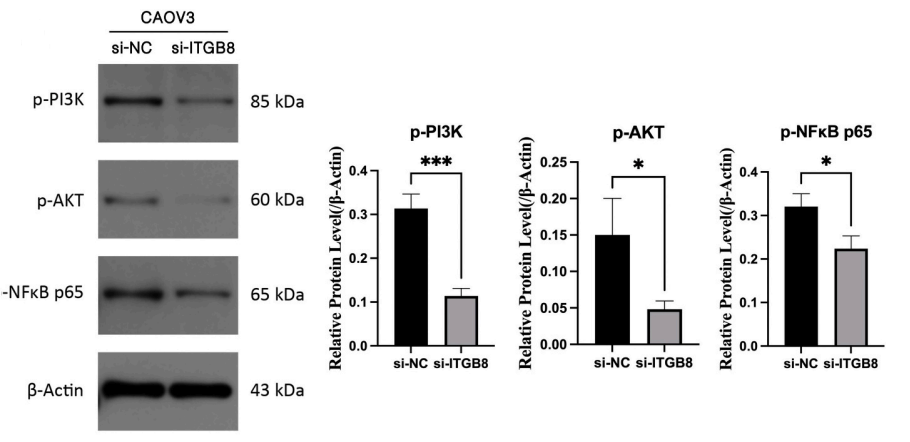
Phospho-NF-κB p65 (Ser536) Antibody purchased from MedChemExpress. Usage Cited in: Int J Biol Macromol. 2026 Jan;335(Pt 1):149046. [Abstract]
Results of Western Blot analysis. They respectively display the relative expression levels of p-PI3K, p-AKT, and p-NFκB p65 proteins in CAOV3 and OVCAR3 cells (Cell lines were obtained as described in the Methods) when ITGB8 is knocked down compared with the negative control.
-
Biochem Biophys Res Commun
Scutellarin alleviated ulcerative colitis through gut microbiota-mediated cAMP/PKA/NF-κB pathway. [Abstract]2024 Nov 26:735:150837. PMID: 39423571


Verification Images
-
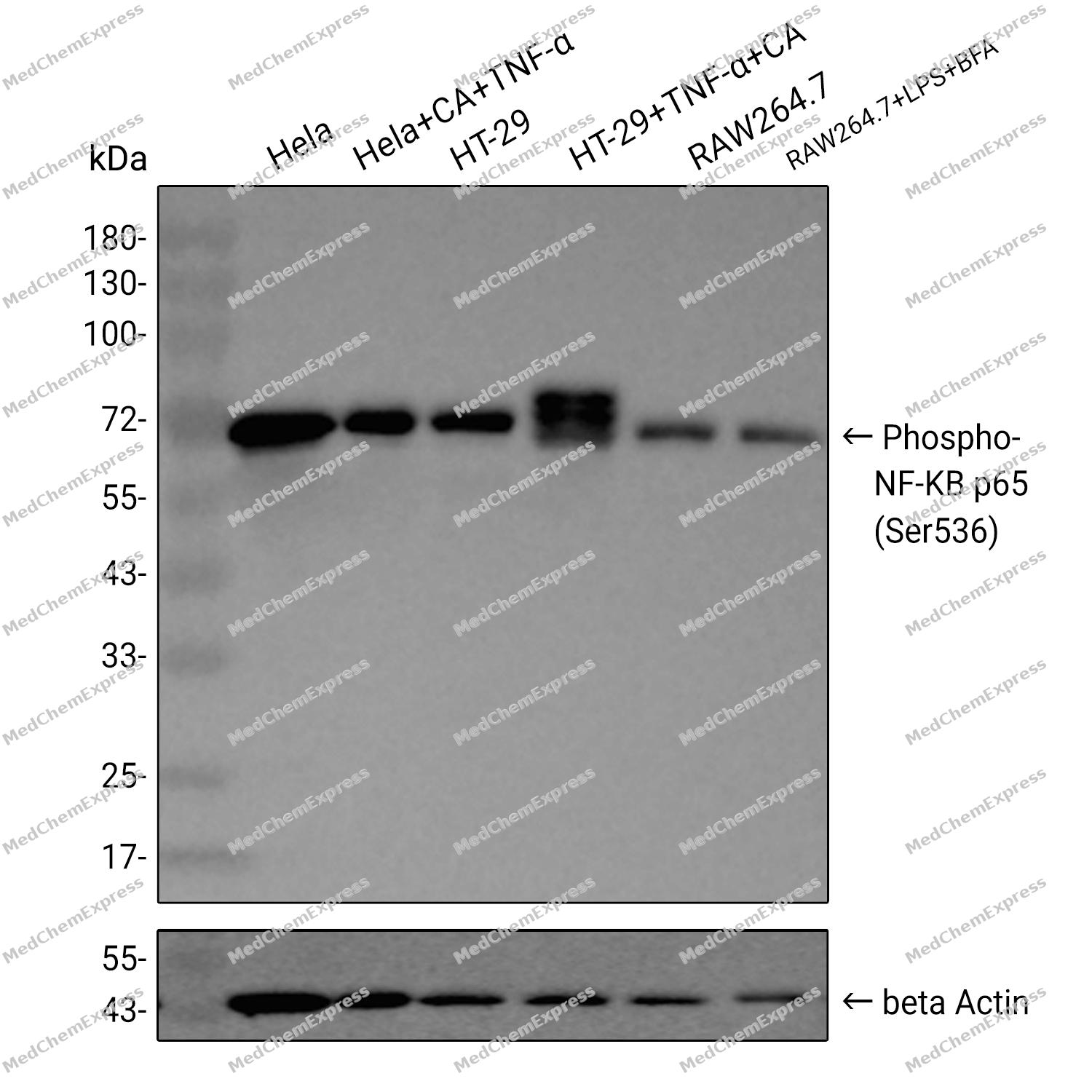 Western blot analysis was performed on extracts from Hela (lane 1, 15 μg), Hela+CA+TNF-α (lane 2, 15 μg), HT-29 (lane 3, 15 μg), HT-29+TNF-α+CA (lane 4, 15 μg), RAW264.7 (lane 5, 15 μg), and RAW264.7+LPS+BFA (lane 6, 15 μg) using Phospho-NF-KB p65 (Ser536) Rabbit pAb. Proteins were transferred to a PVDF membrane and blocked with 5% non - fat milk in TBST at 4°C overnight. The primary antibody (1:1000 dilution) and the loading control antibody (beta-Actin(HRP), HY-P80993, 1:5000 dilution) was incubated in 5% non-fat milk in TBST for 1 hour at 37°C. Goat Anti - Rabbit IgG - HRP Secondary Antibody (1:20000 dilution) was then applied for 40 minutes at 37°C.
 -
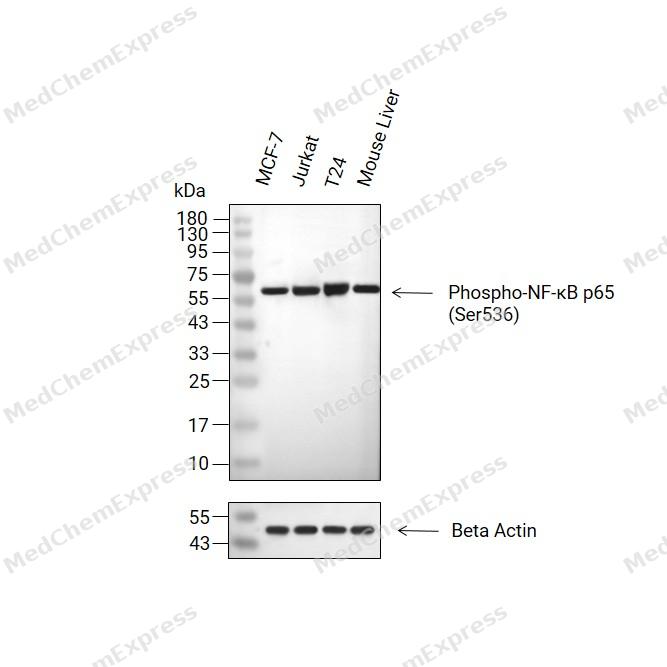 Western blot analysis of extracts from MCF-7(lane 2, 20μg), Jurkat(lane 3, 20μg), T24(lane 4, 20μg) and Mouse Liver(lane 5, 20μg) using Phospho-NF-κB p65 (Ser536) Antibody (HY-P81238). Proteins were transferred to a PVDF membrane and blocked with 5% non-fat milk in TBST for 2 hours at room temperature. The primary antibody (1/1000) and Loading control antibody (Beta Actin, HY-P80993, 1/10000) was used in 5% non-fat milk in TBST at 4°C overnight. Goat Anti-Rabbit IgG-HRP Secondary Antibody (HY-P8001, 1/10000) was used for 1 hour at room temperature.
 -
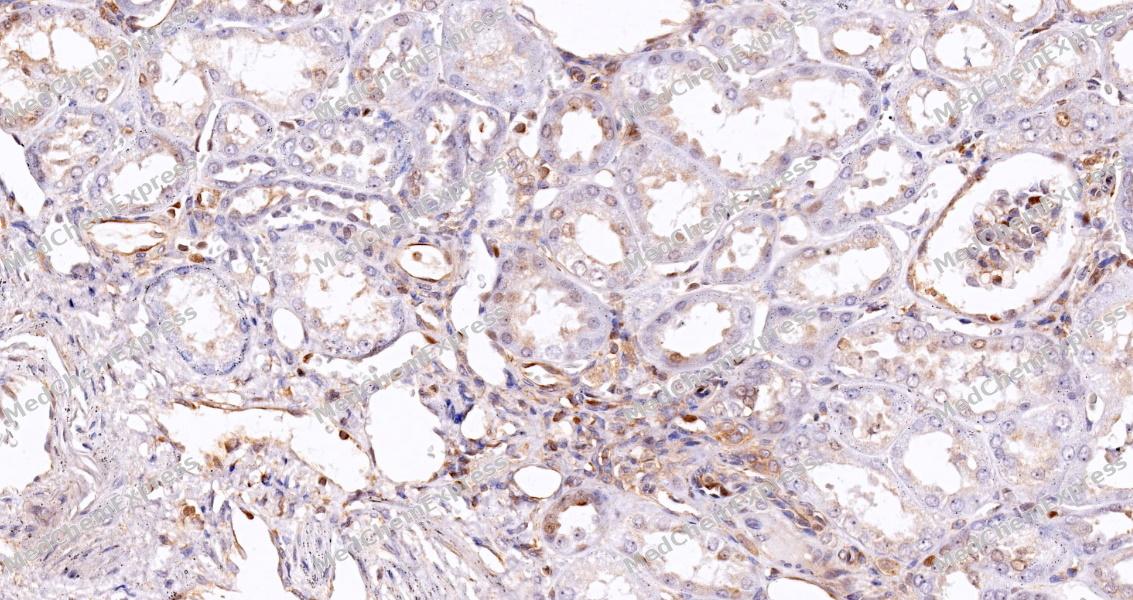 Immunohistochemical analysis of paraffin-embedded human kidney tissue using Phospho-NF-κB p65 (Ser536) Antibody (HY-P81238, 1/200). The section was pretreated using heat mediated antigen retrieval with sodium citrate buffer (pH 6.0) for 8 minutes. The tissues were blocked with quick block buffer for 0.5 hours at room temperature, washed with PBS and PBST, and then incubated with the primary antibody overnight at 4℃. The detection was performed using an HRP conjugated compact polymer system. DAB was used as the chromogen. Tissues were counterstained with hematoxylin and mounted with DPX.
 -
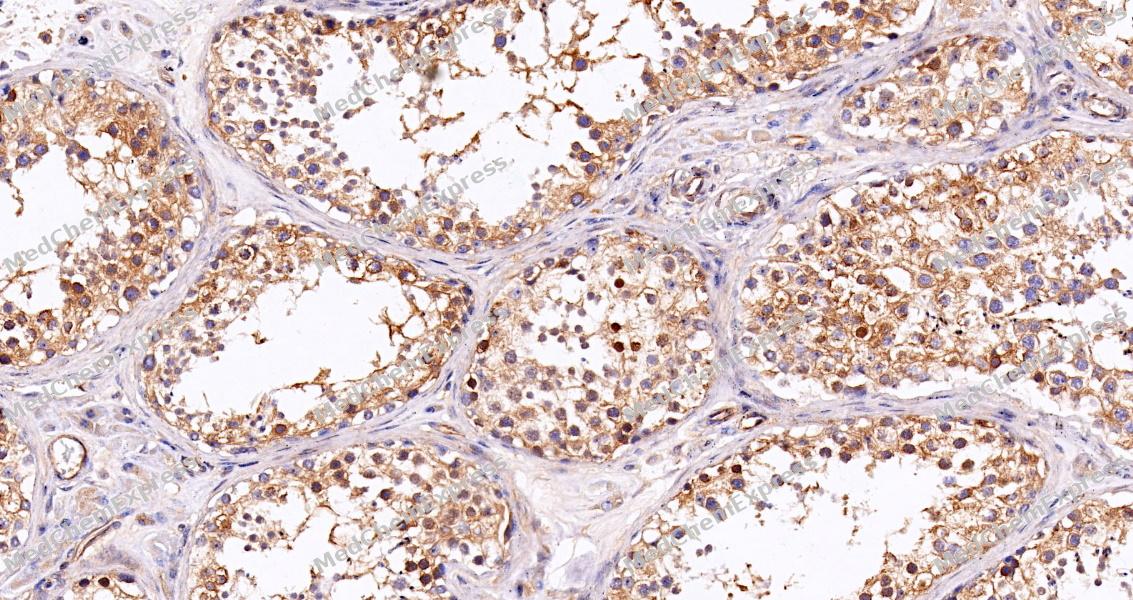 Immunohistochemical analysis of paraffin-embedded human testis tissue using Phospho-NF-κB p65 (Ser536) Antibody (HY-P81238, 1/200). The section was pretreated using heat mediated antigen retrieval with sodium citrate buffer (pH 6.0) for 8 minutes. The tissues were blocked with quick block buffer for 0.5 hours at room temperature, washed with PBS and PBST, and then incubated with the primary antibody overnight at 4℃. The detection was performed using an HRP conjugated compact polymer system. DAB was used as the chromogen. Tissues were counterstained with hematoxylin and mounted with DPX.
 -
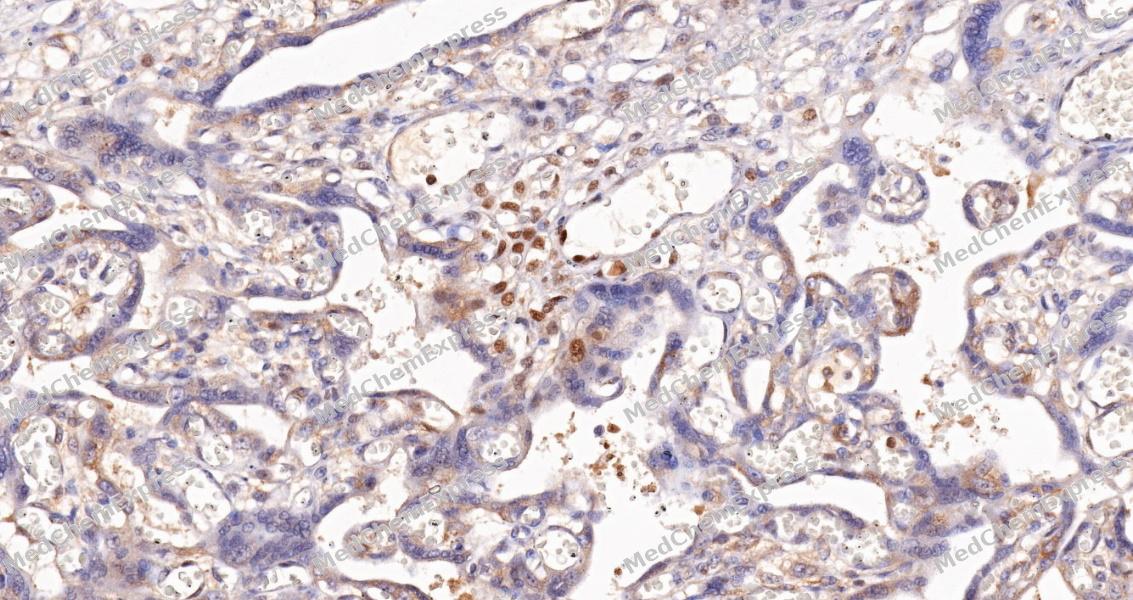 Immunohistochemical analysis of paraffin-embedded human placenta tissue using Phospho-NF-κB p65 (Ser536) Antibody (HY-P81238, 1/200). The section was pretreated using heat mediated antigen retrieval with sodium citrate buffer (pH 6.0) for 8 minutes. The tissues were blocked with quick block buffer for 0.5 hours at room temperature, washed with PBS and PBST, and then incubated with the primary antibody overnight at 4℃. The detection was performed using an HRP conjugated compact polymer system. DAB was used as the chromogen. Tissues were counterstained with hematoxylin and mounted with DPX.
 -
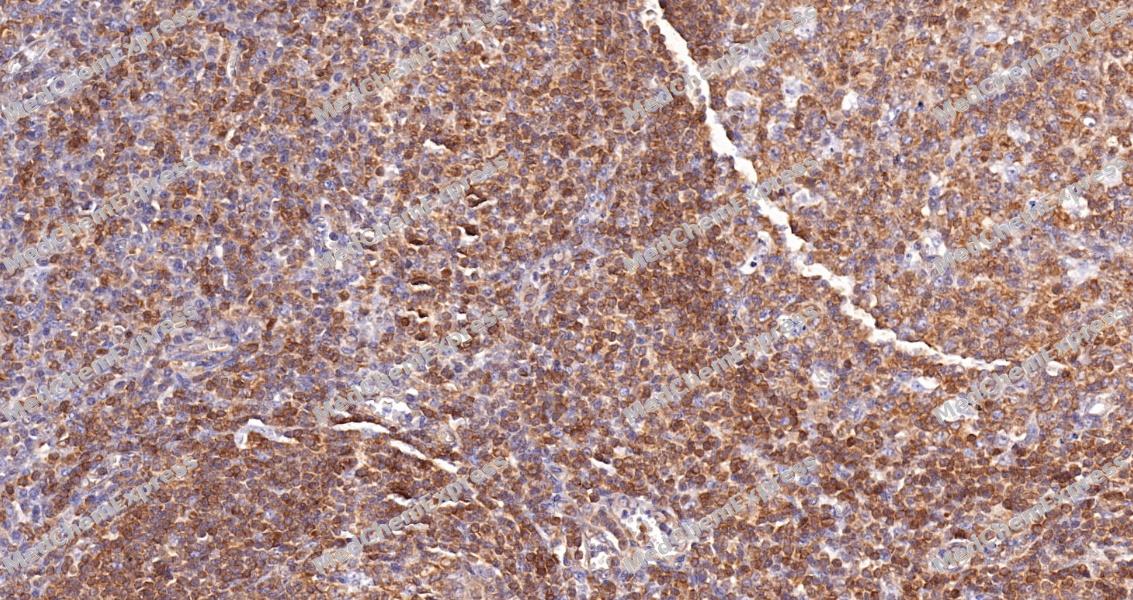 Immunohistochemical analysis of paraffin-embedded human tonsil tissue using Phospho-NF-κB p65 (Ser536) Antibody (HY-P81238, 1/200). The section was pretreated using heat mediated antigen retrieval with sodium citrate buffer (pH 6.0) for 8 minutes. The tissues were blocked with quick block buffer for 0.5 hours at room temperature, washed with PBS and PBST, and then incubated with the primary antibody overnight at 4℃. The detection was performed using an HRP conjugated compact polymer system. DAB was used as the chromogen. Tissues were counterstained with hematoxylin and mounted with DPX.
 -
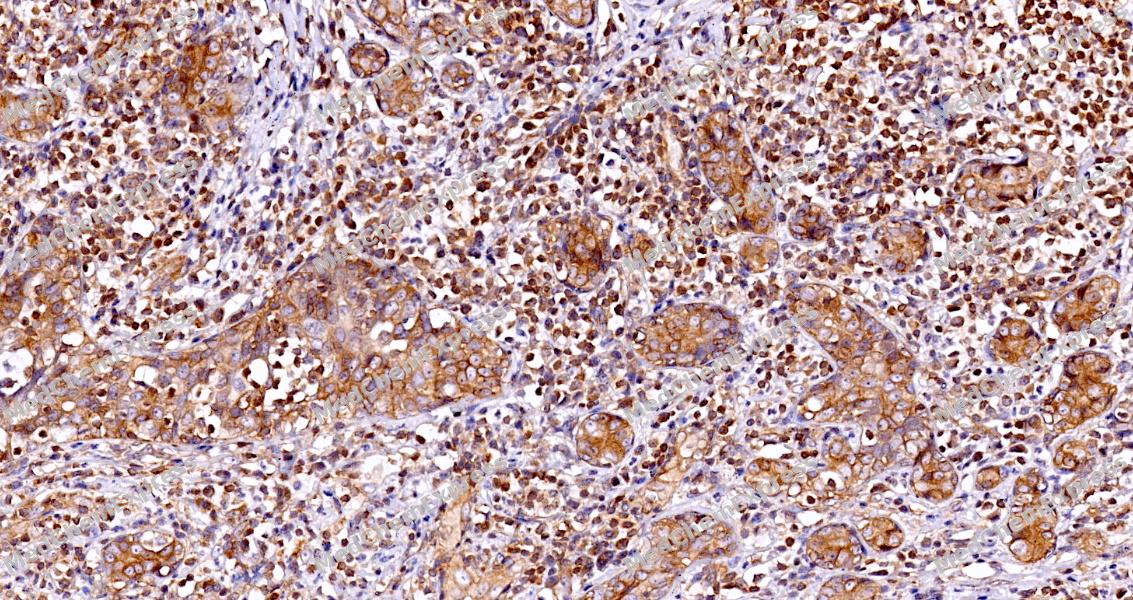 Immunohistochemical analysis of paraffin-embedded human breast tissue using Phospho-NF-κB p65 (Ser536) Antibody (HY-P81238, 1/200). The section was pretreated using heat mediated antigen retrieval with sodium citrate buffer (pH 6.0) for 8 minutes. The tissues were blocked with quick block buffer for 0.5 hours at room temperature, washed with PBS and PBST, and then incubated with the primary antibody overnight at 4℃. The detection was performed using an HRP conjugated compact polymer system. DAB was used as the chromogen. Tissues were counterstained with hematoxylin and mounted with DPX.
 -
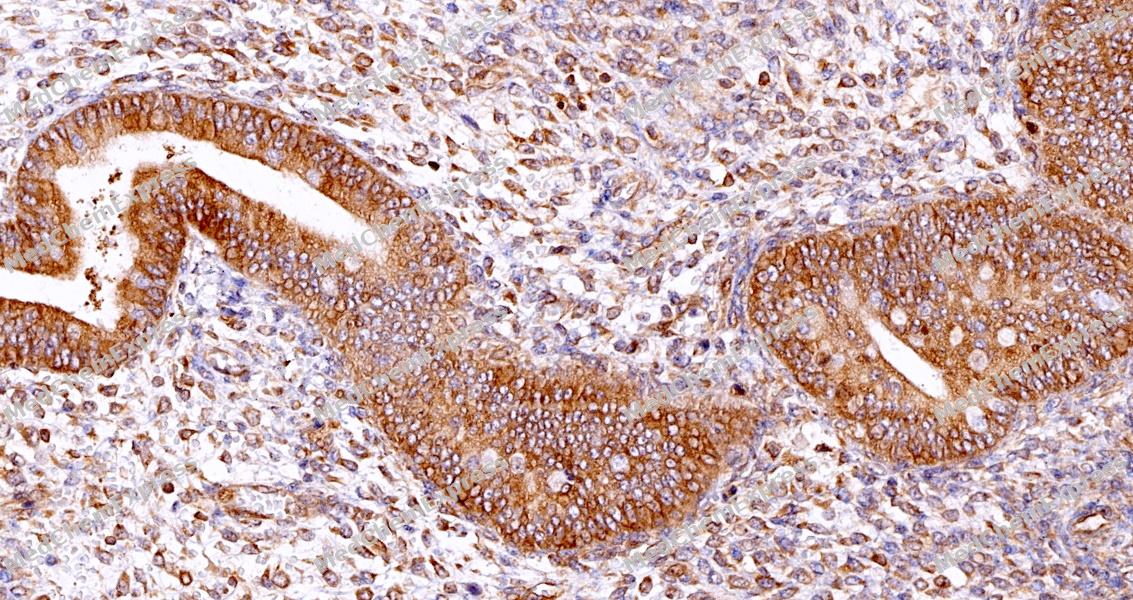 Immunohistochemical analysis of paraffin-embedded human endometrium tissue using Phospho-NF-κB p65 (Ser536) Antibody (HY-P81238, 1/200). The section was pretreated using heat mediated antigen retrieval with sodium citrate buffer (pH 6.0) for 8 minutes. The tissues were blocked with quick block buffer for 0.5 hours at room temperature, washed with PBS and PBST, and then incubated with the primary antibody overnight at 4℃. The detection was performed using an HRP conjugated compact polymer system. DAB was used as the chromogen. Tissues were counterstained with hematoxylin and mounted with DPX.


Background
-
Function
NF-kappa-B is a pleiotropic transcription factor present in almost all cell types and is the endpoint of a series of signal transduction events that are initiated by a vast array of stimuli related to many biological processes such as inflammation, immunity, differentiation, cell growth, tumorigenesis and apoptosis. NF-kappa-B is a homo- or heterodimeric complex formed by the Rel-like domain-containing proteins RELA/p65, RELB, NFKB1/p105, NFKB1/p50, REL and NFKB2/p52. The heterodimeric RELA-NFKB1 complex appears to be most abundant one. The dimers bind at kappa-B sites in the DNA of their target genes and the individual dimers have distinct preferences for different kappa-B sites that they can bind with distinguishable affinity and specificity. Different dimer combinations act as transcriptional activators or repressors, respectively. The NF-kappa-B heterodimeric RELA-NFKB1 and RELA-REL complexes, for instance, function as transcriptional activators. NF-kappa-B is controlled by various mechanisms of post-translational modification and subcellular compartmentalization as well as by interactions with other cofactors or corepressors. NF-kappa-B complexes are held in the cytoplasm in an inactive state complexed with members of the NF-kappa-B inhibitor (I-kappa-B) family. In a conventional activation pathway, I-kappa-B is phosphorylated by I-kappa-B kinases (IKKs) in response to different activators, subsequently degraded thus liberating the active NF-kappa-B complex which translocates to the nucleus. The inhibitory effect of I-kappa-B on NF-kappa-B through retention in the cytoplasm is exerted primarily through the interaction with RELA. RELA shows a weak DNA-binding site which could contribute directly to DNA binding in the NF-kappa-B complex. Besides its activity as a direct transcriptional activator, it is also able to modulate promoters accessibility to transcription factors and thereby indirectly regulate gene expression. Associates with chromatin at the NF-kappa-B promoter region via association with DDX1. Essential for cytokine gene expression in T-cells. The NF-kappa-B homodimeric RELA-RELA complex appears to be involved in invasin-mediated activation of IL-8 expression. Key transcription factor regulating the IFN response during SARS-CoV-2 infection
-
Subcellular Localization
Nucleus; Cytoplasm
-
Isoforms & Post-Translational Modification
NF-κB has 4 isomers: Q04206-1: 60219 Da (predicted); Q04206-2: 58807 Da (predicted); Q04206-3: 59068 Da (predicted); Q04206-4: 59910 Da (predicted).
Ubiquitinated by RNF182, leading to its proteasomal degradation (PubMed:31432514). Degradation is required for termination of NF-kappa-B response. Polyubiquitinated via 'Lys-29'-linked ubiquitin; leading to lysosomal degradation (PubMed:21518757);Monomethylated at Lys-310 by SETD6 (PubMed:21515635). Monomethylation at Lys-310 is recognized by the ANK repeats of EHMT1 and promotes the formation of repressed chromatin at target genes, leading to down-regulation of NF-kappa-B transcription factor activity. Phosphorylation at Ser-311 disrupts the interaction with EHMT1 without preventing monomethylation at Lys-310 and relieves the repression of target genes (By similarity);Phosphorylation at Ser-311 disrupts the interaction with EHMT1 and promotes transcription factor activity (By similarity). Phosphorylation on Ser-536 stimulates acetylation on Lys-310 and interaction with CBP; the phosphorylated and acetylated forms show enhanced transcriptional activity. Phosphorylation at Ser-276 by RPS6KA4 and RPS6KA5 promotes its transactivation and transcriptional activities;Phosphorylation at Ser-75 by herpes simplex virus 1/HHV-1 inhibits NF-kappa-B activation;Reversibly acetylated; the acetylation seems to be mediated by CBP, the deacetylation by HDAC3 and SIRT2. Acetylation at Lys-122 enhances DNA binding and impairs association with NFKBIA. Acetylation at Lys-310 is required for full transcriptional activity in the absence of effects on DNA binding and NFKBIA association. Acetylation at Lys-310 promotes interaction with BRD4. Acetylation can also lower DNA-binding and results in nuclear export. Interaction with BRMS1 promotes deacetylation of Lys-310. Lys-310 is deacetylated by SIRT2;S-nitrosylation of Cys-38 inactivates the enzyme activity;Sulfhydration at Cys-38 mediates the anti-apoptotic activity by promoting the interaction with RPS3 and activating the transcription factor activity;Sumoylation by PIAS3 negatively regulates DNA-bound activated NF-kappa-B;Proteolytically cleaved within a conserved N-terminus region required for base-specific contact with DNA in a CPEN1-mediated manner, and hence inhibits NF-kappa-B transcriptional activity (PubMed:18212740) -
Subunit
Component of the NF-κB p65-p50 complex. Interacts with NFKBIA. Interacts with NFKBIE. Interacts with NFKBIZ. Interacts with EHMT1 (via ANK repeats). Part of a 70-90 kDa complex at least consisting of CHUK, IKBKB, NFKBIA, RELA, ELP1 and MAP3K14. Interacts with HDAC3; HDAC3 mediates the deacetylation of RELA. Interacts with HDAC1; the interaction requires non-phosphorylated RELA. Interacts with CBP; the interaction requires phosphorylated RELA. Interacts (phosphorylated at 'Thr-254') with PIN1; the interaction inhibits p65 binding to NFKBIA. Interacts with SOCS1. Interacts with UXT. Interacts with MTDH and PHF11. Interacts with ARRB2. Interacts with NFKBIA (when phosphorylated), the interaction is direct; phosphorylated NFKBIA is part of a SCF(BTRC)-like complex lacking CUL1. Interacts with RNF25. Interacts (via C-terminus) with DDX1. Interacts with UFL1 and COMMD1. Interacts with BRMS1; this promotes deacetylation of 'Lys-310'. Directly interacts with MEN1; this interaction represses NFKB-mediated transactivation. Interacts with AKIP1, which promotes the phosphorylation and nuclear retention of RELA. Interacts (via the RHD) with GFI1; the interaction, after bacterial lipopolysaccharide (LPS) stimulation, inhibits the transcriptional activity by interfering with the DNA-binding activity to target gene promoter DNA. Interacts (when acetylated at Lys-310) with BRD4; leading to activation of the NF-κB pathway. Interacts with MEFV. Interacts (via N-terminus) with CPEN1. Interacts with FOXP3. Interacts with CDK5RAP3. Interacts with DHX9; this interaction is direct and activates NF-κB-mediated transcription. Interacts with LRRC25. Interacts with ZBTB7A; involved in the control by RELA of the accessibility of target gene promoters. Directly interacts with DDX3X; this interaction may trap RELA in the cytoplasm, impairing nuclear relocalization upon TNF activating signals.
-
SwissProt ID
-
Synonyms
Phospho-NF-KB p65 (Ser536) ; NF-kB p65 (phospho S536); p-NF-κB p65(Phospho-Ser536); RELA(phospho S536); NF kB P65; NF-kB p65; NFKBp65; NF-κBp65; p65 NF kappaB; p65 NFkB; NFKBp65; RELA; Transcription Factor p65; v rel avian reticuloendotheliosis viral oncogene homolog A (nuclear factor of kappa light polypeptide gene enhancer in B cells 3 (p65)); V Rel Avian Reticuloendotheliosis Viral Oncogene Homolog A; v rel reticuloendotheliosis viral oncogene homolog A (avian); v-rel reticuloendotheliosis viral oncogene homolog A; p65NFKB; Avian reticuloendotheliosis viral (v rel) oncogene homolog A; MGC131774; NFKB 3; NFKB3; Nuclear Factor NF Kappa B p65 Subunit; Nuclear factor of kappa light polypeptide gene enhancer in B cells 3; Nuclear Factor Of Kappa Light Polypeptide Gene Enhancer In B Cells; TF65_HUMAN. NFκB-p65; NFκB p65; NF κB-p65; NFκBp65;
Documentation
-
Data Sheet (235 KB)
-
SDS (254 KB)
- English - EN (254 KB)
- Français - FR (254 KB)
- Deutsch - DE (254 KB)
- Norwegian - NO (254 KB)
- Español - ES (254 KB)
- Swedish - SV (254 KB)
- Italian - IT (254 KB)
- Korean - KR (254 KB)
- Portuguese - PT (254 KB)
-
User Guide for Antibodies (1077 KB)

 Powered by Bioz
