



KIN1408
Based on 2 publication(s) in Google Scholar
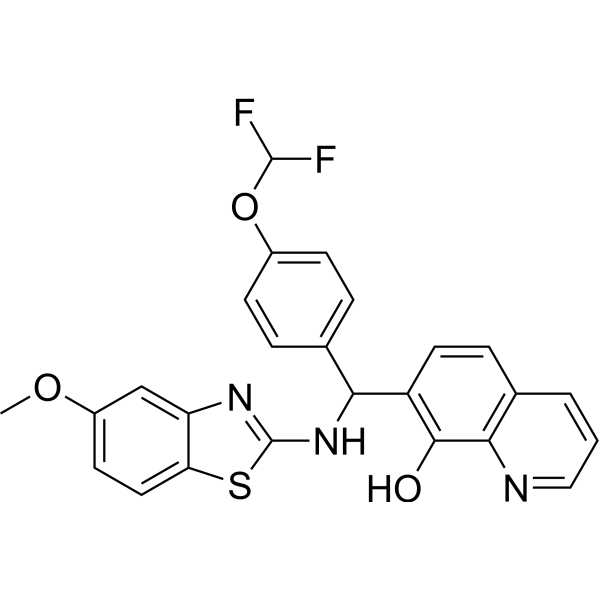
KIN1408 is an agonist of the RIG-1-like receptor (RLR) pathway and exhibits a broad-spectrum antiviral activity. KIN1408 exhibits activity against HCV, influenza A, dengue virus 2, Ebola, Nipah, and Lassa viruses.
Nur für Forschungszwecke. Wir verkaufen nicht an Patienten.
- Reinheit : 98.66%
- CAS. Nr.: 1903800-11-2
- Formel: C25H19F2N3O3S
- Molecular Weight:479.50
-
Speicherung:Powder -20°C, 3 years , 4°C, 2 years ; In solvent -80°C, 2 years , -20°C, 1 year

To place orders, for customer services and technical support, please contact: MedChemExpress USA
Tel: 609-228-6898 E-mail: [email protected] [email protected]


-
 Biologische Aktivität
-
Chemical Information
-
Lösungsmittel & Löslichkeit
- Protokoll
- Reinheit & Dokumentation
- Verweise
-
 Help & FAQs


-
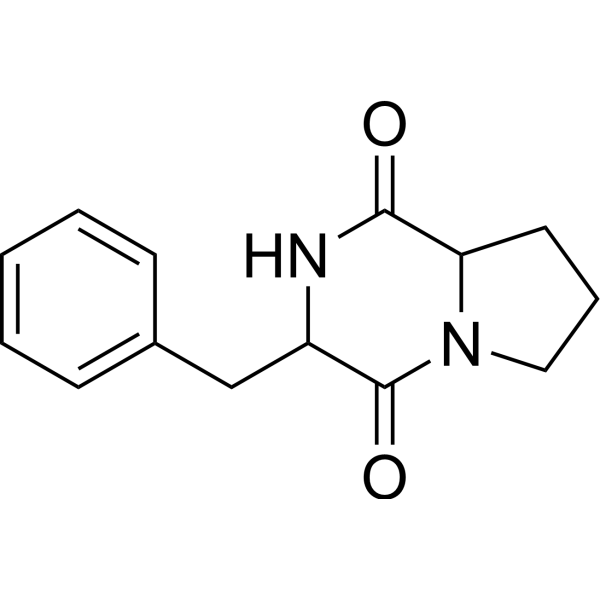
HY-P1934
Cyclo(Phe-Pro)Antifungal Cyclic Dipeptide -
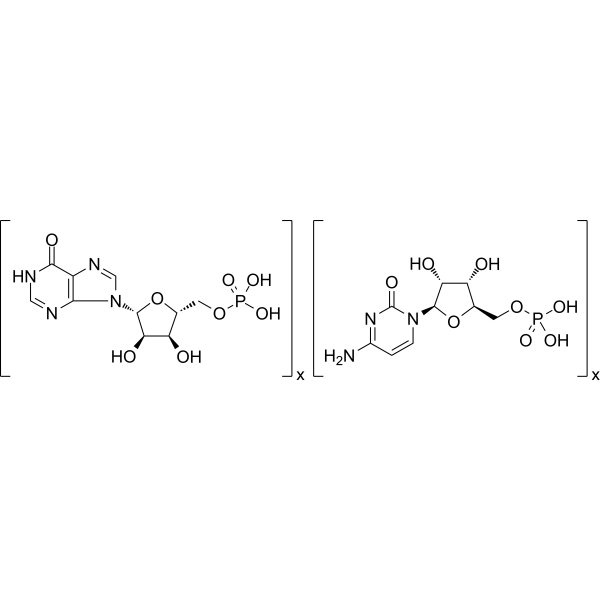
HY-107202
Polyinosinic-polycytidylic acidTLR-3 Agonist -
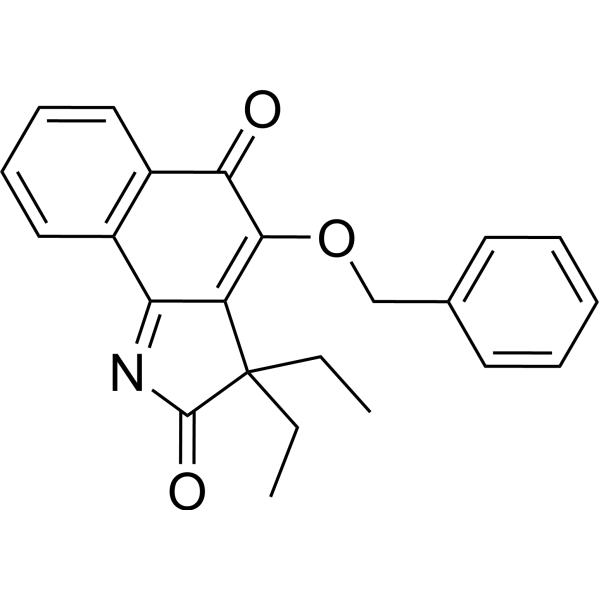
HY-147124
RIG012RIG-I Inhibitor -
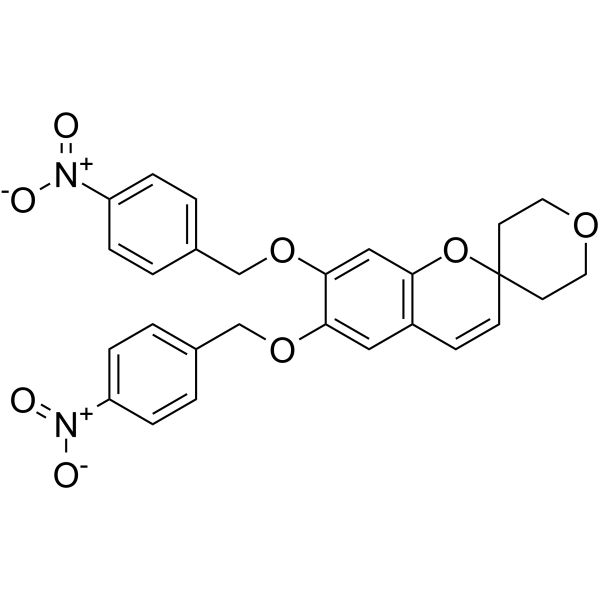
HY-101929
CU-CPT17eTLR Agonist -
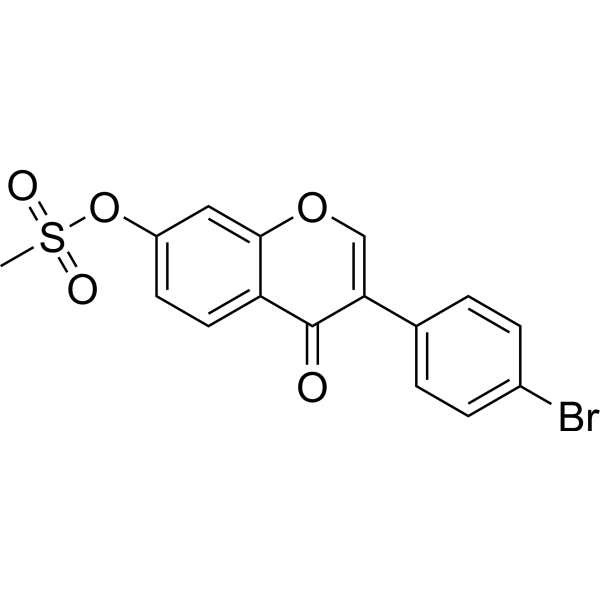
HY-126113
KIN101RNA Viral Inhibitor -
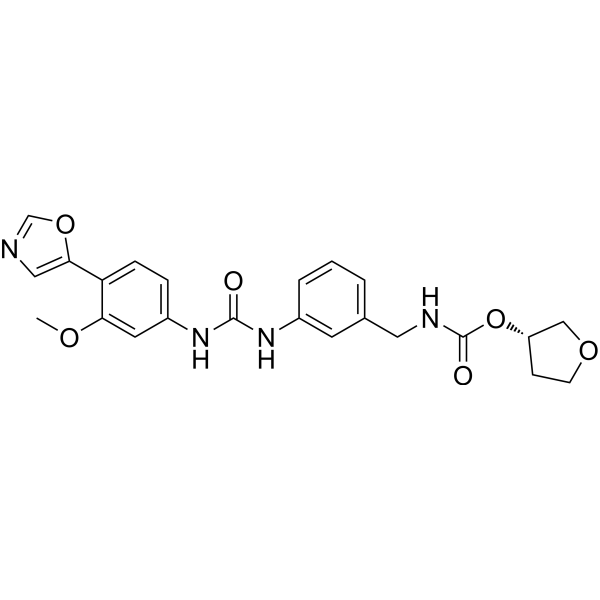
HY-13986
MerimepodibIMPDH Inhibitor -
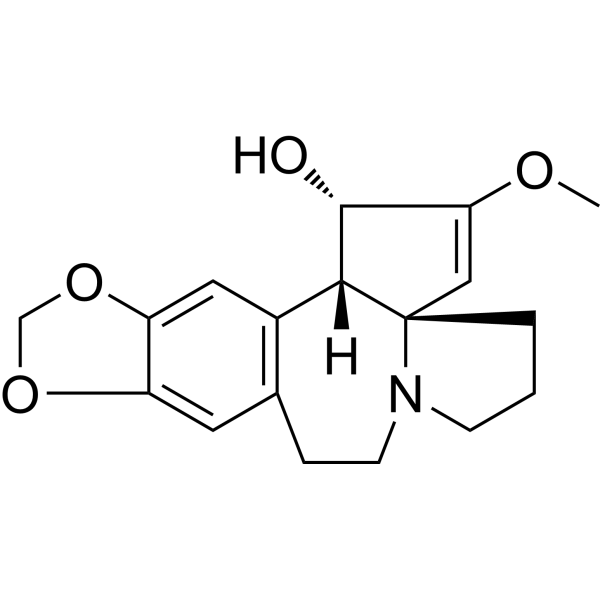
HY-N0838
CephalotaxineAlkaloid -
HY-15287A
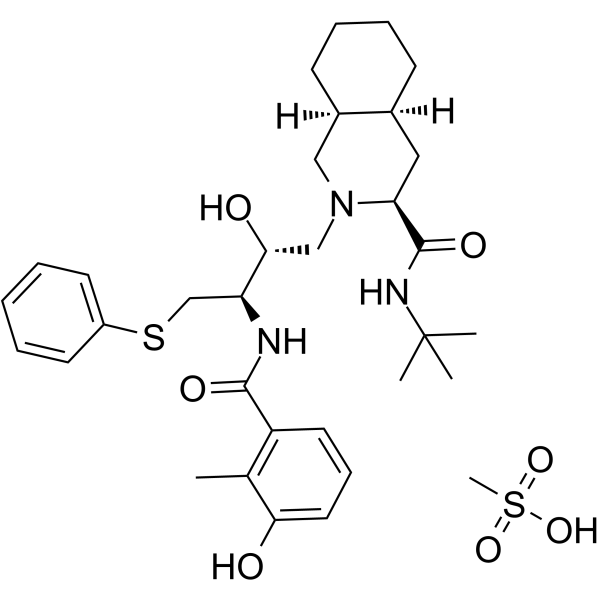
Nelfinavir MesylateHIV-1 Protease Inhibitor -
HY-16134
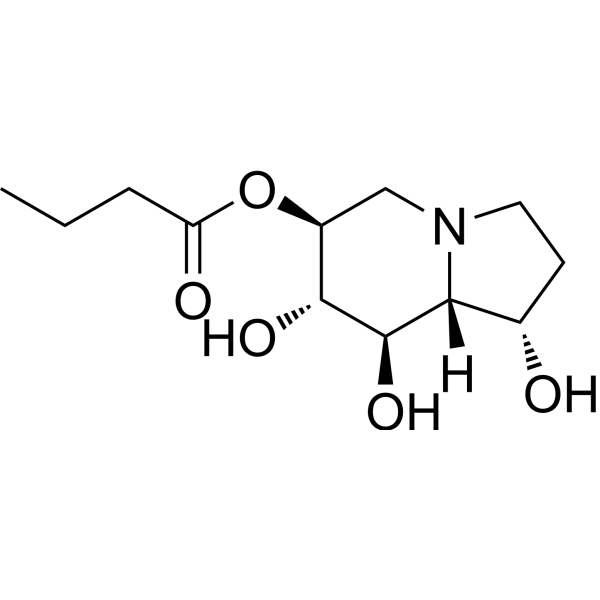
Celgosivirα-Glucosidase I Inhibitor -

HY-15287AR
Nelfinavir Mesylate (Standard)HIV-1 Protease Inhibitor
Publications Citing Use of MedChemExpress (MCE) KIN1408
More

Biologische Aktivität
Beschreibung
IC50 & Target
|
MDA5 |
RIG-I |
In Vitro
KIN1408 has the potency to drive IRF3 activation to induce innate immune gene (MDA5, RIG-1, Mx1, IRF7, and IFIT1 in THP-1 cells) expression and that concomitantly suppress dengue virus2 RNA to levels. KIN1408 also exhibits activity against HCV, influenza A, Ebola, Nipah, and Lassa viruses[1][2].
MedChemExpress (MCE) has not independently confirmed the accuracy of these methods. They are for reference only.


Chemical Information
-
CAS. Nr. 1903800-11-2
-
Appearance Solid
-
Molecular Weight 479.50
-
Formel C25H19F2N3O3S
-
Color Light yellow to yellow
-
SMILES
COC1=CC=C(SC(NC(C2=CC=C(OC(F)F)C=C2)C3=C(O)C(N=CC=C4)=C4C=C3)=N5)C5=C1
-
Versand
Room temperature in continental US; may vary elsewhere.
-
Speicherung
Powder -20°C 3 years 4°C 2 years In solvent -80°C 2 years -20°C 1 year


Publications (2)
-
Journal Impact Factor
-
Most Recent
-
Antioxid Redox Signal
Reprogramming Iron Metabolism via the RIG-I/c-Myc/FTH Axis Mitigates Renal Ischemia-Reperfusion Injury. [Abstract]2025 Aug 22. PMID: 40844436 -
Probiotics Antimicrob Proteins
Lactobacillus rhamnosus GG Regulates Host IFN-I Through the RIG-I Signalling Pathway to Inhibit Herpes Simplex Virus Type 2 Infection. [Abstract]2024 Dec;16(6):1966-1978. PMID: 37624569


Lösungsmittel & Löslichkeit
In Vitro:
DMSO : 100 mg/mL (208.55 mM; Need ultrasonic; Hygroscopic DMSO has a significant impact on the solubility of product, please use newly opened DMSO)
Please refer to the solubility information to select the appropriate solvent. Once prepared, please aliquot and store the solution to prevent product inactivation from repeated freeze-thaw cycles.
Storage method and period of stock solution: -80°C, 2 years; -20°C, 1 year. When stored at -80°C, please use it within 2 years. When stored at -20°C, please use it within 1 year.
Please refer to the solubility information to select the appropriate solvent. Once prepared, please aliquot and store the solution to prevent product inactivation from repeated freeze-thaw cycles.
Storage method and period of stock solution: -80°C, 2 years; -20°C, 1 year. When stored at -80°C, please use it within 2 years. When stored at -20°C, please use it within 1 year.
Konzentration (Stammlösung) × Volumen (Stammlösung) = Konzentration (Ziellösung) × Volumen (Ziellösung)
In Vivo:
Select the appropriate dissolution method based on your experimental animal and administration route.
- For the following dissolution methods, please ensure to first prepare a clear stock solution using an In Vitro approach and then sequentially add co-solvents:
- To ensure reliable experimental results, the clarified stock solution can be appropriately stored based on storage conditions. As for the working solution for In Vivo experiments, it is recommended to prepare freshly and use it on the same day.
- The percentages shown for the solvents indicate their volumetric ratio in the final prepared solution. If precipitation or phase separation occurs during preparation, heat and/or sonication can be used to aid dissolution.
In Vivo Dissolution Calculator
Please enter the basic information of animal experiments:
-
-
-
-
Recommended: Prepare an additional quantity of animals to account for potential losses during experiments.
Please enter your animal formula composition:
-
%DMSO +
Recommended: Keep the proportion of DMSO in working solution below 2% if your animal is weak.
-
%+
-
+%Tween-80 + +
-
%Saline +
The co-solvents required include: DMSO, . All of co-solvents are available by MedChemExpress (MCE). , Tween 80. All of co-solvents are available by MedChemExpress (MCE).
Working solution concentration: 0.22 mg/mL
Method for preparing stock solution: mg drug dissolved in μL DMSO. Stock solution concentration: mg/mL.
1. Take μL DMSO stock solution;
2. Add μL .
μL , mix evenly;
3. Then add μL Tween 80, mix evenly;
4. Then add μL
Please ensure that the stock solution in the first step is dissolved to a clear state, and add co-solvents in sequence. You can use ultrasonic heating (ultrasonic cleaner, recommended frequency 20-40 kHz), vortexing, etc. to assist dissolution.


Reinheit & Dokumentation
-
Data Sheet (275 KB)
-
SDS (251 KB)
- English - EN (251 KB)
- Français - FR (251 KB)
- Deutsch - DE (251 KB)
- Norwegian - NO (251 KB)
- Español - ES (251 KB)
- Swedish - SV (251 KB)
- Italian - IT (251 KB)
- Korean - KR (251 KB)
- Portuguese - PT (251 KB)
-
Handling Instructions (2659 KB)
Verweise
[1]. Green RR, et al. Transcriptional analysis of antiviral small molecule therapeutics as agonists of the RLR pathway. Genom Data. 2016 Feb 1;7:290-2. [Content Brief]
[2]. Sowmya Pattabhi, et al. Targeting Innate Immunity for Antiviral Therapy through Small Molecule Agonists of the RLR Pathway. J Virol. 2015 Dec 16;90(5):2372-87. [Content Brief]


Complete Stock Solution Preparation Table
Please refer to the solubility information to select the appropriate solvent. Once prepared, please aliquot and store the solution to prevent product inactivation from repeated freeze-thaw cycles.
Storage method and period of stock solution: -80°C, 2 years; -20°C, 1 year. When stored at -80°C, please use it within 2 years. When stored at -20°C, please use it within 1 year.
| Optional Solvent | Concentration Solvent Mass | 1 mg | 5 mg | 10 mg | 25 mg |
|---|---|---|---|---|---|
| DMSO | 1 mM | 2.0855 mL | 10.4275 mL | 20.8551 mL | 52.1376 mL |
| 5 mM | 0.4171 mL | 2.0855 mL | 4.1710 mL | 10.4275 mL | |
| 10 mM | 0.2086 mL | 1.0428 mL | 2.0855 mL | 5.2138 mL | |
| 15 mM | 0.1390 mL | 0.6952 mL | 1.3903 mL | 3.4758 mL | |
| 20 mM | 0.1043 mL | 0.5214 mL | 1.0428 mL | 2.6069 mL | |
| 25 mM | 0.0834 mL | 0.4171 mL | 0.8342 mL | 2.0855 mL | |
| 30 mM | 0.0695 mL | 0.3476 mL | 0.6952 mL | 1.7379 mL | |
| 40 mM | 0.0521 mL | 0.2607 mL | 0.5214 mL | 1.3034 mL | |
| 50 mM | 0.0417 mL | 0.2086 mL | 0.4171 mL | 1.0428 mL | |
| 60 mM | 0.0348 mL | 0.1738 mL | 0.3476 mL | 0.8690 mL | |
| 80 mM | 0.0261 mL | 0.1303 mL | 0.2607 mL | 0.6517 mL | |
| 100 mM | 0.0209 mL | 0.1043 mL | 0.2086 mL | 0.5214 mL |


KIN1408 Related Classifications
HY-19961 Related Classifications
 Powered by Bioz