



Atorvastatin sodium (Standard)
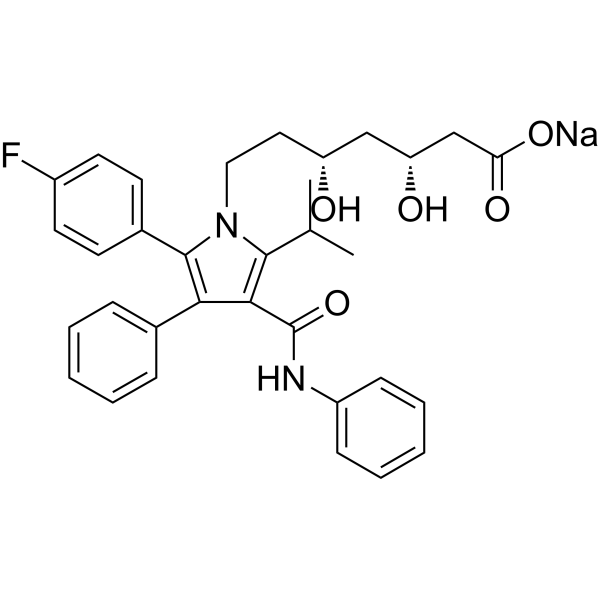
Atorvastatin sodium (Standard) is the analytical standard of Atorvastatin (sodium) (HY-108257). This product is intended for research and analytical applications. Atorvastatin sodium is an orally active HMG-CoA reductase inhibitor, has the ability to effectively decrease blood lipids. Atorvastatin sodium inhibits human SV-SMC proliferation and invasion with IC50s of 0.39 μM and 2.39 μM, respectively.
For research use only. We do not sell to patients.
- CAS No.: 134523-01-6
- Formula: C33H34FN2NaO5
- Molecular Weight:580.62
-
Storage:
Please store the product under the recommended conditions in the Certificate of Analysis.


To place orders, for customer services and technical support, please contact: MedChemExpress USA
Tel: 609-228-6898 E-mail: [email protected] [email protected]


-
 Biological Activity
-
Chemical Information
- Protocols
- Purity & Documentation
- References
-
 Help & FAQs


-
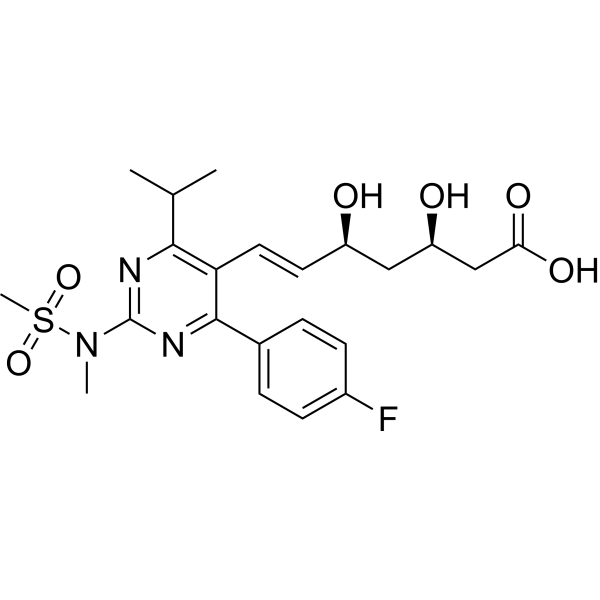
HY-17504A
RosuvastatinHMGCR Inhibitor -
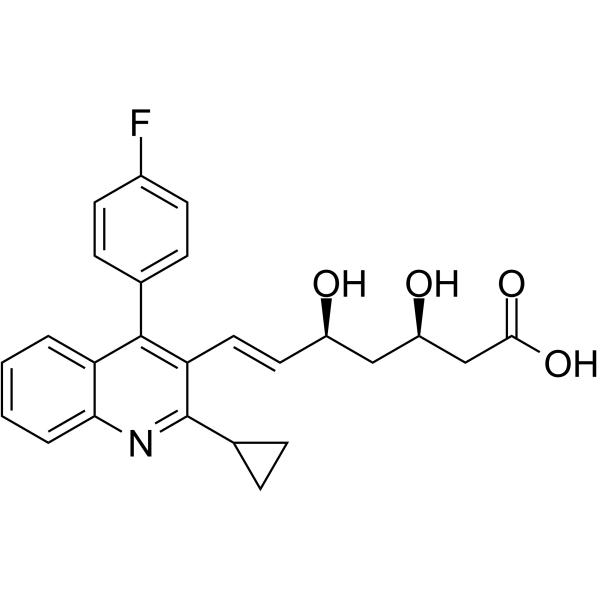
HY-B0144A
PitavastatinHMG-CoA Reductase Inhibitor -
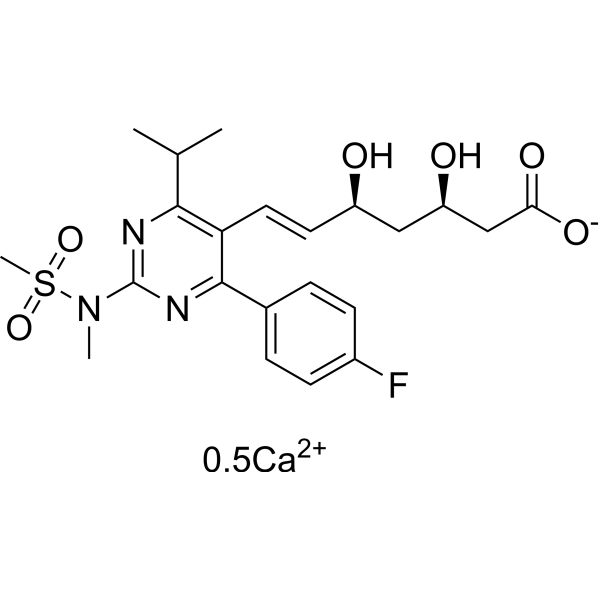
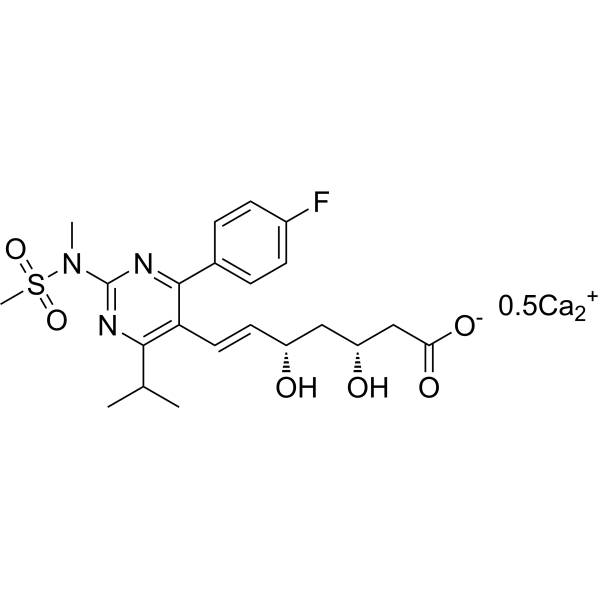
HY-17504
Rosuvastatin CalciumHMGCR Inhibitor -
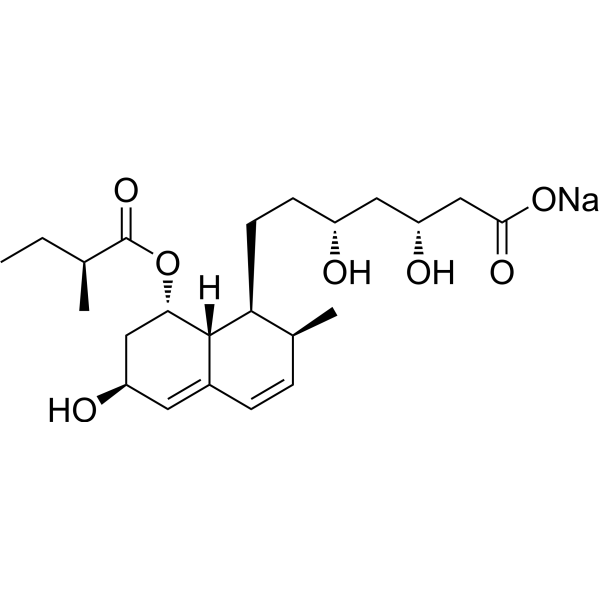
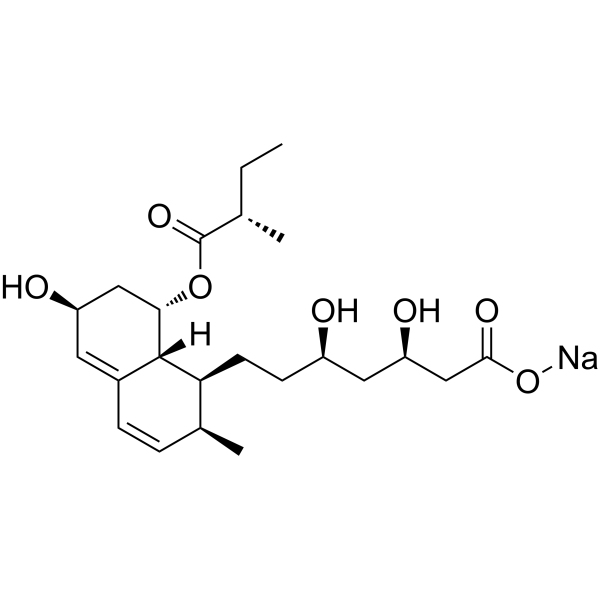
HY-B0165A
Pravastatin sodiumHMG-CoA Reductase (HMGCR) Inhibitor -
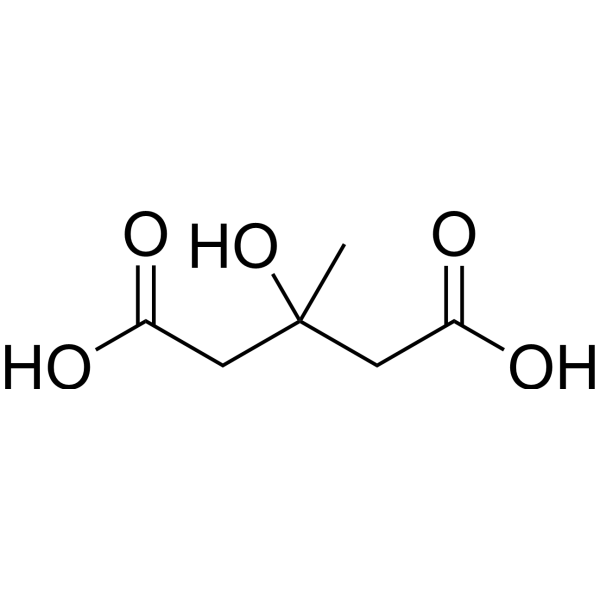
HY-B1189
MeglutolEndogenous Metabolite -
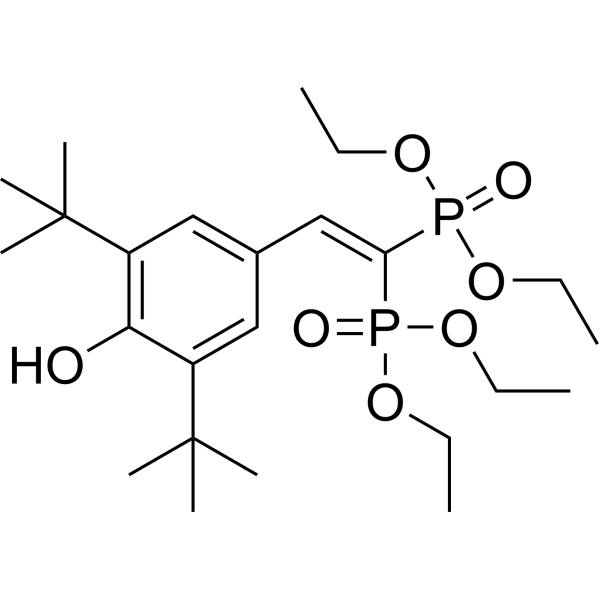
HY-100793
SR12813HMG-CoA Reductase Inhibitor/hPXR Agonist -
HY-B0165AR
Pravastatin sodium (Standard) -
HY-17504R
Rosuvastatin Calcium (Standard) -
HY-108257
Atorvastatin sodiumHMG-CoA Reductase Inhibitor -

HY-B1189R
Meglutol (Standard)Endogenous Metabolite -

HY-100793R
SR12813 (Standard)HMG-CoA Reductase Inhibitor/hPXR Agonist


Biological Activity
Description


Chemical Information
-
CAS No. 134523-01-6
-
Molecular Weight 580.62
-
Formula C33H34FN2NaO5
-
SMILES
O=C(C1=C(C(C)C)N(CC[C@H](O)C[C@H](O)CC(O[Na])=O)C(C2=CC=C(F)C=C2)=C1C3=CC=CC=C3)NC4=CC=CC=C4
-
Shipping
Room temperature in continental US; may vary elsewhere.
-
Storage
Please store the product under the recommended conditions in the Certificate of Analysis.

Protocols
-
Cell invasion
Cell invasion is the ability of cells to migrate from one area to another via the extracellular matrix. Cell invasion is the response of normal and cancer cells to chemical and mechanical stimuli. Before migrating to a new region, the extracellular matrix is degraded by proteases within the cell. Cell invasion often occurs during wound repair, vascularization and inflammation, abnormal tissue invasion, and tumor cell metastasis.
-
Cell Viability Determination by MTT Colorimetric Assay
The following protocol uses the MTT colorimetric assay as a classic literature-established method for assessing cell viability/metabolic activity in cultured mammalian cells. MTT[3-(4,5-dimethylthiazol-2-yl)-2,5-diphenyltetrazolium bromide] is reduced by metabolically active cells to a colored formazan product; the amount of formazan is quantified spectrophotometrically and provides an indirect measure of metabolically active viable cells. Importantly, MTT reduction reflects cellular oxidoreductase/metabolic activity rather than an absolute direct count of living cells, so changes in cellular metabolism can alter the signal independently of cell number.


Purity & Documentation
References
[1]. Br J Pharmacol. 2006 Sep;149(1):14-22. [Content Brief]
[2]. Turner NA, et al. Comparison of the efficacies of five different statins on inhibition of human saphenous vein smooth muscle cell proliferation and invasion. J Cardiovasc Pharmacol. 2007 Oct;50(4):458-61. [Content Brief]
[3]. Nawrocki, J.W., et al., Reduction of LDL cholesterol by 25% to 60% in patients with primary hypercholesterolemia by atorvastatin, a new HMG-CoA reductase inhibitor. Arterioscler Thromb Vasc Biol, 1995. 15(5): p. 678-82. [Content Brief]
[4]. Song XJ, et al. Atorvastatin inhibits myocardial cell apoptosis in a rat model with post-myocardial infarction heart failure by downregulating ER stress response. Int J Med Sci. 2011;8(7):564-72. [Content Brief]
[5]. Li Y, et al. Inhibition of endoplasmic reticulum stress signaling pathway: A new mechanism of statins to suppress the development of abdominal aortic aneurysm. PLoS One. 2017 Apr 3;12(4):e0174821. [Content Brief]
[6]. Ming-Bai Hu, et al. Atorvastatin induces autophagy in MDA-MB-231 breast cancer cells. Ultrastruct Pathol. Sep-Oct 2018;42(5):409-415. [Content Brief]

Calculators
Concentration (start) × Volume (start) = Concentration (final) × Volume (final)


Atorvastatin sodium (Standard) Related Classifications
HY-108257R Related Classifications
 Powered by Bioz