



Patchouli alcohol
Based on 3 publication(s) in Google Scholar
Patchouli alcohol is a natural tricyclic sesquiterpene, exhibits anti-Helicobacter pylori, anti-inflammatory and antioxidant properties.
For research use only. We do not sell to patients.
- Purity: 99.43%
- CAS No.: 5986-55-0
- Formula: C15H26O
- Molecular Weight:222.37
-
Storage:
4°C, protect from light
* In solvent : -80°C, 6 months; -20°C, 1 month (protect from light)

To place orders, for customer services and technical support, please contact: MedChemExpress USA
Tel: 609-228-6898 E-mail: [email protected] [email protected]


-
 Biological Activity
-
Chemical Information
-
Solvent & Solubility
- Purity & Documentation
- References
-
 Help & FAQs


-
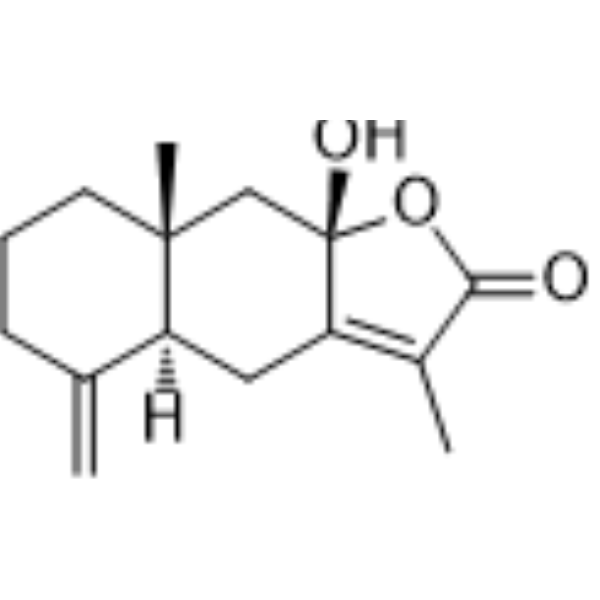
HY-N0203
Atractylenolide III -
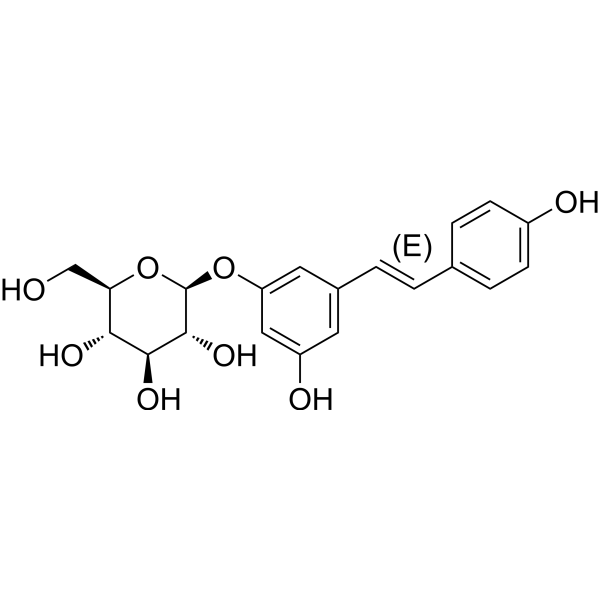
HY-N0120A
Polydatin -
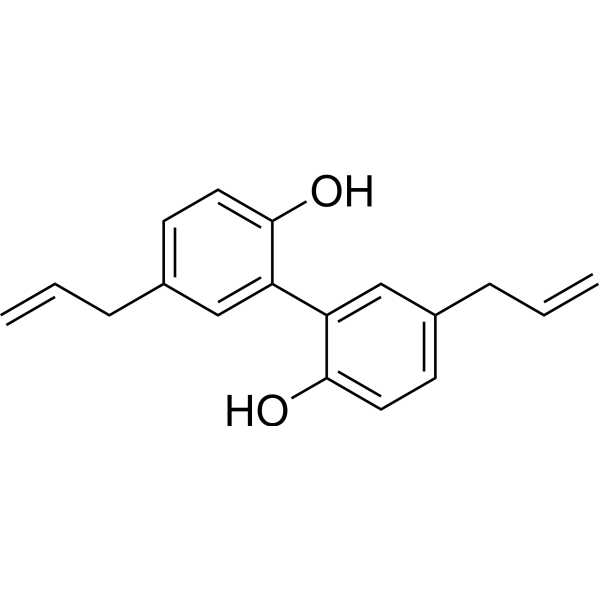
HY-N0163
Magnolol -
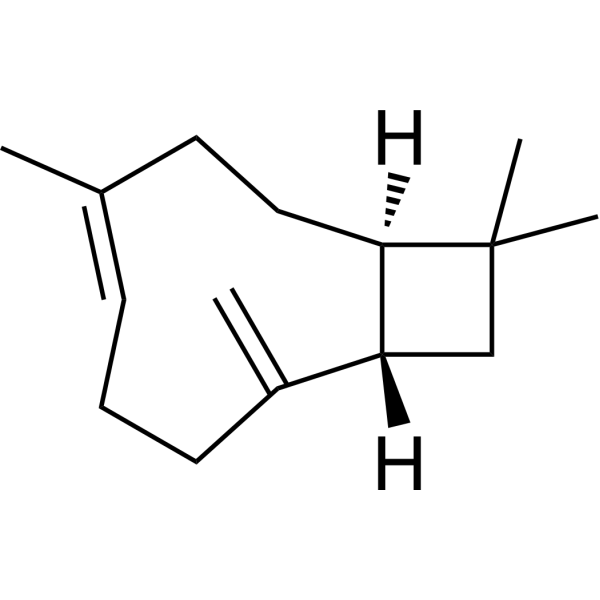
HY-N1415
β-Caryophyllene -
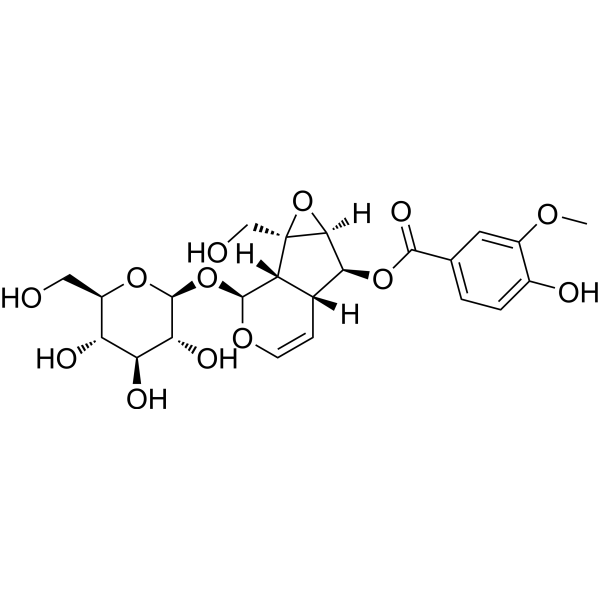
HY-N0408
Picroside II -
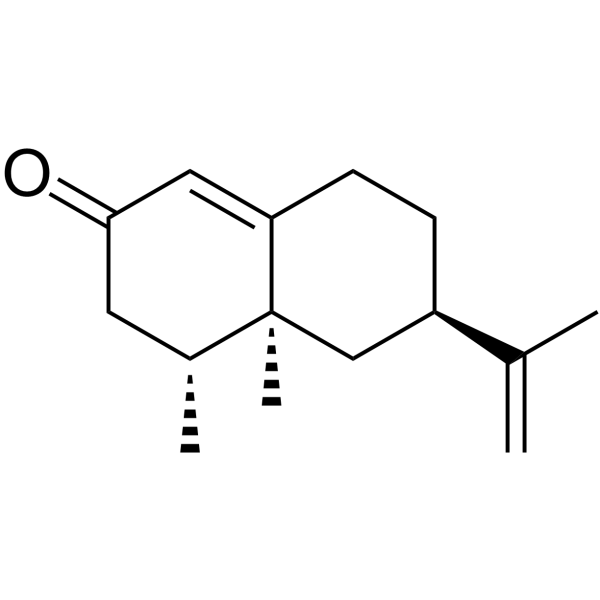
HY-N2195
Nootkatone -
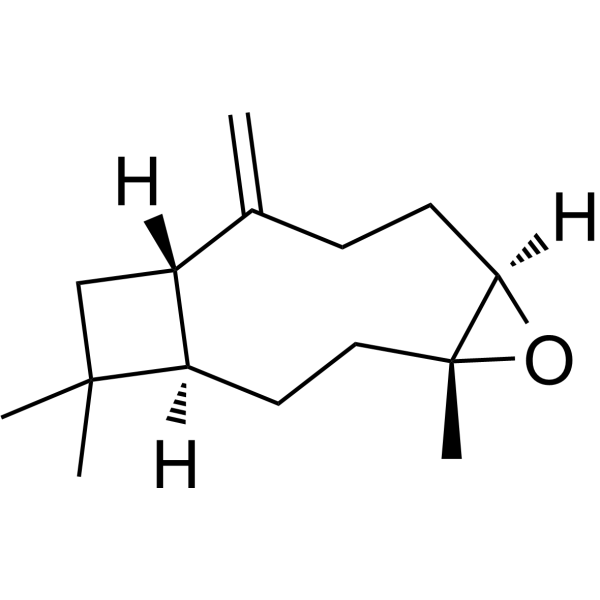
HY-N3544
Caryophyllene oxide -
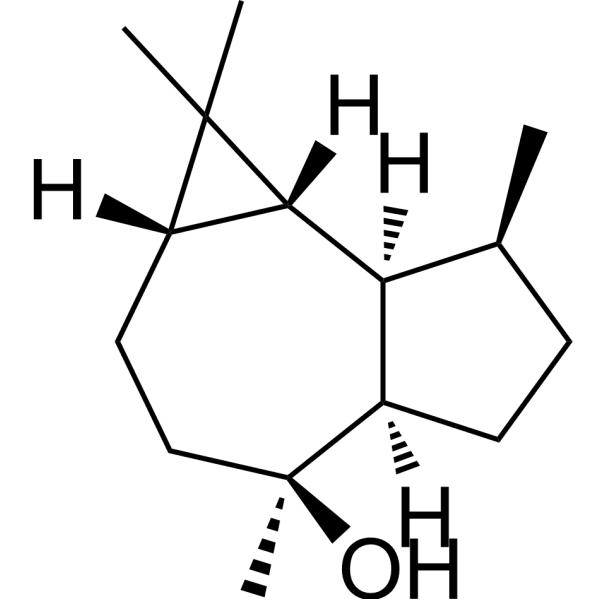
HY-121388
Ledol -
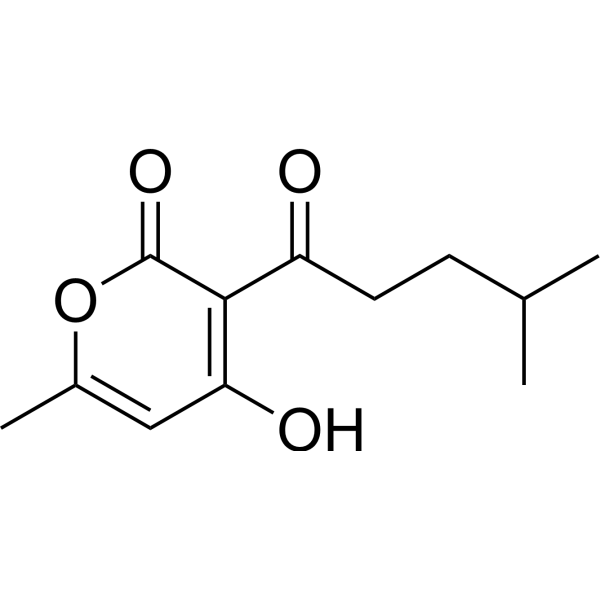
HY-N1416
Pogostone -

HY-N0440R
Germacrone (Standard) -

HY-N0203R
Atractylenolide III (Standard) -

HY-N0207R
Patchouli alcohol (Standard)
Publications Citing Use of MedChemExpress (MCE) Patchouli alcohol
More Customer Validation & Images

-
IF

-
RT-PCR

-
WB

-
In Vivo Efficacy Study


Biological Activity
Description
In Vitro
Patchouli alcohol (5-20 μg/mL; 24 h) not only significantly increases the cell viability and decreased cellular lactate dehydrogenase (LDH) leakage, but also markedly elevates the mitochondrial membrane potential and remarkably attenuated GES-1 cellular apoptosis, thereby protecting gastric epithelial cells against injuries caused by H. pylori. Patchouli alcohol also inhibits the secretions of pro-inflammatory factors, such as MCP-1, TNF-α and IL-6[1].
MedChemExpress (MCE) has not independently confirmed the accuracy of these methods. They are for reference only.
-
Cell Line:GES-1 cells treated with H. pylori
-
Concentration:5 μg/mL, 10 μg/mL, and 20 μg/mL
-
Incubation Time:24 h
-
Result:Significantly increased the cell viability and decreased cellular lactate dehydrogenase (LDH) leakage.
In Vivo
MedChemExpress (MCE) has not independently confirmed the accuracy of these methods. They are for reference only.
-
Animal Model:Five- to six-week-old male C57BL/6 mice injected with H. pylori[1]
-
Dosage:5, 10, and 20 mg/kg
-
Administration:Oral administration; for 2 weeks
-
Result:Effectively attenuated oxidative stress by decreasing contents of intracellular reactive oxygen species (ROS) and MDA, and increasing levels of non-protein sulfhydryl (NP-SH), catalase and glutathione (GSH)/glutathione disulphide (GSSG).


Chemical Information
-
CAS No. 5986-55-0
-
Appearance Solid
-
Molecular Weight 222.37
-
Formula C15H26O
-
Color White to off-white
-
SMILES
O[C@@]1(C2(C)C)CC[C@H](C)[C@]3([H])C[C@@]2([H])CC[C@]13C
-
Structure Classification
-
Initial Source
-
Shipping
Room temperature in continental US; may vary elsewhere.
-
Storage
4°C, protect from light
* In solvent : -80°C, 6 months; -20°C, 1 month (protect from light)


Publications (3)
-
Journal Impact Factor
-
Most Recent
-
Phytomedicine
Patchouli oil and its main component patchouli alcohol inhibit colorectal cancer by activating ectopic olfactory receptor. [Abstract]2026 Aug:158:158408. PMID: 42287815 -
Acta Pharmacol Sin
Patchouli alcohol as a selective estrogen receptor β agonist ameliorates AD-like pathology of APP/PS1 model mice. [Abstract]2022 Sep;43(9):2226-2241. PMID: 35091686
Patchouli alcohol purchased from MedChemExpress. Usage Cited in: Acta Pharmacol Sin. 2022 Sep;43(9):2226-2241. [Abstract]
Live cell imaging assay results demonstrated that Patchouli alcohol (PTA) (5, 10, 20 μM) treatment increased phagocytosis of FAM-o-Aβ42 (200 nM) in BV2 cells.
Patchouli alcohol purchased from MedChemExpress. Usage Cited in: Acta Pharmacol Sin. 2022 Sep;43(9):2226-2241. [Abstract]
qPCR assay results indicated that Patchouli alcohol (PTA) (5, 10, 20 μM) promoted TLR4 expression.
Patchouli alcohol purchased from MedChemExpress. Usage Cited in: Acta Pharmacol Sin. 2022 Sep;43(9):2226-2241. [Abstract]
Western blot assays results demonstrated that Patchouli alcohol (PTA) (5, 10, 20 μM) antagonized the o-Aβ25–35 (20 μM)-decreased levels of VAMP2 and PSD95.
Patchouli alcohol purchased from MedChemExpress. Usage Cited in: Acta Pharmacol Sin. 2022 Sep;43(9):2226-2241. [Abstract]
Results of escape latency during platform trials indicated that Patchouli alcohol (PTA) (20, 40 mg/kg, i.g.) treatment ameliorated the cognitive defect in APP/PS1 mice.
-
Vet Microbiol
The Chinese medicine monomer Schisandrin C inhibits PRRSV infection by regulating the OGT-PI3K/AKT/mTOR signaling pathway. [Abstract]2026 May:316:110992. PMID: 41865607


Solvent & Solubility
In Vitro:
DMSO : 100 mg/mL (449.70 mM; Need ultrasonic; Hygroscopic DMSO has a significant impact on the solubility of product, please use newly opened DMSO)
Ethanol : 20 mg/mL (89.94 mM; Need ultrasonic)
Please refer to the solubility information to select the appropriate solvent. Once prepared, please aliquot and store the solution to prevent product inactivation from repeated freeze-thaw cycles.
Storage method and period of stock solution: -80°C, 6 months; -20°C, 1 month (protect from light). When stored at -80°C, please use it within 6 months. When stored at -20°C, please use it within 1 month.
Please refer to the solubility information to select the appropriate solvent. Once prepared, please aliquot and store the solution to prevent product inactivation from repeated freeze-thaw cycles.
Storage method and period of stock solution: -80°C, 6 months; -20°C, 1 month (protect from light). When stored at -80°C, please use it within 6 months. When stored at -20°C, please use it within 1 month.
Concentration (start) × Volume (start) = Concentration (final) × Volume (final)
In Vivo:
Select the appropriate dissolution method based on your experimental animal and administration route.
- For the following dissolution methods, please ensure to first prepare a clear stock solution using an In Vitro approach and then sequentially add co-solvents:
- To ensure reliable experimental results, the clarified stock solution can be appropriately stored based on storage conditions. As for the working solution for In Vivo experiments, it is recommended to prepare freshly and use it on the same day.
- The percentages shown for the solvents indicate their volumetric ratio in the final prepared solution. If precipitation or phase separation occurs during preparation, heat and/or sonication can be used to aid dissolution.
Add each solvent one by one: 10% DMSO 40% PEG300 5% Tween-80 45% Saline
Solubility: ≥ 6.25 mg/mL (28.11 mM); Clear solution
This protocol yields a clear solution of ≥ 6.25 mg/mL (saturation unknown).
Taking 1 mL working solution as an example, add 100 μL DMSO stock solution (62.5 mg/mL) to 400 μL PEG300, and mix evenly; then add 50 μL Tween-80 and mix evenly; then add 450 μL Saline to adjust the volume to 1 mL.
Preparation of Saline: Dissolve 0.9 g sodium chloride in ddH₂O and dilute to 100 mL to obtain a clear Saline solution.
Add each solvent one by one: 10% DMSO 90% (20% SBE-β-CD in Saline)
Solubility: ≥ 6.25 mg/mL (28.11 mM); Clear solution
This protocol yields a clear solution of ≥ 6.25 mg/mL (saturation unknown).
Taking 1 mL working solution as an example, add 100 μL DMSO stock solution (62.5 mg/mL) to 900 μL 20% SBE-β-CD in Saline, and mix evenly.
Preparation of 20% SBE-β-CD in Saline (4°C, storage for one week): 2 g SBE-β-CD powder is dissolved in 10 mL Saline, completely dissolve until clear.
Add each solvent one by one: 10% EtOH 40% PEG300 5% Tween-80 45% Saline
Solubility: ≥ 2 mg/mL (8.99 mM); Clear solution
This protocol yields a clear solution of ≥ 2 mg/mL (saturation unknown).
Taking 1 mL working solution as an example, add 100 μL EtOH stock solution (20.0 mg/mL) to 400 μL PEG300, and mix evenly; then add 50 μL Tween-80 and mix evenly; then add 450 μL Saline to adjust the volume to 1 mL.
Preparation of Saline: Dissolve 0.9 g sodium chloride in ddH₂O and dilute to 100 mL to obtain a clear Saline solution.
Add each solvent one by one: 10% EtOH 90% (20% SBE-β-CD in Saline)
Solubility: ≥ 2 mg/mL (8.99 mM); Clear solution
This protocol yields a clear solution of ≥ 2 mg/mL (saturation unknown).
Taking 1 mL working solution as an example, add 100 μL EtOH stock solution (20.0 mg/mL) to 900 μL 20% SBE-β-CD in Saline, and mix evenly.
Preparation of 20% SBE-β-CD in Saline (4°C, storage for one week): 2 g SBE-β-CD powder is dissolved in 10 mL Saline, completely dissolve until clear.
Add each solvent one by one: 10% EtOH 90% Corn Oil
Solubility: ≥ 2 mg/mL (8.99 mM); Clear solution
This protocol yields a clear solution of ≥ 2 mg/mL (saturation unknown). If the continuous dosing period exceeds half a month, please choose this protocol carefully.
Taking 1 mL working solution as an example, add 100 μL EtOH stock solution (20.0 mg/mL) to 900 μL Corn oil, and mix evenly.
In Vivo Dissolution Calculator
Please enter the basic information of animal experiments:
-
-
-
-
Recommended: Prepare an additional quantity of animals to account for potential losses during experiments.
Please enter your animal formula composition:
-
%DMSO +
Recommended: Keep the proportion of DMSO in working solution below 2% if your animal is weak.
-
%+
-
+%Tween-80 + +
-
%Saline +
The co-solvents required include: DMSO, . All of co-solvents are available by MedChemExpress (MCE). , Tween 80. All of co-solvents are available by MedChemExpress (MCE).
Working solution concentration: 0.22 mg/mL
Method for preparing stock solution: mg drug dissolved in μL DMSO. Stock solution concentration: mg/mL. * In solvent : -80°C, 6 months; -20°C, 1 month (protect from light)
1. Take μL DMSO stock solution;
2. Add μL .
μL , mix evenly;
3. Then add μL Tween 80, mix evenly;
4. Then add μL
Please ensure that the stock solution in the first step is dissolved to a clear state, and add co-solvents in sequence. You can use ultrasonic heating (ultrasonic cleaner, recommended frequency 20-40 kHz), vortexing, etc. to assist dissolution.


Purity & Documentation
-
Data Sheet (280 KB)
-
SDS (701 KB)
- English - EN (701 KB)
- Français - FR (701 KB)
- Deutsch - DE (701 KB)
- Norwegian - NO (701 KB)
- Español - ES (701 KB)
- Swedish - SV (701 KB)
- Italian - IT (701 KB)
- Korean - KR (701 KB)
- Portuguese - PT (701 KB)
-
Handling Instructions (2659 KB)
References


Complete Stock Solution Preparation Table
Please refer to the solubility information to select the appropriate solvent. Once prepared, please aliquot and store the solution to prevent product inactivation from repeated freeze-thaw cycles.
Storage method and period of stock solution: -80°C, 6 months; -20°C, 1 month (protect from light). When stored at -80°C, please use it within 6 months. When stored at -20°C, please use it within 1 month.
| Optional Solvent | Concentration Solvent Mass | 1 mg | 5 mg | 10 mg | 25 mg |
|---|---|---|---|---|---|
| Ethanol / DMSO | 1 mM | 4.4970 mL | 22.4850 mL | 44.9701 mL | 112.4252 mL |
| 5 mM | 0.8994 mL | 4.4970 mL | 8.9940 mL | 22.4850 mL | |
| 10 mM | 0.4497 mL | 2.2485 mL | 4.4970 mL | 11.2425 mL | |
| 15 mM | 0.2998 mL | 1.4990 mL | 2.9980 mL | 7.4950 mL | |
| 20 mM | 0.2249 mL | 1.1243 mL | 2.2485 mL | 5.6213 mL | |
| 25 mM | 0.1799 mL | 0.8994 mL | 1.7988 mL | 4.4970 mL | |
| 30 mM | 0.1499 mL | 0.7495 mL | 1.4990 mL | 3.7475 mL | |
| 40 mM | 0.1124 mL | 0.5621 mL | 1.1243 mL | 2.8106 mL | |
| 50 mM | 0.0899 mL | 0.4497 mL | 0.8994 mL | 2.2485 mL | |
| 60 mM | 0.0750 mL | 0.3748 mL | 0.7495 mL | 1.8738 mL | |
| 80 mM | 0.0562 mL | 0.2811 mL | 0.5621 mL | 1.4053 mL | |
| DMSO | 100 mM | 0.0450 mL | 0.2249 mL | 0.4497 mL | 1.1243 mL |


Patchouli alcohol Related Classifications
HY-N0207 Related Classifications
 Powered by Bioz