



BAMEA-O16B

Based on 1 Customer Validation
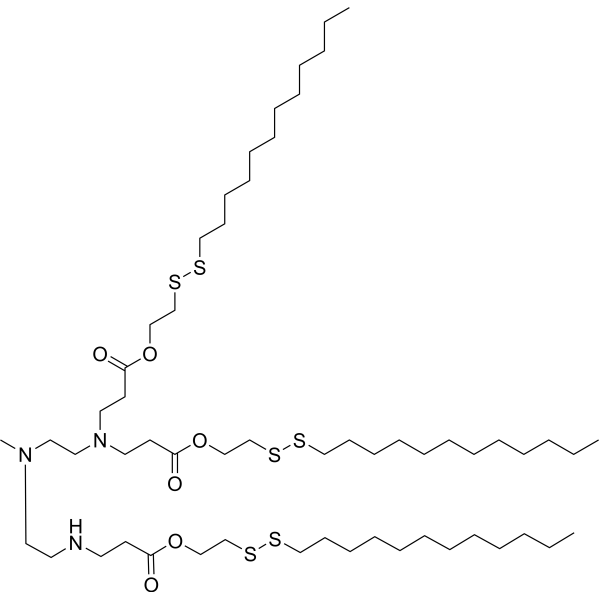
BAMEAO16B is a lipid nanoparticle. BAMEAO16B integrated with disulfide bonds, can efficiently deliver Cas9 mRNA and sgRNA into cells while releasing RNA in response to the reductive intracellular environment for genome editing. BAMEAO16B can be used for the research of gene editing.
For research use only. We do not sell to patients.
- Purity : 98.93%
- CAS No.: 2490668-30-7
- Formula: C56H111N3O6S6
- Molecular Weight:1114.89
-
Storage:
-20°C, stored under nitrogen
* In solvent : -80°C, 6 months; -20°C, 1 month (stored under nitrogen)

To place orders, for customer services and technical support, please contact: MedChemExpress USA
Tel: 609-228-6898 E-mail: [email protected] [email protected]


-
 Biological Activity
-
Chemical Information
-
Solvent & Solubility
- Protocols
- Purity & Documentation
- References
-
 Help & FAQs


-
HY-W590532
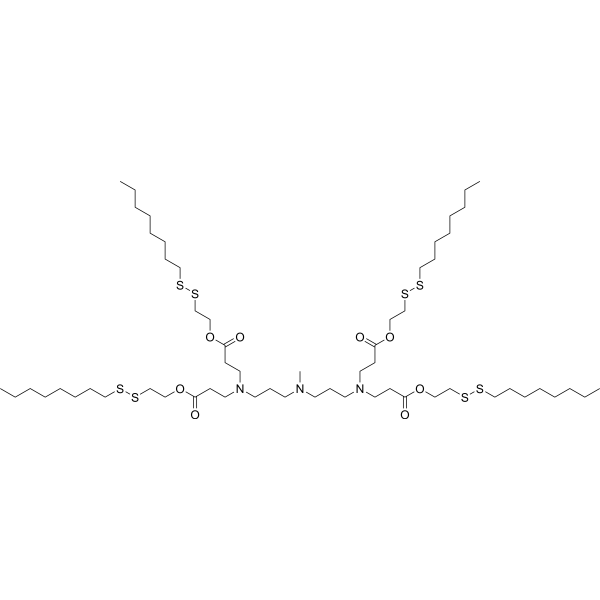
306-O12BCationic Lipid -
HY-145795
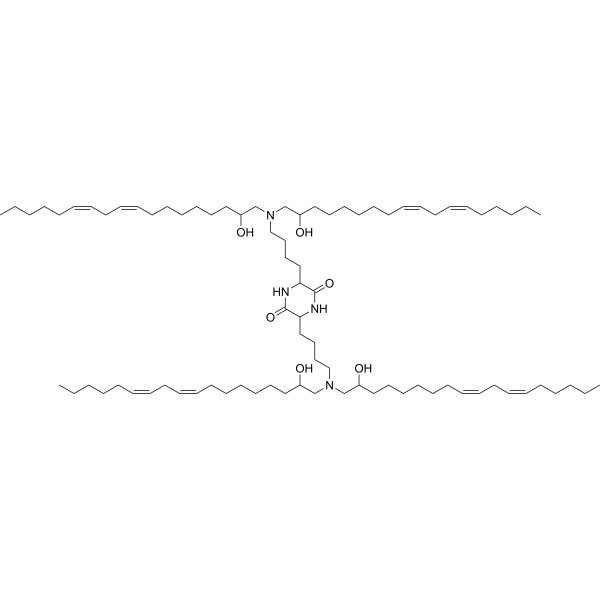
OF-02Ionizable Lipid -
HY-112764
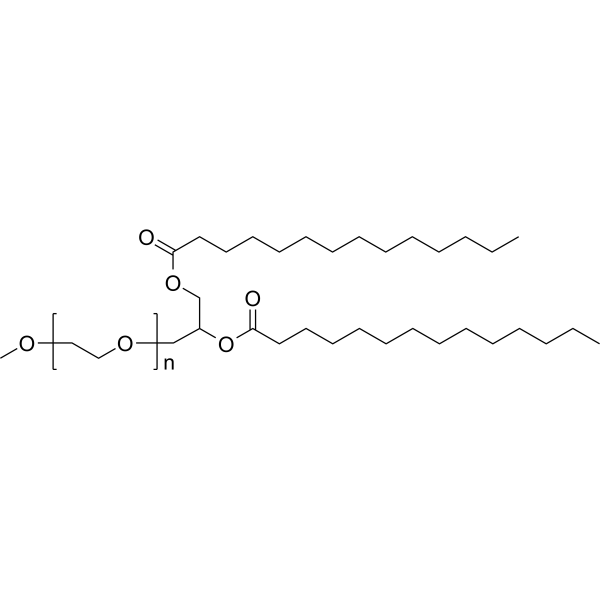
mPEG2000-DMGLiposome -
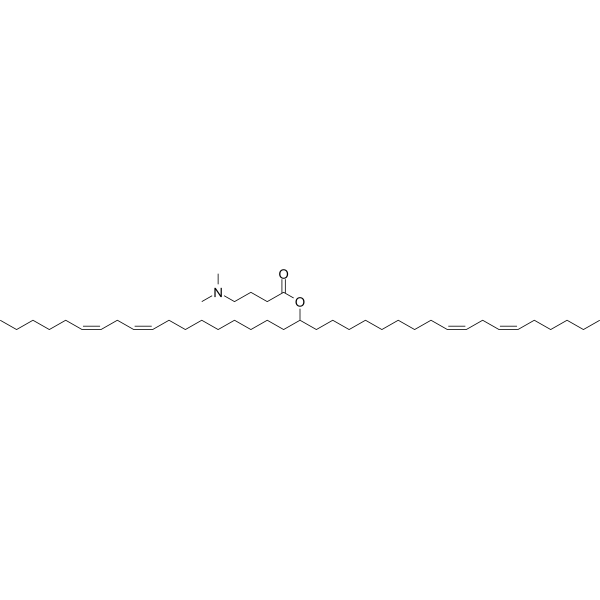
HY-112251
D-Lin-MC3-DMAsiRNA Delivery Vehicle -
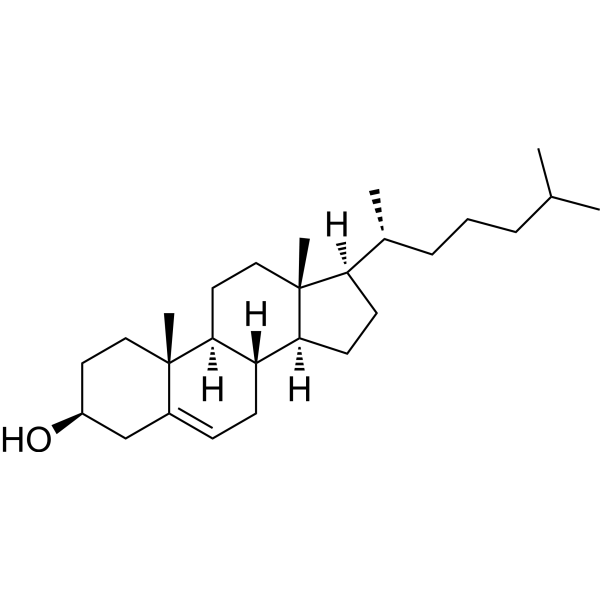
HY-N0322
Cholesterol (from animal)ERRα Agonist -
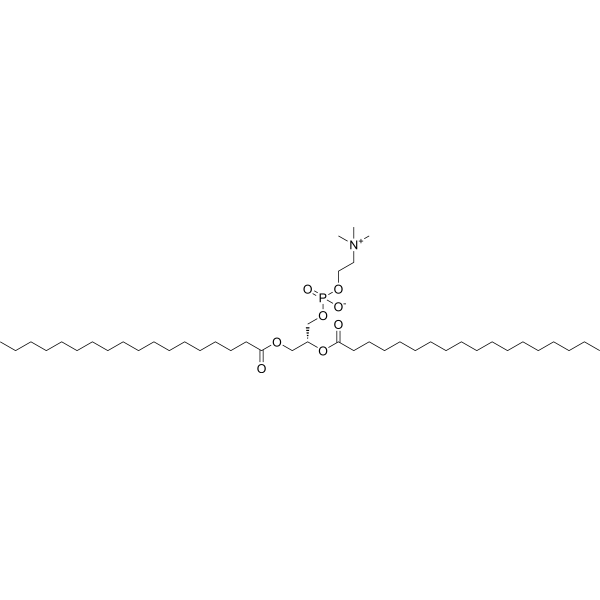
HY-W040193
DSPCLiposome Compound -
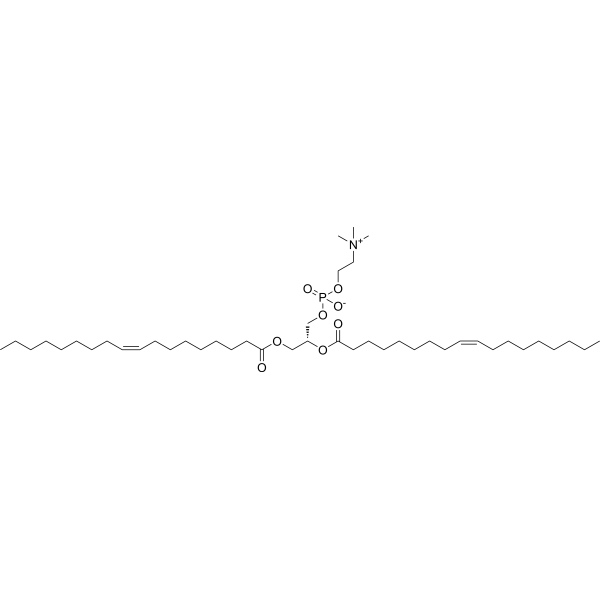
HY-113424A
1,2-Dioleoyl-sn-glycero-3-phosphocholinePhospholipid -
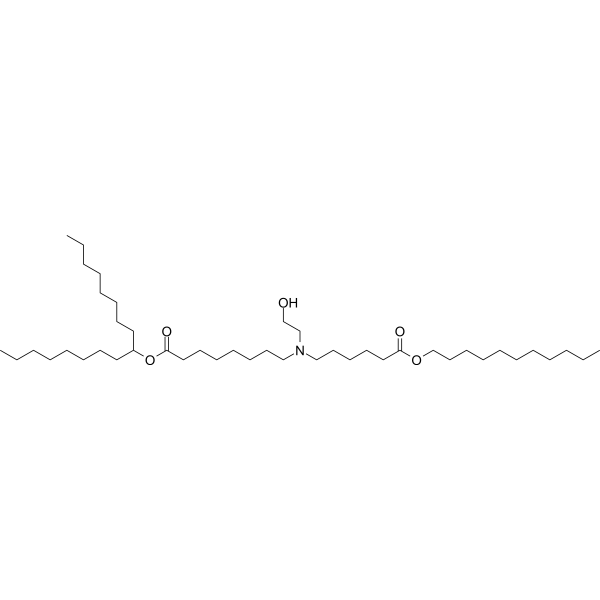
HY-134541
SM-102Ionizable Amino Lipid -
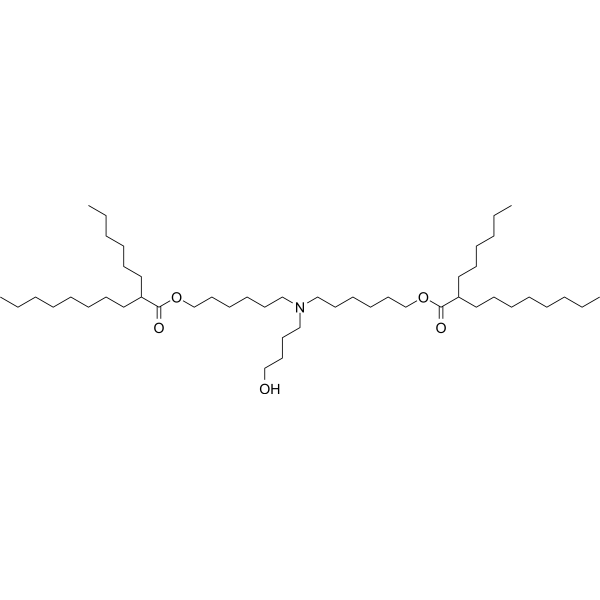
HY-138170
ALC-0315Lipid Nanoparticle Component -
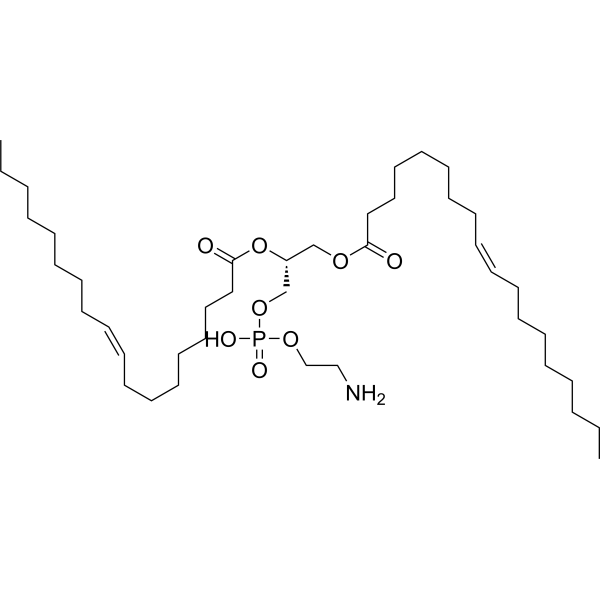
HY-112005
DOPEFerroptosis Inhibitor -
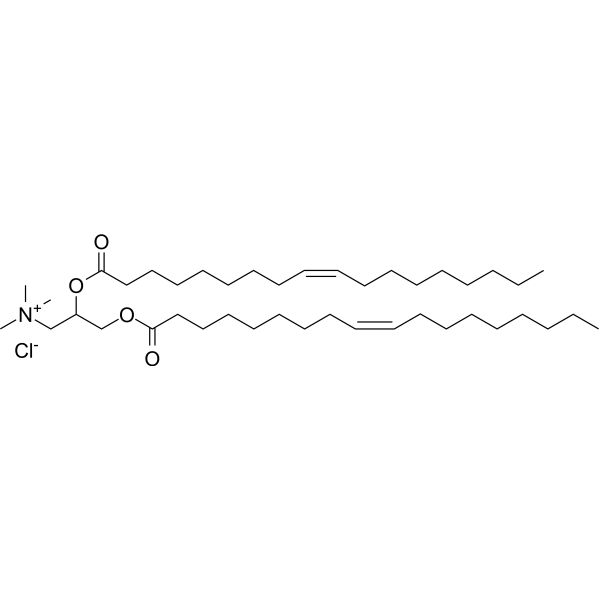
HY-112754A
DOTAP chlorideCationic Lipid -
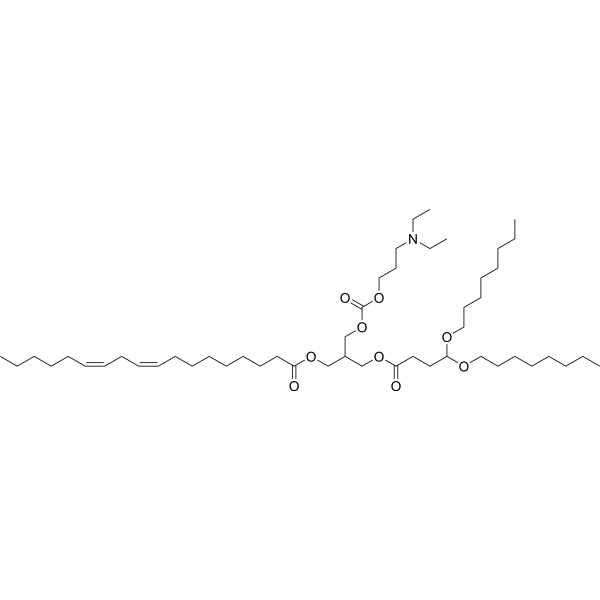
HY-46760
LP01Cationic Lipid


Biological Activity
Description
In Vitro
BAMEA-O16B/Cas9 mRNA/sgHPV18 (HeLa cells) treatment significantly prohibits HeLa growth compared to that of a scramble sgRNA and Cas9 mRNA delivery. BAMEA-O16B shows RNA delivery efficiency. BAMEA-O16B shows mRNA encapsulation efficiency. BAMEA-O16B shows GFP knockout efficiency. BAMEA-O16B mediated Cas9mRNA delivery is able to regulate endogenous gene expression. BAMEA-O16B/RNA treated cells shows a higher endosome escape efficiency than that of BAMEA-O16/RNA treatment. BAMEA-O16B/RFP mRNA (HeLa cells) nanoparticles results in efficient RFP expression[1].
MedChemExpress (MCE) has not independently confirmed the accuracy of these methods. They are for reference only. Further protocols information, click here.
In Vivo
MedChemExpress (MCE) has not independently confirmed the accuracy of these methods. They are for reference only.


Chemical Information
-
CAS No. 2490668-30-7
-
Appearance Liquid (Density: 1.041 g/cm3)
-
Molecular Weight 1114.89
-
Formula C56H111N3O6S6
-
Color Colorless to light yellow
-
SMILES
CN(CCN(CCC(OCCSSCCCCCCCCCCCC)=O)CCC(OCCSSCCCCCCCCCCCC)=O)CCNCCC(OCCSSCCCCCCCCCCCC)=O
-
Shipping
Room temperature in continental US; may vary elsewhere.
-
Storage
-20°C, stored under nitrogen
* In solvent : -80°C, 6 months; -20°C, 1 month (stored under nitrogen)


Solvent & Solubility
In Vitro:
DMSO : ≥ 100 mg/mL (89.69 mM; Hygroscopic DMSO has a significant impact on the solubility of product, please use newly opened DMSO)
Ethanol : 100 mg/mL (89.69 mM; Need ultrasonic)
* "≥" means soluble, but saturation unknown.
Please refer to the solubility information to select the appropriate solvent. Once prepared, please aliquot and store the solution to prevent product inactivation from repeated freeze-thaw cycles.
Storage method and period of stock solution: -80°C, 6 months; -20°C, 1 month (stored under nitrogen). When stored at -80°C, please use it within 6 months. When stored at -20°C, please use it within 1 month.
Please refer to the solubility information to select the appropriate solvent. Once prepared, please aliquot and store the solution to prevent product inactivation from repeated freeze-thaw cycles.
Storage method and period of stock solution: -80°C, 6 months; -20°C, 1 month (stored under nitrogen). When stored at -80°C, please use it within 6 months. When stored at -20°C, please use it within 1 month.
Concentration (start) × Volume (start) = Concentration (final) × Volume (final)
In Vivo:
Select the appropriate dissolution method based on your experimental animal and administration route.
- For the following dissolution methods, please ensure to first prepare a clear stock solution using an In Vitro approach and then sequentially add co-solvents:
- To ensure reliable experimental results, the clarified stock solution can be appropriately stored based on storage conditions. As for the working solution for In Vivo experiments, it is recommended to prepare freshly and use it on the same day.
- The percentages shown for the solvents indicate their volumetric ratio in the final prepared solution. If precipitation or phase separation occurs during preparation, heat and/or sonication can be used to aid dissolution.
Add each solvent one by one: 10% EtOH 40% PEG300 5% Tween-80 45% Saline
Solubility: ≥ 2.5 mg/mL (2.24 mM); Clear solution
This protocol yields a clear solution of ≥ 2.5 mg/mL (saturation unknown).
Taking 1 mL working solution as an example, add 100 μL EtOH stock solution (25.0 mg/mL) to 400 μL PEG300, and mix evenly; then add 50 μL Tween-80 and mix evenly; then add 450 μL Saline to adjust the volume to 1 mL.
Preparation of Saline: Dissolve 0.9 g sodium chloride in ddH₂O and dilute to 100 mL to obtain a clear Saline solution.
Add each solvent one by one: 10% EtOH 90% (20% SBE-β-CD in Saline)
Solubility: 2.5 mg/mL (2.24 mM); Suspended solution; Need ultrasonic
This protocol yields a suspended solution of 2.5 mg/mL. Suspended solution can be used for oral and intraperitoneal injection.
Taking 1 mL working solution as an example, add 100 μL EtOH stock solution (25.0 mg/mL) to 900 μL 20% SBE-β-CD in Saline, and mix evenly.
Preparation of 20% SBE-β-CD in Saline (4°C, storage for one week): 2 g SBE-β-CD powder is dissolved in 10 mL Saline, completely dissolve until clear.
Add each solvent one by one: 10% EtOH 90% Corn Oil
Solubility: ≥ 2.5 mg/mL (2.24 mM); Clear solution
This protocol yields a clear solution of ≥ 2.5 mg/mL (saturation unknown). If the continuous dosing period exceeds half a month, please choose this protocol carefully.
Taking 1 mL working solution as an example, add 100 μL EtOH stock solution (25.0 mg/mL) to 900 μL Corn oil, and mix evenly.
In Vivo Dissolution Calculator
Please enter the basic information of animal experiments:
-
-
-
-
Recommended: Prepare an additional quantity of animals to account for potential losses during experiments.
Please enter your animal formula composition:
-
%DMSO +
Recommended: Keep the proportion of DMSO in working solution below 2% if your animal is weak.
-
%+
-
+%Tween-80 + +
-
%Saline +
The co-solvents required include: DMSO, . All of co-solvents are available by MedChemExpress (MCE). , Tween 80. All of co-solvents are available by MedChemExpress (MCE).
Working solution concentration: 0.22 mg/mL
Method for preparing stock solution: mg drug dissolved in μL DMSO. Stock solution concentration: mg/mL. * In solvent : -80°C, 6 months; -20°C, 1 month (stored under nitrogen)
1. Take μL DMSO stock solution;
2. Add μL .
μL , mix evenly;
3. Then add μL Tween 80, mix evenly;
4. Then add μL
Please ensure that the stock solution in the first step is dissolved to a clear state, and add co-solvents in sequence. You can use ultrasonic heating (ultrasonic cleaner, recommended frequency 20-40 kHz), vortexing, etc. to assist dissolution.

Protocols
-
Gene Editing
Gene editing modify specific sites within the genome through gene deletions, insertions or conversions to study functionally unknown genes or conduct gene therapy. It is also used to change the biological traits of organisms to establish new varieties. Gene editing techniques include zinc finger nuclease (ZFN), transcription activator-like effector nuclease (TALEN), and clustered regularly interspaced short palindromic repeats (CRISPR)/CRISPR-associated protein 9 (Cas 9) (CRISPR/Cas9).
-
RNA extraction experimental
By lysing cells, releasing RNA, and removing impurities such as proteins and DNA, high-purity RNA products are finally obtained. The commonly used traditional method is the guanidine isothiocyanate/phenol/chloroform method (Trizol), which is suitable for a variety of animal materials including animal tissues, microorganisms, cultured cells, etc., and most plant materials.
-
CRISPR-Cas9 knockout in cultured mammalian cells
CRISPR-Cas9 knockout in cultured mammalian cells uses an sgRNA to direct Cas9 to a complementary genomic sequence adjacent to a compatible PAM; Cas9 creates a targeted DNA double-strand break, and repair by non-homologous end joining can introduce insertions or deletions that disrupt the coding sequence or functional genomic element. The readout of knockout is detection of edited alleles and loss of gene product or phenotype, commonly by PCR/Sanger-sequence trace decomposition, targeted sequencing, immunoblotting, immunostaining, or flow cytometry when the target protein is detectable at the cell surface.
-
CRISPR/Cas9 Knockout Animal Model
CRISPR/Cas9 knockout animal modeling uses guide RNA to direct Cas9 to a genomic target, where Cas9 creates a DNA double-strand break; repair by error-prone non-homologous end joining generates insertions or deletions that can disrupt coding sequence and produce knockout alleles. Classic animal-model workflows deliver Cas9 mRNA or Cas9 protein with sgRNA into fertilized zygotes by microinjection or electroporation, then transfer edited embryos into pseudopregnant recipients and genotype founders for target-site mutations.
-
CRISPR-Cas9 editing of human pluripotent stem cells
CRISPR-Cas9 editing of human pluripotent stem cells uses a guide RNA to direct Cas9 to a genomic target, where Cas9 creates a double-strand break that is repaired mainly by non-homologous end joining for knockout mutations or by homology-directed repair when a donor template is supplied for precise knock-in or sequence correction. The readout is generated by genotyping edited bulk populations or single-cell-derived clones, using PCR, sequencing, restriction-based assays, reporter fluorescence, or allele-specific analysis to distinguish unedited alleles, indels, precise donor-mediated edits, biallelic deletions, and unwanted on-target lesions.


Purity & Documentation
-
Data Sheet (281 KB)
-
SDS (394 KB)
- English - EN (394 KB)
- Français - FR (394 KB)
- Deutsch - DE (394 KB)
- Norwegian - NO (394 KB)
- Español - ES (394 KB)
- Swedish - SV (394 KB)
- Italian - IT (394 KB)
- Korean - KR (394 KB)
- Portuguese - PT (394 KB)
-
Handling Instructions (2659 KB)
References


Complete Stock Solution Preparation Table
Please refer to the solubility information to select the appropriate solvent. Once prepared, please aliquot and store the solution to prevent product inactivation from repeated freeze-thaw cycles.
Storage method and period of stock solution: -80°C, 6 months; -20°C, 1 month (stored under nitrogen). When stored at -80°C, please use it within 6 months. When stored at -20°C, please use it within 1 month.
| Optional Solvent | Concentration Solvent Mass | 1 mg | 5 mg | 10 mg | 25 mg |
|---|---|---|---|---|---|
| DMSO / Ethanol | 1 mM | 0.8969 mL | 4.4847 mL | 8.9695 mL | 22.4237 mL |
| 5 mM | 0.1794 mL | 0.8969 mL | 1.7939 mL | 4.4847 mL | |
| 10 mM | 0.0897 mL | 0.4485 mL | 0.8969 mL | 2.2424 mL | |
| 15 mM | 0.0598 mL | 0.2990 mL | 0.5980 mL | 1.4949 mL | |
| 20 mM | 0.0448 mL | 0.2242 mL | 0.4485 mL | 1.1212 mL | |
| 25 mM | 0.0359 mL | 0.1794 mL | 0.3588 mL | 0.8969 mL | |
| 30 mM | 0.0299 mL | 0.1495 mL | 0.2990 mL | 0.7475 mL | |
| 40 mM | 0.0224 mL | 0.1121 mL | 0.2242 mL | 0.5606 mL | |
| 50 mM | 0.0179 mL | 0.0897 mL | 0.1794 mL | 0.4485 mL | |
| 60 mM | 0.0149 mL | 0.0747 mL | 0.1495 mL | 0.3737 mL | |
| 80 mM | 0.0112 mL | 0.0561 mL | 0.1121 mL | 0.2803 mL |


BAMEA-O16B Related Classifications
HY-139306 Related Classifications
 Powered by Bioz