



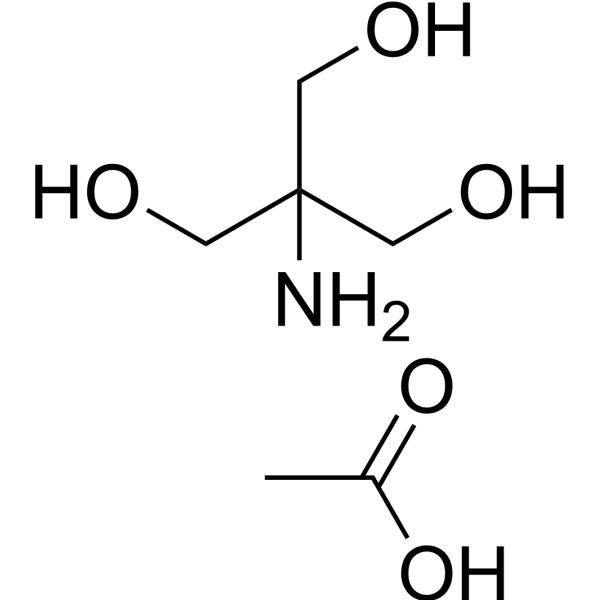
THAM acetate
Based on 2 publication(s) in Google Scholar
THAM acetate is a low-toxicity amino alcohol buffer, a CO2-consuming proton acceptor that buffers carbon dioxide and acid both in vitro and in vivo. THAM acetate binds protons to form bicarbonate, reduces PaCO2, and induces intracellular alkalization, thereby ameliorating hypercapnia-induced elevation of pulmonary blood vessels and pulmonary arterial pressure. THAM acetate may cause PaCO2 rebound, hypoglycemia, and respiratory depression. THAM acetate removes amniotic epithelium and preserves the basement membrane, but depletes extracellular matrix and reduces the adhesion rate of limbal epithelial cells. THAM acetate can act as a CO2 carrier to enhance the productivity and carbon utilization rate of Scenedesmus obliquus. THAM acetate is a key component of buffer solutions used in various biological, cell culture, biochemical, and molecular biology applications.
For research use only. We do not sell to patients.
- Purity : 97.0%
- CAS No.: 6850-28-8
- Formula: C6H15NO5
- Molecular Weight:181.19
-
Storage:
4°C, sealed storage, away from moisture and light
* In solvent : -80°C, 6 months; -20°C, 1 month (sealed storage, away from moisture and light)

To place orders, for customer services and technical support, please contact: MedChemExpress USA
Tel: 609-228-6898 E-mail: [email protected] [email protected]


-
 Biological Activity
-
Chemical Information
-
Solvent & Solubility
- Protocols
- Purity & Documentation
- References
-
 Help & FAQs


-
HY-15917
DL-DithiothreitolReducing Agent -
HY-126399
Bis-tris propaneBuffer -
HY-D0857
HEPESZwitterionic Buffer -
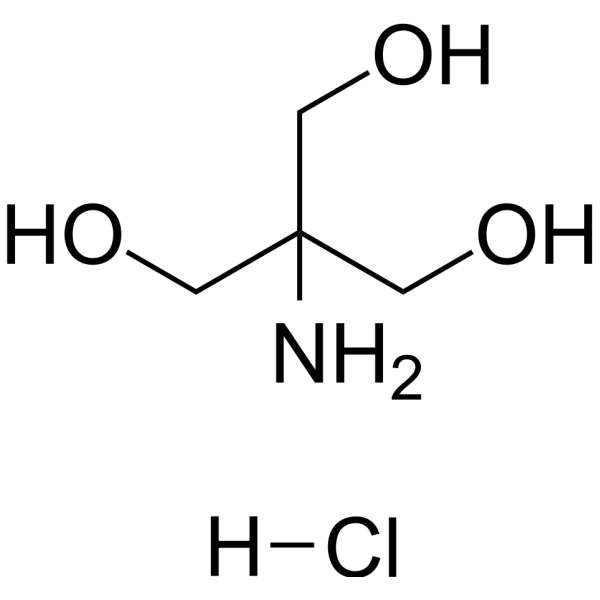
HY-D0227F
THAM hydrochloride (≥99%, reagent grade)Biochemical Assay Reagent -
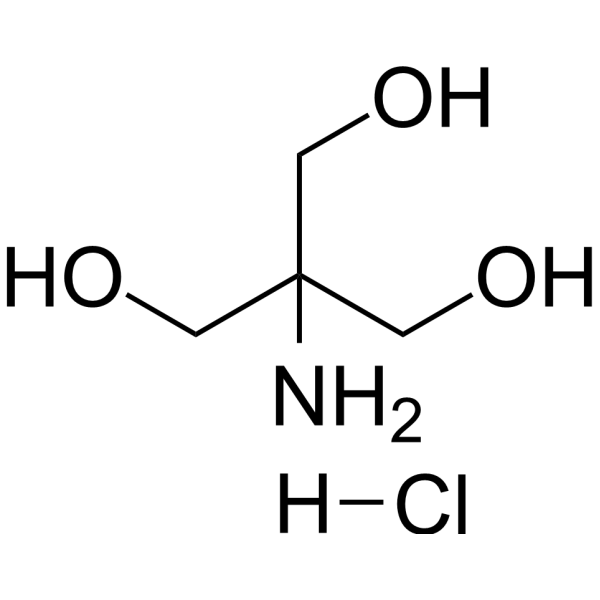
HY-D0227A
THAM hydrochlorideAmino Alcohol -

HY-D0227J
THAM hydrochloride (≥99%, for cell culture)Biochemical Assay Reagents -
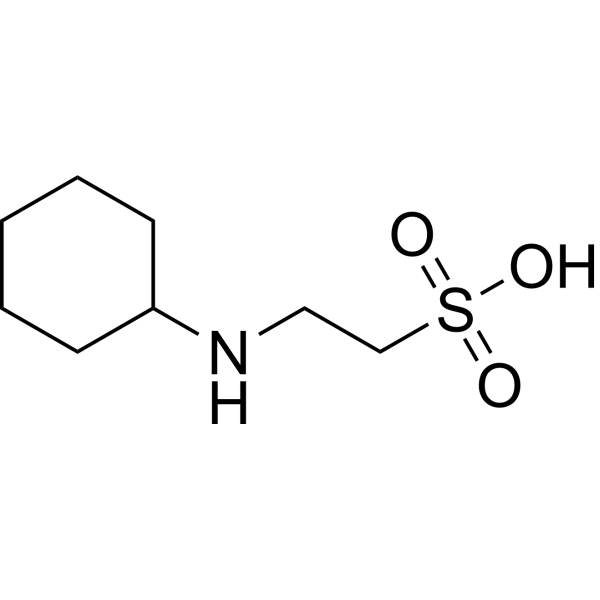
HY-D0871
CHESBuffer -
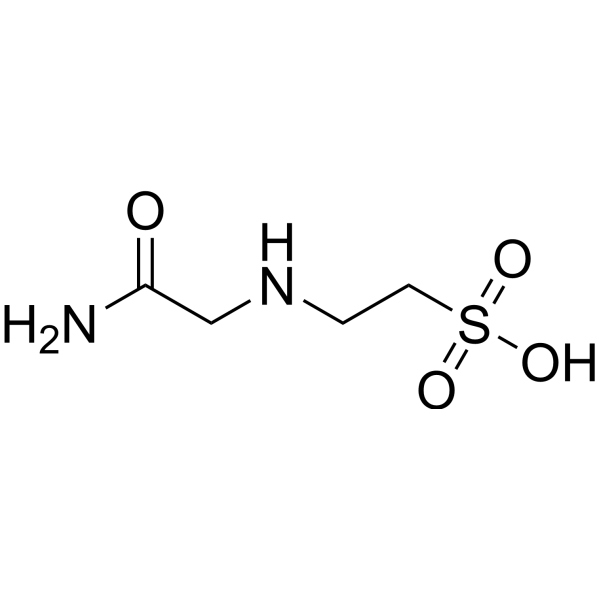
HY-D0866
ACESZwitterionic Buffer -
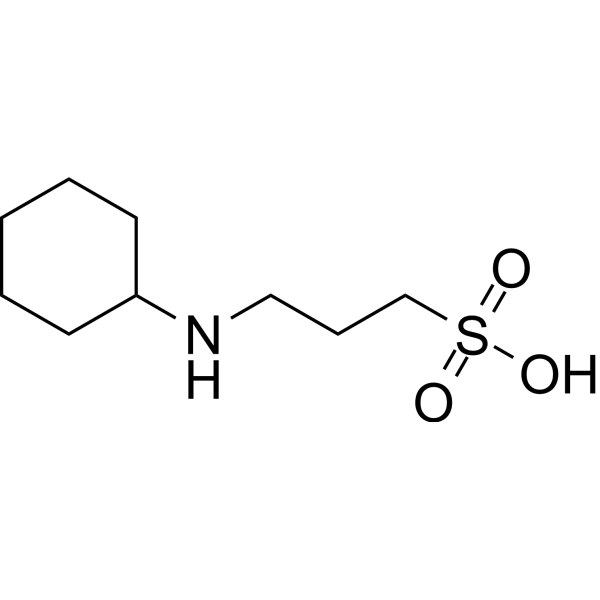
HY-D0869
CAPSSurfactant -
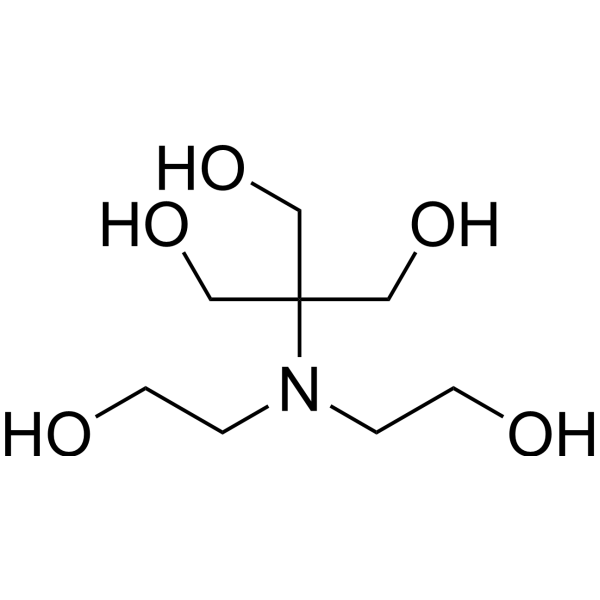
HY-D0856
Bis-TrisBuffer -
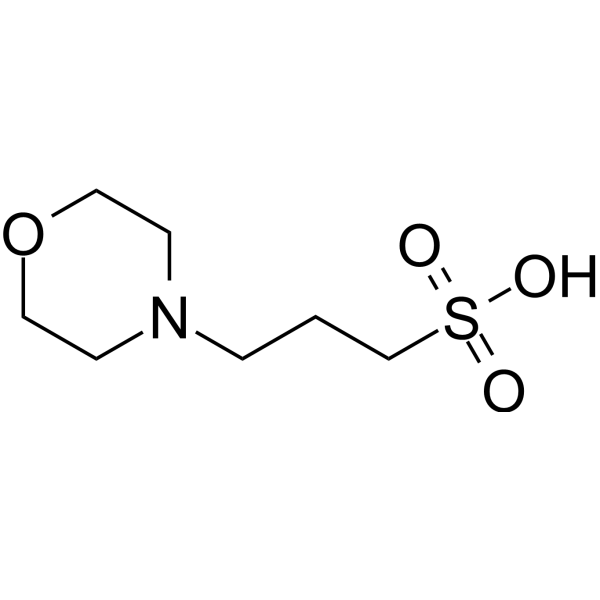
HY-D0859
MOPSBuffering Agent -
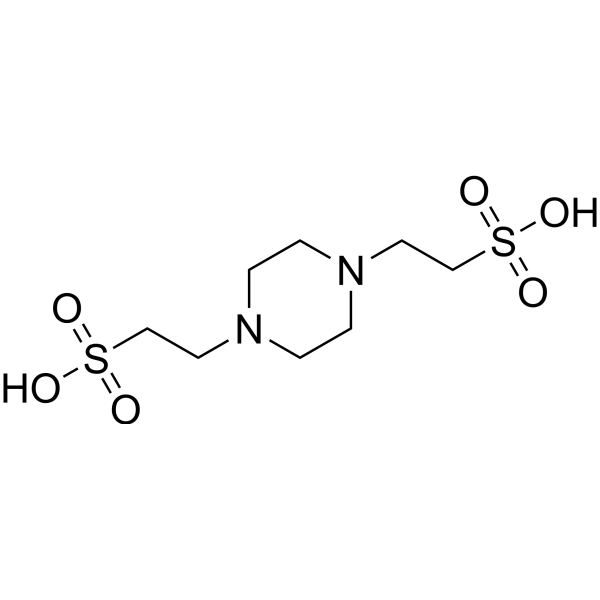
HY-D0875
PIPESBuffer Agent
Publications Citing Use of MedChemExpress (MCE) THAM acetate
More

Biological Activity
Description
In Vitro
THAM (5 min) induces intracellular alkalization in human HepG2 hepatocytes perfused with acidotic artificial media, with a larger effect in the presence of low extracellular non-bicarbonate buffer compared to high extracellular non-bicarbonate buffer[3].
THAM (110 μL) acetate induces intracellular alkalization in human HepG2 hepatocytes bathed in acidotic human blood[3].
THAM (2-8 mmol/L; 40 min) acetate enhances CO2 gas absorptivity and total inorganic carbon storage capacity of modified BG-11 medium, with the highest TIC absorption observed at 8 mmol·L-1[5].
THAM (2-8 mmol/L; 8 days) acetate improves biomass productivity of Scenedesmus dimorphus in indoor shake flask culture, while also increasing polyunsaturated fatty acid content and showing no biodegradation over 8 days[5].
THAM (6 mmol/L; 8 days) acetate increases biomass areal productivity of Scenedesmus dimorphus by 32-33% and CO2 utilisation efficiency by 6-12% in outdoor 2 m2 raceway pond culture, while also increasing polyunsaturated fatty acid content[5].
MedChemExpress (MCE) has not independently confirmed the accuracy of these methods. They are for reference only. Further protocols information, click here.
In Vivo
MedChemExpress (MCE) has not independently confirmed the accuracy of these methods. They are for reference only.
-
Animal Model:Piglets (23.0-30.5 kg body weight; acute respiratory distress syndrome induced by repeated lung lavages with 30 mL/kg 37-39 °C normal saline, eight total)[2]
-
Dosage:Calculated to normalize pH and provide lasting effect
-
Administration:i.v.; continuous infusion; 1 hour (6 animals); 3 hours (6 animals)
-
Result:Increased arterial pH above 7.4, decreased PaCO2, and increased base excess to 13.8 mEq/L (1-hour group) and 16.0 mEq/L (3-hour group) at 60 minutes.
Reduced pulmonary vascular resistance to 423 dyn·s/m5 (1-hour group) and 373 dyn·s/m5 (3-hour group) at 60 minutes, compared to 572 dyn·s/m5 in controls.
Rebounded PaCO2 to 15.2 kPa (1-hour group) and 22.6 kPa (3-hour group) at 6 hours post-infusion cessation.
Maintained elevated base excess at 10.2 mEq/L (1-hour group) and 27.8 mEq/L (3-hour group) at 6 hours post-infusion cessation.
Decreased pH to levels similar to controls by 6 hours post-infusion cessation.
Lowered pulmonary vascular resistance to 329 dyn·s/m5 (1-hour group) and 255 dyn·s/m5 (3-hour group) at 6 hours, compared to 450 dyn·s/m5 in controls.
Increased cardiac index to 5.0 L/min/m2 in the 3-hour group at 6 hours, compared to 3.5 L/min/m2 in controls.
Decreased arterial sodium concentration during infusion and increased arterial potassium concentration during infusion.
Showed no significant differences in lung mechanics (functional residual capacity, respiratory system compliance) between groups.
Increased lung tissue IL-6 concentration to 11.8 pg/mg protein in the 3-hour group, with no significant differences vs. controls for TNF-α or IL-1β.


Chemical Information
-
CAS No. 6850-28-8
-
Appearance Solid
-
Molecular Weight 181.19
-
Formula C6H15NO5
-
Color White to off-white
-
SMILES
OCC(CO)(N)CO.OC(C)=O
-
Synonyms
Tris acetate; Tris(hydroxymethyl)aminomethane acetate
-
Shipping
Room temperature in continental US; may vary elsewhere.
-
Storage
4°C, sealed storage, away from moisture and light
* In solvent : -80°C, 6 months; -20°C, 1 month (sealed storage, away from moisture and light)


Publications (2)
-
Journal Impact Factor
-
Most Recent
-
-
ACS Omega
Highly Efficient Photoelectrochemical Detection of Cystatin C Based on a Core-Shell MOF Nanocomposite with Biomimetic-Catalysis Amplification. [Abstract]2024 Jun 14;9(26):28228-28236. PMID: 38973831


Solvent & Solubility
In Vitro:
DMSO : 100 mg/mL (551.91 mM; Need ultrasonic; Hygroscopic DMSO has a significant impact on the solubility of product, please use newly opened DMSO)
Please refer to the solubility information to select the appropriate solvent. Once prepared, please aliquot and store the solution to prevent product inactivation from repeated freeze-thaw cycles.
Storage method and period of stock solution: -80°C, 6 months; -20°C, 1 month (sealed storage, away from moisture and light). When stored at -80°C, please use it within 6 months. When stored at -20°C, please use it within 1 month.
Please refer to the solubility information to select the appropriate solvent. Once prepared, please aliquot and store the solution to prevent product inactivation from repeated freeze-thaw cycles.
Storage method and period of stock solution: -80°C, 6 months; -20°C, 1 month (sealed storage, away from moisture and light). When stored at -80°C, please use it within 6 months. When stored at -20°C, please use it within 1 month.
Concentration (start) × Volume (start) = Concentration (final) × Volume (final)

Protocols
-
Fibrosis/Collagen Morphometry
Fibrosis and collagen morphometry is based on the quantitative visualization of fibrillar collagen deposition in tissue sections using histochemical stains such as Sirius Red (Picrosirius Red) or Masson's trichrome, followed by image-based or polarization-enhanced analysis to estimate collagen proportional area as a surrogate of extracellular matrix accumulation during fibrotic remodeling. Sirius Red combined with polarized light microscopy enhances detection of collagen fibers due to birefringence properties, enabling more specific visualization of collagen type I and III fibrils compared to conventional bright-field histology, while whole-section or region-restricted digital morphometry reduces field-selection bias in fibrosis assessment. Alternative quantitative approaches include second harmonic generation (SHG) and two-photon excited fluorescence microscopy, which enable label-free detection of fibrillar collagen and have been validated against histological staining and biochemica
-
Collagen: Sirius Red Staining
Sirius Red or picrosirius red staining is a histochemical method for visualizing collagen-rich extracellular matrix in tissue sections, and collagen fibers are detected as red-stained structures under bright-field microscopy with enhanced birefringence under polarized light. Picrosirius red is useful for assessing total collagen organization, distribution, and fibrosis burden, but polarized color should not be interpreted as a definitive collagen type I versus type III readout because color is affected by fiber orientation, thickness, and packing.
-
ECM-Embedded Organoid (Matrigel/Dome) Culture
ECM-embedded organoid dome culture embeds epithelial stem cells, crypts, organoid fragments, or tumor-derived epithelial cells in a basement-membrane-like hydrogel such as Matrigel, allowing 3D growth, self-organization, lumen formation, budding or cystic morphogenesis, and lineage maintenance under defined niche-factor-containing medium. The primary readouts are organoid establishment efficiency, growth, morphology, passaging capacity, lineage-marker expression, and, when fluorescently labeled lines are used, microscopy- or flow-cytometry-based quantification of population behavior in 3D culture.
-
Matrigel/ECM Transwell Invasion Assay
The Matrigel/ECM Transwell invasion assay measures the ability of cells to move toward a chemoattractant while crossing an extracellular-matrix barrier placed on a porous membrane; therefore, the readout reflects both chemotactic motility and matrix invasion rather than migration alone. Matrigel is a basement-membrane-rich matrix derived from Engelbreth-Holm-Swarm mouse sarcoma and has been used as a reconstituted basement membrane barrier in chemoinvasion assays. The assay readout is generated by quantifying cells that reach the underside of the insert membrane or lower compartment after incubation, commonly by staining and counting invaded cells or by fluorescence-based quantification.
-
Matrigel Transwell/Boyden Chamber Invasion Assay
Matrigel Transwell/Boyden chamber invasion assay measures the ability of cells to degrade or traverse an extracellular matrix-coated porous membrane and move from an upper chamber toward a chemoattractant in a lower chamber. Invasion is distinguished from migration by coating the membrane with Matrigel or basement membrane matrix; uncoated inserts measure migration, while coated inserts require cells to cross an ECM barrier before reaching the underside of the membrane.


Purity & Documentation
-
Data Sheet (280 KB)
-
SDS (396 KB)
- English - EN (396 KB)
- Français - FR (396 KB)
- Deutsch - DE (396 KB)
- Norwegian - NO (396 KB)
- Español - ES (396 KB)
- Swedish - SV (396 KB)
- Italian - IT (396 KB)
- Korean - KR (396 KB)
- Portuguese - PT (396 KB)
-
Handling Instructions (2659 KB)
References
[1]. Nahas GG, et al. Guidelines for the treatment of acidaemia with THAM. Drugs. 1998;55(2):191-224. [Content Brief]
[2]. Höstman S, et al. THAM reduces CO2-associated increase in pulmonary vascular resistance - an experimental study in lung-injured piglets. Crit Care. 2015;19(1):331. Published 2015 Sep 17. [Content Brief]


Complete Stock Solution Preparation Table
Please refer to the solubility information to select the appropriate solvent. Once prepared, please aliquot and store the solution to prevent product inactivation from repeated freeze-thaw cycles.
Storage method and period of stock solution: -80°C, 6 months; -20°C, 1 month (sealed storage, away from moisture and light). When stored at -80°C, please use it within 6 months. When stored at -20°C, please use it within 1 month.
| Optional Solvent | Concentration Solvent Mass | 1 mg | 5 mg | 10 mg | 25 mg |
|---|---|---|---|---|---|
| DMSO | 1 mM | 5.5191 mL | 27.5953 mL | 55.1907 mL | 137.9767 mL |
| 5 mM | 1.1038 mL | 5.5191 mL | 11.0381 mL | 27.5953 mL | |
| 10 mM | 0.5519 mL | 2.7595 mL | 5.5191 mL | 13.7977 mL | |
| 15 mM | 0.3679 mL | 1.8397 mL | 3.6794 mL | 9.1984 mL | |
| 20 mM | 0.2760 mL | 1.3798 mL | 2.7595 mL | 6.8988 mL | |
| 25 mM | 0.2208 mL | 1.1038 mL | 2.2076 mL | 5.5191 mL | |
| 30 mM | 0.1840 mL | 0.9198 mL | 1.8397 mL | 4.5992 mL | |
| 40 mM | 0.1380 mL | 0.6899 mL | 1.3798 mL | 3.4494 mL | |
| 50 mM | 0.1104 mL | 0.5519 mL | 1.1038 mL | 2.7595 mL | |
| 60 mM | 0.0920 mL | 0.4599 mL | 0.9198 mL | 2.2996 mL | |
| 80 mM | 0.0690 mL | 0.3449 mL | 0.6899 mL | 1.7247 mL | |
| 100 mM | 0.0552 mL | 0.2760 mL | 0.5519 mL | 1.3798 mL |


THAM acetate Related Classifications
HY-D0227B Related Classifications
 Powered by Bioz